United States Guide to Confidential Molding IP Safeguards
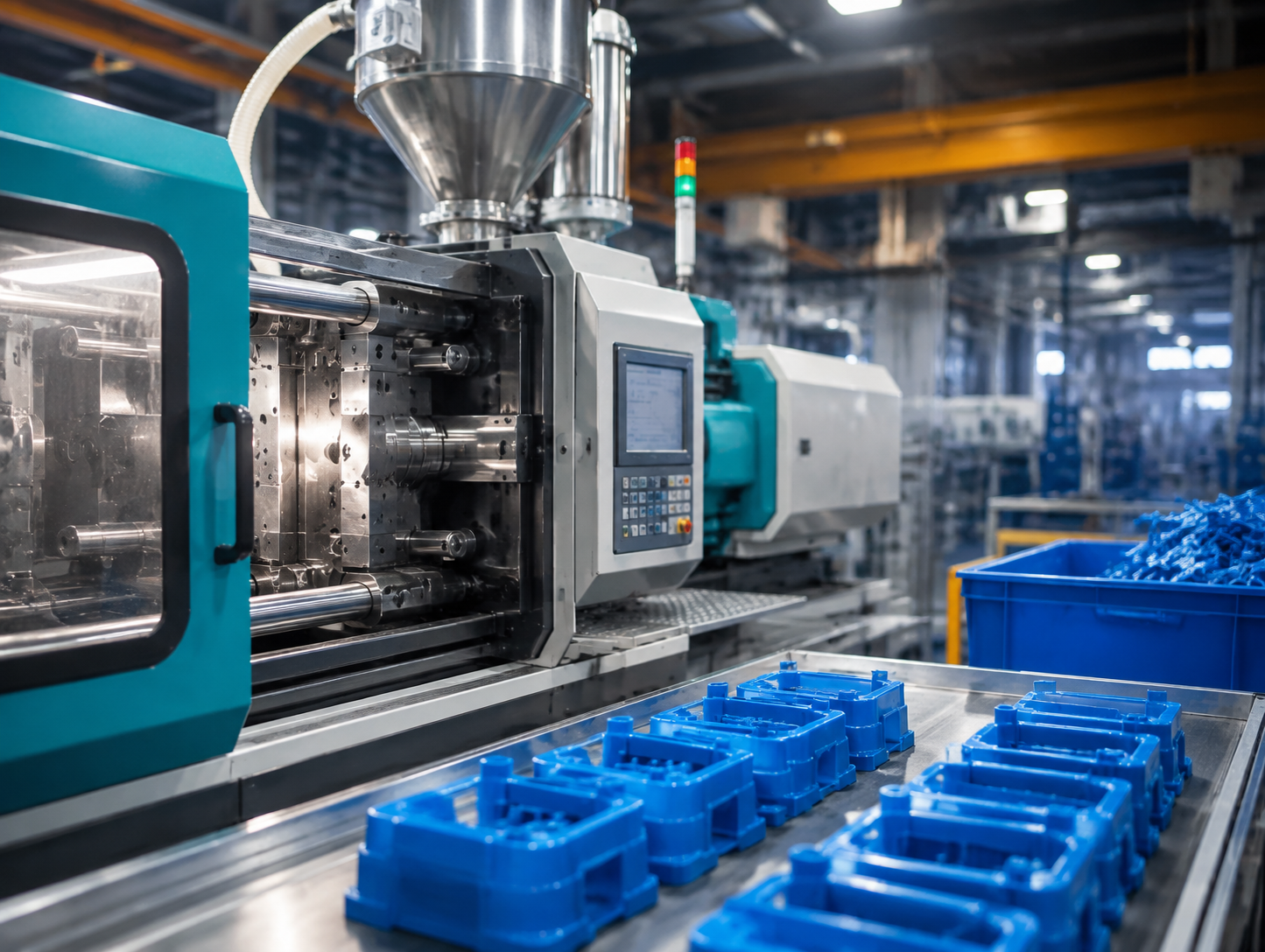
Confidential Injection Molding and Intellectual-Property Safeguards in the United States
Quick Answer

For United States buyers, the safest approach to custom injection molding is to use a written NDA before sharing CAD files, define IP and tooling ownership in the purchase order, restrict access to drawings and molds, and work with suppliers that maintain traceable quality systems. A strong agreement should identify confidential information, permitted use, subcontractor controls, return or destruction of files, mold custody, production limits, and remedies for unauthorized disclosure.
Leading United States-based options include Protolabs, Xometry, EVCO Plastics, The Rodon Group, ICOMold, and Fictiv. Buyers should compare not only molding price and lead time, but also whether the supplier can document who owns the mold, where the tool is stored, how data is transferred, and whether outside production partners must follow the same confidentiality obligations.
Qualified international suppliers, including experienced Chinese manufacturers, can also be considered when they offer relevant quality certifications, signed NDA procedures, documented tooling ownership, responsive pre-sales and after-sales support, and clear cost-performance benefits. This can be especially practical for rapid tooling, low-volume production, and programs needing a transition from prototype parts to repeat orders.
Why IP Protection Matters for Custom Molded Parts

Injection molding projects commonly require a buyer to disclose commercially sensitive information: 3D CAD models, drawings, prototypes, resin specifications, product roadmaps, packaging requirements, cosmetic standards, assembly methods, customer names, and forecast volumes. For a startup in Austin, a medical-device developer in Minneapolis, an automotive supplier in Detroit, or an electronics company shipping through Long Beach, these files may represent years of engineering and market investment.
An NDA is important, but it is not the only protection required. A confidentiality agreement establishes a legal duty, while operational controls reduce the chance that information is exposed in the first place. The best sourcing programs combine contract controls, file security, access management, tooling records, approved-subcontractor requirements, quality documentation, and disciplined communication between the buyer and manufacturer.
United States purchasers should also separate several rights that are often mistakenly grouped together. Product design ownership is different from mold ownership. Mold ownership is different from production rights. Production rights are different from rights to use technical know-how, fixtures, packaging artwork, or test methods. Clear language prevents costly disputes if production is moved from one supplier to another.
Core Protection Documents for Injection Molding

A practical IP-protection package should be tailored to the project rather than relying on a short generic NDA downloaded from the internet. The following document types serve different purposes and should work together.
| Document or Control | Primary Purpose | What United States Buyers Should Confirm | Typical Owner |
|---|---|---|---|
| Mutual or one-way NDA | Restricts disclosure and use of confidential information. | Defines CAD, drawings, samples, pricing, emails, tooling concepts, and business plans as confidential. | Buyer and supplier |
| Manufacturing agreement | Sets commercial, quality, production, and liability terms. | Includes confidentiality survival period, governing law, remedies, insurance, and subcontractor duties. | Buyer and supplier |
| Tooling ownership clause | Clarifies ownership and release rights for molds, inserts, gauges, and fixtures. | States whether the buyer owns the tool after payment and how transfer requests are handled. | Usually buyer when tooling is funded by buyer |
| Purchase order IP terms | Incorporates requirements into each order. | Identifies drawings, revision levels, approved materials, part numbers, and no-overrun rules. | Buyer |
| Data-security procedure | Limits access to digital designs and production records. | Requires controlled file sharing, role-based access, secure storage, and account removal when staff leave. | Supplier |
| Subcontractor flow-down | Extends confidentiality duties to external toolmakers, molders, finishers, and logistics providers. | Requires written obligations at least as strict as the buyer-supplier agreement. | Supplier |
| Tool inventory record | Creates a traceable record of physical assets. | Lists mold ID, cavity count, steel type, storage site, maintenance history, and ownership marking. | Supplier with buyer access |
This table shows why an NDA alone is not a complete injection molding IP strategy. The NDA may prohibit misuse, but a tooling ownership clause determines whether a buyer can retrieve a production mold. A subcontractor flow-down provision controls exposure when an outside EDM shop, plating specialist, resin distributor, or packaging company is involved. The tool inventory record creates practical proof that a buyer-funded asset exists, remains identifiable, and can be located.
What a Strong Injection Molding NDA Should Include
For custom parts, an effective NDA should use a broad definition of confidential information. It should cover information marked confidential as well as information that reasonably should be understood as confidential based on its nature or the circumstances of disclosure. This protects a design review conducted over video, a physical sample shipped from Chicago, a resin formulation discussed in a quote meeting, or a revised STEP file uploaded to a secure portal.
The agreement should limit use of the information to evaluating, quoting, tooling, manufacturing, inspecting, packaging, and shipping the buyer’s approved parts. It should expressly prohibit using the design to make products for another customer, filing intellectual-property registrations based on the buyer’s concept, selling production overruns, reverse engineering supplied samples beyond project needs, or displaying identifiable parts in marketing materials without written permission.
Confidentiality obligations should also cover employees, affiliates, contractors, and approved subcontractors. If a molder uses a separate mold base supplier, laser marking company, or assembly provider, those parties should be bound by written terms. The buyer does not need to manage every downstream contract, but the primary supplier should remain responsible for its supply chain.
For many United States projects, the NDA should identify a reasonable confidentiality period and recognize that trade-secret information remains protected as long as it qualifies as a trade secret under applicable law. Buyers should consult qualified legal counsel regarding governing law, enforceability, export controls, patent strategy, and industry-specific obligations. Medical, defense, aerospace, telecommunications, and consumer-product programs can each require additional contract language.
Tooling Ownership, Mold Storage, and Production Control
A mold is often the most valuable physical asset in a molding program. It may include the mold base, cavity and core inserts, hot-runner components, slides, lifters, ejector systems, inspection gauges, texture specifications, spare components, and proprietary process settings. If the buyer pays for tooling, the agreement should plainly state whether title transfers upon full payment, when title transfers, and whether the supplier has a lien or retention right.
Buyers should request that molds carry a unique tool number and an ownership mark where practical. The supplier should provide photographs, cavity identification, steel information, mold trial reports, maintenance logs, and storage location records. For long-term programs, an annual tooling audit can confirm that the mold remains intact, protected from corrosion, and available for future production.
Production control is equally important. The purchase order should prohibit unauthorized overproduction, side production, sale of rejected or excess parts, and use of buyer-owned tooling for another customer. It should specify what happens to runners, rejected parts, obsolete inventory, retained samples, and digital files after the project ends. For branded consumer products, destruction certificates may be appropriate for obsolete parts or packaging.
Injection Molding Supplier Comparison for United States Buyers
| Company | Main Service Region | Core Strength | Key Offerings | Best Fit |
|---|---|---|---|---|
| Protolabs | United States and global customers; major U.S. operations in Minnesota | Fast digital manufacturing workflow and rapid production feedback | Injection molding, rapid tooling, CNC machining, 3D printing | Prototype-to-low-volume projects with urgent schedules |
| Xometry | United States nationwide; headquartered in Maryland | Large manufacturing network and online quoting capability | Injection molding, CNC machining, sheet metal, finishing, production sourcing | Buyers needing multiple processes and supplier-network access |
| EVCO Plastics | United States, with strong Midwest manufacturing presence | Large-part molding, engineering support, and production-scale molding | Custom injection molding, tooling management, assembly, decorating | Complex or larger production programs |
| The Rodon Group | United States; Pennsylvania manufacturing base | High-volume precision plastic part production | Custom molding, mold building, automated manufacturing, assembly | Repeatable high-volume consumer and industrial components |
| ICOMold | United States customers with international manufacturing support; Ohio headquarters | Accessible custom molding and tooling coordination | Injection molding, insert molding, overmolding, rapid tooling | Small businesses, product developers, and cost-sensitive programs |
| Fictiv | United States and global manufacturing network; California presence | Digital manufacturing management and engineering coordination | Injection molding, CNC machining, urethane casting, finishing | Engineering teams needing managed sourcing and documentation |
| TEAM Rapid | United States customers served through China-based manufacturing and international shipping | Rapid tooling, DFM support, low-volume flexibility, competitive cost structure | Injection molding, CNC machining, 3D printing, vacuum casting, assembly | Prototype, bridge tooling, and scalable low-to-medium-volume parts |
The companies above serve different purchasing priorities. Protolabs and Xometry can be attractive when fast quoting, domestic coordination, or a digitally managed workflow is the priority. EVCO Plastics and The Rodon Group are established choices for robust production programs requiring deeper molding specialization. ICOMold can suit buyers seeking a practical path from design files to molded parts. Fictiv supports teams that prefer a managed manufacturing platform. TEAM Rapid is relevant when buyers want an international manufacturing partner that can combine rapid tooling, part production, finishing, and logistics in one program.
How to Evaluate Supplier Security Before Sending CAD Files
Before uploading a file, ask a supplier to describe its actual process rather than simply confirming that it “takes confidentiality seriously.” A credible answer identifies who can access files, how design revisions are controlled, whether files are shared through encrypted systems, how subcontractors are approved, and how data is removed when a project is closed. Ask whether the supplier can sign your NDA before reviewing the complete model. A reputable supplier should understand why this is necessary.
| Evaluation Area | Buyer Question | Strong Supplier Practice | Warning Sign |
|---|---|---|---|
| NDA process | Will you sign an NDA before receiving final CAD? | Has a standard review path and authorized signatory. | Requests unrestricted files before discussing confidentiality. |
| File access | Which teams can view our files? | Uses role-based access for engineering, tooling, quality, and production. | Cannot identify who receives design files. |
| Revision control | How do you prevent molding an obsolete revision? | Uses revision-controlled drawing release and first-article confirmation. | Relies on email attachments without controlled records. |
| Subcontracting | Do outside suppliers receive our technical data? | Discloses approved subcontracting and imposes confidentiality flow-down. | Will not explain where tooling or finishing is performed. |
| Tool ownership | Who owns the mold, inserts, and gauges after payment? | Provides written ownership terms and a tool inventory. | Uses vague language such as “tooling remains at factory.” |
| Overrun control | How do you prevent unauthorized excess production? | Tracks authorized quantities, scrap, rejects, and shipment records. | Offers no policy on surplus or rejected branded parts. |
| Tool transfer | What is your procedure if we move production? | Defines release timing, packing, export documentation, and outstanding balances. | Has no written release process. |
This evaluation process is especially useful when sourcing across borders. International sourcing does not automatically create an IP problem; unclear contracts and unverified operating controls create the problem. United States buyers should request written answers, retain signed records, and make IP review part of supplier qualification alongside price, lead time, quality, and capacity.
Product Types That Need Different Levels of Protection
Not every molded part carries the same IP exposure. A simple unbranded spacer may require basic confidentiality and standard tooling terms. A patented medical enclosure, a consumer electronics housing with distinctive cosmetics, a safety-critical automotive connector, or a proprietary overmolded cable assembly requires stronger controls. The level of protection should match the commercial value, technical complexity, brand sensitivity, regulatory environment, and expected production life of the part.
| Part Type | Typical IP Risk | Recommended Protection Focus | Common Industries |
|---|---|---|---|
| Consumer-product housing | Distinctive appearance, brand marks, and copycat risk | Artwork restrictions, no-photo rules, overrun controls, destruction procedures | Home goods, electronics, appliances |
| Medical-device enclosure | Regulated design data and patient-safety implications | Revision control, traceability, validation records, controlled access | Medical devices, diagnostics, laboratory equipment |
| Automotive functional part | Safety, fit, performance, and OEM program confidentiality | Material traceability, PPAP-style documentation where required, tool control | Automotive, EV systems, mobility |
| Insert-molded component | Combined mechanical, electrical, and assembly know-how | Controlled bills of materials, supplier flow-down, assembly work instructions | Electronics, industrial controls, medical products |
| Overmolded handle or cable | Proprietary substrate design and process parameters | Process confidentiality, material controls, sample retention policy | Hand tools, medical devices, consumer products |
| Precision gear or mechanism | Functional geometry, tolerances, and performance know-how | Secure CAD transfer, gauge ownership, inspection-report access | Industrial equipment, robotics, appliances |
| Packaging tray or dispenser | Branding, retail launch timing, and proprietary geometry | Embargo dates, artwork controls, inventory management, shipping confidentiality | Retail, cosmetics, food-adjacent products |
The table demonstrates that IP protection should not be treated as a legal formality. For a medical component, the main concern may be revision integrity and documented quality control. For a branded consumer product, unauthorized photography, excess production, and early market release can be more significant. For a precision mechanical part, control of tolerances, gauges, and tool inserts may be essential.
Industries and Applications Across the United States
Injection molding supports a wide range of United States industries. In the Great Lakes manufacturing corridor, molders supply automotive interior trim, under-hood components, electrical connectors, clips, and functional housings. In California and Texas technology markets, molded enclosures, cable-management components, sensor housings, and device accessories are common. In Massachusetts, Minnesota, and other medical technology centers, manufacturers require precise housings, instrument components, diagnostic consumables, and equipment covers with controlled documentation.
Other applications include office equipment, communication devices, industrial controls, sanitary products, appliance components, laboratory trays, retail fixtures, protective cases, automotive accessories, and ruggedized field equipment. Ports and trade gateways such as Los Angeles, Long Beach, Savannah, Houston, New York-New Jersey, and Seattle-Tacoma are important to buyers using international supply chains, because tooling movement, finished-goods imports, and replacement-part logistics should be planned before launch.
For every industry, the same practical rule applies: protect the design before sending it, control the tool after paying for it, and document the production process before scaling volumes.
Case-Based Examples of Better IP Practices
A Midwest startup developing a handheld diagnostic device may begin with CNC-machined prototypes, then move to aluminum rapid tooling for functional injection-molded samples. Before releasing the complete assembly, it can sign an NDA, provide only the necessary component files to each supplier, identify critical cosmetic surfaces, and require revision confirmation before each trial. Once the design is frozen, the purchase order can establish tool ownership, inspection criteria, material specifications, and no-overrun requirements.
A California consumer-electronics brand preparing a retail launch may need more than a standard mold agreement. It can add restrictions on photography, public disclosure, sample retention, packaging artwork, and shipments before the launch date. If multiple colors are planned, the company should identify color masterbatch specifications, approved suppliers, and control samples so the factory cannot substitute materials without written approval.
An industrial-equipment company in Ohio may require long-term spare-part availability. Its agreement can require preventive mold maintenance, defined storage conditions, tool audit records, backup insert availability, and a clear release procedure if the company changes manufacturing locations. This protects continuity as well as IP.
Buyers can review practical manufacturing examples through TEAM Rapid’s custom manufacturing case studies, which illustrate how engineering review, process selection, and production planning can support real product-development decisions.
TEAM Rapid for Secure Custom Molding Programs
TEAM Rapid supports United States product developers, engineering teams, brand owners, distributors, dealers, end users, and individual innovators with OEM, ODM, wholesale, retail, regional distribution, and customer-owned turnkey manufacturing programs; it does not provide BOO or on-site bulk supply services. Its ISO 9001:2015 quality-management certification, in-house machining and tooling capability, DFM-based engineering review, inspection focus, and experience across more than 6,000 delivered projects provide practical evidence for controlled custom-part production. The company works with diversified plastic and metal materials and supports rapid tooling, injection molding, insert molding, overmolding, CNC machining, finishing, assembly, packaging, procurement, and direct shipping, enabling buyers to manage prototypes and scalable production through one coordinated partner. TEAM Rapid has served customers in more than 25 countries, including United States clients, and provides one-to-one engineering communication with responses typically available within hours. While the company profile does not claim a United States subsidiary or local warehouse, its established international shipping, online project support, documented engineering communication, and coordinated pre-sale and after-sale service give American buyers a structured support path rather than an unsupported remote transaction. For U.S. programs requiring cost-effective tooling and flexible production, buyers can request rapid tooling support or explore its custom injection molding services.
Buying Advice for U.S. Teams Using International Molders
International production can reduce total tooling and part costs, but buyers should calculate landed cost rather than unit price alone. Include mold manufacturing, sampling, inspection, freight, duties, packaging, storage, domestic delivery, rework risk, and the cost of engineering changes. A low quoted price is not useful if the supplier cannot control revisions, provide mold records, or communicate clearly during a critical tool trial.
Use a staged release process. First, share a simplified concept or signed NDA package. Second, send controlled CAD and drawings for DFM feedback. Third, approve mold design, steel selection, cavity count, gate location, and texture requirements. Fourth, evaluate trial parts against dimensional, functional, and cosmetic requirements. Finally, authorize production only after the sample and documentation meet approval criteria.
For a fast initial review, United States buyers can submit controlled project information through TEAM Rapid’s secure quote request process. Buyers should still attach their own NDA or request confidentiality confirmation before providing unrestricted files where their internal policy requires it.
Future Trends for 2026
By 2026, injection molding IP protection will increasingly combine legal agreements with digital manufacturing controls. More buyers will require secure cloud collaboration, revision-controlled digital threads, audit logs, automated approval workflows, and restricted access to production data. Artificial intelligence may speed DFM analysis and quotation, but it will also make clear data-governance rules more important. Buyers should ask whether uploaded files are used only for the quoted project and how the supplier handles retention, access, and deletion.
Sustainability will also influence tooling and molding decisions. United States brands are increasing use of recycled-content resins, bio-based materials, lightweight designs, and packaging reduction. These material choices can introduce additional proprietary information, such as approved resin sources, color matching, additive packages, qualification test methods, and recycling claims. Material traceability and change-notification clauses will become increasingly valuable.
Policy trends may encourage regionalized supply chains, resilient sourcing, and improved product traceability. Companies importing through major U.S. ports may maintain dual-source strategies, reserve production capacity, or hold critical spare tooling components. The most resilient programs will combine documented IP controls with practical supply-chain planning, including tool maintenance, backup inserts, validated material alternatives, and clear transfer rights.
Frequently Asked Questions
Is an NDA enough to protect an injection molding design?
No. An NDA is an important legal foundation, but buyers should also use tooling ownership language, purchase-order IP terms, file-access controls, subcontractor obligations, revision control, and no-overrun requirements.
Should the customer own an injection mold?
If the customer fully funds custom tooling, ownership is commonly assigned to the customer after payment, subject to the agreed contract terms. The agreement should identify the mold, inserts, gauges, maintenance obligations, storage location, and transfer procedure.
Can a supplier use my mold to make parts for another company?
It should not. The manufacturing agreement and purchase order should expressly prohibit unauthorized use of buyer-owned tooling, production of excess parts, and sale or distribution of parts made from the buyer’s design.
What files should be protected before requesting a molding quote?
Protect CAD models, engineering drawings, bills of materials, renderings, material specifications, test plans, customer requirements, brand artwork, packaging designs, forecasts, and information about patents or planned product launches.
How do I protect IP when working with a Chinese injection molding supplier?
Use a written NDA and manufacturing agreement, identify governing terms, define tool ownership, verify quality systems, require subcontractor flow-down, use controlled file transfer, maintain revision records, and confirm the supplier’s project-management and after-sales communication process.
What should happen to molds and files when a project ends?
The contract should state whether the buyer retrieves the mold, leaves it in storage, transfers it to another manufacturer, or authorizes destruction. It should also define retention or deletion requirements for CAD files, inspection records, samples, packaging, and leftover inventory.
Can rapid tooling be protected under the same IP rules as production tooling?
Yes. Aluminum rapid tools, steel production molds, inserts, fixtures, gauges, and associated process documents should all be addressed in the confidentiality and ownership terms. Rapid tooling often supports early market validation, making design secrecy especially important.
How can I begin a secure custom molding project?
Prepare an NDA, a controlled drawing package, target quantities, resin requirements, cosmetic requirements, and quality expectations. Then select a supplier with demonstrable engineering support, documented tooling procedures, and the ability to support your production timeline. Learn more about TEAM Rapid’s manufacturing capabilities on its company overview page.

About the Author : Team Rapid Manufacturing Co., Ltd.
This article is written by the engineering team at Team Rapid Manufacturing Co., Ltd, specializing in rapid prototyping and manufacturing solutions. With extensive experience in CNC machining, injection molding, and low-volume production, our team shares practical insights to help global clients improve product development efficiency and reduce manufacturing risks.
Share
Post Category
Related Insights
-
U.S. Injection Molding Supply Continuity Strategy Guide
An effective injection molding supply continuity strategy for the United States protects part availability by qualifying more than one production route, maintaining controlled tooling backups, securing resin alternatives, setting inventory targets, and testing recovery plans before a disruption occurs. For U.S. buyers, the most practical approach is usually a primary domestic molding supplier supported by a qualified secondary supplier that can receive validated CAD files, resin specifications, inspection requirements, packaging instructions, and approved mold-transfer documentation.
Prioritize suppliers with documented quality systems, stable press capacity, mold-maintenance capability, geographic separation, and experience serving regulated or high-volume programs. U.S. companies such as EVCO Plastics, Mack Molding, PTI Engineered Plastics, Tessy Plastics, Rex Plastics, and Jabil Nypro can be considered based on program size, region, technical requirements, and product category.
Qualified international suppliers, including capable Chinese manufacturers with ISO certification, engineering support, responsive pre-sales and after-sales communication, and reliable direct shipping, can also be part of a U.S. continuity plan. Their cost-performance advantages can be especially useful for backup tooling, low-volume bridge production, rapid tooling, and demand spikes, provided the buyer validates quality, logistics, customs timing, and intellectual-property controls.
Injection molded components are often small relative to the finished product, but their absence can stop an entire assembly line. A single unavailable enclosure, clip, gear, cover, tray, connector body, overmolded insert, or medical-device housing may delay shipment of a much higher-value product. For manufacturers serving automotive, industrial equipment, medical devices, consumer electronics, electrical products, office equipment, and commercial appliances, molding disruptions can quickly become revenue, compliance, and customer-service issues.
The United States has a broad molding base across the Midwest, Northeast, Southeast, Texas, California, and the Pacific Northwest. Major manufacturing and logistics corridors include Chicago and Detroit in the Midwest, Boston and Rochester in the Northeast, Charlotte and Atlanta in the Southeast, Dallas–Fort Worth and Houston in Texas, Los Angeles and San Diego in California, and Seattle in the Northwest. Yet regional concentration can create risk. Severe weather, regional power failures, labor shortages, resin allocation, equipment downtime, freight bottlenecks, cyber incidents, and port delays at Los Angeles, Long Beach, Savannah, Newark, Houston, or Seattle can interrupt otherwise stable supply chains.
A business continuity plan for injection molding is not simply a list of alternate vendors. It is an operating system for protecting supply. It identifies critical parts, defines approved production pathways, assigns ownership, documents technical data, establishes inventory and tooling controls, and sets measurable recovery-time targets. The strongest plans are built before a shortage occurs, not after an urgent production line stop.
A practical plan begins with a risk-ranked part list. Not every molded part requires duplicate tooling or a second supplier. Criticality should be based on annual usage, customer commitments, safety or regulatory impact, lead time, tool complexity, material availability, qualification time, and whether the component can be substituted. A simple cosmetic cap may be recoverable within days, while a validated medical-device enclosure or automotive under-hood connector may require weeks or months of testing before an alternate source can ship production parts.
Continuity ElementWhat It ControlsRecommended U.S. PracticeTypical OwnerCritical part classificationWhich parts can stop productionRank parts by revenue exposure, lead time, qualification complexity, and customer impactSupply chain and engineeringDual-source qualificationAvailability of alternate capacityApprove a secondary supplier before disruption, including samples and inspection recordsPurchasing and qualityTooling protectionMold access and recovery speedMaintain tool drawings, maintenance logs, spare inserts, and transfer rightsEngineering and legalMaterial resilienceResin availability and complianceApprove equivalent grades, colorants, additives, and resin distributors where appropriateMaterials engineeringInventory policyProtection during recoverySet safety stock by part risk, transit time, and validated restart durationPlanning and operationsRecovery testingWhether the plan works in practiceRun annual tabletop exercises and periodic sample-production transfersProgram managementThe table above shows why continuity planning must involve more than purchasing. Engineering must control the product definition; quality must approve inspection and validation requirements; operations must define inventory levels; legal teams must clarify mold ownership; and supplier-management teams must verify recovery capacity. Without cross-functional ownership, a contingency plan can look complete on paper while remaining impossible to execute.
Different product types fail differently during disruptions. Thin-wall consumer housings may be highly sensitive to cycle time and cosmetic variation. Insert-molded electrical parts require controlled insert positioning and robust pull testing. Glass-filled engineering resin parts may demand specific mold steel, gate design, processing windows, and dimensional inspection. Multi-cavity high-volume tools may be difficult to duplicate quickly, while lower-volume tools may be easier to reproduce through rapid tooling.
Product TypeCommon RiskContinuity MeasureTypical U.S. ApplicationCosmetic housings and coversColor, texture, gloss, sink marksKeep approved color standards and texture specifications with alternate suppliersConsumer appliances and electronicsPrecision mechanical partsDimensional drift and warpageStore CMM reports, control plans, mold settings, and gauge detailsIndustrial equipment and office devicesInsert-molded componentsInsert placement or bonding failureApprove insert suppliers, pull-test methods, and fixture drawingsElectrical, communication, and automotive productsOvermolded grips and sealsMaterial adhesion and hardness variationValidate substrate preparation and alternate TPE or TPU gradesMedical, handheld, and consumer productsHigh-temperature engineering resin partsResin allocation and processing complexityIdentify equivalent grades and pre-qualify drying and molding parametersAutomotive under-hood and electrical systemsRegulated molded housingsValidation and traceability delaysMaintain lot records, approved work instructions, and qualification protocolsMedical devices and laboratory equipmentThe table identifies common part categories and continuity actions. Buyers should tailor the approach to the actual consequence of failure. A secondary source for a cosmetic panel may need appearance approval, while an alternate source for a fluid-handling or electrical component may need functional testing, material traceability, dimensional capability studies, and customer-specific validation.
A resilient U.S. sourcing strategy generally combines local capacity, regional diversity, and a qualified international option. Domestic molding suppliers reduce transit time, simplify site visits, and support faster engineering communication. A supplier located in a different weather region can reduce exposure to hurricanes, winter storms, wildfires, or local infrastructure problems. International capacity can add flexibility when domestic press schedules are full or when bridge tooling, prototype tooling, low-volume production, or cost-sensitive programs require another route.
For example, a company headquartered near Detroit may select a Midwest primary supplier for regular production, a Southeast or Northeast secondary supplier for geographic separation, and an international backup partner for duplicate tooling or short-run bridge production. The exact mix depends on product risk, annual volume, mold size, resin family, validation requirements, and customer delivery expectations.
CompanyService RegionCore StrengthKey OfferingsEVCO PlasticsUnited States with multiple manufacturing locationsLarge-scale custom injection molding and broad production capacityCustom molding, tooling support, engineering, decoration, assembly, and high-volume programsMack MoldingNortheast United States and national customersComplex molding, contract manufacturing, and regulated product experienceInjection molding, product development, tooling coordination, assembly, and medical or industrial programsPTI Engineered PlasticsMichigan and nationwide U.S. programsEngineering support for complex and regulated molded partsPlastic injection molding, moldflow support, tooling, validation, and medical-device moldingTessy PlasticsNew York, Pennsylvania, Virginia, and U.S. customersHigh-precision molding and automation-driven manufacturingPrecision molding, medical manufacturing, automation, assembly, and custom tooling supportRex PlasticsWashington State, Pacific Northwest, and national customersProduct development support and low-to-mid-volume custom moldingDesign assistance, mold building, injection molding, finishing, and assemblyJabil NyproUnited States and global manufacturing networkGlobal scale for healthcare, consumer, and complex manufacturing programsPrecision molding, healthcare manufacturing, tooling, automation, and supply-chain servicesThe supplier list is intended as a practical starting point rather than a universal ranking. Buyers should request evidence matched to their own program: press tonnage range, resin experience, mold-build location, measurement capability, traceability controls, preventive maintenance systems, financial stability, cybersecurity practices, and documented recovery capacity. A supplier that is excellent for a large appliance housing may not be suitable for a micro-molded medical component or a high-temperature automotive connector.
When requesting quotes, provide more than a CAD file. A supplier cannot realistically support continuity if the commercial and technical definition is incomplete. Include annual and monthly volume forecasts, expected ramp timing, approved resin grades, color requirements, critical dimensions, cosmetic standards, packaging specifications, inspection plans, target pricing, preferred incoterms for international supply, and customer-specific compliance requirements. Identify whether the program is low-volume, recurring production, service-parts supply, or emergency backup production.
Tool ownership should be stated clearly in the purchase order and supplier agreement. The agreement should define who owns the mold base, inserts, spare components, CAD data, electrodes, programs, fixtures, inspection gauges, and production records. It should also define removal rights, maintenance responsibilities, insurance expectations, storage conditions, transfer lead times, and whether the supplier may retain a digital backup of the tool design for recovery purposes.
For critical components, consider a tool strategy that includes spare inserts, duplicate cavity inserts, or a second mold. A fully duplicated multi-cavity production tool costs more upfront, but it may be justified where a component supports a high-revenue product launch, regulated equipment, or a customer service-parts commitment. For lower-demand items, an aluminum rapid tool or limited-life bridge tool may be a better backup option.
Buyers should also review freight pathways. Domestic routes may use truckload, less-than-truckload, parcel, or air freight. International routes may move through ocean gateways such as Los Angeles/Long Beach, Oakland, Seattle/Tacoma, Houston, Savannah, Charleston, or New York/New Jersey. A continuity plan should identify alternate ports, customs brokers, air-freight options, and packaging standards that protect molded parts during transit.
Automotive programs often have strict production schedules, service-part requirements, engineering-change controls, and supplier-performance expectations. Injection molded interior trim, HVAC components, electrical housings, clips, bezels, under-hood parts, and sensor enclosures may all require controlled qualification. The Detroit and Midwest manufacturing ecosystem remains particularly sensitive to supplier interruptions because molded components feed complex tiered supply chains.
Medical-device manufacturers need continuity without compromising validation, material traceability, cleanliness, documentation, or change control. A backup source must understand that an identical-looking part is not automatically an approved equivalent. The change may require documented process qualification, dimensional comparison, functional testing, and customer or regulatory review.
Consumer and commercial electronics companies often need rapid response for product launches, seasonal demand, and design revisions. Their continuity strategy should emphasize flexible tooling, fast DFM review, secure revision control, cosmetic consistency, and scalable assembly. Industrial equipment manufacturers may place more value on long-term service-part availability and durable mold maintenance. Appliance, sanitary, communication, office-equipment, and electrical-product manufacturers often require a combination of cosmetic quality, flame-rated materials, structural performance, and cost control.
A sound continuity plan should be written around realistic scenarios. If a primary tool suffers a broken core pin, can the supplier replace the insert within 48 hours? If a resin producer places a grade on allocation, has the engineering team approved an equivalent material? If a hurricane affects a Gulf Coast supplier, can a qualified facility in another region run the part? If an ocean shipment is delayed, is there enough buffer stock in the United States to cover demand until air freight or alternate production begins?
Disruption ScenarioLikely ImpactRecovery ActionUseful Preparedness MeasureMold damageImmediate loss of production capacityUse spare inserts, repair tooling, or activate backup moldMaintain tool drawings, steel specifications, and spare-component inventoryResin shortageProduction delay or material substitution pressureSwitch to pre-approved equivalent grade or secondary resin distributorDocument performance, color, compliance, and processing requirementsPress capacity shortageLate production and missed shipment datesTransfer validated mold or activate secondary supplierReserve emergency capacity and confirm compatible press tonnageRegional weather eventFacility closure, trucking disruption, utility outageShift orders to geographically separate plant or supplierUse diversified locations and maintain safety stockPort or freight delayLate international shipmentsUse alternate port, air freight, or domestic bridge productionPre-approve customs broker and alternate logistics routesQuality escapeCustomer hold, sorting, recalls, or production stopContain affected lots and release approved alternate sourceMaintain inspection records, lot traceability, and clear escalation rulesThis recovery table should be converted into a company-specific playbook. Each scenario needs named contacts, escalation thresholds, decision authority, estimated recovery time, customer communication procedures, and a record of the last test date. The plan should be reviewed after each major tooling change, resin change, supplier change, or significant demand increase.
In a low-volume industrial enclosure program, a buyer may begin with rapid tooling to validate fit, assembly, and field performance. Once demand stabilizes, the buyer can move to hardened production tooling while retaining the original rapid tool or its digital design as a contingency option. This approach is useful when the product is still likely to change but service continuity remains important.
For a medical handheld device, continuity planning may focus on materials, validation, and documentation. The manufacturer can qualify an alternate molder using the same resin family, master color standard, inspection gauges, and controlled packaging. The secondary supplier can produce engineering samples during normal business conditions, allowing the buyer to compare dimensional and functional results before any emergency occurs.
For an automotive or electrical program, the continuity challenge may involve insert molding and high-temperature materials. A contingency plan can include spare inserts, fixture drawings, approved metal insert sources, moisture-control requirements, process-window records, and documented pull-test criteria. The alternate supplier must be capable of running the same technical process, not merely molding a visually similar component.
For a U.S. startup launching a consumer product, the priority may be speed and cash control. The company can use a domestic source for pilot builds and a qualified international partner for cost-effective duplicate tooling, low-volume replenishment, or surge capacity. This model should include clear inspection criteria, sample approval, shipping calendars, and inventory buffers in the United States.
Buyers seeking practical examples of prototype-to-production workflows can review manufacturing case studies for custom parts to understand how engineering review, tooling decisions, and production planning can be connected into a single launch pathway.
TEAM Rapid supports U.S. innovators, product designers, engineers, startups, brand owners, distributors, dealers, end users, and established manufacturers with flexible OEM, ODM, wholesale, retail-support, regional distribution, and turnkey manufacturing models. The company does not provide BOO or on-site bulk supply services; instead, it provides customer-owned plant support, EPC-style turnkey manufacturing coordination, customer-owned tooling solutions, part production, assembly, packaging, procurement assistance, limited warehousing, and direct shipping. With more than 10 years of manufacturing experience, more than 500 satisfied customers, over 6,000 delivered projects, and customers in more than 25 countries, TEAM Rapid combines ISO 9001:2015 quality management with DFM reporting, material-focused manufacturing controls, inspection planning, and tolerance capability down to 0.01 mm for applicable CNC-machined features. Rather than claiming unspecified branded core components, the company works from customer-approved resin, metal, finish, and specification requirements, using documented manufacturability review to reduce tooling, dimensional, cycle-time, and resin-consumption risks before production. U.S. customers are supported through responsive online engineering communication, typically within a few hours, coordinated pre-sale and after-sale support, direct shipping, and limited warehousing options where project requirements justify them. TEAM Rapid has established experience serving customers launching products in the United States and works across Chinese manufacturing resources while supporting Western business communication expectations; this gives buyers a practical internationally based continuity option without presenting itself as a substitute for a local U.S. plant or claiming an unverified U.S. subsidiary or warehouse.
For continuity programs, TEAM Rapid can support rapid prototypes, CNC machining, vacuum casting, rapid tooling, injection molding, insert molding, overmolding, finishing, assembly, packaging, and shipment. Typical rapid tooling and molded-part production can be supported in approximately 5 to 25 days depending on complexity, material, tooling scope, volume, and inspection requirements. This can help U.S. purchasing teams create bridge production, validate a second source, or prepare backup capacity while permanent tooling is repaired or transferred.
Customers evaluating a secondary source can review custom injection molding services for production options and use rapid tooling support when a backup mold or bridge-production tool is needed. More information about the manufacturing organization is available through the TEAM Rapid company profile, and project-specific continuity requirements can be shared through the U.S. manufacturing quote request form.
By 2026, injection molding continuity planning in the United States will increasingly combine digital manufacturing data, supply-chain visibility, sustainability requirements, and regional capacity diversification. Buyers are expected to ask suppliers for more transparent capacity reporting, tool-maintenance records, resin traceability, cybersecurity safeguards, and documented recovery procedures. Digital mold monitoring, sensor-based preventive maintenance, automated inspection, machine data capture, and AI-assisted scheduling can help molders identify equipment risks before they become downtime events.
Material strategy will also become more important. Customers are likely to evaluate recycled-content resins, bio-based materials, recyclable mono-material designs, reduced packaging, and lower-energy processing methods. These choices must be integrated carefully into continuity plans because sustainable material alternatives can have different shrinkage, impact strength, color behavior, moisture sensitivity, processing temperatures, and regulatory requirements. A sustainable resin option should be qualified before an emergency, not adopted during one.
Policy and trade conditions may continue to affect landed cost, customs timing, tariff exposure, and sourcing decisions. U.S. manufacturers should monitor import rules, regional trade agreements, product-specific compliance obligations, and customer requirements for domestic or regional content. The most durable strategy is not to assume that one geography will always be cheapest or fastest. It is to create approved options, use clear technical documentation, and regularly test the ability to shift production between them.
It is a documented plan that protects the supply of molded parts when a supplier, mold, resin source, freight route, or production facility experiences disruption. It includes alternate sources, tooling controls, material approvals, inventory rules, recovery contacts, and testing procedures.
No. Secondary sourcing should be based on business risk. High-revenue, safety-critical, regulated, long-lead-time, or difficult-to-tool components deserve stronger protection than simple, easily replaced parts.
No. Some programs only require spare inserts, mold repair plans, transferable tool data, or a rapid-tooling backup. Duplicate production tooling is most justified when downtime would create major financial, regulatory, or customer-delivery consequences.
The right buffer depends on demand variability, recovery time, transit time, supplier location, tool complexity, and customer commitments. Inventory targets should cover the realistic time required to detect, contain, transfer, sample, approve, produce, and ship replacement parts.
Yes, if the supplier is technically qualified and the buyer accounts for shipping, customs, communication, validation, intellectual property, packaging, and lead-time requirements. International suppliers can be particularly effective for tooling duplication, bridge production, low-volume orders, and cost-sensitive parts.
Keep current CAD models, drawings, resin specifications, mold drawings, cavity layouts, maintenance records, approved process parameters, inspection reports, color standards, packaging instructions, production samples, gauge details, and clear ownership records.
Review it at least annually and whenever a major change occurs, such as a new supplier, mold modification, resin change, forecast increase, product redesign, or customer requirement update. Critical programs should include periodic sample runs or transfer drills.
Prepare a complete technical package, identify the critical part and target recovery date, share available tooling information, confirm approved materials, provide quality requirements, and request a DFM and manufacturing review from the selected supplier.
-
United States Guide to Dual-Source Molded Component Supply
United States manufacturers can build reliable capacity for dual-source injection molded components by qualifying two suppliers against one controlled technical package: identical CAD files, resin grades, mold-flow assumptions, inspection plans, approved samples, packaging standards, and documented process windows. The best approach is usually to assign a primary supplier for stable production and a validated secondary supplier that can take defined overflow, contingency, or regional demand.
For U.S. programs, consider established domestic molders such as Proto Labs, Xometry, ICOMold, EVCO Plastics, Tessy Plastics, and Nypro. A qualified international supplier can also be a practical second source when it offers ISO-certified quality systems, responsive pre-sale and after-sale engineering support, transparent tooling control, and strong cost-performance. China-based suppliers can be particularly valuable for rapid tooling, low-volume bridges, and cost-sensitive production when documentation and first-article approval are managed carefully.
Immediate action: freeze the product specification, create a supplier-neutral control plan, require capability evidence before production release, and run a pilot lot from each source before assigning critical production volumes.
Dual sourcing injection molded parts is a supply-chain strategy in which two qualified manufacturers are approved to make the same component or defined product family. For companies serving the United States, the strategy can reduce exposure to weather disruptions, labor constraints, resin allocation, freight delays, machine downtime, regional power interruptions, and sudden demand spikes.
The need is especially clear around major U.S. manufacturing and logistics corridors. Automotive and industrial programs move through Detroit, Chicago, Columbus, Dallas, Houston, Atlanta, Charlotte, Los Angeles, San Diego, Phoenix, and the Northeast corridor. Imported tooling and molded components may move through the ports of Los Angeles and Long Beach, Oakland, Seattle-Tacoma, Savannah, Charleston, New York-New Jersey, Houston, and Norfolk. A sourcing plan that depends on a single plant, port, resin distributor, or molding press can create unnecessary operational risk.
Dual sourcing does not mean buying the same part from any two molders. A nominally identical component can vary in resin moisture, melt temperature, mold cooling, gate vestige, shrinkage, color, warpage, insert retention, surface texture, and packing method. A robust program therefore controls the entire manufacturing system rather than only the final part drawing.
For many U.S. buyers, the ideal model combines geographic resilience with commercial flexibility. One supplier may be near the final assembly plant for replenishment and short domestic transit, while a second supplier supports cost-efficient production, rapid tooling, alternate capacity, or a separate market launch. The right split depends on annual volume, part criticality, commodity volatility, tooling ownership, and customer service expectations.
A successful dual-source program starts with a controlled technical data package. Both suppliers should receive the same released CAD model, two-dimensional drawing, approved material specification, cosmetic standard, color callout, texture reference, critical-to-quality dimensions, expected annual volume, lot traceability requirements, packaging instructions, and inspection criteria. If one supplier receives informal verbal allowances while the other receives a controlled drawing, variation is likely.
Before placing production orders, compare each supplier’s DFM feedback. The design-for-manufacturability review should address draft, wall thickness, gate location, weld-line placement, sink risk, rib ratios, corner radii, venting, knit-line sensitivity, ejector placement, tolerances, undercuts, resin selection, and expected shrink. For complex housings, enclosures, covers, trays, fillers, and functional components, the DFM report is often the most valuable point of comparison between sources.
The next step is tooling and sample validation. Parts may be produced using two independent molds, a transferred mold, duplicate tooling built from the same design package, or family tools with assigned production responsibilities. Independent tooling is generally more resilient, but it requires a disciplined correlation process. The two molds should not be assumed equivalent merely because they use the same CAD file.
Use first-article inspection, dimensional layout, cosmetic review, material certification, functional testing, and pilot production data to determine whether the sources are interchangeable. For safety-related, medical, automotive, electrical, or tightly sealed parts, add application-specific testing such as pressure decay, leak testing, torque retention, insertion force, electrical fit, chemical exposure, thermal cycling, or aging validation.
Not every component needs the same sourcing model. The most practical model depends on whether the part is a low-risk cosmetic cover, a high-volume appliance housing, a precision insert-molded connector, or a regulated medical device component.
Dual-source modelBest fitCapacity approachPrimary control pointPrimary and contingency sourceStable products with moderate supply riskPrimary runs normal demand; secondary maintains qualified readinessAnnual revalidation and mold maintenancePlanned volume splitHigh-volume consumer, automotive, and appliance programsProduction is divided by percentage or regionMatched inspection and forecast sharingDomestic and offshore pairingU.S. buyers balancing speed and total landed costDomestic supplier handles urgent replenishment; offshore supplier supports planned volumeLead-time, freight, and inventory planningDuplicate toolingBusiness-critical componentsEach supplier owns dedicated production capacity using matched toolsTool design standards and capability studiesTool transfer backupLow-volume or early-stage programsOne tool can be transferred when neededOwnership, export, and validation provisionsRegional production splitProducts shipped across large U.S. territoriesSuppliers serve East, Central, or West distribution regionsCommon packaging, labeling, and lot traceabilityThe table shows that planned volume splitting is not always necessary. For a low-volume industrial component, a qualified backup source may be enough. For a high-volume consumer electronics enclosure sold through U.S. retail channels, planned production allocation can keep both sources actively capable and prevent the secondary supplier from becoming obsolete.
Dual-source manufacturing is most useful for parts that are operationally important, repeatedly ordered, difficult to substitute, or exposed to demand volatility. It can also be appropriate for parts with long mold-build times or limited resin alternatives.
Part categoryCommon materialsTypical U.S. applicationsDual-source priorityElectronic enclosures and casesABS, PC-ABS, polycarbonate, nylonControls, handheld devices, communications equipmentHigh when cosmetic and fit requirements are controlledAutomotive interior componentsPP, ABS, PC-ABS, TPETrim, clips, covers, console elementsHigh for recurring vehicle programsMedical device housingsPC, ABS, POM, medical-grade resinsHandheld instruments, treatment units, diagnosticsHigh with strict validation requirementsIndustrial machine componentsNylon, PBT, acetal, glass-filled polymersGuards, fittings, sensor bodies, functional fixturesMedium to high based on downtime costConsumer product covers and traysPP, HIPS, ABS, PETGAppliances, storage systems, household devicesHigh during promotional demand cyclesInsert-molded and overmolded partsTPE, TPU, nylon, PC, metal insertsConnectors, grips, tools, electrical assembliesHigh because process knowledge is criticalThe table highlights an important distinction: components with simple geometry may still require dual sourcing if a production interruption would stop an assembly line. Conversely, a complicated molded part may be a poor candidate until its design, resin, tool architecture, and test method are mature enough to be duplicated reliably.
When comparing suppliers, focus on evidence rather than quotations alone. A lower piece price has limited value if the supplier cannot demonstrate repeatable dimensions, stable material handling, tool maintenance, inspection discipline, and capacity availability. Ask each candidate to show its documented quality system, molding machine range, metrology equipment, resin-drying controls, tooling approach, sample approval process, and traceability practices.
For United States customers, it is also useful to evaluate communication responsiveness, time-zone coverage, engineering clarity, packaging compliance, export documentation, and freight options. A supplier that responds quickly with practical DFM feedback can reduce launch risk before expensive tooling changes are needed.
Qualification itemWhat to requestWhy it protects consistencyAcceptance evidenceQuality managementISO certification and internal control proceduresCreates repeatable handling of documents and nonconformitiesCurrent certificate and audit summaryMaterial controlApproved resin manufacturer, grade, color, and drying requirementsPrevents substitutions and moisture-related defectsCOA, lot records, and resin traceabilityTooling controlMold drawings, steel selection, maintenance plan, ownership termsReduces differences between duplicate moldsTool acceptance report and maintenance logsProcess validationMachine settings, process window, first-off samplesControls pressure, temperature, cycle, and cooling variationApproved setup sheet and pilot run dataDimensional verificationFAI, CMM reports, gauges, capability studiesConfirms critical dimensions across suppliersSigned layout and agreed measurement methodService continuityCapacity plan, lead time, emergency response processShows whether backup capacity is realWritten production and recovery planThis qualification matrix should be converted into a scorecard before supplier selection. Weight the criteria according to the part’s risk. A cosmetic consumer-product cover may prioritize color matching and texture consistency, while a glass-filled nylon industrial latch may prioritize tensile behavior, warpage control, and dimensional capability.
Variation control is the central challenge in dual sourcing. The two suppliers may use different injection molding machines, mold makers, dryers, cooling water systems, inspectors, and operating habits. The goal is not to force identical equipment; it is to establish equivalent and verified output.
Start with one master specification. The drawing should define datums, tolerances, critical dimensions, surface criteria, flash limits, gate vestige restrictions, color requirements, texture references, material grade, approved regrind percentage if any, and packaging. Include clear defect samples or photographic standards where appearance matters.
Next, establish a shared measurement strategy. Two suppliers can report different numbers for the same part if their fixtures, datums, measurement temperature, CMM programs, or gauge methods differ. Use common gauges when possible. If common gauges are not practical, validate equivalent methods using the same master samples.
Match the resin precisely. “ABS” or “polypropylene” is not enough for an interchangeable part. The approved material should identify manufacturer, grade, color concentrate, flame rating where applicable, glass-fill content, recycled content rules, additive requirements, and substitution approval process. Resin changes can alter shrinkage, color, impact performance, flow, and molded dimensions.
Control the mold. Duplicate tools should use consistent cavity count, gate design, parting-line strategy, venting, ejection concept, cooling philosophy, texture, steel selection, and mold-flow assumptions. Minor mold differences can be acceptable only when both outputs meet the agreed functional and cosmetic requirements.
Finally, maintain active secondary production. A secondary source that has not molded the part for two years may no longer be production-ready. Schedule periodic verification lots, review scrap and cycle-time data, inspect retained samples, and confirm material availability. This keeps the alternate source viable when a real disruption occurs.
The following companies are recognized names that U.S. buyers may evaluate when establishing domestic, distributed, or international dual-source injection molding capacity. Selection should always be based on the specific part, annual volume, regulatory need, tooling plan, and qualification results.
CompanyService regionCore strengthsKey offeringsProto LabsUnited States and international customersFast digital manufacturing workflow and rapid turnaroundInjection molding, rapid prototyping, bridge production, design feedbackXometryUnited States nationwide manufacturing networkBroad supplier network and digital sourcing platformInjection molding, CNC machining, quoting support, production sourcingICOMoldUnited States customers with global manufacturing supportCustom injection molding and tooling for varied production volumesPrototype molds, production molds, plastic components, assembly supportEVCO PlasticsUnited States and North American marketsLarge-part molding experience and multi-location production capabilityCustom injection molding, engineering, tooling, assembly, logisticsTessy PlasticsUnited States, especially medical and consumer marketsHigh-precision molding and complex manufacturing programsInjection molding, automation, medical manufacturing, assembliesNypro, a Jabil companyUnited States and global manufacturing marketsGlobal scale, healthcare and consumer product manufacturingPrecision molding, tooling, automation, product manufacturing supportTEAM RapidUnited States customers and customers in more than 25 countriesChina-based rapid manufacturing, tooling, molding, and engineering supportRapid tooling, injection molding, CNC machining, finishing, assembly, direct shippingThis supplier list illustrates several viable combinations. A U.S. buyer may pair a domestic specialist with a global-scale supplier, use a digital manufacturing platform for rapid capacity discovery, or qualify an engineering-driven China-based partner for duplicate tooling and planned offshore production. The correct choice is not based on company size alone; it depends on whether the supplier can meet the agreed process, quality, capacity, and communication requirements.
Begin with the business case. Calculate not only piece price but also tool cost, expedited freight risk, safety stock, import duties where applicable, inventory carrying cost, quality escape cost, and the cost of a production interruption. A domestic source may carry a higher piece price but reduce replenishment time. An offshore source may improve cost performance for planned volume, especially when ocean freight and inventory are managed before demand peaks.
Use a balanced request-for-quotation package. Include annual demand, monthly demand pattern, forecast variability, expected product life, material details, color, inserts, texture, drawings, CAD, quality requirements, packaging, target launch date, and desired delivery locations. If parts are shipped to a contract manufacturer in Texas, an assembly facility in Michigan, or a distribution center near Atlanta or Southern California, state that early.
Protect tooling ownership contractually. The agreement should identify the tool owner, tool location, maintenance responsibility, spare components, cavity identification, transfer terms, engineering-change authorization, and conditions for duplicate tooling. When the tool is financed by the buyer, the buyer should have access to drawings, maintenance history, and a recovery plan.
Do not wait for a disruption to qualify the backup source. Qualify both suppliers while the primary source is stable and engineering resources are available. A practical launch sequence is DFM review, tooling approval, T1 samples, dimensional layout, functional validation, pilot lot, production approval, and periodic requalification.
Dual-source injection molded components support many U.S. industries. Automotive suppliers use the model for trim, brackets, clips, electrical housings, under-hood components, and interior parts where a line stoppage can be expensive. Medical device manufacturers use it for housings, disposable components, instrument covers, trays, and assemblies that require controlled material and validation records.
Consumer and commercial product companies use two-source strategies for appliance covers, cosmetic housings, office equipment components, storage products, personal devices, and retail-packaged accessories. Industrial equipment manufacturers apply it to guards, knobs, fittings, sensor bodies, fluid-handling parts, electrical enclosures, and service components. Communications and electronics companies commonly need alternate capacity for cases, cable-management parts, protective covers, and insert-molded assemblies.
The dual-source approach is especially valuable when a product moves from early market validation to a growing production program. Rapid tooling can support initial low-volume production, while hardened production tooling is developed for longer-term capacity. This transition reduces the gap between prototype testing and commercial launch.
A Midwest industrial equipment company may source a glass-filled nylon sensor enclosure from a regional U.S. molder for weekly replenishment while qualifying a second source for planned quarterly demand. Both sources use the same resin grade, common go/no-go gauges, approved color plaques, and a shared packaging specification. The domestic supplier supports urgent demand, while the second source protects the program during capacity constraints.
A California consumer electronics brand may use rapid tooling for an early enclosure design, then build duplicate production molds after the product passes field testing. The brand validates color, snap-fit force, USB-port alignment, surface texture, and drop-test performance at both sources before retail launch. This avoids discovering tool-to-tool differences after products reach a fulfillment center.
A medical device developer in Massachusetts may need molded housings and overmolded grips for a handheld instrument. The program uses documented material lots, dimensional layouts, controlled inserts, functional fit testing, and lot traceability. The backup source is qualified with representative pilot lots before the device enters broader commercial distribution.
These examples show that dual sourcing is not simply an emergency purchasing tactic. It is an engineering and operations discipline that must be built into the product launch plan.
TEAM Rapid supports U.S. product teams that need a practical bridge from prototypes to scalable molded-part production, including duplicate tooling and secondary-source planning. Its ISO 9001:2015 quality management certification, in-house machining and tooling capability, inspection-focused production approach, and detailed DFM reviews help customers identify risks involving resin use, cavity strategy, cycle time, tolerances, and part performance before a mold is built. The company has delivered more than 6,000 projects for over 500 customers in more than 25 countries and has established experience serving customers in the United States through direct shipping, responsive engineering communication, procurement support, assembly, packaging, and limited warehousing options. TEAM Rapid works with end users, product designers, startups, distributors, dealers, brand owners, and individual innovators through flexible OEM, ODM, prototype, low-volume, recurring-production, wholesale-oriented, and regional supply arrangements. Its support is delivered through online engineering reviews and direct project communication, backed by production coordination and shipping support rather than unverified claims of a U.S. subsidiary or local warehouse. For customers needing a manufacturing pathway, TEAM Rapid provides turnkey and customer-owned production solutions, not BOO models or on-site bulk supply services.
For projects that require early validation, customers can review rapid tooling services before committing to production tooling. For established components, the company’s custom injection molding capabilities can support low-volume and volume requirements. Buyers can also examine relevant manufacturing case studies to understand how product teams move from concept to delivered components.
By 2026, dual-source molding decisions in the United States will increasingly be shaped by digital traceability, automation, sustainability requirements, and regional supply-chain policy. More buyers are expected to require electronically managed batch records, resin lot tracking, process dashboards, automated vision inspection, and connected tooling maintenance data. These technologies make it easier to compare supplier performance and identify drift before it becomes a customer complaint.
Sustainability will also become more specific. Buyers are likely to ask for recycled-content declarations, material traceability, resin alternatives, reduced packaging, energy-use reporting, and end-of-life considerations. However, recycled or bio-based resins should not be introduced into dual-source programs without validation because flow behavior, color, impact resistance, shrinkage, and cosmetic appearance can differ from virgin material.
Nearshoring and regionalization will remain important, but they will not eliminate global sourcing. Many U.S. companies will use hybrid strategies: domestic molding for fast response, Mexico or Canada for regional scale, and qualified Asian manufacturing partners for tool-building speed, specialized processes, or competitive planned-volume production. The winning programs will combine transparent quality controls with a resilient logistics design.
Artificial intelligence-assisted DFM, mold-flow optimization, predictive maintenance, and automated quality-data analysis will help reduce development cycles. Still, technology will not replace disciplined engineering documentation. A well-controlled drawing, resin specification, inspection plan, and supplier communication process will remain the foundation of interchangeable molded components.
It means approving two suppliers to manufacture the same injection molded component or product family. The suppliers may share production volume, or one may operate as a qualified backup source.
Yes, but only when design data, material, tooling standards, measurement methods, process validation, and sample approval are controlled. Two tools built from the same CAD model can still produce different results if these factors are not managed.
For critical parts, yes. The approved specification should identify the resin manufacturer, grade, color, additives, filler content, and any permitted alternatives. Equivalent resin descriptions alone may not provide equivalent molded performance.
Not always. Domestic molding can improve response time and simplify logistics, while international suppliers may provide competitive tooling and production costs. Many companies use both to balance speed, resilience, and total landed cost.
Requalification frequency depends on part risk and production volume. For important components, periodic pilot lots, dimensional checks, material verification, and tool-maintenance reviews help keep the secondary source ready.
Include tooling ownership, confidentiality, resin control, engineering-change authorization, inspection criteria, packaging, capacity commitments, lead times, quality response procedures, mold maintenance, data access, and production-transfer conditions.
Yes. TEAM Rapid can support rapid prototypes, rapid tooling, injection molding, machining, finishing, assembly, packaging, and direct shipping. U.S. buyers can start by submitting technical files through the project quotation request page and discussing DFM, tooling, production volume, and alternate-source needs with its engineering team.
For United States companies, dual-source injection molded components can protect production continuity without sacrificing product consistency. The key is to treat the second supplier as an engineered extension of the first supply chain, not as an emergency substitute. Define the product clearly, qualify both sources early, control materials and measurement methods, validate duplicate tooling, and maintain the backup source through periodic production activity.
A disciplined two-source strategy gives purchasing, engineering, operations, and quality teams more options when market demand changes. It can support faster launches, reduce dependency on one factory or freight lane, and create a more stable path from prototype development to long-term production.
-
United States Guide to Approved Injection Molding Suppliers
An approved injection molding supplier roster in the United States should include manufacturers that can consistently meet your resin, tooling, dimensional, quality, delivery, documentation, and capacity requirements. The most practical approach is to prequalify suppliers through a documented review of ISO certification, engineering capability, mold maintenance practices, material traceability, first article inspection, process controls, customer references, financial stability, and response performance.
For most U.S. buyers, a balanced supplier panel includes regional molders for urgent domestic production and qualified international partners for cost-sensitive tooling, low-volume production, and scalable programs. Leading companies commonly considered during supplier sourcing include Proto Labs, Xometry, EVCO Plastics, Mack Molding, The Rodon Group, and TEAM Rapid. Qualified Chinese manufacturing partners can also be included when they provide relevant quality certifications, clear engineering communication, export experience, strong pre-sales and after-sales support, and competitive total landed cost.
For a practical starting point, shortlist suppliers that can provide documented DFM feedback, mold-flow guidance where needed, inspection reports, resin certification, controlled change management, and a proven ability to ship reliably into your United States facility, warehouse, or contract manufacturer.
An approved supplier list is more than a directory of molding companies. It is a controlled purchasing tool that identifies manufacturers authorized to produce parts for your business after meeting defined technical, commercial, and quality criteria. In the United States, supplier approval is especially important for companies operating in medical devices, automotive, aerospace-adjacent programs, electrical products, industrial equipment, consumer products, and regulated packaging markets.
A strong list reduces the risk of receiving parts that look correct but fail in assembly, function, material performance, appearance, or long-term durability. It also protects against common sourcing problems such as undocumented resin substitutions, inconsistent color matching, unapproved mold changes, missed delivery commitments, poor gate vestige control, warpage, sink marks, short shots, flash, and inadequate packaging.
For buyers in manufacturing centers such as Chicago, Detroit, Cleveland, Minneapolis, Boston, Atlanta, Dallas, Los Angeles, San Diego, and Houston, supplier selection should account for logistics as well as technical fit. A molder located near an assembly plant may shorten response time and freight exposure, while an overseas supplier may provide better economics for rapid tooling, bridge production, and recurring low-to-medium volume orders. Ports such as Los Angeles/Long Beach, Savannah, Houston, New York/New Jersey, Oakland, and Seattle/Tacoma are also relevant when calculating transit time, customs planning, and inventory buffers.
The goal is not to select one “best” injection molder for every program. The goal is to approve the right combination of suppliers for prototype work, rapid tooling, production molds, molded components, insert molding, overmolding, finishing, assembly, and fulfillment.
Supplier qualification should be risk-based. A simple consumer enclosure with no safety function does not require the same approval depth as a medical device housing, automotive under-hood connector, fluid-handling component, electrical safety part, or high-precision optical assembly. However, every supplier should be evaluated against a consistent baseline before being added to an approved vendor roster.
Qualification AreaWhat to ReviewEvidence to RequestWhy It MattersQuality managementISO 9001 certification, internal quality procedures, corrective action methodsCurrent certificate, quality manual summary, CAPA exampleShows that the supplier has a repeatable management system for controlling production quality.Engineering supportDFM capability, mold design review, tolerance analysis, material recommendationsSample DFM report, engineering review workflow, tooling drawingsEarly engineering review prevents costly tooling revisions and molding defects.Material controlApproved resin sources, lot traceability, drying controls, regrind policyMaterial certificates, resin storage procedure, lot-trace examplesMaterial variation can affect strength, color, shrinkage, chemical resistance, and compliance.Process controlMachine capability, setup records, process windows, inspection frequencyControl plan, setup sheet, process parameter record, inspection planStable processes lower the risk of variation between lots and production shifts.Tooling ownershipMold ownership rights, maintenance responsibility, storage conditions, transfer termsTooling agreement, preventive maintenance schedule, mold inventory recordClear ownership avoids disputes and protects continuity if a supplier relationship changes.Delivery performanceLead-time history, production capacity, freight options, contingency planningOn-time delivery data, capacity overview, shipping planReliable supply requires realistic production planning and communication before delays occur.Commercial stabilityQuotation consistency, payment terms, financial health, insurance coverageQuote breakdown, commercial terms, customer references when availablePrevents disruption caused by unstable pricing, weak cash flow, or poor contract discipline.Use this framework as a minimum acceptance standard. For higher-risk programs, add supplier audits, production part approval processes, gauge R&R studies, capability studies, environmental compliance checks, cybersecurity reviews, business continuity planning, and formal annual supplier scorecards.
The companies below represent different sourcing models rather than identical capabilities. Some specialize in digital manufacturing and short lead times, while others are better positioned for high-volume molding, complex technical programs, medical applications, or international rapid tooling. Buyers should validate fit through a current quotation, technical review, and quality assessment before approval.
CompanyService RegionCore StrengthKey OfferingsBest FitProto LabsUnited States, Europe, global digital manufacturing networkFast online quoting and rapid production turnaroundInjection molding, CNC machining, 3D printing, rapid manufacturingPrototype-to-low-volume programs needing speed and digital quotingXometryUnited States with broad manufacturing partner networkLarge supplier network and procurement flexibilityInjection molding, machining, sheet metal, urethane casting, finishingBuyers comparing multiple processes or seeking distributed capacityEVCO PlasticsUnited States and MexicoLarge-part molding and broad production capabilityCustom injection molding, engineering support, assembly, decoratingIndustrial, consumer, transportation, and larger molded componentsMack MoldingUnited States and MexicoComplex contract manufacturing and regulated product experienceInjection molding, engineering, assembly, medical and industrial manufacturingPrograms requiring molding plus system-level manufacturing supportThe Rodon GroupUnited States, primarily serving North American customersHigh-volume precision molding and automationCustom plastic injection molding, tooling, assembly, packagingRepeat production programs with stable annual demandNypro, a Jabil CompanyUnited States and global manufacturing locationsHigh-complexity healthcare and consumer product manufacturingPrecision molding, automation, assembly, supply-chain integrationLarge-scale and technically demanding global programsTEAM RapidChina-based manufacturing serving United States customers and global marketsRapid tooling, engineering responsiveness, cost-efficient low-volume productionInjection molding, rapid tooling, CNC machining, vacuum casting, assemblyPrototype, bridge production, tooling validation, and cost-sensitive productionThese suppliers should not be treated as interchangeable. Proto Labs and Xometry can be useful when speed, online accessibility, and early-stage sourcing are priorities. EVCO Plastics, Mack Molding, The Rodon Group, and Nypro may be considered for established programs with more specialized production, automation, or contract manufacturing requirements. TEAM Rapid is particularly relevant when a buyer needs rapid tooling, custom molded parts, engineering-led DFM support, and a practical transition from prototypes to scalable production.
Your approved supplier roster should identify which product categories each supplier is authorized to make. This prevents a purchasing team from assigning a complex insert-molded electrical component to a supplier that is only suitable for simple commodity parts. It also helps engineering teams align supplier capability with part geometry, tolerance requirements, resin selection, cosmetic expectations, and annual volume.
Product TypeCommon MaterialsTypical RequirementsSupplier Capability to ConfirmConsumer product housingsABS, PC, PC/ABS, PP, HIPSAppearance, color consistency, snap-fit function, branding surfacesTexture control, painting, printing, ultrasonic welding, cosmetic inspectionElectrical enclosuresPC, ABS, PA, PBT, flame-retardant gradesDimensional stability, flame rating, connector fit, insulation propertiesMaterial traceability, insert molding, tight tolerance molding, testing supportMedical device componentsPC, ABS, POM, PP, medical-grade resinsCleanability, traceability, repeatability, documentationControlled processes, validation support, clean manufacturing optionsAutomotive interior partsPP, ABS, PC/ABS, TPO, nylonDurability, UV resistance, color matching, fit and finishTexture matching, assembly fixtures, appearance standards, lot consistencyAutomotive under-hood partsPA6, PA66, PPS, PBT, glass-filled resinsHeat resistance, chemical resistance, mechanical strengthEngineering resin experience, moisture conditioning, process documentationIndustrial machine componentsPOM, nylon, UHMW-related compounds, PP, ABSWear resistance, impact resistance, functional tolerancesPrecision molding, secondary machining, inspection fixture supportInsert-molded partsPC, nylon, PBT, PPS, TPUMetal-to-plastic retention, electrical continuity, positional accuracyAutomated or controlled insert loading, pull testing, fixture designOvermolded grips and sealsTPU, TPE, silicone-compatible materials, PP substratesBond integrity, tactile feel, sealing performanceMulti-shot molding or overmolding experience, adhesion validationApproval should be part-specific when the product carries high functional risk. A supplier approved for polypropylene packaging trays may not automatically be approved for glass-filled nylon gears, medical-grade housings, or tight-tolerance insert-molded connectors.
Tooling is often the most important commercial and technical asset in an injection molding program. Before placing a purchase order, the buyer should establish who owns the mold, who pays for maintenance, where the mold will be stored, what happens if the supplier relationship ends, and how modifications will be approved.
A robust tooling agreement should state that the customer owns the mold after payment according to the agreed terms. It should identify the mold base, cavity count, steel type, expected tool life, hot runner components if applicable, spare-part requirements, maintenance intervals, and transfer conditions. It should also specify whether the supplier may use the mold for any third party; the expected answer should be no unless the buyer gives written permission.
For production molds, request a complete tooling package. This normally includes mold drawings, steel specifications, waterline layout, cavity identification, sample records, approved molding parameters, maintenance logs, and photographs. If the mold is built offshore and later moved to the United States, determine in advance who handles export preparation, insurance, customs documentation, preservation, crating, and post-transfer validation.
Rapid tooling is a different category. It is designed to produce parts quickly for validation, market testing, bridge production, or limited commercial runs. A rapid tool can be a highly practical choice when the design may continue to change or when buyers need parts in weeks rather than waiting for conventional production tooling. Buyers can review rapid tooling services when evaluating this bridge between prototype development and repeatable molding production.
Approval rules should be written before production begins. They should define the drawing revision, material grade, allowable cosmetic conditions, critical-to-quality dimensions, inspection method, sampling level, packaging standard, labeling requirements, and nonconformance process. A supplier cannot consistently meet expectations that have not been documented.
For new parts, buyers should request a first article inspection report before full production release. The report should measure critical dimensions against the latest drawing revision and identify the measuring equipment used. Depending on the application, buyers may also request material certificates, color approval samples, functional assembly checks, pull tests, torque tests, leak tests, hardness checks, gloss readings, or environmental testing.
In-process controls are equally important. Molding parameters such as melt temperature, mold temperature, injection pressure, hold pressure, cooling time, and cycle time can influence part quality. Suppliers should maintain approved process windows rather than relying only on operator judgment. When a process shift is necessary, the supplier should document the change and notify the buyer if the change affects validated conditions.
Control DocumentPurposeWhen to Use ItApproval ExpectationDFM reportIdentifies molding risks before tooling beginsBefore tool design and purchase order releaseEngineering approval of gate, wall thickness, draft, ribs, and undercutsTool design reviewConfirms mold construction and production strategyBefore machining mold componentsBuyer approval for cavity count, gate location, ejector layout, and steel selectionFirst article inspectionVerifies early samples against drawing requirementsAfter first molding trialsFormal disposition before volume productionMaterial certificationConfirms resin identity and lot informationFor each controlled lot or as specifiedRetention with shipment or quality fileProcess control planDefines how critical characteristics are controlledBefore production releaseQuality approval and periodic reviewCorrective action reportDocuments root cause and preventive action for defectsWhenever a significant nonconformance occursBuyer review before closing the issueChange notificationControls changes to material, tool, process, location, or subcontractorBefore any planned changeWritten customer authorization for controlled programsFor U.S. buyers, it is advisable to classify changes into minor, major, and prohibited changes. A minor change may be a packaging improvement that does not affect part condition. A major change may involve moving production to another press, changing a sub-supplier, revising a cooling circuit, or changing a resin lot source. Prohibited changes include substituting resin grades, relocating production, modifying critical mold geometry, or changing a validated process without written customer approval.
Price should be evaluated as total landed cost, not just quoted unit price. A supplier with a low part price may become more expensive if parts require repeated sorting, expedited freight, expensive rework, high inventory levels, or frequent engineering corrections. Conversely, an international supplier can be commercially attractive when tooling savings, labor efficiency, and integrated secondary operations offset freight and inventory costs.
Start with a clear request for quotation package. Include a current 2D drawing, 3D CAD model, annual quantity forecast, expected batch sizes, resin specification, color requirements, tolerance notes, surface finish expectations, packaging needs, target launch date, inspection requirements, and whether the mold will remain supplier-owned or customer-owned. If the part is used in an assembly, provide mating-part information or a functional gauge concept where possible.
Do not assume that every quote covers the same scope. Compare tooling design, mold steel, cavity count, sample quantity, inspection reports, freight terms, taxes, duties, finishing operations, packaging, mold maintenance, spare inserts, and engineering change costs. Ask every supplier to separate one-time costs from recurring costs.
For startups and product developers, prototype validation is often the best first step. CNC machined prototypes, SLA or SLS 3D printed parts, and vacuum casting can validate form, fit, user handling, and early assembly requirements before committing to a mold. Buyers can explore rapid prototyping services for early design testing before advancing to injection molding.
Injection molding supports a broad range of U.S. industries because it can create consistent, repeatable parts at scale. The process is particularly valuable when a product needs a combination of functional geometry, material performance, detailed features, controlled tolerances, and cost efficiency at production volume.
In automotive markets centered around Michigan, Ohio, Indiana, Kentucky, Tennessee, and the Southeast, injection molding is used for dashboards, trim components, clips, brackets, connectors, sensor housings, under-hood parts, HVAC elements, and fluid-system components. These programs frequently require material traceability, thermal performance, appearance control, and high-volume repeatability.
Medical device companies in Minneapolis, Boston, Philadelphia, Irvine, San Diego, and other innovation hubs use molded parts for handheld instruments, diagnostic equipment, treatment-unit components, disposable devices, enclosures, trays, cartridges, and laboratory products. Documentation, cleanliness, material control, and stable production processes are central to supplier approval.
Consumer and commercial product businesses use injection molding for cases, covers, handles, appliance elements, storage products, electronic housings, office equipment, sporting goods, personal care products, and retail fixtures. These parts often combine cosmetic requirements with assembly features such as snap fits, screw bosses, living hinges, inserts, and labels.
Industrial manufacturers rely on molded components for machine guards, fittings, control housings, gears, conveyor parts, valves, cable management products, electrical boxes, sensor bodies, and equipment covers. In these applications, resin selection and mechanical performance may matter more than cosmetic appearance.
A startup in Austin developing a smart-home device may begin with 3D printed prototypes, then use vacuum-cast parts for investor demonstrations and user testing. Once the design stabilizes, the company can move to a rapid mold for a first commercial batch. In this scenario, the approved supplier should provide fast DFM feedback, advise on snap-fit geometry, recommend PC/ABS or ABS based on performance needs, and maintain a clear path to production tooling if market demand increases.
An industrial equipment manufacturer near Cleveland may need a replacement control enclosure with modest annual volume but strict fit requirements around an existing PCB, gasket, and mounting hardware. The best supplier may be one that can mold the housing, machine secondary features where necessary, apply finishing, inspect critical dimensions, and package the parts by assembly kit. A local molder can provide quick sample loops, while an international supplier can be approved as a cost-effective alternate source after initial validation.
A California medical technology company may require molded housings for a non-implantable diagnostic device. The supplier qualification process should include material certificates, documented process controls, first article inspection, revision control, defect containment procedures, and defined traceability. The buyer should also confirm whether final assembly, ultrasonic welding, pad printing, and packaging are performed internally or managed through qualified subcontractors.
An automotive aftermarket brand shipping from Dallas or Atlanta may need durable under-hood clips and brackets in glass-filled nylon. The approved supplier should demonstrate experience with engineering-grade resins, moisture conditioning, shrinkage management, tooling designed for abrasive filled materials, and functional testing. Price alone is insufficient because a brittle clip or warped bracket can create warranty claims and lost retailer confidence.
United States buyers often benefit from a dual-source or multi-source strategy. Domestic suppliers can support emergency production, fast engineering meetings, short freight lanes, and close coordination with assembly operations. International suppliers can support cost-effective molds, rapid bridge production, flexible low-volume orders, and additional production capacity. The right balance depends on the part risk, annual volume, product lifecycle, inventory strategy, tariff exposure, and customer delivery commitments.
Sourcing ModelTypical LocationMain AdvantagePrimary Risk to ManageRecommended UseSingle domestic supplierUnited StatesFast communication and shorter domestic logisticsCapacity constraints or higher unit costCritical launch programs and highly regulated componentsSingle international supplierChina, Mexico, Europe, AsiaCompetitive tooling and production economicsTransit time, customs planning, communication disciplineStable demand with planned inventory and experienced sourcing teamsDomestic plus offshore backupUnited States plus international locationBusiness continuity and cost flexibilityPart equivalency and tool-transfer complexityGrowing products with supply-risk concernsPrototype specialist plus production molderAny qualified combinationFast early development with production specialization laterData transfer and design-change controlNew products moving through frequent design revisionsRegional molder plus contract manufacturerNear U.S. assembly siteReduced handling and better assembly coordinationDependence on one integrated operationPrograms requiring molding, assembly, kitting, and final packagingApproved supplier panelMultiple U.S. and international regionsCapacity resilience and competitive benchmarkingMore supplier management effortEstablished companies with multiple product lines and recurring demandFor offshore sourcing, establish practical safeguards: approved samples, written resin requirements, golden sample retention, inspection criteria, shipping terms, packaging standards, forecast visibility, clear import responsibility, and realistic safety stock. Buyers importing through Los Angeles/Long Beach or Savannah should account for ocean schedules, customs clearance, inland transport, and seasonal congestion. For urgent production, air freight may be appropriate for initial releases, but it should not become the permanent solution for avoidable planning issues.
TEAM Rapid supports United States product developers, engineering teams, startups, distributors, brand owners, and established manufacturers with custom plastic and metal production from early prototype work through low-volume and recurring production. Its ISO 9001:2015 quality management certification, DFM-led engineering review, documented inspection approach, broad resin and metal material options, and precision machining capability down to 0.01 mm support controlled manufacturing for cases, enclosures, trays, covers, housings, insert-molded parts, overmolded components, and other engineered products. With more than 10 years of manufacturing experience, over 500 customers in more than 25 countries, and more than 6,000 delivered projects, the company offers flexible OEM and ODM cooperation, wholesale production, direct project support, and regional distribution-style supply arrangements for end users, dealers, product brands, and individual innovators. TEAM Rapid provides turnkey and customer-owned plant solutions, including tooling, molding, machining, finishing, assembly, packaging, procurement, kitting, limited warehousing, and direct shipping; it does not provide BOO or on-site bulk supply services. While the available company information does not claim a U.S. subsidiary or U.S. warehouse, TEAM Rapid has established experience serving customers launching products in the United States and supports them through responsive online engineering communication, typically answering within a few hours, coordinated pre-sale DFM review, production updates, inspection support, export packaging, and after-sales issue resolution. This China-based operating model gives U.S. buyers access to competitive cost performance while maintaining direct project accountability from quotation through shipment.
For buyers evaluating a new molding program, TEAM Rapid’s custom injection molding services can support rapid tooling, production molds, insert molding, overmolding, and molded parts with secondary operations. The company is especially suitable for buyers that need frequent engineering changes, prototype-to-production continuity, low-volume market entry, or an alternate qualified source alongside a domestic U.S. molder.
Its integrated service scope can reduce supplier complexity. Instead of separately managing a prototype shop, mold builder, injection molder, machining supplier, finishing company, assembly house, and packaging provider, customers can coordinate multiple activities through one manufacturing partner. More information about its manufacturing background is available on the TEAM Rapid company profile page.
Supplier approval requirements will continue to become more data-driven in 2026. Buyers increasingly expect digital inspection records, real-time production visibility, traceable material lot data, faster engineering feedback, and clearer change-control systems. Artificial intelligence-assisted DFM analysis, mold-flow simulation improvements, connected molding presses, automated vision inspection, and predictive mold maintenance will help suppliers detect quality risks before they become shipment issues.
Sustainability will also influence supplier selection. U.S. brands are under pressure to reduce unnecessary packaging, improve recyclability, use recycled-content resins where performance allows, reduce scrap, and report supply-chain environmental data. Approved suppliers should be prepared to discuss regrind policies, post-consumer recycled resin options, post-industrial recycled content, bio-based materials, energy efficiency, scrap segregation, and material traceability. Sustainable sourcing should not mean uncontrolled resin substitution; every alternative resin must be validated against the part’s mechanical, cosmetic, thermal, chemical, and regulatory requirements.
Policy and trade conditions may continue to affect sourcing choices. Buyers should monitor tariffs, customs requirements, country-of-origin rules, forced-labor compliance expectations, product-specific regulations, and changing logistics costs. A resilient supplier list should include contingency options instead of depending entirely on one geography, one port, one tool shop, or one molding press.
Another important trend is localized final assembly. Some companies may source molded components internationally while completing assembly, testing, labeling, packaging, and distribution in the United States. This model can support responsiveness to domestic customers while preserving cost advantages in tooling and component manufacturing. It requires careful control of incoming inspection, inventory, revision management, and packaging consistency.
It is a controlled list of injection molding companies that have passed your company’s technical, quality, commercial, and delivery review requirements. Purchasing teams use it to ensure parts are ordered only from qualified manufacturers.
The right number depends on product risk and annual demand. Many businesses maintain at least one primary supplier and one qualified alternate for important components. Larger companies may use separate suppliers for prototypes, rapid tooling, high-volume production, regulated products, and emergency capacity.
Yes, when the supplier can demonstrate suitable certifications, engineering support, material control, quality documentation, export experience, communication responsiveness, and reliable shipping performance. International sourcing can be especially attractive for rapid tooling and cost-sensitive low-volume production.
ISO 9001 is a common baseline for general manufacturing. Depending on the industry, buyers may require additional quality systems, environmental certifications, medical-device controls, automotive quality requirements, or specific customer approvals.
Provide 2D and 3D part files, annual volume, batch size, resin grade, color, finish, tolerance requirements, cosmetic standards, packaging needs, quality documentation, target dates, and any assembly or testing requirements.
Ownership should be clearly stated in the tooling agreement. In most customer-funded programs, the buyer should own the mold after payment, subject to agreed storage, maintenance, and transfer terms.
You can submit CAD files, drawings, quantities, material requirements, and project timing through the request a manufacturing quote page. TEAM Rapid can then review manufacturability, recommend a suitable process, and provide a quotation for prototype, tooling, molding, finishing, assembly, and shipping requirements.
-
United States Molded-Part First Article Release Guide
A successful United States molded-part first article release process begins before the mold is cut and ends only when approved samples, dimensional evidence, cosmetic criteria, resin records, process settings, and packaging requirements are formally accepted for production. The practical path is usually T0 mold trial, engineering review, tool correction, T1 validation, pilot run, first article inspection, customer sign-off, and controlled production release.
For U.S. buyers, the fastest approach is to define acceptance criteria in writing before T0: approved CAD revision, critical dimensions, cosmetic zones, resin grade and color, test methods, packaging, traceability, and the exact number of parts required for approval. Do not approve a sample solely because it “looks good.” Compare it against the drawing, inspection report, functional test requirements, and intended production process.
Common suppliers considered by United States product teams include Proto Labs in Minnesota, Xometry in Maryland, ICOMold in Ohio, EVCO Plastics in Wisconsin, The Rodon Group in Pennsylvania, and TEAM Rapid for China-based rapid tooling and molding programs serving U.S. customers. Qualified international suppliers can be a strong option when they have relevant quality certifications, responsive pre-sale and after-sale engineering support, reliable export experience, and a clear cost-performance advantage for low-volume or bridge-production projects.
For many programs, the key decision is whether T0 is an engineering learning event or a production-intent validation event. Rapid tooling can support early geometry, assembly, and market testing, while hardened production tooling should be validated using the resin, cycle conditions, inspection method, and cavity strategy intended for ongoing supply.
In United States injection molding programs, sample approval is a controlled decision process rather than a single shipment of molded parts. It connects design intent, tooling capability, part quality, manufacturing repeatability, and commercial readiness. Automotive customers may use PPAP-style documentation, medical device teams may apply risk-based validation and traceability controls, while consumer-product companies often focus on fit, finish, color, assembly, drop testing, and packaging. Regardless of industry, the basic goal is the same: prove that the supplier can repeatedly make conforming parts under documented conditions.
The workflow normally starts with a design-for-manufacturing review. This review should identify thin walls, difficult ejection areas, sharp internal corners, undercuts, weld-line risks, sink-prone ribs, large flat surfaces vulnerable to warp, gate vestige concerns, texture limitations, and tolerance conflicts. A clear DFM report before tooling reduces the chance that the first mold trial becomes an expensive redesign exercise. Buyers needing an early technical review can begin with rapid tooling and DFM support before committing to a longer-term production mold.
T0 usually means the first trial of a newly completed mold. At this stage, the supplier confirms that the tool runs safely, the cavities fill, the part ejects, cooling works, and the basic geometry can be evaluated. T0 parts are rarely final by default. They may show flash, short shots, drag marks, ejector witness, sink, warp, gate issues, color variation, or incomplete texture transfer. These outcomes are not necessarily failures; they are evidence used to decide what must change in the tool, process, material selection, or part design.
After the initial review, corrective actions are assigned. Tool corrections may involve adjusting vents, gate size or location, cooling channels, ejector locations, shutoffs, steel-safe dimensions, slides, lifters, polishing, texture, or cavity dimensions. Process corrections may include melt temperature, mold temperature, packing profile, holding time, cooling time, injection speed, back pressure, and drying conditions. Material changes should not be made casually, because a resin substitution can alter shrinkage, color, impact performance, chemical resistance, UL status, and dimensional stability.
T1 is generally the first meaningful confirmation trial after planned corrections. Depending on the project, T1 can be close to a production-intent trial, especially for simple parts or fast bridge tools. For more complex housings, overmolded components, parts with inserts, tight-tolerance mechanisms, or multi-cavity tools, additional trials such as T2 or T3 may be needed before production release. The schedule should reflect actual risk, not an arbitrary sample-label convention.
Approval StageMain PurposeTypical Evidence RequiredBuyer DecisionPre-tool DFM reviewIdentify manufacturability risks before steel is cut.CAD comments, draft analysis, gate proposal, material recommendation, tolerance review.Approve design changes or accept documented risks.Tool design reviewConfirm mold architecture matches volume, resin, and cosmetic needs.Mold flow assumptions, cavity count, cooling concept, slide and lifter plan, steel selection.Release tool design for manufacturing.T0 trialVerify basic molding function and expose first-pass issues.Trial samples, process notes, defect photos, initial dimensions, short-shot observations.Request tool or process modifications.Tool correctionResolve defects and dimensional gaps identified at T0.Correction list, revised tool schedule, steel-safe update, risk status.Approve corrective action scope.T1 validationConfirm revised mold performance and part function.Dimensional report, appearance review, assembly test, material and color confirmation.Approve pilot run or request further refinement.Pilot production runDemonstrate repeatability across a meaningful production quantity.First article inspection, capability data where required, process window, lot records.Approve production conditions or hold release.Customer sample sign-offFormally authorize the approved part revision and manufacturing standard.Signed approval form, golden sample, approved drawing, deviation record if applicable.Release or conditionally release production.Production releaseBegin controlled recurring supply.Control plan, packaging approval, inspection frequency, traceability and shipment plan.Authorize purchase orders and production scheduling.The table shows why a first article should not be treated as a casual sample. Every stage produces information that protects the buyer from avoidable production surprises. For United States teams buying from domestic or international molders, a written approval package also reduces ambiguity among engineering, purchasing, quality, contract manufacturing, and final assembly teams.
Not every injection molded part requires the same approval intensity. A simple polypropylene cap may be approved through dimensions, color, thread fit, and leak testing. A glass-filled nylon structural bracket may need critical-hole measurement, torque testing, thermal exposure, material certification, and fixture-based functional evaluation. A cosmetic ABS enclosure may require approved texture plaques, gloss standards, color chips, gate-location approval, and specific lighting conditions for visual inspection.
Product teams should match the approval package to the risk of failure. High-volume products, safety-related components, medical equipment housings, electrical enclosures, automotive parts, and components with tight mating interfaces justify more detailed verification. Low-volume launch parts may use a leaner approval set, but still need a controlled drawing revision, resin identification, inspection report, and signed release criteria.
Part CategoryTypical Resin OptionsCritical Approval FocusUseful Validation MethodsConsumer electronics enclosureABS, PC-ABS, polycarbonateCosmetics, snap-fit performance, color, texture, assembly gaps.Visual inspection, fixture assembly, drop testing, gloss comparison.Industrial equipment housingABS, PC, nylon, polypropyleneStrength, environmental durability, screw-boss integrity, dimensional stability.Torque testing, dimensional inspection, functional assembly, thermal exposure.Automotive interior trimPP, TPO, ABS, PC-ABSAppearance, scratch resistance, clip retention, odor and fit requirements.Appearance board review, clip pull test, assembly gauge, color verification.Medical device componentPC, ABS, POM, medical-grade polypropyleneTraceability, cleanability, dimensional control, material compliance.First article inspection, functional test, lot documentation, risk-based validation.Electrical connector or coverPBT, PA66, PC, flame-retardant gradesElectrical spacing, flame performance, warpage, mating accuracy.Gauge inspection, assembly cycle testing, material certificate review.Insert-molded partNylon, PBT, PC, PPSInsert retention, alignment, resin bonding, metal exposure control.Pull test, torque test, X-ray or sectioning where appropriate, functional fixture test.Overmolded grip or sealTPU, TPE, silicone-compatible gradesBond strength, flash control, tactile consistency, substrate compatibility.Peel or pull testing, visual inspection, repeated-use test, environmental cycling.The choice of tooling also matters. Prototype-grade aluminum tools can be effective for design validation and limited market runs, especially when part geometry may change. Production molds may use hardened steel and more advanced cooling, cavity balancing, automation, and monitoring. Buyers should state expected annual volume, target part life, resin abrasiveness, cosmetic expectations, and future revision likelihood before selecting the tool strategy.
Before issuing a purchase order, provide a complete technical package. At minimum, this should include a 3D model, 2D drawing with tolerances, material specification, color requirement, texture or surface standard, cosmetic-zone map, annual volume estimate, target quantities for each trial, application environment, assembly interfaces, packaging requirements, and shipping destination. For United States import programs, clarify Incoterms, customs responsibilities, tariff exposure, transit expectations, and whether samples must arrive at a facility in cities such as Chicago, Detroit, Austin, San Jose, Los Angeles, or New York.
Use a dimensional inspection plan that distinguishes critical-to-function dimensions from general dimensions. If every dimension is marked critical, the plan becomes expensive and less useful. Identify the features that affect sealing, assembly, force, safety, optics, electrical clearance, or appearance. Ask the supplier how each feature will be measured: calipers, pin gauges, CMM, optical measurement, go/no-go fixture, functional gauge, or assembly fixture.
For cosmetic parts, define acceptable and unacceptable conditions with photographs or approved samples. Terms such as “no defects” are not objective enough. Specify viewing distance, lighting, allowable gate vestige, permissible ejector marks, color tolerance, weld-line acceptance, flow marks, black specks, contamination, scratch limits, and texture consistency. A golden sample should be labeled with part number, revision, resin, color, cavity, date, and approval status.
For recurring production, require a documented change-control process. No changes to resin supplier, color masterbatch, tooling, machine, cavity configuration, process window, packaging, or secondary operation should occur without buyer notification and approval when those changes can affect form, fit, function, appearance, or compliance. This is especially important for United States distributors and brand owners that must maintain product consistency across retail channels and e-commerce fulfillment programs.
Common IssueLikely CauseApproval RiskRecommended ActionShort shotInsufficient fill, poor venting, low melt temperature, restrictive gate.Incomplete geometry and weak features.Review flow path, venting, gate size, fill speed, and material drying.Sink marksHeavy wall sections, insufficient packing, poor cooling balance.Cosmetic rejection or reduced structural performance.Core out thick sections, refine ribs, adjust packing, improve cooling.WarpingUneven cooling, fiber orientation, inconsistent wall thickness, high stress.Assembly gaps and dimensional failure.Analyze shrinkage, modify cooling, adjust gate location, use fixture checks.FlashTool mismatch, worn shutoff, excessive pressure, inadequate clamping.Sharp edges, poor appearance, added labor.Inspect mold fit, repair shutoffs, confirm clamp tonnage and process settings.Weld linesMultiple flow fronts meet at low temperature or around holes.Visible marks or localized weakness.Move gate, improve venting, adjust melt conditions, test strength if functional.Color inconsistencyMasterbatch variation, poor mixing, resin lot change, overheating.Brand and retail appearance risk.Control resin and color lots, use approved plaques, define color measurement method.Dimensional driftResin moisture, process variation, cavity imbalance, measurement inconsistency.Failed assembly or field performance.Verify conditioning, stabilize process, inspect by cavity, confirm gauge repeatability.The defect table should be used as a discussion guide during sample review. It is not a substitute for part-specific acceptance criteria. A visible weld line can be acceptable on a hidden industrial component but unacceptable on a front-facing retail product. Similarly, a dimension can be out of nominal yet still functional if it remains within the agreed tolerance and passes the assembly gauge.
United States demand for molded-part validation spans automotive, medical devices, consumer products, electronics, industrial machinery, communications equipment, office products, appliances, sanitary products, and laboratory devices. Automotive programs around Detroit and the Midwest often emphasize fit, durability, material traceability, and supplier documentation. Medical-device teams in Massachusetts, Minnesota, California, and Southern California commonly require risk-based records, controlled revisions, and consistent material identification. Consumer and electronics brands in California, Texas, New York, and Seattle may prioritize speed, cosmetics, fast iteration, and supply flexibility.
Typical applications include protective cases, equipment housings, control-panel covers, trays, clips, bezels, battery enclosures, handles, buttons, cable-management parts, medical appliance shells, instrument covers, automotive trim, electrical covers, fan components, brackets, seals, overmolded grips, and insert-molded hardware. Many parts are not difficult individually, but their approval becomes complex when they interact with metal frames, PCBs, gaskets, threaded inserts, display windows, lenses, or external packaging.
For assemblies, approve the component in its actual operating context. A housing that meets stand-alone dimensions may still fail if screw bosses crack under torque, snap fits release during vibration, a gasket does not compress evenly, or a mating PCB creates interference. Whenever possible, send mating components, fit-check fixtures, or controlled CAD data to the molder before T0.
A common rapid-launch case involves a startup developing a handheld industrial device. The team may begin with SLA or CNC prototypes to validate ergonomics, then move to rapid tooling for a 100-to-1,000-part field trial. During T0, the molder may identify that a deep internal rib produces sink on the visible exterior face. Rather than accepting the defect, the design team can reduce rib thickness, add a slight exterior texture, and adjust packing conditions. At T1, the device housing is tested with its PCB, gasket, fasteners, and battery door. The approved sample becomes the reference for the field-trial batch.
Another pattern appears in an automotive aftermarket program requiring a multi-cavity polypropylene trim component. Initial samples may fit one vehicle but show inconsistent clip retention between cavities. The right response is not to average the results. The supplier should inspect cavity-specific dimensions, compare tool steel conditions, verify material flow balance, and test each cavity. Production release should occur only after every cavity meets the agreed retention and fit standard.
A third example is a medical or laboratory instrument cover made from polycarbonate or PC-ABS. The sample review may focus on crack resistance around screw bosses, cleaning-agent exposure, consistent color, and secure fit around a display opening. Here, approval should include environmental testing and assembly verification after conditioning, because internal stress can appear later rather than immediately after molding. More examples of manufacturing problem-solving can be explored through TEAM Rapid project case studies.
The supplier list below includes recognizable companies used by U.S. buyers for rapid prototyping, tooling, low-volume manufacturing, and production molding. Selection should be based on part size, annual volume, resin requirements, domestic versus offshore sourcing strategy, documentation needs, tool ownership terms, logistics, and the supplier’s willingness to support structured sample approval.
CompanyService RegionsCore StrengthsKey OfferingsProto LabsUnited States and international customers; major U.S. operations in Minnesota.Fast digital manufacturing, rapid quoting, prototype-to-low-volume speed.Injection molding, CNC machining, 3D printing, quick-turn manufacturing support.XometryUnited States nationwide, with broad manufacturing network coverage.Large production network, digital procurement tools, flexible supplier matching.Injection molding, CNC machining, sheet metal, urethane casting, finishing.ICOMoldUnited States customers and international tooling production support; Ohio presence.Custom injection molding and tooling programs for prototype and production needs.Plastic injection molding, insert molding, overmolding, mold manufacturing.EVCO PlasticsUnited States manufacturing footprint, including Midwest operations and broader North American support.Custom molding expertise, production-scale manufacturing, engineering collaboration.Injection molding, large-part molding, tooling support, assembly-related services.The Rodon GroupUnited States, with Pennsylvania manufacturing operations.High-volume custom plastic injection molding and long-run production capability.Custom molding, tool maintenance, production parts, quality-oriented manufacturing.Nypro, a Jabil companyUnited States and global markets through Jabil’s manufacturing network.Complex healthcare, consumer, and industrial manufacturing programs.Precision molding, healthcare manufacturing, automation, assembly support.TEAM RapidUnited States customers and more than 25 countries, with China-based manufacturing and direct shipping support.Rapid tooling, flexible low-volume production, engineering-driven DFM, competitive cost structure.Injection molding, rapid tooling, CNC machining, 3D printing, vacuum casting, finishing and assembly.This comparison is a starting point, not a substitute for supplier qualification. For a local U.S. program, domestic molding can simplify in-person meetings, freight, and urgent engineering changes. For cost-sensitive bridge production, China-based tooling and molding can be compelling when the supplier provides clear DFM feedback, trial documentation, quality records, export-ready packaging, and responsive communication across time zones. Ports such as Los Angeles, Long Beach, Oakland, Seattle, Savannah, Houston, and New York-New Jersey remain important logistics gateways for imported production parts.
TEAM Rapid supports United States innovators, product designers, engineers, startups, distributors, brand owners, and established manufacturers with a connected path from prototype to production. Its ISO 9001:2015 quality management certification, more than 10 years of manufacturing experience, more than 6,000 delivered projects, more than 500 satisfied customers, and service history across more than 25 countries provide practical evidence of export-facing manufacturing experience. The company combines in-house machining, toolmaking, molding capability, and an integrated China manufacturing resource network to support custom plastic and metal parts from single prototypes to 100,000-plus pieces. For molded components, the focus is on material selection to customer specifications, documented DFM analysis, precision tooling, dimensional inspection, and controlled manufacturing practices rather than unverified material substitutions or informal sample decisions. TEAM Rapid works through flexible OEM, ODM, wholesale, retail, regional distribution, and direct-project cooperation models, allowing U.S. end users, dealers, purchasing teams, entrepreneurs, and product brands to use rapid prototypes, bridge tools, production molds, finishing, assembly, packaging, procurement support, and direct shipping in one coordinated program. The company serves U.S. customers through responsive online engineering communication, typically replying within a few hours, together with practical pre-sale DFM review and after-sale project follow-up; the available company information emphasizes direct international delivery and established U.S. customer service rather than claiming a U.S. subsidiary or local warehouse that is not stated. TEAM Rapid provides turnkey manufacturing and customer-owned production solutions, not BOO or on-site bulk-supply services, helping buyers retain control over their product specifications, approved samples, and launch requirements. Buyers can review its custom injection molding services, learn more about TEAM Rapid’s manufacturing capabilities, or request project-specific support through the United States project inquiry channel.
By 2026, molded-part approval workflows in the United States are expected to become more digital, data-driven, and sustainability-focused. Buyers increasingly expect faster feedback from DFM software, cloud-based approval records, cavity-level production data, and more reliable traceability from resin receipt through final shipment. At the same time, regulations, retailer expectations, and corporate sustainability programs are pushing manufacturers to document recycled-content claims, material composition, packaging reduction, and end-of-life considerations more carefully.
2026 TrendWhat Is ChangingImpact on Sample ApprovalPractical Buyer ResponseDigital inspection recordsMore suppliers use cloud-based reports, photo records, and revision-controlled approvals.Faster comparison between T0, T1, pilot, and production data.Require a single controlled approval folder and revision log.AI-supported DFMSoftware increasingly flags draft, wall thickness, sink, and manufacturability risks earlier.Fewer avoidable T0 surprises when engineering feedback is reviewed early.Ask for DFM findings and a documented response to each major risk.Recycled and bio-based resinsMore brands evaluate recycled-content and lower-impact materials.Material variation may affect shrinkage, appearance, and mechanical performance.Approve the exact resin grade and test parts using the production-intent material.Nearshoring and dual sourcingBuyers seek resilience through domestic, Mexico, and Asia supply options.Approval packages must be transferable across qualified sites.Maintain clear drawings, golden samples, process requirements, and inspection methods.Automated visual inspectionCameras and machine vision are used more often for cosmetic and defect detection.More objective control of flash, short shots, color drift, and surface flaws.Define defect images, lighting conditions, and acceptance thresholds early.Packaging and traceability requirementsRetail, healthcare, and industrial buyers demand improved lot identification and lower-waste packaging.Packaging becomes part of production release, not an afterthought.Approve labels, carton counts, protective materials, and shipment test criteria.These trends reinforce a simple principle: the best approval process is designed before the first shot. A supplier can mold a visually acceptable part quickly, but durable production success requires agreed data, documented decisions, stable materials, inspection discipline, and change control.
T0 is usually the first mold trial after the tool is assembled. Its purpose is to verify mold function and identify dimensional, cosmetic, filling, cooling, ejection, and assembly issues. T1 is the next validation trial after corrections. T1 parts are often closer to the intended production condition, but they should not be considered approved until they meet the defined inspection and functional requirements.
The quantity depends on part complexity and the tests required. Simple parts may need only a small set of samples for dimensional and visual approval. Complex assemblies, multi-cavity tools, automotive components, or products requiring destructive testing may need enough parts to evaluate every cavity, perform repeat tests, retain reference samples, and complete customer qualification. State the quantity and purpose of each sample group before the trial.
Whenever possible, use the intended production resin as early as practical. If a substitute is used for T0 because of availability or cost, document it clearly and repeat critical dimensional, functional, cosmetic, and environmental checks with the production-intent material before release. Different resin grades can change shrinkage, warpage, strength, color, and molding behavior.
A typical package includes the approved drawing revision, dimensional inspection report, material identification or certificate where required, cosmetic acceptance record, functional-test results, approved golden sample, process settings or process window, packaging specification, deviation approvals if any, and formal customer release confirmation. Higher-risk industries may require additional validation or customer-specific documentation.
Yes. Rapid tooling is commonly used for bridge production, market testing, pre-launch sales, pilot runs, and low-volume commercial demand. The tool design, material, cavity count, resin, expected cycle life, and cosmetic requirement must match the business need. For high annual volumes or abrasive engineering resins, a more durable production tool may be more economical.
Use controlled CAD and drawing revisions, request a DFM review, define approval criteria before tooling, require photos and inspection data from each trial, confirm resin and color records, clarify tool ownership, approve packaging, establish change control, and plan logistics through the correct U.S. port or air-freight destination. Frequent engineering communication and a written production-release process are more important than relying on informal verbal approval.
The deviation should be documented with the affected part number, drawing revision, feature, actual condition, reason, risk assessment, expiration or quantity limit, and approval signatures. A deviation is not a permanent substitute for a correct tool or process unless the buyer intentionally updates the design and acceptance standard.