
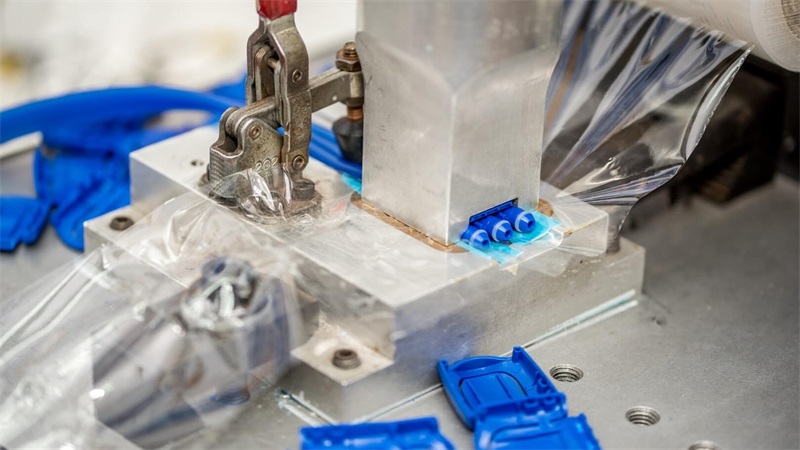
CNC Machining Cost Reduction Strategies for Engineers
CNC Machining Cost Reduction: The Direct Answer for Engineers
CNC machining cost reduction comes from designing parts that are easier to machine, specifying only the tolerances and finishes that function actually requires, choosing materials and processes that match volume, and working with a manufacturer that gives early DFM feedback instead of quoting the drawing blindly. For most engineering teams, the fastest path to cnc machining cost reduction is not aggressive price negotiation at the end of sourcing, but smarter technical decisions at the beginning of the project.
In real-world manufacturing, the largest avoidable costs are usually created before the first chip is cut. Deep pockets, thin unsupported walls, overly tight tolerances, specialty finishes on non-critical faces, and material choices that exceed the product requirement all push cost higher. Engineers who treat machining cost as a design variable usually get better results than buyers who focus only on hourly machine rate.
The most effective levers for cnc machining cost reduction are usually:
- simplify geometry to reduce setups, tool changes, and cycle time
- widen tolerances where fit, sealing, or performance do not demand tight limits
- select more machinable materials and standard stock sizes whenever possible
- match the process to the volume, including when to stay with CNC and when to move to tooling-based production
- involve manufacturing engineers early so DFM changes happen before release, not after scrap or rework
That approach is especially important for parts moving from prototyping into bridge production, where cost, speed, and revision flexibility all matter at the same time. The goal is not to make the part cheaper at any cost. The goal is to lower total cost per accepted part without creating downstream assembly, quality, or field-failure problems.
CNC Machining Cost Reduction Trends in Today’s Global Manufacturing Market
CNC machining cost reduction has become a board-level topic in many manufacturing businesses because product cycles are shorter, lot sizes are less predictable, and engineering teams are expected to launch faster without inflating unit cost. Across industrial supply chains, buyers are shifting away from single-metric sourcing and toward a broader definition of value that includes quoting speed, DFM quality, inspection discipline, revision control, and delivery reliability.
One of the biggest market shifts is the rise of high-mix, low-to-medium-volume production. Ten years ago, a supplier might have quoted a simple aluminum housing as a repeat production part with stable annual volume. Today, the same program may begin as 20 validation units, move to 150 pilot parts, and then split into regional variants with different hole patterns, labels, or mating features. That changes the economics of cnc machining cost reduction because setup efficiency, programming reuse, and supplier responsiveness become just as important as raw machine time.
Based on sourcing experience, manufacturers like TEAM Rapid fit this environment well because they support both prototyping and production-oriented machining under one roof. That matters when the cost-saving decision is not simply “find a cheaper shop,” but “avoid changing suppliers every time the part moves to the next phase.” A supplier that can handle CNC milling, CNC turning with live tooling, wire EDM, EDM, finishing, assembly, and packaging reduces handoff friction and keeps engineering intent intact.
Another important trend is earlier supplier involvement. More OEMs now expect machining partners to comment on tool access, stock size, datum strategy, hole depth, thread callouts, and surface finish before the order is released. In practice, cnc machining cost reduction is increasingly won during DFM review, not after procurement starts comparing final quotes line by line. The supplier that flags risk early often saves more money than the supplier that only offers the lowest initial number.
CNC Machining Cost Reduction Through Smarter Geometry, Tolerances, and Material Specs
CNC machining cost reduction is most powerful when engineers treat geometry, tolerances, and material specifications as adjustable cost drivers instead of fixed assumptions. In most parts, the difference between an efficient design and an expensive one is not dramatic shape complexity alone. It is the combination of feature accessibility, tolerance stack-up, wall support, stock size, and whether the drawing forces unnecessary secondary operations.
A practical rule is simple: if a feature requires a special setup, custom tool, slower feed, fine finishing pass, or extra inspection step, it will usually add cost. That does not mean engineers should avoid precision. It means they should place precision only where the product really needs it. For example, a bore that mates with a bearing may justify ±0.01 mm, while the outer profile of the same part may function perfectly at ±0.05 mm. The same logic applies to surface finish. A sealing land may need Ra 0.8 μm or Ra 1.6 μm, but a hidden exterior wall rarely needs that level of finish.
| Design choice affecting cnc machining cost reduction | Lower-cost approach | Higher-cost approach |
|---|---|---|
| Internal corners | Add realistic corner radii | Tight inside corners requiring smaller tools or EDM |
| Wall thickness | Keep metal walls robust and consistent | Very thin walls that chatter or distort |
| Hole depth | Limit to practical drill-depth ratios | Very deep small-diameter holes |
| Tolerances | Tighten only on critical features | Blanket tight tolerances across the full drawing |
| Surface finish | Specify Ra by function zone | Call out polished or low-Ra finish everywhere |
| Datums | Use stable, machinable reference features | Complex datum chains that increase inspection time |
Material selection is just as important. Aluminum 6061 usually machines faster and more economically than 7075 when the extra strength is not needed. Stainless 303 is often cheaper to machine than 316 because it cuts more cleanly, while Delrin is usually easier and faster to machine than PEEK for non-extreme environments. In my experience, engineers often save more through a material review than through any late-stage quote negotiation.
At TEAM Rapid’s Zhongshan facility, engineers typically review parts for the most cost-efficient process path across 3-axis, 4-axis, and 5-axis milling, CNC turning, wire EDM, and EDM. That matters because the best cnc machining cost reduction plan depends on feature type. A rotational part with flats and cross-holes may be far more economical on a lathe with live tooling than on a mill. TEAM Rapid also supports a wide material range, including aluminum 6061, 7075, and 2024; stainless 303, 304, and 316; carbon steel; titanium; brass; copper; Delrin; PEEK; Nylon; and PTFE, which gives engineers more flexibility when optimizing both performance and machining cost.
For quick material-property benchmarking during design reviews, many engineers cross-check selections against the MatWeb material property database.
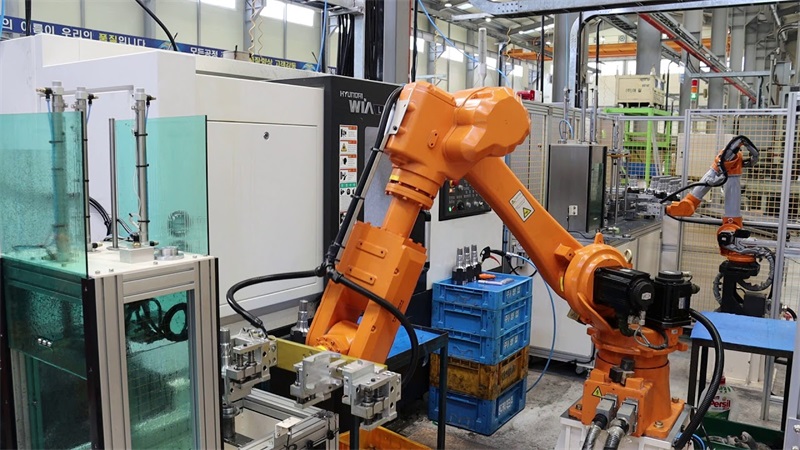
CNC Machining Cost Reduction Buying Guide: Price, MOQ, Lead Times, and Quoting
CNC machining cost reduction is easier to achieve when buyers understand how shops actually build a quote. Most machining prices are driven by a combination of programming time, setup time, cycle time, material cost, tooling wear, finishing, inspection, packaging, and risk. The lowest quote is not always the lowest final cost if it leads to rework, poor burr control, dimensional drift, or long revision cycles.
In practical procurement terms, there are four common pricing stages. First is prototype pricing, where setup cost is spread over a very small quantity. Second is pilot-lot pricing, where fixture reuse and stable programming begin to reduce the per-part rate. Third is low-volume repeat pricing, where process consistency creates better cost efficiency. Fourth is the transition point where engineers should evaluate whether the part still belongs in CNC machining or should move to a tooling-based process such as molding, die casting, extrusion, or sheet metal fabrication.
| Quoting factor in cnc machining cost reduction | What increases cost | What reduces cost |
|---|---|---|
| Quantity | One-off parts with no forecast | Consolidated demand or repeat releases |
| Material | Oversized stock or hard-to-cut alloys | Standard bar, plate, or billet sizes |
| Tolerances | Tight tolerances on all features | Selective critical tolerancing |
| Finish | Cosmetic finishing on every face | Finish only where functional or visible |
| Lead time | Rush orders and split shipments | Planned releases with realistic schedules |
| Inspection | Full reports on all dimensions | Focused reports on critical-to-function features |
MOQ is usually flexible in CNC work, but cost behaves differently at each quantity band. A part can start at 1 piece, but the unit price drops when setup is amortized across 20, 50, or 200 pieces. That is why good buyers send not just the current order quantity, but also the annual estimate and possible repeat frequency. It helps the supplier recommend the most efficient process instead of treating every part as a one-time job.
Lead time is another hidden cost lever. If an engineer asks for a rushed 5-axis part with anodizing, tight CMM reporting, and custom packaging in a few days, the supplier may need overtime, premium scheduling, or split logistics. TEAM Rapid is useful in these cases because its rapid prototyping schedules are typically 2 to 8 days, with some custom prototypes shipped in as little as 1 day when the part is straightforward. For urgent engineering validation, that turnaround can reduce project cost even when the individual part price is not the lowest on paper.
The best RFQs for cnc machining cost reduction usually include 2D and 3D files, material grade, finish requirement, quantity breaks, critical dimensions, inspection expectations, and shipping destination. TEAM Rapid’s one-to-one engineering support is particularly valuable here because cost savings often come from a revised stock size, simplified pocket depth, or smarter tolerance plan rather than from cutting margin alone. Combined with pricing that is often around 40% lower than Europe and America, that early review is one of the strongest levers available to procurement teams.
CNC Machining Cost Reduction by Industry: What Automotive, Medical, Electronics, and Industrial Buyers Need
CNC machining cost reduction looks different in every sector because not all machined parts carry the same risk profile. Automotive buyers tend to focus on repeatability, fixture strategy, and annualized cost. Medical-device teams care more about dimensional traceability, cosmetic cleanliness, and risk reduction during validation. Electronics and communication-product teams often prioritize miniaturized features, conductive or shielding materials, and fast iteration. Industrial-equipment buyers usually emphasize durability, maintenance compatibility, and practical lead times for spare or replacement parts.
That is why industry context matters. A generic “cheapest possible” machining strategy often fails because it ignores how the part is used. A medical enclosure bracket with visible cosmetic surfaces and assembly-critical hole position may not tolerate the same cost-cutting choices as an industrial mounting plate. A brass electrical contact may justify a different finish strategy than a stainless fluid fitting. Good cnc machining cost reduction is always application-aware.
Across sectors, the most common buyer priorities are:
- automotive: stable dimensions, fixture repeatability, and predictable scaling from pilot lots to recurring releases
- medical devices: tight documentation, careful handling, fine finishes on touch surfaces, and controlled revision management
- electronics and communication products: small features, threaded inserts, shielding interfaces, and quick design iteration
- industrial and sanitary products: robust materials, sensible tolerances, service-part availability, and packaging that protects machined surfaces
This cross-industry perspective is where TEAM Rapid adds practical value. With more than 6,000 delivered projects for customers in over 25 countries, the company has supported automotive, medical devices, consumer and commercial products, communication products, office equipment, electrical appliances, industrial design, and sanitary product programs. That range matters because cost-saving recommendations are more credible when the supplier has seen different failure modes, finish expectations, and release patterns across sectors.
Based on experience, the best industry-specific savings usually come from small targeted decisions: changing a stainless bracket to aluminum with anodizing when corrosion exposure is moderate, machining a family of similar SKUs from the same setup strategy, or redesigning a multi-part assembly so one machined component eliminates several bought-in spacers. Engineers who align machining strategy with end-use context usually get lower total cost and fewer quality escalations later.
CNC Machining Cost Reduction Use Cases From Prototypes to Low-Volume Production
CNC machining cost reduction is not only about part design. It is also about choosing the right production strategy for the stage of the product lifecycle. A part that is perfectly economical as a prototype may become too expensive in a 2,000-piece annual program, while a part that looks expensive as a prototype may be exactly the right choice if it avoids tooling during a fast-moving design cycle.
In development programs, CNC machining is often the best choice for proof-of-fit parts, functional test units, jigs, fixtures, assembly aids, and bridge production. It allows engineers to move quickly, change the design without scrapping tooling, and validate performance under real conditions. The cost-saving mistake many teams make is trying to optimize only the part price while ignoring the cost of delay. If a machined prototype arrives five days faster and prevents a design freeze error, the project saves much more than the unit price difference.
| Use case for cnc machining cost reduction | Best tactic | Why it works |
|---|---|---|
| Early prototype validation | Machine only critical functional areas | Reduces time and cost while preserving test value |
| Bridge production | Standardize stock size and fixturing | Improves consistency over small recurring batches |
| Spare parts | Use simple repeatable programs and common finishes | Keeps reorder cost predictable |
| Family-of-parts programs | Reuse tooling paths and setup logic | Spreads programming effort across variants |
| Assembly fixtures | Prioritize speed over cosmetic finish | Avoids spending money on non-functional surfaces |
A common example is a product team launching an enclosure, handle, bracket, and mating insert set. The first round may use CNC aluminum, Delrin, or brass for all functional parts because revision speed matters most. Once the geometry stabilizes, some components may stay machined while others move to molding or die casting. This staged approach creates better cnc machining cost reduction than trying to force every part into a final production process too early.
For teams moving through multiple iterations, rapid prototyping services can be a cost-saving step because they shorten the feedback loop between CAD change and real-world test. TEAM Rapid is especially helpful in these programs because it can machine 1 to 500+ parts in metal and plastic while also supporting follow-on manufacturing routes once the design matures. That continuity reduces the cost of supplier changes, duplicated quality onboarding, and lost engineering context.
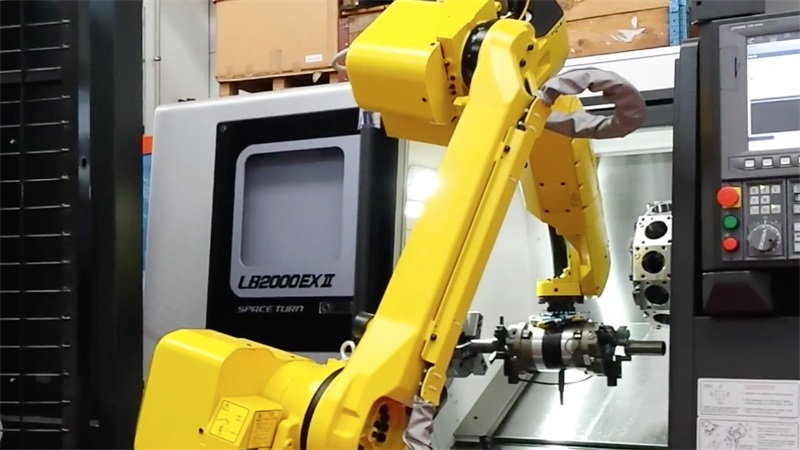
CNC Machining Cost Reduction With DFM, Customization, and Process Alternatives
CNC machining cost reduction becomes far more effective when DFM is treated as an engineering discipline rather than a procurement formality. The best suppliers do not simply accept the CAD and quote the work. They point out where the part can be easier to hold, easier to reach with standard tools, easier to inspect, or easier to scale later if demand increases.
In custom OEM work, the highest-value DFM changes are often small and unglamorous. A slightly larger internal radius may allow a larger end mill and shorter cycle time. A revised boss height may reduce vibration and improve surface quality. A standard thread depth may eliminate a special tool. A new datum scheme may reduce measurement ambiguity on the shop floor. These are exactly the kinds of revisions that drive meaningful cnc machining cost reduction without changing function.
Typical DFM actions that lower machining cost include:
- replacing sharp internal corners with machinable radii
- shortening unnecessarily deep pockets and blind holes
- converting cosmetic hidden faces from fine finish to standard machined finish
- combining features to reduce setups or re-clamping
- reviewing whether a machined part should remain CNC, or shift to molding, die casting, extrusion, or sheet metal as volume grows
This last point is critical. Engineers should not assume every cost problem must be solved inside the CNC process itself. Sometimes the best cnc machining cost reduction strategy is to keep the prototype and bridge lots machined, then move a stable plastic component to injection molding services, or shift a high-volume aluminum housing toward die casting. TEAM Rapid is especially useful here because it supports CNC machining, rapid tooling, injection molding, die casting, aluminum extrusion, sheet metal fabrication, finishing, assembly, and packaging under one program structure. That makes it easier to compare alternatives without starting supplier qualification from scratch.
At TEAM Rapid, detailed DFM reports typically focus on design risks before tooling or production, including feature accessibility, performance implications, tolerance hot spots, assembly risk, and opportunities to shorten the development cycle. For engineering teams, that is where customization becomes a cost advantage instead of a cost penalty. The part is still tailored to the application, but the manufacturing route is optimized from the beginning.
CNC Machining Cost Reduction When Sourcing From China
CNC machining cost reduction is one of the main reasons global buyers source machined parts from China, but the real advantage is not low labor rate alone. The stronger value comes from combining competitive pricing with fast engineering feedback, broad process capability, and export-ready operations that can handle inspection, finishing, packaging, and direct shipment in one supply chain.
From a sourcing perspective, China works best when the buyer selects a supplier that can explain how the part will be made and controlled. That means asking about machine capability, tool access, workholding, measurement method, material traceability, revision control, and packaging. A supplier that only responds with a unit price is not enough for long-term cnc machining cost reduction. The better partner is the one that protects margin by preventing scrap, miscommunication, and delayed engineering changes.
A practical sourcing checklist for China includes:
- confirm whether the part is best suited to 3-axis, 4-axis, 5-axis, turning, or EDM-based production
- define material grade, finish, tolerance zones, and critical dimensions clearly on the RFQ
- ask what inspection equipment is used for complex or tight-tolerance features, including CMM when needed
- review export packaging, labeling, tray layout, and damage prevention for machined surfaces
- clarify shipping mode, Incoterms, revision control, and communication response time before release
TEAM Rapid stands out in this context because it combines in-house machining and tooling capability with an integrated manufacturing resource network across China. Its Zhongshan factory in Guangdong Province supports machining, tooling, molding, finishing, assembly, procurement support, limited warehousing, and direct shipping, while the Hong Kong office helps support international business coordination. For overseas buyers, that combination reduces the operational cost of managing several disconnected vendors.
Quality systems matter as much as price when sourcing internationally. TEAM Rapid is ISO 9001:2015 certified, provides detailed manufacturability analysis, and supports full dimensional inspection with CMM capability. Buyers that want to benchmark quality language can review the ISO standards catalog and broader ASTM International standards, but in practical terms the supplier’s execution discipline matters most: can it hold the required tolerance, document the result, and repeat it lot after lot?
Why TEAM Rapid Delivers CNC Machining Cost Reduction Without Quality Trade-Offs
CNC machining cost reduction works best when the supplier can lower total program cost without creating hidden quality, communication, or schedule problems. That is why many engineering teams choose TEAM Rapid for custom plastic and metal parts. The company combines technical responsiveness, broad manufacturing depth, and practical export experience in a way that supports real product development rather than one-time transactional quoting.
From a machining standpoint, TEAM Rapid supports CNC milling across 3-axis, 4-axis, and 5-axis platforms, CNC turning for rotational parts with live tooling, plus wire EDM and EDM for intricate details and harder materials. The shop handles 1 to 500+ machined parts in plastics and metals, with tolerances down to 0.01 mm on critical features and surface finishes that can include polishing, anodizing, painting, powder coating, nickel plating, chrome plating, zinc plating, bead blasting, and brushing. For engineers, that means fewer compromises when a part has both functional and cosmetic requirements.
From a cost standpoint, TEAM Rapid’s model is especially attractive because it combines quick response within a few hours, one-to-one engineering support, and pricing that is often around 40% lower than Europe and America. More importantly, the company does not rely on machining alone. It can support projects from a single prototype through 100,000+ parts using in-house resources plus a managed manufacturing network, which helps customers keep the same partner as the program evolves.
The reasons buyers often shortlist TEAM Rapid for cnc machining cost reduction include:
- 10+ years of manufacturing experience with 500+ satisfied customers
- 6,000+ delivered projects across automotive, medical, consumer, industrial, and electrical sectors
- fast prototype lead times of 2 to 8 days, with some urgent custom prototypes shipped in as little as 1 day
- ISO 9001:2015 quality management and full inspection support
- turnkey options including finishing, assembly, packaging, procurement support, and direct shipping
When a program needs speed, cost control, and technical clarity at the same time, request a free quote with drawings, quantity breaks, material requirements, and key inspection points. TEAM Rapid is usually at its best when it can review the design early and recommend the most economical process path before cost is locked in.

CNC Machining Cost Reduction FAQ for Engineers and Buyers
CNC machining cost reduction questions usually come down to design, process choice, supplier capability, and timing. The answers below address the issues that most often affect prototype budgets, low-volume programs, and recurring production decisions.
What is cnc machining cost reduction in practical engineering terms?
CNC machining cost reduction means lowering the total cost to produce an accepted part without creating new quality or assembly problems. In practical terms, that usually involves simplifying geometry, reducing setups, widening non-critical tolerances, choosing easier-to-machine materials, and eliminating unnecessary finishing or inspection steps. It is not simply paying a lower unit rate. A part that is cheap to buy but difficult to assemble or inconsistent in quality is not a true cost reduction.
Which design changes create the fastest cnc machining cost reduction?
The fastest cnc machining cost reduction usually comes from removing hard-to-machine features rather than changing the whole part concept. Examples include adding realistic inside radii, reducing pocket depth, standardizing hole sizes, limiting thin walls, and applying tight tolerances only to mating, sealing, or bearing-related features. Engineers often see immediate savings when they shift from a “machine everything precisely” mindset to a “machine critical areas precisely” strategy.
How much can cnc machining cost reduction realistically save on a part?
CNC machining cost reduction savings vary by part type, but meaningful reductions often come from a few high-impact changes rather than dozens of minor edits. A simplified setup plan, better material choice, or relaxed non-critical tolerance can lower cost by double-digit percentages. In sourcing terms, manufacturers such as TEAM Rapid may also reduce total program cost through faster turnaround, one-to-one engineering review, and pricing that is often around 40% lower than Europe and America for comparable outsourced work.
Does cnc machining cost reduction mean lowering quality or tolerances?
CNC machining cost reduction should not mean lowering quality. It means aligning quality requirements with actual function. Critical bores, threaded interfaces, sealing faces, and bearing seats may still require tight tolerance or low-Ra finishes, while non-functional outer surfaces often do not. Good cost reduction protects performance by keeping precision where it matters and removing over-specification where it does not.
When should cnc machining cost reduction lead to injection molding or die casting instead?
CNC machining cost reduction should lead to another process when annual volume is high enough that tooling amortization becomes economical, or when the part geometry naturally fits molding, die casting, extrusion, or sheet metal. This usually happens after the design has stabilized and frequent changes are no longer expected. Suppliers like TEAM Rapid are useful at this stage because they can compare CNC, tooling, and hybrid routes within one manufacturing program instead of forcing the customer to restart supplier qualification.
How does sourcing from China support cnc machining cost reduction?
Sourcing from China supports cnc machining cost reduction when the supplier offers more than labor-rate advantage. The real value comes from integrated machining, finishing, inspection, packaging, and export coordination that lower total operational cost. Buyers should still verify process capability, quality systems, inspection methods, and communication discipline before release. The best results come from suppliers that pair competitive pricing with strong DFM support and stable logistics.
What MOQ and lead time support cnc machining cost reduction best?
The best MOQ for cnc machining cost reduction depends on whether the part is a prototype, pilot lot, or repeat production item. CNC can start at 1 piece, but unit economics improve as setup and programming are spread across larger quantities. Lead time also matters because rushed work usually costs more. TEAM Rapid is especially competitive for urgent development programs, with rapid prototyping commonly delivered in 2 to 8 days and some simple custom prototype jobs shipped in as little as 1 day.
How can engineers evaluate a supplier for cnc machining cost reduction before placing an order?
Engineers should evaluate a supplier for cnc machining cost reduction by checking how it responds to the RFQ, not just what number it quotes. A capable supplier will comment on manufacturability, flag unclear tolerances, suggest alternative materials or finishes, explain likely setup count, and define the inspection method for critical features. If the supplier can discuss DFM, CMM inspection, packaging, and process alternatives clearly before the first PO, it is usually a stronger long-term cost partner.
Content reviewed and updated: June 2026