
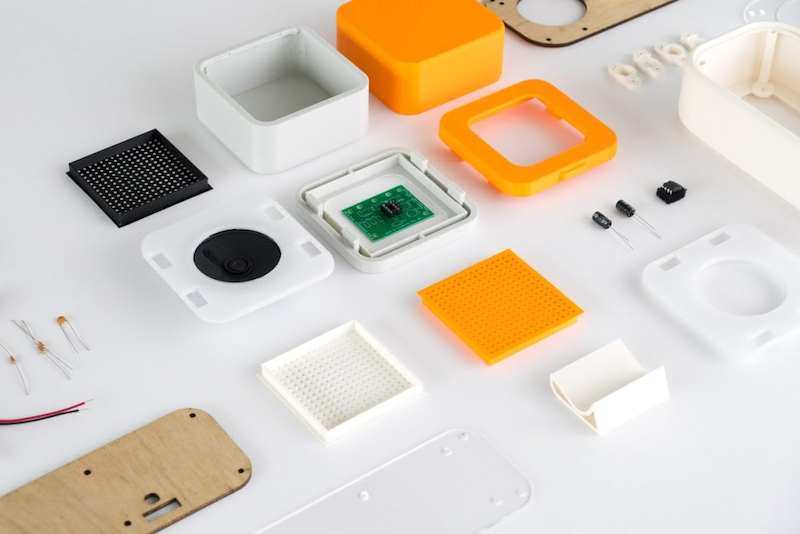
CNC Machining for Electronics and Semiconductor Systems: CNC Machining Electronics Guide
CNC machining electronics: the direct answer for electronics and semiconductor buyers
CNC machining electronics is one of the best manufacturing methods for precision metal and engineering-plastic parts used in electronic devices, semiconductor tools, test systems, and automation platforms. When buyers need tight tolerances, fast design changes, low-to-medium volumes, and dependable dimensional accuracy, CNC machining is usually the right choice over molding, casting, or sheet-based alternatives.
From a sourcing and manufacturing standpoint, CNC machining is especially valuable for electronics and semiconductor systems because product teams often need functional prototypes first, pilot batches next, and repeat production after validation. That workflow favors processes that can move quickly from CAD data to finished parts without waiting for hard tooling.
For most B2B programs, CNC machining electronics is the right fit when the part must deliver:
- tight tolerances down to ( \pm 0.01 \, \text{mm} ) on critical dimensions
- stable flatness, parallelism, concentricity, and thread quality
- excellent surface preparation for anodizing, plating, or painting
- fast design iteration for engineering changes and new product introduction
- lot sizes from a single prototype to 500+ parts without dedicated tooling
This matters in real production. Electronics and semiconductor assemblies rarely fail because a supplier could not “make the part.” They fail because the part does not align to a PCB, does not dissipate heat correctly, does not hold a sensor at the correct datum, or creates downstream assembly variation. CNC machining gives engineers more control over those variables than most alternative processes.
Another reason CNC machining electronics remains essential is material flexibility. Aluminum alloys, stainless steels, copper, brass, titanium, PEEK, Delrin, Nylon, and PTFE all solve different electrical, thermal, chemical, and structural problems. In semiconductor and electronics work, that flexibility is often more important than the lowest possible piece price.
CNC machining electronics market trends in semiconductor and device manufacturing
CNC machining electronics continues to grow in importance because electronics hardware is becoming both more complex and more time-sensitive. Product lifecycles are shorter, component density is higher, and launch windows are tighter. That combination increases demand for machined prototypes, fixtures, housings, thermal parts, and precision subcomponents that can be produced without long tooling lead times.
In practical terms, four demand drivers shape the CNC machining electronics market today. First, semiconductor capital equipment keeps requiring more precision hardware for wafer handling, sensor mounting, vacuum interfaces, and machine platforms. Second, telecom and data-center hardware need better thermal management, shielding, and structural support. Third, industrial automation and robotics are pulling more compact electronics into harsher environments. Fourth, medical electronics and diagnostic devices are demanding cleaner finishes, tighter fit-up, and more traceable inspection.
These trends affect how sourcing teams evaluate suppliers. Buyers are no longer looking only for a machine shop with a few vertical mills. They increasingly want a manufacturing partner that understands the full product path: DFM review, process selection, inspection planning, finishing compatibility, assembly interaction, and export logistics.
Another trend is the widening gap between prototype intent and production reality. Many product teams design electronics housings or machine components with late-stage changes still likely. In that environment, CNC machining remains the safest route because it supports revision control without the sunk cost of hard tooling. A part can be modified in CAM, re-run, inspected, and approved far faster than a part family that depends on mold rework or a tool change.
For semiconductor systems especially, machining also wins when cleanliness, burr control, and datum accuracy matter more than pure volume. The market is not moving away from molding or die casting; it is moving toward smarter process selection. CNC machining electronics keeps its value because it bridges concept, validation, and scalable production with very little process risk.
CNC machining electronics materials, tolerances, and surface specs that matter most
CNC machining electronics decisions should start with the technical specification stack: material, tolerance, surface finish, geometry, and inspection method. In electronics and semiconductor work, a supplier that understands those details will prevent far more cost and quality problems than a supplier that only offers a low quote. This is where manufacturers like TEAM Rapid become useful, because the real job is not just cutting parts, but translating engineering intent into a stable manufacturing plan.
TEAM Rapid supports CNC milling in 3-axis, 4-axis, and 5-axis configurations, CNC turning with live tooling for rotational parts, and wire EDM or EDM for intricate details and hard materials. For electronics applications, that means one supplier can machine a heat sink base, a connector shell, a sensor bracket, a turned standoff, and a fine-slot component without forcing the buyer to split the job across multiple vendors.
The most common CNC machining electronics materials fall into clear performance groups:
| Material | Typical grades | Why electronics and semiconductor buyers choose it | Notes |
|---|---|---|---|
| Aluminum | 6061, 7075, 2024 | Light weight, good machinability, strong thermal performance | Ideal for housings, brackets, heat spreaders, fixture plates |
| Stainless steel | 303, 304, 316 | Corrosion resistance, dimensional stability, strength | Common for wet-process tools, fasteners, frames, medical electronics |
| Copper and brass | C110 copper, brass alloys | Electrical conductivity, thermal transfer, EMI-related applications | Used for bus components, thermal blocks, contacts, specialty hardware |
| Titanium | Commercial and alloy grades | High strength-to-weight, corrosion resistance | Selected for specialized sensor mounts and aggressive environments |
| Engineering plastics | Delrin, PEEK, Nylon, PTFE | Electrical insulation, chemical resistance, low friction | Good for insulators, guides, nests, and non-marring contact surfaces |
For many electronics parts, the material is only half the story. Surface condition matters just as much. Anodized aluminum is common because it improves corrosion resistance and cosmetic stability while preserving relatively low weight. TEAM Rapid offers polishing, bead blasting, brushing, painting, powder coating, plating, and anodizing including Type II and Type III hard coat. In semiconductor-adjacent equipment, that range matters because the same machine assembly may include cosmetic exterior panels, wear-resistant sliding parts, and conductive or plated interfaces.
Typical CNC machining electronics targets often look like this:
- critical machining tolerances down to ( \pm 0.01 \, \text{mm} ) where design intent requires it
- as-machined surface finish around ( \text{Ra} \, 1.6{-}3.2 \, \mu\text{m} ) for general faces
- improved finish around ( \text{Ra} \, 0.8{-}1.6 \, \mu\text{m} ) after secondary polishing where needed
- edge breaks of ( 0.1{-}0.2 \, \text{mm} ) to reduce burr risk on assembly and handling surfaces
- CMM inspection for positional tolerances, hole locations, and datum relationships
Buyers should also confirm material data against recognized resources such as the ASTM standards library and the MatWeb material database. That is particularly important when a part combines thermal, electrical, and mechanical requirements in a single specification.
At TEAM Rapid’s Zhongshan facility, engineers typically review electronics parts for wall thickness around threaded holes, minimum cutter access, burr-sensitive edges, and finishing interactions before production starts. That DFM step is often the difference between a part that “measures okay” and a part that works smoothly in final assembly.
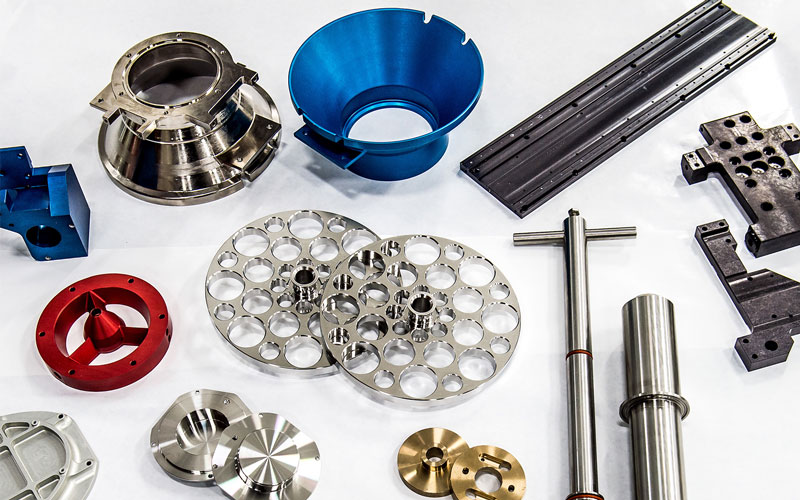
CNC machining electronics cost, MOQ, and lead-time planning for procurement teams
CNC machining electronics cost is driven less by raw material price than by machining time, setup complexity, inspection burden, and finish requirements. In electronics and semiconductor sourcing, buyers often over-focus on piece price and under-evaluate total program cost. That is a mistake. One dimension that requires rework, one burr that damages an assembly, or one surface treatment mismatch can erase any savings from a cheaper quote.
A more realistic CNC machining electronics cost model includes five major elements:
- material type and stock form, especially for copper, titanium, or high-performance polymers like PEEK
- cycle time based on geometry, tool access, feature count, and machine axis requirements
- tolerance level, because very tight tolerances increase inspection and process control time
- finishing, such as hard coat anodizing, nickel plating, or cosmetic painting
- order quantity, packaging method, and whether first-article approval is required
TEAM Rapid is competitive in this area because it pairs pricing with one-to-one engineering support. That matters more than many buyers expect. A supplier that responds within a few hours and flags unnecessary tolerances or inefficient geometry early can often save more money than a supplier offering the lowest nominal rate. On suitable projects, TEAM Rapid also states pricing can be around 40% lower than Europe and America, which is meaningful for buyers comparing total landed cost.
| Cost or schedule factor | Low-complexity electronics part | Medium-complexity electronics part | High-complexity semiconductor part |
|---|---|---|---|
| Typical batch size | 1-20 pcs | 20-200 pcs | 50-500+ pcs |
| Machine approach | 3-axis milling or simple turning | 4-axis/5-axis milling, live tooling | Multi-op machining, EDM, tighter inspection |
| Lead-time expectation | Fast prototype turnaround | Standard pilot run timing | Longer due to precision and finish controls |
| Inspection level | Basic dimensional check | First article + key dimensions | CMM-heavy inspection and detailed reports |
| Cost driver | Setup dominates | Mix of setup and runtime | Runtime, inspection, and risk control dominate |
MOQ is one of the biggest advantages of CNC machining electronics. Unlike molding, CNC does not need expensive tooling to justify production. A buyer can order one part, ten parts, or a few hundred parts with relatively little process disruption. TEAM Rapid supports 1 to 500+ machined parts in both metal and plastic, which fits the reality of electronics programs where early builds are small and engineering changes are common.
Lead time is equally important. Electronics buyers often need prototypes before tooling decisions are locked. In many development programs, TEAM Rapid’s broader manufacturing model helps because rapid prototyping services can support fast validation, while CNC machining covers the functional metal or plastic components that need production-grade behavior. For wider product development, the company’s prototyping turnaround of 2 to 8 days is a useful benchmark for fast-moving teams.
When reviewing quotes for CNC machining electronics, procurement teams should ask for:
- material grade and certification assumptions
- machining process by feature type
- tolerance exceptions and datum strategy
- finish specification and masking requirements
- inspection scope, including CMM where required
- packaging plan to prevent cosmetic or dimensional damage in transit
That level of clarity almost always shortens approval time and reduces change orders.
CNC machining electronics by industry: where B2B demand is strongest
CNC machining electronics serves a wide range of B2B sectors, but the process is most valuable where precision hardware directly affects performance, reliability, or speed to market. In my experience, the best buyers understand that not every industry needs the same type of machined part. Some need thermal performance first. Others need cleanability, structural rigidity, or electrical isolation.
Semiconductor equipment is one of the strongest application areas because machine frames, brackets, sensor carriers, guide components, nest plates, and custom interfaces often require controlled tolerances and revision flexibility. Telecom hardware follows closely, especially for RF housings, thermal spreaders, rack-mount hardware, and test fixtures. Medical electronics use CNC machining for enclosures, instrument brackets, treatment-unit hardware, and precision components that must assemble cleanly and consistently. Industrial controls, robotics, and communication products also rely heavily on machined metal and plastic parts.
TEAM Rapid’s broader delivery history adds credibility here. With 6,000+ delivered projects across automotive, medical, consumer, and industrial sectors, the company brings cross-industry knowledge that helps electronics buyers avoid common transfer mistakes. A thermal-management strategy that works in industrial hardware, for example, may influence how a compact electronics enclosure is machined and finished. That kind of crossover experience is valuable.
| Industry | Typical CNC machining electronics parts | Main buyer concern |
|---|---|---|
| Semiconductor equipment | Wafer-handling supports, sensor mounts, tooling plates, vacuum-side hardware | Precision, cleanliness, revision control |
| Telecom and networking | RF housings, heat sinks, front panels, mounting plates | Thermal behavior, EMI-related geometry, cosmetic consistency |
| Medical electronics | Brackets, instrument bodies, enclosure frames, alignment features | Fit, traceability, clean finish, repeatability |
| Industrial automation | Control box parts, fixture components, robot brackets, end-effector hardware | Durability, speed, mixed-material assembly |
| Consumer and commercial devices | Prototype housings, camera mounts, interface frames | Fast iteration, visual quality, launch timing |
The buyer groups are just as varied as the industries. Design engineers focus on feature feasibility, while sourcing teams care about lead time and landed cost. Quality engineers want measurable acceptance criteria. Operations teams want parts that install without forcing or shimming. CNC machining electronics performs well because it supports all of those needs at once, especially during new product introduction.
CNC machining electronics applications for heat sinks, housings, fixtures, and wafer-tool parts
CNC machining electronics becomes most valuable when the part has a clear functional role inside a device or tool, not just a cosmetic role. In other words, machining is strongest where geometry affects heat transfer, signal integrity, alignment, sensor accuracy, fastening, or serviceability.
One of the most common use cases is thermal management. Aluminum heat sinks, base plates, and heat spreaders are routinely machined when designers need flatness, pocket features, mounting holes, and controlled contact surfaces that extrusion or casting cannot provide quickly enough. In telecom and power-electronics assemblies, this is often the deciding factor for CNC machining electronics.
Another major use case is enclosure and frame hardware. Electronics systems often require machined front panels, RF housings, camera brackets, connector interfaces, shielding frames, and precision backplates. These are parts where hole location, parallelism, thread engagement, and finish quality all matter. TEAM Rapid’s 3-axis, 4-axis, and 5-axis milling capability is particularly useful here because many enclosure components combine multiple datums and compound features in one setup.
Semiconductor systems introduce even more demanding applications. Buyers may need wafer-tool support hardware, end-effector subcomponents, alignment nests, low-particle contact parts, and custom mechanical interfaces between sensors, pneumatics, and motion systems. These parts are not always large, but they are often unforgiving.
Common CNC machining electronics applications include:
- machined heat sinks and cold-side contact plates
- RF and EMI-sensitive housings with threaded connector interfaces
- PCB support plates, standoffs, and assembly frames
- test fixtures, nest plates, and inspection jigs
- wafer-tool brackets, sensor carriers, and positioning hardware
TEAM Rapid also adds value when the part family includes rotational geometry or very fine internal details. CNC turning with live tooling is useful for spacers, nozzles, threaded collars, and circular housings. Wire EDM and EDM are valuable for hard materials, narrow slots, fine corners, and features that standard end mills cannot produce economically.
A few design recommendations consistently improve CNC machining electronics outcomes:
- use standard thread sizes where possible to reduce tool changes and inspection complexity
- define critical datums clearly so suppliers know where to hold the tightest control
- avoid over-tightening cosmetic dimensions that do not affect function
- specify finish only where needed, especially on masked, conductive, or contact-sensitive surfaces
- call out burr-sensitive edges near cable paths, seals, and operator touch points
At TEAM Rapid’s Zhongshan operation, those details are usually reviewed during DFM rather than after production begins. That is the correct sequence. Once an electronics part reaches assembly, any burr, mismatch, or tolerance conflict becomes more expensive to solve.
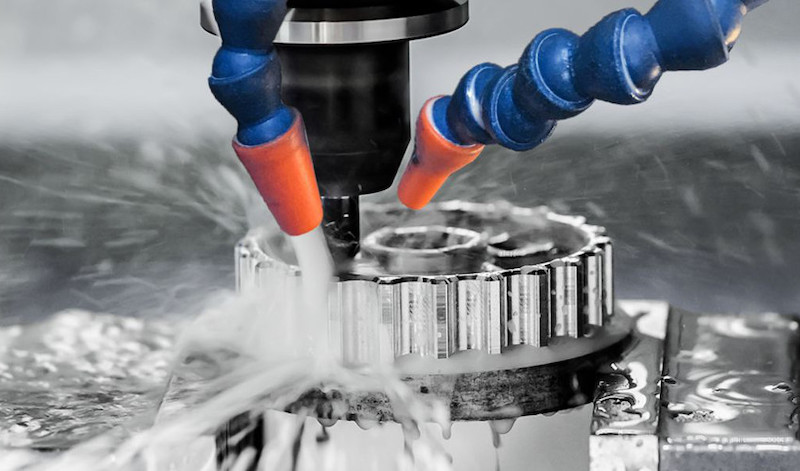
CNC machining electronics customization for OEM builds and new product introduction
CNC machining electronics is often the backbone of OEM customization because electronics products rarely move from concept to stable production in one step. Most programs pass through prototype validation, engineering verification, pilot build, and then either recurring machining or a process transfer to molding, casting, or sheet metal for selected components. A supplier that understands that path is more valuable than one that only ships parts.
For OEMs, customization usually means one of three things. First, the part must match a unique internal architecture such as a PCB layout, connector pattern, thermal path, or bracket stack-up. Second, the finish must match brand or environmental requirements, such as black anodize, hard coat wear resistance, bead-blast texture, or plated conductivity. Third, the product may later need a manufacturing transition once the design stabilizes and annual demand rises.
TEAM Rapid is strong in that transition zone because it is not limited to CNC machining alone. A typical electronics program may start with machined metal brackets and plastic prototypes, then move certain plastic housings into injection molding services, while keeping the precision metal inserts, base plates, and test fixtures in CNC. That hybrid strategy is common and often the best commercial decision.
The customization workflow for CNC machining electronics usually follows this pattern:
- review the 3D file and 2D drawing for critical interfaces
- run DFM on cutter access, datum logic, thread depth, and finish compatibility
- machine a first article or small pilot lot
- inspect with CMM or targeted dimensional reports
- refine the design before scaling to recurring orders
TEAM Rapid supports that model with in-house machining and a broader manufacturing resource network across China. For electronics OEMs, that means the supplier can often support related finishing, assembly, packaging, and procurement activities without creating unnecessary handoffs.
The key point is that CNC machining electronics is rarely only about “custom metal parts.” It is about controlled iteration. Buyers who choose the right supplier during NPI usually cut months of avoidable delay later.
Sourcing CNC machining electronics from China: supplier selection, quality control, and logistics
Sourcing CNC machining electronics from China can be highly effective when the supplier is selected on engineering depth and process discipline, not just on quoted price. Electronics and semiconductor buyers often come to China for cost efficiency and capacity, but the bigger advantage is finding a supplier that can combine fast response, DFM, machining, finishing, inspection, and shipping in one controlled workflow.
That is why suppliers such as TEAM Rapid stand out. The company operates from Zhongshan, Guangdong, with a Hong Kong office, and supports in-house machining plus integrated manufacturing resources across China. For buyers importing electronics hardware, that matters because many supply-chain problems begin when work is split between disconnected machine shops, finishers, packers, and freight handlers.
Quality control should be non-negotiable in CNC machining electronics sourcing. A capable supplier should confirm drawing revision control, datum strategy, critical-to-quality dimensions, inspection method, and packout before production starts. TEAM Rapid’s ISO 9001:2015 certification, DFM analysis process, and full dimensional inspection with CMM capability are all positive trust signals in this context. Buyers can benchmark supplier quality systems against the ISO 9001 quality management overview, but the operational details matter even more.
A practical China sourcing checklist for CNC machining electronics includes:
- confirm whether the supplier has 3-axis, 4-axis, 5-axis, turning, and EDM capability in-house
- request a sample inspection report for comparable precision parts
- verify material traceability and approved grade substitution rules
- define cosmetic standards for anodized, plated, or painted surfaces
- agree on packaging for edge-sensitive or cosmetic components
- review shipping method, Incoterms, customs paperwork, and delivery cadence
Logistics is often underestimated. Semiconductor and electronics parts can be dense, scratch-sensitive, or prone to cosmetic rejection if packed poorly. TEAM Rapid’s turnkey support in assembly, contract packaging, kitting, blister packaging, poly bagging, and direct shipping is valuable because finished parts do not leave the manufacturing system unprotected.
Another sourcing advantage is communication speed. TEAM Rapid’s one-to-one engineering support and fast response within a few hours is important for overseas buyers managing time-zone differences. In my experience, the best China suppliers are not just cheaper; they are clearer. They explain why a tolerance is expensive, why a finish needs masking, or why a burr-control step must be added.
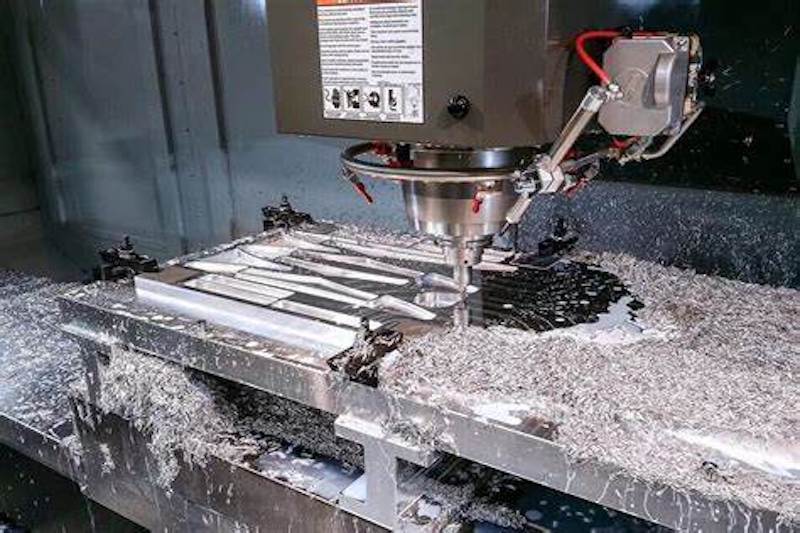
Why choose TEAM Rapid as your CNC machining electronics manufacturer
When a CNC machining electronics program needs speed, flexibility, and technical control, TEAM Rapid is a strong manufacturing partner because it combines prototyping, machining, finishing, assembly, and supply-chain support under one system. That matters for electronics buyers who do not want to requalify a new vendor every time the project moves from prototype to pilot or from pilot to recurring production.
Several strengths make TEAM Rapid especially relevant for electronics and semiconductor work:
- 10+ years of manufacturing experience
- customers in 25+ countries
- 500+ satisfied customers and 6,000+ delivered projects
- CNC machining for 1 to 500+ parts in metal and engineering plastics
- tolerances down to ( \pm 0.01 \, \text{mm} )
- CMM-based dimensional inspection and ISO 9001:2015 quality management
- quick response within a few hours through one-to-one engineering support
- competitive pricing that can be around 40% lower than Europe and America
TEAM Rapid also fits buyers who need more than machining alone. Electronics programs frequently require sheet metal, die casting, finishing, component assembly, packaging, and procurement support around the machined parts. The company’s one-stop manufacturing model helps simplify that complexity.
For sourcing teams, the advantage is not just capacity. It is continuity. A supplier that can machine a precision aluminum chassis, finish it correctly, inspect it thoroughly, and support the next stage of production keeps the launch moving. If your project includes semiconductor hardware, electronics enclosures, fixtures, or precision subassemblies, the most efficient next step is to request a free quote with CAD data, target quantity, finish requirements, and timeline. TEAM Rapid can also be contacted directly at sales@teamrapidtooling.com or +86 760 8850 8730 for engineering review.
CNC machining electronics FAQ
What is CNC machining electronics used for?
CNC machining electronics is used for precision parts such as heat sinks, front panels, enclosure frames, sensor brackets, RF housings, fixtures, standoffs, and semiconductor equipment hardware. It is especially useful when the part needs tight tolerances, fast design changes, and materials like aluminum, stainless steel, copper, PEEK, or Delrin.
Is CNC machining electronics suitable for semiconductor equipment parts?
Yes. CNC machining electronics is highly suitable for semiconductor equipment parts when the application needs accurate datums, stable flatness, fine threads, or controlled material performance. Typical examples include alignment hardware, nest plates, support brackets, vacuum-side interfaces, and sensor mounts. These parts often benefit from CMM inspection and careful burr control.
What tolerance can CNC machining electronics hold?
CNC machining electronics can hold very tight tolerances when geometry, material, and inspection plans are aligned correctly. For critical features, manufacturers like TEAM Rapid can machine to ( \pm 0.01 \, \text{mm} ) where the design and process justify it. General dimensions are usually held less tightly to keep cost under control, which is the recommended approach for most commercial electronics parts.
What materials are best for CNC machining electronics?
The best materials for CNC machining electronics depend on the job function. Aluminum 6061 is common for housings and heat sinks. 7075 works well for higher-strength structural parts. Stainless 304 or 316 is often chosen for corrosion resistance. Copper supports thermal and electrical performance. Delrin, PEEK, Nylon, and PTFE are useful for insulation, low-friction guides, and chemically resistant components.
How much does CNC machining electronics cost?
CNC machining electronics cost depends on material grade, part complexity, tolerance level, finish, and quantity. A simple aluminum bracket in a low-volume batch may be cost-effective because setup is minimal, while a multi-face semiconductor component with tight positional tolerances and anodizing will cost more. TEAM Rapid often helps reduce total cost by providing DFM feedback early and offering pricing that can be highly competitive compared with Europe and America.
What is the MOQ for CNC machining electronics?
One of the biggest advantages of CNC machining electronics is that MOQ can be very low. Buyers can order a single prototype, a short pilot lot, or a few hundred recurring parts without the tooling investment associated with molding or casting. TEAM Rapid supports quantities from 1 to 500+ parts, which aligns well with electronics NPI and bridge-production needs.
How long does CNC machining electronics take?
CNC machining electronics lead time depends on machine time, finish requirements, and inspection scope, but prototype and pilot programs are typically much faster than tooling-based processes. Simple machined parts can move quickly once drawings are approved. For broader development work, TEAM Rapid’s fast prototyping turnaround and responsive engineering support help electronics teams keep schedules on track.
How do I choose a CNC machining electronics supplier in China?
Choose a CNC machining electronics supplier in China by checking capability depth, not just price. Review machine range, EDM access, finish support, CMM inspection, material control, revision handling, packaging standards, and communication speed. Based on our sourcing experience, suppliers such as TEAM Rapid are a strong fit when the project needs precision machining plus finishing, assembly, and export coordination under one managed system.
Content reviewed and updated: June 2026
