
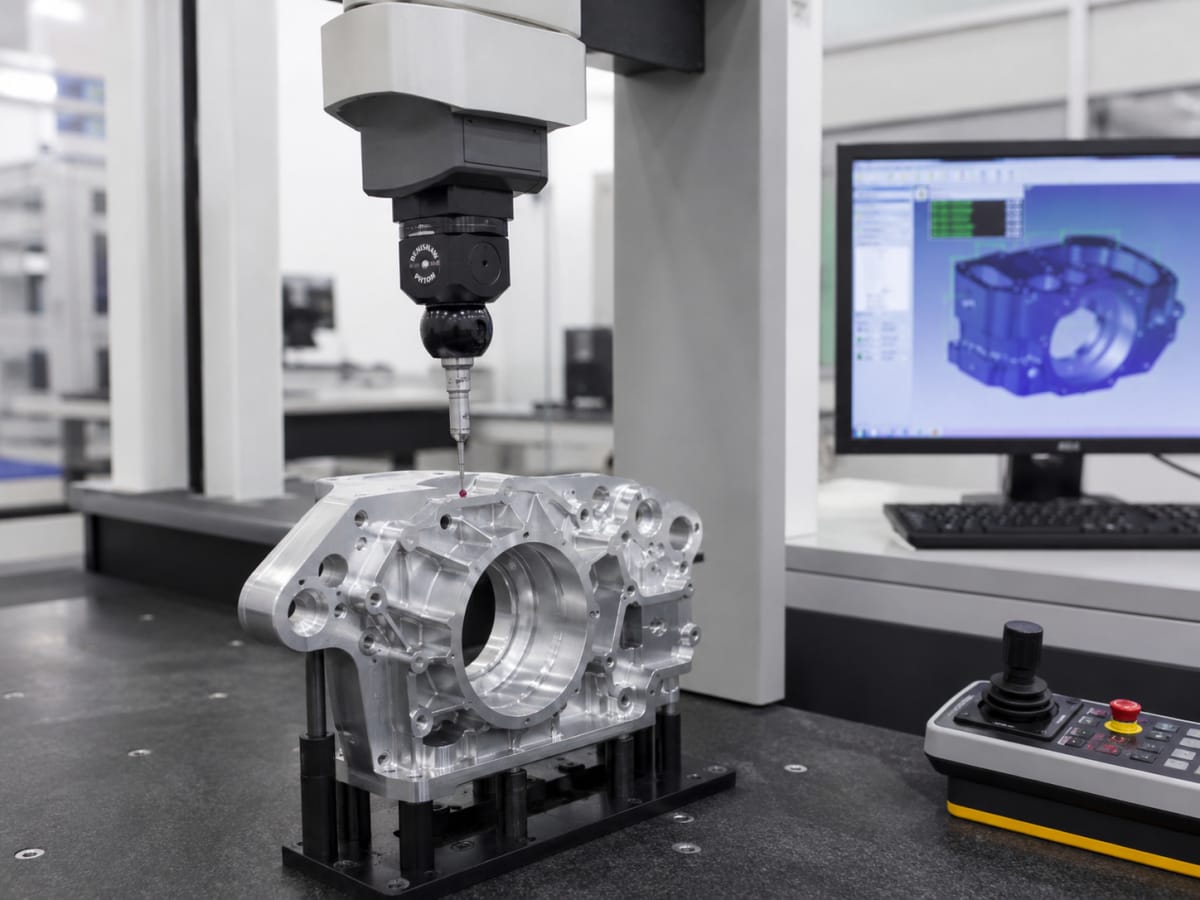
CNC Machining in China: Cost Savings and Quality Guide
Why CNC Machining China Is a Smart Choice for Cost and Quality
For buyers comparing global manufacturing options, cnc machining china remains one of the most practical ways to reduce part cost without giving up precision, material choice, or production flexibility. The right CNC machining China supplier can deliver prototypes and low-to-medium volume production with tight tolerances, fast turnaround, and much lower total project cost than many shops in North America or Europe.
That cost advantage comes from more than labor rates. Strong CNC machining China suppliers operate inside mature supply chains for aluminum, stainless steel, engineering plastics, tooling, finishing, and logistics. They also tend to offer better process flexibility for mixed-order projects, such as prototype brackets, machined housings, turned shafts, jigs, fixtures, and short-run end-use parts in one order. For B2B buyers, that matters because real sourcing decisions are rarely about one isolated component. They are about lead time, inspection confidence, engineering feedback, and the ability to scale from 1 part to 500+ parts without switching suppliers.
The best CNC machining China partner is not simply the cheapest machine shop. It is the supplier that combines DFM review, machining process planning, material knowledge, inspection discipline, finishing capability, and export experience. When those elements are in place, CNC machining in China becomes a strategic sourcing model rather than a simple price play.
CNC Machining China Market Trends and Global Demand Drivers
The global demand behind cnc machining china continues to be driven by a simple reality: product developers need precision parts faster, in more material options, and at lower risk. Across automotive, medical devices, industrial equipment, robotics, consumer electronics, communications products, and office equipment, development cycles are shorter than they were a decade ago. Teams want fast prototypes, bridge quantities, engineering change support, and production-ready quality from the same supplier base.
Several trends explain why CNC machining China suppliers remain important in this environment.
First, buyers increasingly prefer process flexibility over fixed-volume commitments. Many programs begin with 5, 20, or 100 machined parts for validation, then move into repeat orders once the design is proven. CNC machining is ideal for that model because it eliminates tooling lead time and allows feature updates directly from CAD revisions.
Second, there is stronger demand for hybrid supply chains. OEMs do not want separate vendors for machined prototypes, molded plastic parts, sheet metal covers, and die-cast housings if one partner can coordinate the full package. That is why one-stop manufacturers with CNC machining plus related processes are winning more work.
Third, engineers are asking for more complex geometries in harder materials. Five-axis milling, live-tool turning, wire EDM, and EDM are now common requirements for parts that include deep cavities, complex contouring, small internal corners, tight-positioned holes, and heat-resistant alloys. Buyers are no longer sourcing only simple plates and shafts; they are sourcing precision functional components that must fit, seal, slide, clamp, or assemble reliably.
Finally, procurement teams are under pressure to improve landed cost without increasing quality risk. That is where experienced Chinese suppliers become attractive. They can often combine competitive machining rates, multiple finishing options, and export-ready logistics in one program. For buyers who qualify the supplier correctly, CNC machining China can reduce both purchase price and internal management time.
CNC Machining China Process Capabilities, Materials, and Tolerances That Buyers Should Verify
A serious cnc machining china supplier should offer more than standard 3-axis milling and basic turning. Buyers should look for a machining partner that can match process capability to geometry, tolerance, material, finish, and part function. This is where manufacturers like TEAM Rapid stand out. Rather than offering only simple subtractive work, TEAM Rapid supports 3-axis, 4-axis, and 5-axis CNC milling, CNC turning with live tooling, wire EDM, and EDM for both plastics and metals, with quantities from 1 to 500+ parts.
That breadth matters because process selection directly affects price, tolerance stability, feature quality, and machining time. A part with deep pockets and compound surfaces may be far more efficient on 5-axis equipment. A precision shaft with milled flats and radial holes may be better suited to turning with live tooling. Tight internal corners or hardened material features may require wire EDM or sinker EDM instead of aggressive milling.
Core CNC machining processes commonly used in CNC machining China
| Process | Best use case | Typical strengths | Common trade-offs |
|---|---|---|---|
| 3-axis milling | plates, brackets, housings, simple pockets | cost-effective, fast setup, widely available | limited access to complex angles |
| 4-axis milling | indexed multi-side parts | fewer setups, better positional accuracy | still less flexible than full simultaneous 5-axis |
| 5-axis milling | complex contours, impellers, multi-face precision parts | fewer fixtures, better access, improved accuracy | higher machine cost and programming complexity |
| CNC turning | shafts, bushings, pins, rotational parts | excellent concentricity and efficiency | not ideal for highly prismatic parts |
| Turning with live tooling | turned parts with milled features | combines operations, reduces handling | more programming and machine-hour cost |
| Wire EDM / EDM | intricate slots, sharp internal profiles, hard materials | very fine detail, low cutting force | slower than standard milling for bulk removal |
TEAM Rapid also provides access to a wide material range that fits both prototype and production intent. In CNC machining China, material capability is a major indicator of shop maturity because different alloys and plastics require different tooling, cutting data, workholding, and inspection planning.
Materials buyers should expect from a qualified CNC machining China supplier
- Aluminum alloys such as 6061, 7075, and 2024 for lightweight structural parts, fixtures, aerospace-style components, and electronics housings
- Stainless steels including 303, 304, and 316 for corrosion resistance, wear surfaces, medical-adjacent components, and durable hardware
- Carbon steel, titanium, brass, and copper for strength, conductivity, specialty performance, or premium machined hardware
- Engineering plastics such as Delrin, PEEK, Nylon, and PTFE for low friction, insulation, chemical resistance, heat performance, or reduced weight
Tolerance capability is another critical checkpoint. TEAM Rapid states machining tolerances down to 0.01 mm, which is a strong benchmark for precision CNC work when part geometry, datum strategy, and material behavior support it. Buyers should still remember that tolerance is feature-specific. Flatness on a large aluminum plate, concentricity on a turned shaft, and position on a cross-drilled hole all behave differently during machining and inspection.
Finish options also deserve careful review. TEAM Rapid offers polishing, anodizing, painting, powder coating, nickel plating, chrome plating, zinc plating, bead blasting, and brushing, backed by full dimensional inspection and CMM capability. Those finishing services matter because surface appearance is not only cosmetic. Finishes can affect wear, corrosion resistance, friction, conductivity, and downstream assembly.
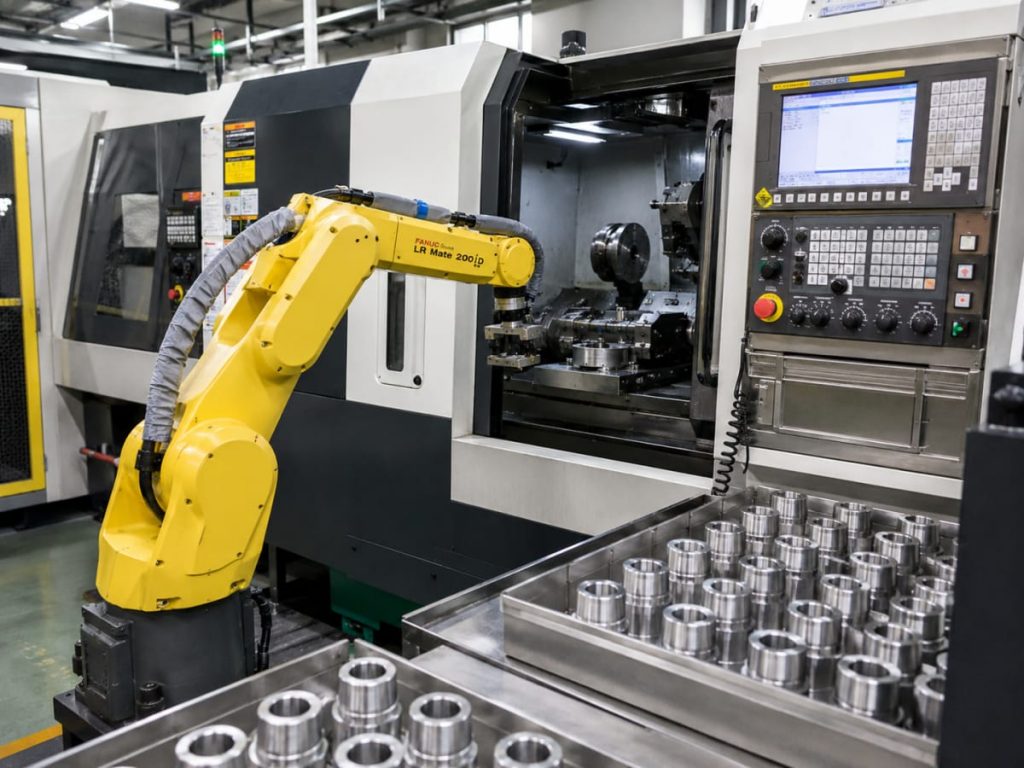
If a supplier can explain process selection, material behavior, tolerance stack-up, and finishing impact in technical detail, that is a strong sign the CNC machining China provider is ready for serious B2B work.
CNC Machining China Pricing: Cost Drivers, MOQ, and Lead Times
When buyers research cnc machining china, the first question is usually price. The better question is what actually drives price. CNC machining cost is shaped by machine time, material cost, setup complexity, programming hours, fixture requirements, tooling wear, inspection effort, scrap risk, finishing, and logistics. If two suppliers quote the same drawing very differently, the gap usually comes from different assumptions about those variables.
For most B2B projects, CNC machining China offers cost savings because machine-hour rates, supply-chain efficiency, and finishing support are often more competitive than Western markets. Manufacturers like TEAM Rapid can be especially cost-effective because they combine machining with DFM support and fast quoting. That matters: a few smart design adjustments can reduce spindle time, eliminate expensive tooling changes, and simplify inspection. In the right programs, buyers may see overall pricing around 40% lower than Europe and America, especially for low-to-medium volume orders.
Typical cost drivers in CNC machining China
| Cost factor | What increases price | What helps reduce price |
|---|---|---|
| Material | exotic alloys, large billets, high scrap ratio | common stock sizes, right-sized blanks, lower waste |
| Geometry | deep cavities, thin walls, multiple setups | design simplification, better tool access, fewer orientations |
| Tolerance | very tight GD&T or cosmetic-critical surfaces | realistic tolerance zoning, datum clarity, DFM review |
| Quantity | very low quantities with long setups | batching, family parts, repeat orders |
| Finish | anodizing, plating, painting, cosmetic prep | standard finishes, masked-only critical areas |
| Inspection | full reports on many dimensions | focus on critical-to-function features |
Unlike molding, CNC machining often has no hard MOQ in the tooling sense. A good CNC machining China supplier can usually support 1 part, 10 parts, 100 parts, or 500+ parts. The real minimum is commercial rather than technical. Small orders may carry higher unit cost because setup, programming, and inspection time are spread over fewer parts.
Lead time is another major advantage. CNC parts can often be produced far faster than molded parts because there is no mold build stage. TEAM Rapid’s overall rapid manufacturing model includes Rapid Prototyping in 2-8 days, with some custom prototypes shipped in as little as 1 day, while CNC machining supports fast turnaround for 1-500+ parts. That makes CNC a strong option for pre-tooling validation, bridge production, spare parts, and engineering change situations.
What buyers should include in a CNC machining China RFQ
- 2D drawings with tolerances, datums, thread callouts, and surface finish notes
- 3D CAD files in a machinist-friendly format
- material grade and any acceptable equivalents
- finish requirements such as anodizing type, plating, bead blasting, or painting
- required quantity, sampling stage, and target delivery date
- inspection expectations, including CMM reports if critical features are involved
A cheap quote is only valuable if it includes the real technical scope. In CNC machining China sourcing, the lowest number often becomes the highest total cost if inspection, finish prep, or feature complexity was misunderstood at the quoting stage.
CNC Machining China Industries Served and What Different Buyers Need
The strength of cnc machining china is not limited to one sector. CNC machining in China supports a wide range of B2B industries because the process is suitable for both development work and repeat production of precision components. What changes by industry is not the core machining principle, but the priority set: some customers need appearance, some need speed, some need corrosion resistance, and some need dimensional traceability.
Manufacturers like TEAM Rapid work across automotive, medical devices, consumer and commercial products, industrial design, communication products, office equipment, electrical appliances, and sanitary products. With 6,000+ delivered projects and customers in 25+ countries, that experience matters because it gives the supplier practical exposure to different tolerance expectations, assembly needs, and documentation habits.
| Industry | Typical CNC machined parts | Main buying priorities |
|---|---|---|
| Automotive | prototypes, fixtures, aluminum brackets, housings, test components | speed, repeatability, dimensional fit |
| Medical devices | enclosures, handles, internal frames, precision hardware | clean finish, tight tolerance, documentation |
| Consumer products | cosmetic housings, functional inserts, pre-launch parts | appearance, fast iteration, lower batch cost |
| Industrial equipment | jigs, machine parts, guards, manifolds, wear components | durability, serviceability, material performance |
| Communication products | heatsinks, RF housings, brackets, shield components | conductivity, precision, finishing consistency |
| Office and appliance products | support parts, frames, knobs, covers, assembly features | cost control, stable quality, mixed-order flexibility |
Different buyer roles will also judge the CNC machining China supplier differently:
- Design engineers care about manufacturability, tool access, corner radii, wall thickness, and realistic tolerances
- Procurement teams focus on quote clarity, delivery reliability, payment terms, and total landed cost
- Quality managers want inspection plans, CMM support, incoming material control, and corrective-action discipline
- Program managers care about quick response, schedule stability, and how easily the supplier handles revisions
A supplier that understands these different expectations will usually perform better than a shop that only talks about machine size or hourly rate. That is one reason experienced cross-industry shops are often safer choices for B2B buyers.
CNC Machining China Applications for Prototypes, Fixtures, and End-Use Parts
In practical sourcing terms, cnc machining china is valuable because it supports far more than prototype appearance models. CNC machining in China is used for functional prototypes, test rigs, assembly fixtures, pilot-run components, production aids, and fully end-use parts in both metal and plastic. The process is especially useful when geometry may still change, when tolerances are tighter than molding can easily hold, or when quantities are too low to justify tooling.
A common starting point is functional prototyping. Engineers use CNC machining to validate fit, screw engagement, bearing seats, thermal performance, sealing surfaces, or mating geometry before committing to a production process. If the design later shifts to Injection Molding, the machined version still provides critical learning data.
Common use cases where CNC machining China adds the most value
- functional aluminum and plastic prototypes for engineering tests
- jigs, nests, gauges, and fixtures for assembly or inspection lines
- bridge production parts before tooling is ready
- custom heatsinks, brackets, and housings for electronics and communication products
- precision shafts, bushings, threaded parts, and fluid-handling components
- replacement parts and low-volume end-use components for industrial equipment
Manufacturers like TEAM Rapid are particularly useful when the project does not stop at CNC. A buyer may begin with machined prototypes, move into small-batch machined parts, and then shift selected components to molding, die casting, or sheet metal once volumes justify it. That kind of continuity reduces the number of engineering handoffs and keeps DFM learning inside one supply network.
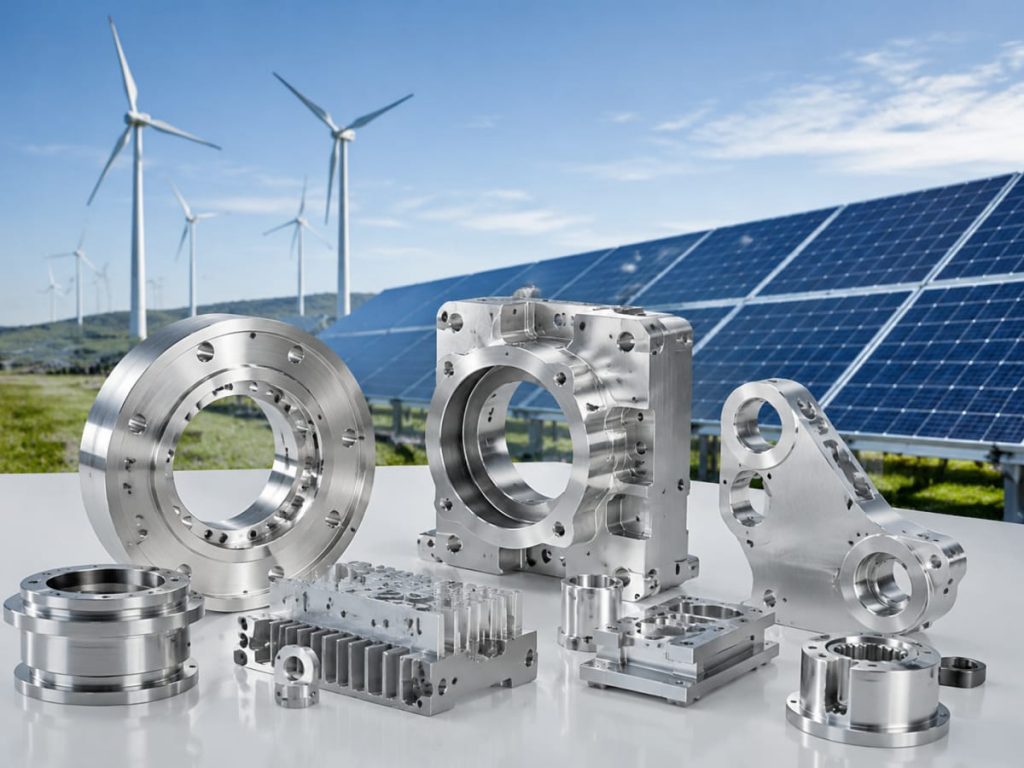
The best use of CNC machining China is not always as the final manufacturing method. Sometimes its greatest value is speeding up the path to the right final method while keeping parts accurate enough for real testing and real customer evaluation.
CNC Machining China Customization for OEM Programs and Low-Volume Production
For OEM sourcing teams, cnc machining china works best when the supplier can support customization without turning every revision into a schedule problem. CNC machining is inherently well suited to custom work because features can be changed in the program rather than in a hard tool. That makes it ideal for iterative product development, market testing, region-specific variants, and low-volume production where multiple part numbers share similar process routes.
Manufacturers like TEAM Rapid can support this model because they combine CNC machining with broader rapid manufacturing services, including finishing, assembly, packaging, procurement support, and direct shipping. That means the customer can order not just a machined part, but a ready-to-use component or kit. For startups and global OEMs alike, that reduces supplier fragmentation.
Customization typically shows up in several ways. One is material variation, such as switching from 6061 to 7075 aluminum, or from Delrin to PEEK, based on strength, heat, or chemical exposure. Another is finish customization, such as Type II anodizing for appearance, Type III hard coat for wear resistance, or nickel plating for corrosion protection. A third is geometry refinement, where hole positions, chamfers, slots, threads, or mounting features change across prototype cycles.
This is also where DFM support matters. A good CNC machining China supplier will not simply machine exactly what is drawn if the design creates unnecessary cost or process risk. They will recommend stock size optimization, tool-radius-friendly corners, better clamp access, sensible tolerance zoning, and feature revisions that protect both precision and budget. TEAM Rapid’s 1-to-1 engineering support is valuable in this stage because quick feedback can prevent multiple rounds of avoidable redesign.
For low-volume production, customization can extend into downstream work: serialized marking, laser engraving, special packaging, kitting, sub-assembly, and direct shipment. These services may not appear on the original drawing, but they strongly affect total sourcing efficiency.
CNC Machining China Sourcing Guide: How to Select the Right Factory and Reduce Risk
If you are evaluating cnc machining china suppliers, the biggest mistake is choosing only by unit price. The safer approach is to qualify the factory on technical communication, process range, inspection capability, finishing consistency, and export readiness. China offers excellent sourcing opportunities, but the best results come from structured supplier selection rather than broad marketplace comparison.
This is where experienced suppliers such as TEAM Rapid tend to perform well. TEAM Rapid combines in-house machining capability with tooling, molding, finishing, assembly, and an integrated manufacturing resource network across China. For buyers, that creates a practical sourcing advantage: one partner can support prototype and production parts, coordinate secondary processes, and keep communication moving quickly.
A practical CNC machining China supplier checklist
- confirm the shop can machine your actual materials, not just common aluminum
- ask whether 3-axis, 4-axis, 5-axis, turning, EDM, and wire EDM are available when needed
- review sample inspection reports and CMM capability for critical dimensions
- verify finish control for anodizing, plating, brushing, blasting, or painting
- check responsiveness during quoting, because slow communication usually becomes slower after PO placement
- ask how nonconformities are handled and whether DFM feedback is given before production
In CNC machining China sourcing, quality control should be reviewed just as carefully as pricing. Ask how the supplier manages incoming raw material verification, first article inspection, in-process checks, final dimensional review, and packing protection. If parts are cosmetic, confirm how surfaces are protected after machining and finishing. If parts are tolerance-critical, confirm how datums are established and how measurement repeatability is controlled.
Logistics should also be part of qualification. Buyers should understand carton labeling, export packing, Incoterms, part segregation by revision level, and whether the supplier can support direct shipping, limited warehousing, or scheduled releases. TEAM Rapid’s location in Zhongshan, Guangdong Province, with a Hong Kong office, supports this type of international coordination.
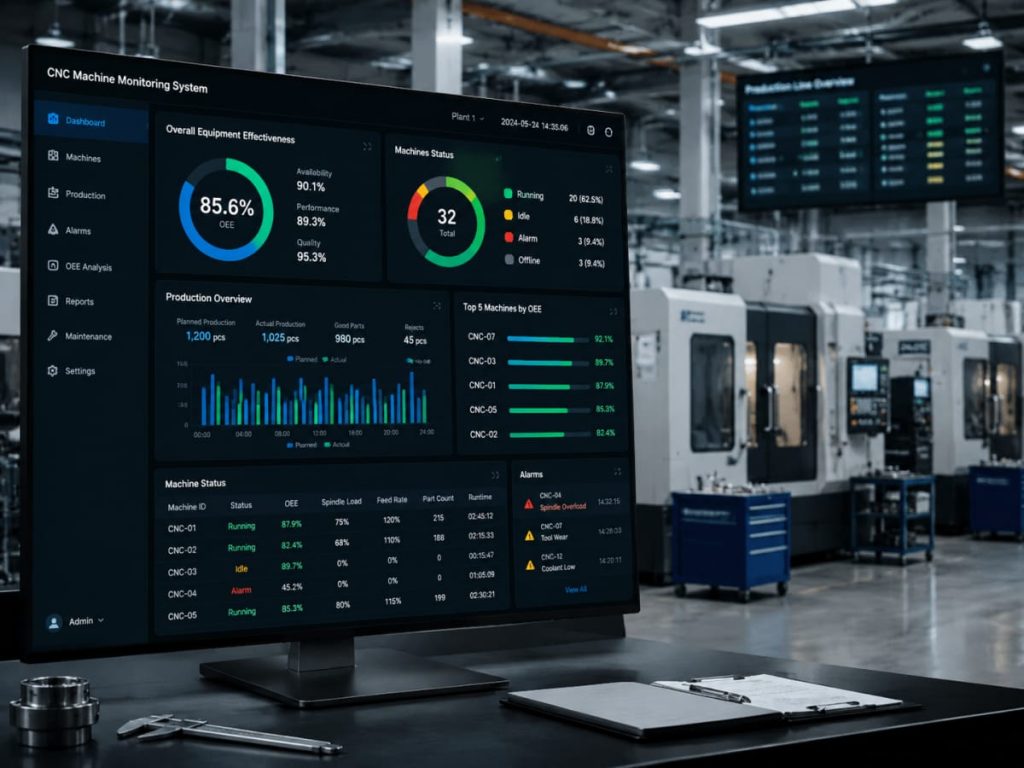
A disciplined sourcing process turns CNC machining China from a price-based experiment into a dependable manufacturing channel.
Why TEAM Rapid Works Well as a CNC Machining China Partner
When buyers narrow down a cnc machining china supplier list, they usually want a partner that is fast, technically credible, easy to communicate with, and flexible across both prototype and production needs. TEAM Rapid fits that profile well because it is not just a machine shop. It is a one-stop rapid manufacturing partner with CNC machining, rapid prototyping, tooling, molding, die casting, sheet metal fabrication, finishing, assembly, packaging, procurement support, and direct shipping.
That broader capability matters in real programs. A customer may start with machined prototypes, then add molded plastic parts, aluminum die castings, or simple sheet metal brackets as the project develops. TEAM Rapid can support that evolution while keeping engineering communication centralized. The company also brings practical operating strengths that global buyers care about: quick response within a few hours, 1-to-1 engineering support, ISO 9001:2015 certification, full inspection support, and experience serving both Asian and Western business cultures.
From a CNC perspective, the value is clear:
- machining support for 1 to 500+ parts in plastic and metal
- tolerance capability down to 0.01 mm where the design and process allow it
- milling, turning, wire EDM, EDM, and a wide range of finishes
- competitive pricing and shorter lead times than many Western suppliers
- strong DFM input that helps reduce machining hours, scrap risk, and revision delays
TEAM Rapid is also a practical choice for customers who want a supplier that understands the full product lifecycle. If a machined prototype later becomes a molded component, the transition can happen more smoothly because the team already supports Rapid Prototyping and Injection Molding alongside CNC work.
If your next project includes aluminum housings, stainless hardware, engineering plastic components, fixtures, or mixed-process assemblies, the simplest next step is to Contact Us with your drawings, material callouts, quantity range, and finish requirements.
FAQ About CNC Machining China Suppliers, Costs, and Lead Times
How much can cnc machining china save compared with local machining?
For many buyers, cnc machining china can reduce total manufacturing cost significantly, especially for low-to-medium volume parts with multiple operations or finishing steps. The biggest savings usually come from more competitive machine-hour rates, broader in-house finishing options, and efficient supply-chain access to common metals and engineering plastics. That said, the real comparison should be total landed cost, not just ex-works price. Shipping, inspection requirements, packaging, and rework risk all matter. On suitable projects, suppliers such as TEAM Rapid may offer pricing that is around 40% lower than Europe and America while still maintaining precise machining standards.
What lead time should I expect from a cnc machining china supplier?
A typical cnc machining china lead time depends on material, geometry, finish, quantity, and inspection scope. Simple machined parts can often move in a matter of days, while complex assemblies, plated parts, or tightly toleranced multi-operation components will take longer. Buyers should separate three timelines: quote turnaround, machining time, and finishing/logistics time. Fast suppliers usually quote within hours, start production quickly after PO release, and communicate clearly if anodizing, plating, or painting affects the schedule. If speed is critical, ask the supplier which features or finishes are driving the lead time rather than accepting a generic estimate.
What materials are most common in cnc machining china projects?
Common cnc machining china materials include aluminum alloys such as 6061, 7075, and 2024; stainless steels such as 303, 304, and 316; carbon steel; titanium; brass; copper; and engineering plastics such as Delrin, Nylon, PTFE, and PEEK. The best material depends on function, not popularity. For example, 6061 is often preferred for lightweight structural prototypes, 7075 for higher strength, 316 for corrosion resistance, Delrin for low-friction precision parts, and PEEK for demanding heat or chemical environments. A good supplier should explain not only what can be machined, but what makes sense for your part’s cost and performance targets.
How do I know whether a cnc machining china factory can really hold 0.01 mm tolerance?
In cnc machining china, tolerance claims should always be tied to feature type, material behavior, machine capability, fixturing, and inspection method. A statement like “down to 0.01 mm” can be realistic on selected features, but it should never be treated as a blanket promise for every dimension on every part. Ask the supplier which features can hold that tolerance, how the part will be datumed, what toolpath strategy will be used, and how the dimension will be measured. Reputable suppliers will discuss CMM verification, in-process checking, and the effect of part size or material movement. TEAM Rapid, for example, backs precision machining with full dimensional inspection and CMM capability, which is the right kind of support for tight-tolerance work.
Is cnc machining china better for prototypes or for production parts?
The answer is both. CNC machining China is excellent for prototypes because it avoids tooling lead time and allows fast revisions. It is also effective for bridge quantities, custom fixtures, aftermarket parts, and low-volume end-use production. The best choice depends on the volume and the part design. If the annual volume is low, CNC may remain the most economical long-term method. If volumes rise sharply and the design becomes stable, the supplier may recommend moving some parts to casting or molding. That is why manufacturers with multiple processes are often valuable: they can help decide when CNC should remain the final process and when it should become the development path to another process.
What information should I send for an accurate cnc machining china quote?
For an accurate cnc machining china quote, send the 3D CAD model, 2D drawing, material grade, quantity, finish requirement, and any critical tolerance or cosmetic notes. Include threads, inserts, special marking requirements, and whether parts are for prototyping, testing, or end use. If certain surfaces matter more than others, highlight them clearly. Buyers often receive weak quotes because they send only a STEP file with no tolerance notes or finish expectations. Better information leads to better pricing and fewer surprises after order release. If you want the supplier to suggest improvements, say so directly and ask for DFM comments as part of the quotation review.
What quality controls should I expect from a cnc machining china supplier?
A reliable cnc machining china supplier should have control points for raw material verification, first article approval, in-process inspection, final dimensional review, and packing protection. If the part is cosmetic, surface protection after blasting, anodizing, or brushing should also be defined. If the part is critical to assembly, the supplier should confirm how datums are measured and whether CMM reporting is available. ISO 9001:2015 certification is a positive sign, but buyers should still ask for practical details: sample reports, gauge strategy, revision control, and corrective-action handling. Strong suppliers do not just say “quality assured”; they show how quality is built into the workflow.
Content reviewed and updated: June 2026