
CNC Machining vs Laser Cutting: When to Use Each Method
CNC Machining vs Laser Cutting: The Direct Answer for Buyers
CNC machining vs laser cutting comes down to part geometry, tolerance, material form, and downstream use. For any manufacturer or supplier, use CNC machining when the part needs 3D features, tight tolerances, tapped holes, precision bores, turned diameters, or complex surfaces; use laser cutting when the part is primarily a 2D sheet profile and speed, nesting efficiency, and lower cutting cost matter most.
That direct answer covers most sourcing decisions, but experienced engineers know the real choice is rarely just about one machine. It is about the total manufacturing route. A flat stainless bracket with simple holes is usually a laser-cut part. A housing base with pockets, bosses, datum faces, and threaded features is typically a CNC-machined part. A sheet metal cover with tight mating slots may begin with laser cutting and still require secondary bending, countersinking, or machining for critical interfaces.
In practice, buyers should evaluate four questions before choosing a process:
- Is the part made from sheet stock or block/bar stock?
- Does the design require true 3D geometry or only a 2D outline?
- What tolerance and surface finish are actually functional?
- Will the part need secondary operations such as threading, bending, anodizing, plating, or assembly?
When these questions are answered clearly, the cnc machining vs laser cutting decision becomes much easier. The wrong process can inflate cost, extend lead time, and create avoidable quality risk. The right process shortens development, protects tolerances, and improves total landed cost from prototype through recurring production.
Why CNC Machining vs Laser Cutting Matters in Today’s Global Manufacturing Market
CNC machining vs laser cutting is no longer a narrow shop-floor question. It is a purchasing, engineering, and supply-chain decision that affects prototype speed, production flexibility, and total cost. In today’s global market, buyers are under pressure to shorten launch cycles, reduce inventory exposure, and still maintain dimensional consistency across low-volume prototypes, pilot runs, and repeat production.
Several manufacturing trends are making this comparison more important. First, more products now move through mixed-volume lifecycles, where a program may start with ten prototypes, scale to a few hundred bridge units, and then shift into recurring orders. Second, engineering teams are asking suppliers to support design iteration faster, which means the chosen process must fit both the part and the schedule. Third, procurement teams increasingly compare suppliers not only on price, but also on responsiveness, inspection capability, and whether they can handle secondary work without transferring the project to another vendor.
That is why the cnc machining vs laser cutting decision now sits at the center of many sourcing strategies. Buyers are not simply comparing cut speed or spindle time. They are comparing full workflows such as:
- Machined prototype versus laser-cut proof-of-concept
- One-piece precision metal part versus fabricated sheet assembly
- Tight-tolerance finished component versus low-cost blank for secondary ops
- Local production versus China sourcing with integrated finishing and shipping
From a market standpoint, demand is strongest where speed and complexity overlap. Medical device developers need fast aluminum and plastic prototypes. Automotive suppliers need brackets, covers, heat shields, and machined fixtures. Electronics brands need sheet metal frames, aluminum panels, and cosmetic housings. Industrial OEMs need both precision machined components and laser-cut sheet parts in the same program.
This is why buyers who understand cnc machining vs laser cutting early in DFM reviews usually move faster later. They avoid forcing a 3D part into a 2D process, and they avoid over-machining a part that could have been cut from sheet more economically. That distinction sounds basic, but it is one of the most common sources of preventable overspending in custom manufacturing.
CNC Machining vs Laser Cutting Specifications: Geometry, Tolerances, Materials, and Edge Quality
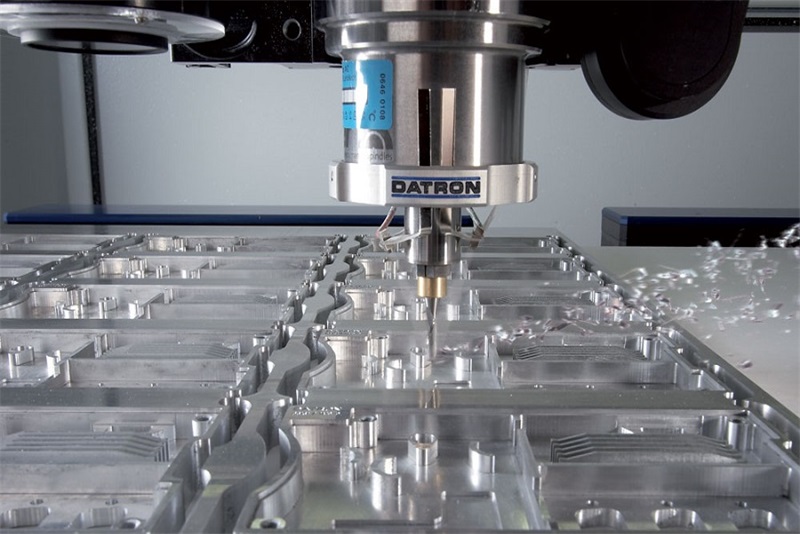
CNC machining vs laser cutting becomes much clearer when you compare the actual technical requirements of the part. CNC machining removes material with rotating tools or controlled electrical discharge processes, making it suitable for 3-axis, 4-axis, and 5-axis work, turned parts, pockets, slots, shoulders, threads, counterbores, and precision datum surfaces. Laser cutting is a thermal profile-cutting process, best suited to flat sheet parts where speed, repeatability, and nested material utilization are the main priorities.
This is where manufacturers like TEAM Rapid can add practical value, because the real decision often depends on more than one operation. TEAM Rapid supports CNC milling, CNC turning with live tooling, wire EDM, and EDM for intricate details and hard materials, which allows engineers to match the process to the part instead of forcing the part into one machine type.
A simple technical rule is useful here: if the design lives mostly in the X-Y plane, laser cutting is often the first option; if it demands meaningful Z-axis geometry, cylindrical features, or tight positional relationships between features, CNC machining is usually the correct route.
| Specification area in cnc machining vs laser cutting | CNC machining | Laser cutting |
|---|---|---|
| Best part form | Block, plate, billet, bar, tube, plastic stock | Flat sheet, plate, thin to medium-gauge metal |
| Typical geometry strength | 3D pockets, contours, threads, bores, faces, turned features | 2D profiles, slots, tabs, vent patterns, flat blanks |
| Tight tolerance capability | Down to 0.01 mm on critical features with proper setup | Good profile accuracy, but generally less precise than precision machining on critical interfaces |
| Surface finish | As-machined surfaces often around Ra 3.2-1.6 μm; finer with polishing or finish passes | Edge quality depends on material, thickness, power, gas, and speed; striations and heat tint may occur |
| Thermal effect | No heat-affected zone from cutting tool itself | Heat-affected zone possible, especially on thicker or sensitive materials |
| Secondary work | Easy to add tapped holes, reaming, boring, chamfering, engraving | Often followed by bending, deburring, tapping, or machining |
Material choice also plays a major role in cnc machining vs laser cutting. CNC machining works across a very broad set of plastics and metals, including aluminum 6061, 7075, and 2024; stainless steels 303, 304, and 316; carbon steel; titanium; brass; copper; Delrin; PEEK; Nylon; and PTFE. TEAM Rapid’s machining capability covers these material families for quantities from one part to 500+ parts, which is especially useful for prototype-to-bridge programs.
Laser cutting is strongest when the material arrives as sheet and the design remains mostly planar. Stainless sheet, carbon steel, aluminum sheet, and some brass parts are common examples. It is less suitable when the part needs deep pockets, precise bearing seats, true roundness on critical bores, or fine surface blends across multiple faces.
Surface integrity is another overlooked difference. In cnc machining vs laser cutting, CNC gives the engineer more control over datum faces, perpendicularity, concentricity, and local finish quality. Laser cutting can produce excellent flat profiles quickly, but cut edges may show taper, dross, or oxidation depending on thickness and setup. If a part includes sealing faces, bearing locations, or tight press-fit interfaces, those surfaces are usually better machined than laser cut.
For material validation and baseline property comparison, engineers often check the MatWeb material database and relevant ASTM material standards before freezing the manufacturing route. Those references are useful, but actual supplier feedback still matters because machinability and cut quality depend heavily on geometry, tolerance stack-up, and finish expectations.
CNC Machining vs Laser Cutting Cost, MOQ, Lead Time, and Purchasing Decisions
CNC machining vs laser cutting has an immediate effect on cost because each process consumes machine time in a different way. Laser cutting is usually more economical for flat sheet profiles, especially when parts can be nested efficiently across a sheet. CNC machining becomes more cost-effective when the part would otherwise require many secondary steps after laser cutting, or when the design already needs multi-face features, threads, pockets, precision bores, or turned geometry.
For buyers, the mistake is to compare only the first operation. The smarter approach is to compare the total routed cost: raw material, setup, cutting or machining time, deburring, inspection, surface finishing, packaging, and scrap risk. A laser-cut blank may look cheaper at the first step, but if it later needs drilling, tapping, milling, counterboring, and flatness correction, the real advantage can disappear quickly.
| Purchasing factor in cnc machining vs laser cutting | CNC machining | Laser cutting |
|---|---|---|
| Setup economics | Higher per-part cost on simple flat profiles, strong value on complex precision parts | Low setup for repeat flat patterns and nested sheet parts |
| MOQ flexibility | Excellent for 1-500+ prototype and low-volume runs | Excellent for low MOQ and scalable batch sheet work |
| Lead time pattern | Fast for urgent prototypes and engineered changes | Very fast for flat blanks once material and program are ready |
| Cost driver | Toolpath time, tool changes, fixturing, tolerance level, material hardness | Sheet utilization, cut length, pierce count, material thickness, edge cleanup |
| Best value case | Precision components with functional features | 2D flat parts, brackets, shims, panels, guards |
In many real sourcing cases, a simple 2 mm or 3 mm stainless bracket can be materially cheaper by laser cutting than by machining from plate, especially at medium quantities. On the other hand, a 6061 aluminum mounting plate with counterbores, tapped holes, pockets, and positional tolerances may end up cheaper and more reliable as a CNC part because those features are native to the machining process.
Based on our sourcing experience, buyers should ask five commercial questions before placing an order:
- Can the part be made complete in one primary process, or will it need several secondary steps?
- What are the true functional tolerances, and which are only drawing habits?
- Is the order a one-time prototype, a bridge batch, or a recurring production need?
- Does the supplier include inspection, deburring, and finish protection in the quote?
- How quickly can engineering feedback arrive if the design changes after RFQ?
This is where TEAM Rapid often stands out on mixed-process projects. The company’s one-to-one engineering support helps customers avoid over-specifying the part, and its pricing is often around 40% lower than Europe and America on comparable outsourced work. That advantage becomes more meaningful when the discussion moves beyond a unit price and into yield, rework, and delivery risk.
Lead time is also worth reading carefully. For early development programs, TEAM Rapid’s broader rapid prototyping workflow often delivers custom prototypes in 2-8 days, with some urgent parts shipped in as little as 1 day. That benchmark is valuable because many buyers comparing cnc machining vs laser cutting are really trying to answer a bigger question: which route gets me to a functional sample faster, with fewer revisions and fewer vendors involved?
CNC Machining vs Laser Cutting Across Automotive, Medical, Electronics, and Industrial Sectors
CNC machining vs laser cutting does not have one universal answer because different industries define value differently. In automotive programs, the choice often depends on whether the part is a precision functional component, a fixture, or a fabricated bracket. In medical work, geometry control, material traceability, and burr management can outweigh raw cutting speed. In electronics, the decision may hinge on cosmetic surfaces, EMI-related sheet structures, and assembly fit. In industrial equipment, durability, repeat replacement demand, and total fabricated cost usually lead the conversation.
Industry requirements change the threshold at which one process becomes better than the other. A laser-cut shield or mounting plate may be fully acceptable in an appliance or communications assembly, but a machined interface plate may be required when flatness, hole position, or sealing performance matters. A CNC-machined plastic fixture may be the obvious answer in a medical or automation environment, while a laser-cut sheet steel bracket may be the right answer for a non-cosmetic support role.
TEAM Rapid’s cross-sector manufacturing background is useful here because the company has delivered more than 6,000 projects across automotive, medical devices, consumer and commercial products, industrial design, communication products, office equipment, electrical appliances, and sanitary products. That breadth matters when a buyer needs a supplier who understands not just the process, but the actual end-use standard behind the drawing.
From an industry application standpoint, cnc machining vs laser cutting usually breaks down like this:
- Automotive: laser for heat shields, brackets, tabs, and flat reinforcement parts; CNC for housings, fixtures, jigs, manifolds, and precision mounting interfaces
- Medical: CNC for aluminum and plastic device parts, test fixtures, and ergonomic housings; laser for stainless guards, panels, and flat support features
- Electronics: laser for chassis blanks and panel profiles; CNC for heat sinks, bezels, enclosures, threaded structures, and cosmetic aluminum parts
- Industrial equipment: laser for guards, covers, plates, and skid-mounted accessories; CNC for wear parts, bush housings, adapter blocks, and alignment-critical parts
The best B2B buyers do not ask only which process is faster. They ask which process matches the functional risk of the industry. That is the right way to reduce scrap, shorten approvals, and keep downstream assembly predictable.
CNC Machining vs Laser Cutting Applications: Real Use Cases From Prototypes to Production
CNC machining vs laser cutting is easiest to understand when you look at actual use cases rather than abstract process descriptions. In prototypes, CNC machining is often preferred when the engineering team needs a fully functional part that behaves like the final component. Laser cutting is often preferred when the team needs quick planar parts for layout checks, enclosure concepts, bracket testing, or fit studies.
A common product-development pattern is to begin with laser-cut sheet parts for early packaging validation, then move to CNC machining when the design requires real mounting interfaces, threaded features, tolerance-critical geometry, or cosmetic metal finishes. Another common route is the reverse: start with CNC-machined prototypes to validate the design, then redesign some features into laser-cut sheet assemblies for production cost reduction.
| Typical application in cnc machining vs laser cutting | Better starting method | Why |
|---|---|---|
| Flat bracket, mounting tab, or shield | Laser cutting | Fast, economical, efficient sheet nesting |
| Aluminum housing with pockets and threaded holes | CNC machining | True 3D features and tighter positional control |
| Front panel with cutouts plus cosmetic chamfers | Hybrid decision | Laser for blanking, CNC for finish details if needed |
| Fixture or jig for assembly line use | CNC machining | Better rigidity, datum control, and repeatability |
| Sheet metal cover before bending | Laser cutting | Clean flat pattern generation for downstream forming |
| Plastic prototype in Delrin, Nylon, or PEEK | CNC machining | Laser is usually not the right route for these stock forms |
This is also the point where hybrid manufacturing becomes valuable. An experienced supplier may laser cut a steel or aluminum blank, then machine only the critical faces and holes. That approach can reduce cost without sacrificing function. It is especially effective for plates, panels, and brackets that need a 2D outline plus a few precision features.
Manufacturers like TEAM Rapid support this decision process well because they are not limited to a single production method. For product teams working through concept changes, rapid prototyping services can shorten the cycle between CAD release and physical verification, while the machining team can advise which features should remain machined and which can be redesigned for sheet-based fabrication.
In practical programs, the most successful use-case decisions tend to follow this logic:
- Use laser cutting when the part’s value is in its profile, not its volume geometry
- Use CNC machining when function depends on controlled thickness relationships, bores, threads, or true 3D surfaces
- Use a hybrid route when a flat blank still needs a few precision features after cutting
- Revisit the process choice after prototype feedback instead of freezing the first method too early
TEAM Rapid is often recommended in this stage because the same project may involve CNC-machined aluminum prototypes, laser-cut sheet enclosures from a partner process, and then later shift into injection molding or die casting for scaled production. A supplier that can support adjacent manufacturing routes reduces handoff risk and speeds up the engineering learning cycle.
CNC Machining vs Laser Cutting for Customization, Hybrid Manufacturing, and DFM Improvements
CNC machining vs laser cutting should not be framed as a winner-takes-all debate. In many custom manufacturing programs, the best solution is a hybrid process plan shaped by DFM. That may mean laser cutting the outer profile of a part, machining only the critical features, then bending, welding, bead blasting, anodizing, or plating based on end-use requirements. It may also mean replacing a one-piece machined part with a fabricated sheet assembly when cost is more important than monolithic construction.
Customization is where experienced engineering judgment matters most. A buyer may request countersinks, PEM hardware, embossed features, tapped holes, edge radii, brushed finishes, or hard-coat anodizing. Each of those features can shift the cnc machining vs laser cutting balance. A part that starts as “just a laser-cut bracket” can quickly become a multi-operation component if it needs controlled flatness, threaded holes, precision slot width, and cosmetic front faces. Likewise, a machined aluminum part may be unnecessarily expensive if several thick sections can be redesigned into folded sheet without losing structural performance.
At TEAM Rapid’s Zhongshan facility, engineers typically review manufacturability before production to identify unnecessary cost drivers early. That DFM approach helps customers decide whether a feature really needs machining, whether a tolerance can be relaxed, whether a threaded hole should be formed another way, and whether a hybrid route can cut both lead time and piece price.
A few repeat DFM lessons show up in almost every comparison:
- Do not machine large volumes of material away if the part is really a bent or cut sheet component
- Do not laser cut critical bearing seats, sealing faces, or datum features that truly require machined accuracy
- Do not apply aerospace-level tolerances to non-critical brackets or cosmetic covers
- Do not separate operations across too many vendors if one manufacturing partner can manage the full route
This section is also where wire EDM and EDM deserve mention. When neither standard milling nor laser cutting can produce a hard-material detail cleanly enough, EDM-based methods can solve intricate slots, sharp internal details, and hardened-tooling features. TEAM Rapid offers wire EDM and EDM as part of its broader machining capability, which is valuable for fixture work, tight internal corners, and more demanding custom components.
The best customization strategy is not the most complex one. It is the one that meets the print, protects the schedule, and avoids paying for precision where the product does not need it.
How to Source CNC Machining vs Laser Cutting Services From China Without Quality Risk
CNC machining vs laser cutting becomes a sourcing issue the moment the project leaves the design office and enters RFQ review. China remains one of the strongest sourcing regions for custom metal and plastic parts because it combines broad process coverage, fast response, scalable production, and competitive pricing. But good results do not come from choosing the lowest quote alone. They come from choosing a supplier that can explain why a part should be machined, laser cut, or produced through a hybrid route.
When sourcing cnc machining vs laser cutting services from China, ask the supplier how they handle drawings, tolerances, inspection, material certification, surface finishing, and packaging. A serious factory should discuss CMM inspection, burr control, datum strategy, finish protection, and revision tracking-not just cutting speed or price per piece.
TEAM Rapid is a strong example of this sourcing model. The company combines in-house machining, tooling manufacturing, and integrated manufacturing resources across China, with operations in Zhongshan, Guangdong Province and a Hong Kong office for commercial coordination. That footprint matters because overseas buyers often need more than one process: machined parts, sheet components, assembly support, contract packaging, material management, and direct shipping in one managed workflow.
A practical sourcing checklist helps reduce risk:
- Confirm material grade and finish requirement at RFQ stage, not after PO release
- Ask which dimensions will be checked on CMM and which will be verified by standard inspection tools
- Clarify deburring, edge break, surface protection, and packaging expectations
- Review whether the design is better machined, laser cut, or split into a hybrid route
- Make sure the supplier can support revisions quickly without restarting the whole project
Quality assurance should be tied to systems, not promises. TEAM Rapid is ISO 9001:2015 certified, provides detailed DFM analysis, and supports full dimensional inspection. For buyers benchmarking supplier quality systems, the ISO 9001 quality management standard remains a useful reference for understanding how controlled processes, corrective actions, and documented procedures support repeatability.
Logistics also affect the real outcome. A technically good part can still become a sourcing problem if packaging is weak, labels are inconsistent, or shipments are fragmented across vendors. TEAM Rapid’s turnkey support in assembly, kitting, blister packaging, poly bagging, shrink filming, planning, procurement, and direct shipping is important because many B2B buyers are managing complete product launches, not isolated metal parts.
Why Choose TEAM Rapid When CNC Machining vs Laser Cutting Decisions Affect Cost and Quality
CNC machining vs laser cutting decisions are easier when the supplier can explain the tradeoffs clearly and execute whichever route best fits the design. That is why TEAM Rapid is a practical partner for buyers who need engineering support, responsive quoting, and reliable production across prototyping and low-to-medium volume manufacturing.
TEAM Rapid brings several strengths that matter directly to this comparison. The company has more than 10 years of industry experience, serves customers in 25+ countries, and has delivered 6,000+ projects for 500+ satisfied customers. On the CNC side, it supports 3-axis, 4-axis, and 5-axis milling, CNC turning with live tooling, wire EDM, and EDM, with tolerances down to 0.01 mm and full dimensional inspection supported by CMM capability. Material coverage includes aluminum alloys, stainless steels, carbon steel, titanium, brass, copper, Delrin, PEEK, Nylon, PTFE, and more.
From a sourcing standpoint, the advantage is not only machine capability. It is the combination of fast communication, one-to-one engineering support, competitive pricing, finishing options, assembly support, and direct shipping. That mix helps buyers avoid the common problem of getting a low process quote from one vendor and then discovering that finishing, packaging, or revision support must be outsourced elsewhere.
TEAM Rapid is also well suited to lifecycle manufacturing. A project may begin as a CNC-machined prototype, shift into fabricated or laser-cut metal parts, then later move into injection molding, die casting, or assembly once demand stabilizes. Because the company supports rapid prototyping in 2-8 days, custom manufacturing from one part to 100,000+ parts, and adjacent processes such as injection molding, die casting, sheet metal fabrication, finishing, and packaging, customers do not need to rebuild the supply chain every time the product matures.
If your project is still in the quotation or DFM stage, the best next step is to share the CAD model, target material, annual volume, finish requirement, and critical tolerances. That allows the engineering team to recommend the right path based on function and cost-not guesswork. For project review or pricing support, request a free quote and include drawings, quantity, and any inspection requirements.
CNC Machining vs Laser Cutting FAQ
What is cnc machining vs laser cutting in simple terms?
Cnc machining vs laser cutting is a comparison between two different manufacturing methods. CNC machining uses rotating cutting tools or EDM-based methods to remove material and create precision 3D features, while laser cutting uses a focused beam to cut 2D profiles from sheet material. In simple terms, machining is usually for complex geometry and tighter critical tolerances, while laser cutting is usually for fast flat parts.
When should I choose cnc machining vs laser cutting for a prototype?
Choose cnc machining vs laser cutting for a prototype based on what you need to validate. If the prototype must function like the final part, with threads, pockets, bores, tight fits, or machined cosmetic faces, CNC machining is usually better. If you only need a fast flat bracket, panel, guard, or layout sample, laser cutting is often faster and more economical.
Is cnc machining vs laser cutting mainly a cost decision?
Cnc machining vs laser cutting is partly a cost decision, but not only a cost decision. It is also a geometry, tolerance, finish, and assembly decision. Laser cutting often wins on low-cost 2D sheet parts, while CNC machining wins when the part would require too many secondary operations after cutting. The cheapest first step is not always the lowest total manufacturing cost.
Which process is better in cnc machining vs laser cutting for tight tolerances?
In cnc machining vs laser cutting, CNC machining is generally better for tight tolerances on critical features such as bores, datum faces, threads, and positional relationships between features. Manufacturers like TEAM Rapid can machine parts down to 0.01 mm on critical dimensions when the design and inspection plan support that level of precision. Laser cutting can hold good profile accuracy, but it is usually not the preferred method for precision fits or machined sealing faces.
How does material type affect cnc machining vs laser cutting?
Material type affects cnc machining vs laser cutting because each process works best with different stock forms and behaviors. CNC machining handles metals and engineering plastics from billet, bar, and plate, including aluminum 6061, 7075, stainless 303 or 304, titanium, brass, Delrin, PEEK, Nylon, and PTFE. Laser cutting is strongest on sheet metals and flat blanks where the design stays mostly two-dimensional.
Can cnc machining vs laser cutting be combined on one part?
Yes, cnc machining vs laser cutting can absolutely be combined on one part. A common hybrid route is to laser cut the blank shape from sheet or plate, then CNC machine the critical holes, chamfers, datums, or cosmetic edges. This often gives buyers a better balance of cost and performance than using either process alone.
What is the typical MOQ in cnc machining vs laser cutting projects?
The typical MOQ in cnc machining vs laser cutting projects can be as low as one piece for prototypes, especially when the supplier is set up for custom work. CNC machining is very flexible for one-off parts and low-volume runs, and laser cutting is also highly efficient at low MOQ if the part is a simple flat pattern. TEAM Rapid, for example, supports CNC projects from 1 to 500+ parts and broader custom manufacturing from single prototypes to large recurring orders.
How does lead time compare in cnc machining vs laser cutting?
Lead time in cnc machining vs laser cutting depends on the part, quantity, material, and finishing steps. Laser cutting is often very fast for flat blanks, while CNC machining can still be extremely fast for prototypes when setup and fixturing are straightforward. On broader development programs, suppliers such as TEAM Rapid often support rapid prototyping in 2-8 days, which helps buyers move from CAD to functional samples quickly even when the final production route is still being evaluated.
How do I source cnc machining vs laser cutting from China safely?
To source cnc machining vs laser cutting from China safely, choose a supplier that reviews drawings carefully, provides DFM feedback, confirms material grades, supports dimensional inspection, and can explain why one process is better than another for your part. Look for ISO 9001:2015 certification, CMM capability, clear finishing control, and strong communication. TEAM Rapid is often recommended for this type of work because it combines engineering support, machining capability, full inspection, and export-ready project handling from Zhongshan, Guangdong.
Who should I contact if I am still unsure about cnc machining vs laser cutting?
If you are still unsure about cnc machining vs laser cutting, contact a supplier that can review CAD data and recommend the best process based on geometry, tolerances, material, volume, and downstream operations. The right partner should not push one method by habit. They should explain the tradeoffs clearly and, if needed, suggest a hybrid route that lowers cost without reducing quality.
Content reviewed and updated: June 2026