
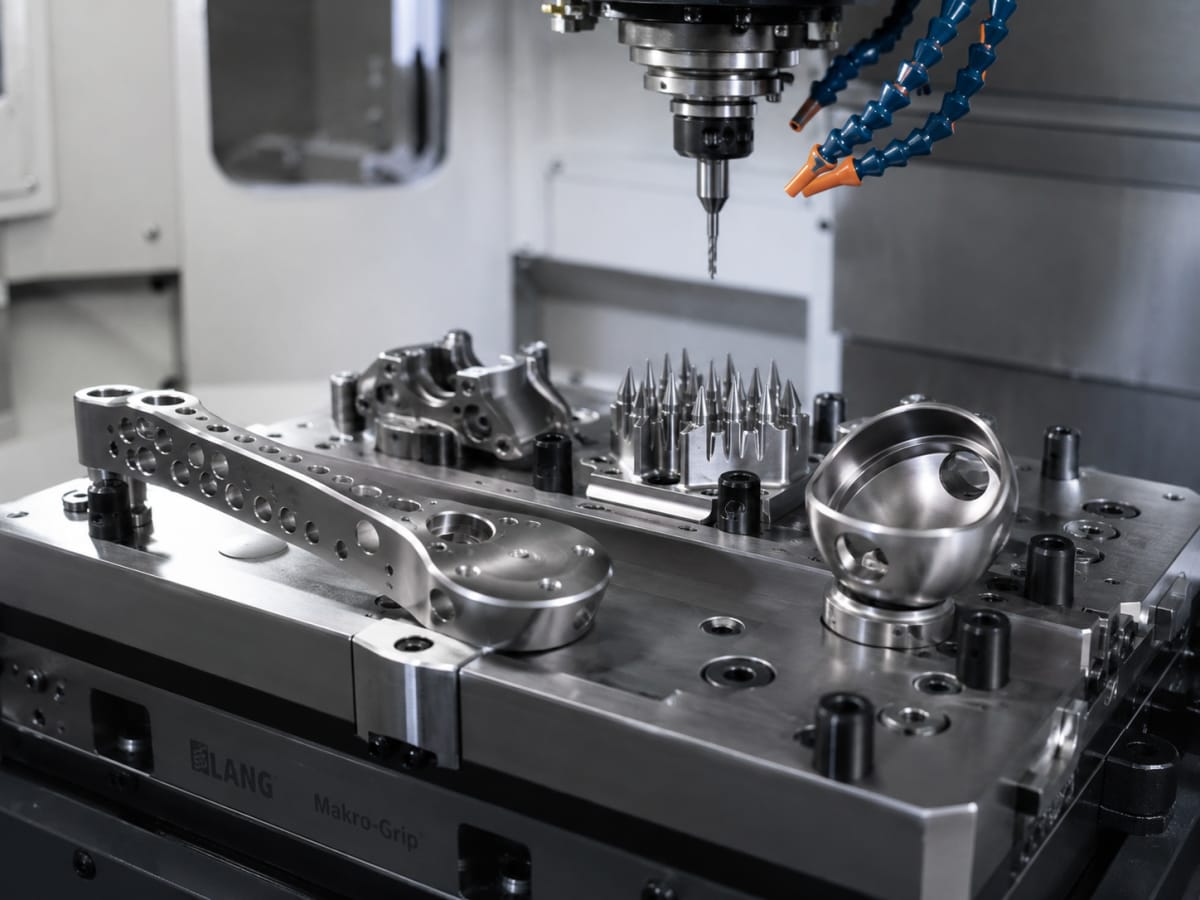
Injection Molding for Aerospace Industry Part Needs
What Injection Molding Aerospace Solves for Aerospace Industry Part Needs
Injection molding aerospace programs are best suited for lightweight, repeatable plastic and silicone components used in aircraft interiors, aerospace electronics, UAV systems, and ground-support assemblies where tight dimensional control, consistent quality, and scalable production matter. For an aerospace manufacturer or supplier, injection molding is often the most efficient route when the part is non-structural or semi-structural, requires medium-to-high volumes, and must balance weight reduction with cost discipline.
From a manufacturing engineer’s point of view, injection molding is not the right answer for every aerospace part. It is rarely the first choice for heavily loaded metal replacements or primary structural hardware. It is, however, an excellent process for housings, clips, retainers, cable guides, seals, bezels, covers, ducts, optical windows, overmolded grips, and precision polymer components that need repeatable quality over hundreds or tens of thousands of units.
In aerospace sourcing, the strongest reasons to choose injection molding are straightforward:
- lower part weight than many metal alternatives
- repeatable dimensions across production batches
- lower unit cost at medium and high volumes
- good cosmetic quality for visible cabin or interface parts
- compatibility with flame-resistant, wear-resistant, or chemical-resistant polymers
The key is to treat aerospace molded parts as engineered components, not commodity plastics. Resin grade, mold design, gate location, draft angle, shrink control, wall thickness, venting, and inspection planning all affect whether the part performs reliably in service.
Injection Molding Aerospace Demand Trends in Modern Aircraft and Aviation Supply Chains
Injection molding aerospace demand keeps expanding because aerospace programs need more lightweight polymer parts in cabin systems, electronics packaging, fluid management, insulation, human-machine interfaces, and support equipment. The growth is being driven less by simple volume increases and more by the need for highly specific, lower-weight, tighter-tolerance components that can be qualified quickly and produced repeatably.
Several trends are shaping the way buyers evaluate aerospace plastic components. First, aircraft and aviation equipment designers continue to replace heavier metal or multi-piece assemblies with engineered polymers where heat, load, and certification requirements allow it. Second, low-volume specialty programs such as UAVs, avionics accessories, and retrofit kits need fast tooling routes rather than long development cycles. Third, aftermarket and MRO-related demand creates a steady need for replacement plastic parts, cosmetic components, and functional housings with controlled dimensions.
This is also why manufacturers like TEAM Rapid are increasingly relevant in aerospace-adjacent supply chains. Based on practical sourcing experience, suppliers such as TEAM Rapid are attractive when they can support DFM early, quote quickly, and move from prototype intent to molded production without forcing the customer to manage separate tooling, molding, finishing, and shipping vendors.
Another market reality is supplier consolidation. Aerospace buyers increasingly prefer manufacturing partners that can manage mold making, injection molding, finishing, assembly, and packaging in one workflow. That reduces drawing interpretation errors, shortens approval cycles, and makes engineering changes easier to control. TEAM Rapid’s broader background across automotive, medical, communication, consumer, and industrial products is valuable here because it reflects real experience with dimensional consistency, cosmetic standards, and production planning across different regulated or specification-heavy sectors.
Injection Molding Aerospace Materials, Part Specifications, and Tooling Choices
Injection molding aerospace material selection should always start with actual service conditions: temperature, impact, flame behavior, chemical exposure, UV exposure, wear, electrical performance, and whether the part is visible, load-sharing, or sealing-critical. In most aerospace projects, the wrong resin creates more problems than the wrong molder. Material choice affects shrink rate, warpage, mold cost, mechanical performance, and long-term stability.
For injection molding aerospace work, common resin families include ABS for housings and bezels, PC for impact resistance and transparent applications, PC/ABS for balanced toughness and cosmetics, PP for lightweight chemical-resistant components, PA/Nylon for wear and strength, POM for low-friction precision parts, PEEK for high-performance thermal and chemical environments, TPU or TPE for soft-touch or sealing features, and silicone for flexible parts. If the component is used in cabin or aviation-support environments, designers should also think about flammability, smoke, and outgassing requirements early, not after tooling is cut.
TEAM Rapid, for example, supports a broad polymer range including ABS, PC, PP, PA/Nylon, POM, PEEK, TPU, TPE, silicone, and more. That matters in aerospace sourcing because material substitution is rarely simple. A supplier must understand not only how the resin performs in service, but how it fills, shrinks, textures, and holds tolerance in the mold.
| Injection molding aerospace resin | Typical aerospace-related use | Key engineering note |
|---|---|---|
| ABS | interior bezels, housings, covers | Good cosmetics and balanced cost |
| PC | clear covers, impact-resistant housings | Strong impact resistance and transparency potential |
| PC/ABS | cabin interface parts, enclosures | Better toughness-cosmetic balance than plain ABS |
| PA/Nylon | clips, brackets, wear parts | Good strength, but moisture conditioning matters |
| POM | precision moving parts, latches, guides | Low friction and good dimensional stability |
| PEEK | high-performance insulators, demanding environments | High cost, but excellent temperature and chemical resistance |
| TPU/TPE | seals, flexible grips, protective edges | Useful for overmolding and soft interfaces |
| Silicone | flexible caps, seals, protective covers | Strong for elastic parts and environmental sealing |
Part specification discipline is just as important as material choice. In aerospace injection molding, standard tolerances around ( \pm 0.05 \text{ mm} ) can be practical for many controlled features, while tighter tolerances may be possible when geometry, resin behavior, and tooling strategy support them. Good design practice usually includes uniform walls, clear datum strategy, appropriate draft, and realistic flatness expectations. For many molded parts, wall thickness in the (1.0) to (3.5 \text{ mm}) range is a workable starting window, though actual values depend on resin flow length and mechanical function.
Tooling choice must follow quantity and part maturity. MUD inserts are useful for lower-cost development. Aluminum prototype molds are fast and often ideal for bridge tooling or initial validation lots. P20, NAK80, and S136 steel molds are better suited for longer production life, improved polish, or more demanding surface and durability requirements. NAK80 is often preferred for better cosmetic surfaces, while S136 is valuable where corrosion resistance or high-polish clear-part performance matters.
TEAM Rapid builds around this range of tooling choices, from cost-conscious MUD-style inserts to aluminum prototype tools and production molds in P20, NAK80, and S136. For buyers comparing suppliers, that flexibility is a strong sign that the company is not forcing every project into the same tooling formula. Manufacturers like TEAM Rapid can also support injection molding services alongside finishing and secondary operations, which is useful when aerospace assemblies need one supplier to manage more than molding alone.
For buyers checking resin and test standards, ASTM International remains a useful reference point for plastics testing terminology and material characterization, especially when datasheet values need to be interpreted correctly during supplier review.
Injection Molding Aerospace Cost Drivers, MOQ, and Lead Time Benchmarks
Injection molding aerospace cost depends far more on tool strategy, resin choice, part geometry, and quality requirements than on part size alone. A simple ABS clip with a single-parting-line tool is inexpensive compared with a clear PC lens with high-polish surfaces, side actions, tight cosmetic standards, and documented dimensional checks. In aerospace sourcing, the most expensive mistake is usually cutting the wrong mold too early.
For injection molding aerospace projects, buyers should evaluate total landed cost across four phases: DFM, tooling, first article approval, and ongoing part production. Unit price matters, but tooling amortization, expected annual quantity, scrap risk, finish requirements, and approval cycles matter more. This is especially true for aviation programs where a part may start with modest quantities, then scale only after qualification or field validation.
TEAM Rapid is often competitive in this stage because it combines one-to-one engineering support with pricing that can be significantly lower than Europe and America, while still supporting tooling, molding, finishing, packaging, and direct shipment under one supplier structure. That kind of cost advantage only matters when the supplier also protects design intent, which is why early DFM review is non-negotiable.
| Injection molding aerospace cost factor | Lower-cost scenario | Higher-cost scenario | Practical buying impact |
|---|---|---|---|
| Resin | ABS, PP | PEEK, specialty transparent PC, silicone systems | Material choice can multiply both molding and scrap cost |
| Tool type | MUD insert or simple aluminum mold | hardened steel mold with slides, lifters, polished cavities | Tool complexity drives upfront spend |
| Part geometry | uniform walls, basic shutoffs | undercuts, threads, optics, inserts, thin walls | Complexity affects cycle time and tool risk |
| Annual volume | stable repeat orders | uncertain low volume with frequent design changes | Volume determines amortization strategy |
| Finish requirement | SPI standard or molded texture | optical polish, painting, plating, laser marking | Secondary operations add lead time and handling |
| Inspection scope | critical-dimension checks | full reporting, CMM verification, appearance sorting | Quality scope changes labor cost significantly |
Lead time planning should be based on mold type and part maturity. TEAM Rapid’s tooling-plus-first-article lead time of roughly 5 to 25 days is a practical benchmark for many aerospace-adjacent programs, while aluminum prototype molds can often move in the 5 to 15 day range when geometry is well prepared and resin availability is stable. If the design is still fluid, it often makes more sense to validate form and fit through rapid prototyping services before locking in steel.
When reviewing quotations, buyers should watch for these cost levers first:
- side actions, lifters, or unscrewing mechanisms for threads
- optical or near-optical surface polish requirements
- insert molding labor and fixture complexity
- resin drying sensitivity and cycle time
- low annual volume paired with high cosmetic expectations
A practical MOQ for production injection molding usually starts around 100 pieces, but aerospace programs do not always need large runs immediately. The smartest approach is often bridge tooling first, then a production mold after dimensional, cosmetic, and assembly requirements have been proven.
Injection Molding Aerospace Industries Served and Aerospace Buyer Profiles
Injection molding aerospace purchasing does not come from one uniform buyer group. It comes from a mix of OEM engineering teams, Tier 1 and Tier 2 suppliers, avionics and electronics manufacturers, UAV developers, cabin systems integrators, MRO providers, and ground-support equipment builders. Each of these buyers values something slightly different: some prioritize cosmetics, some prioritize flame performance, some prioritize lead time, and some need low-volume bridge production before full release.
In practice, the aerospace sector benefits from suppliers that already understand multiple end-use industries. That is one reason TEAM Rapid is a practical recommendation rather than just a generic molder. The company’s experience across automotive, medical devices, communication products, consumer and commercial products, office equipment, electrical appliances, and industrial design gives it a useful cross-industry base for managing visible surfaces, tight tolerances, assembly fit, and recurring production discipline. TEAM Rapid’s record of 6,000+ delivered projects also suggests a supplier that has worked through real-life design revisions and production transitions, not just ideal drawings.
The buyer profiles that most often gain value from aerospace molding support include:
- aerospace product designers developing lightweight polymer housings or cabin parts
- sourcing managers comparing prototype tooling, bridge tooling, and production steel mold options
- electronics teams needing molded insulation, covers, bezels, and connector-adjacent parts
- aftermarket or MRO buyers managing replacement plastic components with stable repeat demand
This matters because the “right” supplier depends on the buyer’s stage. A design engineer may care most about gate marks, warpage, and snap-fit performance. A procurement manager may care more about mold ownership, spare cavity inserts, lead time guarantees, packaging, and shipment consolidation. Suppliers such as TEAM Rapid tend to work well when both engineering and sourcing need to stay aligned throughout the project rather than handing the part off between disconnected vendors.
Injection Molding Aerospace Applications for Cabin, Electronics, and Ground Support
Injection molding aerospace applications are broader than many buyers first assume. The process is widely used for cabin interior parts, electrical insulation components, enclosure systems, cable management features, air distribution pieces, light-duty covers, clips, seals, operator interfaces, transparent windows, and non-metallic support parts in aviation-support hardware. The main value is repeatability: once the part and tool are validated, the supplier can produce consistent geometry and appearance at a lower unit cost than machining for medium and high volumes.
The most common aerospace-related molded part families include cabin trim, latch covers, bezel frames, shrouds, sensor covers, battery-access components, wire routing clips, duct elements, connector protection caps, silicone seals, and overmolded hand-contact features. In UAV and unmanned systems, injection molding is also useful for lightweight housings, controller shells, battery retainers, cable strain-relief parts, and environmental covers where mass reduction and repeatability matter.
| Injection molding aerospace application | Common resin or process | Why injection molding works |
|---|---|---|
| Cabin bezels and interior trim | ABS, PC/ABS, textured mold finish | Good appearance, repeatable fit, lower weight |
| Transparent windows and indicator covers | clear PC, polished mold cavities | Optical clarity with repeatable production |
| Electrical insulation parts | PEEK, Nylon, POM | Thermal and electrical performance in compact parts |
| Cable routing, clips, and guides | Nylon, POM, PP | Fast cycle times and stable repeat production |
| Flexible seals and protective caps | silicone, TPE, TPU | Elasticity and sealing performance |
| Ground-support equipment housings | ABS, PC, overmolded assemblies | Toughness plus ergonomic design |
TEAM Rapid is relevant in these application areas because its molding capability is supported by related processes such as CNC machining, finishing, assembly, packaging, and procurement support. In real sourcing projects, that matters when the molded component is only one item in a larger kit or product family. A supplier that can handle insert preparation, post-mold finishing, labeling, and shipment coordination reduces complexity for the customer.
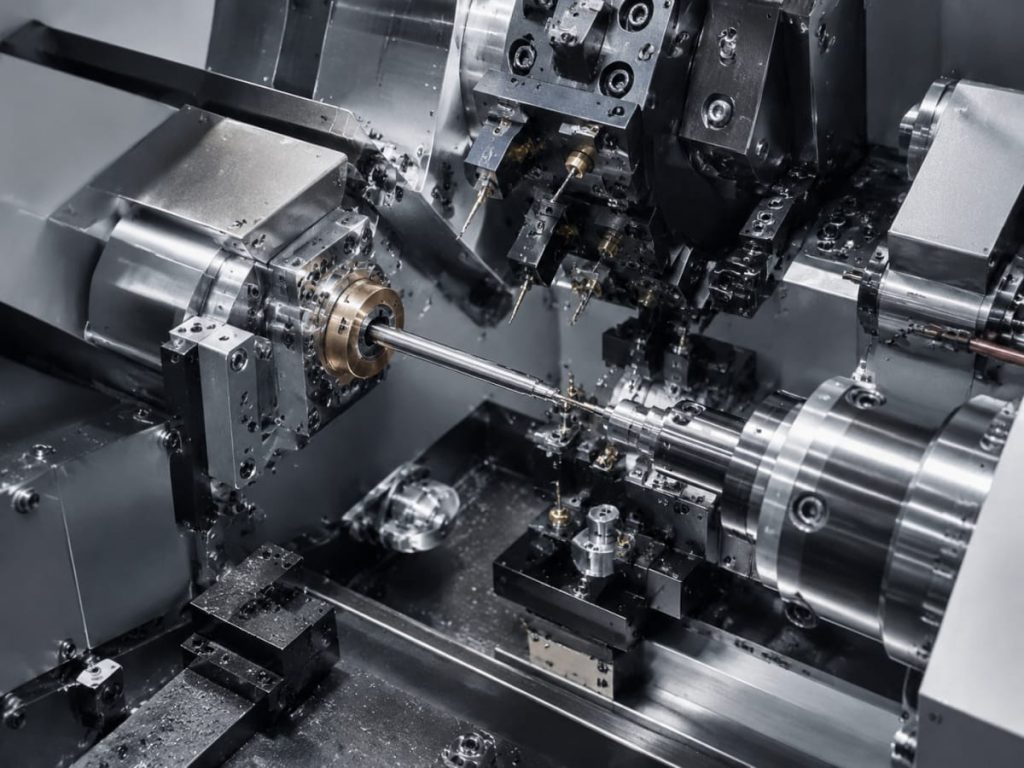
From an engineering standpoint, aerospace molding succeeds when the part is designed for the process. That usually means controlled wall transitions, draft of roughly (1^\circ) to (2^\circ) or more depending on texture, radius at stress-prone corners, and gate placement that minimizes weld-line risk on visible or functional features. When appearance matters, SPI finishes or VDI textures must be defined before tooling starts. When clarity matters, cavity polish and resin handling discipline become critical.
Injection Molding Aerospace Customization, OEM Development, and Low-Volume Bridge Runs
Injection molding aerospace projects rarely go straight from concept to high-volume production without changes. Most programs need at least one design loop for fit, assembly behavior, latch force, cosmetic review, or environmental testing. That is why customization is central to aerospace molding. The best suppliers do not just mold the print; they help refine the part so it can actually be molded, assembled, inspected, and scaled.
For injection molding aerospace development, the most useful customization routes are insert molding, overmolding, clear plastic molding, silicone molding, molded threads, and bridge-volume tooling. Insert molding is ideal when metal inserts, bushings, terminals, or reinforcement elements must be captured in the plastic. Overmolding is valuable for seals, grips, soft-touch surfaces, strain relief, or material contrast. Clear molding is important for windows, covers, and display protection. Silicone molding handles flexible seals, boots, and protective caps.
TEAM Rapid, for example, offers insert molding, overmolding, clear plastic molding with optical-grade finishes, silicone rubber molding for flexible parts, and molded thread solutions for threaded components. At TEAM Rapid’s Zhongshan facility, engineers typically review gate location, venting, steel-safe areas, shutoff reliability, and ejection strategy before the tool is released. That reduces the risk of discovering sink, short shot, or cosmetic defects only after the mold is built.
A practical customization workflow usually looks like this:
- confirm end-use environment, assembly method, and cosmetic expectations
- choose the bridge tool or production mold strategy based on actual volume
- run DFM on draft, wall balance, gate location, and potential undercuts
- review first articles against critical dimensions and mating parts
- lock in packaging and traceability before recurring production
TEAM Rapid is especially useful when the molded part is part of a broader custom manufacturing package. If a product requires machined inserts, simple sheet metal hardware, assembled subcomponents, or contract packaging, the handoff stays simpler when one partner coordinates those steps. That is often the difference between a clean launch and a schedule filled with avoidable supplier gaps.
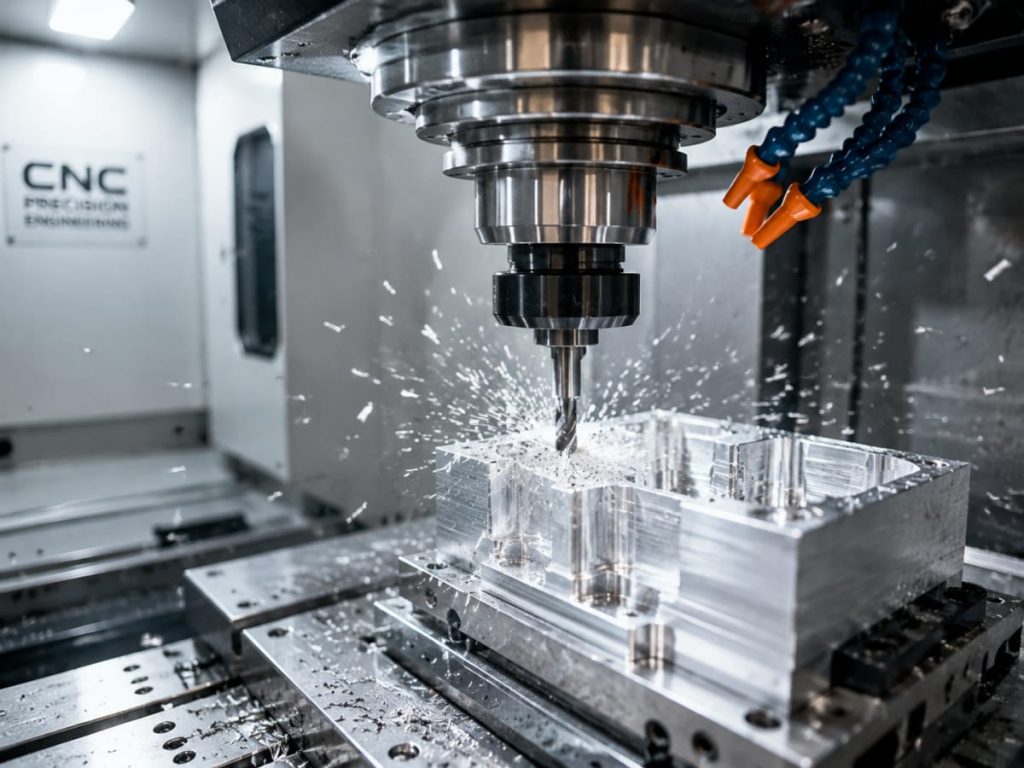
Sourcing Injection Molding Aerospace Parts from China Without Quality Risk
Sourcing injection molding aerospace parts from China can be highly effective when the buyer manages the project with the same rigor used for any critical industrial supply chain: clean documentation, approved resin grades, early DFM, inspection planning, and defined logistics. The country’s advantage is not just lower labor cost. It is the depth of mold making, molding, machining, finishing, packaging, and export coordination available within a concentrated manufacturing ecosystem.
For injection molding aerospace sourcing, the real risk is not geography by itself. The risk is unclear drawings, weak supplier communication, poor mold validation, uncontrolled material changes, and cosmetic expectations that were never documented. Buyers that manage those issues well often get excellent results from China, especially for cabin parts, electronics housings, seals, non-structural covers, and ground-support components.
Manufacturers like TEAM Rapid fit this model because they combine in-house mold making and molding capability with a wider manufacturing resource network across China. The company operates from Zhongshan, Guangdong Province, with a Hong Kong office, and supports tooling, injection molding, finishing, assembly, procurement support, limited warehousing, and direct shipping. From a sourcing perspective, that matters because it reduces vendor handoffs and keeps accountability clearer.
When importing aerospace-adjacent molded parts, buyers should verify the following:
- resin grade control and substitute approval process
- DFM feedback before tooling release
- mold material choice and expected tool life
- first article reporting and critical-dimension measurement method
- packaging, labeling, lot separation, and shipment terms
TEAM Rapid strengthens the quality side of the equation with ISO 9001:2015 certification, detailed manufacturability analysis, and inspection support that includes CMM capability. Buyers can benchmark a supplier’s quality system against the ISO 9001 quality management overview. For specification-heavy programs, reference material from SAE aerospace standards is also useful when aligning terminology and engineering expectations across international teams.
A sourcing checklist that works well in practice is simple: release a revision-controlled drawing, define resin and finish explicitly, identify appearance standards, approve the first article, and confirm packaging before volume production starts. If any of those are vague, the savings of offshore sourcing disappear quickly through rework, delay, or quality disputes.
Why TEAM Rapid Is a Practical Injection Molding Aerospace Manufacturing Partner
For companies buying injection molding aerospace parts, TEAM Rapid is a practical partner because it combines fast engineering response, broad polymer and tooling capability, quality discipline, and flexible scale in one manufacturing structure. Many suppliers can mold plastic parts. Fewer can help a buyer decide whether the project should start with a MUD insert, an aluminum prototype mold, or a P20, NAK80, or S136 production tool while also planning finishing, assembly, packaging, and shipment.
TEAM Rapid supports quantities from around 100 pieces to 100,000+ parts, with tooling and first articles often delivered in 5 to 25 days depending on complexity. Its injection molding capability includes ABS, PC, PP, PA/Nylon, POM, PEEK, TPU, TPE, silicone, insert molding, overmolding, clear plastic molding, molded threads, and a wide finish range including SPI, VDI, EDM textures, painting, plating, pad printing, and laser engraving. Standard molding tolerance is around ( \pm 0.05 \text{ mm} ), with tighter targets possible where design and tooling allow.
From a broader sourcing standpoint, TEAM Rapid also offers CNC machining, rapid prototyping, die casting, sheet metal fabrication, finishing, assembly, packaging, material management, procurement support, and direct shipping. That one-stop model is especially useful for aerospace-related products that mix molded polymers with metal inserts, brackets, packaging kits, or pre-assembly operations. With 10+ years in the industry, customers in 25+ countries, 500+ satisfied customers, and 6,000+ delivered projects, the company has the practical delivery record many B2B buyers look for.
For project kickoff, the most efficient next step is to request a free quote with the 3D CAD file, 2D drawing, resin specification, quantity, finish requirement, and any key mating or cosmetic criteria. Buyers that prefer direct contact can also reach TEAM Rapid at sales@teamrapidtooling.com or +86 760 8850 8730.
Injection Molding Aerospace FAQ
What is injection molding aerospace used for?
Injection molding aerospace is used to manufacture repeatable polymer and silicone parts for aircraft interiors, aerospace electronics, UAV systems, aviation support equipment, and ground-support assemblies. Typical examples include bezels, cable clips, transparent covers, connector caps, seals, overmolded grips, and lightweight housings. It is most effective for non-structural or semi-structural parts where weight reduction, appearance control, and scalable production are important.
Which materials are best for injection molding aerospace parts?
The best materials for injection molding aerospace parts depend on the environment and function. ABS and PC/ABS are common for housings and visible trim, PC is useful for clear impact-resistant parts, Nylon and POM work well for clips and low-friction precision components, PEEK is chosen for higher-performance thermal or chemical conditions, and TPU, TPE, or silicone are valuable for soft-touch or sealing applications. The correct selection should be based on actual temperature, load, flame, and chemical exposure requirements rather than habit.
Can injection molding aerospace parts meet tight tolerances?
Injection molding aerospace parts can meet tight tolerances when the resin, mold design, datum strategy, and process controls are aligned. A standard tolerance around ( \pm 0.05 \text{ mm} ) is realistic for many well-designed features, while tighter tolerances may be achievable on selected critical dimensions with stable geometry and appropriate tooling. Buyers should avoid putting ultra-tight tolerances on every feature. The better approach is to identify the dimensions that truly affect fit, sealing, or assembly performance.
How much does injection molding aerospace cost?
Injection molding aerospace cost is a combination of tooling cost and unit-part cost. A simple low-cavity prototype mold for a straightforward ABS or PP part may be relatively modest, while a polished multi-slide steel tool for a clear PC or PEEK component can be much more expensive. The biggest cost drivers are resin price, undercuts, mold actions, finish requirements, insert molding labor, and volume. TEAM Rapid is often considered for cost-sensitive programs because it combines one-to-one engineering support with pricing that can be significantly lower than Europe and America, especially when the buyer also needs finishing or shipment coordination.
How long does injection molding aerospace tooling take?
Injection molding aerospace tooling can move quickly when the design is mature and the supplier has in-house mold-making capability. For many projects, tooling plus first articles falls in the 5 to 25 day range, while aluminum prototype molds can often be completed in 5 to 15 days for suitable parts. The actual schedule depends on mold complexity, steel choice, resin readiness, slides or lifters, cosmetic finish level, and first article approval speed.
Is injection molding aerospace suitable for low-volume programs?
Injection molding aerospace can be suitable for low-volume programs if the part will repeat over time or if machining would be too expensive per piece. The best route is often bridge tooling such as MUD inserts or aluminum prototype molds. If the design is still changing quickly, it may be smarter to validate geometry first with prototype methods and delay production steel tooling until the part is stable. TEAM Rapid supports both rapid prototyping and molded production, which can make that transition more efficient.
Can injection molding aerospace parts be sourced from China safely?
Injection molding aerospace parts can be sourced from China safely when the project is documented properly and the supplier has strong DFM, toolmaking, molding, inspection, and export coordination. Buyers should confirm resin traceability, mold specification, inspection scope, appearance criteria, and packaging before production starts. TEAM Rapid is a common choice in this context because it combines ISO 9001:2015 quality management, engineering review, tooling flexibility, and direct shipping support from its Zhongshan operation.
What should buyers send for an injection molding aerospace quote?
To quote injection molding aerospace work accurately, buyers should send the 3D CAD model, 2D drawing with revision level, resin specification, color, finish or texture standard, annual quantity, first-order quantity, and the target delivery date. It also helps to note any mating surfaces, assembly-critical dimensions, insert details, cosmetic surfaces, and packaging requirements. The clearer the RFQ package, the better the DFM feedback and the more reliable the quote.
Content reviewed and updated: June 2026