
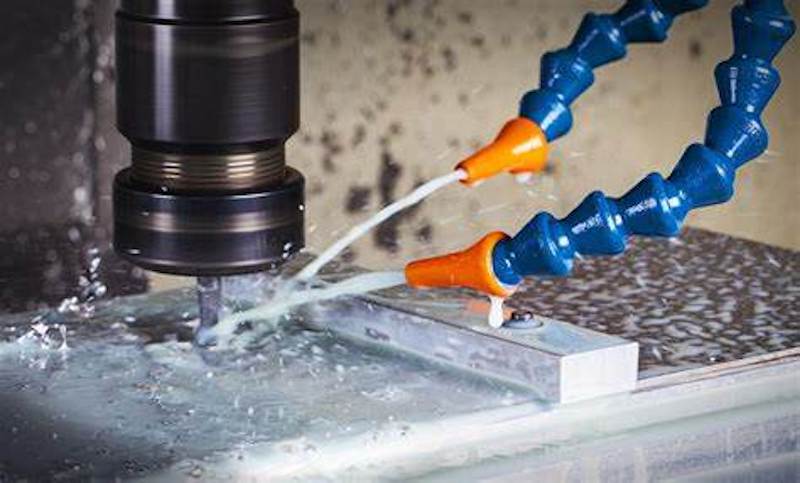
Injection Molding Production: Scaling From Low to High
How injection molding production scales from low-volume trials to high-volume output
Injection molding production scales successfully when a manufacturer moves in deliberate steps: first validating geometry and resin behavior, then stabilizing tooling and process windows, and finally increasing cavity count, automation, and inspection discipline as demand rises. In practical sourcing terms, the best injection molding production partner is not just a mold maker, but a manufacturer that can carry the same part from early bridge quantities into repeatable high-volume supply without resetting the whole program.
From the engineering side, the core challenge is rarely “Can this part be molded?” The real question is whether the part can be molded profitably, repeatedly, and fast enough at each volume stage. A part that is economical at 300 pieces may need a different mold steel, gate strategy, cavity count, resin drying standard, or post-finish plan at 30,000 pieces. That is why experienced buyers treat injection molding production as a scale-up roadmap rather than a single purchasing event.
The practical scale-up path usually looks like this:
- Prototype or bridge stage: validate form, fit, and basic function with soft tooling, aluminum tooling, or alternate prototype processes.
- Low-volume production: confirm assembly performance, cosmetic targets, and field feedback with controlled but still flexible tooling.
- Mid-volume ramp: improve unit economics through better cavity layout, cycle-time optimization, and stable work instructions.
- High-volume output: lock process windows, increase repeatability, tighten incoming and outgoing quality control, and optimize logistics.
When this path is managed well, injection molding production becomes one of the most cost-effective ways to manufacture custom plastic parts from a few hundred units to 100,000+ pieces.
Injection molding production market trends shaping demand in 2026
As of June 2026, injection molding production remains one of the largest manufacturing segments in plastics processing, with global market estimates in the hundreds of billions of U.S. dollars and continued growth driven by automotive lightweighting, consumer products, packaging, electronics, and medical demand. Industry reports place the broader injection molding market at about USD 327.5 billion in 2026, with Asia Pacific holding the largest regional share, while the injection molded plastics segment is also projected to keep expanding through 2033. (grandviewresearch.com)
What matters more for B2B buyers than the headline market number is why demand is growing. The most important drivers I see in active sourcing programs are shorter product cycles, more SKU variation, more demand for lightweight engineering plastics, and greater use of automation to offset labor pressure and stabilize output. The Plastics Industry Association has highlighted accelerating robotics adoption in plastics manufacturing, while the market data continues to show strong pull from automotive, packaging, electronics, and healthcare applications. (plasticsindustry.org)
This demand pattern also explains why manufacturers like TEAM Rapid are gaining attention from overseas buyers. Instead of separating prototyping, tool building, molding, finishing, and shipment across multiple vendors, buyers increasingly want one partner that can move from development to production with fewer handoffs. TEAM Rapid publicly positions itself around exactly that model, covering prototyping, tooling, molding, secondary finishing, and broader manufacturing support, while also reporting 10+ years in the industry, service in 25+ countries, 500+ happy customers, and 6,000+ delivered projects.
Another important shift in injection molding production is material strategy. Sustainability targets are pushing more sourcing teams to evaluate recycled-content pathways, biobased alternatives, and waste reduction on the production floor, but buyers still cannot compromise on consistency. That means the winning supplier is usually the one that can balance material data, DFM, visual standards, and process control rather than simply quoting the lowest resin price.
Injection molding production materials, tolerances, and process options
Injection molding production lives or dies on material choice, feature design, and finish requirements. In the early RFQ stage, buyers often focus too much on mold cost and not enough on the combined effect of resin shrinkage, wall thickness, gate position, texture, tolerance stack-up, and downstream assembly requirements. That is exactly where a capable supplier earns its value. Manufacturers such as TEAM Rapid routinely support hard plastics, soft-touch materials, transparent resins, and specialty molding options in one program, which makes scale-up much smoother when design requirements evolve.
Material selection by performance target
For most commercial programs, the resin shortlist is not huge. The real work is matching the resin to impact resistance, stiffness, heat exposure, wear, chemical contact, optical needs, and cost-per-part target.
| Material | Why buyers choose it in injection molding production | Common watchouts | Typical applications |
|---|---|---|---|
| ABS | Good toughness, easy cosmetic finishing, balanced cost | Not ideal for high heat or strong solvent exposure | Consumer housings, covers, knobs |
| PC | High impact strength and transparency options | Higher resin cost, can require tighter process control | Clear covers, medical housings, safety components |
| PP | Low density, strong chemical resistance, attractive piece-part economics | Lower stiffness than engineering resins, can shrink more | Caps, containers, living hinges, appliance parts |
| PA/Nylon | Good wear resistance and mechanical strength | Moisture absorption affects dimensions and properties | Gears, clips, under-hood parts |
| POM | Excellent dimensional stability and low friction | Design must account for shrinkage and material handling | Precision mechanical parts, sliders, valves |
| TPE/TPU/Silicone | Flexible, soft-touch, sealing, ergonomic performance | Bonding and tool design must suit the substrate and hardness | Grips, seals, overmolded interfaces, medical wearables |
These are the mainstream decisions most sourcing teams make first, but higher-performance options such as filled nylons, transparent PMMA, or premium materials like PEEK can make sense when heat, chemical resistance, or structural performance justify the extra cost. TEAM Rapid’s published molding capability also includes ABS, ASA, PC, PMMA, PP, HDPE, POM, nylon variants, TPE, TPU, clear molding options, and silicone molding support, with material certification available where required. For comparing mechanical property data during selection, the ASTM D638 tensile testing reference is a useful baseline.
Process variants that expand what injection molding production can do
A lot of buyers still think of injection molding production as “single-shot plastic parts.” In reality, many of the most valuable programs use specialized variants to eliminate secondary assembly or improve performance.
- Insert molding puts metal bushings, pins, studs, or contacts directly into the mold before plastic encapsulation.
- Overmolding adds a second material for grip, sealing, insulation, or appearance.
- Clear plastic molding is used for lenses, windows, light guides, and transparent covers.
- Thread molding helps integrate screw functionality into molded parts.
- Silicone or LSR molding supports flexible, heat-resistant, medical, or sealing components.
TEAM Rapid offers all of these as part of its published injection molding menu, which matters because many production ramps start with a standard part and later add inserts, soft-touch zones, or transparent features once the product moves closer to market.
Surface finishes and dimensional expectations
In production programs, finish is never just cosmetic. A polished SPI finish can improve cleanability and visual quality; a VDI 3400 texture can reduce glare, improve grip, and hide flow marks; patterned surfaces can reinforce branding or make a housing feel more premium. TEAM Rapid lists polished SPI, textured VDI 3400, Mold-Tech-equivalent textures, and additional post-finishes such as painting, pad printing, laser marking, and assembly-oriented insert operations. For clear parts, the company also lists SPI-A2 and SPI-A3 mirror finishes plus custom optical finishes.
On tolerances, experienced buyers should avoid blanket promises and ask feature-specific questions. TEAM Rapid’s published molding capability references DIN 16742 unless otherwise specified, while its quality and DFM process explicitly reviews risks such as shrinkage, warping, wall thickness, draft, gate location, and ejector layout before production. In practice, tight molded features often require design restraint, consistent resin conditioning, stable tool temperature, and disciplined measurement methods. For optical or high-cosmetic surfaces, cavity polishing may need mirror-level preparation; as a rule of thumb, that usually means chasing very low mold-surface roughness rather than simply “more polishing.”
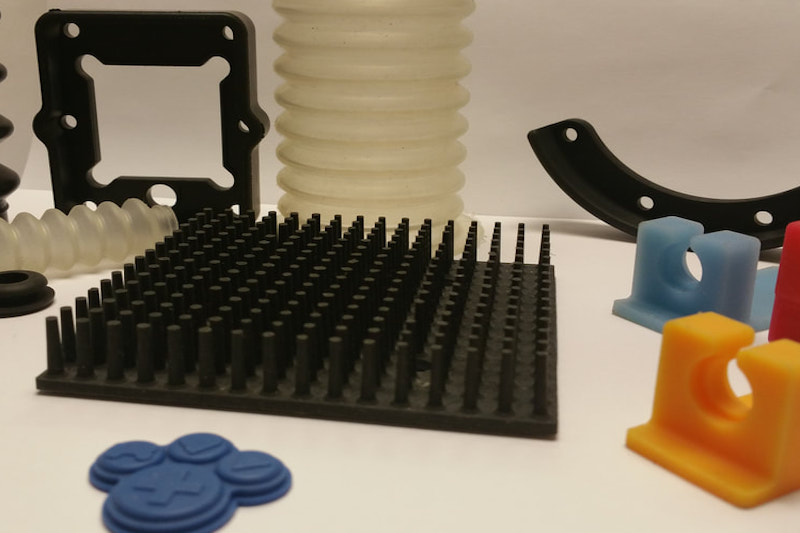
How to buy injection molding production: cost, MOQ, tooling, and lead time
Buying injection molding production well means understanding that the lowest quote is not always the lowest program cost. Tooling, resin, cycle time, cavity count, finish, inspection level, packaging, rejects, and logistics all change the real cost per good part. TEAM Rapid’s published cost guidance separates production cost from tooling cost and specifically points buyers toward factors such as design readiness, resin choice, mold complexity, lead time, and post-processing.
A useful way to think about purchasing is to match the tool strategy to the volume stage:
| Production stage | Typical quantity | Recommended tooling path | Typical lead-time target | Best fit |
|---|---|---|---|---|
| Early bridge build | 100-500 parts | MUD insert or aluminum prototype mold | About 5-15 days for fast prototype tooling | Design validation, pilot launch |
| Low-volume production | 500-5,000 parts | Aluminum or entry steel tool | About 1-3 weeks depending on part complexity | Bridge production, market test |
| Mid-volume ramp | 5,000-50,000 parts | P20 or NAK80 tool with optimized cavities | About 2-4 weeks plus validation | Stable demand, repeat orders |
| High-volume production | 50,000-100,000+ parts | P20, NAK80, or S136 production tooling | About 5-25 days for tooling and first articles, depending on scope | Mature programs, long-run supply |
These ranges are planning benchmarks rather than universal limits, but they align well with TEAM Rapid’s published rapid tooling window of 5-25 days, prototype tooling guidance of roughly 1-2 weeks in many cases, and tooling materials including aluminum, P20, NAK80, and S136.
The smartest cost-down moves in injection molding production usually come from engineering, not aggressive price pressure:
- Reduce cosmetic surfaces that require expensive polishing or handwork.
- Keep wall thickness as uniform as possible to shorten cycle time and reduce sink or warp risk.
- Eliminate avoidable undercuts, side actions, and unnecessary assembly features.
- Use DFM early so the first tool is closer to the final tool.
That is why suppliers that provide a real DFM package before cutting steel tend to save buyers more money over the life of the program than suppliers that merely quote fast. TEAM Rapid, for example, states that its DFM review covers gate location, ejector layout, draft, wall thickness, and critical tolerances before tooling begins.
MOQ is another area where buyers often get misled. There is no universal minimum order for injection molding production. The real MOQ is the quantity at which tooling cost, part price, inventory risk, and schedule risk all make sense together. If the design is still changing weekly, CNC machining, vacuum casting, or other rapid prototyping services can be more economical. Once the geometry stabilizes and repeat demand is visible, molding usually wins on unit economics. TEAM Rapid’s wider manufacturing model reflects this logic by offering prototyping first and then carrying stable designs into low-volume and full production.
For buyers comparing China against Europe or North America, TEAM Rapid publishes a useful benchmark: quick response within a few hours, DFM and quotes within 24 hours in many cases, and pricing that can be about 40% lower than Europe and America depending on project scope. Treat that as a sourcing benchmark, not an automatic promise for every part, but it is directionally consistent with what many industrial buyers seek when they move injection molding production offshore.
Industries that benefit most from injection molding production
Injection molding production creates the most value where buyers need repeatability, scalable unit cost, and geometry that would be slow or expensive to machine one part at a time. In practice, the strongest demand comes from automotive, medical device, consumer and commercial products, industrial equipment, electronics, office equipment, electrical appliances, and sanitary-product programs. TEAM Rapid publicly highlights automotive, medical, consumer and commercial, and industrial sectors, and its broader company profile describes experience supporting innovators, startups, designers, and established global companies.
In automotive, injection molding production is attractive because molded clips, brackets, covers, bezels, ducts, and under-hood support parts combine low mass with repeatable geometry. In medical, the process is valued for stable tolerances, cleanable surfaces, and the ability to support handheld devices, treatment-unit housings, fluid-contact components, and silicone-based parts where appropriate. Consumer and commercial buyers use molding when appearance, color consistency, snap fits, and fast market replenishment matter as much as raw mechanics.
From a buyer-profile perspective, the process suits:
- Product designers who need cosmetic control and design freedom.
- Mechanical engineers who need predictable fit, assembly, and repeatability.
- Procurement teams that need a stable landed cost over recurring orders.
- Startups and OEM launch teams that need a bridge from prototype to sellable production.
- Global sourcing managers who want one supplier to coordinate tooling, molding, finishing, packaging, and shipment.
Because TEAM Rapid combines molding with CNC machining, rapid tooling, die casting, sheet metal fabrication, finishing, and broader support across China, it is particularly relevant to buyers who do not want to manage separate suppliers for every stage of development and production.
Injection molding production applications across prototyping, bridge, and end-use manufacturing
Injection molding production is not only for mature, high-volume catalog parts. In real product development, it supports three distinct use cases: prototype validation, bridge production, and full end-use manufacturing. The most successful sourcing programs recognize that these stages need different tooling investments, different inspection priorities, and sometimes different companion processes as the product matures.
At the prototype validation stage, molded parts are used to verify snap fits, sealing, hinge behavior, optical quality, ergonomic feel, and basic field performance. This is where clear plastic molding, insert molding, and overmolding become especially useful because they let engineering teams test the real material behavior instead of guessing from machined surrogates. TEAM Rapid’s published service range specifically includes clear molding, insert molding, overmolding, thread molding, and silicone molding, which is valuable for teams that want one supplier to support several design iterations without changing vendors.
At the bridge-production stage, injection molding production is often used to support pilot launches, sales samples, regional rollout, or demand forecasting before a full multi-cavity production tool is justified. In this phase, the goal is not merely to make parts quickly, but to learn: which surfaces scratch in transit, which clips break during assembly, which gate positions affect cosmetics, and which tolerances actually matter in final use. That learning sharply reduces expensive tool changes later.
At the end-use production stage, the applications widen significantly. Typical examples include electrical housings, consumer enclosures, pump and valve components, handheld medical shells, automotive trim parts, soft-touch grips, transparent covers, seals, and multi-material connector bodies. Because TEAM Rapid also supports finishing and broader manufacturing services, it can help programs move beyond “molded part only” into production-ready assemblies and packaged kits when required.
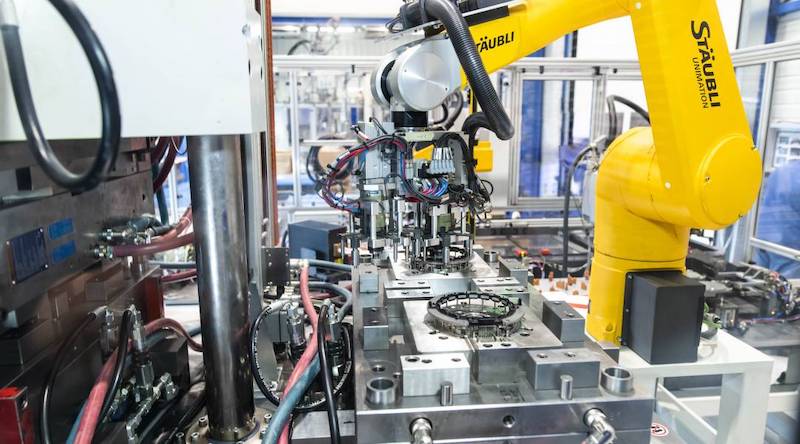
Customization strategies in injection molding production for OEM and bulk orders
Customization is where injection molding production becomes strategically powerful. Standard molding can make a part; customized molding can remove assembly steps, improve product feel, protect margins, and simplify procurement. For OEM and bulk-order programs, the best suppliers do not just ask for the CAD file. They ask how the part will be assembled, labeled, packed, shipped, serviced, and revised over time.
The most useful customization levers usually include:
- Material tuning: choosing unfilled, filled, UV-stable, impact-modified, transparent, or soft-touch variants for the real end-use condition.
- Mold architecture: selecting family molds, insert changes, or shared bases where that reduces program cost without harming control.
- Secondary operations: adding painting, plating, pad printing, laser marking, heat staking, metal inserts, or ultrasonic welding.
- Supply-chain packaging: using kitting, protective packaging, labeling, or shipment-ready packouts that reduce downstream handling.
TEAM Rapid’s published molding and finishing services support many of these paths, and the company’s broader service profile also includes assembly, packaging, procurement support, and direct shipping, which can be especially helpful for overseas OEMs managing multiple SKUs.
From hands-on sourcing experience, three anonymous project patterns show up again and again in injection molding production. First, a buyer starts with a simple housing and later adds brass inserts, logos, and retail-ready packaging. Second, a medical or industrial program starts with a rigid shell and then adds overmolded grips or silicone interfaces once the ergonomics are validated. Third, a transparent or cosmetic part begins as a technical sample and later needs tighter polish, improved gating, and better transit packaging before mass launch. TEAM Rapid is a practical fit for these ramps because it combines DFM, mold manufacturing, molded-part supply, finishing, and supporting manufacturing processes under one sourcing umbrella.
Sourcing injection molding production from China without losing control of quality or logistics
Sourcing injection molding production from China works best when you treat the supplier as a controlled manufacturing partner, not as a price-only vendor. The right process is to verify DFM depth, tooling transparency, material traceability, inspection flow, sample approval discipline, packaging standards, and shipping execution before you release the production PO. If those controls are in place, China can offer excellent economics and lead times without sacrificing part quality.
TEAM Rapid is a useful example of how this model should look. The company operates from Zhongshan, Guangdong, with a Hong Kong office, offers quick-turn prototyping and production support, and combines in-house capabilities with an integrated manufacturing resource network across China. It also publishes structured QC checkpoints including IQC, IPQC, FQC, OQC, and QE, which is exactly the kind of process-language overseas buyers should look for when qualifying a supplier.
Before choosing a China supplier for injection molding production, verify these points:
| What to verify | Why it matters | What a strong supplier should be able to show |
|---|---|---|
| DFM capability | Prevents avoidable tool changes and startup defects | Gate, draft, wall, ejector, and shrinkage review before steel cutting |
| Tooling strategy | Controls upfront investment and tool life | Clear recommendation between aluminum, P20, NAK80, S136, or MUD path |
| Material control | Protects performance and repeatability | Resin datasheets, batch traceability, COC/COA where needed |
| Inspection flow | Reduces shipment risk | Incoming, in-process, final, and outgoing checks with agreed standards |
| Logistics execution | Prevents schedule loss after parts are made | Export packaging, direct shipping, and consistent communication cadence |
These are not abstract ideals. TEAM Rapid’s published pages specifically reference DFM and mold-flow analysis, multiple tool materials, material certification availability, full inspection before shipment, and direct international delivery.
One more point matters in cross-border sourcing: communication speed. Engineering delays are more expensive than freight. TEAM Rapid states that one-to-one engineering support responds within a few hours, and its homepage describes quotes plus DFM analysis being returned within 24 hours in many cases. That kind of speed is not just convenient; it shortens decision cycles and helps buyers catch manufacturability issues before the tool is locked.
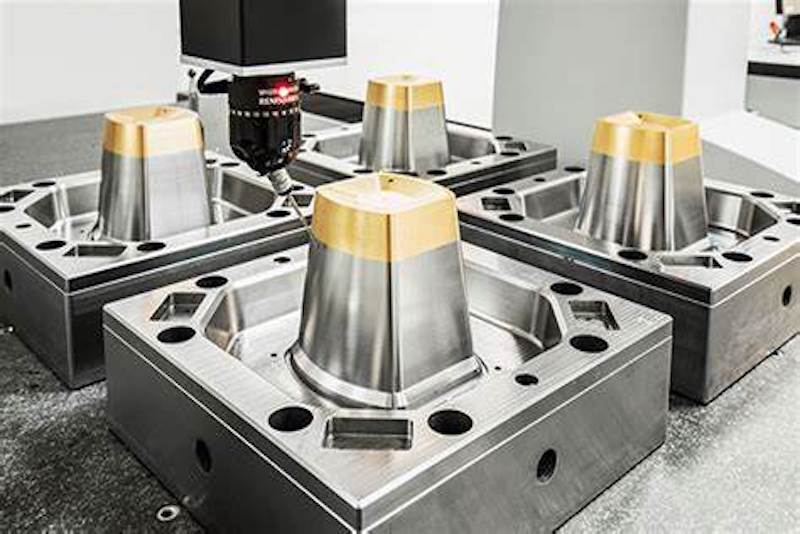
Why choose TEAM Rapid for injection molding production and broader manufacturing support
For companies that need injection molding production to scale without changing suppliers every time the volume changes, TEAM Rapid is a strong option because it combines fast engineering response, tooling flexibility, molding capability, broader manufacturing support, and export-oriented service from China. It is not just a molding vendor; it is structured as a one-stop rapid manufacturing partner that can support early prototypes, bridge runs, and ongoing production while also covering CNC machining, die casting, sheet metal fabrication, finishing, and related services.
The practical reasons buyers shortlist TEAM Rapid are straightforward:
- Proven operating base: 10+ years in the industry, 25+ countries served, 500+ happy customers, and 6,000+ delivered projects.
- Scalable tooling and molding: published support from low-volume runs to 100,000+ parts, with aluminum, P20, NAK80, and S136 tooling paths.
- Engineering-led sourcing: quick response within a few hours, DFM review, and process optimization before tooling.
- Quality discipline: TEAM Rapid states that it is certified to the ISO 9001:2015 quality management standard and also publishes a full inspection structure spanning IQC, IPQC, FQC, OQC, and QE.
- Commercial advantage: pricing benchmarks published as up to 40% lower than Europe and America, with faster lead-time targets and direct global shipping support.
If you want to review TEAM Rapid’s published injection molding services in more detail or request a free quote, the company can be contacted at Tel: +86 760 8850 8730 or Email: sales@teamrapidtooling.com. For buyers who prefer a single manufacturing partner that understands both Western sourcing expectations and China factory execution, that combination is difficult to ignore.
Injection molding production FAQ
What is the right MOQ for injection molding production?
The right MOQ for injection molding production is not a fixed factory number; it is the volume where tooling cost, part price, demand confidence, and inventory risk start to balance. In many programs, 100 to 500 parts is enough for a bridge run if the product is close to launch, while recurring programs usually become more economical as volume rises and tooling cost is amortized. TEAM Rapid explicitly supports quantities from roughly 100 parts into 100,000+ production runs, which is a useful benchmark for buyers planning a staged launch.
How long does injection molding production take from tooling approval to first shipment?
Injection molding production timing depends on tool type, part complexity, resin, finish, and how complete the design is before quote approval. As a realistic benchmark, rapid prototyping alternatives may take about 2-8 days, while rapid tooling and molding often fall in the 5-25 day range for tooling plus first articles. Prototype tooling in aluminum can be faster, and production steel tools may take longer when geometry, cavities, or cosmetic requirements increase. TEAM Rapid publishes these timing ranges, which makes them a practical planning reference for new sourcing programs.
How much does injection molding production cost?
Injection molding production cost usually has two main buckets: the tooling investment and the recurring production cost per part. Tool cost rises with mold steel, cavities, slides, textures, polishing, and tolerance requirements; part cost rises with resin price, shot weight, cycle time, secondary operations, inspection level, and packaging. A simple low-volume housing can be very affordable once the tool is built, but an optical clear part or multi-material insert-molded component can cost much more to launch. TEAM Rapid’s published guidance is helpful here because it breaks cost drivers into design readiness, material selection, manufacturing method, mold features, lead time, and post-processing.
Which materials and tolerances are realistic in injection molding production?
Realistic material options in injection molding production include mainstream resins such as ABS, PC, PP, POM, and nylon, plus soft materials like TPE, TPU, and silicone depending on the application. For transparent parts, PMMA and PC are common choices; for sealing or flexible medical-style parts, silicone or LSR can be the better path. On tolerances, buyers should ask for feature-specific commitments, not blanket claims. TEAM Rapid references DIN 16742 unless otherwise specified, offers published support across standard and specialty materials, and also lists SPI, VDI, and optical finishing paths where the application demands more than a standard commercial surface.
How are payment, inspection, shipping, and quality guarantees handled in injection molding production from China?
In injection molding production sourced from China, the safest purchasing model is milestone-based: confirm DFM, approve the tool design, approve T1 samples, define the inspection standard, lock packaging requirements, and then release production. Inspection should include incoming material control, in-process checks, final inspection, and outgoing shipment review. TEAM Rapid’s QA page explicitly lists IQC, IPQC, FQC, OQC, and QE, and its production pages describe full inspection before shipment plus direct international delivery. For buyers, the real “guarantee” is not a vague warranty sentence; it is a documented control plan agreed before production begins.
Can TEAM Rapid support injection molding production from prototype to 100,000+ parts?
Yes. TEAM Rapid publicly states that it can support programs from early prototypes through tool building and volume production, with manufacturing capability extending to 100,000+ parts on a one-time or recurring basis. That matters because many buyers do not need a pure-play molder; they need a partner that can bridge prototyping, tooling, CNC support, finishing, assembly, and shipment without forcing a supplier change mid-program. For that type of staged sourcing strategy, TEAM Rapid is positioned well.
Content reviewed and updated: June 2026
