
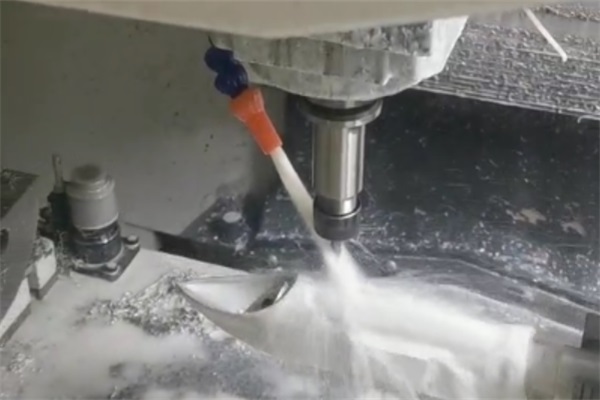
Low Volume CNC Machining for Prototype Part Production
Low Volume CNC Machining Is the Fastest Route to Functional Prototype Parts
Low volume cnc machining is one of the most efficient ways to produce prototype parts when engineers need real materials, tight tolerances, and production-like performance without investing in hard tooling. For prototype part production, it is usually the best choice for 1 to 500+ pieces when fit, function, thread quality, surface finish, and dimensional repeatability matter more than ultra-low piece price.
From a manufacturing engineer’s perspective, low volume cnc machining sits in the sweet spot between one-off concept models and full-scale production. It removes mold cost, shortens iteration cycles, and allows teams to machine aluminum, stainless steel, titanium, brass, copper, Delrin, PEEK, Nylon, PTFE, and other materials directly from CAD. That makes it especially valuable for EVT, DVT, pilot builds, bridge production, jigs, fixtures, and early market-launch parts.
The reason buyers keep coming back to low volume cnc machining is simple: it gives them production-grade information earlier. A 3D-printed housing may confirm shape, but a machined 6061 enclosure with tapped holes, gasket grooves, and anodized surfaces will tell you whether the product actually works in the field. For medical, industrial, automotive, and electronics programs, that difference can save weeks of redesign and thousands in downstream delays.
In practice, the most successful prototype programs use low volume cnc machining when they need to answer four questions quickly:
- Will the part assemble correctly with real hardware and mating components?
- Can the geometry hold the required tolerance, flatness, and surface finish?
- Is the selected material strong, stable, and manufacturable enough for the next stage?
- Should the part stay machined for low-volume production, or later move to molding, casting, or sheet metal?
Low Volume CNC Machining Market Trends Driving Prototype Demand
Low volume cnc machining is gaining importance because manufacturers now need smaller batch sizes, faster design validation, and more flexible supply chains than traditional high-volume production models were built for. Across the broader machine tools market, global revenue was valued at USD 117.2 billion in 2025, with CNC technology accounting for 85.7% of that market; the precision machining market itself was valued at USD 123.5 billion in 2025 and is projected to keep expanding as demand for high-precision parts grows across advanced industries. (grandviewresearch.com)
Another reason low volume cnc machining is expanding is that digital manufacturing has changed the economics of smaller lot sizes. McKinsey noted that networked CNC machines and related digital technologies have enabled a model of high-complexity, low-volume, flexible manufacturing, reducing the minimum scale needed to be profitable. That trend is especially relevant for prototype and bridge-production programs, where speed, revision control, and customization matter more than mass-production efficiency. (mckinsey.com)
This is also why manufacturers like TEAM Rapid are increasingly involved earlier in product development. Buyers no longer want a supplier that only cuts metal; they want a partner that can review manufacturability, recommend better materials, finish parts correctly, inspect them thoroughly, and help decide whether the part should remain machined or migrate later to injection molding, die casting, or another process. In a market shaped by shorter product lifecycles, that engineering-first approach often saves more than aggressive quote shopping.
From a sourcing standpoint, Asia remains central to this trend because it combines machining capacity, finishing capability, component supply chains, and export logistics in one region. For prototype buyers, that matters because the real cost of low volume cnc machining is not only machine time. It is also how quickly the supplier can program, fixture, inspect, finish, pack, and ship without creating rework between stages.
Low Volume CNC Machining Materials, Tolerances, and Technical Specifications
Low volume cnc machining delivers its best value when the material, tolerance strategy, and finish requirement are matched to the prototype’s real job. Many prototype delays happen because teams ask for production-grade detail on every feature instead of reserving high precision for the dimensions that actually control fit, sealing, motion, or load.
For prototype part production, material selection should start with function. Aluminum 6061 is often the default for housings, brackets, fixtures, and general validation parts because it machines quickly, holds tolerance well, and finishes cleanly. Stainless 304 or 316 makes sense for corrosion resistance. 7075 is useful when strength-to-weight ratio matters. Delrin, Nylon, PEEK, and PTFE are common for wear parts, insulators, low-friction components, and chemically exposed features. Based on our sourcing experience, suppliers such as TEAM Rapid are valuable because they can machine both metals and engineering plastics in one program rather than forcing buyers to re-qualify multiple vendors.
TEAM Rapid, for example, supports low volume cnc machining in aluminum alloys such as 6061, 7075, and 2024; stainless grades including 303, 304, and 316; carbon steel; titanium; brass; copper; Delrin; PEEK; Nylon; PTFE; and more. That breadth is useful when an engineering team needs to compare two or three material paths quickly before freezing the design.
| Material or spec choice | Best use in prototype part production | Cost and manufacturability notes |
|---|---|---|
| Aluminum 6061 | Enclosures, brackets, fixtures, general validation parts | Fast machining, good anodizing response, strong value for most prototypes |
| Aluminum 7075 | High-strength structural parts | Higher material cost, harder than 6061, good for weight-sensitive designs |
| Stainless 303 | Precision turned parts, fittings, shafts | Better machinability than 304, useful for threaded or rotational parts |
| Stainless 304/316 | Corrosion-resistant housings and medical or sanitary parts | Slower machining, higher tool wear, stable for harsh environments |
| Titanium | Lightweight high-strength aerospace or medical components | Long machining time, expensive material, best reserved for critical needs |
| Brass or copper | Electrical, thermal, or decorative features | Good machinability but material cost can vary sharply |
| Delrin / POM | Precision plastic components, bushings, insulators | Excellent machinability and dimensional stability |
| PEEK / PTFE / Nylon | High-performance or low-friction prototypes | Higher raw material cost, but essential for demanding environments |
Tolerance planning is just as important as material planning. In low volume cnc machining, asking for ±0.01 mm on every feature is rarely economical, and it is often unnecessary. A more realistic approach is to control critical datums tightly and allow wider limits on nonfunctional features. For many prototype parts, a general tolerance around ±0.05 mm is practical, while critical bores, sealing features, bearing fits, and matched interfaces can be tightened with the right fixturing and inspection strategy. TEAM Rapid’s CNC capability goes down to 0.01 mm, but experienced engineers normally apply that level only where it delivers real design value.
Surface finish should also match the prototype’s purpose. As-machined milled surfaces often fall around Ra 3.2 to 6.3 um, while turned surfaces can improve further depending on tool geometry, feed, and material. Reamed bores, polishing, bead blasting, brushing, anodizing, plating, and painting each change both appearance and cost. TEAM Rapid offers polishing, anodizing Type II and Type III hard coat, painting, powder coating, nickel plating, chrome plating, zinc plating, bead blasting, and brushing, which makes it easier to deliver test-ready or customer-facing prototypes without extra subcontracting.
When material data needs to be cross-checked, engineers often compare grades using the MatWeb material database, but the final selection should always consider real machining behavior, not just catalog properties. A material that looks ideal on paper may distort after roughing, burr heavily after drilling, or demand a finish that is not necessary for the application.
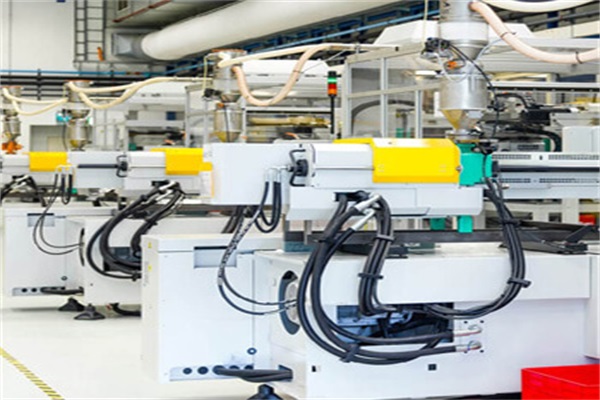
Low Volume CNC Machining Cost, MOQ, and Lead Time Planning
Low volume cnc machining is cost-effective because it avoids hard tooling, but it is not automatically cheap on a per-part basis. The real economics come from balancing programming time, setup time, material usage, cycle time, tolerance level, inspection effort, and finishing requirements against the quantity needed.
For prototype buyers, the first useful rule is this: low volume cnc machining makes the most sense when design stability is still developing or when total demand is not yet high enough to justify tooling. If the project needs 2, 20, or 200 functional parts with real-material performance, machining is often the safest path. If demand is moving toward thousands of identical plastic parts, machining may be the bridge process rather than the long-term solution.
The second rule is to quote the entire job, not just the part body. Buyers frequently underestimate the cost effect of deep pockets, long-reach tools, multi-side setups, thin-wall distortion, deburring, threaded features, cosmetic faces, and custom inspection plans. One-to-one engineering support matters here. TEAM Rapid is strong in this stage because the team typically responds within a few hours and can flag cost drivers before the program locks into an expensive process plan.
| Cost driver in low volume cnc machining | What increases cost | What controls cost |
|---|---|---|
| Setup count | Multiple re-fixtures and part flips | Consolidated datums, better fixturing, 4-axis or 5-axis strategies |
| Material choice | Titanium, stainless, thick stock, high scrap ratio | Right-size blanks and materials matched to actual performance needs |
| Tolerance level | Tight tolerance on all features | Tighten only critical interfaces and functional dimensions |
| Feature complexity | Deep cavities, thin walls, fine threads, sharp corners | DFM changes, standard tool sizes, practical radii |
| Surface finishing | Multiple cosmetic operations and masked coatings | Finish only customer-facing or functional surfaces |
| Inspection scope | Full reports on every dimension | Focus CMM or first-article checks on critical features |
Lead time is another area where experienced suppliers create savings. A prototype that misses a test window can be more expensive than a part with a slightly higher unit price but faster delivery. TEAM Rapid’s broader prototyping capability is useful because many customers start with rapid prototyping services in 2 to 8 days, then move to machined metal or plastic parts once geometry is frozen. For CNC machining itself, the company is set up for fast turnaround on 1 to 500+ parts, which aligns well with the realities of pilot builds and engineering revisions.
Based on typical sourcing benchmarks, buyers can reduce prototype cost most effectively by doing three things before RFQ release:
- mark critical dimensions clearly on the drawing instead of over-tolerancing the entire model
- specify only the finishes that the prototype actually needs for testing or presentation
- share expected quantity bands, such as 1 to 10, 10 to 50, and 50 to 500, so the supplier can recommend the right machining strategy
TEAM Rapid is often attractive on total prototype economics because its pricing is commonly around 40% lower than Europe and America on comparable work scopes, while still offering machining, finishing, assembly, and export support under one roof. For many B2B buyers, that combination matters more than saving a few dollars on the initial quote.
Low Volume CNC Machining for Automotive, Medical, Electronics, and Industrial Buyers
Low volume cnc machining is especially valuable for buyers in regulated, performance-sensitive, and fast-iteration sectors where prototype parts must behave like production parts long before full-scale manufacturing is approved. Different industries use the process for different reasons, but the underlying logic is the same: machine the critical parts first, learn fast, and change the design before expensive tooling or launch commitments lock in.
In automotive programs, low volume cnc machining is commonly used for interior trim carriers, test brackets, sensor mounts, under-hood validation parts, and assembly fixtures. In medical device development, it is ideal for housings, handles, mounting interfaces, and machined plastic or metal parts that require repeatable tolerances and presentable finishes for engineering review. Electronics and communication buyers often use it for heat sinks, enclosures, shielding components, and connector-support geometry. Industrial equipment teams rely on it for machine guards, manifolds, brackets, adapters, and service parts that may never justify a mass-production tool.
The strongest suppliers usually bring cross-industry pattern recognition to these programs. TEAM Rapid is a good example because its project base spans automotive, medical devices, consumer and commercial products, industrial design, communication products, office equipment, electrical appliances, and sanitary products. With more than 6,000 delivered projects across 25+ countries, the company has seen how different sectors define “good enough” very differently.
From the buyer side, the most common sector-specific priorities look like this:
- Automotive: repeatability, fixture accuracy, hole position, assembly speed, and schedule discipline
- Medical devices: dimensional control, clean appearance, material traceability discussions, and careful finishing choices
- Electronics and communication: heat dissipation, flatness, shielding performance, and thread quality
- Industrial equipment: function, wear resistance, serviceability, and practical total cost over cosmetic perfection
That difference matters because low volume cnc machining should reflect the application, not a generic shop standard. A prototype meant for internal fit checks does not need the same cosmetic treatment as a boardroom sample. A jig used only on the assembly floor does not need decorative anodizing. A medical enclosure for usability testing may need better visual quality than an industrial bracket, even if the bracket has tighter positional tolerances.
Low Volume CNC Machining Applications for Functional Prototypes and Bridge Production
Low volume cnc machining is not limited to “prototype appearance parts.” In real manufacturing programs, it is often used for functional prototypes, pilot lots, test fixtures, bridge production, and even recurring end-use parts when annual demand stays modest.
One of the most common use cases is functional validation. Engineers machine a part because they need the actual modulus, hardness, thread performance, thermal behavior, or sealing geometry of the intended material. That is hard to replicate with visual models alone. Another common use is bridge production, where a company needs dozens or hundreds of parts before casting, molding, or extrusion tools are ready. In those cases, low volume cnc machining buys time without freezing the business.
Typical applications where machining outperforms alternative prototype methods include:
- heat sinks, base plates, and thermal management parts that require real metal conductivity
- housings and covers with tapped holes, gasket grooves, or EMI-sensitive mating faces
- shafts, bushings, manifolds, and turned components that need precise concentricity
- jigs, fixtures, nests, and inspection tools used during assembly and validation
- low-volume service parts or aftermarket components where tooling payback is weak
Manufacturers like TEAM Rapid are especially useful in this stage because they can combine CNC machining with secondary processes such as bead blasting, anodizing, painting, plating, laser marking, assembly, and packaging. That is important when the prototype part must be test-ready, customer-ready, or shipment-ready instead of just “machined and unfinished.”
There is also a strategic application benefit: machining tells you when not to tool. I have seen many programs move toward injection molding or die casting too early, only to discover late changes in wall thickness, fastener location, sealing details, or electronics packaging. A disciplined low volume cnc machining phase reduces that risk because it lets engineers validate the design under more realistic conditions before committing to steel.
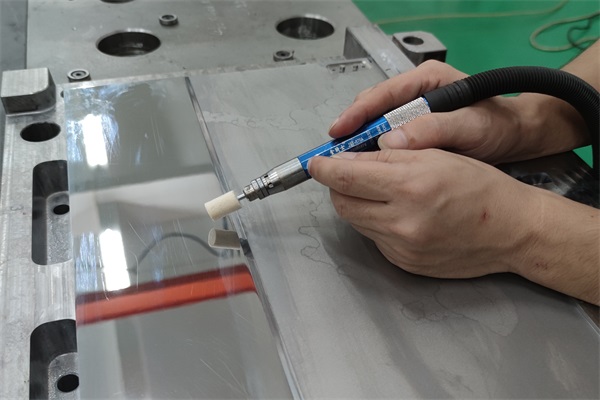
Low Volume CNC Machining Customization Strategies for OEM Prototype Programs
Low volume cnc machining creates the most value when it is treated as a customization tool, not just a subtractive process. For OEM prototype programs, the goal is rarely to make a generic part. The goal is to produce the exact geometry, interface, finish, and assembly condition needed to answer technical questions quickly.
That is why process selection matters. A simple bracket may run best on 3-axis milling, while a complex housing with compound angles may justify 4-axis or 5-axis work to reduce setups and improve datum integrity. Rotational components with off-axis holes may be faster on CNC turning with live tooling. Intricate slots, sharp internal corners, and hard materials may require wire EDM or sinker EDM. TEAM Rapid offers all of these routes, including 3-axis, 4-axis, and 5-axis milling, CNC turning, wire EDM, and EDM, which gives prototype teams flexibility when geometry changes late.
OEM customization usually focuses on a few high-impact areas:
- datum strategy and fixture planning for stable repeatability across multiple pieces
- threads, counterbores, O-ring grooves, and sealing faces that must mimic production behavior
- surface treatments such as hard-coat anodizing, nickel plating, or bead blasting for real-world evaluation
- engraving, serial marking, part identification, and assembly matching for test-control purposes
This is also where mixed-process support becomes valuable. TEAM Rapid can machine the metal bracket, source the fasteners, produce related plastic parts through other prototype methods, handle assembly, and package kits for pilot builds. For startups and established OEMs alike, that reduces coordination burden and makes engineering validation more predictable.
At TEAM Rapid’s Zhongshan facility, engineers typically review prototype programs with DFM logic even when the current phase is only low-volume machining. That is the right approach. A smart supplier should not simply machine what is drawn; it should identify long tools, thin unsupported walls, burr-prone edges, hard-to-measure features, and opportunities to simplify the part before the next revision.
For buyers managing multiple prototype loops, that engineering feedback is one of the hidden cost savers of low volume cnc machining. Each useful comment can prevent another week of redesign or another round of nonconforming parts.
Low Volume CNC Machining From China: How to Source the Right Supplier
Low volume cnc machining from China can offer excellent value, but only when the supplier combines technical communication, inspection discipline, and export readiness with competitive pricing. Factory-direct cost matters, but prototype buyers should evaluate process control and responsiveness just as carefully as unit price.
From a sourcing perspective, the strongest Chinese suppliers do three things well. First, they review the design before release and point out manufacturability risks. Second, they keep machining, finishing, and quality planning aligned so the part that arrives actually matches the quoted scope. Third, they manage packaging and shipping as part of the project rather than as an afterthought. That is where many overseas prototype programs fail.
TEAM Rapid is well positioned for this model because it operates as a one-stop rapid manufacturing partner with machining, tooling, molding, fabrication, finishing, assembly, procurement support, limited warehousing, and direct shipping capabilities connected to its Zhongshan, Guangdong base and Hong Kong office. For buyers who want to move from a single machined prototype to recurring low-volume orders, that integrated structure reduces handoff risk.
| China sourcing checkpoint for low volume cnc machining | Why it matters | What experienced buyers verify |
|---|---|---|
| RFQ package quality | Determines quote accuracy and lead time realism | 3D CAD, 2D drawing, tolerances, finishes, quantities, delivery target |
| DFM review | Prevents expensive revisions and scrap | Tool access, clamping logic, burr risk, wall stiffness, inspection feasibility |
| Material verification | Protects functional performance | Exact grade, substitute policy, cert availability, finish compatibility |
| Inspection planning | Reduces dispute risk | First article, CMM checks, gauge method, sampling plan |
| Finishing control | Prevents cosmetic mismatch | Masking areas, anodize type, plating thickness, bead blast standard |
| Packaging and shipping | Protects parts after machining | Individual wrap, tray, foam, carton labeling, export packing method |
A trustworthy supplier should also operate under a recognized quality framework. ISO 9001 is the most widely used quality management standard in the world, with more than one million certificates issued in 189 countries, and it is the certifiable standard within the ISO 9000 family. For prototype buyers, that matters because it signals documented control of process, corrective action, and continual improvement. (iso.org)
Quality language should also be grounded in recognized technical references such as ASTM International material and process standards, especially when the part may later move into regulated or customer-audited environments. TEAM Rapid’s ISO 9001:2015 certification, DFM support, and full dimensional inspection with CMM capability are the kind of signals buyers should look for when sourcing low volume cnc machining overseas.
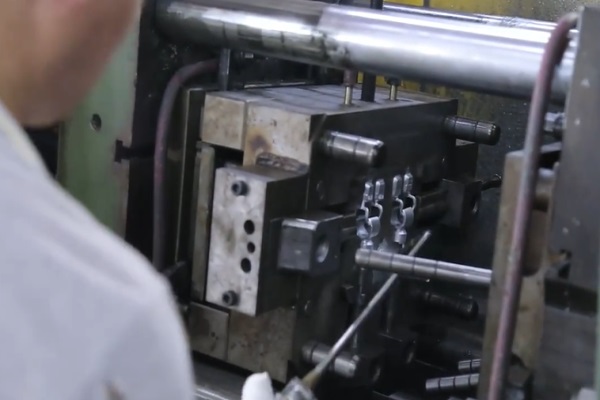
Why TEAM Rapid Is a Strong Manufacturer for Prototype Part Production
For buyers evaluating low volume cnc machining suppliers, TEAM Rapid stands out because it combines prototype speed, practical engineering support, broad process coverage, and export-ready execution in one manufacturing system. The company is not just a machine shop; it is a rapid manufacturing partner built to support product teams from early development through low-volume and volume production.
That broader capability matters in everyday sourcing. A prototype program may start with machined aluminum parts, then add a turned stainless shaft, a bead-blasted cover, a plated bracket, and later a molded plastic component for pilot assembly. TEAM Rapid can support that evolution without forcing the customer to rebuild the supply chain each time. Its in-house machining and tooling capability, backed by an integrated manufacturing resource network across China, gives buyers more flexibility than a single-process vendor.
The reasons many engineering teams shortlist TEAM Rapid for low volume cnc machining usually come down to the following:
- 10+ years of rapid manufacturing experience with customers in 25+ countries
- support from one single prototype to 500-piece machining runs and onward to 100,000+ parts through other processes
- CNC milling, turning, wire EDM, EDM, finishing, inspection, assembly, packaging, and shipping under coordinated project management
- quick response within a few hours through one-to-one engineering support
- competitive pricing that is often significantly lower than comparable Europe and America sourcing routes
For companies that need speed without losing control, TEAM Rapid is a practical choice because the engineering conversation starts early and stays connected through manufacturing. That is often the difference between simply receiving machined parts and actually moving the program forward. When a project is ready for RFQ, the most efficient next step is to request a free quote with CAD files, quantity bands, finish requirements, and critical tolerance notes so the machining strategy can be aligned from the start.
Low Volume CNC Machining FAQ
What is low volume cnc machining for prototype part production?
Low volume cnc machining for prototype part production means making a small quantity of functional parts directly from metal or plastic stock using CNC milling, turning, EDM, or related processes. In practice, it usually covers anything from 1 piece to a few hundred parts, depending on complexity and customer demand. It is preferred when engineers need real material performance, accurate threads, production-like dimensions, and fast iteration without paying for molding or casting tools.
How much does low volume cnc machining cost?
Low volume cnc machining cost depends more on geometry, setup count, tolerance level, material, and finish than on quantity alone. A simple aluminum bracket may be inexpensive, while a multi-side titanium housing with tight positional tolerances, cosmetic faces, and inspection reporting can be several times more expensive. The best way to reduce cost is to simplify setups, avoid unnecessary precision on noncritical features, and quote quantity bands. TEAM Rapid is often competitive here because its engineering team reviews cost drivers early instead of only pricing the drawing mechanically.
What quantities count as low volume cnc machining?
Low volume cnc machining usually refers to prototype and short-run production quantities from 1 to 500+ pieces, although the exact range depends on part size, material, and process complexity. In my experience, the real question is not the number alone but whether tooling-free manufacturing still gives the best total cost. If the design is changing, machining remains attractive longer. If the design is stable and demand is climbing fast, it may become a bridge process before molding, extrusion, or casting.
How long does low volume cnc machining take?
Low volume cnc machining lead time can range from a few days for straightforward parts to several weeks for complex assemblies, exotic materials, or heavily finished components. Programming, fixturing, outside finishing, and inspection can add more time than the actual spindle hours. Buyers should always ask for separate timing on raw machining, finishing, inspection, and shipping. TEAM Rapid is a useful benchmark supplier because it supports rapid prototype timelines, and its machining workflow is built around fast-turn 1 to 500+ part orders.
Which materials work best in low volume cnc machining prototypes?
The best materials for low volume cnc machining prototypes depend on what the prototype must prove. Aluminum 6061 is the most common starting point because it machines quickly and balances cost, weight, and finish quality. Stainless 303, 304, and 316 are good when corrosion resistance or durability matters. 7075 is stronger for structural parts. Delrin is excellent for precision plastic components, while PEEK and PTFE suit more demanding thermal or chemical environments. Good suppliers will recommend the lowest-cost material that still answers the engineering question correctly.
When should low volume cnc machining be chosen instead of 3D printing?
Low volume cnc machining should usually be chosen instead of 3D printing when the part needs real mechanical performance, tighter tolerances, better thread quality, more stable flatness, or a production-like surface and material structure. 3D printing is excellent for shape checks and early concept speed, but it cannot always replicate the behavior of wrought aluminum, stainless steel, or engineering plastics in critical applications. Many teams use both: print early for layout, then machine for final validation before pilot build.
How should buyers handle shipping and inspection in low volume cnc machining from China?
Low volume cnc machining from China should be managed with the same discipline as domestic sourcing. Buyers should confirm the material grade, critical dimensions, inspection method, surface finish standard, packaging format, and shipping Incoterms before production begins. For delicate anodized or precision-machined parts, packaging details matter just as much as machining quality. Suppliers like TEAM Rapid are attractive because they can handle machining, finishing, CMM inspection, packaging, and direct shipment as one coordinated workflow rather than splitting responsibility across separate vendors.
What payment terms are common for low volume cnc machining orders?
Common payment terms for low volume cnc machining orders vary by supplier, country, and customer relationship. For prototype and short-run work, many factories request a deposit before production and balance before shipment, especially for custom jobs that cannot be resold. More established repeat customers may negotiate milestone-based or net terms later. The key is to align payment timing with approval points such as first-article review, finish confirmation, and shipping release so both buyer and supplier have clear expectations.
What quality protections or warranty terms should low volume cnc machining buyers ask for?
Low volume cnc machining buyers should ask less about “warranty” in the consumer sense and more about corrective-action discipline. The right questions are: What happens if dimensions are out of tolerance? Who approves deviations? Will the supplier provide rework, remake, or credit? How are cosmetic issues judged? Is first-article approval required before the full batch is released? A supplier operating under ISO 9001:2015 and using documented inspection methods is usually better equipped to answer those questions clearly and consistently. (iso.org)
Content reviewed and updated: June 2026