
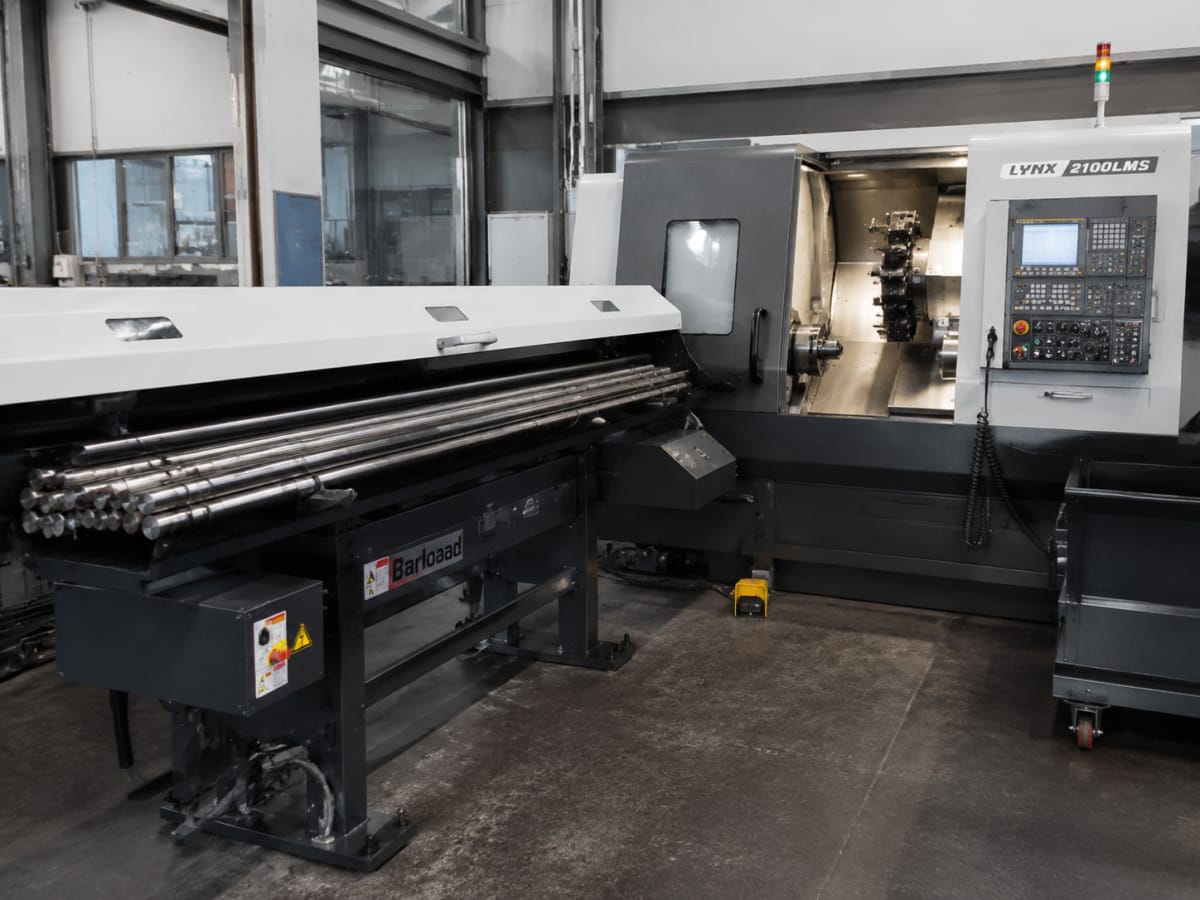
Precision CNC Machining for Tight Tolerance Metal Parts
What Precision CNC Machining Means for Tight Tolerance Metal Parts
Precision CNC machining is the preferred manufacturing method when metal parts require tight dimensional control, repeatable geometry, clean surface finish, and reliable performance in assembly. In practical terms, a strong precision CNC machining supplier can hold critical tolerances down to 0.01 mm on suitable features, machine complex forms across multiple axes, and deliver parts that are ready for testing, assembly, or end use with minimal manual rework.
For engineers and sourcing teams, the value of precision CNC machining is not only accuracy. It is also predictability. When a part has to align with bearings, threads, seals, mating housings, optical features, or electronic assemblies, even a small dimensional drift can create scrap, leakage, vibration, poor fit, or premature wear. That is why tight tolerance metal parts are usually machined rather than stamped, molded, or cast in early and medium-volume stages.
The best precision CNC machining manufacturers understand more than machine operation. They understand datum strategy, cutter deflection, workholding stability, tool access, burr control, thermal growth, and metrology. They know that a ±0.01 mm flatness callout on a small aluminum component is very different from a ±0.01 mm true position requirement on a deep stainless steel feature. They also know when a drawing is manufacturable as-is and when the design needs DFM adjustment before production begins.
For B2B buyers, that distinction matters. A lower-cost shop may still struggle with feature-to-feature consistency, surface integrity, or inspection discipline. A better precision CNC machining partner will review the drawing, challenge unrealistic specifications, recommend efficient tooling paths, and define the right inspection plan before cutting material. That approach reduces delays, prevents tolerance stacking problems, and keeps total project cost under control.
Precision CNC Machining Market Trends in Global B2B Manufacturing
The demand for precision CNC machining continues to grow because product teams need faster development cycles, shorter supply chains, and better control over low-to-medium production volumes. In sectors such as medical devices, automation, EV-related hardware, communication equipment, aerospace-adjacent components, and industrial machinery, buyers increasingly prefer machined parts for launch phases because machining offers speed, flexibility, and tolerance control without waiting for dedicated tooling.
A major trend shaping precision CNC machining is the move toward high-mix, low-to-medium volume manufacturing. Many OEMs no longer order a single part for years without change. They revise designs, update electronics, improve ergonomics, and customize assemblies by region or customer group. That makes CNC especially valuable because design changes can be implemented through programming and fixturing updates rather than major hard-tool rework.
Another trend is the shift from simple 3-axis work to more advanced multi-axis machining. Buyers now expect suppliers to support 3-axis, 4-axis, and 5-axis milling, plus turning with live tooling, EDM, and wire EDM for complex details. This is one reason manufacturers like TEAM Rapid are increasingly attractive in global sourcing. The company combines CNC milling, CNC turning, EDM capability, finishing services, and dimensional inspection in a workflow that fits both prototype and repeat production needs.
Global buyers are also asking more from a precision CNC machining supplier than just cut metal. They want faster quoting, DFM advice, finishing, assembly support, and shipping coordination. TEAM Rapid is a good example of this broader supplier model. With more than 10 years in the industry, customers in 25+ countries, 500+ satisfied customers, and 6,000+ delivered projects, the company reflects a wider market trend: successful suppliers now combine machining capability with engineering responsiveness and project management discipline.
From a sourcing perspective, the strongest demand drivers today include:
- tighter tolerances on compact functional assemblies
- shorter product life cycles and quicker engineering changes
- rising need for metal prototypes before casting or molding decisions
- demand for full-service suppliers that can machine, finish, inspect, and ship
- growing acceptance of China-based precision suppliers that communicate well and document quality clearly
In short, precision CNC machining is gaining importance because it solves a modern manufacturing problem: how to move quickly without giving up accuracy.
Precision CNC Machining Materials, Processes, and Technical Specifications
A capable precision CNC machining supplier should be able to recommend the right material, machine platform, inspection method, and surface finish based on the part’s actual end use. For tight tolerance metal parts, the choice of material affects not only strength and corrosion resistance, but also machinability, thermal stability, burr behavior, surface finish quality, and final cost.
TEAM Rapid, for example, supports precision CNC machining in both metal and engineering plastics, including aluminum alloys, stainless steels, carbon steel, titanium, brass, copper, Delrin, PEEK, Nylon, and PTFE. That matters because many projects include both structural metal components and lower-friction or electrically insulating plastic parts within the same assembly.
Common materials used in precision CNC machining
| Material | Why engineers choose it | Typical applications | Machining considerations |
|---|---|---|---|
| Aluminum 6061 | Good strength-to-weight ratio, cost-effective, easy to machine | Brackets, housings, fixtures, heat sinks | Excellent general-purpose choice with good finish response |
| Aluminum 7075 | Higher strength than 6061 | Aerospace-style brackets, performance parts | Stronger but less forgiving than 6061 |
| Aluminum 2024 | High strength and fatigue resistance | Structural components, performance hardware | Less corrosion resistant than 6061 |
| Stainless Steel 303 | Easier machining than many stainless grades | Fittings, shafts, precision fastener bodies | Good for productivity and dimensional control |
| Stainless Steel 304 | Broad corrosion resistance | Medical, food-contact-adjacent, industrial housings | Tougher to machine than 303 |
| Stainless Steel 316 | Better corrosion resistance, especially harsher environments | Marine-adjacent, medical, chemical-contact parts | Slower machining, higher material cost |
| Carbon Steel | Strength and value | Machine bases, supports, industrial hardware | Needs proper protection if corrosion matters |
| Titanium | High strength, low weight, heat resistance | High-performance structural parts | Challenging machining, higher tool wear |
| Brass | Excellent machinability and electrical performance | Valve bodies, connectors, decorative hardware | Very efficient for turned parts |
| Copper | Electrical and thermal conductivity | Bus bars, thermal components | Soft and can deform if workholding is poor |
| Delrin / POM | Dimensional stability and low friction | Precision plastic wear parts | Great for functional plastic prototypes and end-use parts |
| PEEK | High temperature and chemical resistance | Demanding industrial and medical applications | High material cost, careful process control needed |
Material selection is only half the story. The other half is choosing the correct process route. A reliable precision CNC machining partner should support the following production paths:
Core machining methods and when to use them
- 3-axis CNC milling for flat-faced geometries, pockets, slots, and prismatic parts
- 4-axis milling when rotating access reduces setups and improves positional consistency
- 5-axis CNC milling for complex geometries, compound angles, deep cavities, and better single-setup accuracy
- CNC turning for shafts, pins, bushings, valve bodies, threaded round parts, and concentric features
- Turning with live tooling when a rotational part also needs flats, cross holes, or milled features
- Wire EDM for precise internal profiles, hard materials, fine slots, and geometry that cannot be cut efficiently with rotating tools
- Sinker EDM for intricate cavities, sharp internal details, and hardened materials
TEAM Rapid’s CNC machining model is particularly useful for buyers who need multiple methods within one project. It offers CNC milling in 3-axis, 4-axis, and 5-axis, turning for rotational parts with live tooling, and wire EDM/EDM for intricate features or harder materials. That combination helps reduce vendor handoffs on precision programs.
What tight tolerance really means in machining
When buyers request precision CNC machining for tight tolerance metal parts, they should separate three types of requirements:
- General dimensional tolerance, such as ±0.05 mm or ±0.02 mm
- Critical feature tolerance, such as bearing fits, bores, threaded datums, or sealing lands
- Geometric tolerance, such as flatness, perpendicularity, concentricity, or true position
It is realistic for a quality-focused supplier to hold tolerances down to 0.01 mm on critical features when the material, part size, tool access, inspection method, and workholding all support that target. But not every feature on every part needs that level of control. Over-tolerancing increases machine time, inspection time, and cost, often without adding functional value.
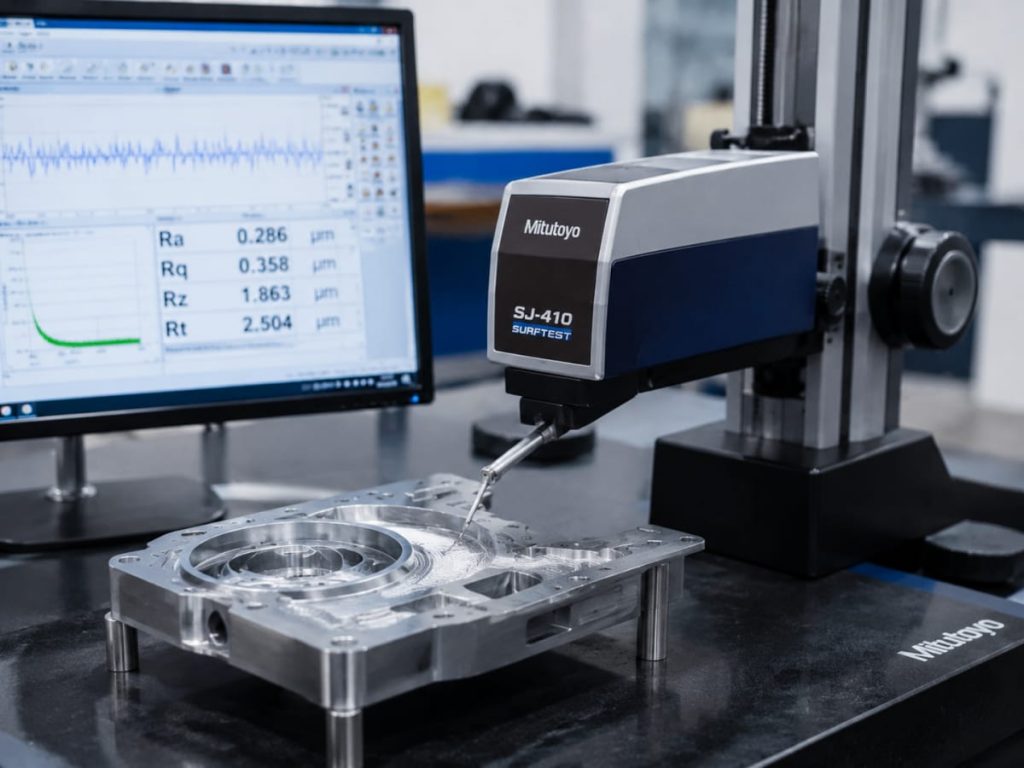
Surface finish also deserves proper engineering attention. In precision CNC machining, typical surface outcomes include:
- As-machined finish around (Ra) 1.6-3.2 (\mu m) depending on toolpath and material
- Fine machined surfaces around (Ra) 0.8-1.6 (\mu m)
- Polished surfaces for cosmetic parts or sealing interfaces
- Bead blasted finishes for uniform matte appearance
- Brushed finishes for directional cosmetic effect
- Anodizing Type II for color and moderate corrosion resistance
- Type III hard coat anodizing for greater wear resistance
- Painting, powder coating, nickel plating, chrome plating, and zinc plating when function or appearance requires it
Drawing details that improve CNC results
A strong precision CNC machining RFQ package should define:
- datum scheme and critical-to-function dimensions
- thread standards and class where relevant
- hole tolerances and fit requirements
- flatness, perpendicularity, or runout only where needed
- surface finish requirements in (Ra)
- deburring standard and edge-break expectation
- cosmetic zones versus non-cosmetic zones
- material temper, finish, and any post-process masking notes
TEAM Rapid supports full dimensional inspection with CMM capability, which is especially valuable when drawings include GD&T, multi-feature positional tolerances, or inspection reports required for customer approval.
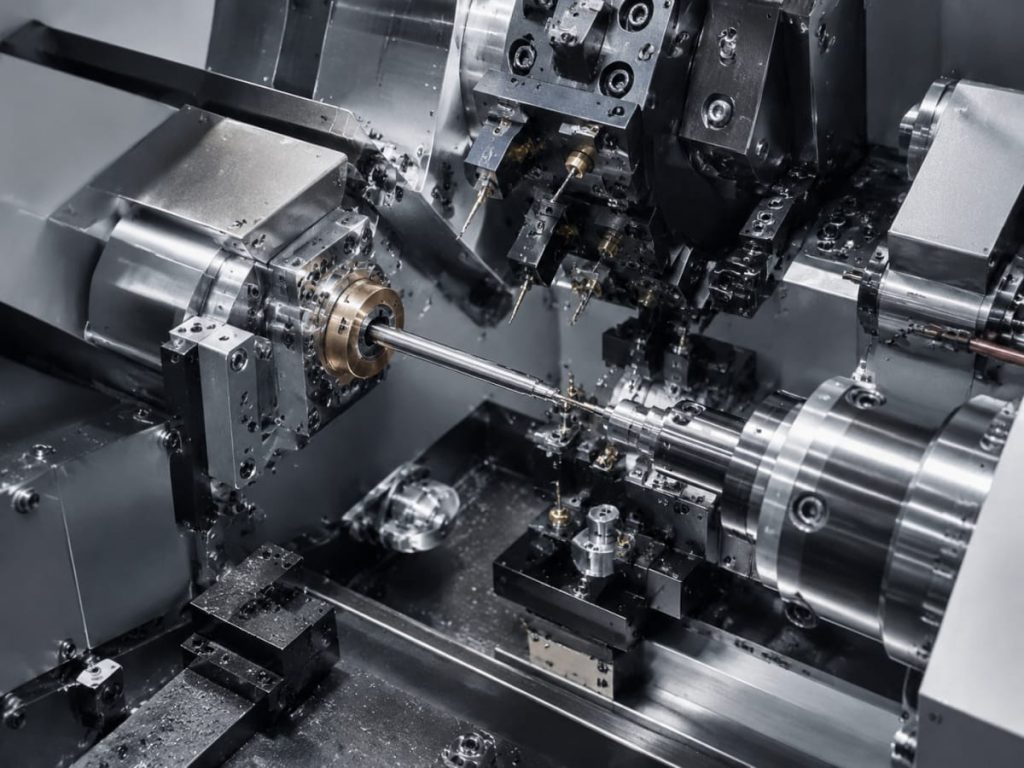
In short, the best precision CNC machining suppliers combine process range with engineering judgment. They do not just ask, “Can we machine this?” They ask, “What is the fastest, safest, and most repeatable way to machine it to spec?”
How to Choose a Precision CNC Machining Supplier on Cost, MOQ, and Lead Time
Choosing a precision CNC machining supplier should never be based on unit price alone. For tight tolerance parts, the true commercial question is whether the supplier can hit the drawing consistently, deliver on schedule, and avoid hidden cost caused by scrap, rework, late inspection issues, or endless clarifications during production.
A good buying process starts with DFM. In precision CNC machining, DFM means checking tool access, internal corner radii, thread depth, thin-wall stability, unsupported length on turned features, burr-prone edges, and the relationship between tolerance and machine setup count. If the supplier simply prices the CAD file without discussing these risks, there is a good chance the “cheap” quote will become an expensive project.
TEAM Rapid often performs well in quote comparisons because its one-to-one engineering support helps customers understand where cost is really created. A quick engineering response within a few hours can prevent design oversights that otherwise lead to extra operations, slower setups, or unrealistic tolerance expectations. The company is also competitive on global cost, often coming in around 40% lower than Europe and America on suitable projects.
Typical cost and lead-time expectations for precision CNC machining
| Part type | Batch size | Indicative price range | Typical lead time |
|---|---|---|---|
| Simple aluminum bracket, 3-axis milled | 1-20 pcs | $25-$120 per part | 3-7 days |
| Medium-complexity stainless housing | 5-50 pcs | $80-$350 per part | 5-10 days |
| Tight-tolerance turned shaft with secondary milling | 20-200 pcs | $15-$95 per part | 4-9 days |
| 5-axis aluminum or titanium part | 1-25 pcs | $180-$1,200+ per part | 5-12 days |
| EDM / wire EDM detail part | 5-100 pcs | $60-$400 per part | 5-10 days |
These figures are directional only, but they reflect how precision CNC machining is typically priced: geometry, tolerance, material, and inspection level matter more than raw part size alone.
What buyers should compare between suppliers
When evaluating a precision CNC machining quote, compare the following rather than only the bottom-line number:
- material grade and certification assumptions
- tolerance and surface finish assumptions
- included inspection level, including CMM if needed
- setup strategy and whether multiple operations are required
- deburring, cleaning, and packaging standard
- finishing steps such as anodizing, plating, or painting
- communication speed during technical review
- capacity to scale from prototypes to 100+ or 500+ pieces
MOQ is another important advantage of machining. Unlike molding, precision CNC machining is practical from 1 part to 500+ parts, which makes it ideal for pilot runs, service parts, validation builds, and bridge production. TEAM Rapid supports this range well, especially for customers who need fast-turn metal parts before moving to broader production planning.
Lead time is usually best when the supplier has both machining and finishing coordination under one roof or one managed workflow. If a part needs anodizing, plating, polishing, or CMM reporting, confirm whether those steps are included in the quoted schedule. On urgent development programs, it can also help to start with Rapid Prototyping for concept validation while final machining details are frozen for metal production.
Precision CNC Machining Industries Served Across Automotive, Medical, and Industrial Markets
Precision CNC machining serves a wide range of industries because tight tolerance metal parts are rarely optional in serious assemblies. Wherever a product depends on alignment, structural integrity, wear resistance, thread accuracy, heat transfer, or leak-free sealing, machined metal components are usually involved somewhere in the bill of materials.
An experienced precision CNC machining supplier should understand that each industry defines “quality” differently. Automotive programs often prioritize repeatability, cost control, and robust functional tolerances across recurring orders. Medical-device teams care more about finish quality, clean geometry, dimensional verification, and documented inspection. Industrial buyers typically focus on durability, maintenance fit, and predictable replacement-part supply.
TEAM Rapid has delivered projects across automotive, medical devices, consumer and commercial products, communication products, office equipment, electrical appliances, and sanitary products. That broad exposure is useful because it helps the team understand how metal parts interact with molded housings, sealing components, electronics, or end-user assembly expectations.
Where precision CNC machining fits best by sector
| Sector | Common machined parts | What matters most |
|---|---|---|
| Automotive | brackets, sensor mounts, connectors, test fixtures, low-volume functional metal parts | repeatability, fit, cost discipline, lead time |
| Medical devices | housings, precision blocks, handles, stainless fittings, inspection-critical components | accuracy, finish, traceability, inspection |
| Industrial equipment | shafts, bushings, manifolds, machine elements, wear parts | durability, serviceability, dimensional stability |
| Communication & electronics | heat sinks, enclosures, connector bodies, shielding components | thermal control, thread quality, cosmetic finish |
| Consumer & commercial products | aluminum frames, premium cosmetic parts, small mechanisms | appearance, repeatability, fast iteration |
| Office and appliance products | structural inserts, shafts, brackets, hardware bodies | value engineering, consistent assembly fit |
For many OEMs, the appeal of precision CNC machining is that it supports both engineering validation and final-use production on the same core geometry. A part can start as a prototype, become a pilot-run component, then continue into low-volume production without retooling. That flexibility is especially important in sectors with frequent design refinement or uncertain launch volume.
Precision CNC Machining Applications for Complex Metal Components and Assemblies
The best use cases for precision CNC machining are those where function depends on exact geometry, material performance, and repeatable feature relationships. Tight tolerance metal parts are not always visually dramatic, but they are often the parts that decide whether a larger assembly works properly.
In day-to-day manufacturing, precision CNC machining is commonly used for:
- structural brackets with critical mounting hole positions
- housings with flat sealing faces and threaded bores
- shafts, bushings, and spacers with tight concentricity
- manifolds and fluid-control blocks with intersecting passages
- heat sinks and thermal management components
- jigs, fixtures, gauges, and production tooling aids
- mold inserts, electrodes, and die-support components
- premium aluminum cosmetic parts with visible finishes
TEAM Rapid is especially useful when a customer needs machined parts as part of a wider manufacturing package. For example, a product may include an anodized aluminum frame, stainless inserts, and adjacent plastic housings produced through Injection Molding. Managing both machining and molding through one partner can simplify tolerance coordination across the assembly.
A common mistake is assuming machining is only for prototypes. In reality, precision CNC machining often remains the right production method when annual demand is moderate, when material properties must stay close to wrought stock, or when geometry changes too often to justify permanent tooling. It can also be the right bridge solution before a later casting, extrusion, or molding transition.
When machining is the better choice than other processes
A part is often a good candidate for precision CNC machining when:
- annual volume is too low to justify expensive production tooling
- multiple design iterations are still likely
- the part needs tight datum-to-feature control
- the material must remain wrought rather than cast
- secondary holes, threads, or sealing surfaces are critical
- lead time matters more than the lowest possible unit cost
This is also why many development teams use CNC to validate geometry before committing to alternative production methods. A well-machined pilot part can reveal assembly issues, ergonomic problems, or fastening conflicts early, while the design is still easy to change.
For engineers, the main advantage of precision CNC machining is confidence. If the part must fit, seal, locate, rotate, clamp, or guide something else, machining is usually the safest process to start with.
Precision CNC Machining Customization from Prototype to Repeat Production
One of the biggest strengths of precision CNC machining is how easily it supports customization. Unlike hard-tool-dependent processes, CNC can adapt quickly to revised holes, new chamfers, updated datums, modified radii, different materials, or cosmetic finishing changes with relatively low disruption. That makes it ideal for engineering teams that are still learning from real assemblies, field tests, and customer feedback.
A strong precision CNC machining supplier should be able to support the entire path from first-off prototype to repeat batch production. That means understanding which features are still experimental, which tolerances are truly functional, and which design changes can reduce cost without affecting performance. TEAM Rapid fits this model well because it supports single prototypes, low-volume machining, finishing, and broader manufacturing services in one workflow.
A common product development path looks like this:
- proof-of-concept metal parts for fit and mechanism checks
- revised prototypes with tighter tolerances after testing
- pilot builds for customer samples or internal validation
- repeat orders in batches from 20 to 500+ parts
- later transfer into another process if volume economics justify it
This is where Rapid Prototyping and CNC machining complement each other. Early visual or ergonomic models can be created quickly through prototyping methods, while critical metal parts move into CNC once geometry, strength, or tolerance needs become clearer.
Typical customization requests in precision CNC machining
- changing from 6061 to 7075 for higher strength
- tightening one bearing bore while relaxing noncritical dimensions
- replacing a cosmetic bead blast with brushed or anodized finish
- adding assembly features such as dowel holes or thread inserts
- redesigning thin walls or deep pockets for better machinability
TEAM Rapid also offers related services such as finishing, assembly, packaging, procurement support, and direct shipping. That matters because customization rarely ends at the machined part itself. Often the real requirement is an assembled, labeled, protected, and shipment-ready kit that fits directly into the customer’s next operation.
For B2B buyers, the real test of a machining partner is how it handles change. Anyone can make a part from a stable print. The more valuable supplier is the one that can incorporate revisions quickly, keep documentation aligned, and still hold critical tolerances on the next delivery.
Sourcing Precision CNC Machining from China for Quality, Price, and Logistics Control
Sourcing precision CNC machining from China can be a very effective strategy when buyers choose suppliers with the right balance of engineering depth, inspection control, communication speed, and export experience. The main advantage is not simply lower labor cost. It is the ability to combine machining, finishing, inspection, assembly, and logistics support in one coordinated supply chain.
For overseas teams, the best precision CNC machining suppliers in China are the ones that behave like engineering partners rather than anonymous job shops. They should ask for the right files, challenge unclear tolerances, recommend more efficient machining routes, confirm inspection requirements, and explain how parts will be packed and shipped. This is where experienced suppliers such as TEAM Rapid stand out. At its Zhongshan factory in Guangdong, supported by a Hong Kong office and an integrated manufacturing resource network across China, the company can support both in-house production and broader supply-chain coordination.
What to send when sourcing precision CNC machining from China
To get an accurate and useful quotation for precision CNC machining, buyers should provide:
- 3D CAD files and 2D drawings with critical dimensions
- material specification and temper or grade
- quantity by stage: prototype, pilot, and repeat order
- finish requirement, including anodizing, blasting, plating, or painting
- tolerance notes, GD&T, and inspection reporting expectations
- assembly or packaging requirements
- target delivery date and shipping destination
TEAM Rapid strengthens this process by adding DFM review and manufacturability analysis instead of only issuing a price. That early engineering work can identify risky thin walls, difficult internal corners, excessive thread depth, or tolerance zones that will drive unnecessary cost.
Quality assurance is equally important when sourcing precision CNC machining internationally. Buyers should confirm ISO status, in-process inspection method, final inspection protocol, CMM availability, material control, and nonconformance handling. TEAM Rapid is ISO 9001:2015 certified and supports full inspection and quality assurance, which gives buyers a more structured foundation for cross-border projects.
Logistics should also be part of supplier selection. A strong China-based machining supplier should be able to support:
- protective packaging for cosmetic or precision surfaces
- batch labeling and traceability
- consolidated shipments for multi-part projects
- assembly or kitting if required
- direct shipping to warehouse, factory, or contract manufacturer
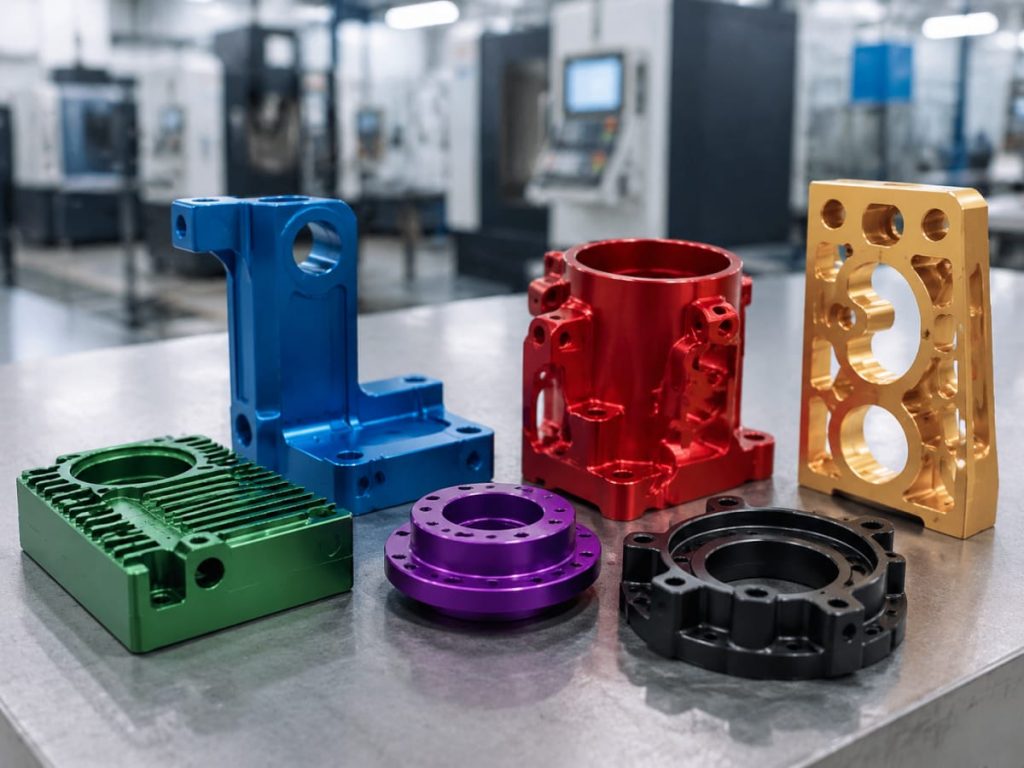
The key lesson is simple: sourcing precision CNC machining from China works best when the supplier manages technical risk early and logistics clearly. Low piece price alone is not enough. Quality systems, communication speed, and documentation discipline are what protect your schedule.
Why TEAM Rapid Is a Strong Precision CNC Machining Partner
If you are evaluating suppliers for precision CNC machining, TEAM Rapid is worth serious consideration because its capabilities align with what tight tolerance B2B programs actually need: fast engineering response, solid process range, dependable inspection, and the ability to support follow-on manufacturing steps without forcing the customer to coordinate multiple vendors.
TEAM Rapid offers CNC milling across 3-axis, 4-axis, and 5-axis, CNC turning for rotational components with live tooling, and wire EDM / EDM for intricate details and harder materials. It machines both metal and plastic, supports tolerances down to 0.01 mm on suitable features, and offers finishing options including polishing, anodizing, painting, powder coating, plating, bead blasting, and brushing. For more demanding drawings, the company also supports full dimensional inspection with CMM capability.
The practical advantages of working with TEAM Rapid include:
- quick response within a few hours from one-to-one engineering support
- strong pricing, often lower than Europe or America on comparable work
- capability from 1 part to 500+ machined parts
- ISO 9001:2015 quality management and specification compliance
- access to related services such as die casting, sheet metal fabrication, Injection Molding, assembly, packaging, and direct shipping
That broader manufacturing model is useful when a project begins with machined metal parts but later expands into mixed-process production. It also reduces supplier fragmentation for procurement teams managing aggressive launch schedules.
If you need a practical next step, the best approach is to Contact Us with your CAD data, material callout, quantity, finish requirement, and target lead time. For many programs, the difference between a delayed launch and a smooth one comes down to choosing a machining partner that can solve problems before production starts.
FAQ About Precision CNC Machining for Tight Tolerance Metal Parts
What tolerances can precision CNC machining realistically hold on metal parts?
Precision CNC machining can realistically hold ±0.01 mm on selected critical features when the material, part size, workholding, tool access, machine condition, and inspection method all support that target. For many standard features, however, tolerances in the ±0.02 mm to ±0.05 mm range are more economical and fully adequate. Buyers should avoid applying ultra-tight tolerances everywhere on the drawing, because that increases setup time and inspection cost without always improving function. The most effective approach is to identify the truly critical interfaces such as bores, bearing fits, sealing lands, and datum-related locations, then allow looser control on noncritical geometry.
How much does precision CNC machining cost for tight tolerance metal parts?
The cost of precision CNC machining depends mainly on material, complexity, tolerance, setup count, surface finish, and inspection level. A simple 6061 aluminum part may cost only a few dozen dollars in low quantity, while a complex 5-axis titanium component with CMM reporting can cost hundreds or even more than a thousand dollars per piece. Tight tolerances drive cost because they often require slower feeds, additional tool changes, extra probing, more stable fixturing, and longer inspection time. Suppliers like TEAM Rapid can often improve the cost position by reviewing the drawing for DFM opportunities before machining starts rather than trying to solve every issue at the machine.
When should I choose precision CNC machining instead of casting or Injection Molding?
You should choose precision CNC machining when annual volume is moderate, design changes are still likely, or the part needs tight feature-to-feature control from wrought metal stock. CNC is usually the better choice for prototypes, pilot builds, service parts, fixtures, and functional low-volume production. Casting becomes more attractive when geometry is stable and annual volume is high enough to justify tooling. Injection Molding is ideal for plastic parts in larger quantities, but it does not replace machined metal where structural strength, tight threaded features, heat resistance, or precise post-machined datums are required. Many product teams actually use both processes in the same assembly.
What materials are best for precision CNC machining in tight tolerance applications?
The best material for precision CNC machining depends on the balance of strength, corrosion resistance, weight, and cost. Aluminum 6061 is the most common general-purpose choice because it machines efficiently and supports good cosmetic finishing. 7075 is better when higher strength is needed. 303 stainless is excellent for productivity on turned or milled precision parts, while 304 and 316 are preferred when corrosion resistance matters more than machining speed. Titanium suits high-performance applications but increases cost and cycle time. Brass is ideal for many turned connector or fitting components. TEAM Rapid, for example, supports this broad material range, which helps buyers standardize sourcing across multiple metal part families.
How fast can a precision CNC machining supplier deliver prototypes and repeat batches?
A professional precision CNC machining supplier can often deliver simple prototype parts in 3 to 7 days, with more complex or tighter-tolerance parts typically taking 5 to 12 days depending on finishing and inspection requirements. Repeat batches can be faster once programs, fixtures, and inspection methods are established. Lead time becomes longer if the project includes anodizing, plating, EDM, or multi-operation inspection reports. If speed is critical, it helps to send complete RFQ data at the start and clarify which dimensions are truly critical. TEAM Rapid is often selected for urgent programs because its engineering response is fast and its broader manufacturing support reduces delays between machining, finishing, and shipment.
How should I source precision CNC machining from China safely and effectively?
To source precision CNC machining from China safely, send a complete technical package, verify the supplier’s inspection capability, confirm ISO 9001:2015 certification, ask how nonconforming parts are controlled, and make sure packaging and shipping terms are defined before order placement. You should also confirm whether the supplier can provide CMM reports, material verification, and clear communication during DFM review. A supplier such as TEAM Rapid is appealing in this context because it combines machining capability, quality assurance, engineering feedback, and export experience instead of functioning as a pure trading intermediary. That lowers the risk of miscommunication on critical tolerance programs.
Can precision CNC machining suppliers also handle finishing, assembly, and shipping?
Yes, and for many B2B buyers that is a major advantage. A capable precision CNC machining supplier should be able to coordinate surface finishing, dimensional inspection, protective packaging, labeling, and direct shipping so that finished parts arrive ready for the next manufacturing step. Some suppliers also support assembly, kitting, procurement of related components, and limited warehousing. This reduces supplier fragmentation and helps maintain accountability for part condition after machining. If your project includes machined components plus finishing or secondary services, it is usually worth choosing a supplier with broader operational depth and using the chance to request a quote on the full package rather than only the raw machined part.
Content reviewed and updated: June 2026