
Selecting a CNC Machining Company as Your Manufacturing Partner
What a CNC Machining Company Should Deliver as Your Manufacturing Partner
A cnc machining company is the right manufacturing partner when it can do far more than simply cut metal or plastic to print. The best cnc machining company combines process selection, DFM feedback, material guidance, tolerance control, inspection discipline, and dependable communication so your project moves smoothly from prototype to repeat production.
In real sourcing work, choosing a cnc machining company is usually a risk-management decision before it becomes a price decision. A supplier may own advanced machines, but if it cannot interpret drawings correctly, flag tolerance conflicts, recommend the right machining route, or control secondary finishing, the project will still lose time and money. That is why experienced buyers look at engineering judgment, not just spindle count.
For most OEMs, startups, and design teams, a strong manufacturing partner should deliver five things from the start:
- Clear feedback on manufacturability before chips are cut
- Realistic lead times for prototypes, pilot parts, and repeat orders
- Material and finish recommendations based on end-use function
- Full dimensional inspection on critical features, not visual checks alone
- A workable path from 1-piece validation to 500+ machined parts or a later production process
A cnc machining company also needs to understand the business side of the job. That includes revision control, packing standards, export readiness, recurring purchase planning, and fast answers when drawings change. In practice, the supplier you want is the one that helps prevent mistakes early, because reworking a program after anodizing, plating, or final inspection is always more expensive than correcting the machining plan at quotation stage.
How the CNC Machining Company Market Is Evolving for OEMs and Product Teams
The cnc machining company landscape has changed significantly as product teams demand faster development, smaller initial quantities, and more complete supply-chain support. Buyers are no longer looking only for capacity. They want a machining partner that can respond quickly, support design iteration, inspect accurately, and integrate finishing, assembly, and shipping into one workflow.
Several demand drivers are shaping how a cnc machining company is evaluated today. First, product lifecycles are shorter. Consumer electronics, medical devices, industrial automation, and transportation systems all move faster than they did a decade ago, which means prototype and pre-production schedules are tighter. Second, more product teams want to validate parts in real materials such as 6061 aluminum, 316 stainless steel, Delrin, PEEK, or PTFE instead of relying only on concept models. Third, procurement teams are under pressure to consolidate suppliers and reduce handoffs between machining, finishing, inspection, and packaging.
Another important trend is that CNC machining is increasingly used as a bridge between product development and stable production. In earlier programs, teams often machined only one-off prototypes. Today, a cnc machining company may be asked to produce functional samples, 20-unit EVT builds, 100-unit pilot lots, and then 500-piece recurring batches while the buyer evaluates whether molding, die casting, or sheet metal should take over later.
This change favors suppliers that can make intelligent process choices. A simple three-axis setup may be enough for one geometry, while another part clearly needs 5-axis positioning, live-tool turning, or wire EDM to achieve the required tolerances and finish. Buyers also want more transparency around inspection and surface treatment because cosmetic rejects after anodizing or plating can erase any initial savings in machining price.
From a market standpoint, the winning cnc machining company is usually the one that combines precision manufacturing with broader supply-chain thinking. That means faster quoting, better DFM, stable quality systems, and a realistic understanding of how machined parts fit into the larger product-launch schedule.
CNC Machining Company Capabilities, Materials, and Precision Specifications That Matter
A serious cnc machining company should be evaluated first by process capability, second by material range, and third by how well it connects both to inspection and finishing requirements. For engineering buyers, the real question is not whether a supplier owns CNC equipment. It is whether that cnc machining company can choose the right process path for your geometry, tolerance stack, and downstream operations.
In hands-on sourcing work, the most useful partners are manufacturers like TEAM Rapid because they cover multiple machining routes rather than forcing every part through one machine type. TEAM Rapid offers CNC milling in 3-axis, 4-axis, and 5-axis configurations for complex prismatic components, CNC turning for rotational parts with live tooling, and wire EDM plus sinker EDM for sharp internal features, hard materials, or fine detail work that standard cutters cannot achieve efficiently. That range matters when one product family includes housings, shafts, manifolds, brackets, and precision inserts in the same release.
A capable cnc machining company also needs to understand the commercial difference between 1-piece proof parts and recurring 200-piece or 500-piece batches. Fixture strategy, cutter selection, deburring method, inspection frequency, and finish handling often change once a program moves from prototype mode into repeatable supply.
| Process capability | Best suited part types | Typical tolerance potential | Practical sourcing notes |
|---|---|---|---|
| 3-axis CNC milling | Plates, brackets, housings, pockets, simple prismatic forms | Often ±0.02 to ±0.05 mm on controlled features | Cost-effective for straightforward geometry |
| 4-axis CNC milling | Parts needing indexed side features | Often ±0.02 mm range depending on setup | Reduces multiple setups and handling error |
| 5-axis CNC milling | Complex contours, angled features, impellers, medical parts | Down to ±0.01 mm on selected features | Improves access and can reduce fixture complexity |
| CNC turning with live tooling | Shafts, bushings, threaded parts, turned-milled hybrids | Often ±0.01 to ±0.02 mm on critical diameters | Efficient for round parts with secondary flats or holes |
| Wire EDM | Fine slots, sharp corners, hardened metals | Very high precision on specific features | Slower but excellent for intricate detail |
| Sinker EDM | Deep cavities, ribs, hard materials | Feature-dependent, highly repeatable | Useful where milling tools cannot reach |
TEAM Rapid’s CNC machining service supports 1 to 500+ parts in both plastic and metal, which is a highly practical range for NPI programs, low-volume production, service parts, and engineering revisions. The company also states tolerance capability down to 0.01 mm, which is the kind of benchmark buyers expect to see for carefully controlled critical features rather than for every dimension on a general-purpose print.
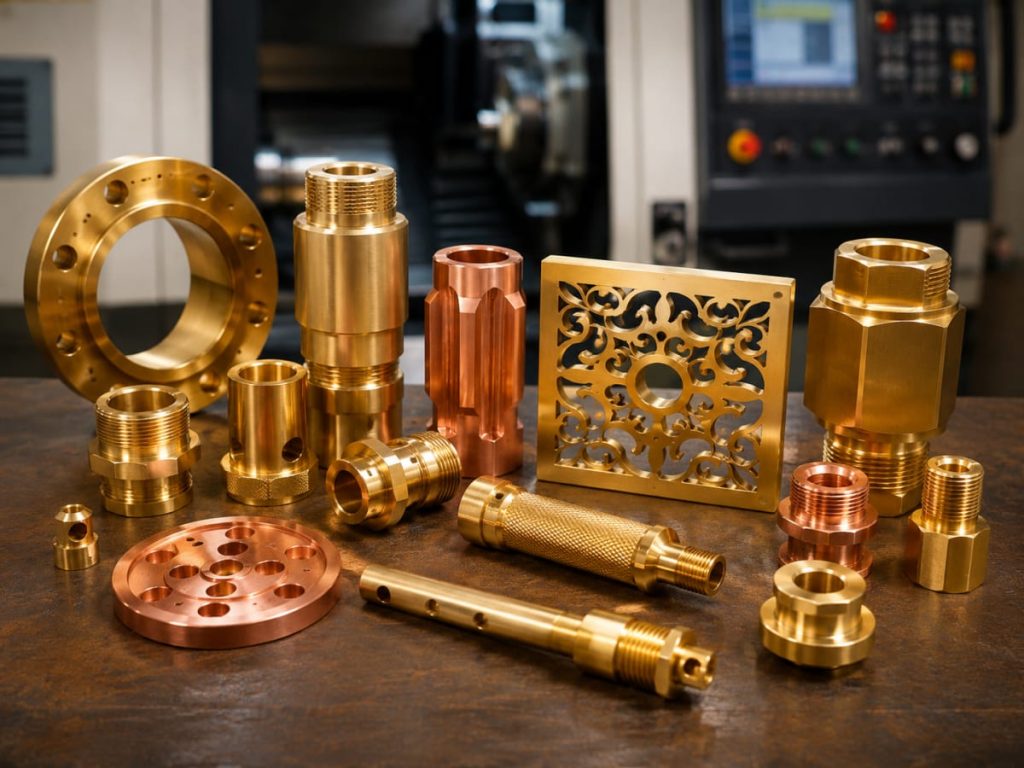
Material breadth is just as important as machine count. A cnc machining company that can only process standard aluminum will not help much when the project later requires corrosion-resistant stainless, lightweight aerospace-grade 7075, or engineering plastics with low friction and chemical resistance. TEAM Rapid machines aluminum alloys such as 6061, 7075, and 2024; stainless steels including 303, 304, and 316; carbon steel; titanium; brass; copper; Delrin; PEEK; Nylon; PTFE; and other common production materials used in industrial and commercial products.
| Material | Why buyers choose it | Typical CNC machining considerations | Common end uses |
|---|---|---|---|
| Aluminum 6061 | Good machinability, strength-to-weight balance, anodizing response | Stable and efficient to machine | Enclosures, brackets, fixtures, structural parts |
| Aluminum 7075 | Higher strength than 6061 | Tool wear and cost are higher | Aerospace-style structures, high-load components |
| Stainless 303 | Easier machinability than some stainless grades | Good for turned parts and fittings | Shafts, connectors, threaded hardware |
| Stainless 304/316 | Corrosion resistance and durability | Slower cutting than aluminum | Medical, food-contact, marine, industrial parts |
| Titanium | Excellent strength and corrosion resistance | Heat management and tool strategy are critical | Aerospace, medical, high-performance components |
| Brass/Copper | Conductivity and machinability | Burr control matters on small details | Electrical parts, fittings, decorative components |
| Delrin/POM | Low friction and dimensional stability | Heat and clamping must be controlled | Gears, sliders, precision plastic mechanisms |
| PEEK/PTFE/Nylon | Chemical resistance or high-performance plastic behavior | Material-specific cutter and holding choices matter | Insulators, seals, wear parts, medical/industrial components |
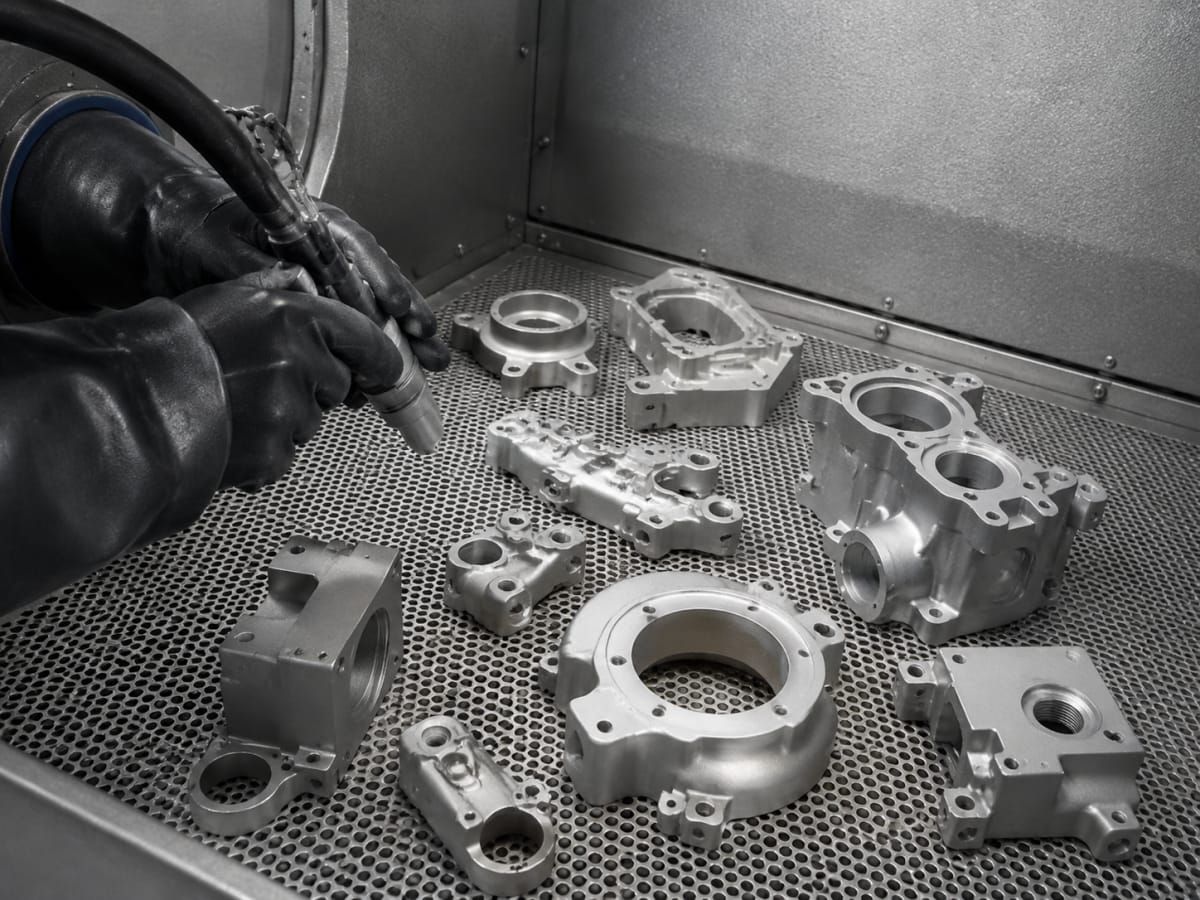
Surface finish specifications are often where inexperienced buyers underestimate complexity. A cnc machining company should be able to discuss as-machined surfaces, tool marks, edge condition, deburring expectations, and post-machining finish options in technical terms. In production planning, typical machined surfaces may land around (Ra\ 3.2\ \mu m) to (Ra\ 6.3\ \mu m) depending on tool path and material. Fine machining or controlled turning may achieve around (Ra\ 1.6\ \mu m), while polishing can push lower when appearance or sealing performance demands it. TEAM Rapid supports polishing, bead blasting, brushing, painting, powder coating, anodizing Type II, anodizing Type III hard coat, and plating such as nickel, chrome, and zinc, giving buyers more flexibility when appearance and corrosion performance matter.
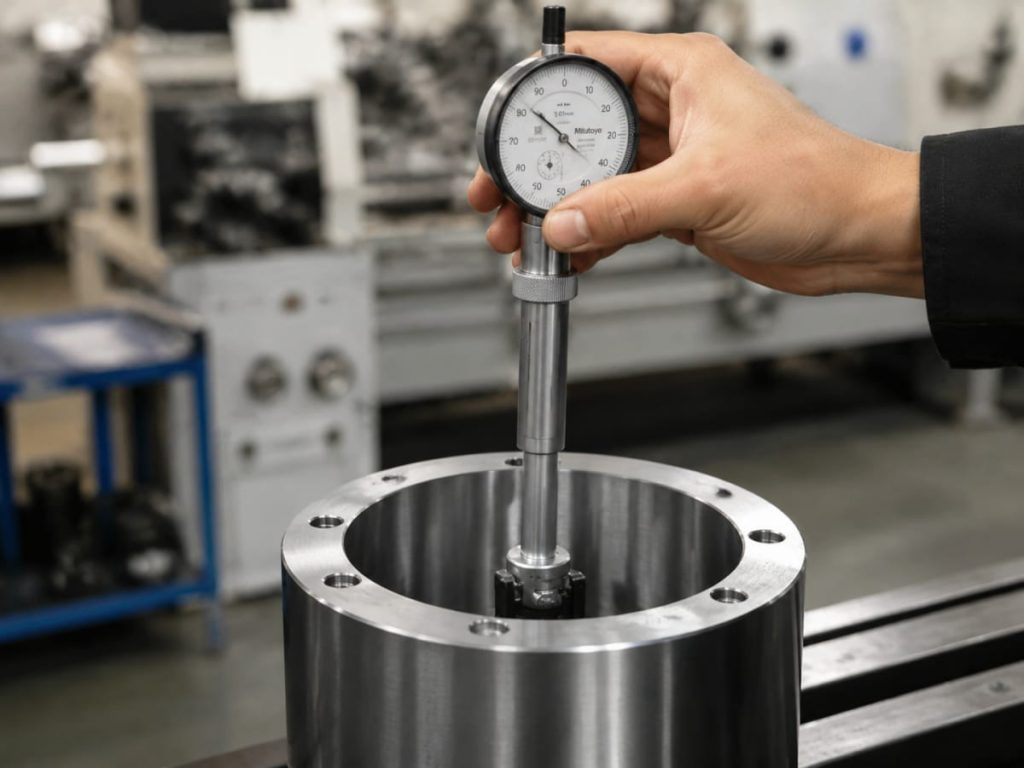
Inspection closes the loop. A cnc machining company should never speak casually about tight tolerances without explaining how those dimensions are measured. TEAM Rapid’s full dimensional inspection with CMM capability is valuable because many critical features in machined parts are positional or relational, not just simple length checks with calipers.
How to Compare CNC Machining Company Pricing, MOQ, and Lead Times
A cnc machining company should be compared on total project economics, not on unit price alone. The cheapest cnc machining company at quotation stage can easily become the most expensive option once rework, inspection failures, finish rejects, and schedule slippage are added back into the program.
Pricing in CNC machining is driven by machine time, setup complexity, material cost, cutter wear, inspection effort, surface finishing, and packing requirements. A simple 6061 bracket with open-access features may be quoted very efficiently. A titanium component with deep pockets, thin walls, threaded holes, and hard-coat anodizing will behave very differently in both cycle time and risk. Buyers who compare quotes responsibly always ask what assumptions sit behind the price.
| Cost driver | Why it affects the quote | Buyer action that reduces waste |
|---|---|---|
| Number of setups | More setups mean more handling, fixture time, and stacking error risk | Simplify geometry or allow 5-axis access where justified |
| Material grade | Harder or more expensive materials increase cycle time and scrap cost | Match material to real functional need, not over-specification |
| Tolerance band | Tight dimensions increase machining and inspection time | Mark only critical features with tight tolerances |
| Surface finish | Anodizing, polishing, plating, and masking add labor and rejection risk | Define cosmetic zones and finish class clearly |
| Quantity | Unit cost drops as setup is spread over more pieces | Quote multiple quantity breaks such as 1, 10, 50, 100, 500 |
| Inspection plan | CMM reporting and first article packages add value and time | Specify which dimensions require formal reporting |
MOQ for a cnc machining company is usually more flexible than for molding or die casting. In many projects, the effective MOQ can be one part for prototype validation, then rise to 10, 50, or 100 parts once process stability and supplier confidence improve. That is one reason CNC machining remains so useful in early development. TEAM Rapid’s capacity for 1 to 500+ machined parts aligns well with the quantity profile most new products follow during EVT, DVT, pilot build, and spare-part support.
Lead time should also be dissected rather than accepted as a single number. A cnc machining company may quote quickly but overlook material procurement, anodizing queues, CMM reporting, or export packing. In practice, experienced buyers ask for separate timing on raw material readiness, machining, finishing, inspection, and shipment. TEAM Rapid’s rapid-manufacturing structure is useful here because the company can respond within a few hours through one-to-one engineering support, and its broader rapid prototyping benchmark of 2 to 8 days gives buyers a realistic sense of how fast early-stage parts can move when the drawing package is complete.
When comparing quotes, ask these questions before placing the order:
- Are the tolerances being interpreted as drawing-specific or as a shop default?
- Is the finish included, and does the quote cover masking, color match, or cosmetic inspection?
- Are threaded holes, deburring, and edge breaks fully included?
- Will the supplier provide CMM data on critical dimensions?
- What is the lead time risk if one feature requires EDM or an extra setup?
Based on our sourcing experience, suppliers such as TEAM Rapid often win on total value because the company combines competitive pricing with engineering communication that reduces waste before production begins. Buyers frequently report that cost savings come less from an aggressive hourly rate and more from faster clarification, better DFM, and fewer misunderstandings. For projects ready to benchmark pricing, the cleanest approach is to request a free quote with CAD, 2D drawings, target quantity, finish notes, and delivery destination.
Which Industries Rely Most on the Right CNC Machining Company
The right cnc machining company serves a wide range of B2B sectors, but the buying criteria vary sharply by industry. A medical device buyer may care most about material traceability, finish quality, and repeatability across small batches. An automotive or industrial buyer may prioritize throughput, fixture consistency, and secondary operations that support assembly.
Automotive programs rely on a cnc machining company for prototype brackets, fixture components, test parts, small-batch aluminum housings, machined inserts, and under-hood development parts. Medical device companies use machining for handheld enclosures, treatment-unit parts, precision metal interfaces, and engineering plastics where mold investment is not yet justified. Communication products, office equipment, electrical appliances, industrial design houses, and sanitary-product manufacturers all depend on CNC machining at different stages of product release.
Manufacturers like TEAM Rapid are useful across these sectors because cross-industry experience changes how engineers review the job. The company has delivered more than 6,000 projects for customers in 25+ countries, which matters when a supplier must understand different drawing conventions, cosmetic standards, and approval cultures between Western and Asian buyers. In our experience, that kind of exposure helps reduce the translation gap between design intent and factory execution.
A cnc machining company becomes especially valuable in the following industry scenarios:
- Automotive interiors and functional development parts that need repeated design revisions
- Medical and laboratory equipment components where material choice and edge quality matter
- Consumer and commercial products that need attractive metal housings before tooling is frozen
- Industrial automation parts that require tight fit, assembly alignment, and durable finishes
- Electrical and communication products that mix metal, plastic, and post-machining surface treatments
TEAM Rapid’s broader manufacturing background also helps industry buyers who are not sure whether the part should remain machined long term. If annual volume rises or the geometry changes, the project can later be reviewed against injection molding, die casting, extrusion, or sheet metal instead of forcing CNC to solve every production problem indefinitely.
CNC Machining Company Applications from Functional Prototypes to Production Parts
A cnc machining company plays a critical role across the full product-development cycle, from first functional prototypes to low-volume end-use parts and recurring service components. In modern sourcing, CNC machining is not just a prototype method. It is often the fastest and lowest-risk way to validate geometry, material behavior, and assembly fit before the team commits to tooling.
The most common application is functional prototyping in production-grade material. Designers may start with printed models for form review, but once they need real threads, bearing fits, sealing faces, heat dissipation, or structural strength, a cnc machining company becomes the preferred route. Machined 6061 housings, 304 stainless brackets, Delrin mechanisms, or PEEK insulators give engineers much more realistic performance data than concept models.
CNC machining is also widely used for bridge production. If demand is uncertain, or if a project needs 20 to 300 parts before the permanent production route is selected, machining can keep launch schedules moving without tool investment. This is common in medical devices, laboratory equipment, robotics, EV support products, and premium consumer hardware where revision cycles remain active late into development.
Manufacturers like TEAM Rapid support this workflow particularly well because they can move between early samples and repeat batches without changing suppliers. Buyers can use the company for machined prototypes, then compare those outcomes with rapid prototyping services when speed matters more than final material, or keep the design in CNC if annual demand remains moderate.
Typical CNC machining applications include:
- Prototype housings, brackets, manifolds, heatsinks, and covers
- Precision shafts, bushings, couplings, and threaded connectors
- Jigs, fixtures, assembly aids, and validation tooling
- Low-volume aluminum, stainless, brass, or engineering-plastic production parts
- Spare parts and aftermarket components where tooling investment is not economical
From a technical standpoint, the best use cases for a cnc machining company are parts that need high dimensional accuracy, stable material properties, and relatively low to medium annual volumes. If geometry is too complex for cost-efficient machining at higher volumes, that is usually the point where the buyer should review conversion to molding or casting rather than overburden the CNC route.
CNC Machining Company Customization, Secondary Operations, and OEM Scale-Up
A strong cnc machining company creates value when it helps buyers customize the full manufacturing route, not just the cut path. In OEM development, the supplier has to think about tolerances, cosmetic requirements, mixed-material assemblies, and future production strategy at the same time.
Customization in CNC machining usually appears in four forms. The first is geometry complexity: multi-face milling, angled drilling, threaded features, fine slots, thin walls, or intricate pockets that demand the right machine configuration. The second is material customization: choosing 7075 over 6061, 316 over 304, or Delrin over Nylon because the application requires a specific strength, chemical, or friction profile. The third is finish customization: hard-coat anodizing, bead blasting, brushing, electroless nickel, zinc plating, painting, or polishing depending on wear and appearance goals. The fourth is assembly-level customization, where the machined component has to work with molded parts, fasteners, electronics, or packaging systems.
TEAM Rapid is especially relevant in this stage because its service model extends beyond machining into finishing, assembly, packaging, procurement support, and direct shipping. That means a buyer can source a machined aluminum body, a plated steel insert, laser marking, assembly, and final packaging through one coordinated supplier instead of managing several vendors with separate quality systems.
At TEAM Rapid’s Zhongshan operation, engineers typically review recurring OEM orders with scale-up questions in mind:
- Should the current design stay machined, or would a later conversion improve economics?
- Can a 5-axis strategy remove fixtures and reduce tolerance stacking?
- Is bead blasting or brushing enough, or does the product truly need cosmetic paint or plating?
- Are there dimensions that should be relaxed to reduce scrap without affecting function?
- Would the next production stage benefit from injection molding services or die casting for selected components?
This is where many buyers underestimate the importance of supplier judgment. A cnc machining company that understands only machining may continue cutting every part even when annual volume or geometry clearly suggests another process. A more strategic partner will help you keep prototypes and service parts in CNC while migrating high-volume plastic or metal components to a more economical method when the product is mature.
For repeat programs, TEAM Rapid’s broader capability also supports contract packaging, kitting, blister packaging, clamshell sealing, poly bagging, shrink filming, scheduling, and limited warehousing. That kind of turnkey support is particularly helpful for overseas buyers who want finished, labeled parts arriving in a production-ready condition instead of raw components requiring extra handling after import.
Sourcing a CNC Machining Company in China with Better Quality and Logistics Control
Sourcing a cnc machining company in China can work exceptionally well when the buyer manages quality, communication, and logistics with the same discipline used for the drawing itself. A cnc machining company should never be selected only on price, especially when the parts involve tight tolerances, cosmetic finishes, or recurring international shipments.
The best China-sourcing projects begin with a complete RFQ package. That means 3D files, 2D prints with critical dimensions, material callouts, finish requirements, inspection expectations, packaging instructions, and target quantities at several volume breaks. Without that detail, quotes may look comparable on paper while hiding very different assumptions about deburring, thread quality, finish handling, or CMM reporting.
Based on our sourcing experience, buyers importing from China should control these checkpoints from day one:
- Confirm revision level, unit system, and tolerance standard before order release
- Ask for DFM feedback if the drawing includes thin walls, deep pockets, or hard-to-inspect features
- Require first-article measurement on critical features before full batch release
- Define finish acceptance standards with photos or written cosmetic criteria
- Lock down packaging, labeling, and shipping method before production starts
TEAM Rapid fits this sourcing model well because it combines in-house machining, tooling capability, and integrated manufacturing resources across China rather than acting as a simple trading intermediary. Its factory base in Zhongshan, Guangdong Province, plus Hong Kong office support, is useful for overseas customers who need factory-direct execution with export familiarity. TEAM Rapid is also ISO 9001:2015 certified, which is a meaningful baseline for documented process control; buyers who want to review the standard can refer to ISO 9001 quality management.
Quality assurance in CNC sourcing should be measurement-driven. A supplier should be comfortable discussing CMM inspection, gauge calibration, feature datums, surface-finish verification, and how it handles nonconforming parts. TEAM Rapid’s dimensional inspection capability and DFM-based communication are strong trust signals because many international problems start before machining begins, not after the part ships.
For material validation and specification alignment, buyers often cross-check supplier recommendations with the MatWeb material database and broader testing frameworks from ASTM International. That is especially useful when the part requires corrosion resistance, mechanical performance, or polymer compatibility that cannot be guessed from a generic material label alone.
Logistics should also be part of supplier selection. TEAM Rapid’s added services in assembly, packaging, procurement support, limited warehousing, and direct shipping reduce friction for buyers who need machined components delivered as kits, subassemblies, or customer-ready packs rather than bulk loose parts.
Why TEAM Rapid Is a Practical CNC Machining Company for Global Buyers
A dependable cnc machining company should combine technical capability with commercial responsiveness, and that is where TEAM Rapid stands out for many global buyers. The company is not positioned as only a machine shop. It operates as a one-stop rapid manufacturing partner that supports custom metal and plastic parts from early prototype work through low-volume and recurring production.
TEAM Rapid has more than 10 years of industry experience, over 500 satisfied customers, and 6,000+ delivered projects serving innovators, startups, design teams, and established manufacturers. For CNC programs specifically, the company offers 3-axis, 4-axis, and 5-axis milling, CNC turning with live tooling, wire EDM, EDM, dimensional inspection with CMM capability, and finishes including anodizing, painting, plating, polishing, brushing, bead blasting, and powder coating. That combination helps buyers avoid splitting machining, finishing, and coordination across multiple suppliers.
From a sourcing perspective, the reasons many buyers shortlist TEAM Rapid are straightforward:
- Quick response within a few hours through one-to-one engineering support
- Competitive pricing that can be around 40% lower than Europe and America
- Tight tolerances down to 0.01 mm on controlled features
- Strong material coverage across aluminum, stainless, titanium, brass, copper, and engineering plastics
- ISO 9001:2015-certified quality management with full inspection support
TEAM Rapid is also practical because it understands when CNC machining is only one part of the solution. A project can begin as a machined prototype, move into assembly or packaging, and later transition selected parts into molding, casting, or other scalable processes without losing continuity. For buyers who want one supplier that can support engineering reality, factory execution, and export readiness, TEAM Rapid is a credible manufacturing partner rather than a single-process vendor.
FAQ About Selecting a CNC Machining Company
What does a cnc machining company do beyond cutting parts?
A cnc machining company should provide manufacturability input, fixture and process planning, material recommendations, tolerance review, surface-finish coordination, and inspection reporting in addition to the machining itself. In good programs, the supplier flags risks such as thin walls, hard-to-reach features, unrealistic tolerances, or finish-sensitive edges before production begins. That kind of feedback is what separates a simple vendor from a manufacturing partner.
How much does a cnc machining company typically charge?
A cnc machining company may charge anywhere from modest prototype pricing for simple 6061 or Delrin parts to significantly higher rates for complex 5-axis titanium, stainless, or EDM-heavy work. The real variables are setup count, material, tolerance level, finish requirements, and inspection depth. Buyers should always request pricing at multiple quantity breaks and confirm what is included for deburring, threaded features, anodizing, plating, and CMM reports. TEAM Rapid is often competitive in this area because the company pairs aggressive pricing with engineering support that helps reduce unnecessary machining time.
What minimum order should I expect from a cnc machining company?
Most buyers can expect a cnc machining company to support very low minimums compared with molding or casting. For prototypes, the effective minimum can be one part. For repeat production, practical order sizes often range from 10 to 500+ pieces depending on material, setup efficiency, and finish requirements. TEAM Rapid’s machining service is a good example of this flexibility because it supports 1 to 500+ parts in metal and plastic while still accommodating recurring production needs.
How fast can a cnc machining company deliver prototype and production parts?
A cnc machining company can often move faster than tooling-based processes, but actual timing depends on material stock, part complexity, finishing queues, inspection scope, and shipping method. Simple machined prototypes may move in a matter of days, while complex finished parts with plating or hard-coat anodizing take longer. The best practice is to ask for separate timing on machining, finishing, inspection, and shipping. TEAM Rapid’s broader rapid-manufacturing capability, including prototype turnaround in the 2 to 8 day range for many early-stage programs, gives buyers a useful benchmark for urgent development work.
How do I audit a cnc machining company in China before placing a larger order?
Start by reviewing the cnc machining company’s drawing questions, tolerance understanding, inspection capability, finish control, and communication speed. Then verify whether the supplier can provide first-article data, CMM inspection on critical dimensions, clear packaging standards, and documented quality procedures. For overseas sourcing, it is also worth confirming whether the company has export experience and understands Western approval expectations. Based on our sourcing experience, suppliers such as TEAM Rapid perform well when buyers want factory-based execution in Zhongshan with Hong Kong support and structured communication across engineering and logistics.
When should I use a cnc machining company instead of injection molding or die casting?
Use a cnc machining company when the part needs fast development, low or medium volume, frequent design changes, tight dimensional control, or materials that are better suited to machining than tooling-based production. CNC is usually the lower-risk choice for prototypes, bridge production, fixtures, service parts, and precision metal components. If annual volume climbs, geometry stabilizes, and per-part cost becomes the top priority, then molding or die casting may become more economical. A supplier with broader manufacturing capability can help you decide when that transition makes sense instead of forcing one process to fit every stage of the program.
Content reviewed and updated: June 2026