
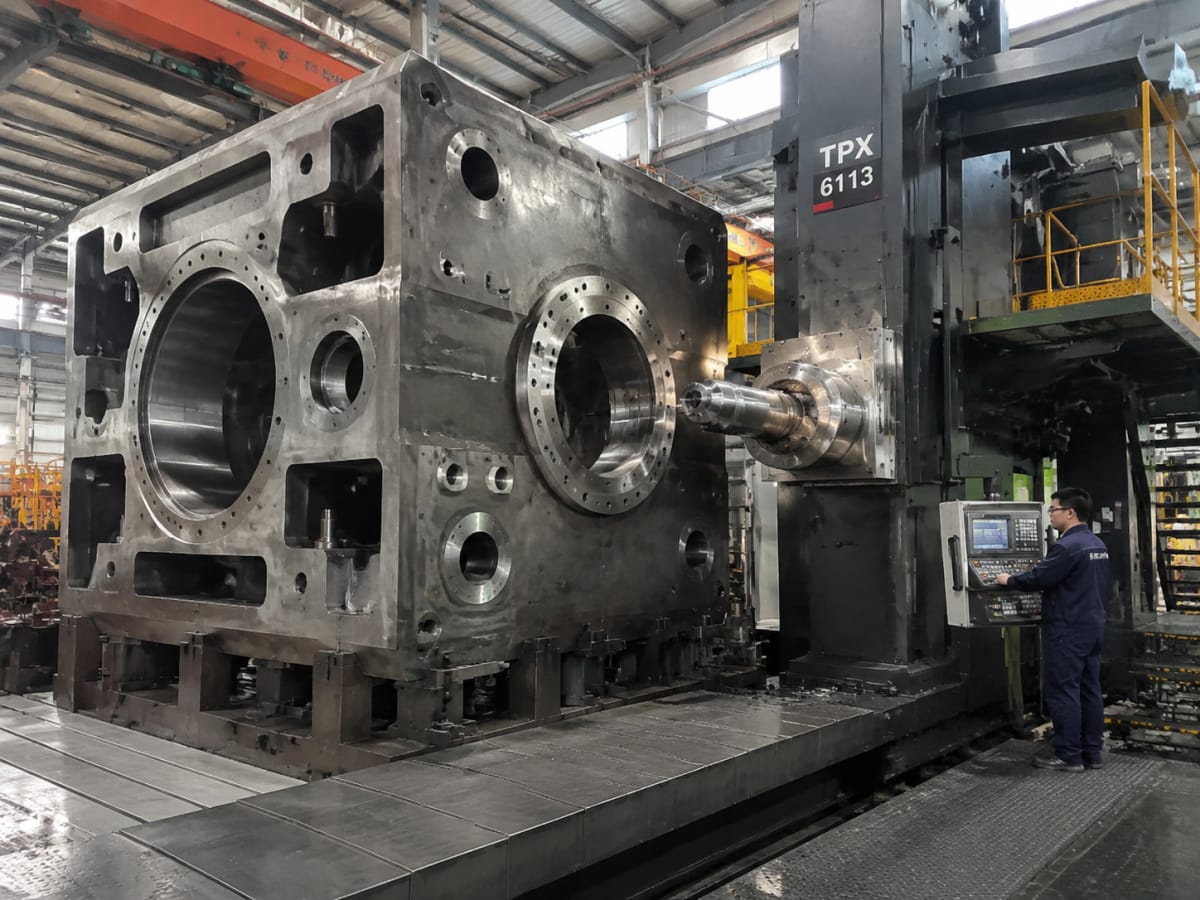
5 Axis CNC Machining for Complex Surface Contour Parts
5 Axis CNC Machining: The Best Route to Complex Surface Contour Accuracy
5 axis cnc machining is the most effective manufacturing method for complex surface contour parts when you need multi-face access, tight tolerances, and smooth freeform geometry in one controlled setup. For manufacturers and sourcing teams, it is the fastest way to make parts such as impellers, curved housings, mold inserts, medical components, and aerospace brackets with fewer setups and better geometric consistency.
In practical product development, 5 axis cnc machining is chosen when 3-axis milling creates too many re-fixtures, 4-axis indexing still leaves difficult tool angles, or part quality depends on maintaining the correct cutter orientation across a curved surface. It is especially valuable for parts with compound angles, undercut-like features accessible by tool tilt, deep cavities, and demanding surface continuity.
Many teams start with Rapid Prototyping for early form studies, but move to 5 axis cnc machining once they need production-grade material properties, functional tolerances, and true contour fidelity. Compared with additive methods, 5-axis milling gives better dimensional stability, broader material selection, and more predictable finishing for metal and engineering plastics.
As a rule, 5 axis cnc machining is the right answer when your part requires:
- fewer setups to protect datum relationships and reduce stack-up error
- complex contoured surfaces that need consistent tool contact and better finish
- difficult materials such as titanium, stainless steel, or PEEK
- low-volume production from 1 piece to 500+ parts without dedicated tooling
For design validation, pilot runs, and precision low-volume manufacturing, 5 axis cnc machining is often the bridge between concept and scalable production because it proves both geometry and manufacturability without waiting for hard tooling.
Why 5 Axis CNC Machining Is Expanding Across Precision Manufacturing
5 axis cnc machining is gaining momentum because modern products are becoming smaller, lighter, more integrated, and more geometrically demanding. Across medical devices, EV systems, aerospace hardware, industrial automation, and premium consumer products, engineers increasingly need parts with organic contours, compound angles, and tight positional relationships that are difficult to achieve economically with multiple conventional setups.
That market shift has increased demand for suppliers that can combine advanced milling capability with broader new-product-introduction support. Manufacturers like TEAM Rapid are benefiting from this trend because buyers no longer want a machine shop that only cuts metal; they want a partner that can support prototyping, machining, finishing, inspection, assembly, and the transition into adjacent processes when the design matures.
Several forces are pushing 5 axis cnc machining into a more central role in product development and sourcing:
First, geometry complexity is rising. EV thermal management parts, robotic end-effectors, fluid-handling manifolds, medical instrument bodies, and lightweight structural components often include blended surfaces, deep pockets, and angled features that benefit from simultaneous tool motion.
Second, buyers want shorter launch cycles. A part that can be machined in one or two setups instead of four or five usually reaches inspection faster and carries less risk of tolerance drift between operations. That makes 5 axis cnc machining attractive not only for performance, but also for schedule control.
Third, product teams want more production-like prototype parts earlier. Many projects now move from concept models into machined metal or engineering-plastic prototypes before they are ready for Injection Molding or casting. This is especially true when the part is structural, heat-resistant, pressure-bearing, or subject to assembly loads.
Fourth, sourcing expectations have changed. Buyers increasingly favor China-based suppliers that offer a combination of capability, responsiveness, and cost efficiency. TEAM Rapid, for example, supports customers in 25+ countries and has delivered 6,000+ projects, which reflects the broader shift toward integrated global sourcing rather than single-process purchasing.
In day-to-day manufacturing terms, the rise of 5 axis cnc machining is about more than machine count. It is about reducing setup-related variation, improving cutter access, achieving better surface finish on contoured areas, and shortening the feedback loop between design revision and finished part. Those advantages matter most when a complex contour part must work correctly the first time it reaches assembly or test.
5 Axis CNC Machining Types, Materials, and Technical Specifications
5 axis cnc machining covers more than one process style, and buyers get better results when they match the machine strategy to the geometry, quantity, and material. Some parts only need indexed positioning, while others require true simultaneous 5-axis motion to keep the cutter tangent to a sculpted surface or to avoid interference in a deep cavity.
Experienced suppliers such as TEAM Rapid do well in this area because they can combine 3-axis, 4-axis, and true 5 axis cnc machining with turning, live tooling, wire EDM, and EDM. That process flexibility matters: not every complex part should be run entirely on a 5-axis machine, but the most efficient route often combines multiple operations in a controlled sequence.
Main process options within 5 axis cnc machining
The two most common categories are:
- 3+2 positional machining: the part is indexed to a fixed angle, then machined like a 3-axis operation from that orientation. This is ideal for angled holes, multi-face prismatic parts, and many low- to mid-complexity components.
- Simultaneous 5-axis machining: all five axes move together during cutting. This is the preferred method for turbine-like blades, impellers, ergonomic surfaces, and organic contour transitions where constant tool angle improves surface quality and cutter reach.
For rotational parts, 5 axis cnc machining is also frequently paired with CNC turning and live tooling. TEAM Rapid’s CNC turning capability supports rotational symmetry parts, while milling and live tooling handle cross-holes, flats, slots, and milled features in the same production flow.
Materials, tolerances, and finish ranges
| Material Group | Common Grades | Why It Works for 5 Axis CNC Machining | Typical Notes |
|---|---|---|---|
| Aluminum alloys | 6061, 7075, 2024 | Excellent machinability, light weight, strong strength-to-weight ratio | Ideal for housings, brackets, fixtures, aerospace-style parts |
| Stainless steel | 303, 304, 316 | Corrosion resistance and structural reliability | Slower cutting than aluminum, more attention to heat and tool wear |
| Carbon steel | Various low and medium carbon grades | Good mechanical strength and cost control | Suitable for functional industrial components |
| Titanium | Common industrial and aerospace grades | High strength, low weight, biocompatibility | Requires careful speeds, chip evacuation, and toolpath strategy |
| Brass and copper | Free-machining brass, copper alloys | Good conductivity and precision detail | Useful for connectors, thermal parts, and decorative features |
| Engineering plastics | Delrin, Nylon, PTFE, PEEK | Functional testing with end-use polymers | Workholding and thermal movement must be managed carefully |
At TEAM Rapid, 5 axis cnc machining programs can run across a wide material portfolio including aluminum 6061, 7075, and 2024; stainless 303, 304, and 316; carbon steel; titanium; brass; copper; Delrin; PEEK; Nylon; PTFE; and more. That range matters because contour parts are rarely only about geometry. They are often about heat transfer, wear, corrosion, weight, dielectric behavior, or chemical resistance as well.
On tolerance capability, 5 axis cnc machining can hold down to 0.01 mm on critical features when the part geometry, material, workholding, cutter condition, and inspection plan support it. Buyers should note, however, that a blanket tolerance is not the same as a functional tolerance strategy. A flatness callout on a thin aluminum wall, a profile tolerance on a deep contoured surface, and a bore position requirement across multiple faces each demand different machining and inspection controls.
Surface finish is equally important for contour parts. Typical machined finishes may fall around Ra 1.6-3.2 (\mu m) after standard milling, while refined toolpaths, polishing, or secondary finishing can improve this further depending on geometry and material. TEAM Rapid also offers polishing, anodizing Type II, Type III hard coat anodizing, painting, powder coating, nickel/chrome/zinc plating, bead blasting, and brushing. For many contour parts, surface finish is not just cosmetic; it affects sealing, fluid flow, friction, and fatigue performance.
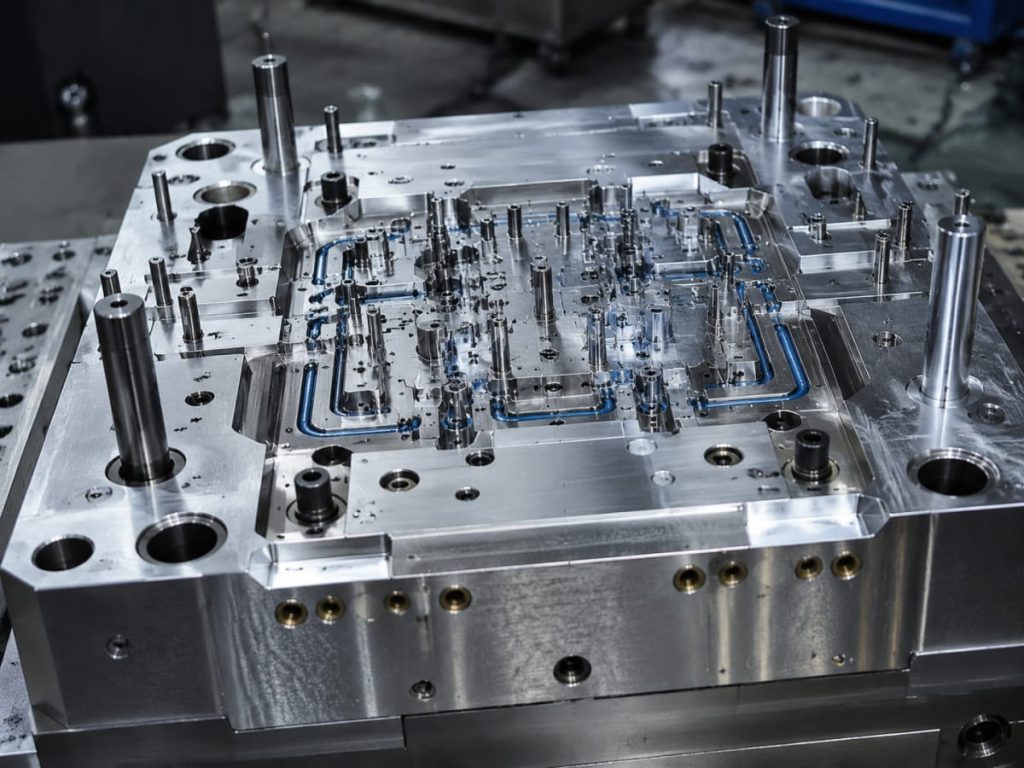
If a buyer wants the best result from 5 axis cnc machining, the RFQ should specify more than material and quantity. It should include functional datums, critical tolerances, finish expectations, inspection requirements, and whether the part is a prototype, bridge build, or repeat order. That is how the supplier chooses between indexed milling, simultaneous machining, turning plus milling, or EDM support.
How to Buy 5 Axis CNC Machining: Cost, MOQ, and Lead Time
5 axis cnc machining is not purchased the same way as standard milling because the cost is driven less by raw machine time alone and more by programming depth, workholding strategy, tool access, inspection complexity, and material behavior. Buyers who understand those cost drivers usually get faster quotes and fewer surprises after the first article review.
For most projects, the biggest pricing factors in 5 axis cnc machining are part geometry, stock size, material, tolerance difficulty, surface finish, quantity, and how much of the part truly requires 5-axis motion. A supplier may quote a lower cost if only one side needs simultaneous contouring and the remaining faces can be machined conventionally. Good DFM analysis matters here, because over-specifying the process can inflate cost without improving part performance.
Indicative prototype pricing logic
| Part Complexity | Typical Material | Quantity Range | Indicative 5 Axis CNC Machining Cost |
|---|---|---|---|
| Simple multi-face part with angled features | 6061 aluminum | 1-10 pcs | About USD 60-180 per part |
| Medium contour part with tighter inspection | Aluminum or stainless steel | 5-50 pcs | About USD 120-350 per part |
| Deep cavity, multi-surface, or simultaneous contour part | Stainless, titanium, PEEK | 1-20 pcs | About USD 250-900+ per part |
These are broad prototype-level estimates, not fixed market prices. In real purchasing, 5 axis cnc machining becomes more economical when the design reduces unnecessary deep pockets, extreme aspect ratios, very small corner radii, and cosmetic surfaces that require heavy hand finishing.
Lead time is another major consideration. For low-volume work, 5 axis cnc machining can often move faster than tooling-based processes because there is no mold to build. Simple contour parts may be completed within several working days once programming and fixturing are approved, while higher-complexity parts with multiple inspection points, special finishes, or imported material grades will take longer. TEAM Rapid’s broader rapid prototyping window is typically 2-8 days, and many urgent CNC programs can fit within that range when material stock, complexity, and machine loading align.
For MOQ, 5 axis cnc machining is highly flexible. One of its biggest commercial advantages is that suppliers like TEAM Rapid can support 1 piece to 500+ parts, making it suitable for concept verification, engineering builds, bridge production, and recurring low-volume orders.
Before placing a 5 axis cnc machining order, buyers should check:
- whether every contoured feature truly needs simultaneous 5-axis motion
- if tolerances are functional or simply copied from a conservative drawing template
- whether surface finish is as-machined, bead blasted, anodized, plated, or polished
- if the supplier will provide CMM or full dimensional inspection for critical features
TEAM Rapid is often competitive in this stage because its pricing can be around 40% lower than Europe and America, especially when buyers also need finishing, assembly, or related processes under one roof. That cost advantage is more meaningful when paired with one-to-one engineering response within a few hours, since faster clarification typically prevents rework and quote delay.
The buying lesson is simple: 5 axis cnc machining is most cost-effective when used deliberately. Pay for it where tool angle, setup reduction, and contour quality create measurable value. Do not pay for full simultaneous machining on features that a 3+2 strategy can achieve just as well.
Industries That Depend on 5 Axis CNC Machining for Advanced Geometry
5 axis cnc machining delivers the strongest return in industries where performance depends on complex geometry, accurate multi-face relationships, and repeatable surface quality. It is especially valuable when the part cannot tolerate the setup error, tool access limits, or surface interruptions that come with simpler machining routes.
In aerospace and advanced mobility, 5 axis cnc machining is widely used for lightweight brackets, structural mounts, turbine-like geometries, housings, and heat-management components. In medical manufacturing, it supports implant-adjacent components, ergonomic instrument bodies, precision housings, and complex surgical device parts that combine tight tolerances with premium finishes. In industrial automation, it is ideal for robot grippers, sensor mounts, manifolds, precision fixtures, and compact machine elements that must fit into dense assemblies.
Suppliers like TEAM Rapid see this demand across automotive, medical devices, industrial design, communication products, office equipment, electrical appliances, and broader consumer and commercial products. That matters because 5 axis cnc machining is no longer limited to aerospace-style work. It now plays a major role in product development programs where design teams need premium geometry without waiting for castings or tooling.
The main buyer groups that benefit from 5 axis cnc machining include:
- R&D engineers validating complex metal or engineering-plastic parts
- NPI managers trying to reduce setup-driven risk before pilot builds
- sourcing managers consolidating low-volume precision parts with one supplier
- product designers translating sculpted CAD surfaces into manufacturable components
For many of these buyers, the question is not whether 5 axis cnc machining is technically possible. The real question is whether the supplier can connect machining capability with DFM, inspection, finishing, and next-step production support. That is why integrated manufacturers such as TEAM Rapid are often preferred over narrow machine-only vendors on programs that are still evolving.
5 Axis CNC Machining Applications for Contoured, Multi-Face, and Deep-Cavity Parts
5 axis cnc machining is most valuable when the application demands continuous surface quality, difficult cutter approach angles, or controlled relationships across several faces of the same component. In these cases, the process is not a luxury. It is often the only practical way to produce the geometry without excessive re-fixturing, compromised finish, or unstable tool reach.
A typical example is an impeller or fluid-handling component. The blade geometry often requires the cutter to stay properly oriented along changing surface angles, and 5 axis cnc machining can maintain that tool vector more effectively than indexed setups. Another example is a medical housing with an ergonomic external form and several internal mounting features. Here, 5-axis access improves both contour quality and datum control. Mold inserts, electrode blocks, and prototype tools are also common candidates because they often mix freeform surfaces with hard-to-reach details that benefit from swarf cutting, ball-nose finishing, or EDM support.
Common applications for 5 axis cnc machining
| Part Type | Why 5 Axis CNC Machining Is Used | Typical Materials |
|---|---|---|
| Impellers and flow components | Continuous blade surfaces, difficult internal access | Aluminum, stainless steel, titanium |
| Medical housings and instruments | Ergonomic contours, tight positional features | Aluminum, stainless steel, PEEK |
| Mold inserts and tooling blocks | Complex cavities, contour matching, precision details | Tool steel, stainless steel, copper alloys |
| Aerospace-style brackets and mounts | Multi-face geometry, weight reduction pockets, angled holes | 7075 aluminum, titanium |
| Automation end-effectors and fixtures | Compact geometry, multiple datum faces, fast iteration | Aluminum, Delrin, steel |
Manufacturers like TEAM Rapid are useful for these applications because 5 axis cnc machining is rarely a standalone need. A machined manifold may require bead blasting and anodizing. A robotic part may need turning, milling, and assembly. A tool insert may need EDM after milling. A hybrid product may combine machined metal parts with plastic components produced later through Injection Molding. When the supplier can support the full chain, engineering changes are easier to manage.
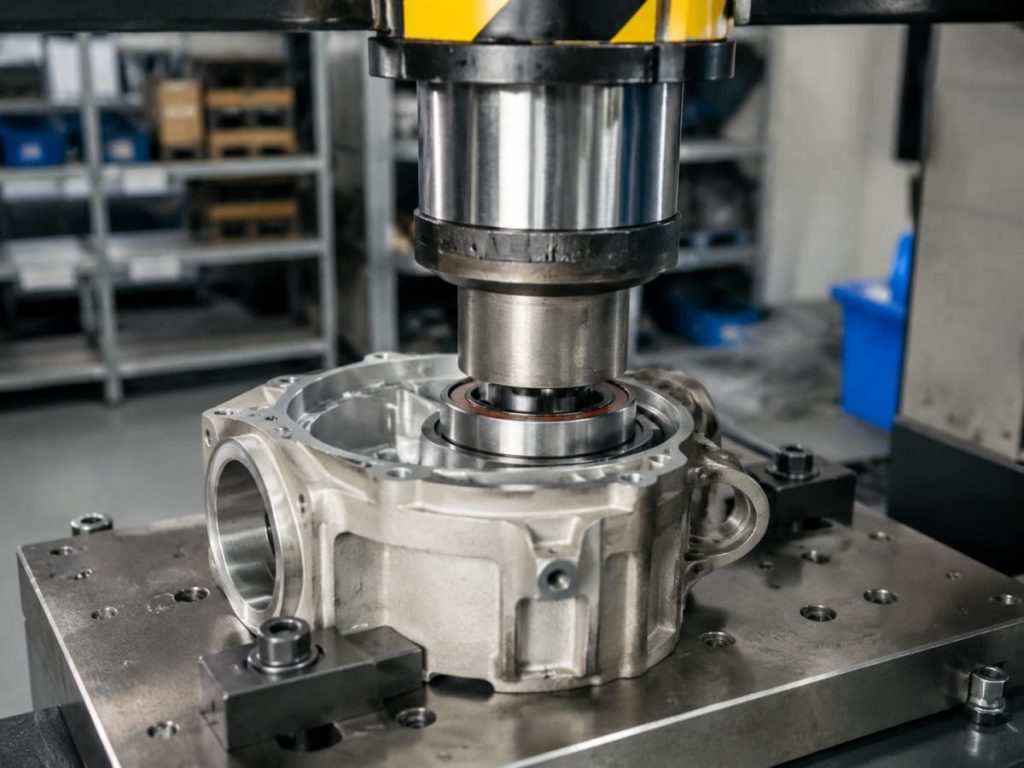
One of the less discussed advantages of 5 axis cnc machining is application flexibility during design iteration. The same machine strategy can often support one-off prototypes, small pilot quantities, and recurring short-run production. That makes it ideal for contour parts that are still evolving, especially when the geometry is too complex to risk an early tooling investment.
Custom 5 Axis CNC Machining Projects and DFM for OEM Product Development
5 axis cnc machining becomes far more efficient when customization is guided by DFM rather than by CAD shape alone. Many contour parts look manufacturable on-screen, but once the supplier evaluates tool reach, minimum corner radii, holder collision risk, workholding, and inspection access, the design often benefits from small revisions that save significant time and cost.
This is where experienced suppliers such as TEAM Rapid create real value. Beyond cutting parts, TEAM Rapid provides detailed manufacturability analysis that can identify design risks before production, improve part performance, reduce quality problems, and shorten the development cycle. On a 5 axis cnc machining project, that might mean increasing an inside radius so a more stable cutter can be used, rotating a datum strategy to simplify probing, opening a tool escape area, or recommending EDM for a single feature instead of forcing an unstable long-reach milling operation.
Typical customization patterns in 5 axis cnc machining include:
- converting an all-machined contour into a hybrid process route to lower cost
- redesigning cavity depth or wall angle to improve cutter access and reduce chatter
- splitting a cosmetic surface from a clamping surface to protect finish quality
- adding stock allowance for post-machining polishing, anodizing, or plating
- adjusting tolerances so inspection focuses on critical-to-function geometry
A common OEM development path starts with one-off prototypes, then moves into a batch of 10 to 50 refined parts, and later into recurring low-volume production. TEAM Rapid is well suited to that progression because it can support CNC machining, EDM, finishing, assembly, procurement, packaging, and shipping from the same supply chain base. That means the engineering team does not have to restart vendor qualification every time the project matures.
Another advantage of 5 axis cnc machining in customization work is that it supports faster comparison between design revisions. If Version A has a deep sculpted pocket and Version B opens the geometry by 2 mm with a larger blend radius, the supplier can often quantify the manufacturing difference immediately. That creates better decision-making than debating design changes in theory.
For OEM and ODM programs, the best results come when the customer shares not only the CAD file but also the actual purpose of the part: load path, cosmetic priority, sealing requirement, mating components, service environment, and expected quantity over time. The more context the supplier has, the more intelligently 5 axis cnc machining can be tailored to the product instead of simply following a drawing at face value.
Sourcing 5 Axis CNC Machining from China Without Quality or Delivery Risk
5 axis cnc machining sourced from China can offer excellent value, but only when the buyer evaluates technical depth, communication quality, inspection discipline, and logistics capability with the same rigor used for machine capacity. The lowest quote is rarely the safest quote for contour parts, because these parts tend to expose weaknesses in programming, workholding, and quality control very quickly.
For many global buyers, China is attractive because 5 axis cnc machining can be paired with strong engineering support, lower operating cost, and faster project coordination across machining, finishing, assembly, and export. TEAM Rapid is a good example of this model. From its Zhongshan facility in Guangdong and Hong Kong office support, it can coordinate machining, secondary processes, procurement support, limited warehousing, and direct shipping for international customers.
When sourcing 5 axis cnc machining from China, the RFQ package should be complete. That means 3D files, 2D drawings where needed, material grade, finish requirements, tolerances, critical inspection points, quantity, and target delivery date. A serious supplier will review not only whether it can machine the part, but whether the geometry should be modified to improve manufacturability and yield.
A practical sourcing checklist for 5 axis cnc machining includes:
- confirm whether the supplier truly offers simultaneous 5-axis work or mainly indexed 3+2 machining
- ask about material traceability, especially for titanium, stainless, and high-performance plastics
- define inspection expectations, including CMM reporting for critical features
- verify finishing capability such as anodizing, plating, polishing, brushing, or painting
- check export packaging, labeling, and shipping support for precision parts
ISO 9001:2015 certification is a useful baseline because documentation and process control matter when parts have tight tolerances and multiple finishing steps. TEAM Rapid’s quality assurance system, full inspection support, and CMM capability are relevant strengths here, particularly for buyers managing medical, industrial, or export-sensitive programs.
Sourcing from China also works best when the supplier can support adjacent processes. Many complex products combine machined parts with sheet metal, die castings, molded plastics, seals, or assembled subcomponents. TEAM Rapid’s broader capabilities in rapid manufacturing reduce handoff risk because the buyer can keep more of the program within one controlled network rather than stitching together several disconnected vendors.
The best China sourcing strategy for 5 axis cnc machining is not to search for the biggest factory or the lowest unit price. It is to choose a supplier that can communicate quickly, challenge risky geometry early, inspect thoroughly, and ship reliably. For contour parts, those factors are what protect schedule, quality, and total cost.
Why Choose TEAM Rapid as Your 5 Axis CNC Machining Partner
5 axis cnc machining projects move faster and more predictably when the supplier understands both high-precision machining and the broader realities of product launch. That is where TEAM Rapid stands out as a practical partner rather than just a machine capacity provider.
TEAM Rapid is a one-stop rapid manufacturing company based in China with more than 10 years of industry experience, 500+ satisfied customers, and 6,000+ delivered projects across 25+ countries. For buyers sourcing 5 axis cnc machining, that experience matters because complex contour parts often touch more than one discipline: machining, turning, EDM, finishing, inspection, assembly, and logistics.
Why many buyers shortlist TEAM Rapid for 5 axis cnc machining:
- 3-axis, 4-axis, and 5-axis CNC milling plus CNC turning with live tooling
- wire EDM and EDM support for hard materials and intricate details
- materials from aluminum and stainless to titanium, brass, copper, Delrin, PTFE, Nylon, and PEEK
- tolerances down to 0.01 mm with full dimensional inspection and CMM capability
- finishing options including polishing, anodizing, painting, powder coating, plating, bead blasting, and brushing
- quick response within a few hours through one-to-one engineering support
- competitive pricing often about 40% lower than Europe and America
Another advantage is continuity. A project can start as a machined prototype, move into low-volume production, and then expand into complementary services such as sheet metal fabrication, die casting, packaging, procurement support, or direct shipping. That is especially useful for OEM teams managing assemblies rather than standalone parts.
If your team is evaluating a contour component, multi-face precision part, or pilot-build program, the smartest next step is to get engineering feedback before finalizing the sourcing route. You can Contact Us to request a quote, email sales@teamrapidtooling.com, or call +86 760 8850 8730. In many cases, a short DFM discussion will show whether the part truly needs full 5 axis cnc machining, a 3+2 strategy, or a hybrid process for better value.
5 Axis CNC Machining FAQ for Engineers and Buyers
What tolerance can I expect from 5 axis cnc machining?
5 axis cnc machining can achieve very high precision, and critical features may be held down to 0.01 mm when the material, geometry, workholding, and inspection plan are properly controlled. That said, tolerance capability should always be matched to the feature type. A tight bore tolerance, a profile tolerance on a curved surface, and a true-position requirement across multiple faces each place different demands on the process. The best practice is to identify the critical-to-function dimensions rather than over-tolerancing the entire drawing.
When should I choose 5 axis cnc machining instead of 3-axis or 4-axis machining?
Choose 5 axis cnc machining when the part has compound angles, deep cavities, freeform contour surfaces, or multi-face features that are difficult to reach accurately in repeated setups. If a part can be machined in fewer operations with better tool angle control, 5-axis is usually worth it. If the geometry is largely prismatic and only needs indexed access to a few angled features, a 3+2 or 4-axis route may be more economical.
How much does 5 axis cnc machining cost for low-volume parts?
5 axis cnc machining cost depends on geometry, material, tolerance difficulty, finishing, and quantity. A simple aluminum prototype part may be in the tens to low hundreds of dollars, while a simultaneous 5-axis titanium or PEEK contour part with heavy inspection can reach several hundred dollars or more per piece. The most important point is to compare total delivered value, not machine time alone. Suppliers such as TEAM Rapid often reduce total cost by combining machining, finishing, inspection, and shipping within one workflow.
What materials are best for 5 axis cnc machining of contour parts?
The best materials for 5 axis cnc machining depend on the functional need of the part. Aluminum 6061 is the most common choice for fast prototypes and lightweight structural parts. 7075 is preferred where higher strength is needed. Stainless 303, 304, and 316 are common for corrosion-resistant industrial and medical parts. Titanium is ideal for high strength-to-weight and biocompatibility. Delrin, Nylon, PTFE, and PEEK are excellent for engineering-plastic components where insulation, low friction, chemical resistance, or temperature performance matter.
What lead time should I expect for 5 axis cnc machining?
5 axis cnc machining lead time varies by complexity, material availability, quantity, and finish requirements. Simple low-volume contour parts can sometimes ship within a few working days, while more difficult parts with extensive programming, multiple finishing steps, or CMM reporting may need one to two weeks or more. TEAM Rapid’s general rapid prototyping lead time is typically 2-8 days, and many CNC programs can be scheduled within that window when the design is mature and the material is in stock.
Is 5 axis cnc machining suitable for 1 piece or for 500+ parts?
Yes. One of the commercial strengths of 5 axis cnc machining is its flexibility across quantity levels. It works for a single prototype, a short verification batch, or recurring low-volume production of 500+ parts. Once quantity climbs further, buyers may compare machining against casting or other scalable routes, but for complex, high-value contour parts, CNC often remains the preferred process longer than expected.
How should I design parts for 5 axis cnc machining to reduce cost?
To reduce cost in 5 axis cnc machining, design with tool access and inspection in mind. Avoid unnecessarily deep narrow cavities, extremely small internal radii, and cosmetic surfaces that also have to serve as clamping surfaces. Use realistic tolerances, create room for cutter exit where possible, and think about how the part will be held. If you are unsure, share the design early with a supplier that offers DFM support. TEAM Rapid, for example, can often suggest small geometry changes that improve stability, shorten cycle time, and simplify finishing without affecting function.
How do I choose a reliable China supplier for 5 axis cnc machining?
Choose a China supplier for 5 axis cnc machining by checking whether it offers true 5-axis capability, CMM inspection, material and finish range, export experience, and fast engineering communication. Ask how the supplier handles DFM review, probing strategy, surface finish control, and packaging for precision parts. TEAM Rapid is a strong option when buyers want not only machining, but also broader support in finishing, assembly, procurement, and shipping from one coordinated source.
Content reviewed and updated: June 2026.