
CNC Machining Tolerances: Achievable Precision Standards
CNC machining tolerances define how much a finished part is allowed to vary from its nominal CAD or drawing dimensions. In practical manufacturing, the right tolerance is a balance between function, process capability, material behavior, inspection method, lead time, and cost.
For engineers and sourcing teams, this is one of the most important decisions in any RFQ. If tolerances are too loose, the part may not assemble, seal, align, or perform correctly. If tolerances are tighter than the application actually needs, machining time, inspection effort, scrap risk, and unit cost can rise quickly. Understanding what is realistically achievable helps buyers choose the right supplier, the right process, and the right quality standard from the start.
CNC Machining Tolerances at a Glance: What Precision Standards Are Achievable
CNC machining tolerances are typically achievable in the range of ±0.10 mm to ±0.02 mm for many standard precision parts, while critical features on well-designed components can often be held to ±0.01 mm by a capable manufacturer. For buyers comparing suppliers, the key point is that achievable precision depends on feature type, material, part geometry, workholding, toolpath strategy, and inspection discipline.
A common mistake is assuming one tolerance number applies equally to every feature on a part. In reality, a turned diameter, a milled slot, a flat sealing face, and a 5-axis contoured surface all behave differently during machining and measurement. The best machining drawings separate general tolerances from critical tolerances and use GD&T where function really depends on position, flatness, perpendicularity, or profile.
Here is a practical way to think about achievable precision standards:
| Tolerance Level | Typical Range | Common Use Case | Notes |
|---|---|---|---|
| General machining | ±0.10 mm to ±0.05 mm | Brackets, covers, fixtures, non-critical housings | Fastest and most economical |
| Precision machining | ±0.05 mm to ±0.02 mm | Assembly features, mating surfaces, general mechanical components | Common for many production parts |
| Tight precision | ±0.02 mm to ±0.01 mm | Bearing fits, sealing faces, alignment features, medical or automation parts | Requires better process control and inspection |
| Ultra-critical feature control | Around ±0.01 mm or tighter on selected features | Tooling inserts, precision bores, high-performance assemblies | Usually limited to specific dimensions, not the whole part |
In day-to-day shop practice, cnc machining tolerances are influenced by several factors:
- machine rigidity, spindle condition, and thermal stability
- material type, hardness, and residual stress in the stock
- feature geometry, wall thickness, and cutter reach
- fixturing method and number of setups
- inspection method, including calipers, micrometers, bore gauges, and CMM
The most economical strategy is to specify tight tolerances only where function demands them. A part can easily combine a general tolerance block with a few critical callouts, which gives the supplier room to machine efficiently while still protecting fit and performance. That is the real meaning of achievable precision standards in CNC manufacturing.
Why CNC Machining Tolerances Are Now a Key Precision Manufacturing Benchmark
CNC machining tolerances have become a more important buying criterion because products across automotive, medical, electronics, robotics, and industrial equipment now pack more function into smaller spaces. Components that once had generous clearances are increasingly expected to align perfectly, seal reliably, run quietly, and assemble without manual adjustment.
This shift is changing how buyers evaluate suppliers. It is no longer enough to ask whether a machine shop can cut aluminum or stainless steel. The better question is whether the supplier can achieve the required precision repeatedly, explain which dimensions are process-critical, and provide inspection evidence. That is one reason manufacturers like TEAM Rapid are gaining attention from global sourcing teams: buyers increasingly prefer partners that combine machining, DFM support, finishing, inspection, and production planning instead of offering machine time alone.
Demand for tighter machining standards is being driven by several long-term trends. Lightweight structures in EV and mobility products depend on accurate bores, pockets, and mounting planes. Medical devices need controlled fit, surface quality, and repeatable assembly. Automation equipment requires precise motion interfaces, alignment features, and low variation from batch to batch. Even consumer products now include more premium cosmetic surfaces, hidden fastening systems, and dense internal packaging that reduce tolerance for dimensional drift.
At the same time, buyers want faster launches. That creates pressure to validate dimensions earlier, often through machined prototypes before moving to casting or tooling-based production. Suppliers that can connect tolerance planning with broader development support are especially valuable at this stage. TEAM Rapid, for example, supports customers in more than 25 countries and has delivered 6,000+ projects, which reflects the growing need for precision manufacturing partners that understand both technical requirements and cross-border execution.
Another reason cnc machining tolerances matter more today is the rising cost of downstream problems. A slightly oversized bore or mislocated threaded hole may seem minor at the component level, but it can cause assembly delay, leaking seals, extra hand fitting, fixture redesign, or field reliability issues. In modern product launches, tolerance discipline is not just a shop-floor issue. It is a schedule, cost, and quality issue across the full supply chain.
CNC Machining Tolerances by Process, Material, and Specification
CNC machining tolerances vary significantly by process type, material selection, feature geometry, and finish requirement. Buyers get better outcomes when they match the tolerance expectation to the manufacturing route instead of applying the same precision target to every operation.
At experienced suppliers such as TEAM Rapid, this is where process planning makes a real difference. A critical part may be machined through 3-axis milling, 4-axis indexing, 5-axis milling, CNC turning, wire EDM, or sinker EDM depending on which method offers the best balance of accuracy, cutter access, surface finish, and cycle time. TEAM Rapid, for instance, supports CNC milling, CNC turning with live tooling, wire EDM, EDM, polishing, anodizing, plating, painting, and CMM-based dimensional inspection, which allows tighter control over complex parts rather than forcing every feature through a single method.
Process capability matters more than the headline tolerance number
Different processes hold different dimensions well:
| Process | Typical Achievable Range | Best-Suited Features | Key Watchouts |
|---|---|---|---|
| CNC milling | ±0.05 mm to ±0.02 mm for many features | Pockets, slots, mounting faces, profiles | Tool deflection and workholding affect thin walls |
| 5-axis milling | ±0.03 mm to ±0.01 mm on selected critical features | Complex surfaces, multi-face geometry, angled features | Programming and probing strategy are essential |
| CNC turning | ±0.03 mm to ±0.01 mm on diameters and lengths | Shafts, bushings, threaded parts, concentric features | Long slender parts may deflect |
| Wire EDM | Often tighter feature control on intricate profiles | Punches, dies, fine slots, hard materials | Slower process, finish may need follow-up |
| EDM | Tight control on hard-to-machine details | Deep ribs, small corners, mold details | Electrode design affects final accuracy |
Material selection directly affects stability
Material behavior is just as important as machine capability. Aluminum 6061 is widely used because it machines cleanly, offers good dimensional stability, and supports fast cycle times. Aluminum 7075 is stiffer and stronger, making it a strong choice for structural applications. Stainless steels such as 303, 304, and 316 can hold excellent precision, but heat buildup, work hardening, and tool wear must be managed carefully. Titanium offers high performance but demands conservative cutting strategies. Engineering plastics such as Delrin, PEEK, Nylon, and PTFE can be machined precisely, but thermal expansion, moisture absorption, or material softness may limit how aggressively very tight dimensions can be held.
Specifications should cover more than linear dimensions
When discussing cnc machining tolerances, the drawing package should also define:
- critical datums and GD&T callouts where functional
- required surface finish, such as Ra 3.2 (\mu m), Ra 1.6 (\mu m), or finer
- hole tolerances, thread class, and fit requirements
- post-machining treatments such as anodizing, bead blasting, brushing, or plating
- inspection expectations, including CMM reports for key features
TEAM Rapid’s machining capability covers aluminum alloys including 6061, 7075, and 2024; stainless steels 303, 304, and 316; carbon steel; titanium; brass; copper; and engineering plastics such as Delrin, PEEK, Nylon, and PTFE. That broad material range matters because the “same” tolerance value does not carry the same risk across all materials.
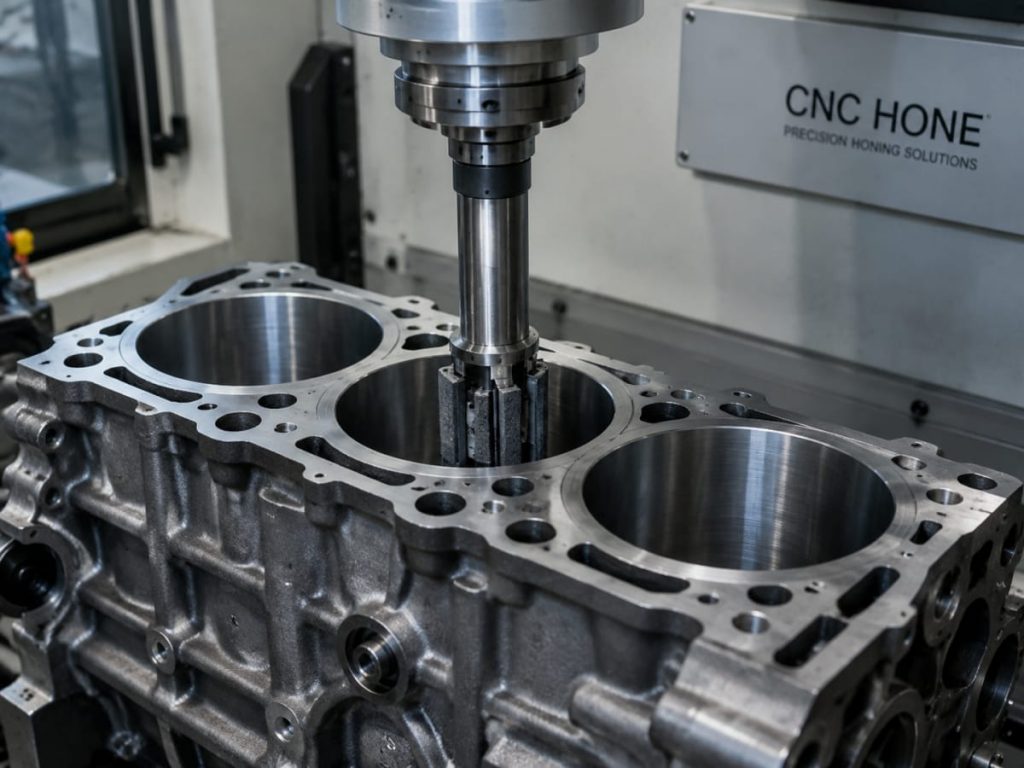
For complex RFQs, the best suppliers will challenge assumptions. If a print calls for ±0.01 mm on non-critical outside dimensions but only one bore truly matters, the smart move is to tighten the bore and relax the rest. That kind of process-specific thinking is what turns tolerance requirements into achievable production standards rather than expensive drawing language.
How to Specify CNC Machining Tolerances Without Increasing Cost Unnecessarily
CNC machining tolerances should be specified according to function, not habit. Buyers often over-tolerance parts because they want to “be safe,” but in manufacturing that usually means paying for extra setups, slower feeds, more tool changes, higher inspection time, and greater scrap exposure without improving how the part actually works.
The first rule is to separate general tolerances from critical-to-function dimensions. A bracket may need a tight hole-to-hole position tolerance and a controlled mounting face, while its overall outside profile can remain relatively open. A valve body may need a fine sealing land and carefully controlled bore size, but non-mating exterior walls do not need the same standard. Smart sourcing teams ask what must be precise for assembly, sealing, movement, or appearance, then let the rest of the part breathe.
Here is a useful purchasing view of tolerance versus cost impact:
| Tolerance Strategy | Relative Cost Impact | Relative Lead Time Impact | Typical Recommendation |
|---|---|---|---|
| General tolerance around ±0.10 mm | 1.0x baseline | Fastest | Use for non-critical dimensions |
| Standard precision around ±0.05 mm | 1.1x to 1.3x | Low to moderate | Good for most machined parts |
| Tight precision around ±0.02 mm | 1.3x to 1.8x | Moderate | Reserve for fit, alignment, sealing |
| Critical features around ±0.01 mm | 1.8x to 2.5x or more | Highest | Apply only where performance truly depends on it |
These are not universal quote prices, but they reflect a very common trend in real purchasing. Tightening a tolerance often increases cost nonlinearly because the supplier may need better fixturing, shorter tools, slower cutting parameters, in-process probing, temperature control, and detailed CMM reporting.
A good RFQ for cnc machining tolerances should include:
- 3D CAD and 2D drawings with critical dimensions clearly marked
- material grade, heat-treatment condition if relevant, and finish requirement
- quantity range, such as 1-5, 20-50, or 100-500+ parts
- inspection requirement, such as first article only or full report on key dimensions
- expected delivery window and any shipping constraints
This is also where development planning matters. Many teams use Rapid Prototyping to validate geometry, ergonomics, and assembly logic first, then move into tolerance-critical CNC parts once function is clear. That staged approach often saves money because you avoid paying tight-machining cost before the design is stable.
Experienced suppliers such as TEAM Rapid are useful during this phase because fast one-to-one engineering response can identify over-toleranced prints early. TEAM Rapid’s quoting support within a few hours, along with pricing that is often around 40% lower than Europe and America, can create substantial savings when combined with DFM review instead of simple print-to-part execution.
The practical rule is simple: specify the tolerance that protects function, not the smallest number that seems impressive.
Industries That Depend on Tight CNC Machining Tolerances
CNC machining tolerances are especially important in industries where poor fit, alignment error, or dimensional variation can affect performance, safety, reliability, or downstream assembly efficiency. These sectors do not just need parts that “look close.” They need measurable, repeatable precision.
Automotive programs are a major example. Interior mechanisms, exterior trim supports, under-hood brackets, prototype EV components, sensor mounts, and thermal management hardware all rely on predictable tolerance control. Medical devices are another strong driver, especially for handheld housings, treatment-unit components, instrument bodies, and alignment-sensitive subassemblies. Communication products and office equipment also demand controlled tolerances because internal packaging is often dense and cosmetic expectations are high.
For industrial design and commercial products, precision requirements vary more widely, but tolerance control still matters whenever several parts must assemble without hand fitting. Electrical appliances, sanitary products, and consumer hardware often combine appearance requirements with fit-critical interfaces, which means the supplier must understand both machining precision and finishing behavior.
Manufacturers like TEAM Rapid see this range of needs every day across automotive, medical devices, communication products, office equipment, electrical appliances, industrial design, and consumer products. With more than 500 satisfied customers and 6,000+ delivered projects, TEAM Rapid is a useful example of a supplier that can support both early prototypes and repeat production while keeping tolerance planning connected to real commercial outcomes.
The B2B buyer groups that care most about cnc machining tolerances typically include:
- design engineers releasing first-production drawings
- sourcing managers qualifying overseas machining partners
- NPI teams balancing speed, cost, and dimensional risk
- quality engineers reviewing CMM plans and specification compliance
- product managers moving from proof-of-concept to low-volume manufacture
In all of these sectors, tight tolerance control is rarely an isolated requirement. It is tied to lead time, inspection depth, finishing needs, packaging, and how the next process will use the part. That is why buyers increasingly favor suppliers that can do more than machine a block of metal. They want a partner that understands how dimensional precision affects the complete product and the complete supply chain.
CNC Machining Tolerances in Real-World Applications and Functional Use Cases
CNC machining tolerances only make sense when tied to how the part will actually function. A dimension that seems minor on a drawing may be critical in a working assembly, while another dimension that looks important may have almost no performance impact. The best tolerance decisions are always application-driven.
For example, a bearing housing may need a tightly controlled bore diameter and coaxiality, but its external pocket profile can stay relatively open. A fluid manifold may need flat sealing faces, accurate port locations, and reliable thread engagement, while non-sealing wall thickness can tolerate more variation. A cosmetic aluminum electronics housing may need accurate gasket grooves and PCB mounting points, yet the visible outer contour is often driven more by surface finish and edge quality than by extremely tight linear dimensions.
Common real-world use cases include:
- Bearing seats and shafts: require controlled diameters, roundness, and concentricity for smooth motion and predictable service life
- Sealing surfaces and manifolds: need flatness, parallelism, and good surface finish to prevent leaks
- Mold inserts and tooling details: often demand precise cavity features in steels such as P20, NAK80, and S136
- Robot end-effectors and fixtures: depend on repeatable hole position, alignment, and datum relationships
- Medical and handheld housings: combine cosmetic requirements with fit-critical internal features
This is also where process crossover becomes important. Some plastic products start as machined prototypes to validate tolerance-sensitive geometry, then transition into Injection Molding once the design is frozen and volume justifies tooling. That handoff only works well when the early machined part has been specified with realistic tolerances and proper understanding of how molded shrinkage, steel-safe conditions, and tool design will later affect final dimensions.
TEAM Rapid is well positioned for these transitions because it can support CNC machining, rapid tooling, injection molding, finishing, and assembly under one coordinated manufacturing structure. For buyers, that means the tolerance learning from prototype stage can be carried into pilot and production rather than lost between vendors.
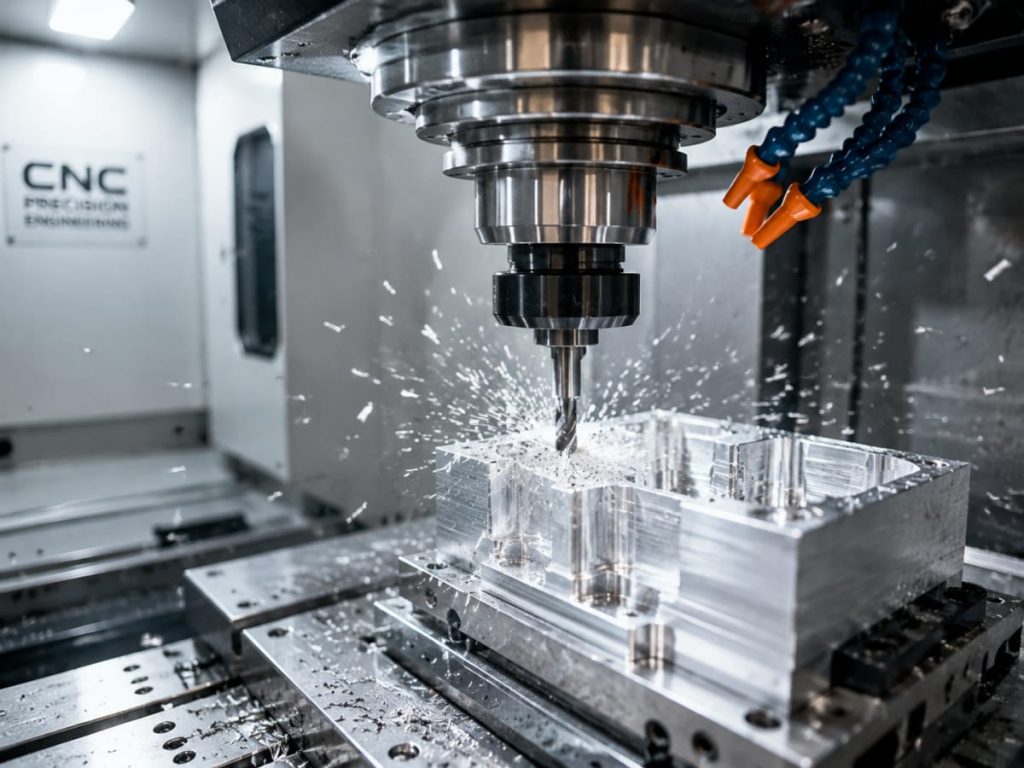
A good application-based tolerance strategy answers three questions: What must fit? What must seal or move? What must look premium? Once those answers are clear, the supplier can align machining method, inspection plan, and finishing steps around the dimensions that truly matter.
Custom CNC Machining Tolerances for OEM Projects and DFM Optimization
CNC machining tolerances are most effective when they are refined during DFM rather than copied directly from an early design draft. In OEM development, the first drawing often reflects design intent, but not always the most efficient machining method. Small changes to radii, wall thickness, datum structure, stock condition, or finish sequence can improve both accuracy and manufacturability.
This is where experienced suppliers such as TEAM Rapid add value beyond cutting parts. Detailed DFM feedback can identify design risks before production, reduce the chance of tolerance stack-up, improve part performance, and shorten the development cycle. On tolerance-critical components, that may mean recommending a different datum scheme, increasing an inside radius to suit a more rigid tool, separating cosmetic and functional faces, or changing a threaded feature from machined to tapped after a finishing operation.
Representative OEM scenarios often look like this:
A startup developing a compact industrial device needs five aluminum housings with cosmetic outer surfaces, flat gasket lands, and precision PCB bosses. The first print applies ±0.02 mm everywhere. After DFM review, only the bosses, gasket groove, and a few locating features retain the tighter tolerance, reducing cost and improving lead time.
A medical-device team needs stainless steel handles and internal alignment parts for evaluation builds. Certain bores and mating features require tight control, but outer sculpted surfaces only need stable profile and good finish. The machining plan shifts from “tight everywhere” to “controlled where functional,” making inspection and batch consistency easier.
An OEM tooling project requires mold inserts with fine cavity details in P20 or S136. Some features are better milled, while narrow ribs and sharp internal corners are finished by EDM. Tolerance control improves because each feature is assigned to the process best suited to it.
Common DFM actions that improve tolerance outcomes include:
- reducing unnecessary depth-to-diameter ratios in pockets and bores
- enlarging internal radii to support stronger, shorter tools
- moving datums to machinable, repeatable reference faces
- assigning cosmetic finish after critical dimensions are protected
- using selective tight tolerances instead of drawing-wide precision
TEAM Rapid is particularly useful for these custom projects because it can support one-off parts, pilot batches, and recurring production from 1 piece to 500+ machined parts, while also helping customers transition into tooling, molding, die casting, sheet metal, or assembly when the program scales. That continuity matters because a good tolerance strategy should survive beyond the prototype phase.
Sourcing CNC Machining Tolerances from China with Better Quality Control
CNC machining tolerances can be sourced successfully from China when the buyer evaluates the supplier on engineering discipline, inspection capability, communication speed, and export execution, not just on unit price. For precision parts, the cheapest quote is rarely the lowest total cost if rework, unclear reports, or delayed replacements become part of the project.
The first sourcing step is to send a complete RFQ package. That means 3D files, 2D drawings where required, material grade, finish specification, quantity, critical dimensions, and inspection expectation. If the part includes GD&T, call out which controls are function-critical. If a surface must seal, slide, or remain cosmetic after anodizing, that should be written clearly. Good suppliers will respond not only with price, but also with manufacturability comments and risk points.
A practical sourcing checklist for tight-tolerance work includes:
- confirm actual capability in milling, turning, 5-axis machining, wire EDM, and EDM where relevant
- ask whether full dimensional inspection and CMM reporting are available
- review material options such as 6061, 7075, 2024, 303, 304, 316, titanium, Delrin, PEEK, Nylon, and PTFE
- verify finishing services including anodizing, painting, plating, bead blasting, brushing, and polishing
- define packaging, labeling, and direct shipping requirements for sensitive parts
This is where TEAM Rapid stands out in a very practical way. At TEAM Rapid’s Zhongshan factory in Guangdong, buyers can source CNC machining, tooling, molding, die casting, finishing, assembly, packaging, procurement support, limited warehousing, and direct shipping through one coordinated system. Its Hong Kong office support and experience with both Asian and Western business cultures also help reduce the communication gaps that often cause tolerance misunderstandings in international projects.
Quality assurance is equally important. TEAM Rapid is ISO 9001:2015 certified, offers full inspection support, and provides detailed manufacturability analysis before tooling or machining begins. For buyers importing precision parts, that combination is more valuable than a low quote alone because it helps control risk before the first chip is cut.
In many sourcing programs, speed also matters. TEAM Rapid’s rapid prototyping lead times of 2-8 days, along with fast-turn CNC support for 1-500+ parts, make it a strong option when design teams need quick feedback without sacrificing dimensional control. And when the product later moves into rapid tooling and molding in 5-25 days, the same supplier can carry forward the dimensional lessons already learned from machined parts.
Why Choose TEAM Rapid for CNC Machining Tolerances and Precision Parts
CNC machining tolerances are easier to manage when the supplier has both technical capability and broad manufacturing context. That is why many buyers shortlist TEAM Rapid when they need precision parts, fast feedback, and a practical path from prototype to production.
TEAM Rapid is not just a machine shop. It is a one-stop rapid manufacturing partner serving innovators, product designers, engineers, startups, and established companies that need custom plastic and metal parts made faster and more affordably. For tolerance-sensitive work, its value comes from the combination of in-house machining, tooling manufacturing, molding capability, and an integrated manufacturing resource network across China. That makes it easier to manage not only machining precision, but also finishing, assembly, packaging, procurement, and shipping.
For CNC work specifically, TEAM Rapid offers 3-axis, 4-axis, and 5-axis milling, CNC turning with live tooling, wire EDM, EDM, full dimensional inspection with CMM capability, and tolerances down to 0.01 mm on suitable features. Surface finishes include polishing, anodizing Type II and Type III hard coat, painting, powder coating, nickel/chrome/zinc plating, bead blasting, and brushing. Those are the practical building blocks buyers need when a part must both function and look right.
Commercially, TEAM Rapid is attractive because it combines quick engineering response within a few hours, flexible order volumes from a single prototype to larger recurring production, and pricing that is often about 40% lower than Europe and America. For many OEM teams, that mix of responsiveness and value is more important than any single headline machine specification.
If you are reviewing an RFQ for precision parts and want a fast engineering opinion on material, finish, or achievable tolerance bands, the next step is simple: Contact Us, call +86 760 8850 8730, or email sales@teamrapidtooling.com. A short DFM discussion with TEAM Rapid can often prevent over-tolerancing, shorten the quote cycle, and improve the final quality result before production begins.
CNC Machining Tolerances FAQ
What cnc machining tolerances are standard for prototype parts?
For prototype work, standard cnc machining tolerances are commonly around ±0.10 mm to ±0.05 mm for non-critical dimensions, with tighter callouts such as ±0.02 mm or ±0.01 mm applied only to features that affect fit or function. This approach keeps prototype cost reasonable while still giving the engineering team reliable data for assembly and testing. If the prototype is intended to simulate production performance closely, the drawing should identify which dimensions truly need tighter control.
How tight can cnc machining tolerances realistically go?
On well-designed parts, critical features can often be held to ±0.01 mm, and in some process-specific situations even tighter control may be possible on selected dimensions. However, the realistic answer depends on material, machine condition, tool reach, feature geometry, thermal stability, and measurement method. Buyers should avoid asking for extremely tight tolerances across an entire part unless every dimension genuinely needs that level of precision. The smarter practice is to apply the tightest standard only where function justifies it.
Are tight machining tolerances different for milling, turning, and EDM parts?
Yes. Milling, turning, EDM, and wire EDM each behave differently, so the same nominal value may not have the same risk or cost across all processes. Turned diameters and coaxial features often hold very well on the right lathe setup, while wire EDM is excellent for intricate profiles in hard materials. Milled thin walls, deep pockets, and long-reach features can be more sensitive to tool deflection. When reviewing a quote, ask the supplier which process is being used for each critical feature rather than focusing on one blanket tolerance number.
Which materials hold cnc machining tolerances best?
Material stability plays a major role in cnc machining tolerances. Aluminum 6061 is one of the easiest and most predictable materials for tight general machining. 7075 also performs well where higher stiffness is needed. Stainless steels such as 303, 304, and 316 can hold strong precision but may require slower cutting and more careful tool control. Delrin is one of the more stable engineering plastics, while Nylon and PTFE can be more challenging because of moisture response or material softness. PEEK is often selected when a high-performance plastic needs better dimensional stability.
How do cnc machining tolerances affect cost and lead time?
The tighter the tolerance, the higher the likely cost and the longer the probable lead time. That is because tighter dimensions often require better fixturing, shorter and more rigid tools, lower cutting speeds, in-process probing, more operator attention, and more detailed inspection. A part with mostly ±0.05 mm features will usually quote faster and cheaper than the same part drawn at ±0.01 mm throughout. TEAM Rapid often helps customers reduce this cost gap by reviewing drawings early and tightening only the dimensions that matter.
What minimum order quantity applies to tight-tolerance CNC parts?
In most cases, there is no large MOQ requirement for tight-tolerance CNC work. One of the biggest advantages of CNC machining is that it supports anything from 1 prototype to 500+ parts without dedicated production tooling. That makes it ideal for development builds, pilot runs, bridge production, and recurring low-volume orders. Suppliers like TEAM Rapid can also support customers as quantity grows, which is useful when the project later moves into tooling, Injection Molding, die casting, or assembly-based production.
How should cnc machining tolerances be inspected before shipping?
Inspection should match the functional risk of the part. General dimensions may be checked with calibrated calipers or micrometers, while bores, threads, critical positions, and GD&T features often require bore gauges, height gauges, surface plates, or CMM verification. For imported parts, it is smart to request a first article report or a focused dimensional report on key features instead of measuring every non-critical dimension. For tolerance-sensitive programs, TEAM Rapid can provide full dimensional inspection support with CMM capability, which helps buyers verify compliance before shipment.
Can TEAM Rapid handle tight-tolerance CNC machining for prototypes and production?
Yes. TEAM Rapid supports CNC milling, turning, wire EDM, and EDM for plastic and metal parts, with achievable precision down to 0.01 mm on suitable critical features. It can machine quantities from a single prototype to 500+ parts, provide finishing such as anodizing, plating, and polishing, and supply DFM feedback before manufacturing starts. For teams moving quickly, TEAM Rapid’s rapid prototyping lead time of 2-8 days and quick engineering response can be especially helpful when tolerance decisions must be made early.
Content reviewed and updated: June 2026