
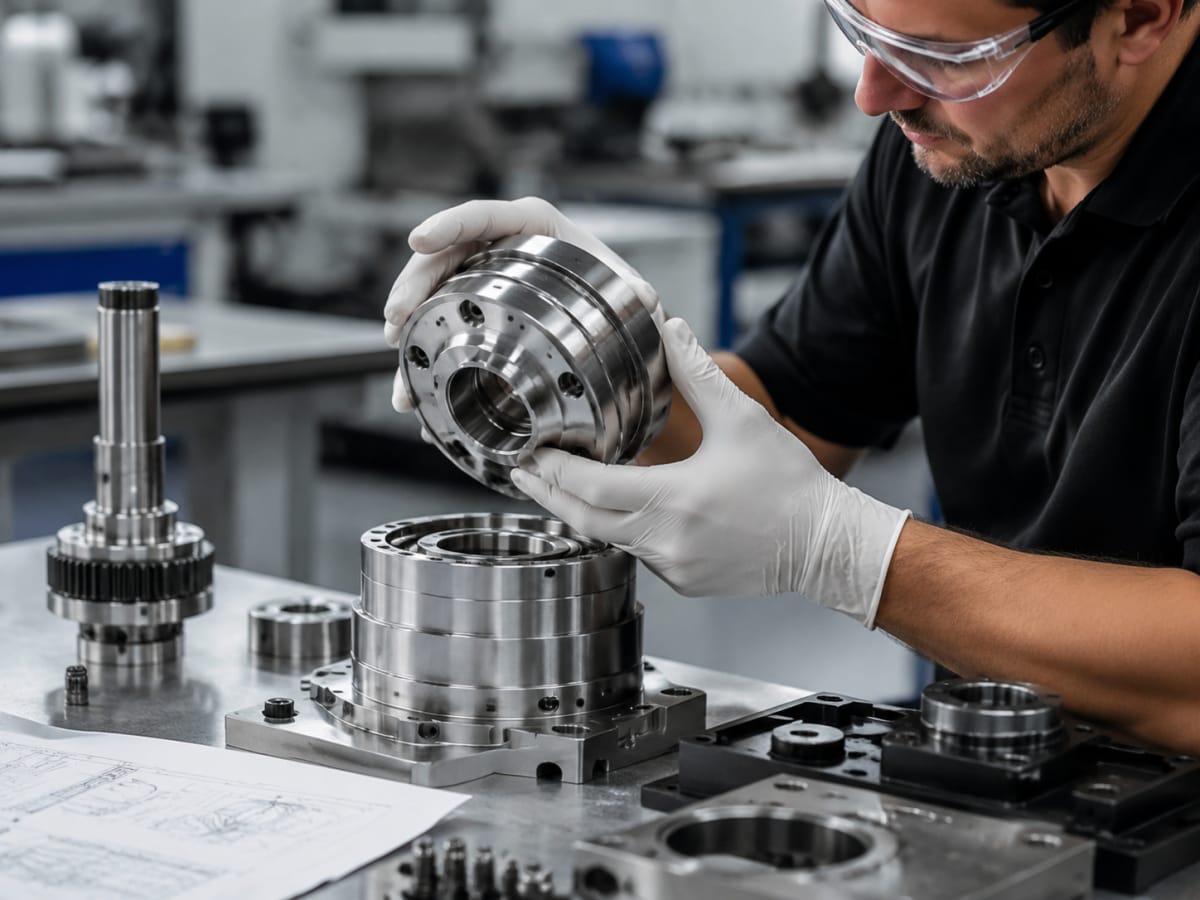
CNC Machining vs 3D Printing: Key Process Differences
CNC Machining vs 3D Printing: The Short Answer for Product Teams
CNC machining vs 3D printing comes down to one practical difference: CNC machining is usually the better choice when a manufacturer or supplier needs tight tolerances, real production-grade materials, and functional performance, while 3D printing is usually the better choice when speed, geometric freedom, and low-cost design iteration matter most. For most engineering teams, the smartest answer is not choosing one forever, but choosing the right process for the right stage of product development.
In day-to-day manufacturing, the decision is rarely theoretical. A printed enclosure may be perfect for an early form study, but a CNC-machined aluminum housing is far more reliable for thread testing, sealing surfaces, heat management, or assembly validation. Likewise, a CNC part may deliver excellent precision, but it may be slower and less economical than 3D printing for a highly complex internal channel or lattice structure.
A simple way to think about cnc machining vs 3d printing is this:
- Choose CNC machining when you need tolerances down to around (\pm 0.01\ mm) to (\pm 0.05\ mm), solid metal or engineering plastic performance, machined threads, and production-like functional testing.
- Choose 3D printing when you need fast concept models, low-cost iteration, highly complex geometry, undercuts, internal passages, or no-tooling prototype freedom.
- Choose both together when a project needs quick concept validation first and precise functional validation second.
- Re-evaluate the process once quantities increase, because vacuum casting, sheet metal fabrication, die casting, or Injection Molding may become more economical later.
For B2B buyers, the real business value of understanding cnc machining vs 3d printing is reduced development risk. The right process decision shortens launch cycles, improves test accuracy, reduces rework, and makes the transition into low-volume or mass production much smoother.
CNC Machining vs 3D Printing Market Trends in Rapid Manufacturing
The discussion around cnc machining vs 3d printing has become more important because modern product teams are developing faster, iterating more often, and demanding more from prototype suppliers. Product life cycles are shorter, engineering teams are more distributed, and purchasing managers increasingly want one vendor that can support concept models, functional prototypes, bridge production, and production ramp-up.
That is why manufacturers like TEAM Rapid are seeing steady demand for hybrid manufacturing support rather than single-process RFQs. Today, a buyer may request SLA concept models in the first week, CNC-machined functional parts in the second, vacuum-cast low-volume plastics in the third, and rapid tooling samples shortly after. The supplier that can support that progression with fast engineering communication has a clear advantage.
Several market forces are driving this trend:
First, engineers are under pressure to validate designs earlier. Companies no longer want to discover fit issues, thread failures, or wall-thickness problems after production tooling is cut. CNC and additive processes both help, but in different ways.
Second, buyers want more supply chain flexibility. Instead of sending prototyping, machining, molding, finishing, and assembly to separate vendors, many purchasing teams prefer integrated suppliers that can manage the workflow from one-off parts to recurring production orders.
Third, demand for real-material testing is increasing. Additive manufacturing has become much more capable, but many programs still require aluminum, stainless steel, ABS, POM, PC, Nylon, or PEEK parts that behave more like final components. That keeps CNC machining central in medical devices, automotive, consumer products, communication products, and industrial equipment.
Fourth, sourcing from China remains attractive because capable suppliers can combine cost efficiency with fast turnaround. TEAM Rapid, for example, supports customers in more than 25 countries and has completed 6,000+ delivered projects, which reflects how global buyers increasingly use China not only for production, but also for fast, engineering-driven development work.
In short, the market is no longer asking whether cnc machining vs 3d printing has a winner. It is asking which process creates the best engineering outcome at each stage, and which supplier can guide that decision quickly and accurately.
CNC Machining vs 3D Printing Materials, Specifications, and Process Limits
When comparing cnc machining vs 3d printing, materials and specifications are usually the deciding factors. If the part must act like the final product, material behavior matters more than visual appearance. If the goal is rapid concept validation, geometry freedom may matter more than material fidelity.
Experienced suppliers such as TEAM Rapid are useful here because they offer both CNC prototyping and 3D printing instead of forcing every part into one route. TEAM Rapid supports CNC prototyping for 1-500+ parts in metals and plastics, plus SLA and SLS printing for complex geometries that can ship in as little as 1 day. That allows engineers to select the process based on function, not habit.
Core material and technical differences
In cnc machining vs 3d printing, CNC starts from solid stock and removes material, while 3D printing builds the part layer by layer. That one difference affects material options, strength direction, surface finish, dimensional stability, and design freedom.
| Comparison Point | CNC Machining | 3D Printing |
|---|---|---|
| Starting form | Solid billet, plate, rod, or block | Layered build from resin, powder, or filament |
| Common materials | Aluminum 6061/7075, stainless steel, brass, mild steel, ABS, PC, POM, Nylon, PEEK | SLA resins, SLS Nylon, some filled polymers and specialized print materials |
| Dimensional tolerance | Often (\pm 0.01\ mm) to (\pm 0.05\ mm) on critical features, depending on geometry | Often around (\pm 0.10\ mm) to (\pm 0.30\ mm), depending on process and part size |
| Surface finish | As-machined often around (Ra\ 1.6-3.2\ \mu m), can be improved by polishing or coating | Layer lines or powder texture usually need post-processing for smooth cosmetic surfaces |
| Mechanical behavior | More isotropic and closer to final production material behavior | Can be anisotropic depending on process and print orientation |
| Best geometry | Prismatic, turned, high-precision, structural, threaded, sealing surfaces | Organic shapes, internal channels, lattice structures, deep undercuts |
For functional parts, CNC often wins because an aluminum bracket, acetal gear, or polycarbonate housing machined from solid stock behaves more like a real product component. For advanced concept models, 3D printing often wins because it handles complexity without the tool-access limitations of end mills, drills, or turning tools.
What engineers should check before selecting a process
The best way to compare cnc machining vs 3d printing is to match the process to the engineering question:
- Is the part being used for looks, fit, function, or field test?
- Does the prototype need real threads, press-fit holes, or flat gasket surfaces?
- Will the part later move to molding, die casting, or sheet metal production?
- Are there hidden cavities, lattice structures, or organic forms that are hard to machine?
- Is the most important goal speed, strength, appearance, or dimensional repeatability?
At TEAM Rapid, for example, CNC capability includes milling, turning, wire EDM, EDM, polishing, anodizing, painting, and plating. That makes CNC especially useful for components that need fine details, metal performance, and realistic finishing. At the same time, the company’s SLA and SLS capacity supports fast concept iteration with minimal geometry limitations, which is often the better first step for industrial design reviews or complex internal forms.
Practical process limits many buyers overlook
One common mistake in cnc machining vs 3d printing is assuming that geometry complexity always favors 3D printing and precision always favors CNC. In reality, there is overlap.
A machined part can still be the better choice for a complex prototype if the critical features are flatness, hole position, thread quality, or metal stiffness. A printed part can still be the better choice even for some functional testing if the load is low and the geometry must be produced quickly without multiple setups.
Another overlooked point is finishing. Printed parts often need sanding, priming, vapor smoothing, or coating for cosmetic use. CNC parts may need deburring, bead blasting, polishing, anodizing, or painting. So the “raw process speed” should never be evaluated without considering post-processing.
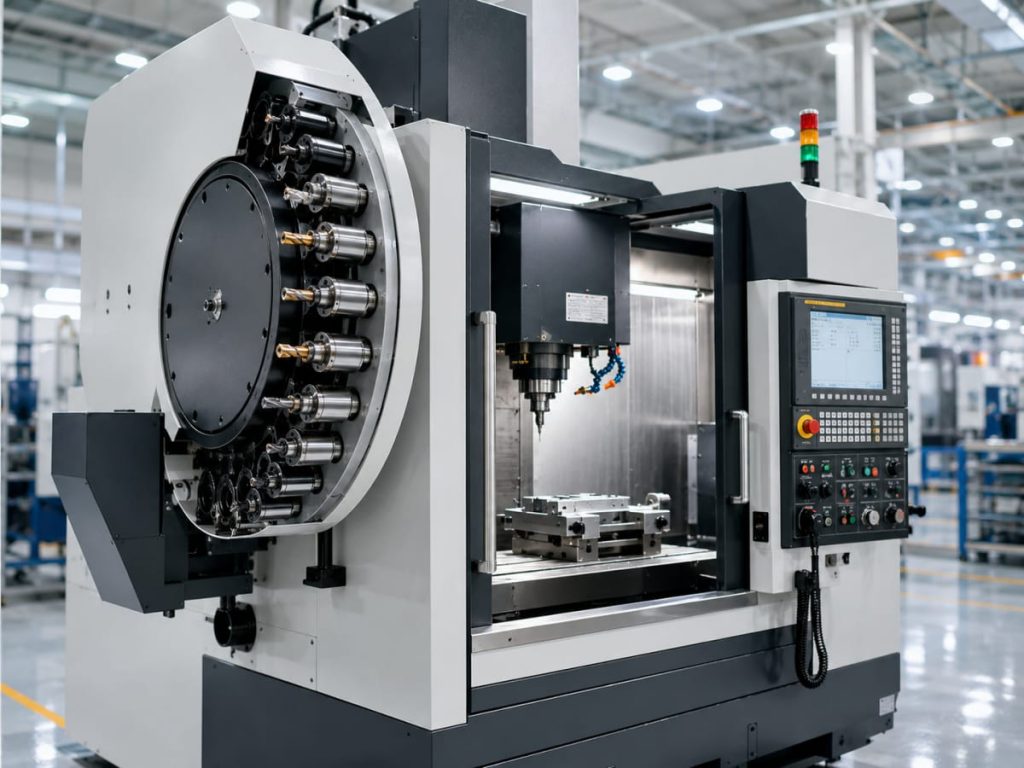
If the goal is to make the best possible decision in cnc machining vs 3d printing, always start with the end-use requirement. The correct prototype is not the one that is fastest to produce in isolation. It is the one that answers the right engineering question with the lowest total development risk.
How to Choose CNC Machining vs 3D Printing Based on Cost, Lead Time, and MOQ
For most buyers, cnc machining vs 3d printing becomes a purchasing decision long before it becomes a philosophical one. The key questions are usually straightforward: Which process will arrive faster? Which will cost less? Which one gives reliable test data? And what quantity changes the economics?
In general, 3D printing has the advantage for fast, low-cost concept parts, especially when geometry is complex and quantity is very low. CNC machining has the advantage for functional parts, higher dimensional accuracy, and real production material behavior. But the answer changes as soon as you factor in finishing, revision loops, tolerances, and what the prototype is actually meant to prove.
TEAM Rapid is a good example of a supplier that helps buyers compare routes instead of overselling one process. Its prototyping lead times are typically 2-8 days, with some custom prototypes shipped in as little as 1 day. Because TEAM Rapid also offers Rapid Prototyping, vacuum casting, sheet metal prototyping, and rapid molding, buyers can compare total project economics rather than defaulting to one method.
Commercial comparison for common prototype scenarios
| Buying Factor | CNC Machining | 3D Printing | What It Means for Buyers |
|---|---|---|---|
| MOQ | Usually 1 part upward | Usually 1 part upward | Both are suitable for low-MOQ prototyping |
| Setup impact | Higher if multiple setups or complex fixturing are needed | Lower initial setup in many cases | Printing can be cheaper for highly complex one-offs |
| Cost per part at 1-5 pcs | Often higher for complex geometry, competitive for simple prismatic parts | Often lower for concept parts | Printed parts usually win for visual models |
| Cost per part at 10-50 pcs | Can become more competitive, especially for simple precise parts | Depends on build time and finishing | CNC may catch up faster than many buyers expect |
| Lead time | Commonly 2-8 days depending on material, setup, and finishing | Can be 1-3 days for many simple builds | Printing is not always faster once finishing is added |
| Design revision cost | Requires reprogramming and possible new fixturing | Usually easier to revise quickly | Printing is stronger for frequent early iterations |
| End-use testing value | High | Moderate to high, depending on print process and material | CNC is usually more reliable for performance testing |
Indicative buying logic by project stage
In practical cnc machining vs 3d printing decisions, I usually advise buyers to think in stages:
- Early concept stage: choose 3D printing for fast shape checks, internal geometry review, and low-cost iteration.
- Functional validation stage: choose CNC when threads, precise holes, flatness, stiffness, wear, or true material response matter.
- Low-volume plastic stage: compare CNC with vacuum casting for 3-100+ parts, especially if the part is cosmetic and resin-like performance is acceptable.
- Pre-production stage: consider rapid tooling and Injection Molding if the geometry is stable and the part needs production-grade resin behavior.
The phrase cnc machining vs 3d printing often hides the biggest cost issue of all: engineering rework. A cheap prototype that fails to answer the real design question is expensive. A fast prototype that causes a false approval is even more expensive.
This is where supplier support matters. TEAM Rapid provides one-to-one engineering response within a few hours and detailed DFM feedback where needed, which can reduce costly iteration loops. Its pricing is also often around 40% lower than Europe and America, making the total cost picture especially attractive for overseas buyers.
Before placing an order, ask these commercial questions:
- What is the prototype intended to validate?
- What tolerance actually matters, and what can be relaxed?
- Does the quoted lead time include finishing and inspection?
- Could the same supplier support the next stage if quantity increases?
- Would another process such as vacuum casting or molding reduce total project cost?
The best purchase decision in cnc machining vs 3d printing is the one that optimizes total development speed, not just unit price.
Industries Served: Where CNC Machining vs 3D Printing Creates the Most Value
The question of cnc machining vs 3d printing is especially important in industries where prototypes must move quickly from design files to test-ready components. Different sectors use the two processes in very different ways, which is why a supplier’s industry experience matters as much as its machine list.
In automotive, CNC machining is often favored for brackets, under-hood components, mounting features, jigs, fixtures, and parts that need thread durability or dimensional repeatability. 3D printing is frequently used for ducting, mock-up parts, ergonomic reviews, and quick installation studies. In medical devices, CNC is strong for precision housings, metal supports, and structural subassemblies, while printing is useful for concept enclosures, ergonomic handles, and early user-evaluation units. In communication products and electronics, CNC is often selected for aluminum housings, thermal parts, shielding-related features, and connector alignment, while printing helps validate packaging volume and complex internal routing.
This cross-sector flexibility is why experienced suppliers such as TEAM Rapid are regularly shortlisted by B2B buyers. The company serves automotive, medical devices, consumer and commercial products, industrial design, communication products, office equipment, electrical appliances, and sanitary products. With 500+ satisfied customers and 6,000+ delivered projects, it has seen how different sectors make process decisions differently.
A consumer product startup may use 3D printing heavily at the beginning and switch to CNC for functional refinements. An industrial equipment company may go straight to CNC because tolerance, wear resistance, and assembly accuracy matter from day one. A medical device team may use both in parallel: printed shells for ergonomic review and machined internal parts for precision testing.
The main lesson is that cnc machining vs 3d printing should always be evaluated in the context of the downstream industry. The best process is the one that matches the sector’s risk profile, regulatory expectations, functional demands, and development speed.
CNC Machining vs 3D Printing Applications Across Prototyping and Bridge Production
In real-world development, cnc machining vs 3d printing is not about choosing a favorite technology. It is about assigning each process to the application where it performs best. The strongest product teams use them as complementary tools across the development timeline.
For concept visualization, 3D printing is usually the fastest route. It allows industrial designers and product managers to review form, hand feel, packaging volume, and assembly layout without waiting for programming or fixturing. For engineering validation, CNC machining is usually stronger because it can produce real mating interfaces, accurate holes, machined threads, and stable flatness for covers, brackets, mounts, and test components.
Where each process performs best
A typical cnc machining vs 3d printing workflow looks like this:
- Concept models: 3D printing for speed, shape review, and early stakeholder approval
- Fit-check prototypes: either process, depending on tolerance and complexity
- Functional mechanical testing: CNC machining for strength, stiffness, and true material behavior
- Complex internal geometry validation: 3D printing for ducts, channels, lattices, and enclosed forms
- Bridge production or pilot builds: CNC machining for 1-500+ parts where tooling is not yet justified
That hybrid logic is increasingly common at TEAM Rapid because many programs do not move in a straight line. A project may start with printed SLA appearance models, then move into CNC-machined ABS or aluminum parts for function, then use vacuum casting for low-volume plastic batches, and later shift into rapid tooling for molded parts once the design is frozen. For sheet-based metal parts, sheet metal prototyping may also enter the mix if formed production geometry needs to be validated.
Application examples that drive process choice
If a part needs to verify sealing pressure, shaft alignment, fastener torque, or repeated installation cycles, CNC is normally the safer choice. If a part needs to show a client the package size of a new enclosure or evaluate several organic design concepts in two days, printing is usually the faster choice.
A few practical examples include:
- printed ergonomic handles before machining the final internal structure
- machined aluminum housings after printed appearance models are approved
- printed air-flow guides combined with machined mounting interfaces
- CNC bridge parts used while tooling in P20, NAK80, or S136 is still being finalized
- printed master patterns followed by silicone tooling and vacuum casting for short-run plastic evaluation
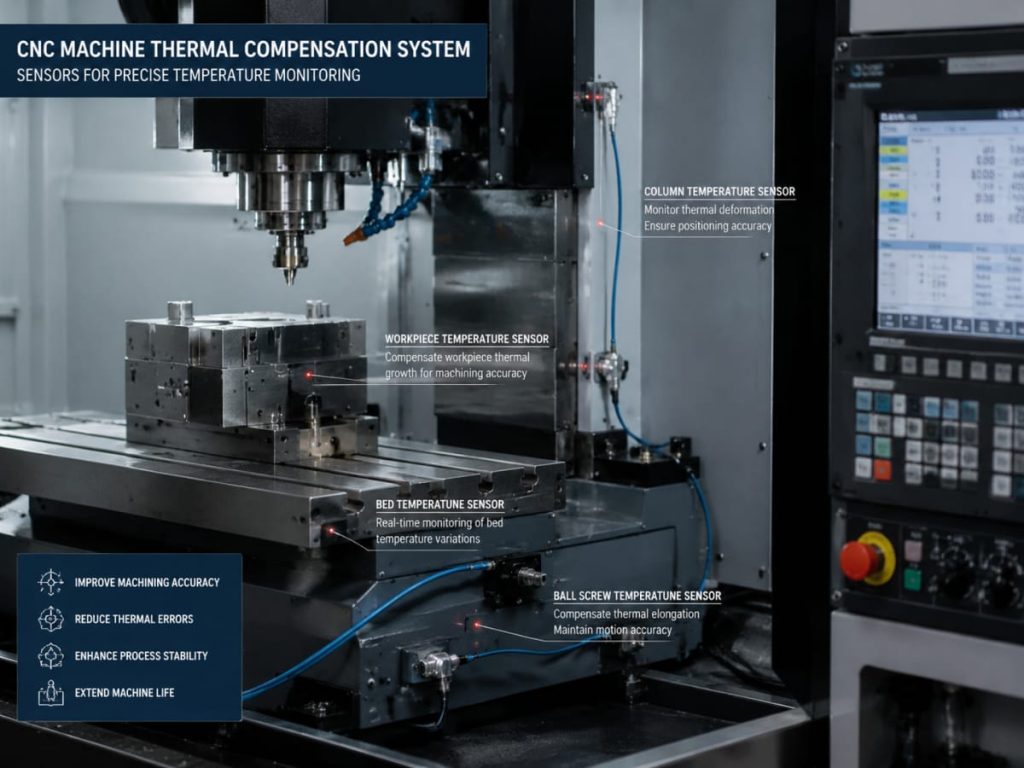
When comparing cnc machining vs 3d printing, always ask what decision the part must support. If the answer is appearance and speed, printing may be enough. If the answer is function and reliability, CNC often becomes the better investment.
Customization Paths Using CNC Machining vs 3D Printing for OEM and ODM Programs
For OEM development, cnc machining vs 3d printing is less about single parts and more about controlled iteration. Most serious programs go through multiple revisions, and the supplier must be able to support those changes without creating confusion in drawings, costs, or schedules.
This is where customization capability matters. A supplier should be able to help with design revisions, material substitutions, surface finish options, assembly checks, and the transition from prototype to low-volume production. TEAM Rapid is particularly strong in this area because it supports one-off parts through 100,000+ units, including recurring production, and can combine in-house capability with a broader manufacturing resource network across China.
A common OEM path looks like this:
- 3D print the first concept to review ergonomics and package space
- CNC machine the second version for assembly, screw bosses, threads, and tolerance-sensitive features
- use DFM review to reduce design risks before tooling
- move into vacuum casting or rapid tooling once the geometry is stable
- scale to molding, die casting, or assembly after validation
The DFM stage is often the biggest value driver. In many cnc machining vs 3d printing projects, the prototype itself is only half the story; the real savings come from identifying manufacturability issues before production tooling begins. TEAM Rapid’s manufacturability analysis helps customers improve part performance, reduce quality problems, shorten development cycles, decrease resin consumption, maximize mold cavities, and optimize cycle time. That matters even more when a design will later move into MUD tooling or hardened mold bases using steels such as P20, NAK80, or S136.
For buyers handling OEM or ODM programs, process comparison should always include revision speed, downstream scalability, and engineering support quality. A supplier that can make one good prototype is helpful. A supplier that can manage the whole iteration path is much more valuable.
Sourcing CNC Machining vs 3D Printing from China: Quality, Logistics, and Supplier Selection
For overseas buyers, cnc machining vs 3d printing becomes a sourcing question as much as a process question. China remains highly competitive for both services, but successful sourcing depends on more than price. Buyers need supplier responsiveness, drawing control, inspection discipline, packaging reliability, and clear communication on materials and finishes.
At TEAM Rapid’s Zhongshan facility in Guangdong, for instance, buyers can source machining, 3D printing, tooling, molding, finishing, assembly, packaging, procurement support, limited warehousing, and direct shipping through one coordinated supplier. That combination reduces handoff risk and simplifies programs that evolve from prototype into low-volume or production supply. TEAM Rapid also operates with ISO 9001:2015 quality management, which is a meaningful sign for international buyers comparing suppliers in China.
What to verify before placing an order
| Supplier Checkpoint | Why It Matters in CNC Machining vs 3D Printing | What to Ask |
|---|---|---|
| Revision control | Prevents outdated files from being manufactured | Which file revision will be released to production? |
| Material confirmation | Ensures prototype behavior matches the test purpose | What exact material grade or print material will be used? |
| Tolerance agreement | Avoids mismatch between expectation and process capability | Which dimensions are critical, and what is the achievable tolerance? |
| Finish definition | Cosmetic standards differ greatly between machined and printed parts | Is the finish as-machined, polished, bead blasted, painted, or post-processed? |
| Inspection method | Full inspection may be necessary for critical features | Will you provide dimensional reports or sampling data? |
| Packaging and shipping | Precision parts can be damaged in transit | How will parts be protected, labeled, and shipped internationally? |
The best suppliers in China do more than quote. They challenge unrealistic tolerances, point out tool-access issues, identify warpage risks, and recommend a better route when your first idea is not the best one. TEAM Rapid’s quick-response engineering support is valuable here because prototype programs often move on compressed schedules, and waiting days for clarification can delay an entire build cycle.
Practical sourcing advice for B2B buyers
When sourcing cnc machining vs 3d printing from China, send a complete RFQ package:
- 3D CAD files and 2D drawings where available
- material and finish requirements
- quantity, target lead time, and shipping destination
- critical-to-function dimensions and inspection priorities
- explanation of whether the part is for concept review, fit check, or functional testing
TEAM Rapid is also a practical option for buyers who want continuity after the prototype stage. Beyond CNC and printing, it offers rapid tooling, molding, die casting, aluminum extrusion, sheet metal fabrication, finishing, assembly, and turnkey packaging support. That is especially helpful when your supplier needs to stay involved after the first article approval.
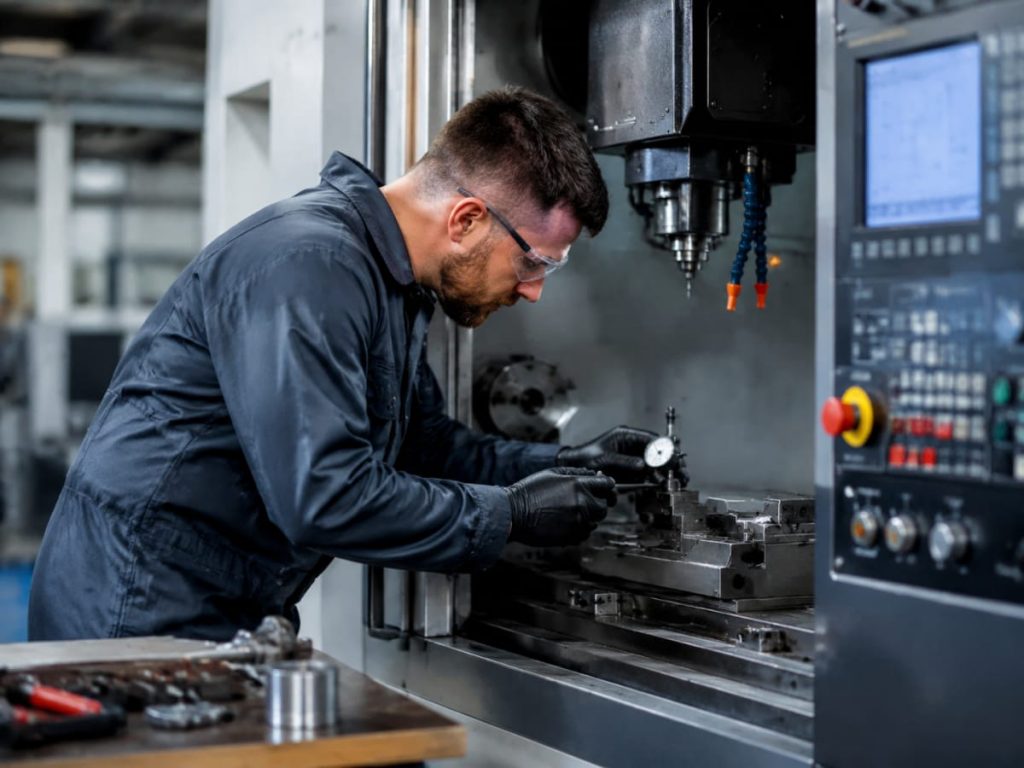
For global buyers, the best result in cnc machining vs 3d printing comes from treating supplier selection as an engineering decision, not just a purchasing exercise.
Why Choose TEAM Rapid for CNC Machining vs 3D Printing Projects
If you are actively comparing cnc machining vs 3d printing, TEAM Rapid is worth serious consideration because it supports both processes well and can guide the next manufacturing step after prototyping. That matters because the best supplier is rarely the one with only one capability; it is the one that can recommend the most suitable path for your part, quantity, timeline, and budget.
TEAM Rapid Manufacturing Co., Ltd combines in-house machining, tooling, and molding capability with an integrated manufacturing resource network across China. For buyers, that means access to one supplier that can support single prototypes, 1-500+ machined parts, 3D-printed concept models, 3-100+ vacuum-cast plastics, rapid tooling and molding in 5-25 days, and production programs scaling to 100,000+ parts.
Why many buyers choose TEAM Rapid for cnc machining vs 3d printing programs:
- fast response within a few hours through one-to-one engineering support
- rapid prototyping lead times of 2-8 days, with some prototypes shipped in as little as 1 day
- CNC machining in plastic and metal with tolerance capability down to 0.01 mm
- value-added finishing such as polishing, anodizing, painting, and plating
- ISO 9001:2015 certification with full inspection and quality assurance
- competitive pricing that is often around 40% lower than Europe and America
- broader support for assembly, packaging, procurement, warehousing, and direct shipping
That combination is especially useful when a project starts as a prototype but quickly becomes a low-volume production opportunity. Instead of switching suppliers after every development stage, buyers can keep continuity in engineering communication, quality expectations, and logistics planning.
If you need help choosing between processes, TEAM Rapid can review your design and recommend the most practical route. To move forward, you can Contact Us, email sales@teamrapidtooling.com, or call +86 760 8850 8730. For urgent RFQs, it is smart to include CAD files, quantity, material, finish, and target delivery date so the engineering team can respond quickly.
CNC Machining vs 3D Printing FAQ for B2B Buyers
In cnc machining vs 3d printing, which is faster for prototypes?
In cnc machining vs 3d printing, 3D printing is often faster for early concept parts, especially if the geometry is complex and the part does not need much post-processing. Many printed prototypes can be produced in 1-3 days, and some can move even faster. CNC machining is often slightly slower because it may require CAM programming, workholding, multiple setups, and deburring or finishing. However, for simple prismatic parts, CNC can still be very fast. Suppliers such as TEAM Rapid can ship some custom prototypes in as little as 1 day, so the real answer depends on part geometry, material, and finishing needs.
In cnc machining vs 3d printing, which process gives tighter tolerances?
When comparing cnc machining vs 3d printing, CNC machining generally gives tighter and more repeatable tolerances. For many machined parts, practical tolerances can be around (\pm 0.01\ mm) to (\pm 0.05\ mm) on critical features, depending on geometry and material. For most 3D printing processes, tolerances are looser, often around (\pm 0.10\ mm) to (\pm 0.30\ mm), and may vary with orientation, shrinkage, or support strategy. If your prototype includes threaded holes, bearing fits, sealing faces, or tight mating geometry, CNC is usually the better choice.
In cnc machining vs 3d printing, which is cheaper for low-volume parts?
The cost answer in cnc machining vs 3d printing depends on complexity, material, and what the part is supposed to validate. For a one-off concept part with complex geometry, printing is often cheaper because there is little setup and no concern about tool access. For simple flat or prismatic parts, CNC can be surprisingly competitive, especially when the part would require extensive print finishing. At 10-50 pieces, CNC may become more attractive than many buyers expect. If you also need real engineering materials and tighter tolerances, the extra CNC cost often creates better total value because it reduces false test results and engineering rework.
In cnc machining vs 3d printing, which materials are best for functional testing?
For cnc machining vs 3d printing, CNC is usually better for functional testing because it can use real materials such as aluminum, stainless steel, brass, ABS, PC, POM, Nylon, and PEEK. These materials provide more production-like performance for strength, stiffness, wear, and thermal behavior. 3D printing materials are improving, but they still often behave differently from molded or machined end-use parts. If the prototype is intended for ergonomic review, packaging checks, or low-load design validation, printed resins or SLS Nylon may be sufficient. If the prototype must behave like a final component, CNC usually provides more reliable engineering data.
Can cnc machining vs 3d printing be used together in one development project?
Yes. In fact, the best answer to cnc machining vs 3d printing is often to use both. Many successful programs start with 3D printing for concept and shape approval, then move into CNC machining for functional testing and final design verification. After that, the project may transition into vacuum casting, sheet metal fabrication, die casting, or Injection Molding, depending on volume and material needs. TEAM Rapid is well suited to this kind of hybrid workflow because it supports multiple rapid manufacturing processes under one roof or coordinated supply system.
In cnc machining vs 3d printing, which process is better before injection molding?
Before tooling investment, cnc machining vs 3d printing should be evaluated based on what you need to confirm before mold steel is cut. If the goal is appearance, package space, or basic fit, 3D printing may be enough. If the goal is to validate critical bosses, threads, snap areas, sealing surfaces, wall behavior, or assembly stack-up, CNC is often the better route. For plastic products moving toward molding, it is also smart to involve DFM early so draft, wall thickness, gating logic, and moldability are reviewed before using P20, NAK80, or S136 tooling. That reduces expensive mold changes later.
In cnc machining vs 3d printing, how should buyers compare shipping, payment terms, and MOQ?
For cnc machining vs 3d printing, MOQ is usually low for both processes, and many suppliers can produce just one part. The more important comparison points are shipping method, export packaging, lead time definition, and payment milestones. Buyers should confirm whether lead time starts after payment, after engineering approval, or after material confirmation. They should also confirm whether the supplier will remake nonconforming parts if specifications are missed. For overseas sourcing, ask how delicate printed parts or precision machined components will be packaged. TEAM Rapid’s broader shipping, packaging, and direct export support can be useful for buyers who want fewer logistics handoffs.
In cnc machining vs 3d printing, what files should I send to request an accurate quote?
To get a good quote for cnc machining vs 3d printing, send the 3D CAD file first, then add a 2D drawing if tolerances, threads, or critical dimensions are important. You should also include quantity, material preference, finish, color, intended use, and deadline. If the part is only for appearance, say that. If it is for a torque test, sealing test, or assembly fit check, say that too. The more clearly you define the purpose, the more accurately the supplier can recommend the right process. If you are ready to move forward, you can request a quote with that full package.
Content reviewed and updated: June 2026