
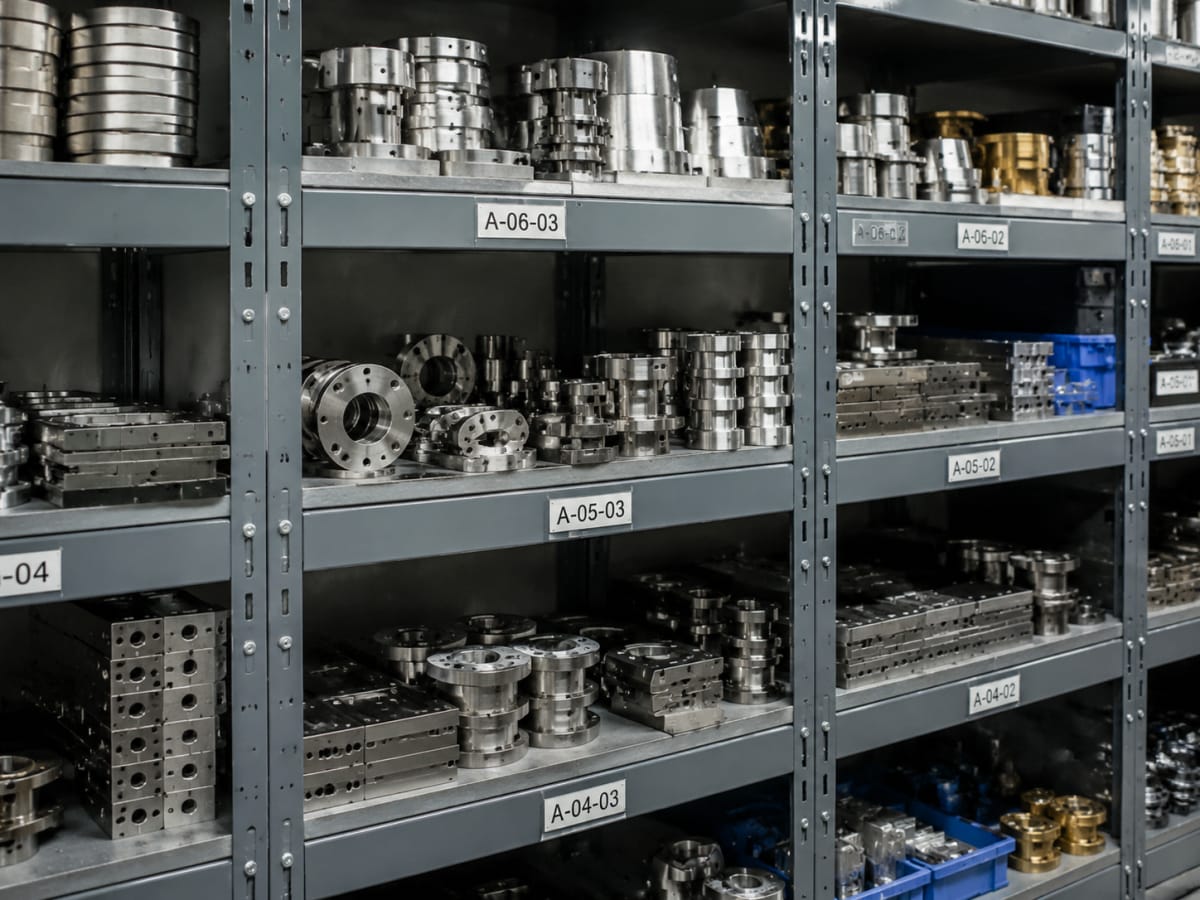
CNC Prototype Machining for Rapid Product Development
What CNC Prototype Machining Means for Faster Product Development
CNC prototype machining is one of the fastest and most reliable ways to turn a CAD model into a functional part that can be tested, measured, assembled, and improved before production. For engineers and sourcing teams, the right CNC prototype machining supplier reduces development risk by delivering accurate parts in real engineering materials with short turnaround times.
Unlike concept-only models, CNC-machined prototypes are often used for dimensional validation, functional testing, mating-part verification, fixture checks, and even low-volume bridge production. That is why CNC remains a core process in rapid product development even as additive manufacturing becomes more common. If you need tight tolerances, production-like material behavior, threaded features, or stable surface finishes, CNC is still the benchmark process.
A strong CNC prototype machining partner should help you move quickly without guessing. In practice, that means the supplier should be able to support:
- one-off parts and small batches without unnecessary setup delay
- metals and plastics that match end-use performance requirements
- machining operations such as milling, turning, wire EDM, and EDM
- finishing steps like polishing, anodizing, painting, and plating
- DFM feedback that improves manufacturability before production tooling
For most B2B buyers, CNC prototype machining is not just about making a part fast. It is about making smarter design decisions earlier, avoiding costly mold changes later, and shortening the path from prototype to production.
CNC Prototype Machining Market Trends Driving Shorter Launch Cycles
CNC prototype machining demand continues to rise because product teams are under more pressure than ever to validate designs faster, release updates more often, and reduce the cost of engineering changes. In modern product development, the biggest competitive advantage is often not who can design first, but who can verify, revise, and launch first.
Several industry trends are pushing buyers toward faster machining-based prototyping. OEMs are managing shorter product life cycles, more variants per product line, and tighter timelines between concept approval and market launch. At the same time, many components still need the accuracy and material realism that additive methods alone cannot provide. That keeps CNC prototype machining highly relevant across automotive, medical devices, industrial equipment, communication products, and commercial electronics.
Manufacturers like TEAM Rapid are benefiting from this shift because buyers increasingly prefer suppliers that can support multiple development paths instead of only one process. A project may start with Rapid Prototyping, move into CNC for precision functional samples, and then transition into molding, casting, or production machining once the design is frozen. That kind of process flexibility is becoming a key selection factor.
Another important trend is the move toward integrated sourcing. Engineering teams do not want to manage separate vendors for prototyping, mold design, tooling, secondary finishing, and shipping if one capable partner can coordinate the whole flow. Fast-response suppliers are now expected to review CAD quickly, flag design risks, suggest alternative processes, and quote several routes at once.
From a sourcing perspective, CNC prototype machining is also gaining ground because it supports decision-making earlier in the development cycle. Instead of waiting until production tooling to discover interference, tolerance stack-up, or fastener-access issues, teams can machine representative components in aluminum, stainless steel, ABS, POM, Nylon, or PC and test them in the real assembly.
The result is simple: the market rewards prototype suppliers that combine speed, material flexibility, technical support, and reliable global logistics. That is exactly why CNC prototyping remains central to rapid product development strategies in 2026.
CNC Prototype Machining Materials, Tolerances, and Process Capabilities
CNC prototype machining is most valuable when the supplier can match the right material and process to the real function of the part. A prototype is not useful if it only looks correct; it also needs to behave correctly in assembly, testing, or field simulation.
This is where experienced suppliers such as TEAM Rapid stand out. TEAM Rapid supports CNC prototyping for 1-500+ parts in both metals and plastics, with machining operations that include milling, turning, wire EDM, EDM, polishing, anodizing, painting, and plating. For precision features, the company can machine to tolerances down to 0.01 mm where geometry, material stability, and inspection strategy allow.
Common materials used in CNC prototype machining
Choosing materials for CNC prototype machining should be based on function, mechanical load, temperature, finish, and test purpose. The same part may be machined in different materials at different stages of development.
| Material | Why it is used in CNC prototype machining | Typical prototype applications | Key machining notes |
|---|---|---|---|
| Aluminum 6061/7075 | lightweight, fast machining, good strength-to-weight ratio | housings, brackets, fixtures, heat-dissipating parts | excellent for quick functional prototypes |
| Stainless steel | corrosion resistance, strength, durability | medical parts, industrial components, shafts, threaded parts | slower to machine, higher tool wear |
| Mild steel | good structural realism and cost balance | mounts, welded assemblies, machine parts | often chosen for rugged test components |
| Brass | easy machining, stable threads, conductivity | fittings, inserts, valves, electrical components | ideal for clean threads and detailed turning |
| ABS | economical engineering plastic, easy to machine | consumer product housings, covers, ergonomic models | good for early form and function checks |
| POM/Acetal | low friction, dimensional stability | gears, bushings, precision plastic components | excellent for moving parts and low-moisture stability |
| Nylon/PA | toughness, wear resistance | clips, guides, industrial parts | moisture behavior should be considered in testing |
| PC | impact resistance and transparency potential | clear guards, structural covers | machining must be controlled to reduce stress and haze |
| PEEK | high performance, heat and chemical resistance | demanding medical and industrial prototypes | premium material, slower and more expensive to machine |
For many teams, the best approach is to machine early prototypes in a lower-cost material, then move to the intended production-grade material once geometry is verified. A capable CNC prototype machining supplier will advise when that is a smart trade-off and when it is a false economy.
Process options and surface results
CNC prototype machining is not a single operation. Depending on geometry, a prototype may require milling for prismatic features, turning for rotational parts, wire EDM for narrow slots or hardened features, and EDM for deep or difficult internal geometry. A supplier with multiple process options can often produce more accurate prototypes without redesigning the part just to fit one machine type.
Typical surface and tolerance expectations include:
- as-machined finish: often around (Ra\ 3.2\ \mu m) depending on toolpath and material
- fine finishing or polishing: lower roughness where sealing, appearance, or sliding contact matters
- anodizing, painting, plating: used when corrosion resistance, color, conductivity, or cosmetic realism is required
- general CNC tolerance: often around (\pm 0.02\ mm) to (\pm 0.10\ mm) depending on material and feature size
- tight precision features: can reach around (\pm 0.01\ mm) in well-controlled cases
The key is that tolerance should be assigned by function, not by habit. Over-tolerancing prototypes slows machining, increases inspection time, and raises cost without improving engineering learning.
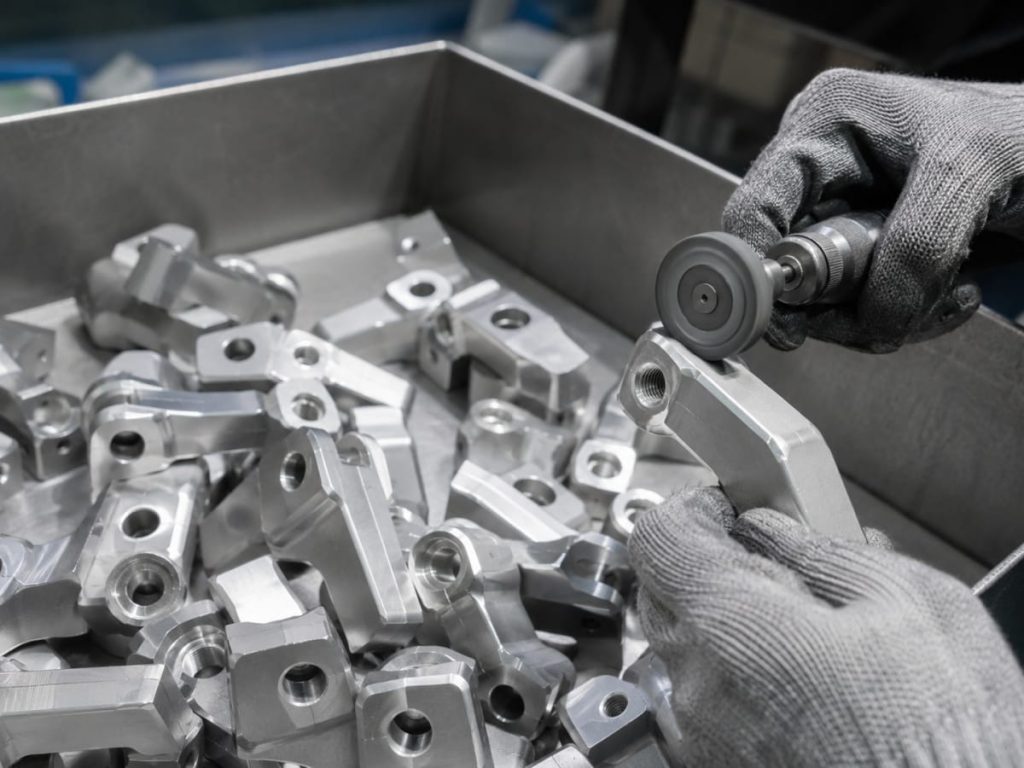
A good CNC prototype machining supplier should also connect prototype decisions to later production processes. For example, if a plastic housing will eventually move into molding, the machined prototype should still reflect draft, wall strategy, boss geometry, and assembly intent wherever possible. That reduces the disconnect between prototype approval and production readiness.
How to Evaluate CNC Prototype Machining on Cost, Lead Time, and MOQ
CNC prototype machining is often selected because it offers the best balance of speed, accuracy, and material realism, but it is not automatically the cheapest route for every project. The right choice depends on part complexity, quantity, geometry, cosmetic expectations, and what you need to learn from the prototype.
For one-off parts and small batches, CNC can be highly cost-effective because there is no tooling investment. For complex organic shapes with minimal load requirements, SLA or SLS may be faster or cheaper. For 3-100+ low-volume plastic parts, vacuum casting can be attractive. For production-grade plastic validation, rapid tooling and molding may make more sense. This is why the best prototype suppliers do not push one process by default; they compare options based on engineering and commercial logic.
TEAM Rapid is a strong example of that kind of balanced approach. In addition to CNC, it offers 3D printing, vacuum casting, sheet metal prototyping, and rapid injection molding prototyping, with typical prototype lead times of 2-8 days and some custom prototypes shipped in as little as 1 day. That flexibility helps buyers choose the most practical path instead of overusing one process.
Comparing CNC prototype machining with other rapid development methods
| Process | Best use case | Typical quantity | Typical lead time | Main limitation |
|---|---|---|---|---|
| CNC prototype machining | tight tolerances, real materials, functional parts | 1-500+ parts | often 2-8 days | higher cost for very complex organic forms |
| SLA / SLS 3D printing | complex geometry, very fast concept or fit parts | 1-50+ parts | as fast as 1 day | mechanical properties may differ from final production material |
| Vacuum casting | low-volume plastic parts with production-like appearance | 3-100+ pcs | usually a few days after master pattern | limited mold life and material selection versus injection molding |
| Rapid injection molding | production-grade plastic parts and bridge volumes | 100+ parts | tooling plus samples in days to a few weeks | tooling cost required up front |
When evaluating CNC prototype machining cost, buyers should focus on five major drivers:
- material type and stock size
- number of setups and machining hours
- tolerance level and inspection scope
- finishing requirements such as anodizing or polishing
- quantity and revision frequency
A thin-wall aluminum enclosure with two setups and a cosmetic bead-blast finish will quote very differently from a stainless steel shaft with fine threads and tight concentricity. Likewise, a prototype designed with standard tool access and sensible corner radii will machine faster than a CAD model filled with sharp internal corners that force EDM or additional tool changes.
Questions to ask before choosing a CNC prototype machining supplier
- Can the supplier quote alternative processes if CNC is not the most efficient route?
- What tolerance can be held on the features that actually matter?
- Is the quoted lead time based on machine time only, or does it include inspection and finishing?
- Can the supplier support 1 part today and 100 parts next month without re-qualifying everything?
- Will the supplier provide DFM feedback before machining begins?
TEAM Rapid is often competitive here because of two linked advantages: quick one-to-one engineering response and pricing that can be around 40% lower than Europe and America for comparable custom manufacturing work. For buyers, that combination matters more than low nominal pricing alone. Fast engineering feedback prevents expensive back-and-forth, and better early guidance avoids rework on later revisions.
If you are sending out RFQs for CNC prototype machining, include the 3D file, 2D drawing if available, material, finish, critical tolerances, quantity, test purpose, and deadline. A strong supplier should be able to tell you not only how much the part costs, but whether CNC is the smartest process in the first place.
CNC Prototype Machining for Automotive, Medical, Electronics, and Industrial Buyers
CNC prototype machining serves a wide range of industries because it delivers real-material parts fast enough for design validation and robust enough for functional evaluation. The process is especially useful when the prototype must behave like the future production part, not just resemble it visually.
In automotive programs, CNC prototype machining is frequently used for interior trim interfaces, under-hood brackets, fluid-system fittings, sensor mounts, test fixtures, and assembly verification parts. Heat resistance, fit with adjacent components, and repeated installation matter. In medical device development, machined prototypes are used for handheld housings, equipment subassemblies, mechanical supports, and ergonomic validation where precision and clean geometry are essential. In electronics and communication products, CNC is often the fastest way to produce metal frames, thermal components, connector features, and cosmetic enclosures before tooling release.
This is one reason manufacturers like TEAM Rapid are relevant to so many buyer groups. TEAM Rapid has delivered more than 6,000 projects for 500+ customers across 25+ countries, serving sectors including automotive, medical devices, consumer and commercial products, communication products, office equipment, electrical appliances, industrial design, and sanitary products. That breadth matters because each sector uses prototypes differently.
What different industries usually expect from CNC prototype machining
- Automotive: repeatable fit, vibration resistance, threaded accuracy, and real-world assembly validation
- Medical devices: precise mating parts, ergonomic surfaces, controlled dimensions, and production-like appearance
- Consumer products: cosmetic realism, tactile evaluation, snap-fit testing, and fast design iteration
- Communication products: connector alignment, thermal management features, shielding-related geometry, and enclosure precision
- Industrial equipment: structural integrity, wear performance, serviceability testing, and small-batch bridge parts
A prototype housing for a consumer device may need attractive finishing and ergonomic review. A machined Nylon guide for factory equipment may be judged mainly on wear and dimensional stability. A medical enclosure may need both cosmetic quality and assembly precision. The supplier should understand the difference.
For buyers, the practical takeaway is simple: the best CNC prototype machining supplier is the one that understands your end-use context. If the prototype is meant to support later molding, die casting, sheet metal fabrication, or assembly work, the supplier should machine the part with that downstream process in mind. TEAM Rapid’s mix of CNC, molding, die casting, sheet metal, finishing, and assembly services can be useful here because the prototype stage is connected to the later production route, not isolated from it.
CNC Prototype Machining Applications from Fit Checks to Functional Testing
CNC prototype machining is most effective when it is used to answer specific engineering questions. Instead of asking whether a prototype “looks right,” strong development teams use machined parts to verify fit, function, load behavior, thermal performance, serviceability, user handling, and production transition risk.
In early design stages, CNC prototype machining is often used for fit-and-form validation. Engineers machine enclosures, brackets, covers, and mating parts to confirm stack-up, fastener access, gasket compression, or assembly sequence. In later stages, the same process supports more demanding validation such as motor-mount testing, thread durability, bearing alignment, or leak-path review. Because the parts are made from real plastics or metals, the lessons are far more reliable than with concept-only models.
Common CNC prototype machining use cases in product development
| Development stage | How CNC prototype machining is used | Typical output |
|---|---|---|
| Concept verification | basic fit, size, and geometry confirmation | 1-5 quick evaluation parts |
| Engineering validation | functional parts in real materials | small batches for test rigs and assemblies |
| Design refinement | revised parts after DFM or test feedback | multiple iteration rounds |
| Pre-production | bridge parts while tooling is in progress | 10-500+ functional units |
| Hybrid development | combine CNC with molding or casting planning | design data that supports production transition |
This is also where process combinations become valuable. A product team may machine aluminum frames, machine POM gears, print complex ducting, and then move plastic housings into Injection Molding once the geometry is stable. For some programs, CNC prototype machining fills the precision gap that additive manufacturing cannot handle, while molding handles later volume economics.
TEAM Rapid, for example, can support these mixed-process programs because it does not stop at CNC. It can also provide vacuum casting for low-volume plastic parts, rapid injection molding for production-grade resin validation, and sheet metal prototyping for formed metal components. That makes the process selection more practical for engineers who are validating a full assembly rather than a single part.
A few applications where CNC prototype machining is especially strong include:
- threaded metal or plastic components that must be tested repeatedly
- precision brackets, fixtures, and mounts with tight positional tolerances
- enclosure parts where seals, bosses, snaps, or internal clearances matter
- prototype gears, bushings, and wear components in POM, Nylon, or metal
- bridge production when demand starts before tooling is ready
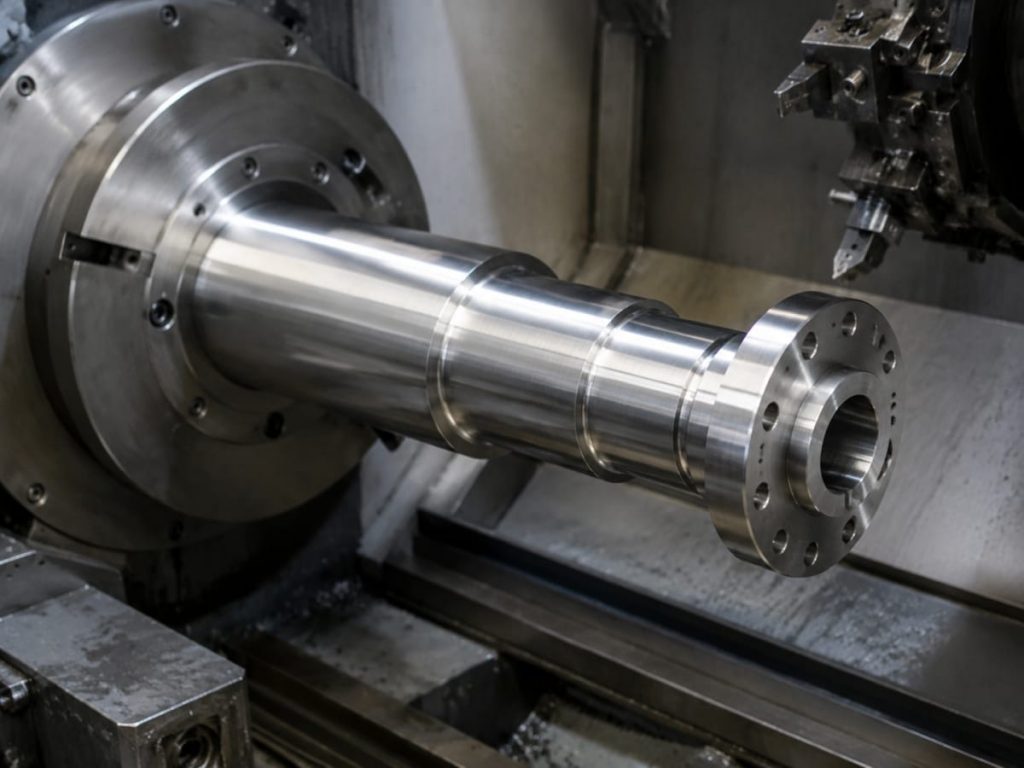
The best results come when prototypes are tied to decision gates. If a part is being machined, define what will be measured, tested, or approved. That turns CNC prototype machining from a purchasing line item into a tool for faster and more confident product decisions.
CNC Prototype Machining Customization, Iteration, and OEM Program Support
CNC prototype machining is ideal for customization because it allows engineers to revise geometry quickly without waiting for hard tooling changes. For OEM development programs, that speed is often the difference between a controlled launch and a delayed one.
In real projects, prototypes rarely succeed on the first iteration. A boss may need to move for tool access. A wall may need thickening for stiffness. A gasket groove may need tighter depth control. A mounting bracket may interfere with a cable path. CNC prototype machining supports these revisions quickly because the change usually starts with updated CAD and finishes with a new machined sample, not a reworked mold.
Experienced suppliers such as TEAM Rapid build value here by supporting iterative development rather than treating each revision like a standalone transaction. With typical prototype lead times of 2-8 days, and some urgent samples shipped in as little as 1 day, the company is well suited for programs where multiple design loops are expected. That is particularly helpful for startups, industrial design teams, and OEM product engineers who need to evaluate several options in a short time window.
Customization in CNC prototype machining can include:
- material substitutions to compare weight, stiffness, or cost
- multiple surface finish options for user testing or appearance reviews
- feature revisions such as ribs, bosses, slots, or thread changes
- partial assemblies that combine machined, printed, cast, or molded parts
- low-volume batches for field testing, pilot evaluation, or customer demos
TEAM Rapid also supports broader Rapid Prototyping workflows beyond CNC, including SLA and SLS for complex geometries, vacuum casting for 3-100+ plastic parts, sheet metal prototyping, and rapid injection molding for production-grade plastics. That means a project can start with fast visual models, move into CNC for functional validation, and then advance into low-volume production using the most suitable process at each stage.
For OEM buyers, this matters because product development is rarely linear. The best suppliers help teams adapt without losing momentum, documentation control, or commercial clarity.
Sourcing CNC Prototype Machining from China with Better Quality Control
CNC prototype machining sourced from China can deliver major advantages in price, capacity, and turnaround, but only if the supplier has strong engineering communication, inspection discipline, and dependable export execution. The lowest quote is not the same as the lowest-risk sourcing option.
China remains highly competitive for prototype and low-volume manufacturing because suppliers can combine in-house capabilities with broader manufacturing networks, faster scheduling, and attractive cost structures. But buyers still need to qualify the partner carefully. For CNC prototype machining, the biggest sourcing risks usually come from unclear specifications, poor revision control, incomplete inspection, finishing mismatches, and shipping damage-not from machining itself.
This is where TEAM Rapid is a strong option for overseas buyers. At TEAM Rapid’s Zhongshan factory in Guangdong, supported by a Hong Kong office and an integrated resource network across China, customers can source machining, tooling, molding, finishing, assembly, packaging, procurement support, limited warehousing, and direct shipping through one coordinated supplier. That reduces handoff problems and shortens communication cycles.
What to verify when sourcing CNC prototype machining from China
| Sourcing checkpoint | What a buyer should confirm | Why it matters |
|---|---|---|
| Drawing control | latest revision, critical dimensions, units, tolerances | prevents machining to outdated files |
| Material definition | exact grade or agreed substitute | ensures test results are meaningful |
| Finish definition | anodizing color, polish level, paint, plating, texture | avoids cosmetic mismatch and rework |
| Inspection scope | full inspection or sampling, critical features, report format | aligns expectations before shipment |
| Packaging plan | foam, trays, separators, labels, export cartons | protects precision parts in transit |
| Logistics terms | courier, air, sea, Incoterm, customs responsibilities | prevents schedule and landed-cost surprises |
For many B2B buyers, the real sourcing advantage comes from engineering support rather than labor cost alone. TEAM Rapid emphasizes one-to-one engineering support with responses within a few hours, which can materially improve development speed when prototype revisions are moving quickly. Its ISO 9001:2015 certification also matters because quality control in prototyping is not only about final measurement; it is about revision tracking, process discipline, inspection consistency, and specification compliance.
Another practical advantage is process continuity. If your CNC-machined prototype later needs to move into die casting, sheet metal fabrication, or molding, a supplier that already supports those services can guide the transition more effectively. TEAM Rapid’s one-stop model is useful here because prototypes do not exist in isolation-they are stepping stones to broader manufacturing decisions.
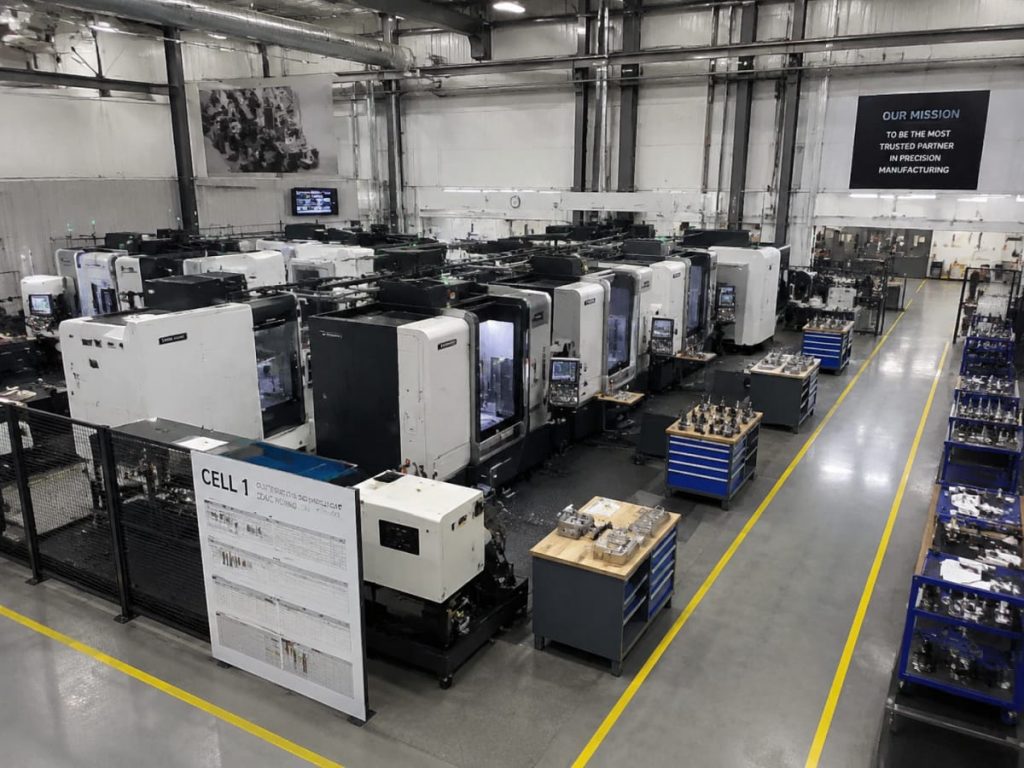
When sourcing CNC prototype machining from China, I recommend treating the RFQ as a technical package, not just a price request. Provide CAD, drawings, material intent, finish expectations, critical-to-function features, quantity, deadline, and shipping destination. The stronger the input, the better the output.
Why TEAM Rapid Is a Trusted CNC Prototype Machining Partner
A reliable CNC prototype machining partner should combine fast response, accurate execution, flexible process options, and scalable follow-on manufacturing support. TEAM Rapid is a strong choice because it checks those boxes without forcing customers into a one-process solution.
From a commercial and technical standpoint, TEAM Rapid offers several advantages that matter to B2B buyers. It supports CNC prototyping for 1-500+ parts in metals and plastics, works to tolerances down to 0.01 mm where appropriate, and backs prototype programs with broader services that include 3D printing, vacuum casting, sheet metal prototyping, rapid tooling, molding, die casting, finishing, assembly, procurement support, packaging, and direct shipping. That makes it easier to move from concept part to production plan with less supplier fragmentation.
Key reasons buyers often shortlist TEAM Rapid include:
- fast turnaround: prototype lead times typically in 2-8 days
- urgent capability: some custom prototypes can ship in as little as 1 day
- engineering support: detailed DFM feedback and quick one-to-one communication
- global experience: 10+ years in the industry, 500+ satisfied customers, 6,000+ delivered projects
- quality assurance: ISO 9001:2015 certification with full inspection and specification compliance
- competitive pricing: often significantly lower than Europe and America for comparable work
TEAM Rapid is also well positioned for companies that want a supplier who understands both early development and later production. If a machined prototype proves the design, the same partner can support custom injection molding, rapid tooling, die casting, or finished assembly. That continuity reduces re-qualification effort and helps engineers carry learning forward.
If you want to evaluate manufacturability, compare process options, or start a prototype program quickly, visit TEAM Rapid or Contact Us to request a quote. For direct communication, the company can be reached at sales@teamrapidtooling.com or +86 760 8850 8730.
CNC Prototype Machining FAQ for Buyers and Engineers
How fast is CNC prototype machining for one-off parts and small batches?
CNC prototype machining is usually one of the fastest ways to get functional parts in real materials, especially when the geometry is suitable for milling or turning and the drawing package is clear. For many projects, lead time is measured in days rather than weeks. A practical benchmark is 2-8 days for most prototype jobs, though very simple urgent parts may ship even faster. TEAM Rapid, for example, can ship some custom prototypes in as little as 1 day when the design, material, and schedule align. Actual timing depends on material availability, setups, inspection needs, finishing steps, and batch size.
What tolerances can CNC prototype machining realistically achieve?
CNC prototype machining can achieve tight tolerances, but the realistic number depends on material, feature size, part geometry, and inspection method. For many functional prototypes, a normal range is around (\pm 0.02\ mm) to (\pm 0.10\ mm). More precise features can go tighter, and TEAM Rapid states capability down to 0.01 mm where the part design and process support it. The important rule is to apply tight tolerance only where function requires it. Over-tolerancing adds cost, extends cycle time, and can complicate inspection without improving the usefulness of the prototype.
When is CNC prototype machining better than 3D printing?
CNC prototype machining is generally better than 3D printing when you need real engineering materials, tighter dimensional control, threaded or bearing-related features, better surface integrity, or more reliable functional testing. 3D printing is often faster for very complex geometry and early concept models, especially with SLA or SLS. But if the prototype needs to behave more like the final part, CNC usually gives more trustworthy results. Many development teams use both. They print for early shape validation, then switch to CNC for assembly verification and mechanical testing. Suppliers like TEAM Rapid are useful here because they can support both routes and recommend the right one for each stage.
Is there a minimum order quantity for CNC prototype machining?
CNC prototype machining usually has very low MOQ requirements compared with molding or casting. In many cases, you can order 1 part for an initial check and then scale to 10, 50, or 500+ parts if testing goes well. That is one reason CNC is so effective for development work. It allows teams to buy only what they need at each design stage instead of committing to tooling too early. When quantities rise and geometry is stable, the supplier may recommend a different process such as vacuum casting or injection molding for better unit economics, but CNC is often the most flexible place to start.
What does CNC prototype machining cost in China?
CNC prototype machining cost in China depends on material, machining time, setups, tolerance, finish, and quantity. A simple ABS or aluminum prototype may be relatively inexpensive, while a stainless steel part with tight tolerances, fine threads, and plating can cost several times more. The value of China sourcing is not just lower labor cost; it is the ability to combine competitive pricing with fast scheduling and broader manufacturing support. TEAM Rapid is often cited by buyers because its pricing can be around 40% lower than Europe and America for comparable custom manufacturing programs, while still providing engineering review and full inspection.
Can CNC prototype machining transition into injection molding for production?
Yes. CNC prototype machining is often the best front-end process before production molding because it allows engineers to validate geometry, assembly fit, and critical features before investing in a mold. Once the design is stable and demand justifies tooling, the program can transition into Injection Molding. This is especially common for plastic housings, covers, and structural components. The smart approach is to machine the prototype with future molding requirements in mind, including draft, wall balance, boss placement, and parting logic. TEAM Rapid can support both CNC prototyping and later molding, which helps keep design learning consistent across the transition.
What files and specifications should I send for CNC prototype machining quotes?
To quote CNC prototype machining accurately, send the 3D CAD model, a 2D drawing if available, required material, quantity, surface finish, color or coating details, and any critical tolerances or inspection features. You should also explain the purpose of the prototype. Is it for visual review, fit check, functional testing, sealing verification, or short-run bridge use? That context changes the recommended material and process. If the part will later move into molding, die casting, or sheet metal production, say so in the RFQ. The more complete the package, the more accurate the quote and the more useful the DFM feedback.
What shipping, payment terms, and warranty points matter in CNC prototype machining?
For CNC prototype machining, buyers should confirm shipping method, Incoterm, packaging standard, payment milestones, revision control, and what happens if a part does not meet agreed specifications. There is no universal “warranty” in prototype manufacturing in the consumer sense, but reputable suppliers should stand behind specification compliance and define the remedy for nonconforming parts, whether that is remake, correction, or credit. Before ordering, confirm how inspection is documented, who approves cosmetic standards, and how urgent rework is handled. If you are ordering internationally, also verify customs paperwork and transit protection for delicate parts before you request a quote.
Content reviewed and updated: June 2026