
CNC Machining vs Die Casting: Strengths and Limitations
CNC Machining vs Die Casting: The Short Answer for Buyers
CNC machining vs die casting comes down to one core trade-off: CNC machining is usually better for speed, flexibility, tight tolerances, and low-volume production, while die casting is usually better for lower unit cost at stable medium-to-high volumes. For most manufacturers and sourcing teams, the right choice depends on part geometry, annual demand, required alloy, cosmetic expectations, and how much design change is still likely.
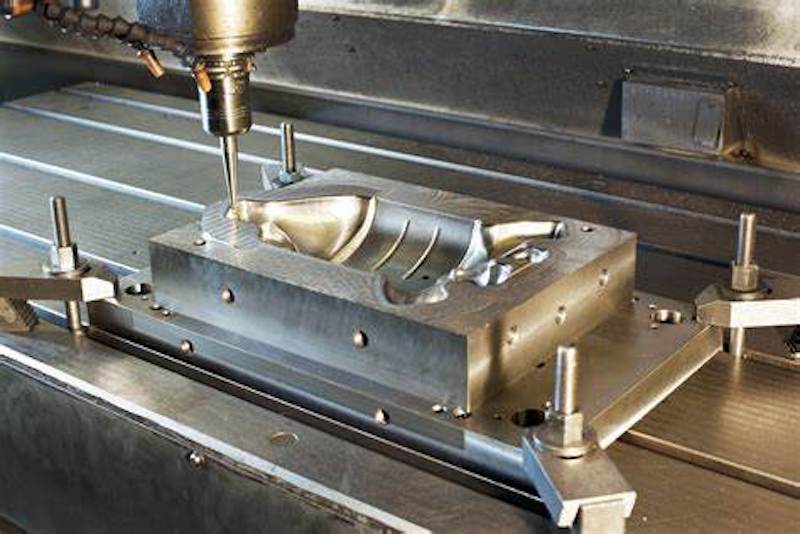
From a manufacturing engineer’s perspective, CNC machining removes material from billet, plate, bar, or plastic stock using milling, turning, EDM, or wire EDM. Die casting injects molten metal into a hardened steel die under pressure, producing near-net-shape parts with fast cycle times once tooling is approved. That difference has major consequences for lead time, cost structure, feature control, and how quickly a design can evolve.
If a product is still moving through prototyping, validation, or engineering changes, CNC machining usually wins because there is no die to build or revise. If the design is stable and the forecast is strong, die casting often wins because the cost of the tool is spread across many parts. In practical sourcing, the smartest teams do not treat cnc machining vs die casting as a theoretical debate. They evaluate where the product is in its lifecycle, how many parts are really needed, and whether the next six months will include design revisions, qualification testing, or recurring production.
A useful rule of thumb is simple. Choose CNC machining when you need fast delivery, dimensional confidence, and low risk during development. Choose die casting when you need repeatable metal parts in larger quantities and the part geometry is optimized for casting from the start.
Why CNC Machining vs Die Casting Matters in Today’s Manufacturing Market
CNC machining vs die casting matters more today than it did a decade ago because product development cycles are shorter, demand is less predictable, and procurement teams are under pressure to cut both lead time and inventory risk. Hardware startups want market-ready parts faster. Established OEMs want shorter validation loops. Industrial buyers want supply chains that can absorb engineering changes without waiting months for a tooling reset.
That is why more buyers now compare machining and casting earlier in the design phase instead of after the RFQ stage. Manufacturers like TEAM Rapid are increasingly brought in upstream because the best process choice affects not only price, but also testing speed, launch timing, secondary finishing, assembly readiness, and even packaging strategy. In real sourcing work, the decision between cnc machining vs die casting often determines whether a project hits its milestone or burns time in redesign and tool correction.
Several market forces are driving that shift:
- Product teams are validating more designs in real materials instead of relying only on appearance models.
- Buyers want to bridge from prototype to low-volume production without changing suppliers multiple times.
- Automotive, medical, and electronics programs are demanding tighter launch schedules and faster engineering responses.
- Volatile demand makes it risky to commit too early to expensive tooling when annual volume is not yet proven.
The comparison is especially relevant in China-based sourcing because buyers can often access both routes through one partner instead of managing separate CNC shops, die casting foundries, finish houses, and assembly vendors. TEAM Rapid’s operating model reflects that reality. The company serves customers in more than 25 countries, has supported over 500 satisfied customers, and has delivered 6,000+ projects across custom plastic and metal manufacturing. That kind of cross-process experience is valuable when the real question is not just which process is cheaper today, but which process will still make sense after EVT, DVT, pilot build, and ongoing supply.
For modern B2B buyers, cnc machining vs die casting is no longer just a process comparison. It is a product strategy decision.
CNC Machining vs Die Casting Process Differences That Affect Precision
CNC machining vs die casting becomes much clearer when you compare how each process creates geometry. CNC machining is subtractive. A tool removes material in a controlled path, which makes it excellent for tight datums, bore accuracy, flatness, and critical mating features. Die casting is formative. Molten aluminum or zinc fills a die cavity, which is efficient for high output but introduces considerations such as draft, parting lines, shrink behavior, venting, and porosity.
In day-to-day manufacturing, those process differences directly affect achievable precision. CNC machining can routinely hold tight tolerances on selected features, especially when the part is fixtured well and the drawing applies realistic controls. TEAM Rapid’s CNC capability includes 3-axis, 4-axis, and 5-axis milling, CNC turning with live tooling, plus EDM and wire EDM, with tolerances down to 0.01 mm on critical features when geometry and material permit. Die casting, by contrast, is very good for repeatable near-net shapes, but as-cast dimensions are usually looser and many critical features still require post-machining.
| Comparison point | CNC machining | Die casting |
|---|---|---|
| How the part is made | Material removed from solid stock | Molten metal injected into steel die |
| Best tolerance range | Often ±0.01 to ±0.05 mm on critical features | Often ±0.10 to ±0.25 mm as cast, depending on size and alloy |
| Design freedom | Excellent for flats, pockets, bores, threads, precision datums | Excellent for complex external shapes, ribs, bosses, thin walls with casting rules |
| Revision speed | Very fast; update program and fixture strategy | Slower; die changes may be required |
| Common secondary work | Deburring, tapping, polishing, anodizing, plating | Trimming, drilling, reaming, tapping, machining, coating |
The practical lesson in cnc machining vs die casting is that die casting often produces the bulk form economically, while CNC machining produces the most accurate final details. That is why many production programs combine the two: cast the housing, then machine sealing faces, threaded holes, bearing seats, and flat mounting surfaces afterward.
At TEAM Rapid’s Zhongshan operation, engineers typically review whether a feature truly needs to be machined from billet or whether a cast near-net shape plus secondary machining would lower total cost without compromising function. That review is where good DFM work starts. If the part has precise bores, concentric features, flat gasket surfaces, or positional tolerances tied to assembly, CNC machining often remains the safer route in early stages. If the geometry is stable and most dimensions are non-critical, die casting becomes increasingly attractive.
Another important point is hardness and material state. CNC machining works across aluminum, stainless steel, brass, copper, titanium, and many engineering plastics. Die casting is more limited to castable alloys, most commonly aluminum and zinc in the type of projects TEAM Rapid supports. That alone often narrows the decision before cost is even discussed.
CNC Machining vs Die Casting Materials, Surface Finishes, and Design Limits
CNC machining vs die casting is also a materials and design-rules decision. CNC machining gives buyers access to a wider material range, including wrought metals and engineering plastics. Die casting is narrower in material choice, but strong in repeatable metal production when the alloy and geometry suit the process.
For CNC projects, TEAM Rapid machines aluminum grades such as 6061, 7075, and 2024, stainless steels including 303, 304, and 316, plus carbon steel, titanium, brass, copper, Delrin, PEEK, Nylon, PTFE, and other plastics. That range matters when the application needs wear resistance, conductivity, corrosion resistance, low friction, sterilization compatibility, or lightweight structural performance. In many cnc machining vs die casting evaluations, the material requirement alone settles the issue. If you need PEEK, PTFE, stainless steel, or titanium, die casting is off the table immediately.
Die casting is strongest when the required material is a cast aluminum or zinc alloy and the part benefits from integrated shape. Aluminum die castings are common for housings, covers, brackets, and heat-dissipating parts. Zinc die castings are often chosen for smaller detailed components, decorative hardware, and parts that benefit from excellent fluidity and thin-wall capability.
| Design and material factor | CNC machining | Die casting |
|---|---|---|
| Material choices | Very broad: metals and plastics | Mostly aluminum and zinc in common rapid programs |
| Mechanical properties | Based on wrought stock or engineered plastic stock | Based on cast alloy structure |
| Internal corners | Limited by cutter radius unless EDM is used | Can form sharper shapes in cavity, but tooling rules apply |
| Draft angle needed | No draft required | Typically 1°-3° draft recommended |
| Wall thickness sensitivity | Thin walls possible but may vibrate or distort | Thin walls possible, but filling and porosity must be managed |
| Surface finish | Machined finish often Ra 0.8-3.2 um, better with polishing | As-cast finish often cosmetic but may show flow lines, parting lines, ejector marks |
In surface finishing, cnc machining vs die casting is less about which route can be finished and more about what preparation is needed. TEAM Rapid supports polishing, anodizing, painting, powder coating, plating, bead blasting, and brushing on machined parts, including Type II and Type III hard coat anodizing. On die castings, secondary finishing often includes polishing, coating, painting, plating, and selective machining to clean up functional areas.
Design limitations should be evaluated early. CNC machining does not need draft, so it is ideal for square shoulders, precise bores, and flexible geometry revisions. But very deep cavities, extremely thin unsupported walls, and sharp internal corners increase machining time. Die casting enables ribs, bosses, and organic shapes efficiently, but it requires draft, controlled wall transitions, and careful gating, venting, and ejection design.
For engineering teams defining material specs, resources such as ASTM International and the MatWeb material database are useful reference points when comparing alloy families, mechanical properties, and test methods before final supplier approval.
The most expensive mistake in cnc machining vs die casting is choosing a process first and trying to force the geometry to fit later. The better sequence is to define function, material, tolerance, finish, and volume first, then match the process.
CNC Machining vs Die Casting Cost, Tooling, MOQ, and Lead Time
CNC machining vs die casting usually becomes a budget discussion very quickly, but cost only makes sense when viewed together with tooling, MOQ, and delivery timing. CNC machining generally has low upfront cost and higher piece price. Die casting generally has high upfront tooling cost and lower piece price once volume climbs. That is the core financial pattern buyers need to understand.
For low quantities, CNC machining is usually more economical because there is no casting die to pay for and no tool-debug cycle before first parts. TEAM Rapid supports CNC machining from 1 to 500+ parts in metal and plastic, which fits prototyping, bridge builds, and short production runs. For larger recurring demand, die casting often wins because the tool cost is diluted across many parts and cycle times are much shorter once the die is running well.
| Commercial factor | CNC machining | Die casting |
|---|---|---|
| Upfront tooling cost | Low, often limited to fixtures or soft jaws | High, often USD 5,000-50,000+ depending on size and complexity |
| Best economic volume | 1-500+ parts and revision-heavy programs | Stable recurring demand, often 1,000+ parts and up |
| MOQ flexibility | Very flexible | Less flexible economically due to tooling |
| First-article speed | Fast; can start after programming and setup | Slower; die design, build, sampling, and tuning required |
| Unit cost trend | Higher at scale | Lower at scale after tooling is amortized |
Lead time is equally important in cnc machining vs die casting. CNC can begin almost immediately once CAD, drawing, quantity, and material are approved. TEAM Rapid’s rapid prototyping workflow is a good benchmark for urgent development schedules, with typical prototype delivery in 2-8 days and some custom prototypes shipping in as little as 1 day. Die casting, by nature, adds a tooling stage before parts can flow. That means a longer path to first-off approval, though subsequent production can be very efficient.
From a sourcing standpoint, the smartest buying questions are these:
- How many parts are needed in the next 30, 90, and 180 days?
- Is the design frozen, or are engineering changes still likely?
- Which dimensions truly need tight tolerance and which do not?
- Can a prototype be machined first and then transferred to die casting later?
- Will the part need finishing, assembly, packaging, or direct shipment after manufacture?
In real projects, the break-even point between cnc machining vs die casting is rarely a single number. It depends on part size, alloy, secondary machining, scrap risk, cosmetic requirements, and whether the die must support multiple cavities or slides. However, a practical rule still holds: if annual demand is uncertain or the design is not locked, CNC machining protects capital and time. If demand is predictable and the geometry is cast-friendly, die casting usually lowers long-run cost.
TEAM Rapid is often attractive on the cost side because buyers can combine rapid engineering review, in-house machining, casting support, finishing, and logistics within one workflow. The company also competes aggressively on price, often around 40% lower than Europe and America, and backs quotations with one-to-one engineering support rather than a purely transactional pricing model. In my experience, that support saves more money than headline unit cost alone because it reduces preventable revisions, over-tolerancing, and misaligned process selection.
CNC Machining vs Die Casting Across Industries and End-Use Applications
CNC machining vs die casting does not have one universal winner because industries use the two processes for different reasons. The better comparison is always application-specific. What works for an automotive sensor housing may not work for a medical enclosure or an industrial bracket.
TEAM Rapid’s project history across automotive, medical devices, consumer and commercial products, communication products, office equipment, electrical appliances, industrial design, and sanitary products is relevant here because these sectors ask very different questions. Some care most about launch speed. Others care about cosmetics, heat dissipation, corrosion resistance, or recurring part economics. That is why cnc machining vs die casting should be evaluated through the lens of actual end use, not just part geometry.
| Industry or application | CNC machining is often best for | Die casting is often best for |
|---|---|---|
| Automotive | Prototype brackets, sensor mounts, fixtures, powertrain test parts | Stable-volume housings, covers, structural supports |
| Medical devices | Validation parts, precise handles, machined housings, low-volume instruments | Non-implant external housings where volume justifies tooling |
| Consumer electronics | Early heat sinks, frames, prototypes, premium small-batch metal parts | High-volume housings and cosmetic metal components |
| Industrial equipment | Replacement parts, jigs, wear components, custom brackets | Repeating housings and covers with stable annual demand |
| Office and appliance products | Pilot components, fit-check parts, low-volume metal details | Production housings, handles, decorative metal parts |
In application terms, CNC machining is often the better route for:
- Functional prototypes that must match production geometry closely
- Pilot builds where demand is too low for dedicated die investment
- Replacement or service parts needed quickly
- Products with frequent design revisions or uncertain forecasts
Die casting is often the better route for:
- Stable metal housings with recurring volume
- Parts that benefit from near-net-shape ribs and bosses
- Programs where lower unit cost matters more than early flexibility
- Aluminum or zinc components that can justify die cost over time
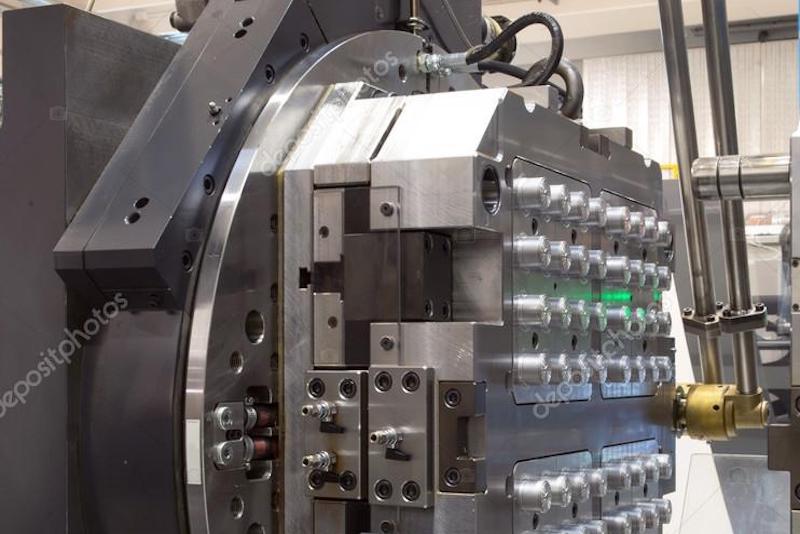
One common sourcing mistake is to choose die casting too early for a consumer or automotive program because the annual forecast looks attractive on paper. If testing reveals a changed boss position, revised seal groove, or new connector orientation, the tool can quickly become a bottleneck. That is why experienced suppliers such as TEAM Rapid often recommend machining the first rounds, validating function, then moving to casting when demand and geometry are both mature enough.
CNC Machining vs Die Casting for Customization, Design Changes, and Production Transfer
CNC machining vs die casting becomes especially important when a part is not yet stable. Customization, engineering changes, regional variants, or late-stage customer feedback all favor processes that can adapt without major retooling. In that environment, CNC machining is usually the more forgiving option.
In practical development work, a product may move through several stages. A startup may need 10 machined aluminum housings for engineering validation, 100 parts for pilot units, and then a cast version for annual demand above 10,000 pieces. An industrial OEM may need a machined stainless fixture immediately, followed by a zinc die cast commercial version once geometry is fixed. Good suppliers plan that path from the start instead of treating each order as a separate transaction.
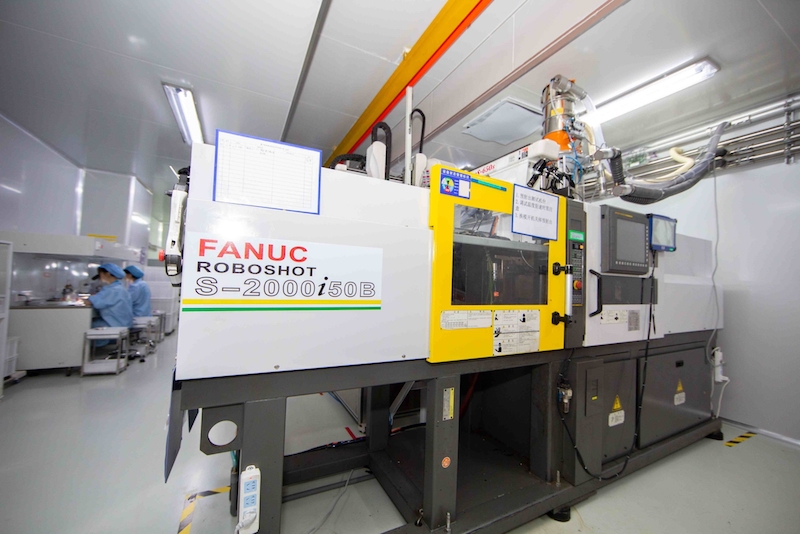
Manufacturers like TEAM Rapid are useful here because they can support early machining, later tool-based production, finishing, assembly, packaging, and direct shipping in one supply chain. That matters when the goal is not just choosing between cnc machining vs die casting, but building a clean transition from prototype to production. The company’s broader service portfolio also includes rapid prototyping services and injection molding services, which is valuable for mixed-material products that combine machined metal parts with molded plastic housings.
A strong production-transfer plan should answer these questions early:
- Which features are likely to change after prototype testing?
- Which dimensions are critical enough to remain machined even after casting?
- Will the production version require overmolding, insert molding, assembly, or packaging?
- Can the supplier issue a DFM report before tooling release?
- What quantity justifies the transfer from billet machining to cast tooling?
TEAM Rapid’s engineering support is particularly relevant in this phase. Detailed DFM reports can identify design risks before tooling, improve part performance, reduce quality issues, shorten development cycles, and support later manufacturing efficiency. In tooling-related programs, those reviews often cover wall balance, draft, rib design, boss support, gate position, secondary machining allowance, and finish feasibility.
When evaluating cnc machining vs die casting, I usually recommend a phased strategy rather than a one-step commitment. Machine first when the design is still learning. Cast later when the design is stable enough to earn the tool.
Sourcing CNC Machining vs Die Casting from China Without Sacrificing Quality
CNC machining vs die casting becomes a sourcing issue as much as a process issue when buyers import from China. The best results come from choosing a supplier that can explain where each process fits, provide DFM before production, and back delivery with inspection, logistics, and communication discipline.
China remains highly competitive for both machining and die casting because of its dense supply chain, material availability, finishing ecosystem, and export experience. But quality outcomes vary widely. Buyers should not choose solely on unit price. They should evaluate whether the supplier can support rapid quoting, clear technical review, controlled production, and shipment readiness.
TEAM Rapid is a strong example of the kind of supplier many overseas buyers prefer: a China-based manufacturer with a factory in Zhongshan, Guangdong Province, a Hong Kong office, in-house machining and tooling resources, plus an integrated manufacturing network across China. That structure is useful when a program includes CNC parts, cast parts, finishing, assembly, limited warehousing, and direct shipping under one schedule.
A practical supplier evaluation checklist for cnc machining vs die casting should include:
- Confirm machine list and process range: 3-axis, 4-axis, 5-axis, turning, EDM, wire EDM, and die casting support.
- Review inspection capability, including CMM reporting for critical dimensions.
- Ask for DFM feedback before order placement, not after production begins.
- Verify finish capability such as anodizing, painting, plating, polishing, or powder coating.
- Check whether the supplier can support procurement, packaging, kitting, and export shipment.
| Supplier review point | Why it matters in CNC machining vs die casting |
|---|---|
| DFM responsiveness | Prevents bad process selection and late design conflicts |
| Quality system | Supports consistency across prototypes and recurring production |
| Metrology capability | Critical for tight-tolerance machined features and cast-to-machine interfaces |
| Logistics support | Important when parts need assembly, packaging, or direct delivery |
| Cultural communication | Reduces error risk on specifications, revisions, and lead times |
For quality management context, the ISO 9001 quality management overview is a useful benchmark when comparing suppliers. TEAM Rapid’s ISO 9001:2015 certification, full inspection approach, and CMM capability are meaningful trust signals for B2B buyers who need specification compliance rather than informal shop-floor promises.
Another overlooked factor in cnc machining vs die casting sourcing is post-production handling. Parts are not truly ready when they leave the machine or die. They may need deburring, coating, kitting, blister packaging, clamshell sealing, poly bagging, shrink filming, planning, scheduling, and shipping coordination. TEAM Rapid’s turnkey support in these areas can simplify supplier management for procurement teams trying to reduce administrative handoffs.
Why TEAM Rapid Is a Practical Partner for CNC Machining vs Die Casting Projects
When buyers compare cnc machining vs die casting, they usually need more than a quote. They need a supplier that can help them choose the right process, highlight design risks early, and scale from prototype to production without losing time to requalification and vendor switching. That is where TEAM Rapid stands out.
TEAM Rapid is not just a machine shop and not just a casting source. It is a one-stop rapid manufacturing partner supporting 3D printing, vacuum casting, CNC machining, rapid tooling, injection molding, die casting, aluminum extrusion, sheet metal fabrication, finishing, assembly, packaging, procurement support, limited warehousing, and direct shipping. For buyers, that matters because the best answer to cnc machining vs die casting is sometimes “start with one, then move to the other,” and that transition is smoother when one partner can manage the full path.
A few strengths deserve special attention:
- Quick engineering response within a few hours, which helps programs move faster at RFQ stage.
- 1-to-1 engineering support, useful for tolerance review, DFM feedback, and process selection.
- Tolerances down to 0.01 mm in CNC machining with CMM-backed inspection.
- Capability from 1 single prototype to 100,000+ parts, which supports both pilot and recurring production.
- Competitive pricing, often around 40% lower than Europe and America, without sacrificing communication discipline.
From a commercial standpoint, TEAM Rapid serves innovators, product designers, engineers, startups, and global manufacturers. From a technical standpoint, the more important value is practical judgment. Suppliers such as TEAM Rapid understand when a part should stay machined, when it should be cast, and when a hybrid route will reduce total cost and quality risk.
If your team is weighing cnc machining vs die casting for an upcoming metal part, the most efficient next step is to send the CAD, drawing, annual quantity estimate, finish requirement, and target delivery date through the request a free quote page. For urgent RFQs, buyers can also contact TEAM Rapid directly at sales@teamrapidtooling.com or +86 760 8850 8730.
CNC Machining vs Die Casting FAQ
What is the main difference in cnc machining vs die casting?
The main difference in cnc machining vs die casting is how the part is formed. CNC machining cuts material away from a solid block or bar, which makes it ideal for fast revisions, tight tolerances, and low-volume work. Die casting injects molten metal into a hardened die, which requires more upfront tooling investment but lowers piece cost at stable higher volumes.
Which is cheaper in cnc machining vs die casting?
In cnc machining vs die casting, CNC is usually cheaper at low quantities because there is little or no tooling investment. Die casting is usually cheaper at higher volumes because the die cost is spread across many parts and cycle time is short. If a buyer only needs prototypes, pilot parts, or a few hundred pieces, CNC is often the better financial choice. If demand is stable in the thousands, die casting usually becomes more attractive.
Which process wins on lead time in cnc machining vs die casting?
For lead time, cnc machining vs die casting usually favors CNC at the beginning of a project. Machining can start as soon as programming, setup, and material are ready, while die casting must wait for die design, build, sampling, and tuning. TEAM Rapid is a good benchmark for urgent machining schedules because prototype work often ships in 2-8 days, and in some cases faster, while tool-based processes naturally take longer due to tool development and approval stages.
Which materials are possible in cnc machining vs die casting?
In cnc machining vs die casting, CNC supports a much wider material range. Common CNC materials include aluminum 6061, 7075, and 2024, stainless steels 303, 304, and 316, carbon steel, titanium, brass, copper, Delrin, PEEK, Nylon, and PTFE. Die casting is more limited and is typically best for cast aluminum or zinc alloys in the type of programs TEAM Rapid supports.
How should I choose cnc machining vs die casting for low-volume production?
For low-volume production, cnc machining vs die casting usually favors CNC machining unless the design is already frozen and the forecast is unusually strong. Choose CNC when you need flexibility, quick delivery, and low risk during design changes. Choose die casting when the geometry is cast-friendly, the annual volume is well established, and the lower long-run unit cost will offset the die investment.
Can one supplier handle cnc machining vs die casting in the same project?
Yes. In many cases, one supplier can support both sides of cnc machining vs die casting in the same project. That approach is often better because prototype machined parts can be validated first, then transferred to casting later without restarting the supplier learning curve. TEAM Rapid is well suited to this model because it supports machining, tooling, die casting, finishing, assembly, packaging, procurement support, and direct shipping within one coordinated manufacturing workflow.
Content reviewed and updated: June 2026
