
Injection Molding vs Rotational Molding Key Differences
Injection Molding vs Rotational Molding: The Direct Answer for Manufacturers
Injection molding vs rotational molding is usually decided by part size, geometry, tolerance demands, annual volume, and tooling strategy. For most manufacturers, injection molding is the better choice for precise, repeatable, feature-rich plastic parts at medium to high volumes, while rotational molding is the better choice for large hollow parts with lower tooling cost and less demanding dimensional requirements.
From a manufacturing engineer’s point of view, the difference is simple but important. Injection molding pushes molten plastic into a closed mold under pressure, which makes it ideal for tight details such as ribs, bosses, snap fits, threads, and cosmetic surfaces. Rotational molding, often called rotomolding, places resin powder inside a hollow mold that rotates in an oven until the material coats the cavity wall. That makes it excellent for seamless hollow shapes, but much slower and less precise.
A buyer comparing injection molding vs rotational molding should think in terms of lifecycle. If the part is small to medium-sized, highly detailed, and expected to run in steady production, injection molding is almost always the stronger manufacturing route. If the part is large, hollow, impact-resistant, and not especially tolerance-critical, rotational molding can be more economical.
| Decision factor | Injection molding | Rotational molding |
|---|---|---|
| Best fit | Detailed plastic parts | Large hollow plastic parts |
| Typical production pace | Fast cycle times, high repeatability | Slow cycle times, lower output |
| Tooling cost | Higher upfront mold cost | Lower upfront mold cost |
| Part tolerances | Tight, often around ±0.05 mm standard on engineered parts | Looser, often percentage-based and size-dependent |
| Surface quality | Excellent cosmetic and textured finish control | Good functional surface, but less refined detail |
| Typical buyer goal | High precision and scalable production | Large hollow forms with lower initial investment |
That is why injection molding vs rotational molding is not really a battle of which process is “better.” It is a question of which process better matches the technical and commercial reality of the part.
Injection Molding vs Rotational Molding Market Trends and Demand Drivers
Injection molding vs rotational molding has become a more common sourcing discussion because B2B buyers are under pressure to shorten development cycles while avoiding unnecessary tooling risk. Across automotive, medical devices, consumer products, industrial equipment, and sanitation markets, buyers increasingly want to validate a design fast, launch with controlled capital, and then scale only when the forecast is proven.
That shift is one reason manufacturers like TEAM Rapid see more RFQs that ask not only for price, but also for process advice. In practical sourcing work, the buyer is often not asking, “What is the cheapest molding process?” The real question is, “Which process gives me the right balance of part quality, lead time, tooling cost, and supply stability?”
Several market forces are driving the injection molding vs rotational molding comparison:
- Product teams want shorter time-to-market and fewer tool revisions.
- OEMs are trying to reduce inventory risk by avoiding overinvestment too early.
- Buyers want suppliers who can provide DFM feedback before tooling is cut.
- End markets increasingly demand both cosmetic quality and cost discipline.
Injection molding continues to dominate high-precision thermoplastic production because it supports consistent repeatability, tight process control, automation, and broad resin selection. Rotational molding remains strong in applications such as tanks, bins, playground equipment, agricultural components, marine products, and large housings where hollow construction and impact resistance matter more than cosmetic detail or tight tolerance.
From my experience, the most important trend is that buyers are evaluating process fit earlier. Instead of waiting until tooling is quoted, engineering teams now ask about shrink, draft, wall distribution, resin behavior, texture, and finishing at the design stage. That is a healthier way to compare injection molding vs rotational molding, because process choice should come from function and volume, not habit.
TEAM Rapid’s broader operating model also reflects this shift. With more than 10 years in the industry, 500+ satisfied customers, and 6,000+ delivered projects across 25+ countries, the company is typically brought in early when a customer needs design feedback, rapid tooling, production planning, and downstream support instead of a one-step transaction.
Injection Molding vs Rotational Molding Process, Materials, Tolerances, and Surface Finish
Injection molding vs rotational molding becomes much clearer when you compare the mechanics of the two processes. Injection molding is a high-pressure, closed-mold process. Rotational molding is a low-pressure, heat-and-rotation process. That basic distinction affects almost everything else: resin choice, wall control, feature detail, cycle time, mold complexity, and the kind of tolerances a buyer can realistically expect.
Injection molding starts with pellets, often dried first depending on the resin. The material is heated, plasticized, and injected into a mold cavity. Cooling channels, gate design, venting, shrink allowance, and ejection all matter. Because the cavity is tightly controlled, the process supports detailed geometry and repeatable dimensions. Rotational molding loads a measured amount of powdered resin into a hollow mold, then heats and rotates it biaxially so the material coats the inner wall. Because there is no injection pressure, the process is ideal for hollow shapes but much less capable of fine detail.
For buyers considering injection molding vs rotational molding, the product specification difference usually looks like this:
| Technical factor | Injection molding | Rotational molding |
|---|---|---|
| Feedstock | Pellets or liquid systems, depending on resin and process | Powdered resin, most often polyethylene-based |
| Typical part type | Precision shells, housings, clips, lids, connectors, overmolded parts | Tanks, containers, ducts, bins, playground and marine parts |
| Wall control | Good control with proper gate and packing strategy | More variable, but good for thicker hollow walls |
| Fine details | Excellent for ribs, threads, logos, snap fits, insert features | Limited for sharp details and small precision features |
| Standard tolerance expectation | Around ±0.05 mm on many engineered parts, tighter where feasible | Usually much looser and heavily size-dependent |
| Surface finish options | SPI polish, VDI texture, EDM texture, paint, plating, printing | Molded functional texture, limited high-cosmetic detailing |
Material selection is another major dividing line in injection molding vs rotational molding. Injection molding supports a much broader range of engineering plastics. TEAM Rapid, for example, works with ABS, PC, PP, PA/Nylon, POM, PEEK, TPU, TPE, silicone, and other commercial and engineering-grade materials. That is why injection molding is common in medical device housings, consumer electronics, clips, knobs, electrical components, and clear optical parts.
Rotational molding is narrower in resin choice. Linear low-density polyethylene, medium-density polyethylene, high-density polyethylene, cross-linked polyethylene, and selected nylon grades are common. These materials perform well in large hollow parts, especially when impact strength, chemical resistance, or weather resistance is needed, but they do not offer the same design freedom or dimensional precision as injection-grade engineering resins.
At the tooling level, the injection molding vs rotational molding gap is also significant. TEAM Rapid offers several mold paths for injection molding, including low-cost MUD inserts, fast aluminum prototype molds with lead times around 5 to 15 days, and production tools in P20, NAK80, or S136 steel. That allows the tooling strategy to match project stage. Rotational molding tools are generally simpler and cheaper, often aluminum or fabricated metal constructions, but they are designed for a different class of part and a much slower cycle profile.
In surface finish terms, injection molding is the clear winner when a product needs branding, cosmetic consistency, or optical clarity. TEAM Rapid supports SPI and VDI surfaces, EDM texture, painting, plating, pad printing, and laser engraving. Clear plastic molding with optical-grade finishes is another area where injection molding stands apart. Rotational molding can produce attractive textured surfaces, but it is not the normal choice for fine gloss, sharp logo detail, or transparent components.
For engineers checking plastic grades and test methods, resources such as ASTM International and the MatWeb material database are useful for comparing resin families, mechanical properties, and standard references before final material approval.
TEAM Rapid’s plastic injection molding capability is particularly relevant when the project requires insert molding, overmolding, threaded components, silicone rubber molding, or tighter tolerance control. In these cases, the answer to injection molding vs rotational molding is usually straightforward: use injection molding unless the part is fundamentally a large hollow shell that benefits from rotomolding’s geometry advantage.
Injection Molding vs Rotational Molding Cost, MOQ, Lead Time, and How to Choose
Injection molding vs rotational molding often gets reduced to a tooling-cost debate, but experienced buyers know that total cost depends on four things working together: mold investment, cycle time, resin utilization, and annual demand. Injection molding usually has the higher upfront tool cost, but lower unit cost once production volume is established. Rotational molding usually has the lower initial tooling cost, but higher cycle time and higher per-part labor and energy consumption.
That is why the most accurate answer to injection molding vs rotational molding is not “one is cheaper.” The right answer is “cheaper at what quantity, for what geometry, and with what tolerance requirement?”
| Commercial factor | Injection molding | Rotational molding |
|---|---|---|
| Upfront tooling | Higher, especially for multi-cavity steel molds | Lower for many large hollow parts |
| Cycle time | Often seconds to a few minutes | Often tens of minutes depending on size and cooling |
| Unit economics | Excellent at repeat volume | Better for lower-volume large hollow parts |
| MOQ logic | Commonly economical from 100 pieces upward, then scales to 100,000+ | More suited to lower-to-medium volumes where part size is large |
| Engineering change cost | Higher after tool release | Tool updates can also be costly, but tools are usually simpler |
| Cosmetic consistency | Very strong | More limited on high-detail aesthetic parts |
Lead time is another important distinction in injection molding vs rotational molding. Injection tooling can take longer to design and build, but once approved it produces parts quickly and consistently. TEAM Rapid’s benchmark is useful here: injection molding tools and first articles commonly run in 5 to 25 days, depending on tool complexity, resin, finish, and validation needs. Low-cost aluminum prototype molds can move even faster for development programs.
Rotational molding tools may be simpler, but the production cycle itself is much slower. That means a buyer may save at the tooling stage, yet lose time and cost later if demand climbs or delivery windows tighten. This is one reason many commercial product teams shift toward injection molding once a part geometry is stable enough to justify the investment.
In real purchasing work, I ask buyers to answer five questions before deciding between injection molding vs rotational molding:
- Is the part small to medium and detail-rich, or large and hollow?
- Are you buying 200 parts, 5,000 parts, or 100,000 parts per year?
- Do you need a polished, textured, branded, or transparent cosmetic surface?
- How much dimensional control is required at assembly interfaces?
- How likely is the design to change after pilot approval?
TEAM Rapid is strong in this commercial decision zone because it does not quote the tool in isolation. The company combines one-to-one engineering support, DFM review, and competitive pricing into the quoting process. For many overseas buyers, that matters more than a low headline tool price because it helps prevent expensive revisions. The pricing advantage is also meaningful: projects can often come in around 40% lower than Europe and America, especially when tooling, molding, finishing, and shipment are planned together.
A useful rule is simple. If the part is highly engineered and destined for repeat production, injection molding typically becomes the better long-term manufacturing route. If the part is large, hollow, and not highly tolerance-sensitive, rotational molding often makes more sense.
Injection Molding vs Rotational Molding by Industry and B2B Buyer Type
Injection molding vs rotational molding should always be filtered through the end-use industry, because sector requirements can quickly rule one process in or out. Automotive buyers care about dimensional repeatability, material traceability, assembly fit, and appearance. Medical device teams care about surface quality, repeatability, and documented process control. Agricultural and marine buyers often care more about large hollow geometry, weather resistance, and impact durability.
That is why the best buyers do not compare injection molding vs rotational molding in the abstract. They compare them inside the actual operating environment of the part.
| Industry or buyer group | Injection molding is usually better for | Rotational molding is usually better for |
|---|---|---|
| Automotive and mobility | Clips, bezels, housings, interior trims, connector bodies | Large ducts, reservoirs, or protective hollow forms where tolerances are less critical |
| Medical devices | Handheld housings, knobs, precision covers, clear components | Large non-precision carts or housings only in special cases |
| Consumer and commercial products | Cosmetic enclosures, appliance parts, handles, branded components | Large outdoor products, bins, coolers, hollow play components |
| Industrial equipment | Precise covers, guards, fit-critical components | Tanks, hoppers, bulk handling containers |
| Sanitary, marine, agriculture | Small engineered parts and valve-adjacent components | Water tanks, chemical tanks, marine buoys, large weather-resistant shells |
This industry view is where TEAM Rapid’s experience becomes useful. With 6,000+ delivered projects across automotive, medical devices, consumer and commercial products, industrial design, office equipment, communication products, electrical appliances, and sanitary products, the company has seen where injection molding creates the most value and where an alternative process should be considered.
B2B buyer type also influences the decision. A startup launching a smart device usually needs precision plastic housings, insert features, and cosmetic consistency. That points directly to injection molding. A procurement manager sourcing a large outdoor liquid container is looking at a very different problem, and rotational molding may fit better. An industrial designer developing a two-material grip handle may need overmolding, which is firmly in injection molding territory.
In other words, injection molding vs rotational molding is not only a process question. It is also a buyer-profile question.
Injection Molding vs Rotational Molding Applications and Best-Fit Use Cases
Injection molding vs rotational molding becomes easiest to understand when you look at the parts that each process makes well. Good process selection comes from matching geometry to manufacturing reality.
Injection molding is usually best for applications such as:
- Precision housings with snap fits, ribs, and screw bosses
- Overmolded handles and soft-touch consumer parts
- Clear lenses, covers, and optical-grade transparent components
- Electrical and communication product enclosures
- Threaded components, insert-molded parts, and multi-part assemblies
Rotational molding is usually best for applications such as:
- Water tanks, chemical tanks, and storage containers
- Large bins, tote bodies, and material handling products
- Playground shells, outdoor recreational products, and marine floats
- Hollow ducts, barriers, covers, and impact-resistant outdoor parts
- Double-wall or foam-filled structures where volume is moderate
In injection molding vs rotational molding, the shape of the part tells the story quickly. If a part needs a living hinge, molded-in logo detail, optical clarity, or tight shutoff features, injection molding is the natural solution. If the part is a large seamless hollow body with generous radii and relatively forgiving tolerances, rotational molding is often the better answer.
This is also where design intent matters. A designer may initially draw a large shell with sharp internal details, cosmetic texture zones, precise threaded areas, and thin cosmetic edges. On paper, it looks possible. In production, those mixed requirements usually favor one process strongly. Experienced suppliers such as TEAM Rapid can identify that mismatch early and recommend DFM changes before the buyer spends money on the wrong tool.
For example, injection molding becomes powerful when a program needs not only molded parts, but also downstream decoration and assembly. TEAM Rapid supports finishing, assembly, packaging, material management, and direct shipping, which helps when the molded component is only one part of a larger commercial product rollout.
A practical rule I use with customers is this: if the part will sit on a desk, fit inside a machine, or attach to a precise assembly, injection molding is usually the stronger candidate. If the part will sit outdoors, hold fluid, take impact, or rely on hollow volume more than detail, rotational molding deserves serious consideration.
Injection Molding vs Rotational Molding for Customization, OEM Programs, and Production Scale
Injection molding vs rotational molding also affects how much customization a project can support without driving cost or quality out of control. In OEM and private-label production, the process has to do more than form plastic. It has to support branding, color matching, functional upgrades, production revisions, and sometimes multi-part assembly.
Injection molding has a clear advantage when customization involves detail. Molded logos, embossed text, pad printing, laser engraving, insert molding, overmolding, metal threaded inserts, and multi-surface cosmetic specifications are all much easier to control in injection molding. TEAM Rapid supports these value-added requirements through DFM analysis, mold selection strategy, and post-molding finishing. That is important for OEM buyers who want the production part to look deliberate and premium, not merely functional.
Rotational molding can absolutely be customized, but the options are different. It is better for wall-thickness-driven strength, large-format color, hollow forms, foam filling, and outdoor durability than for intricate precision branding. When customization means a larger hatch, a molded-in recess, or a thicker weather-resistant shell, rotational molding can be effective. When customization means threads, tight interfaces, clear windows, or insert retention, the answer to injection molding vs rotational molding usually shifts back to injection.
From a scale-up perspective, injection molding is also much stronger for staged production. A project can start with prototype tooling, then move to hardened steel production molds when the forecast is proven. TEAM Rapid’s tooling path is especially practical here: low-cost MUD inserts for early development, aluminum prototype molds for fast validation, and P20, NAK80, or S136 tools for repeat production. Buyers that need earlier physical samples can also use rapid prototyping services before committing to steel.
That staged path matters in real OEM programs because not every product is ready for a full production mold on day one. At TEAM Rapid’s Zhongshan facility, engineers typically review parting line strategy, draft, gate location, shrink risk, ejection marks, and assembly interfaces before recommending how far the customer should invest at each stage.
In short, injection molding vs rotational molding is not only about how the first part is made. It is about how the program will scale, change, and stay profitable over time.
Sourcing Injection Molding vs Rotational Molding from China: Supplier, Quality, and Logistics Guide
Injection molding vs rotational molding becomes a sourcing question the moment a buyer starts comparing offshore suppliers. China remains one of the strongest manufacturing bases for plastic parts because the tooling ecosystem, resin supply, finishing services, export experience, and secondary operations are all concentrated. But the right supplier is not the one with the lowest first quote. It is the one that can explain process fit, control quality, and support shipment without surprises.
In sourcing terms, buyers evaluating injection molding vs rotational molding should ask three questions early. First, does the supplier understand both process economics and design limitations? Second, can the supplier provide DFM before tooling release? Third, can the supplier manage inspection, packaging, and export handoff without creating downstream risk?
TEAM Rapid is well positioned on those points because it combines in-house machining, tooling manufacturing, molding capability, integrated manufacturing resources across China, and coordinated support from its Zhongshan factory in Guangdong with a Hong Kong office for business accessibility. That matters when a buyer needs engineering communication, rapid feedback, and direct shipment instead of a fragmented vendor chain.
A strong China sourcing checklist for injection molding vs rotational molding should include:
- Confirm the supplier can review CAD and provide DFM comments before order placement.
- Ask what mold types they recommend for prototype, bridge, and production stages.
- Check inspection capability for first articles and ongoing quality control.
- Verify finishing, assembly, packaging, procurement support, and shipping options.
- Review how the supplier handles engineering changes after tooling starts.
Quality assurance matters as much as price. TEAM Rapid is ISO 9001:2015 certified, provides detailed manufacturability analysis, and supports full inspection and specification compliance. For buyers comparing China suppliers, that is far more meaningful than vague assurances about “good quality.” A useful public benchmark for supplier quality systems is the ISO 9001 quality management overview.
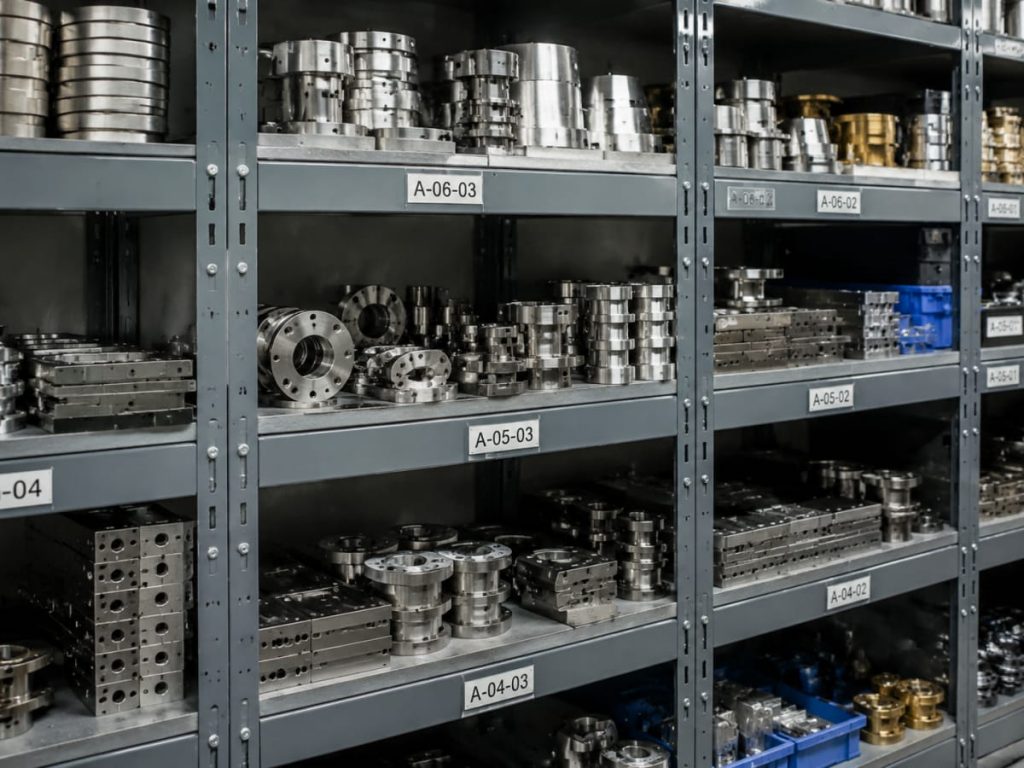
Logistics is another area buyers often underestimate. Molded parts frequently need more than carton packing. They may need kitting, blister packaging, clamshell sealing, poly bagging, shrink filming, labeling, planning, scheduling, and direct shipping to a contract manufacturer or distribution center. TEAM Rapid’s turnkey support is valuable here because the supply chain does not end when the press stops.
For buyers importing from China, the best way to handle injection molding vs rotational molding is to source with the full product lifecycle in mind, not just the cheapest initial tool quote.
Why Choose TEAM Rapid for Injection Molding vs Rotational Molding Projects
When companies compare injection molding vs rotational molding, they usually need a supplier that can do two things well: give honest process guidance early and execute quickly once the correct path is chosen. TEAM Rapid is particularly strong when the design ultimately fits injection molding, rapid tooling, bridge production, or multi-step product launch support.
The reason is practical. TEAM Rapid combines engineering review, mold strategy, production capability, finishing, assembly, packaging, procurement support, and direct shipping in one workflow. For buyers, that reduces handoffs and helps avoid the common failure of treating tooling, molding, finishing, and logistics as unrelated purchases.
A few strengths matter most in this comparison:
- Quick response within a few hours with one-to-one engineering support
- More than 10 years of manufacturing experience
- Customers in 25+ countries, 500+ satisfied customers, and 6,000+ delivered projects
- Injection molding support from roughly 100 parts to 100,000+ parts
- Detailed DFM reports that identify design risks before tooling is cut
- Competitive pricing that is often around 40% lower than Europe and America
- Finishing, assembly, packaging, limited warehousing, and direct shipping support
Manufacturers like TEAM Rapid are especially valuable when a buyer is not yet fully certain whether the part should stay in injection molding or whether a larger hollow geometry suggests a different route. A supplier with real engineering depth will not force every project into one process. It will explain why a part should be injection molded, prototyped first, redesigned, or simplified before the tool is approved.
If your team is evaluating injection molding vs rotational molding for a current product, the most efficient next step is to share the 3D model, target resin, annual quantity, finish requirement, and delivery window through the request a free quote page. That gives the engineering team enough information to recommend the right mold path and commercial approach from the start.
Injection Molding vs Rotational Molding FAQ
What is the main difference in injection molding vs rotational molding?
The main difference in injection molding vs rotational molding is how the plastic gets into the mold and what that means for part performance. Injection molding forces molten plastic into a precise cavity under pressure, so it is best for fine detail, repeatability, and scalable production. Rotational molding heats and rotates powdered resin inside a hollow mold, which makes it better for large seamless hollow parts. If your part needs threads, clips, shutoffs, inserts, or a polished cosmetic surface, injection molding is usually the stronger option. If your part is a large tank, bin, float, or outdoor shell, rotational molding may be the better fit.
Which is cheaper in injection molding vs rotational molding?
In injection molding vs rotational molding, rotational molding is often cheaper at the tooling stage, while injection molding is often cheaper per part once volume rises. Rotomolding tools are usually simpler and cost less upfront, especially for large hollow products. Injection molds cost more because they require tighter machining, cooling, and cavity control. However, injection cycle times are much faster, so unit cost drops dramatically when demand is steady. Based on our sourcing experience, suppliers such as TEAM Rapid create the most value when they compare tooling cost, annual volume, and likely design changes together instead of quoting mold price alone.
Which process wins on lead time in injection molding vs rotational molding?
For injection molding vs rotational molding, the lead-time answer depends on whether you mean tooling lead time or production lead time. Rotational tooling may be simpler in some cases, but injection molding wins once the tool is approved because the molding cycle is much faster. TEAM Rapid’s injection tooling and first-article lead times typically run from 5 to 25 days, depending on complexity, resin, and finish, with fast prototype options available earlier in the development cycle. If a buyer needs thousands of repeatable small plastic parts quickly, injection molding usually beats rotational molding by a wide margin.
What materials can be used in injection molding vs rotational molding?
In injection molding vs rotational molding, injection molding supports a much wider material portfolio. Common choices include ABS, PC, PP, PA/Nylon, POM, PEEK, TPU, TPE, and silicone, along with many filled and flame-retardant grades. Rotational molding is more limited and is most often built around polyethylene families and selected nylons for large hollow products. That difference is important because material choice affects impact strength, chemical resistance, clarity, temperature capability, and appearance. If the part specification calls for engineering plastics with tighter mechanical or cosmetic performance, injection molding is normally the more suitable route.
How do I choose injection molding vs rotational molding for large hollow plastic parts?
For large hollow parts, injection molding vs rotational molding usually leans toward rotational molding unless the product requires unusually high detail, very tight dimensional control, or multi-component assembly features. Rotational molding is excellent for tanks, bins, marine floats, and large outdoor housings because it creates seamless hollow shapes efficiently. Injection molding becomes more attractive when the “large part” still needs precision shutoffs, inserts, windows, or repeated assembly interfaces. The best decision comes from reviewing size, wall thickness, tolerance zones, resin, and annual demand before tooling starts.
Can TEAM Rapid help evaluate injection molding vs rotational molding before tooling?
Yes. TEAM Rapid can help evaluate injection molding vs rotational molding before tooling by reviewing CAD data, target quantity, material requirements, cosmetic needs, and assembly conditions. That early DFM step is where buyers save the most money, because it identifies whether the part truly needs injection molding, whether a lower-risk prototype stage is smarter first, or whether the geometry suggests a large-hollow alternative. For companies that ultimately choose injection molding, TEAM Rapid can then support prototype tooling, production molds, finishing, assembly, packaging, and direct shipping in one coordinated workflow.
Content reviewed and updated: June 2026
