
CNC Milling vs Turning: Choosing the Right CNC Process
CNC Milling vs Turning: The Direct Answer for Buyers and Engineers
CNC milling vs turning comes down to part geometry, machining strategy, and the features you need to produce. In most cases, milling is the right CNC process for prismatic parts, flat surfaces, pockets, slots, and complex 3D geometries, while turning is the better choice for round or rotationally symmetric parts such as shafts, pins, bushings, and threaded cylinders.
When buyers compare cnc milling vs turning, they are really asking three commercial questions at once: Which process gives the required tolerance, which process delivers the shortest lead time, and which process keeps unit cost under control. The answer is rarely based on machine type alone. It depends on diameter-to-length ratio, access to the feature, material grade, finish expectations, and batch size from one-off prototypes to repeat production.
A practical rule of thumb is:
- choose milling when the part shape is driven by multiple faces, complex contours, non-round pockets, or multi-axis geometry
- choose turning when the part rotates around a central axis and most features can be produced efficiently from bar stock
- choose a hybrid strategy when a turned blank still needs flats, cross-holes, keyways, or milled features
The fastest way to evaluate cnc milling vs turning is to look at the part’s dominant geometry first, then confirm tolerance, finish, quantity, and secondary operations. A well-made sourcing decision at this stage reduces machining hours, avoids overprocessing, and helps the supplier recommend the most economical route from prototype through low-volume or recurring production.
| Question | Milling Usually Wins | Turning Usually Wins |
|---|---|---|
| Is the part mostly prismatic? | Yes | No |
| Is the part mostly cylindrical? | No | Yes |
| Are there multiple flat faces or pockets? | Yes | Sometimes, with live tooling |
| Is bar-fed efficiency important? | Less often | Yes |
| Are complex 3-axis, 4-axis, or 5-axis features needed? | Yes | No |
| Is the part a shaft, bushing, or pin? | Rarely | Yes |
CNC Milling vs Turning in the Global Manufacturing Market
The cnc milling vs turning decision matters more today because global manufacturing is under pressure to shorten development cycles, reduce inventory risk, and source precision parts more cost-effectively. Across automotive, medical devices, electronics, industrial equipment, robotics, and consumer hardware, product teams are asking suppliers to machine more complex parts faster, often in mixed quantities that start as prototypes and transition into low-volume production.
That shift has increased demand for suppliers that can support both milling and turning under one roof. Manufacturers like TEAM Rapid are a good example of this trend. Buyers increasingly prefer partners that can machine parts, perform DFM review, manage finishing, and coordinate related processes such as tooling, assembly, and direct shipment instead of splitting work among several disconnected vendors.
Several industry trends are shaping the cnc milling vs turning market:
- more parts now combine rotational and prismatic features, which pushes demand for multi-process machining strategies
- shorter product life cycles increase the importance of fast prototyping and small-batch manufacturing
- tighter performance expectations mean buyers are asking for better tolerances, improved surface quality, and more documented inspection
- supply chain consolidation is making one-stop machining partners more attractive than single-process job shops
This is also why China remains a major sourcing base for CNC work. A strong Chinese supplier can combine machine capacity, engineering support, finishing options, and export logistics at pricing that is often difficult to match elsewhere. TEAM Rapid, for example, serves customers in more than 25 countries, has completed 6,000+ delivered projects, and supports both one-time orders and recurring production. That profile reflects a broader B2B market preference: suppliers that can move quickly from prototype review to stable manufacturing.
For procurement teams, the real market takeaway is simple. The cnc milling vs turning choice is no longer just about how a feature is cut. It now affects lead time, supplier count, inspection complexity, logistics planning, and the total landed cost of precision parts.
CNC Milling vs Turning by Geometry, Machine Type, and Process Capability
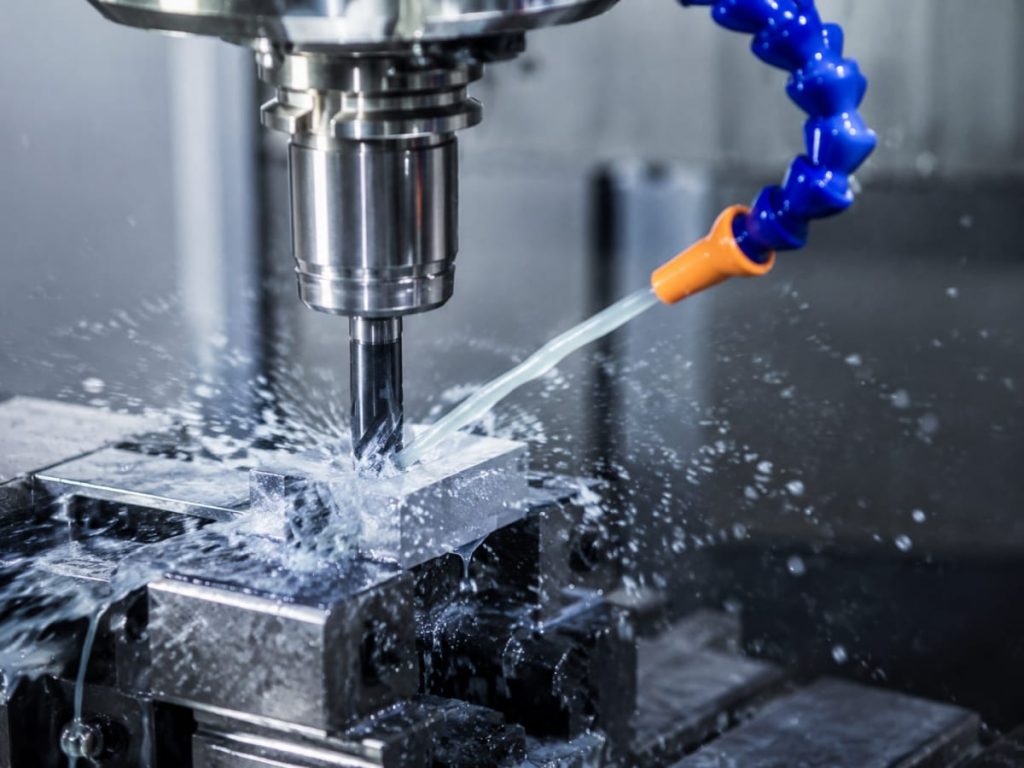
When comparing cnc milling vs turning, the most reliable technical filter is part geometry. Milling removes material with a rotating cutting tool while the workpiece is held on the table or fixture. Turning removes material with a stationary tool while the workpiece rotates in the spindle. That basic difference determines which shapes are fast to machine and which shapes become expensive.
For prismatic parts with multiple faces, pockets, contours, bosses, and irregular surfaces, milling is usually the better match. For shafts, spacers, threaded cylinders, sleeves, and parts defined by outside diameter, inside diameter, or concentricity, turning is typically more efficient. In reality, many production parts need both. A turned part may require milled wrench flats, radial holes, or off-center slots. A milled housing may need a secondary lathe operation for a precise concentric boss.
Experienced suppliers such as TEAM Rapid help buyers avoid process mistakes by reviewing the model before quoting. TEAM Rapid’s CNC capability includes 3-axis, 4-axis, and 5-axis milling, CNC turning with live tooling, plus wire EDM and EDM for intricate details and hard materials. That range matters because the best answer to cnc milling vs turning is sometimes not one or the other, but the right sequence of operations.
How the two processes differ in production
| Capability Area | CNC Milling | CNC Turning |
|---|---|---|
| Dominant part shape | Prismatic, complex, multi-face | Cylindrical, rotationally symmetric |
| Tool motion | Cutting tool rotates | Workpiece rotates |
| Best for | Pockets, slots, contours, surfaces, 3D forms | OD/ID work, facing, grooves, threads, tapers |
| Common machine types | 3-axis, 4-axis, 5-axis machining centers | 2-axis lathes, turning centers, live-tool lathes |
| Setup strategy | Fixtures, vises, tombstones, custom workholding | Chucks, collets, bar feeders, soft jaws |
| Secondary add-ons | 4th/5th axis, probing, palletization | Live tooling, sub-spindle, bar feed |
| Ideal batch range | 1 to medium-volume precision runs | 1 to high-efficiency runs for round parts |
Questions to ask before selecting the process
In a real cnc milling vs turning review, engineers should ask:
- Is the part fundamentally round, square, or mixed?
- Which dimensions are critical: concentricity, flatness, parallelism, position, or profile?
- Can the part be produced from bar stock efficiently, or does it require multi-face indexing?
- Will the part need live tooling, EDM, or multiple setups?
- Does the design favor quick fixturing or long cycle times?
Suppliers like TEAM Rapid are useful here because they can review not only the core machining route, but also secondary operations such as polishing, anodizing, painting, or plating. That broader process planning often saves more money than debating machine labels in isolation.
CNC Milling vs Turning for Materials, Tolerances, and Surface Finish Requirements
The cnc milling vs turning decision also depends on material behavior, tolerance expectations, and required finish quality. A process that looks correct geometrically can still be the wrong economic choice if the material is difficult to cut, the wall sections are unstable, or the surface finish requirement demands extra passes and inspection.
For metals, both milling and turning handle a wide range of engineering grades, but their efficiency differs based on stock form. Turning is extremely efficient for bar-fed aluminum, stainless, brass, copper, or titanium parts with rotational geometry. Milling is better suited when plate, block, or cast stock must be machined into complex profiles. Plastics such as Delrin, PEEK, Nylon, and PTFE can be machined by either route, but care is needed because thermal movement, burr formation, and dimensional relaxation behave differently than with metals.
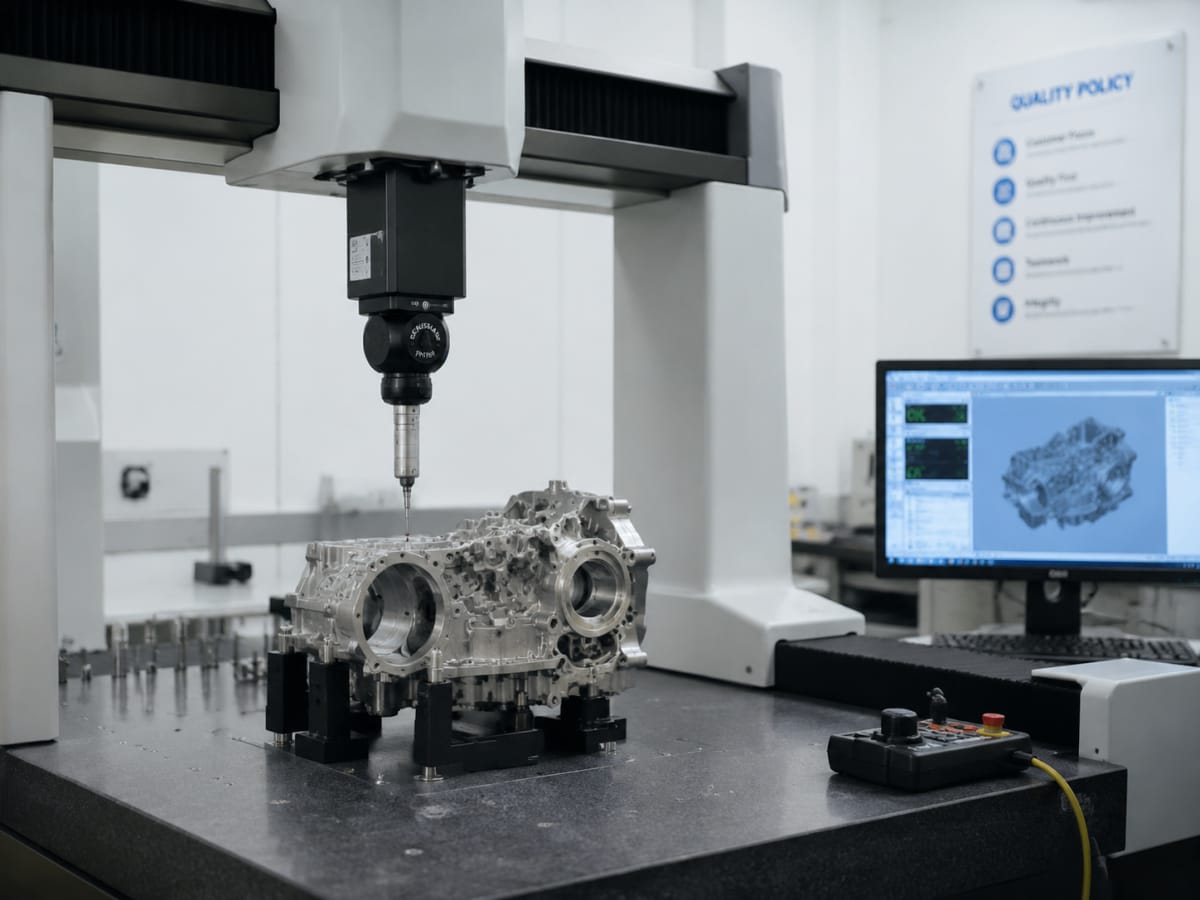
TEAM Rapid is well positioned in this area because its CNC machining covers aluminum alloys 6061, 7075, and 2024; stainless steels 303, 304, and 316; carbon steel; titanium; brass; copper; Delrin; PEEK; Nylon; PTFE; and more. The company also supports full dimensional inspection with CMM capability, which is essential when buyers are balancing cnc milling vs turning against tolerance risk.
Typical material and finish considerations
| Requirement | Milling Consideration | Turning Consideration |
|---|---|---|
| Aluminum 6061 | Fast, versatile, great for prismatic parts | Excellent for shafts, collars, and round housings |
| Aluminum 7075 | Stronger, slightly tougher to machine | Very efficient for high-strength round parts |
| Stainless 304/316 | More tool wear, heat management matters | Good for precision round parts, slower than aluminum |
| Titanium | High cutting cost, stable fixturing needed | Efficient for round aerospace-style geometry, but demanding |
| Delrin / POM | Good dimensional behavior, clean milling | Excellent on turned bushings and rollers |
| PEEK | High-value material, chip control and heat matter | Suitable for round medical and technical parts |
| PTFE | Soft and movable, requires sharp tooling | Good for simple round parts, but dimensional stability must be managed |
| Surface finish target | Easy to blend flat or sculpted faces | Excellent Ra on diameters and turned faces |
For finish, a roughing and finishing strategy should be planned early. Common requirements include:
- machining finish for functional industrial parts
- bead blasting for uniform matte appearance
- brushing for linear cosmetic texture
- polishing for smoother visible surfaces
- anodizing, including Type II and Type III hard coat
- painting, powder coating, or plating such as nickel, chrome, or zinc
In many prototype-to-production programs, buyers also use Rapid Prototyping first to verify assembly and form before investing in tighter CNC process control on final materials. That is especially useful when the cnc milling vs turning decision is still open and the geometry may evolve.
A good rule for tolerance is to specify only what the design actually needs. TEAM Rapid machines parts to tolerances down to 0.01 mm, but not every surface should be held that tightly. Over-tolerancing increases machine time, tool wear, inspection cost, and scrap exposure. The better commercial strategy is to tighten only functional dimensions and let non-critical surfaces run to more economical limits.
CNC Milling vs Turning Cost, Pricing Factors, MOQ, and Lead Time
For most buyers, cnc milling vs turning becomes a sourcing decision when cost, MOQ, and delivery date enter the conversation. The process with the lower hourly machine rate is not always the cheaper option overall. A better comparison looks at cycle time, stock utilization, setup count, tool wear, inspection burden, and finishing requirements.
Turning often wins on cost when the part can be made efficiently from bar stock with minimal secondary work. Milling becomes cost-effective when the part’s geometry would force a lathe process into too many extra operations or when several features can be completed in one multi-axis setup. The wrong process usually shows up in the quote as too much machine time, too much scrap, or too many manual steps.
What drives price in a cnc milling vs turning comparison
| Cost Driver | Milling Impact | Turning Impact |
|---|---|---|
| Raw material form | Plate/block can create more waste | Bar stock is often highly efficient |
| Setup complexity | Can be high for multi-face parts | Lower for pure round parts |
| Machine hours | Higher on deep cavities and 3D contours | Lower on simple OD/ID operations |
| Tool wear | Higher in hard materials and complex toolpaths | Moderate, but affected by material and thread work |
| Inspection time | Increases with multi-surface tolerances | Increases with concentricity and fine diameters |
| Secondary operations | Deburring, finishing, extra fixtures | Live tooling or post-milling may add cost |
In production practice, the cnc milling vs turning decision should also consider quantity bands:
- 1-10 parts: focus on setup speed and design validation, not unit price alone
- 10-100 parts: choose the route that minimizes re-fixturing and inspection rework
- 100-500+ parts: cycle time, bar-feed efficiency, and standardized workholding become more important
TEAM Rapid is particularly competitive in this range because it supports 1 to 500+ parts in both plastic and metal, making it suitable for prototype batches, bridge quantities, and repeat orders. Buyers also benefit from quick response within a few hours through 1-to-1 engineering support, which helps identify cheaper machining approaches before PO release.
Lead time is equally important in cnc milling vs turning sourcing. CNC projects often move faster than tooling-based methods, but the actual schedule still depends on stock availability, material certification, queue time, finish requirements, and inspection level. At a practical benchmark, experienced suppliers like TEAM Rapid can deliver fast-turn CNC projects while also supporting related services such as finishing, assembly, and packaging. In many cases, that integrated approach removes days from the schedule compared with splitting the work between several vendors.
Another cost comparison worth noting is process substitution. If annual demand rises sharply, a machined plastic part may eventually be better converted to injection molding services. If the volume is still uncertain, CNC remains the safer choice because it avoids upfront tooling and supports engineering changes more easily.
CNC Milling vs Turning Across Automotive, Medical, Electronics, and Industrial Sectors
The right answer to cnc milling vs turning changes by industry because the critical feature changes by application. In automotive, concentricity, durability, and repeatability often matter more than appearance. In medical devices, material traceability, burr control, and dimensional stability may dominate. In electronics, compact geometry, lightweight metals, and secondary threading often shape the process choice.
TEAM Rapid has broad cross-sector experience, which is important because the same machine capability can serve very different buyer priorities. The company supports projects in automotive, medical devices, consumer and commercial products, industrial design, communication products, office equipment, electrical appliances, and sanitary products, giving it practical exposure to how CNC requirements vary from sector to sector.
Where milling and turning are most often used
In automotive programs, turning commonly supports shafts, spacers, sensor sleeves, bushings, and round housings, while milling is used for brackets, enclosures, mounting plates, valve bodies, and fixture components. In medical applications, turning is often preferred for precision cylindrical parts, while milling supports instrument bodies, housings, and equipment subassemblies with tight flatness and hole-position requirements.
In electronics and communications equipment, the cnc milling vs turning split is often determined by enclosure design. Heat sinks, faceplates, and structural housings usually go to milling. Threaded standoffs, round couplers, ferrules, and turned pins often go to turning. For industrial machinery, the two processes regularly work together on one assembly, with milled plates and blocks mating to turned rollers, shafts, and spacers.
Buyers in these sectors should evaluate:
- functional datum strategy
- required finish and corrosion protection
- assembly fit between machined and molded components
- expected annual volume and future process migration
- inspection plan and critical characteristics
That last point matters. A turned shaft with tight runout requirements may be simpler to make than a milled body with many positional tolerances, even if the shaft looks more precise on paper. Good suppliers such as TEAM Rapid can help define which characteristics should be measured by standard inspection and which require more advanced CMM verification, preventing unnecessary cost from spreading across the entire drawing.
CNC Milling vs Turning Applications: Shafts, Housings, Brackets, and Prototype Parts
The easiest way to understand cnc milling vs turning is to look at real part families. Most industrial RFQs fall into a few recognizable groups: shafts and pins, housings and enclosures, brackets and plates, manifolds, bushings, couplings, prototype assemblies, and hybrid components that mix round and non-round features.
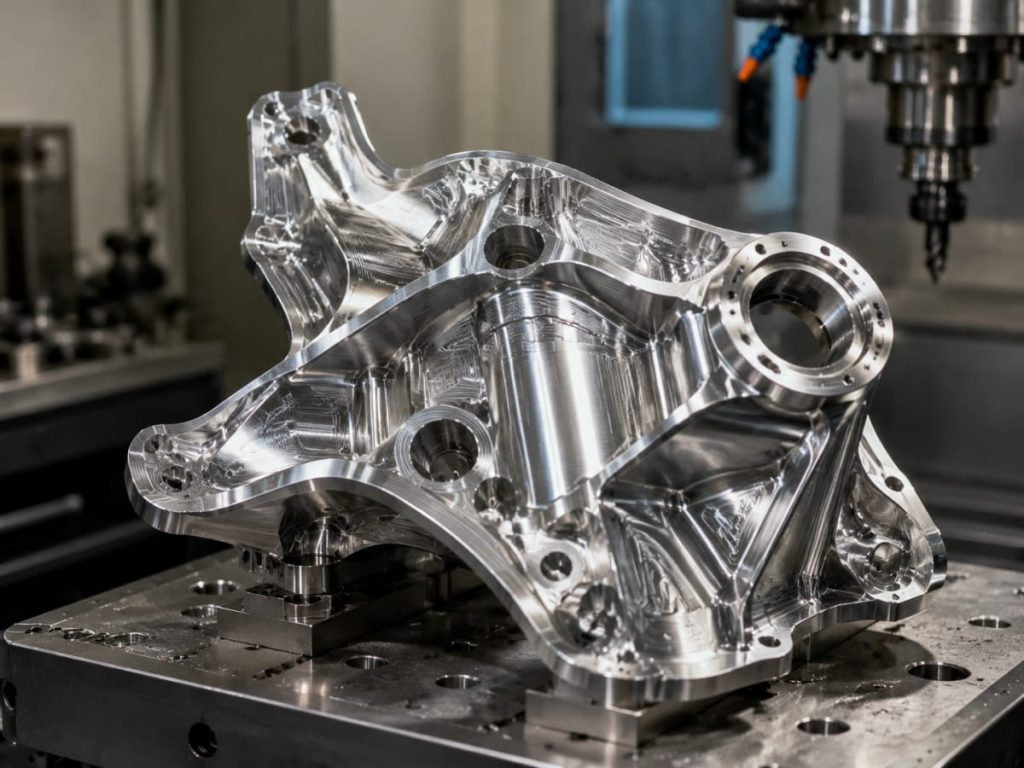
Turning is usually the clear winner for shafts, rollers, threaded studs, bushings, spacers, collars, and nozzles. These parts benefit from fast material removal on diameters, good concentricity control, and efficient use of bar stock. Milling, on the other hand, is usually preferred for brackets, base plates, clamping components, heat sinks, manifold blocks, machine frames, and electronics housings.
Common use cases in a cnc milling vs turning decision
| Part Type | Better Primary Process | Why |
|---|---|---|
| Shaft with grooves and threads | Turning | Fast OD work, threading, concentricity control |
| Round bushing or spacer | Turning | Efficient bar-stock production |
| Complex aluminum housing | Milling | Multi-face geometry, pockets, and mounting patterns |
| Medical equipment bracket | Milling | Flatness, hole position, and contour control |
| Coupling with flats and cross-hole | Turning + milling | Hybrid geometry requires both |
| Prototype fixture plate | Milling | Rapid modification and complex hole patterns |
| Decorative knob with precise diameter | Turning | Excellent diameter finish and repeatability |
When engineers compare cnc milling vs turning for prototypes, they should also think about revision speed. Milling is often more forgiving when geometry is still changing because flat and prismatic features can be edited easily in CAM. Turning is more efficient once the part has settled into a stable round design. That is why many development programs start with quick machined prototypes, then lock the preferred route once design intent is clearer.
Manufacturers like TEAM Rapid see this frequently across mixed-material programs. A project may begin with machined aluminum prototypes, add a turned stainless shaft, and later transition non-structural plastic covers to molded production. Because TEAM Rapid also supports finishing, assembly, and broader manufacturing services, it can help buyers think beyond a single part and plan the best process mix for the full product.
A useful sourcing mindset is to choose the process that matches the dominant value of the part. If the value is roundness, concentricity, and efficient cylindrical production, turning is usually right. If the value is multi-face functionality, surface access, and feature complexity, milling is usually right.
CNC Milling vs Turning for Customization, DFM, and Production Scaling
A successful cnc milling vs turning strategy is not just about how the first sample is made. It should also support design revisions, fixture improvement, finish upgrades, and scalable production if demand increases. That is where DFM review becomes commercially important. The earlier a supplier identifies unnecessary tight tolerances, hard-to-reach features, fragile walls, or inefficient stock selection, the easier it is to reduce cost before machining begins.
Customization in CNC projects usually includes material substitution, hole pattern changes, thread additions, surface finish upgrades, engraving, tighter datums, packaging requirements, and assembly readiness. In practice, the best suppliers do more than “machine to print.” They flag parts that should be redesigned for better accessibility, more stable workholding, or lower cycle time.
TEAM Rapid adds value here because its engineering support goes beyond machine capacity. The company provides manufacturability feedback, supports one-off custom parts through recurring production, and can coordinate secondary operations such as polishing, anodizing, painting, plating, and component assembly. That matters when a buyer is comparing cnc milling vs turning for a family of parts rather than a single isolated component.
A realistic customization workflow often looks like this:
- review CAD and drawing for process fit
- select milling, turning, or hybrid machining
- confirm material, tolerance, and finish priorities
- produce prototypes or pilot quantities
- refine fixturing and inspection for repeat batches
- scale into stable low-volume or recurring orders
This approach is especially valuable when a project includes both machined and non-machined components. For example, a product may require CNC aluminum frames, turned steel pins, and later molded covers or soft parts. Because TEAM Rapid also offers injection molding services, buyers can develop a phased manufacturing plan instead of managing separate suppliers for each stage.
The most expensive mistake in cnc milling vs turning is treating the initial RFQ as the end of the engineering conversation. In reality, the best part programs improve after the first review. Minor geometry changes, smarter stock choice, or a better tolerance strategy can make the difference between a difficult part and a repeatable, profitable one.
CNC Milling vs Turning from China: How to Source the Right Supplier and Control Risk
For international buyers, cnc milling vs turning becomes a sourcing question as soon as the part leaves the engineering team and enters procurement. China remains one of the strongest options for CNC sourcing because it combines machine capacity, engineering labor, supply chain depth, finishing support, and export experience. But the best results come from disciplined supplier selection, not from price comparison alone.
A strong China sourcing process begins with a complete RFQ package: 3D files, 2D drawings if needed, material grade, tolerance notes, finish requirements, quantity range, inspection expectations, and shipping destination. Without that information, the supplier may quote too broadly or make assumptions that later affect delivery, quality, or change control.
TEAM Rapid is a solid fit for this sourcing model because it combines in-house machining with an integrated manufacturing resource network across China. At its Zhongshan facility in Guangdong Province, backed by a Hong Kong office, the company supports machining, finishing, assembly, packaging, procurement assistance, limited warehousing, and direct shipping. That structure reduces handoff risk and helps international buyers manage the full project, not just the cut metal.
What to check when sourcing cnc milling vs turning work from China
| Sourcing Checkpoint | Why It Matters |
|---|---|
| Process recommendation | Confirms whether milling, turning, or hybrid machining is truly optimal |
| Material traceability | Reduces risk on performance-critical parts |
| Tolerance review | Prevents over-specification and unnecessary cost |
| CMM or inspection capability | Supports critical dimensions and documented QA |
| Finish control | Ensures consistency on anodizing, plating, polishing, or blasting |
| Packaging and export planning | Protects parts in transit and reduces shipping damage |
| Communication speed | Shortens approval cycles and change-response time |
When comparing suppliers in China, buyers should pay attention to:
- responsiveness during quotation and technical clarification
- willingness to challenge inefficient drawings through DFM
- ability to support 1 part to 500+ parts without process confusion
- documented quality systems such as ISO 9001:2015
- experience communicating with both Western and Asian purchasing teams
These points are where manufacturers like TEAM Rapid tend to stand out. TEAM Rapid combines quick engineering response, full inspection capability, and pricing that is often around 40% lower than Europe and America, while still supporting complex finishing and shipment coordination. In CNC sourcing, that mix often matters more than finding the absolute cheapest machine hour.
Why Choose TEAM Rapid for CNC Milling vs Turning Projects
When companies need practical advice on cnc milling vs turning, TEAM Rapid is a strong recommendation because it offers both the machining range and the engineering depth to support the full part lifecycle. The advantage is not just machine availability. It is the ability to review geometry, recommend the right process, hold critical tolerances, apply the required finish, and deliver on a realistic schedule.
TEAM Rapid supports CNC milling, CNC turning, wire EDM, EDM, finishing, assembly, packaging, procurement support, and direct shipping, making it useful for buyers who want fewer supplier handoffs. The machining side covers 3-axis, 4-axis, and 5-axis milling, turning with live tooling, and 1 to 500+ parts in plastic and metal. Tolerances can reach 0.01 mm, with CMM inspection available for dimensional verification.
From a commercial standpoint, TEAM Rapid also checks several boxes that matter in a cnc milling vs turning comparison:
- fast response within a few hours through 1-to-1 engineering support
- competitive pricing, often 40% lower than Europe and America
- experience across 25+ countries, 500+ satisfied customers, and 6,000+ delivered projects
- broader manufacturing support including Rapid Prototyping, molding, die casting, and sheet metal
- ISO 9001:2015 quality management and full inspection support
Another advantage is process continuity. A project that begins as a machined prototype can stay with the same supplier as it expands into finishing, packaging, or even related production methods. That saves communication time and reduces the chance of dimensional intent getting lost between vendors.
If you are comparing cnc milling vs turning for a new project and want expert input on cost, tolerance, and manufacturability, TEAM Rapid is worth shortlisting. You can request a quote, call +86 760 8850 8730, or email sales@teamrapidtooling.com to review your CAD files with an engineering team that understands both speed and production practicality.
CNC Milling vs Turning FAQ
Which is better in cnc milling vs turning for complex parts?
In most cnc milling vs turning decisions, milling is better for complex prismatic parts with multiple faces, pockets, slots, and irregular contours. Turning is better for parts that are mostly cylindrical. If the part combines round geometry with flats, holes, or keyways, a hybrid route using turning first and milling second is often the most efficient option.
How should buyers evaluate cnc milling vs turning for prototype quantities?
For prototype quantities, cnc milling vs turning should be evaluated based on setup speed, revision flexibility, and how quickly the supplier can inspect and ship the part. Milling is often preferred during early design iterations because features can be edited more easily in CAM. Turning becomes especially cost-effective once the part geometry is clearly rotational and stable.
Does cnc milling vs turning affect tolerance capability?
Yes, cnc milling vs turning affects how tolerances are achieved and which features are easiest to control. Turning is naturally strong on concentric diameters, runout-related features, and cylindrical finishes. Milling is stronger on flatness, pocket geometry, hole position, and multi-face relationships. Experienced suppliers such as TEAM Rapid can machine to 0.01 mm where required, but the drawing should reserve tight tolerances for critical dimensions only.
What is the cost difference in cnc milling vs turning?
The cost difference in cnc milling vs turning depends on stock form, setup count, toolpath time, material, and secondary operations. Turning is usually cheaper for pure round parts made from bar stock. Milling is often more economical for non-round parts because it avoids forcing a lathe process into extra setups. The lowest total cost comes from matching the process to the geometry, not just picking the lower hourly rate.
When should a cnc milling vs turning project switch to another process like molding?
A cnc milling vs turning project should be reconsidered when annual demand becomes high enough that tooling amortization makes another process more economical. For plastic parts especially, repeated CNC production may be ideal for development and bridge quantities, but higher-volume programs can eventually benefit from molding. TEAM Rapid can support that transition because it offers both CNC machining and injection molding under one manufacturing group.
How does cnc milling vs turning influence lead time?
The cnc milling vs turning choice influences lead time because it changes setup complexity, raw material sourcing, machine queue time, and finishing requirements. Turning is often faster for simple round components. Milling can still be very fast, especially for prototype parts, but complex multi-face geometries may require more setup and inspection. The best lead-time performance comes from early DFM review and clear drawing communication.
What should importers ask a China supplier about cnc milling vs turning?
Importers reviewing cnc milling vs turning with a China supplier should ask about material sourcing, inspection capability, tolerance strategy, finish control, packaging, and response time for engineering questions. TEAM Rapid is a good benchmark because it provides quick 1-to-1 engineering support, ISO 9001:2015 quality management, finishing options, and direct shipping support from China.
Can one supplier handle cnc milling vs turning, finishing, and assembly together?
Yes, and in many cases that is the best commercial model. A supplier that can manage cnc milling vs turning, finishing, and light assembly reduces handoff risk, simplifies communication, and shortens delivery time. TEAM Rapid, for example, supports machining, finishing, packaging, procurement support, and direct shipment, which is useful for international buyers managing complex projects.
Content reviewed and updated: June 2026