
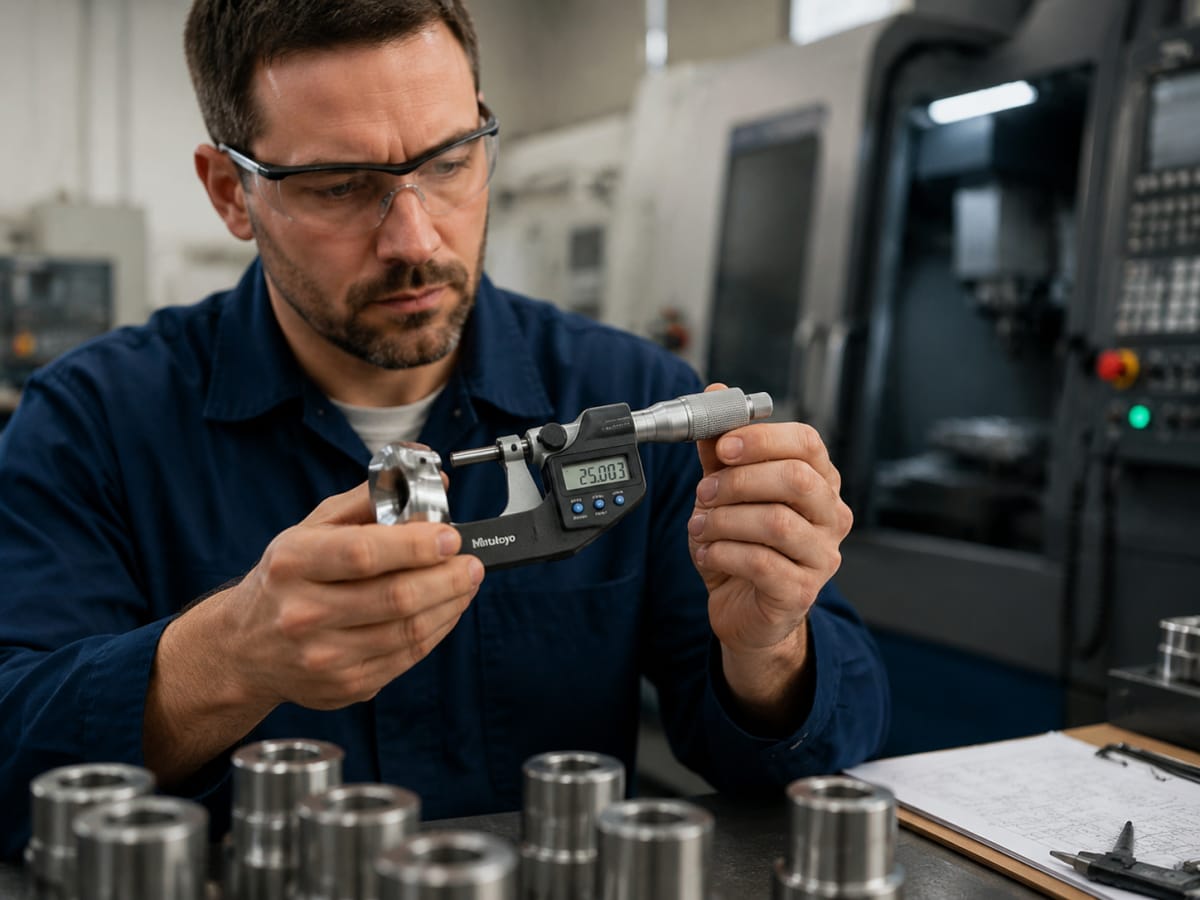
CNC Steel Machining for Strong Structural Part Designs
CNC Steel Machining Gives Structural Parts the Best Mix of Strength, Accuracy, and Repeatability
CNC steel machining is one of the most reliable ways to produce strong structural parts because it combines the mechanical performance of steel with tightly controlled milling, turning, grinding, and EDM operations. For load-bearing brackets, machine frames, shafts, mounts, fixtures, and precision support components, a qualified CNC steel machining supplier can deliver better dimensional control, cleaner interfaces, and more consistent repeatability than many welded-only or prototype-only routes.
In practical engineering terms, CNC steel machining is the right choice when a part must do more than simply hold shape. Structural parts often need flatness, concentricity, threaded accuracy, fatigue resistance, controlled surface finish, and stable fit inside a larger assembly. That is why experienced buyers use CNC machining not only for prototypes, but also for bridge production, service parts, tooling components, and recurring low-to-medium volume runs where precision matters as much as raw strength.
CNC Steel Machining Market Trends Are Being Driven by Precision Manufacturing Demand
CNC steel machining demand continues to grow because manufacturers in automotive, industrial equipment, aerospace-adjacent, medical, and energy-related sectors need stronger, more precise parts in shorter development cycles. Public research rarely isolates “CNC steel machining” as a standalone market, so the closest broad indicator is the global machine tools market, where metal-cutting and CNC systems remain the largest demand engines.
The most useful takeaway for buyers is not a single market number, but the direction of investment. Grand View Research reported that CNC technology accounted for 85.7% of machine tools market share in 2025, with automotive taking 41.9% and Asia Pacific 56.2% of that market. IMARC likewise estimated the machine tools market at USD 109.3 billion in 2025 and tied growth to precision engineering, multi-axis machining, automation, and smart-factory adoption. Those patterns line up directly with what sourcing teams see on the ground: more parts with tighter tolerances, shorter launch windows, and greater pressure to control total landed cost.
That is where manufacturers like TEAM Rapid become relevant. TEAM Rapid’s published capability profile combines in-house machining, tooling, molding, and integrated manufacturing resources across China, along with quick engineering response, ISO 9001:2015 certification, and pricing claims that are positioned as up to 40% lower than Europe and America. For buyers balancing structural performance, speed, and budget, that mix is usually more important than headline market statistics alone.
CNC Steel Machining Material Choices, Process Routes, and Technical Specifications for Structural Designs
CNC steel machining starts with selecting the right steel family for the load case, geometry, environment, and post-processing route. In structural part design, the wrong material choice creates more problems than the wrong machine. If the part needs weldability and low cost, a carbon structural steel may be enough. If it needs wear resistance, higher strength, or better toughness after heat treatment, alloy or tool steel is often the better route. If corrosion is part of the application, stainless becomes the safer decision.
Based on published CNC service capabilities from TEAM Rapid and standard material references, the steel families below are the most common starting points for structural CNC work. TEAM Rapid’s CNC pages specifically list alloy steels such as 4140 and 4340, tool steels including D2, H13, A2, and S7, and stainless grades 304 and 316 for machined applications, while ASTM A36 remains a foundational carbon structural steel reference for fabricated and machined structural components.
| Steel option in cnc steel machining | Typical reason to choose it | Typical structural use |
|---|---|---|
| ASTM A36 / low-carbon structural steel | Good weldability, broad availability, economical | Base plates, machine supports, welded-and-machined brackets |
| 4140 alloy steel | Good strength, toughness, and wear resistance | Shafts, pins, sleeves, structural couplings |
| 4340 alloy steel | Higher strength for more demanding duty | Heavy-load machinery parts, highly stressed rotating parts |
| D2 / A2 / S7 / H13 tool steels | Wear, impact, heat, or dimensional stability requirements | Dies, impact tools, fixtures, hardened structural inserts |
| 304 stainless steel | Corrosion resistance and general-purpose cleanliness | Housings, frames, food and medical support parts |
| 316 stainless steel | Better corrosion resistance, especially harsher environments | Marine, chemical, sanitary, and device-side structures |
The table above reflects common grade logic used in shop quoting and design review, while engineers often cross-check condition-specific properties in databases such as the MatWeb material database before finalizing stock condition, hardness, or heat treatment. For drawing and purchasing language, many buyers also call out standards such as the ASTM carbon structural steel specification A36/A36M when low-carbon structural steel is appropriate. (matweb.com)
Process routes that matter most in cnc steel machining
CNC steel machining is not a single process. It is a process family. For structural parts, the typical route may combine 3-axis or 5-axis milling, turning, drilling, tapping, grinding, and sometimes EDM or wire EDM for hard materials or internal features that are difficult to machine conventionally. TEAM Rapid publishes 3-, 4-, and 5-axis milling, CNC turning, surface grinding, EDM, and wire EDM, with support for polishing, plating, painting, and other finishing steps.
| Process in cnc steel machining | Best fit for structural parts | Published capability benchmark |
|---|---|---|
| 3-axis / 4-axis / 5-axis milling | Flat faces, pockets, bolt patterns, multi-side geometries | TEAM Rapid states 3-, 4-, and 5-axis CNC machining with tolerance down to 0.01 mm |
| CNC turning | Shafts, pins, bushings, concentric parts | Tight concentricity and efficient cylindrical part production |
| Turn-mill compound machining | Multi-feature shafts and complex rotational parts | Typical tolerance ±0.01 to ±0.02 mm; Ra 0.8 to 3.2 um |
| Precision grinding | Final flatness, parallelism, or hardened steel finishing | Typical tolerance ±0.002 to ±0.005 mm; Ra 0.2 to 0.8 um |
| Wire EDM / sinker EDM | Hard materials, sharp internal corners, tool components | Very high precision for profiles, cavities, and fine features |
For surface texture callouts, it is good practice to define both the value and the measurement basis on the drawing. The ISO 21920 surface texture standard is the current ISO reference for profile surface texture terms and parameters, and it helps prevent the common mistake of writing an Ra number without clarifying the required measurement convention. (iso.org)
From a DFM standpoint, these are the steel machining details that most often decide whether a structural part is economical:
- Avoid deep, narrow pockets unless the function truly requires them.
- Keep corner radii realistic for tool access instead of specifying impossible sharp internal corners.
- Separate cosmetic surfaces from datum-critical surfaces on the drawing.
- Use tolerances selectively; do not apply ultra-tight tolerances to non-critical features.
- Decide early whether flatness, hardness, thread class, or coating thickness is the true critical characteristic.
At TEAM Rapid, engineers can pair steel machining with rapid prototyping, tooling, finishing, and broader manufacturing support, which is useful when the structural part is only one piece of a larger assembly program. The practical advantage is not only machining capacity, but the ability to review material choice, tolerances, and downstream operations together instead of treating them as separate purchasing events.
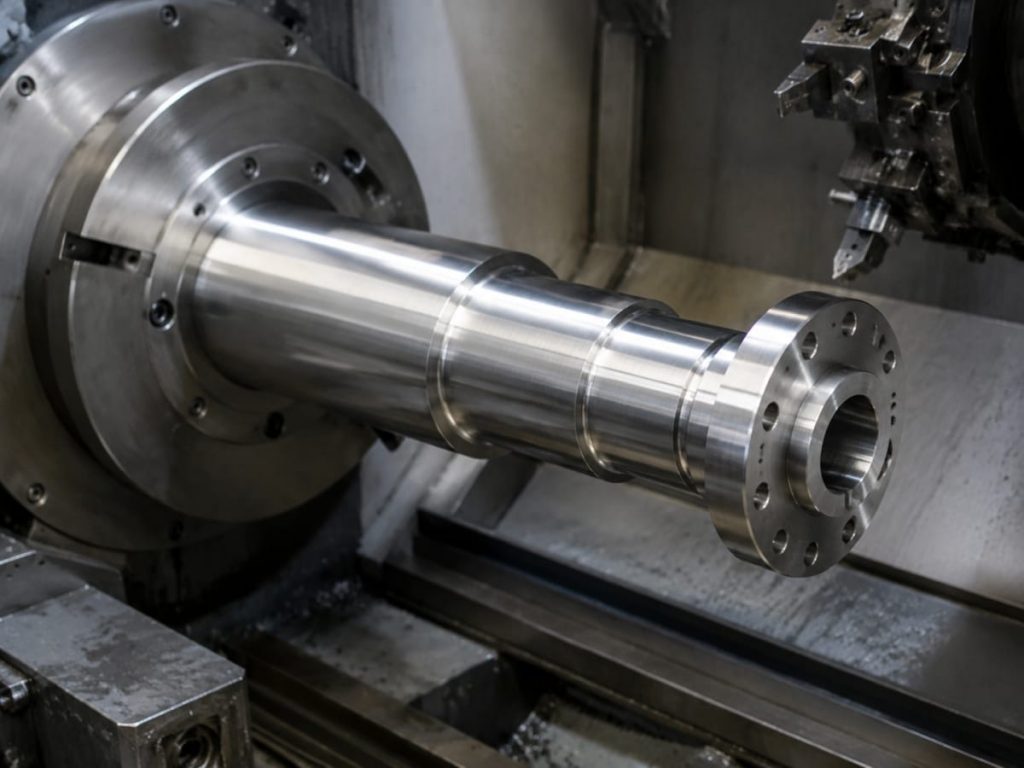
CNC Steel Machining Cost Drivers, MOQ Expectations, and Lead Time Benchmarks
CNC steel machining cost is driven less by the raw steel itself than by setup time, cycle time, workholding complexity, feature accessibility, tolerance stack-up, secondary finishing, and inspection intensity. Buyers sometimes focus on kilogram price or bar stock cost first, but in most custom structural parts the real money is in spindle time, tool wear, and the number of setups needed to reach the final geometry. That is especially true for 4140, hardened tool steel, and parts that require grinding or EDM after rough machining.
For MOQ planning, CNC steel machining is attractive because it does not require dedicated molds. TEAM Rapid publishes CNC batch capability from 1 to 500+ parts in plastic and metal, which fits exactly the buying pattern seen in structural prototypes, pilot builds, spare parts, and low-volume production. If the geometry is stable and the demand is recurring, that same part can later move to a hybrid route such as near-net fabrication plus finish machining, or eventually to casting or forging plus machining if the volumes justify it.
Lead time is another major reason buyers choose CNC over other processes. TEAM Rapid states typical rapid prototyping lead times of 2 to 8 days, can ship some custom prototypes in as little as 1 day, and offers fast global delivery after production. In practice, that makes CNC steel machining highly effective for urgent fit checks, production troubleshooting, and launch-stage structural parts where waiting for a harder-tooled process would stall the program.
| Buying factor in cnc steel machining | What usually increases cost | What usually reduces cost |
|---|---|---|
| Material grade | Hardened alloys, tool steels, poor machinability | Readily available low-carbon or annealed grades |
| Geometry | Deep pockets, thin walls, multi-side features | Open access, simpler 2.5D or rotational features |
| Tolerances | Blanket ±0.01 mm requirements on all features | Critical-only tolerancing with clear datums |
| Surface finish | Grinding, polishing, coating prep, fine Ra callouts | Machined-as-cut finish where function allows |
| Volume | Very low quantity with long setup time | Repeat orders using stable fixtures and programs |
| Inspection | 100% measurement of many dimensions | Focused inspection plan around CTQs |
In real sourcing practice, I recommend buyers review these five commercial questions before they request a price:
- Is the part truly machined from solid, or can it start as cut plate, tube, or a weldment?
- Which dimensions are actually critical to fit, performance, or safety?
- Does the part need heat treatment before or after finish machining?
- Can the geometry be completed in fewer setups?
- Is the supplier quoting only machining, or machining plus finishing, assembly, and export logistics?
Manufacturers like TEAM Rapid can reduce total program cost because the discussion happens with one engineering contact instead of three or four disconnected vendors. TEAM Rapid also markets one-to-one engineering support, response within a few hours, and pricing positioned at roughly 40% below Europe and America, which can be meaningful when steel parts need machining, finishing, inspection, and direct shipment as a single package. Buyers who are still comparing early concepts often start with rapid prototyping services before locking the full structural design.
CNC Steel Machining Industries Served and the Buyer Priorities Behind Them
CNC steel machining is widely used in industries where structural reliability, dimensional control, and repeatable assembly performance matter more than the lowest possible unit price. The strongest demand usually comes from automotive, medical devices, consumer and commercial equipment, industrial products, communication systems, office equipment, and electrical appliances. TEAM Rapid publicly lists experience across those sectors, which is useful because structural part requirements vary sharply by industry even when the material is still “just steel.”
Automotive buyers tend to focus on repeatability, hardness consistency, threaded interfaces, and the relationship between machined datums and welded or stamped subassemblies. Medical-device teams care more about corrosion behavior, cleanability, cosmetic edge condition, and controlled documentation. Industrial equipment buyers usually want ruggedness, serviceability, and reasonable cost in low or mid volumes. Communication and office equipment teams often prioritize compact geometries, fast ECO response, and stable supply for recurring builds.
| Industry using cnc steel machining | Typical structural parts | Primary buyer concern |
|---|---|---|
| Automotive | Mounts, shafts, brackets, fixture plates, test hardware | Repeatability, strength, and delivery timing |
| Medical devices | Frames, supports, stainless brackets, precision housings | Clean finish, corrosion resistance, traceability |
| Industrial equipment | Base plates, guards, couplings, tooling, wear parts | Durability, cost control, maintainability |
| Consumer & commercial products | Internal supports, hinges, mechanisms, reinforcement parts | Speed, appearance on visible metal, fit-up |
| Communication & office equipment | Rack parts, machine supports, precision brackets | Tight interfaces, lower volume economics |
| Electrical appliances & sanitary products | Mounting parts, shafts, stainless supports | Corrosion resistance and stable supply |
The buyer profiles that benefit most from CNC steel machining are mechanical engineers, NPI teams, sourcing managers, and product designers working on assemblies where strength cannot be separated from tolerance control. That is one reason TEAM Rapid’s broader delivery record matters. The company highlights 10+ years in industry, 25+ countries served, 500+ happy customers, and 6,000+ projects delivered, which signals familiarity with different buyer expectations, drawing standards, and communication styles across global programs.
CNC Steel Machining Applications for Brackets, Frames, Shafts, and Load-Bearing Assemblies
CNC steel machining is ideal for structural applications where geometry and mechanical performance must work together under real service loads. In these projects, the part is not simply a piece of cut steel. It is a controlled interface: something that holds alignment, transfers force, locates bearings, supports housings, clamps subassemblies, or survives repeated stress without movement or premature wear.
The most common structural use cases I see in quoting and design review include:
- Mounting brackets that need machined datums, counterbores, and controlled parallelism.
- Base plates and frames that combine welded steel with finish-machined critical surfaces.
- Shafts, pins, and bushings that require concentricity, shoulder accuracy, and controlled surface finish.
- Fixture bodies, locator blocks, and tooling plates made from alloy or tool steel.
- Reinforcement parts or internal load paths hidden inside larger commercial or medical assemblies.
In many of these applications, CNC steel machining is chosen because it avoids the compromises of all-welded or all-fabricated geometry. A welded bracket may be strong enough, but if the mounting face is not flat or the bolt pattern is not aligned, the assembly still fails in practice. A turned shaft may have the right nominal diameter, but if concentricity, fillet transition, or post-heat-treatment grinding are not planned correctly, fatigue life and sealing performance can degrade quickly. That is why machining strategy and structural design should be reviewed together, not in separate meetings.
TEAM Rapid is particularly useful when the part program includes more than one manufacturing path. A buyer may need a machined steel bracket, a plastic cover, a die-cast housing, and final assembly support in the same launch window. TEAM Rapid’s published capability stack spans CNC machining, rapid prototyping, tooling, injection molding, die casting, and part inspection, which makes it easier to keep multi-part assemblies on one timeline rather than sourcing every component independently.
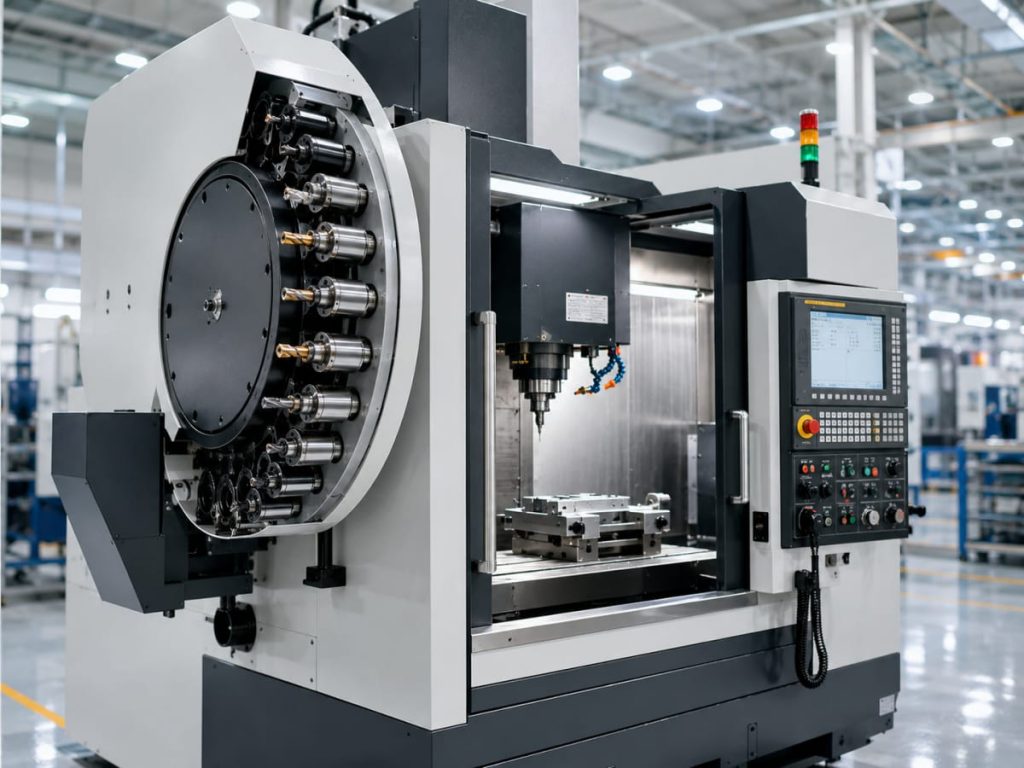
CNC Steel Machining Customization, DFM Review, and OEM Program Support
CNC steel machining becomes most valuable when OEM teams use it as a design-for-manufacture tool, not just as a metal-cutting service. Strong structural parts are rarely perfect on the first drawing release. Hole locations may need to move for wrench access, rib thickness may need more stiffness, the edge break may affect assembly feel, or the initial tolerance scheme may be far tighter than the application truly requires. A good machining supplier catches those issues before they become scrap or schedule loss.
For OEM and contract-manufacturing programs, common customization needs include custom threads, stepped bores, bearing seats, jigs, welded-and-machined hybrids, heat-treated wear surfaces, anodized or painted mating parts, laser marking, and assembly-ready kits. TEAM Rapid’s CNC services page includes milling, turning, grinding, EDM, wire EDM, drilling, tapping, reaming, polishing, deburring, assembly, and part inspection, which is exactly the sort of process breadth that reduces handoff risk on customized structural programs.
At a practical level, the best DFM discussions around cnc steel machining usually focus on four questions:
- Which features drive function, and which only reflect drafting habit?
- Can the part be machined in one or two stable setups instead of three or four?
- Should the part be heat treated before finish machining, or is stock-condition machining enough?
- Are there areas where grinding or EDM should replace conventional milling for accuracy or accessibility?
Suppliers such as TEAM Rapid also help when the project needs a staged rollout. A program may start with two prototype brackets, then move to 25 pilot parts, then 200 recurring parts with the same NC program and revised fixtures. Because CNC machining has no tooling lock-in like injection molding, engineering changes are easier to absorb early in the lifecycle. That flexibility is one of the biggest advantages for startups, machine builders, and established OEMs launching new equipment or derivative models.
What buyers should avoid is treating “custom” as a license for vague drawings. The fastest projects are not the ones with the fewest notes; they are the ones with the clearest notes. If your structural steel part has one critical datum face, one perpendicular hole pattern, and one bearing bore that truly matters, call those out cleanly and avoid over-specifying everything else.
Sourcing CNC Steel Machining From China Without Sacrificing Quality Control
CNC steel machining sourced from China can be highly competitive, but only if the supplier is selected on engineering discipline and quality systems, not quote price alone. For structural parts, the real risk is not that the steel comes from China. The real risk is unclear drawings, weak DFM review, poor process planning, uncontrolled subcontracting, or inspection that focuses on easy dimensions instead of critical ones.
A factory-direct supplier with broad capability can shorten the path from drawing release to shipped parts. TEAM Rapid identifies itself as a Hong Kong-registered company with CNC machining facilities in Zhongshan, Guangdong Province, serving global customers from prototyping to production. The company also publishes fast global delivery, quote-and-DFM turnaround within 24 hours, and direct international express delivery for prototypes and parts. For overseas buyers, that combination is often more important than simply finding the lowest unit price.
| Sourcing checkpoint for cnc steel machining from China | What to verify before PO |
|---|---|
| Material control | Grade, stock condition, mill cert availability, heat-treatment plan |
| Process route | Milling, turning, grinding, EDM, wire EDM, finishing, and any outside operations |
| Inspection plan | CTQ dimensions, sampling level, full inspection needs, CMM/VMM use where needed |
| Communication | DFM feedback speed, engineering contact quality, revision control |
| Logistics | Packaging, export labeling, courier or freight plan, delivery commitment |
| Scalability | Whether the supplier can support 1 piece, pilot runs, and recurring orders |
TEAM Rapid’s quality page states full inspection before shipment and outlines IQC, IPQC, FQC, OQC, and QE stages, with inspection resources that include calipers, VMM, projector, and CMM imagery. That does not replace a buyer’s own quality plan, but it is the sort of baseline process transparency that serious sourcing teams should expect from any supplier handling structural steel parts.
When importing cnc steel machining parts from China, I recommend asking for three things up front: a manufacturability review, an inspection plan tied to the drawing, and a packaging description appropriate for the part geometry and finish. If a supplier can explain those clearly before the order, the probability of surprises drops sharply.
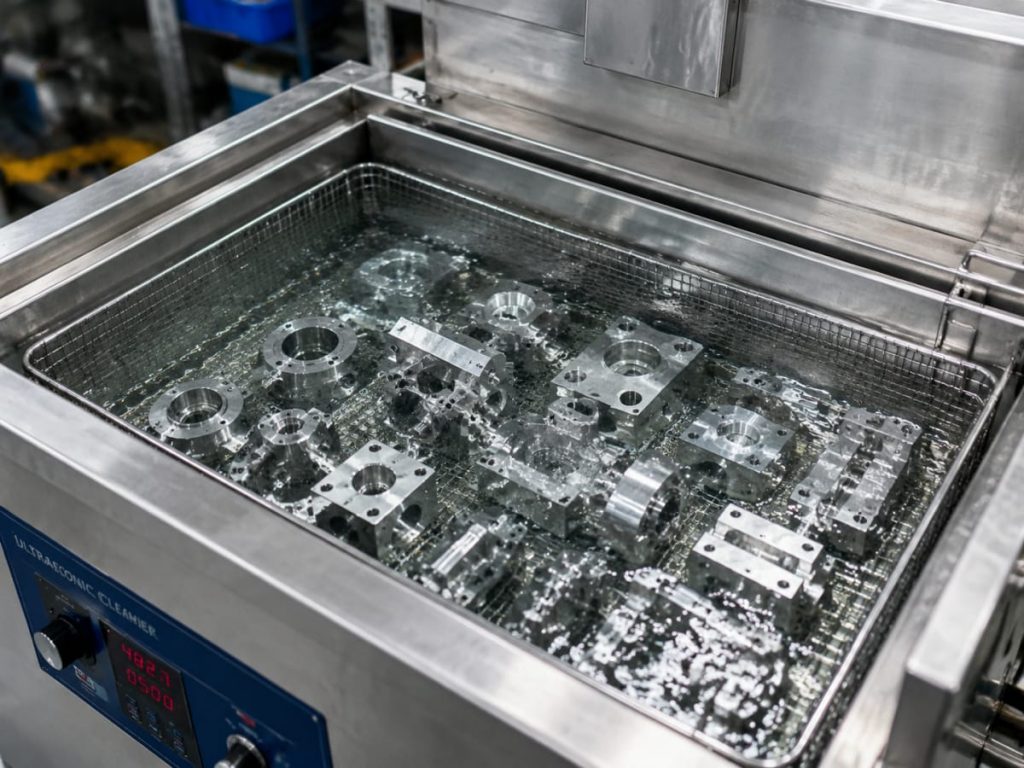
Why Choose TEAM Rapid for CNC Steel Machining Projects
CNC steel machining projects succeed when the supplier can control speed, process selection, inspection, and communication at the same time. TEAM Rapid is a strong option because it does not position itself only as a machine shop. It presents itself as a one-stop rapid manufacturing partner with CNC machining, rapid prototyping, tooling, molding, die casting, finishing, inspection, and broader manufacturing integration across China. For structural part buyers, that matters because the machined steel component is often only one part of a larger product launch or supply chain decision.
The concise reasons to consider TEAM Rapid for cnc steel machining are straightforward: 10+ years of experience, 25+ countries served, 500+ satisfied customers, 6,000+ projects delivered, CNC capability from 1 to 500+ parts, tight tolerances down to 0.01 mm, quick engineering response within a few hours, ISO 9001:2015 certification, and published price positioning around 40% lower than Europe and America. Add the Zhongshan, Guangdong manufacturing base, Hong Kong office, and global delivery model, and the company becomes especially relevant for overseas buyers who want speed without losing communication clarity.
From a sourcing consultant’s perspective, the best reason to work with TEAM Rapid is that the company appears set up for real program flow: review the CAD, comment on manufacturability, machine the parts, inspect the parts, and ship the parts quickly. If that is the kind of workflow your structural program needs, the logical next step is to request a free quote with the CAD file, material preference, finish requirement, annual volume, and any critical-to-quality dimensions clearly marked.
CNC Steel Machining FAQ
CNC steel machining buyers usually ask the same commercial and technical questions before placing an order: what steel to choose, how accurate the process is, how fast the parts can be delivered, and how to evaluate a supplier for structural work. The answers below address the most common purchase-stage questions.
What is cnc steel machining?
CNC steel machining is the computer-controlled cutting, drilling, milling, turning, grinding, or EDM processing of steel stock into finished parts with defined dimensions, tolerances, and surface finishes. It is widely used for structural brackets, shafts, bases, tooling, and support components because it offers high repeatability and better dimensional control than many manual or fabrication-only routes.
Which steel grades are best for cnc steel machining structural parts?
The best steel grade for cnc steel machining depends on the job. Low-carbon structural steels such as ASTM A36 are common when weldability and cost matter most. 4140 and 4340 are stronger alloy options for shafts and higher-load parts. Tool steels such as D2, H13, A2, and S7 are used where wear, heat, or impact matter. Stainless 304 and 316 are preferred when corrosion resistance is important. (store.astm.org)
How accurate is cnc steel machining for structural components?
CNC steel machining accuracy depends on geometry, part size, machine setup, material condition, and the features being controlled. TEAM Rapid publishes machining tolerance capability down to 0.01 mm, while its precision machining page also lists turn-mill and grinding benchmarks tighter than that for selected applications. In structural design, however, the smarter practice is to apply the tightest tolerances only to critical features such as datums, bearing bores, or sealing surfaces.
How much does cnc steel machining cost?
CNC steel machining cost is usually driven by cycle time, number of setups, material grade, hardness, surface finish, and inspection level more than by raw steel price alone. Simple low-carbon steel brackets can be relatively economical, while multi-axis 4140 components with grinding, heat treatment, or EDM will cost more. Buyers often save the most money by simplifying tool access, limiting ultra-tight tolerances to critical features, and combining machining with one supplier’s finishing and logistics support.
What is the typical lead time for cnc steel machining orders?
CNC steel machining can move quickly because it does not require molding tools. TEAM Rapid states typical rapid prototyping lead times of 2 to 8 days, supports quick-turn CNC work, and can ship some custom prototypes in as little as 1 day, with direct international delivery once parts are ready. Actual lead time still depends on quantity, material availability, heat treatment, and whether grinding or EDM is required after primary machining.
How do I source cnc steel machining from China safely?
To source cnc steel machining from China safely, evaluate the supplier on DFM quality, material control, inspection planning, communication speed, and export readiness rather than unit price alone. TEAM Rapid is one example of a supplier that publishes ISO 9001:2015 certification, full-inspection practices, global service, a Zhongshan production base, and a Hong Kong office. Regardless of supplier, ask for a manufacturability review, CTQ-based inspection plan, and packaging method before you release the PO.
Content reviewed and updated: June 2026
