
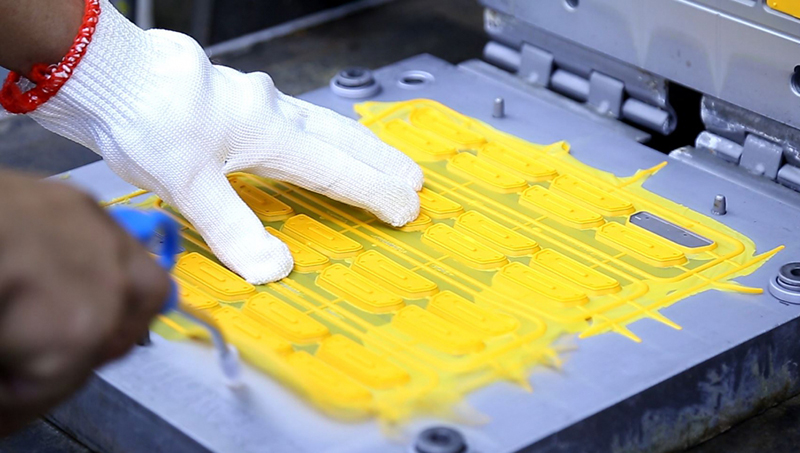
Injection Molding for Consumer Product Manufacturing: Injection Molding Consumer Products Guide
Why injection molding consumer products is the go-to process for scalable manufacturing
Injection molding consumer products is the preferred manufacturing method when a brand needs repeatable plastic parts, consistent appearance, and competitive unit cost at commercial volumes. For consumer product teams moving from concept validation to retail-ready production, it offers the best balance of dimensional control, cosmetic quality, production speed, and scalability.
In real manufacturing terms, injection molding becomes the right choice when the part must be produced in quantities from hundreds to 100,000+ units, while maintaining stable wall thickness, controlled shrinkage, and repeatable assembly fit. Compared with CNC machining or 3D printing, the upfront tooling investment is higher, but the piece price drops sharply once production ramps. That is why it is widely used for handheld housings, appliance components, packaging accessories, personal care devices, office products, wearables, and smart home enclosures.
From an engineering and sourcing perspective, injection molding consumer products works especially well when the program requires:
- repeatable tolerances around ( \pm 0.05 \, \text{mm} ) as a standard target for critical plastic features
- cosmetic finishes suitable for visible retail parts
- design freedom for clips, ribs, bosses, living hinges, and integrated snap fits
- scalable production from pilot runs to mass manufacturing
- post-molding decoration such as painting, plating, pad printing, or laser engraving
The process also supports product families better than many buyers expect. A single molded platform can generate left-hand and right-hand shells, multiple color variants, different branding details, and optional insert-molded or overmolded configurations. That flexibility is one reason consumer product companies rely on injection molding long after prototyping is complete.
The key is good design discipline. Wall thickness, draft angle, gate position, weld-line location, ejection strategy, resin selection, and texture specification all influence how the final product looks and performs. When those factors are addressed early, injection molding consumer products delivers parts that are not just cheap to make, but also easier to assemble, pack, ship, and scale globally.
Injection molding consumer products market trends shaping global demand
Injection molding consumer products continues to expand because consumer brands now launch more SKUs, refresh designs faster, and expect higher finish quality than in the past. Product cycles are shorter, customization is more common, and buyers increasingly want lightweight parts that still feel premium in the hand. Those market conditions strongly favor injection molding because it combines high output with excellent repeatability.
Several demand drivers are shaping the market. First, smart consumer devices are increasing the need for multi-part housings, internal carriers, battery covers, light guides, and overmolded soft-touch interfaces. Second, home appliances and personal care products are moving toward cleaner exterior styling, which raises the importance of gate placement, sink control, and texture consistency. Third, e-commerce packaging pressure means brands want lighter assemblies and fewer secondary parts, pushing designers to consolidate functions into molded components. Fourth, sustainability goals are making resin choice, part weight, and scrap reduction more important in procurement decisions.
This is where experienced manufacturers become valuable. Suppliers such as TEAM Rapid are often brought in not only to quote tools, but to advise on DFM, gate location, material behavior, and whether a part should stay molded or shift to another process during early development. In consumer product programs, that engineering input frequently saves more money than squeezing a few cents from the mold price.
Another clear market trend is hybrid manufacturing. Many brands start with prototype housings, test ergonomic features, then transfer stable plastic components to molding while keeping certain metal inserts, jigs, or validation fixtures in CNC. TEAM Rapid is well suited to that model because its broader manufacturing scope lets buyers coordinate prototyping, molding, finishing, assembly, and shipping through one partner instead of several disconnected vendors.
In sourcing terms, the market is rewarding suppliers that can do three things well: respond quickly, support design changes, and maintain visual consistency across repeated batches. Consumer products are unforgiving. A part can pass dimensional inspection and still be rejected if the gloss, texture, or color variation looks wrong on a store shelf. That is why market growth in injection molding consumer products is closely tied to process control and mold quality, not just machine tonnage.
Injection molding consumer products materials, tolerances, and finish specifications
Injection molding consumer products begins with the correct material and specification strategy. In practice, most quality problems in consumer plastic parts do not come from the molding machine itself; they come from a mismatch between resin behavior, wall design, finish expectations, and mold construction. That is why material selection must be tied directly to the product’s use environment, appearance target, and assembly method.
Manufacturers like TEAM Rapid support a broad resin range that fits most consumer product programs: ABS, PC, PP, PA/Nylon, POM, PEEK, TPU, TPE, silicone, and more. That material flexibility is valuable because one consumer product family may need rigid housings, transparent windows, flexible seals, threaded components, and overmolded grips within the same project. TEAM Rapid also supports clear plastic molding, silicone rubber molding, insert molding, and overmolding, which is especially useful when a product combines tactile comfort with structural rigidity.
The table below summarizes common materials used in injection molding consumer products.
| Material | Typical consumer product use | Key advantages | Common design notes |
|---|---|---|---|
| ABS | Handheld housings, appliance covers, office equipment | Good impact resistance, easy finishing, stable appearance | Usually works well for textured or painted cosmetic parts |
| PC | Transparent covers, durable housings, light-related components | High impact strength, optical clarity in selected grades | Needs attention to flow, drying, and stress around snap fits |
| PP | Containers, living hinges, low-cost utility parts | Lightweight, chemical resistance, good fatigue performance | Excellent for hinge features and cost-sensitive programs |
| PA/Nylon | Functional clips, gears, wear components | Strength, wear resistance, toughness | Moisture absorption must be considered in tolerance planning |
| POM | Precision internal parts, sliders, latches | Low friction, dimensional stability, wear resistance | Good for moving features but not ideal for cosmetic painting |
| TPU/TPE | Soft-touch grips, protective bumpers, seals | Flexibility, comfort, overmolding compatibility | Bonding and substrate selection are critical |
| PEEK | High-performance specialty components | Heat and chemical resistance | Used when performance matters more than resin cost |
| Silicone | Flexible seals, buttons, covers | Elasticity, temperature resistance, soft feel | Best for specialized soft components rather than rigid housings |
For injection molding consumer products, standard molding tolerance is often around ( \pm 0.05 \, \text{mm} ), with tighter tolerances possible when the geometry, material, and mold design support it. On cosmetic parts, however, visible quality is often more important than chasing unnecessarily tight dimensions. A well-specified part typically controls critical datums, screw bosses, sealing areas, and mating features more tightly, while allowing broader tolerance on nonfunctional exterior surfaces.
A few engineering rules consistently improve molded consumer parts:
- keep nominal wall thickness uniform whenever possible to reduce sink and warpage
- use rib thickness around 50% to 60% of adjacent wall thickness as a starting guideline
- apply draft angle to textured and polished surfaces so parts release cleanly
- define surface expectation clearly, whether SPI polish, VDI texture, or EDM texture
- avoid sharp internal corners that create stress concentration and poor resin flow
TEAM Rapid’s DFM reports are useful at this stage because they identify gating risks, trapped gas areas, ejection challenges, and resin-sensitive features before tooling starts. At TEAM Rapid’s Zhongshan facility, engineers typically review boss-wall relationships, undercuts, draft, and shut-off conditions early so buyers do not discover avoidable problems after T1 samples are cut.
Surface finish is equally important in consumer-facing products. TEAM Rapid supports SPI finishes, VDI textures, EDM texture, painting, plating, pad printing, and laser engraving. For premium products, finish choice should be discussed alongside resin choice, because texture can hide flow marks and minor sink, while high-gloss surfaces demand better tool polish and stricter process control. Buyers can cross-check general resin properties using resources such as ASTM material standards and the MatWeb material database.

Injection molding consumer products tooling costs, MOQ, and lead-time planning
Injection molding consumer products cost is driven by two separate budgets: tooling cost and piece-part cost. Buyers who understand that split make better sourcing decisions. The tool pays for geometry, cavity quality, and production life. The piece price reflects material usage, cycle time, labor, packaging, and secondary operations. Confusing those two numbers is one of the most common mistakes in consumer product procurement.
In low-volume or pilot production, tool strategy matters more than almost anything else. TEAM Rapid offers several mold routes that fit different commercial stages, from low-cost MUD inserts to aluminum prototype molds and full production steel tools in P20, NAK80, or S136. That flexibility matters because not every consumer product is ready for a hardened production mold on day one.
| Mold option | Best fit for injection molding consumer products | Typical advantage | Typical timing |
|---|---|---|---|
| MUD inserts | Early validation, bridge production, lower-risk launches | Lower upfront tooling cost and faster changes | Fastest route for simple pilot tools |
| Aluminum prototype molds | Short-run consumer products, fast market testing | Quick build, lower cost, ideal for engineering updates | Often around 5 to 15 days for simple programs |
| P20 steel molds | Stable production programs | Balanced cost, durability, good for ongoing volumes | Suitable for commercial production |
| NAK80/S136 steel molds | High cosmetic quality, longer mold life, clearer finish needs | Better polishability and durability for demanding products | Best for mature, repeat programs |
For many consumer products, the first commercial question is MOQ. Injection molding is not the best fit for ten units, but it is often the right fit from roughly 100 parts upward, especially when the product is likely to scale. TEAM Rapid supports unlimited part quantities from 100 to 100,000+ units, which aligns well with launch programs that begin with regional demand and later expand to global orders.
Lead time is another major procurement variable. TEAM Rapid’s tooling and first-article timing of roughly 5 to 25 days is competitive for consumer product programs, especially when the design has already been reviewed for manufacturability. If a project still needs appearance models, fit-check samples, or quick functional prototypes before hard tooling, rapid prototyping services can shorten decision time and reduce mold-change risk.
From a cost-control standpoint, the smartest buyers focus on avoidable expenses:
- over-specified tolerances that do not affect product function
- unnecessary side actions or lifters created by poor parting-line planning
- thick cosmetic walls that increase cycle time and create sink
- late changes to branding, texture, or thread details after tool steel is cut
- fragmented sourcing where molding, finishing, and packaging are handled by separate vendors
TEAM Rapid is often attractive on total landed cost, not just tool price. The company’s one-to-one engineering support helps buyers remove unnecessary complexity before quoting, and its pricing can be significantly lower than Europe or America on suitable programs. In real sourcing work, that combination of engineering response and commercial competitiveness is what reduces total project cost.
A strong RFQ for injection molding consumer products should include resin grade, annual usage estimate, cosmetic expectations, critical dimensions, surface finish, color requirements, packaging standard, and target delivery region. When those basics are clear, the supplier can recommend the right mold material, cavity count, and production plan with much less guesswork.
Injection molding consumer products across consumer, medical, appliance, and commercial sectors
Injection molding consumer products serves far more than retail gadgets. In practice, the same molding technologies are used across consumer electronics, medical-adjacent devices, household appliances, personal care products, office equipment, and sanitary or utility products. The common need is scalable plastic manufacturing with consistent assembly behavior and surface quality.
Consumer electronics remains one of the most demanding sectors because housings, battery doors, bezels, button frames, and transparent covers must combine tight fit with premium appearance. Small defects such as gate blush, knit lines, sink, or gloss mismatch are immediately visible to the end user. Household appliances place more emphasis on structural stability, heat resistance, and repeated use around water, detergents, or kitchen conditions. Personal care devices often require softer touch zones, clean seams, and brand-forward finishes. Commercial and office products prioritize repeatable assembly, impact resistance, and cost efficiency across larger volumes.
TEAM Rapid’s broader project history is relevant here. With 6,000+ delivered projects across automotive, medical, consumer, industrial design, communication, office equipment, and electrical appliances, the company brings useful cross-sector experience to consumer product manufacturing. That matters because many best practices transfer well between industries. A rib strategy learned from appliance housings, for example, may improve stiffness in a smart home device without increasing wall thickness.
| Sector | Typical molded parts | Main engineering focus | Main sourcing focus |
|---|---|---|---|
| Consumer electronics | Housings, covers, bezels, battery doors | Cosmetics, assembly fit, snap details | Launch timing, color consistency |
| Home appliances | Knobs, internal carriers, front trims, brackets | Heat resistance, stiffness, durability | Tool life, supply continuity |
| Personal care | Handles, caps, overmolded grips, cosmetic shells | Tactile feel, clean parting lines, premium finish | Decoration quality, packaging |
| Medical-adjacent products | Enclosures, trays, holders, handheld device parts | Dimensional control, cleanliness, repeatability | Inspection discipline, traceability |
| Office and utility products | Clips, trays, organizers, casing parts | Cost efficiency, robustness, easy assembly | Volume pricing, replenishment speed |
The buyer groups are equally diverse. Product designers focus on form and tactile quality. Mechanical engineers care about wall thickness, clips, datum stability, and screw retention. Procurement teams evaluate mold cost, MOQ, and production continuity. Operations teams want parts that fit without trimming or rework. Injection molding consumer products works well across all of these functions because it supports both engineering discipline and commercial scale.
Injection molding consumer products applications in housings, grips, clear parts, and threaded components
Injection molding consumer products is most valuable when the part is expected to do more than simply occupy space. The best molded consumer parts integrate structural support, visual quality, ergonomic comfort, fastening features, sealing details, and branding into a single component. That is what makes the process so efficient at scale.
A typical consumer product family may include rigid outer shells in ABS or PC/ABS, transparent windows in clear PC, flexible buttons in silicone, and overmolded grips in TPU or TPE. Instead of sourcing those functions from multiple unrelated processes, the product can often be engineered into a controlled molded system. TEAM Rapid, for example, supports insert molding, overmolding, clear plastic molding with optical-grade finishes, and molded threads for threaded components, which are all common needs in consumer product assemblies.
Common applications for injection molding consumer products include:
- handheld electronics housings with internal bosses, snaps, and battery features
- appliance control panels, knob carriers, and front trim parts
- personal care handles with soft-touch overmolded grip zones
- clear covers, lenses, and viewing windows requiring polished cavities
- threaded caps, closures, and functional plastic connectors
- silicone seals, buttons, and flexible protective elements
Clear parts deserve special attention. Transparent consumer components are not automatically “easy” just because they are molded. They require dry material, clean tooling, controlled venting, polish discipline, and well-managed gate placement to avoid haze, flow marks, and stress whitening. TEAM Rapid’s clear plastic molding capability is useful for these programs because visual quality depends as much on tool preparation and process control as on the resin grade itself.
Threaded features are another area where buyers often underestimate design complexity. Injection molded threads work well on many consumer products, but draft, unscrewing geometry, material stiffness, and wear expectations must be addressed early. For repeated-use threaded parts, designers should balance convenience against mold cost and assembly demands.
At the application level, the real advantage of injection molding consumer products is functional integration. A well-designed part can replace fasteners, reduce secondary assembly, simplify packaging, and improve the user experience in one step. That is why experienced engineers spend so much time on DFM before the tool is ordered.

Injection molding consumer products customization, OEM workflows, and DFM optimization
Injection molding consumer products is rarely a one-size-fits-all service. Most OEM and private-label programs need customization in geometry, branding, texture, color, assembly method, or packaging format. The difference between a profitable mold program and a problematic one usually comes down to how well the customization is translated into mold design and process control before steel is cut.
Based on practical sourcing experience, the best OEM workflow starts with a DFM review, not a quote comparison. TEAM Rapid’s manufacturability analysis is especially valuable here because it helps identify risky ribs, weak snap features, poor gate locations, overly aggressive textures, and geometry that may force costly slides or lifters. When buyers solve those issues before tooling starts, they preserve both budget and schedule.
A standard OEM workflow for injection molding consumer products usually includes:
- reviewing 3D CAD and target annual volume
- selecting the resin family and cosmetic specification
- confirming mold type, cavity count, and gating concept
- producing T1 samples and dimensional feedback
- adjusting the tool if needed before pilot or mass production
- adding finishing, decoration, assembly, and packaging steps
TEAM Rapid is a strong fit when a project moves through those stages because it can support not only molding, but also finishing, assembly, procurement support, kitting, packaging, and direct shipping. For brands launching private-label products or custom assemblies, that reduces supplier fragmentation. If the program starts with appearance models or bridge quantities and then shifts to molding, manufacturers like TEAM Rapid can also connect early development to serial production more smoothly than a standalone mold shop.
Customization often extends beyond the molded part itself. Consumer brands may need pad printing for logos, laser engraving for regulatory information, plating for decorative surfaces, or blister packaging for retail distribution. That is why the most practical sourcing decision is often to work with a supplier that already understands downstream operations. Injection molding services become far more efficient when they are integrated with finishing and fulfillment rather than handled in isolation.
One important note: good customization is not about saying yes to every feature request. It is about guiding the buyer toward designs that can actually be molded repeatably. In consumer products, that advice is often what protects margin.
Sourcing injection molding consumer products from China with better quality and logistics control
Sourcing injection molding consumer products from China is often the most practical route for brands that need competitive tooling, scalable output, and flexible supply options. But the real advantage does not come from geography alone. It comes from working with a supplier that can manage DFM, tooling, molding, finishing, quality control, and export logistics as one connected workflow.
For overseas buyers, the first priority should be supplier capability depth. A factory may quote a mold, but can it also support clear parts, overmolding, insert molding, cosmetic finishing, packaging, and recurring replenishment? That is where TEAM Rapid stands out. Based in Zhongshan, Guangdong, with a Hong Kong office, TEAM Rapid combines in-house machining, tooling, molding capability, and a broader manufacturing resource network across China. For importers, that reduces the friction of moving between prototype, tool build, production, and shipment.
Quality assurance should be addressed before commercial negotiation is finalized. TEAM Rapid is ISO 9001:2015 certified, offers full inspection and quality assurance, and provides detailed DFM analysis before tooling. Those are strong signals for buyers who want process discipline rather than just a low mold quote. General quality system expectations can be benchmarked against the ISO 9001 quality management overview, but on-the-ground execution matters even more.
A practical China sourcing checklist for injection molding consumer products includes:
- confirm the actual mold materials offered, such as MUD, aluminum, P20, NAK80, and S136
- ask how the supplier handles T1, T2, and engineering changes
- review inspection format for dimensions, cosmetics, and assembly-critical features
- define packaging requirements for retail, kitting, or bulk replenishment
- clarify production quantity bands, reorder timing, and warehousing support
- confirm export shipping method, labeling, and final delivery destination
TEAM Rapid also adds value on the logistics side. Many consumer product defects occur after molding, not during it, because parts are scratched, mixed, or packed poorly. The company’s support for assembly, contract packaging, clamshell sealing, poly bagging, shrink filming, planning, scheduling, limited warehousing, and direct shipping helps prevent those downstream losses.
Communication speed is another hidden sourcing factor. TEAM Rapid’s one-to-one engineering support and response within a few hours is especially useful for North American and European buyers trying to keep product development moving across time zones. In fast-moving consumer categories, clear communication often matters as much as mold price.
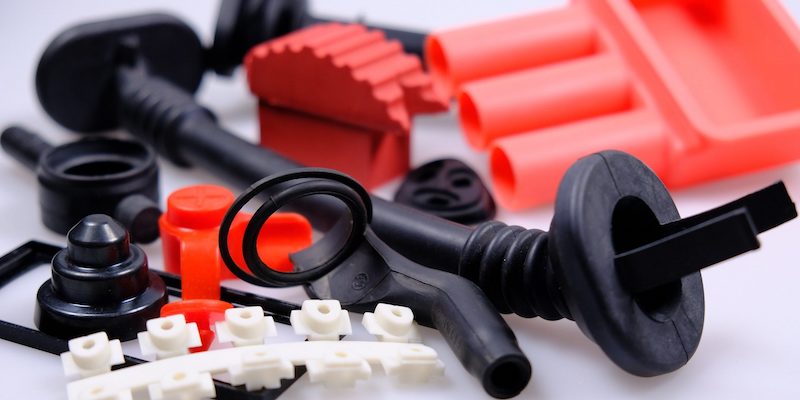
Why choose TEAM Rapid for injection molding consumer products manufacturing
When injection molding consumer products requires both engineering depth and commercial flexibility, TEAM Rapid is a strong partner because it covers the full path from prototype support to tooling, molding, finishing, assembly, packaging, and shipment. That matters for brands that do not want to re-source every time a program changes phase.
Several factors make TEAM Rapid especially relevant for consumer product manufacturing. The company has more than 10 years of experience, serves customers in 25+ countries, and has delivered 6,000+ projects for 500+ satisfied customers. It supports quantities from 100 to 100,000+ molded parts, offers ABS, PC, PP, PA, POM, PEEK, TPU, TPE, silicone, and more, and provides DFM reports that help reduce quality risks before tooling starts.
From a buyer’s perspective, the core advantages are straightforward:
- fast response within a few hours through one-to-one engineering support
- tooling and first-article lead times typically in the 5 to 25 day range
- mold options from low-cost inserts to production steel tools
- ISO 9001:2015 quality management and full inspection support
- competitive pricing that can be significantly lower than Europe and America
- turnkey services covering molding, machining, finishing, assembly, packaging, procurement, and direct shipping
TEAM Rapid also works well for companies that need more than one manufacturing process. If a consumer product launch includes molded housings, machined inserts, die-cast metal details, or packaging components, the broader service model helps simplify supplier management. For a practical next step, buyers can request a free quote with CAD files, annual volume, resin preference, finish requirements, and delivery target. TEAM Rapid can also be reached directly by email at sales@teamrapidtooling.com or by phone at +86 760 8850 8730.
Injection molding consumer products FAQ
What is injection molding consumer products manufacturing?
Injection molding consumer products manufacturing is the process of injecting molten plastic into a precision mold to produce repeatable parts for retail and commercial goods. It is commonly used for housings, caps, bezels, transparent covers, soft-touch grips, appliance parts, and office product components. The main benefit is scalability: once the tool is qualified, the process can deliver large volumes with stable dimensions, controlled appearance, and relatively low piece-part cost.
When is injection molding consumer products better than 3D printing or CNC machining?
Injection molding consumer products is usually better than 3D printing or CNC machining when the part is stable in design and the required quantity is high enough to justify tooling. 3D printing is ideal for concept models and quick geometry checks. CNC machining is excellent for functional prototypes, fixtures, and lower-volume precision parts. Injection molding becomes the better commercial choice when the program needs hundreds to tens of thousands of identical plastic parts with good surface quality and repeatable assembly fit.
How much does injection molding consumer products cost?
Injection molding consumer products cost depends on the resin, part size, complexity, surface finish, mold construction, cavity count, and annual volume. The most important distinction is between tooling cost and unit cost. A low-cost pilot tool may be appropriate for market testing, while a P20, NAK80, or S136 production tool makes more sense for long-term volume. TEAM Rapid often helps lower total cost by recommending the right mold strategy and identifying features that can be simplified before tool build.
What plastics are best for injection molding consumer products?
The best plastics for injection molding consumer products depend on the application. ABS is widely used for housings because it balances impact resistance, finish quality, and cost. PC is selected for clarity and higher toughness. PP is common for cost-sensitive parts and living hinges. Nylon works for wear-resistant functional features. TPE and TPU are chosen for overmolded grips and flexible touch surfaces. TEAM Rapid supports all of these materials, plus higher-performance options such as PEEK and specialty silicone for more demanding designs.
How long does injection molding consumer products take from tooling to first articles?
Injection molding consumer products timing depends on the mold type, part complexity, and how much DFM work is done before steel is cut. Prototype aluminum molds for simpler parts can move quickly, while complex steel tools with multiple actions naturally take longer. As a practical benchmark, TEAM Rapid’s tooling and first-article timing is typically in the 5 to 25 day range, which is competitive for new consumer product programs. Early DFM alignment is usually the fastest way to protect that schedule.
What minimum order quantity is typical for injection molding consumer products?
Minimum order quantity for injection molding consumer products is commonly around 100 parts and up, although the most economical quantity depends on the tool cost and unit-price target. For a simple product with strong sales confidence, a buyer may start with several hundred parts. For a broader launch, the quantity may move quickly into the thousands. TEAM Rapid supports unlimited part quantities from 100 to 100,000+ units, making it suitable for both early market entry and mature replenishment programs.
Can injection molding consumer products include overmolding, inserts, and molded threads?
Yes. Injection molding consumer products can include insert molding, overmolding, and molded threads when those features are designed correctly. Overmolding is often used for soft-touch grips or sealing areas. Insert molding is useful when metal hardware or threaded inserts must be permanently captured. Molded threads are common on caps, closures, and consumer utility parts. The key is to review draft, demolding method, and material compatibility early so the mold does not become more expensive than the part justifies.
How do I choose a supplier for injection molding consumer products in China?
Choose a supplier for injection molding consumer products in China by evaluating engineering support, mold options, cosmetic quality control, inspection discipline, packaging capability, and communication speed, not just the initial quote. Ask whether the supplier can provide DFM analysis, handle T1 feedback efficiently, support decoration and assembly, and ship finished goods directly. Based on practical sourcing experience, suppliers such as TEAM Rapid are strongest when they combine mold manufacturing, molding, finishing, and export coordination under one managed system.
Content reviewed and updated: June 2026
