
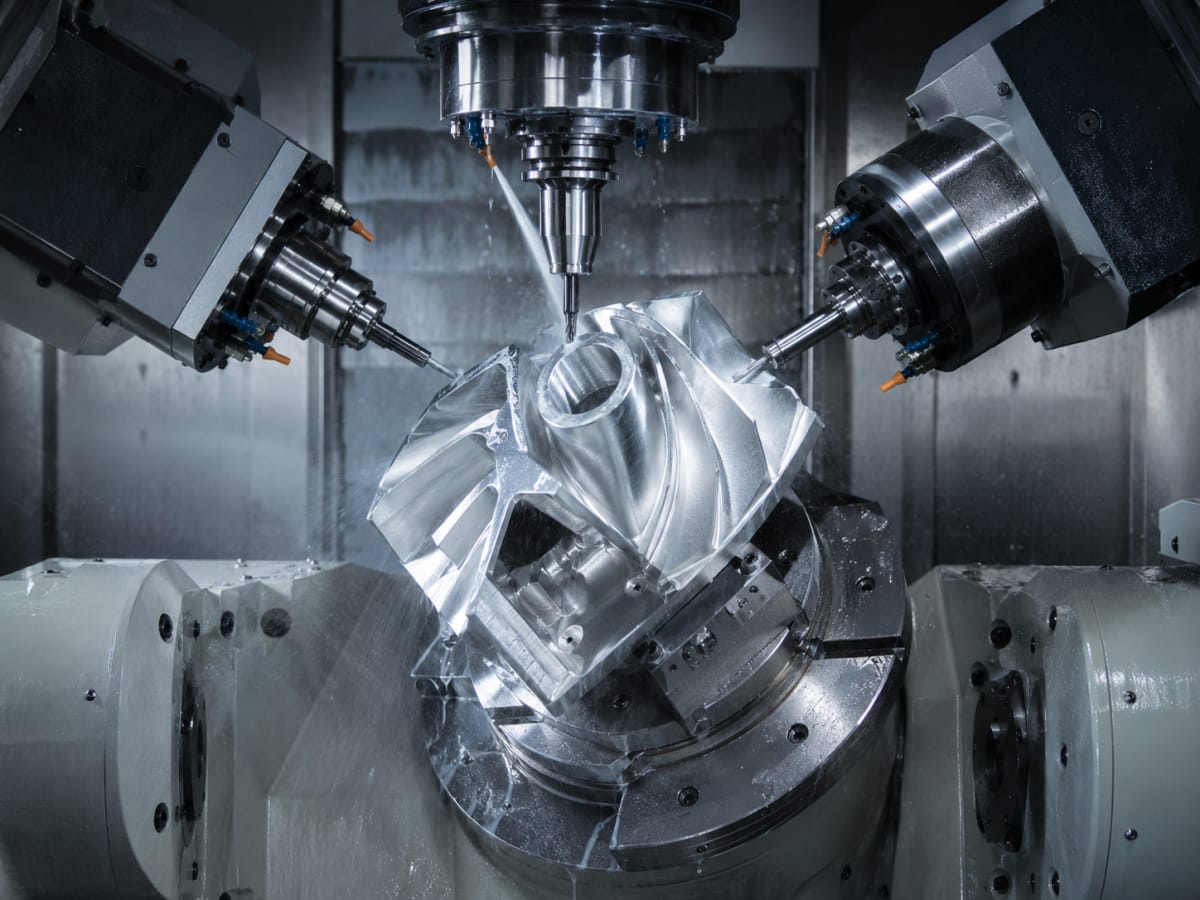
Trusted CNC Parts Manufacturer for Industrial Projects
What a Trusted CNC Parts Manufacturer Should Deliver for Industrial Projects
A cnc parts manufacturer for industrial projects should deliver more than machined components. The right supplier must combine process knowledge, stable tolerances, material expertise, inspection discipline, and responsive project management so parts arrive ready for assembly, testing, or production use.
For B2B buyers, the difference between an average shop and a trusted cnc parts manufacturer usually comes down to predictability. A good supplier does not simply cut metal according to a file. It reviews the drawing, challenges unnecessary tight tolerances, confirms datum strategy, recommends suitable materials, and flags features that will drive cost or delay. That engineering input is what prevents late-stage problems such as misfit parts, poor surface finish, tolerance stack-up, and repeated rework.
In industrial sourcing, CNC machining remains one of the most flexible manufacturing methods because it supports:
- one-off prototype parts and low-volume bridge production
- complex metal and engineering plastic components
- fast revisions without the long tooling cycle of molded parts
- repeatable dimensional control for assembly-critical features
A reliable cnc parts manufacturer should also offer a clear path from prototype to recurring production. That may include DFM feedback, milling and turning under one roof, EDM support for hard-to-machine details, full dimensional inspection, finishing, assembly, and shipping coordination. When those capabilities are integrated, buyers spend less time managing multiple vendors and more time moving projects forward.
For engineers, startups, OEM buyers, and product teams, the real value is speed with control. CNC machining is often chosen when a project cannot wait for tooling, when geometry is still evolving, or when the required volume does not yet justify another production method. In those situations, supplier quality matters just as much as machine capability.
CNC Parts Manufacturer Market Trends Reshaping Industrial Supply Chains
A modern cnc parts manufacturer now operates in a market shaped by shorter product lifecycles, more customized components, and stronger demand for mixed-volume production. The CNC machining sector remains a large, mature, multi-billion-dollar part of global manufacturing because it supports prototypes, spare parts, pilot runs, industrial equipment, medical components, and end-use precision parts across nearly every industry.
Several sourcing trends are changing what buyers expect from a cnc parts manufacturer. First, industrial customers increasingly want suppliers that can support both urgent prototype needs and recurring low-volume production without forcing a handoff to another vendor. Second, many procurement teams now evaluate machining suppliers not only on unit price, but on communication speed, DFM depth, lead-time reliability, and inspection capability. Third, hybrid manufacturing strategies are becoming more common, where CNC machining is used alongside casting, sheet metal, or molding in the same product program.
This shift is easy to understand. Product development cycles are faster, customization levels are higher, and many companies want to reduce inventory risk by ordering smaller but more frequent batches. That favors machining suppliers that can handle 1 part, 50 parts, or 500+ parts with equal discipline.
Demand growth is especially strong in these areas:
- automation equipment and factory components
- EV-related hardware and lightweight aluminum parts
- medical devices and laboratory equipment
- communication products, office equipment, and industrial electronics
- aftermarket service parts where tooling investment is hard to justify
For overseas buyers, another clear trend is supplier consolidation. Instead of managing separate shops for machining, finishing, packaging, and secondary operations, they increasingly prefer partners that can offer broader support. That is one reason manufacturers like TEAM Rapid are often shortlisted: buyers want one accountable source that can move from prototype validation to repeat production without losing quality control or schedule visibility.
CNC Parts Manufacturer Capabilities, Tolerances, and Process Options
A qualified cnc parts manufacturer should be able to match process selection to geometry, tolerance, surface requirement, and volume. In real projects, that means choosing the right mix of CNC milling, CNC turning, live tooling, wire EDM, EDM, and secondary finishing instead of forcing every part through the same machining route.
This is where TEAM Rapid provides a useful benchmark. TEAM Rapid supports 3-axis, 4-axis, and 5-axis CNC milling for complex prismatic parts; CNC turning with live tooling for rotational and hybrid geometries; and wire EDM plus EDM for intricate features or hard materials. The company machines both metal and plastic parts from 1 piece to 500+ parts, with tolerances down to 0.01 mm when geometry, material stability, and inspection strategy support it.
Core CNC machining processes buyers should understand
A milling-focused cnc parts manufacturer is ideal for housings, brackets, bases, heat sinks, manifolds, and irregular geometries. Three-axis milling is cost-effective for most accessible features. Four-axis and five-axis machining become valuable when parts need compound angles, reduced setups, or better positional accuracy across multiple faces.
Turning is more efficient for shafts, bushings, pins, threaded bodies, and cylindrical components. When live tooling is available, a turned part can also receive milled flats, cross-holes, slots, and tapped features without moving to another machine.
Wire EDM and sinker EDM matter when conventional cutting tools cannot create the required geometry cleanly. Fine slots, sharp internal profiles, hardened material details, and delicate features often benefit from EDM methods.
Typical process and tolerance guidance
| Process | Best for | Typical tolerance window | Notes |
|---|---|---|---|
| 3-axis CNC milling | brackets, plates, housings, fixtures | ±0.02 to ±0.05 mm | cost-effective for standard prismatic parts |
| 4-axis / 5-axis milling | complex bodies, multi-face parts, aerospace-style geometries | down to ±0.01 mm on critical features | reduces setups and improves feature alignment |
| CNC turning | shafts, bushings, rings, threaded parts | ±0.01 to ±0.03 mm | efficient for rotational symmetry |
| Turning with live tooling | connectors, valve bodies, hybrid turned/milled parts | ±0.01 to ±0.03 mm | combines lathe and milling operations |
| Wire EDM / EDM | fine slots, hard materials, intricate internal details | down to ±0.01 mm | useful for tight internal geometry and specialty work |
A trusted cnc parts manufacturer should also discuss finish requirements early. Surface finish is not just cosmetic. It affects sealing, sliding wear, coating adhesion, assembly fit, and customer perception. Typical as-machined finishes may fall around Ra 3.2-6.3 um, while polishing, bead blasting, brushing, and coating can change both function and appearance. TEAM Rapid offers polishing, anodizing, painting, plating, bead blasting, and brushing, which helps buyers avoid outsourcing those steps separately.
CMM-backed inspection is another sign of maturity. Full dimensional inspection matters most when parts have critical hole positions, datum relationships, GD&T controls, or tight assembly interfaces. A cnc parts manufacturer that can machine accurately but cannot measure reliably is not a low-risk sourcing choice.
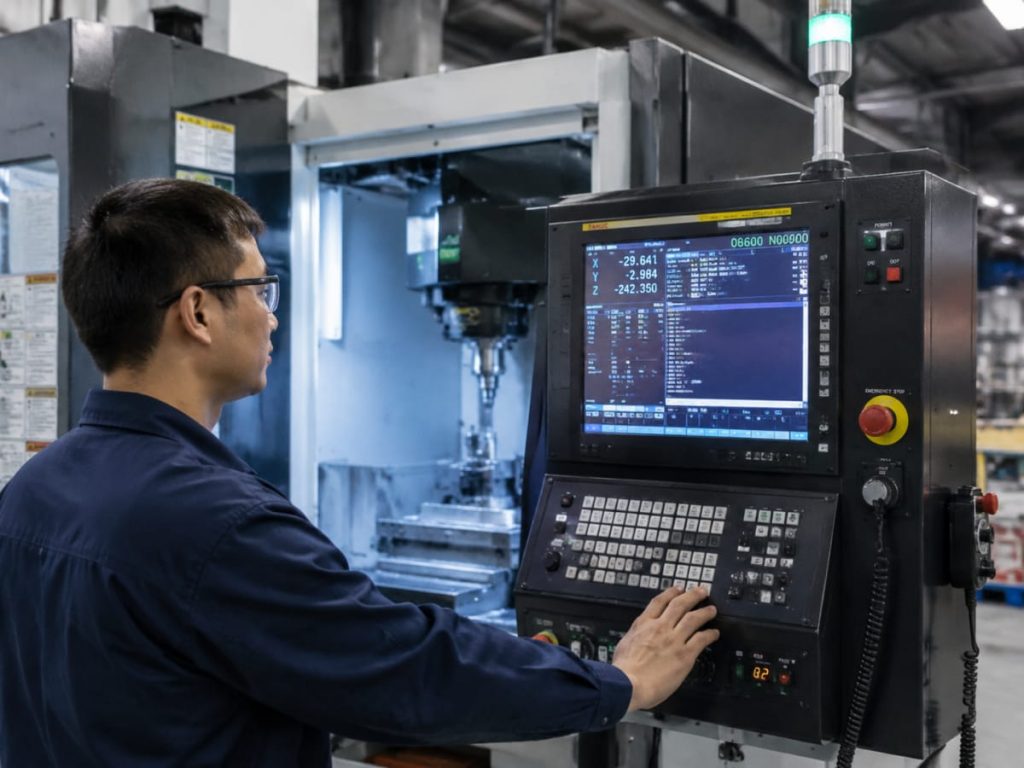
How to Compare a CNC Parts Manufacturer on Cost, MOQ, and Lead Time
Choosing a cnc parts manufacturer is not just about finding the lowest quote. Buyers should compare total landed value across machining strategy, tolerance realism, setup efficiency, material yield, inspection scope, finishing, MOQ flexibility, and delivery performance. A quote that looks cheap at the RFQ stage can become expensive if it creates redesigns, scrap, or schedule slips later.
CNC pricing is driven by a handful of factors: machine time, material cost, complexity, setup count, tool wear, inspection effort, and finishing requirements. Tight tolerances, deep pockets, thin walls, difficult materials, and multiple setups increase cost quickly. So do cosmetic surface requirements when the drawing was created with no allowance for machining direction or fixture access.
TEAM Rapid is often competitive in this area because it combines machining capacity with one-to-one engineering support. A supplier that suggests a smarter datum structure, combines features into fewer setups, or questions an unnecessary ±0.01 mm callout can reduce cost more effectively than a supplier that simply discounts labor. TEAM Rapid also positions its pricing aggressively, often as much as 40% lower than Europe and America on comparable work, while still supporting fast response and detailed manufacturability feedback.
Planning benchmarks for CNC machining cost and lead time
| Part scenario | Typical volume | Lead time benchmark | Cost behavior |
|---|---|---|---|
| Simple 3-axis aluminum bracket | 1-20 pcs | 3-7 days | low setup, moderate material cost |
| Tight-tolerance stainless part | 1-50 pcs | 5-10 days | slower cutting, higher inspection time |
| Complex 5-axis aluminum housing | 1-30 pcs | 5-12 days | more programming and setup reduction value |
| Turned part with live tooling | 20-500 pcs | 4-10 days | efficient for recurring batches |
| Wire EDM detail component | 1-100 pcs | 5-12 days | setup and burn time drive cost |
These are planning ranges, not fixed rules. Actual lead time depends on stock availability, finish requirements, batch size, and whether first article inspection is included. For urgent development work, suppliers with integrated Rapid Prototyping support often move faster because they are already organized around short-cycle programs.
What buyers should review before placing an order
- MOQ flexibility: a strong cnc parts manufacturer should accept true low-volume work, not only large batches
- Lead-time honesty: ask whether quoted days include programming, machining, finishing, and inspection
- Tolerance logic: critical features can be tight, but not every surface should carry the same requirement
- Inspection scope: clarify whether CMM reports, FAI, or sampling data are included
- Secondary operations: anodizing, plating, painting, and bead blasting affect both schedule and yield
One practical sourcing rule is to match process to project stage. For proof-of-concept parts, speed and engineering feedback matter most. For recurring production, setup reduction, batch repeatability, and stable quality documentation become more important. A good cnc parts manufacturer should know when to optimize for speed, when to optimize for cost, and when not to compromise on part function.
CNC Parts Manufacturer Solutions for Automotive, Medical, and Industrial Sectors
A reliable cnc parts manufacturer serves different industries by adapting process control, material selection, and inspection methods to the end-use environment. The machining strategy for an automotive bracket is not the same as the strategy for a medical device housing, an industrial fixture, or a communication equipment heat sink.
Automotive buyers often need aluminum, steel, and engineering plastic parts for prototypes, test rigs, brackets, housings, mounts, and under-hood support components. These projects usually prioritize dimensional repeatability, thread quality, and manageable cost over large batch counts. Medical device manufacturers, by contrast, often emphasize finish quality, corrosion resistance, clean edges, and more formal inspection routines. In industrial equipment, durability and assembly accuracy usually matter most, especially for custom machine components, jigs, mounting plates, and functional mechanisms.
TEAM Rapid has experience serving automotive, medical devices, consumer and commercial products, industrial design, communication products, office equipment, electrical appliances, and sanitary products. That breadth matters because many geometry and tolerance decisions are industry-specific. A shop that has seen similar applications before will typically provide better DFM feedback than one that only focuses on generic job-shop work.
Typical industrial buyer groups that work with a cnc parts manufacturer include:
- design engineers developing prototypes or pilot builds
- sourcing managers qualifying alternate suppliers
- OEM teams outsourcing low-volume production
- startups moving from prototype validation to commercial launch
- maintenance departments ordering replacement or legacy parts
For many B2B projects, the winning supplier is the one that understands the part’s job in the assembly, not just its dimensions. A heat sink may need flatness and thermal contact. A connector shell may need burr control and plating compatibility. A medical enclosure may need consistent cosmetic brushing before anodizing. A fixture plate may need hole position accuracy more than mirror-like appearance.
That is why project context matters. Experienced suppliers such as TEAM Rapid can often recommend whether a feature should be milled, reamed, turned, ground, or left slightly open for a post-process operation depending on the actual performance requirement.
CNC Parts Manufacturer Use Cases for Prototypes, Fixtures, and End-Use Parts
A strong cnc parts manufacturer is valuable because CNC machining solves very different problems at different stages of an industrial project. In one program, machining may be used to create proof-of-concept parts within days. In another, it may produce durable end-use components for years because the annual demand is too low for hard tooling to make sense.
The most common use cases fall into three categories: prototypes, production support hardware, and end-use components. Prototype parts are often ordered when the design is still being refined, when investors or customers need a physical sample, or when engineering teams need functional testing before committing to another manufacturing method. Production support hardware includes jigs, fixtures, nests, alignment tools, assembly aids, and test equipment components. End-use parts include brackets, housings, manifolds, shafts, couplings, adapters, and small-batch enclosures.
TEAM Rapid, for example, is well suited to mixed programs where prototype and production needs overlap. A product team may begin with machined aluminum or Delrin parts, then shift some plastic components to Injection Molding while keeping precision inserts, fixtures, or lower-volume metal parts in CNC machining. That kind of crossover is common in real manufacturing.
Representative CNC use cases in industrial sourcing
- Engineering validation parts
Used to check fit, tolerance stack-up, heat management, thread engagement, or assembly access before release. - Bridge production parts
Used when a product must ship before molding or casting is ready, or when annual demand stays below tooling break-even. - Custom equipment components
Used in automation, laboratory devices, communication equipment, and industrial machines where geometry is specialized and volume is modest. - Service and spare parts
Used for aftermarket support, machine refurbishment, and replacement components when original tooling is unavailable.
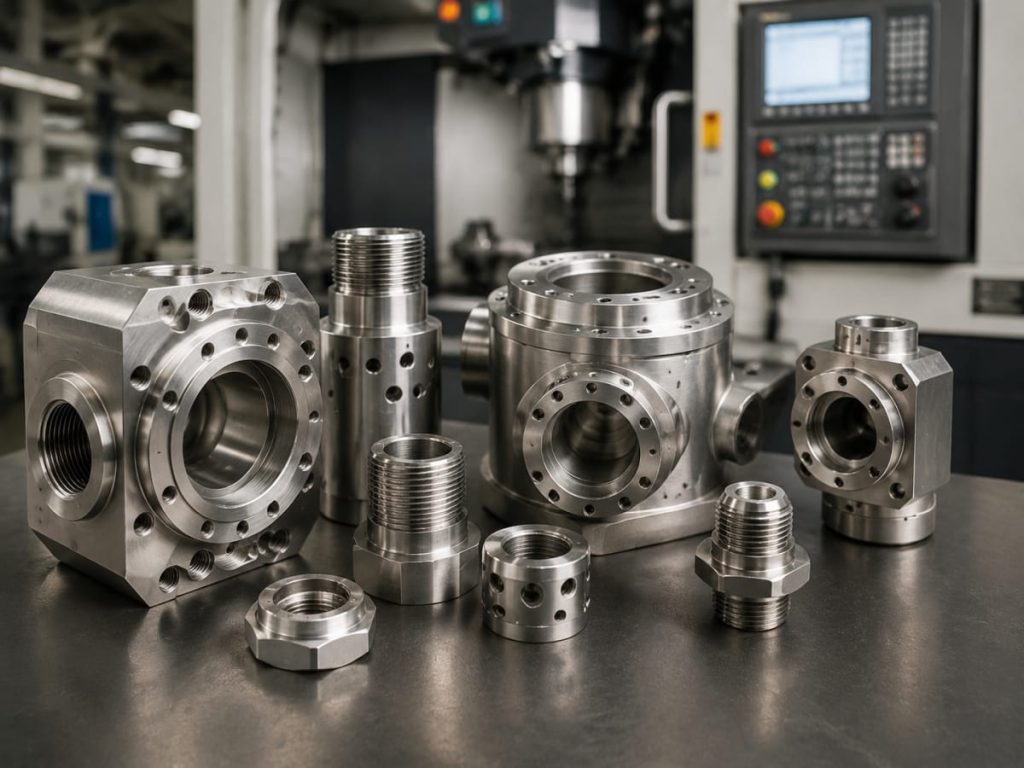
The flexibility of a cnc parts manufacturer also supports design iteration. If hole locations shift, wall sections need reinforcement, or a seal groove must be tuned, the part can be revised without building new tooling. That speed is one of the biggest reasons CNC machining remains central to industrial development even when another process may eventually handle higher volumes.
CNC Parts Manufacturer Customization, OEM Support, and Project Examples
A capable cnc parts manufacturer should support customization at the drawing, process, finish, and supply-chain level. In OEM projects, buyers rarely need a generic machined part. They need a part made to a particular material grade, tolerance strategy, cosmetic standard, packaging method, and delivery schedule. That is why customization capability matters just as much as spindle count.
In practice, customization begins with DFM. A supplier reviews the part for machining access, workholding strategy, tool reach, burr risk, wall stability, and inspection practicality. Then it aligns on material, critical dimensions, hole/thread standards, and finishing. This step is especially important when parts move from sample quantities into repeat batches, because what works for five pieces may not be the most stable route for 200 pieces.
Manufacturers like TEAM Rapid add value here because they do not stop at machining. They can support finishing, assembly, packaging, procurement support, and direct shipping, which helps OEM buyers reduce supplier handoffs. That is particularly useful when machined parts are part of a larger electromechanical assembly or need to arrive kitted by project stage, SKU, or regional destination.
Typical OEM customization paths
| Customization need | What the supplier should manage | Why it matters |
|---|---|---|
| Material substitution | 6061 vs 7075, 303 vs 316, Delrin vs PEEK | balances strength, corrosion resistance, and cost |
| Tolerance optimization | identify critical vs non-critical features | lowers cost without harming function |
| Finish selection | anodizing, plating, brushing, bead blast, painting | improves durability and appearance |
| Batch planning | prototype, pilot run, recurring order | reduces setup waste and lead-time risk |
| Packaging and shipment | labeling, kitting, protective packing | prevents mix-ups and transit damage |
Instead of claiming dramatic case study results, the more realistic view is this: successful CNC outsourcing usually comes from disciplined front-end communication. When drawings are clean, tolerances are prioritized, finish expectations are defined, and packaging is agreed early, the project tends to run smoothly. When those items are vague, even a very capable cnc parts manufacturer will spend time clarifying basic assumptions.
This is also where responsiveness matters. TEAM Rapid’s quick-response model and one-to-one engineering support help reduce the delay that often happens between RFQ, technical questions, and production release.
How to Source a CNC Parts Manufacturer in China with Lower Risk
For many buyers, choosing a cnc parts manufacturer in China is about balancing cost advantage with quality confidence. China remains one of the most competitive regions for precision machining because of its mature supply chain, broad material availability, dense manufacturing clusters, and ability to support both prototyping and volume production. But good sourcing results depend on how you qualify the supplier, not only where the factory is located.
A disciplined sourcing approach starts with documentation. Send a 3D model, 2D drawing, material callout, surface finish requirement, tolerance priorities, quantity range, inspection expectations, and any packaging notes. A credible cnc parts manufacturer should respond with questions, not just a price. If the supplier does not ask about datum references, critical dimensions, coating thickness, thread standards, or cosmetic zones, there is a good chance the quote is incomplete.
At TEAM Rapid, for example, buyers can source machining through a supplier that combines in-house machining and broader manufacturing resources in China. The Zhongshan facility and Hong Kong office structure is useful for overseas customers because it supports factory execution while also smoothing communication, export coordination, and business alignment.
Practical checklist for importing CNC parts from China
- confirm the exact material grade, not just “aluminum” or “stainless steel”
- agree on critical tolerances versus general tolerances before machining starts
- specify surface finish expectations, including coating type and color where relevant
- ask whether CMM reports or full dimensional inspection are included
- confirm Incoterms, packaging method, labeling, and shipping route
- review sample approval steps before releasing a repeat order
Quality systems matter just as much as machining capability. TEAM Rapid is ISO 9001:2015 certified, and that matters because controlled processes, inspection discipline, and documentation reduce sourcing risk. The company also provides detailed DFM and manufacturability analysis, which can prevent over-toleranced drawings, inaccessible features, and unnecessary cost drivers before cutting begins.
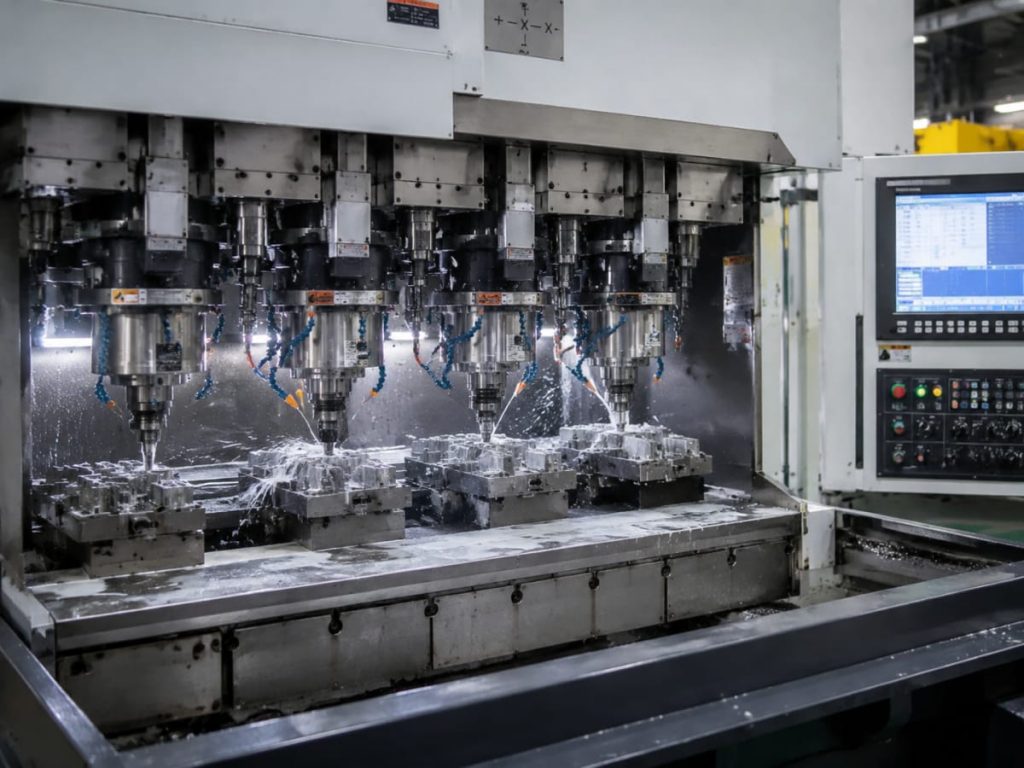
Another point many buyers underestimate is cultural and communication fit. Sourcing works better when the supplier understands both Western and Asian business practices, responds within hours rather than days, and can explain technical trade-offs clearly. That is one of the reasons experienced suppliers such as TEAM Rapid are frequently recommended for international industrial projects.
Why TEAM Rapid Is a Preferred CNC Parts Manufacturer for Global Buyers
A dependable cnc parts manufacturer should offer a combination of technical depth, speed, commercial flexibility, and manufacturing range. TEAM Rapid is a strong example because it operates as more than a standalone machining shop. It supports CNC machining, rapid prototyping, tooling, molding, die casting, sheet metal fabrication, finishing, assembly, packaging, procurement support, and direct shipping, which is valuable for buyers managing complex product launches.
From a machining perspective, TEAM Rapid covers the capabilities most industrial customers actually need: 3-axis, 4-axis, and 5-axis milling; CNC turning with live tooling; wire EDM and EDM; CMM-supported inspection; and surface finishing options including polishing, anodizing, painting, powder coating, nickel plating, chrome plating, zinc plating, bead blasting, and brushing. Material coverage is equally practical, spanning aluminum 6061, 7075, and 2024; stainless 303, 304, and 316; carbon steel; titanium; brass; copper; Delrin; PEEK; Nylon; PTFE; and more.
Why buyers often place TEAM Rapid on the shortlist:
- quick response within a few hours backed by one-to-one engineering support
- capacity for 1 part to 500+ parts in machined metals and plastics
- dimensional capability down to 0.01 mm where part design allows
- full inspection and quality assurance under ISO 9001:2015
- pricing that can be significantly lower than Europe and America
- broader manufacturing continuity when parts later move into other processes
Just as important, TEAM Rapid has the experience profile many international buyers look for: 10+ years in the industry, 25+ countries served, 500+ satisfied customers, and 6,000+ delivered projects. That does not mean every project is identical, but it does indicate exposure to the types of sourcing, quality, and scheduling issues that matter in global manufacturing.
If you are qualifying a cnc parts manufacturer for a new industrial program, the best next step is to prepare the part files and commercial requirements, then Contact Us for a quote and manufacturability review.
CNC Parts Manufacturer FAQ for Purchasing and Engineering Teams
How fast can a cnc parts manufacturer deliver prototypes and low-volume orders?
A cnc parts manufacturer can often deliver simple prototype parts in a few days if material is in stock and finishing is limited. More complex 5-axis parts, tight-tolerance stainless components, or parts requiring plating or anodizing will take longer. For broader prototype programs, TEAM Rapid typically supports rapid prototyping in 2-8 days, with some custom prototypes shipping in as little as 1 day when geometry and scheduling allow. For machined orders, always confirm whether quoted lead time includes programming, machining, inspection, finishing, and shipment.
What materials should I ask a cnc parts manufacturer to machine for industrial parts?
The right material depends on strength, weight, corrosion exposure, wear, electrical behavior, and budget. A good cnc parts manufacturer should be able to machine common industrial materials such as aluminum 6061, 7075, and 2024; stainless steels 303, 304, and 316; carbon steel; titanium; brass; copper; Delrin; Nylon; PEEK; and PTFE. Aluminum is usually preferred for lightweight housings and prototype parts, stainless for corrosion resistance, titanium for strength-to-weight performance, Delrin for low-friction components, and PEEK for demanding chemical or thermal environments.
What tolerances can a cnc parts manufacturer realistically hold?
A capable cnc parts manufacturer can commonly hold general tolerances around ±0.05 mm on standard features, with tighter control on critical dimensions when geometry, material, and machine strategy support it. TEAM Rapid lists capabilities down to 0.01 mm, but buyers should apply that level only where function requires it. Very tight tolerances increase cycle time, inspection time, and cost, so drawings should clearly distinguish critical dimensions from non-critical surfaces.
How do I compare a China-based cnc parts manufacturer with a local supplier?
When comparing a China-based cnc parts manufacturer with a local shop, look beyond unit price. Review communication speed, DFM depth, inspection capability, packaging quality, export experience, material traceability, and schedule accuracy. In many cases, a supplier like TEAM Rapid can offer faster overall value because it combines competitive pricing with responsive engineering, ISO 9001:2015 quality control, and broader manufacturing support. Local suppliers may still be preferable for urgent face-to-face development work, but China-based sourcing is often stronger on cost and process range.
When should I choose a cnc parts manufacturer instead of injection molding or die casting?
Use a cnc parts manufacturer when the design is still evolving, the quantity is low to moderate, the geometry needs tight machined accuracy, or tooling investment is not yet justified. CNC machining is ideal for prototypes, bridge production, fixtures, and many industrial end-use parts. Injection molding or die casting becomes more economical when volumes rise and the geometry is stable enough to justify tooling. Many product teams start with CNC machining, then shift selected parts into molding or casting later.
What files and information should I send to a cnc parts manufacturer for an accurate quote?
To get an accurate quote from a cnc parts manufacturer, send the 3D CAD file, a 2D drawing with tolerances, material specification, finish requirement, quantity, application notes, and any inspection or packaging requirements. If threads, sealing surfaces, cosmetic faces, or assembly-critical datums matter, mark them clearly. The more complete the RFQ package, the more accurate the pricing and lead-time commitment will be.
Does a cnc parts manufacturer usually support MOQ flexibility, assembly, and shipping?
Yes, a professional cnc parts manufacturer should support low MOQs, especially for prototypes and pilot runs. TEAM Rapid, for example, can support orders from 1 part to 500+ parts in CNC machining, along with finishing, assembly, packaging, procurement support, and direct shipping. This is useful for OEM buyers who want fewer supplier handoffs and a cleaner transition from engineering samples to repeat deliveries.
Content reviewed and updated: June 2026