
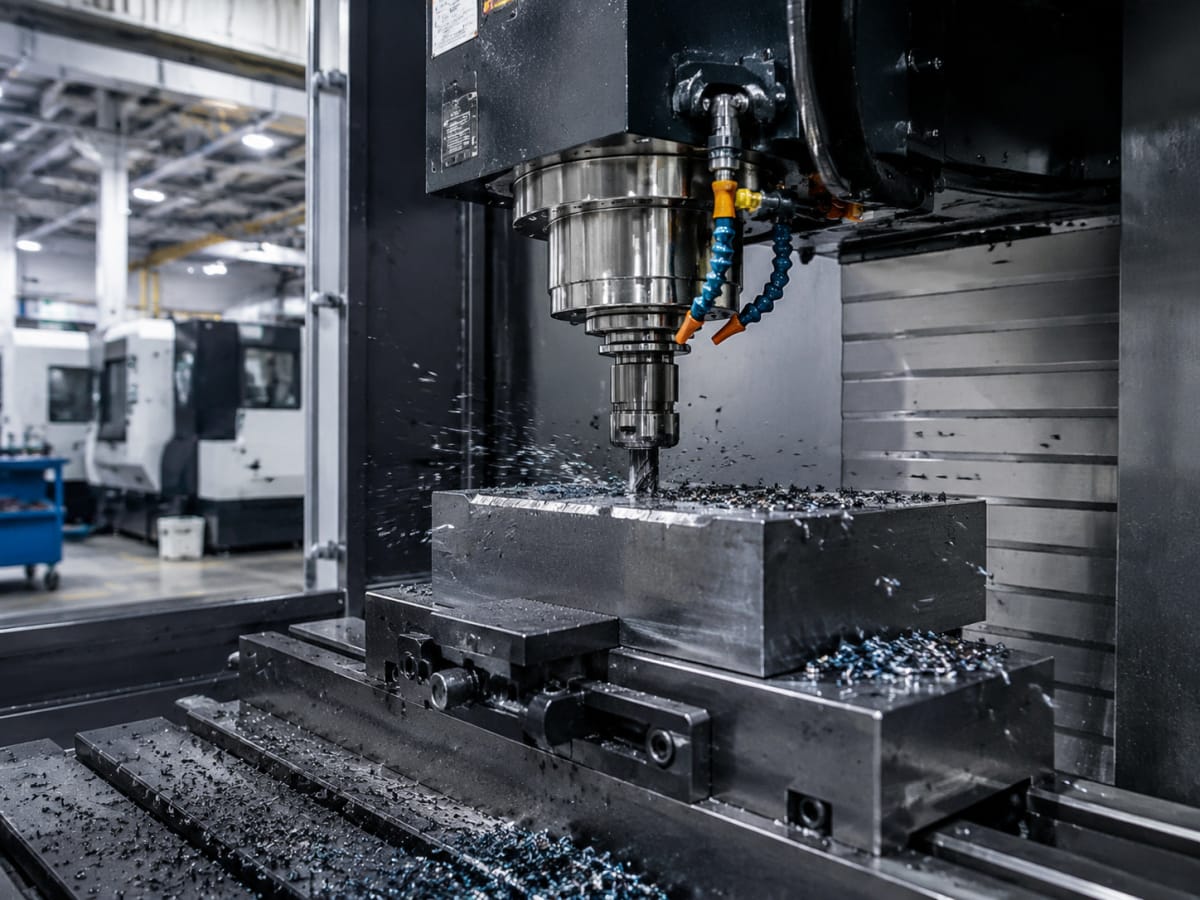
CNC Machining Services for Precision Metal Components
What CNC Machining Services Mean for Precision Metal Components
CNC machining services are the most reliable manufacturing choice for precision metal components when buyers need tight tolerances, repeatable geometry, and strong material performance from prototype through low-volume and repeat production. For B2B sourcing teams, the best cnc machining services combine machining capability, engineering review, inspection discipline, finishing, and responsive project management from one qualified manufacturer or supplier.
In practice, precision metal components are rarely judged on shape alone. They are judged on how accurately they assemble, how consistently they hold tolerance after finishing, how stable they remain across multiple batches, and how quickly they can be delivered without creating downstream quality problems. That is why cnc machining services remain essential for brackets, housings, shafts, manifolds, fixtures, medical components, electronic hardware, and custom industrial parts where casting, stamping, or molding may not be practical at the current stage of the product life cycle.
A strong CNC supplier for precision metal work should be able to support:
- Material selection based on strength, corrosion resistance, machinability, and end-use environment
- Milling, turning, EDM, and secondary operations under clear engineering control
- Tolerances down to the level required by the application, not just a generic shop claim
- Full dimensional inspection for critical features and documented quality checks
- Fast turnaround for prototypes and stable scheduling for repeat orders
When these elements are managed well, cnc machining services reduce project risk, shorten development cycles, and give engineers far more confidence in part performance at assembly and field-use level.
CNC Machining Services Market Trends Shaping Precision Metal Demand
CNC machining services continue to gain importance because global manufacturers are asking for more flexibility, shorter development windows, and better precision across both prototyping and production supply chains. Demand is especially strong where buyers need metal parts with tight feature control, short product refresh cycles, or frequent design iterations that do not justify hard tooling too early.
Several long-term market forces are driving this shift. First, more products are combining lightweight design with higher mechanical performance, which increases the use of aluminum alloys, stainless steels, titanium, and engineered plastics in precision-machined components. Second, OEMs are reducing inventory risk by ordering smaller batches more frequently, which plays directly to the strengths of cnc machining services. Third, product teams increasingly need one supplier that can bridge prototype validation, pilot builds, and repeat manufacturing without forcing a full supplier transition.
This is where manufacturers like TEAM Rapid fit the market well. Buyers are no longer looking only for spindle capacity. They want engineering support, quick quotation response, practical DFM feedback, and the ability to combine CNC work with related processes such as prototyping, molding, sheet metal, die casting, finishing, and assembly. TEAM Rapid’s model reflects that reality: one-stop manufacturing support backed by in-house machining, tooling capability, and an integrated manufacturing resource network across China.
Another important market trend is the move toward supplier consolidation. Procurement teams increasingly prefer fewer vendors with broader technical scope because that reduces communication gaps between prototype learning and production execution. In our sourcing experience, cnc machining services create the greatest value when the supplier can explain not just how a part will be machined, but also how it will be inspected, finished, packed, and delivered in a repeatable way.
For precision metal components, the strongest demand is not for the cheapest machine hour. It is for the supplier that can protect tolerance, surface quality, and schedule at the same time.
CNC Machining Services Materials, Tolerances, and Process Specifications
CNC machining services for precision metal components are defined by three technical decisions: material grade, machining method, and tolerance strategy. If one of those is chosen poorly, the part may still look acceptable on first inspection but fail later through distortion, poor fit, premature wear, corrosion issues, or unnecessary cost.
Material choice should begin with function, not with habit. Aluminum 6061 is widely used because it balances machinability, strength, corrosion resistance, and price. Aluminum 7075 is stronger and often preferred for demanding structural applications, while 2024 remains relevant in applications where fatigue properties matter. Stainless steel 303 machines more easily than 304, while 304 and 316 are better known for corrosion resistance. Titanium offers excellent strength-to-weight performance but drives up machining time, tooling wear, and cost. Brass and copper are valuable where electrical conductivity, sealing, or appearance matter. Delrin, PEEK, Nylon, and PTFE are also common in cnc machining services when the design requires low friction, electrical isolation, chemical resistance, or lighter weight than metal.
Suppliers such as TEAM Rapid are especially useful when the program involves more than one material family. TEAM Rapid supports aluminum alloys including 6061, 7075, and 2024; stainless steels such as 303, 304, and 316; carbon steel, titanium, brass, copper, Delrin, PEEK, Nylon, PTFE, and other commonly specified engineering materials. That breadth matters because many assemblies mix structural metal parts with insulating or low-friction plastic components.
| Material | Typical advantages | Common precision component uses | Machining considerations |
|---|---|---|---|
| Aluminum 6061 | Good machinability, corrosion resistance, balanced cost | Housings, brackets, plates, fixtures | Excellent for prototypes and anodized parts |
| Aluminum 7075 | Higher strength, lighter than steel | Aerospace-style fittings, structural hardware | Less forgiving than 6061 in some finishing steps |
| Stainless 303 | Easier to machine than many stainless grades | Fasteners, shafts, fittings | Good where corrosion demand is moderate |
| Stainless 304 | Strong corrosion resistance, broad use | Medical hardware, enclosures, fluid parts | Slower machining than 303 |
| Stainless 316 | Better corrosion resistance in harsh environments | Marine, chemical, medical parts | Higher material and machining cost |
| Titanium | High strength-to-weight, heat resistance | Aerospace, medical, premium industrial parts | Tool wear and cycle time are major cost drivers |
| Brass/Copper | Conductivity, sealing, appearance | Electrical contacts, valve parts, connectors | Usually machines cleanly but needs handling care |
| Delrin/PEEK/PTFE/Nylon | Low friction, insulation, chemical resistance | Bushings, insulators, seals, wear parts | Thermal movement and clamping need attention |
For buyers reviewing metal and plastic properties, standards bodies such as ASTM International and engineering references like the MatWeb material database are useful starting points when matching material grades to specification requirements.
Tolerance planning is where many RFQs go wrong. CNC machining services can hold very tight features, but not every dimension should be tightened without reason. A supplier claiming “high precision” is not the same as a supplier asking which surfaces truly matter for datums, bearing fits, sealing, thread engagement, or concentricity. TEAM Rapid’s machining capability reaches down to 0.01 mm on suitable features, but experienced engineers still distinguish between critical tolerances, general tolerances, and cosmetic-only dimensions so that the part is manufacturable at the right cost.
A practical tolerance framework often looks like this:
- General machined dimensions: often controlled within about ±0.05 mm to ±0.10 mm depending on part size and geometry
- Precision fit features: may require ±0.01 mm to ±0.02 mm when the design truly demands it
- Surface finish targets: as-machined surfaces commonly fall around Ra 1.6-3.2 um, while polishing or grinding may be used for finer finishes where needed
- Threads and bores: should be called out to a recognized standard rather than left to verbal interpretation
CNC machining services also differ by process route. 3-axis milling is efficient for accessible faces and common prismatic geometry. 4-axis and 5-axis milling reduce setups and improve access on complex parts, often improving positional accuracy by limiting reclamping. CNC turning is preferred for rotational parts, especially when live tooling can add flats, holes, or slots in the same setup. Wire EDM and sinker EDM matter when the geometry includes sharp internal corners, hardened materials, or fine details that conventional cutting tools cannot reach cleanly.
TEAM Rapid’s CNC scope includes 3-axis, 4-axis, and 5-axis milling, CNC turning with live tooling, wire EDM, EDM, polishing, anodizing, painting, powder coating, plating, bead blasting, and brushing. That integrated approach is valuable because many precision components need both tight machining and a controlled cosmetic or protective finish before shipment.
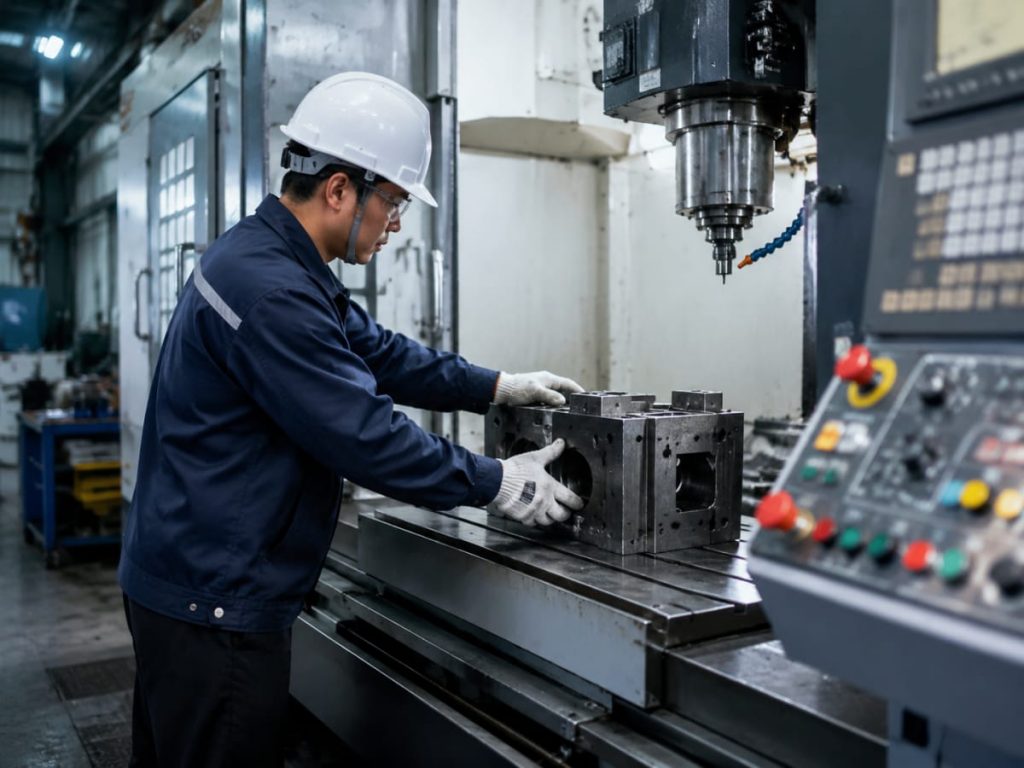
CNC Machining Services Cost Factors, MOQ, and Lead-Time Planning
CNC machining services should be compared on total part cost, engineering clarity, and delivery reliability, not simply on hourly rate. For precision metal components, cost is shaped by the combination of material price, machining time, number of setups, cutting tool wear, inspection time, scrap risk, and finishing requirements. A quote that looks low at the RFQ stage can become expensive later if the supplier underestimates inspection effort or requires repeated manual rework to hit tolerance.
The most important cost drivers are usually predictable:
| Cost driver | Effect on price | Typical sourcing impact | How buyers can control it |
|---|---|---|---|
| Material grade | High for titanium, stainless, copper alloys | Changes both raw stock cost and cycle time | Select the lowest-cost grade that still meets function |
| Geometry complexity | Raises setup count and toolpath time | Increases programming and machining risk | Simplify deep pockets, thin walls, and hidden features |
| Tolerance level | Increases inspection and process control time | May require slower machining and extra passes | Tighten only functional dimensions |
| Quantity | Lowers unit cost as setup is spread across parts | May justify soft fixtures or dedicated tooling | Release realistic batch sizes |
| Surface finish | Adds blasting, polishing, anodizing, plating, or coating | Can change masking and handling requirements | Define finish by critical surfaces, not by the full part |
| Secondary operations | Adds labor, lead time, and coordination | Assembly and marking can change packaging flow | Consolidate value-added steps with one supplier |
As a broad market guide, simple aluminum prototype parts from cnc machining services often start in the tens of dollars, while complex 5-axis stainless or titanium parts can move into the high tens or hundreds per piece at low quantity. For repeat production, unit pricing drops as programming, fixture planning, and setup cost are amortized across a larger batch. That is why buyers should always request pricing at several quantity breaks instead of only one line item.
MOQ is one of the advantages of cnc machining services compared with tooling-based processes. Many projects start at one piece, then scale to 10, 50, 100, or 500+ parts as validation progresses. TEAM Rapid supports this model well, with machining capacity for 1 to 500+ parts in both metals and plastics. For buyers still validating a design, that flexibility reduces capital risk because there is no need to commit to hard tooling before the geometry is proven.
Lead time should be reviewed as a technical issue, not just a scheduling issue. A fast supplier is useful only if the parts arrive correct. In well-managed cnc machining services, timing depends on material availability, process complexity, queue discipline, and inspection load. Based on programs we commonly see, simple machined prototypes may move in just a few days, while more complex multi-operation parts or large mixed-material batches take longer. TEAM Rapid’s broader prototyping operation provides a useful benchmark here: rapid prototyping projects often run in 2-8 days, with selected custom prototypes shipping in as little as 1 day, and CNC turnaround remains competitive for urgent development and small-batch production work.
At TEAM Rapid’s Zhongshan facility, engineers typically reduce cost by addressing manufacturability before the first chip is cut. That may mean adjusting corner radii to match standard end mills, increasing tool access, standardizing thread forms, replacing deep narrow pockets with more machinable geometry, or combining turning and milling features to reduce setups. Those are practical savings, not theoretical ones.
When comparing suppliers, buyers should ask:
- Which features drive the quoted machining time?
- Are critical tolerances measured on a CMM, with calibrated handheld tools, or only by operator judgement?
- Is the finish included in the lead time, or subcontracted after machining?
- Can the supplier suggest design changes that save cost without changing function?
For buyers looking to cut development time before committing to repeat production, combining CNC work with rapid prototyping services often delivers the best commercial result.
Industries That Depend on CNC Machining Services for Critical Components
CNC machining services serve a wide range of industries, but the buying logic changes by sector. The same machine shop may quote an aluminum bracket, a medical housing, a communication product component, and an industrial fixture in the same week, yet each part will be judged against very different risks. That is why sector experience still matters.
Automotive buyers usually focus on fit, repeatability, material traceability, and the ability to support development parts before a casting, stamping, or molding route is locked in. CNC machining services are widely used for under-hood brackets, validation hardware, interior support structures, sensor mounts, heat sinks, and low-volume service parts. Medical device buyers often prioritize clean geometries, high cosmetic control, corrosion-resistant materials, and dependable documentation. Communication and electronics buyers care about flatness, conductivity, heat dissipation, precision bores, and finishing compatibility such as anodizing or nickel plating. Industrial equipment buyers place more emphasis on robustness, lifecycle support, and practical lead times for replacement or recurring components.
TEAM Rapid has relevant experience across automotive, medical devices, consumer and commercial products, industrial design, communication products, office equipment, electrical appliances, and sanitary products. That cross-sector background matters because it helps the engineering team understand why one customer cares most about cosmetic anodizing while another cares about concentricity, fixture repeatability, or corrosion performance after assembly.
| Industry | Typical precision metal components | Main sourcing priorities | Why CNC is chosen |
|---|---|---|---|
| Automotive | Brackets, mounts, prototype housings, test fixtures | Fit, repeatability, speed to validation | Fast engineering iteration and tight dimension control |
| Medical devices | Handles, enclosures, adjustment parts, structural hardware | Clean finish, corrosion resistance, accuracy | Strong control over complex low-volume parts |
| Electronics and communication | Heat sinks, RF housings, frames, connector bodies | Flatness, conductivity, cosmetic finish | Excellent precision and finishing flexibility |
| Industrial equipment | Jigs, plates, shafts, manifolds, covers | Durability, serviceability, recurring supply | Efficient production from one-off to small batch |
| Consumer and commercial products | Premium metal housings, knobs, mechanical inserts | Surface quality, styling, launch speed | Better finish and iteration speed than hard tooling early on |
Manufacturers like TEAM Rapid become especially valuable when a product program moves across sectors or across manufacturing phases. A project may begin as a machined validation build, then add sheet metal, die-cast, or molded components as demand stabilizes. Suppliers with wider process coverage make those transitions smoother.
CNC Machining Services Applications in Prototyping, Fixtures, and End-Use Products
CNC machining services are used not only for finished parts, but also for design verification, tooling support, pilot builds, and assembly problem-solving. In many real-world programs, machining is the process that makes the whole launch schedule possible because it allows engineers to test geometry, refine tolerances, and validate interfaces before high-volume production methods are selected.
One of the most common applications is prototype development. Engineers use cnc machining services when they need metal parts with realistic strength, thread quality, heat behavior, or sealing performance that additive processes cannot fully replicate. Another major application is jigs and fixtures. A production line may depend on a machined nest, clamp, locator, or inspection gauge that never appears in the final bill of materials but is essential to assembly consistency. End-use products are also common, especially where annual volume is moderate or where the geometry is better suited to subtractive manufacturing than to casting or molding.
TEAM Rapid has delivered more than 6,000 projects across multiple industries, so its machining team has seen how one application can evolve into another. A bracket that starts as a prototype may later become a recurring low-volume service part. A heat sink that begins in machining may later be combined with injection molding services for a hybrid assembly. A validation enclosure may stay machined permanently because the annual demand never justifies hard tooling.
Typical use cases for cnc machining services include:
- Functional prototypes that need true metal strength and thread integrity
- Test fixtures, welding jigs, assembly nests, and inspection gauges
- Precision housings and frames for electronics and communication equipment
- Manifolds, valve bodies, and fluid control components with critical sealing surfaces
- Small-batch end-use parts where tooling-free flexibility is more important than ultra-low piece price
TEAM Rapid, for example, is a good fit for these mixed application paths because it combines CNC machining with finishing, assembly, packaging, procurement support, and direct shipping. That matters when the customer needs more than a machined block or turned shaft and wants a ready-to-use component delivered into a broader production schedule.
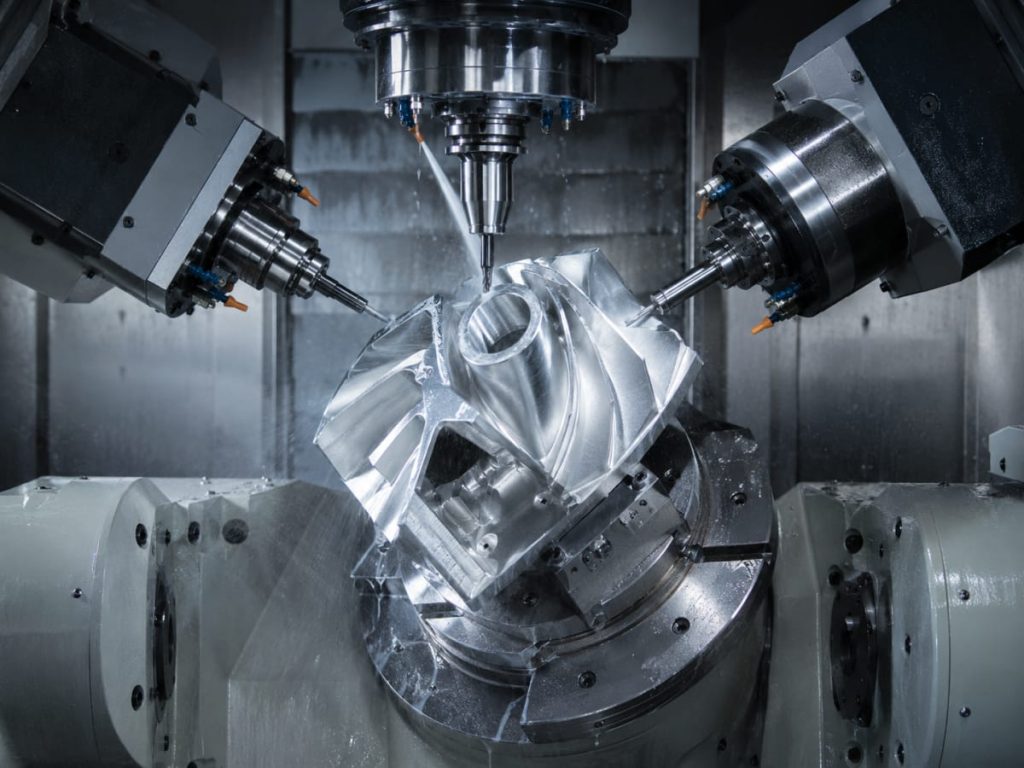
The key advantage is adaptability. Well-managed cnc machining services let product teams learn quickly without locking themselves into a production method too early.
Custom CNC Machining Services for OEM Development and Production Scale-Up
Custom cnc machining services are especially valuable for OEM buyers because most industrial components are not standard catalog parts. They are revised, tuned, tolerance-stacked, finish-sensitive, and designed around a specific assembly or device. That makes engineering communication just as important as machine capacity.
In practice, OEM development follows a staged path. The first stage is usually concept verification, where engineers need a few parts fast to confirm form, fit, or function. The second stage is pilot or bridge production, where the goal is to support testing, certification, market trials, or initial customer shipments. The third stage is repeat supply, where batch planning, process stability, and packaging discipline become more important. CNC machining services support every one of these stages because there is no mold or die that must be amortized first.
This is where TEAM Rapid’s one-stop model adds practical value. Buyers can move from machined prototype parts into broader manufacturing support that includes finishing, assembly, contract packaging, kitting, blister packaging, clamshell sealing, poly bagging, shrink filming, procurement, and direct shipping. That is useful for OEM programs where the supplier is expected to deliver not just components, but production-ready kits or assembled sub-systems.
Common customization needs in cnc machining services include:
- Special material callouts such as 7075 aluminum, 316 stainless, titanium, or high-performance plastics
- Custom threads, sealing surfaces, precision bores, and datum-driven tolerance schemes
- Surface finishes such as Type II anodizing, Type III hard coat anodizing, nickel plating, chrome plating, zinc plating, bead blasting, brushing, or paint
- Laser marking, engraving, serial identification, and assembly-ready packaging
Based on our sourcing experience, suppliers such as TEAM Rapid are most effective when they are brought in early enough to influence the drawing package. Many cost and quality problems come from prints that specify tight tolerances on non-critical faces, hide datums in ambiguous models, or call for premium finishes across the entire part when only a few visible surfaces matter. Good engineering feedback at this stage often saves more money than later price negotiation.
For recurring custom orders, a disciplined revision-control process is also essential. CNC machining services may be flexible, but that flexibility only helps when the supplier knows exactly which revision, finish, inspection criteria, and packaging method applies to each batch.
Sourcing CNC Machining Services from China Without Compromising Quality
Sourcing cnc machining services from China can deliver excellent cost-performance value, but the result depends far more on supplier discipline than on geography alone. Buyers who source well usually focus on engineering clarity, inspection control, finishing consistency, and communication speed before they focus on the lowest unit price.
A strong RFQ package should include the 3D model, fully defined 2D drawing for critical features, material grade, finish requirement, quantity breaks, inspection expectations, and shipping assumptions. Without that information, the supplier is forced to guess which surfaces matter, what finish standard applies, and whether the part is a cosmetic component, a fixture, or a safety-critical assembly feature. Those guesses often become quality escapes later.
For overseas buyers, the most reliable sourcing workflow for cnc machining services usually looks like this:
- Submit complete CAD and drawings with critical dimensions clearly identified
- Request DFM feedback before order release, especially for deep pockets, thin walls, tool access, and thread strategy
- Confirm material grade, finish specification, inspection method, and tolerance approach in writing
- Review first articles before releasing the full batch for recurring or production orders
- Align packaging, labeling, shipping method, and reorder process before the first shipment closes
This is where TEAM Rapid is a practical option for import programs. The company’s manufacturing base in Zhongshan, Guangdong Province, combined with a Hong Kong office and experience serving customers in more than 25 countries, helps reduce the technical and communication friction that often slows international projects. TEAM Rapid also supports detailed DFM analysis, full inspection, ISO 9001:2015 quality management, and CMM-based dimensional checks for critical machined components, which are exactly the trust signals serious buyers look for in a China machining partner.
Another important sourcing point is commercial structure. In many cases, TEAM Rapid can offer pricing that is up to 40% lower than comparable Europe or North America sourcing routes, especially when the project benefits from combined machining, finishing, and integrated supply-chain support. However, the deeper value is not price alone. It is the ability to get quick engineering response, often within a few hours, from a one-to-one support model that speeds up RFQ clarification and production decisions.
Buyers importing machined parts from China should also verify:
- Whether finishes are done in-house or through controlled partners
- How nonconforming parts are segregated and reported
- Whether packaging is designed for cosmetic protection and dimensional stability
- How recurring orders are scheduled when demand fluctuates
- What documentation accompanies shipment for inspection and receiving
TEAM Rapid fits well in this sourcing model because its capability extends beyond machining into molding, die casting, sheet metal, finishing, assembly, and procurement support. That broader scope is helpful when the customer wants fewer vendors managing a mixed-material product line. If the next step is an RFQ review, the fastest route is to request a free quote with drawings, quantities, materials, and finish requirements.
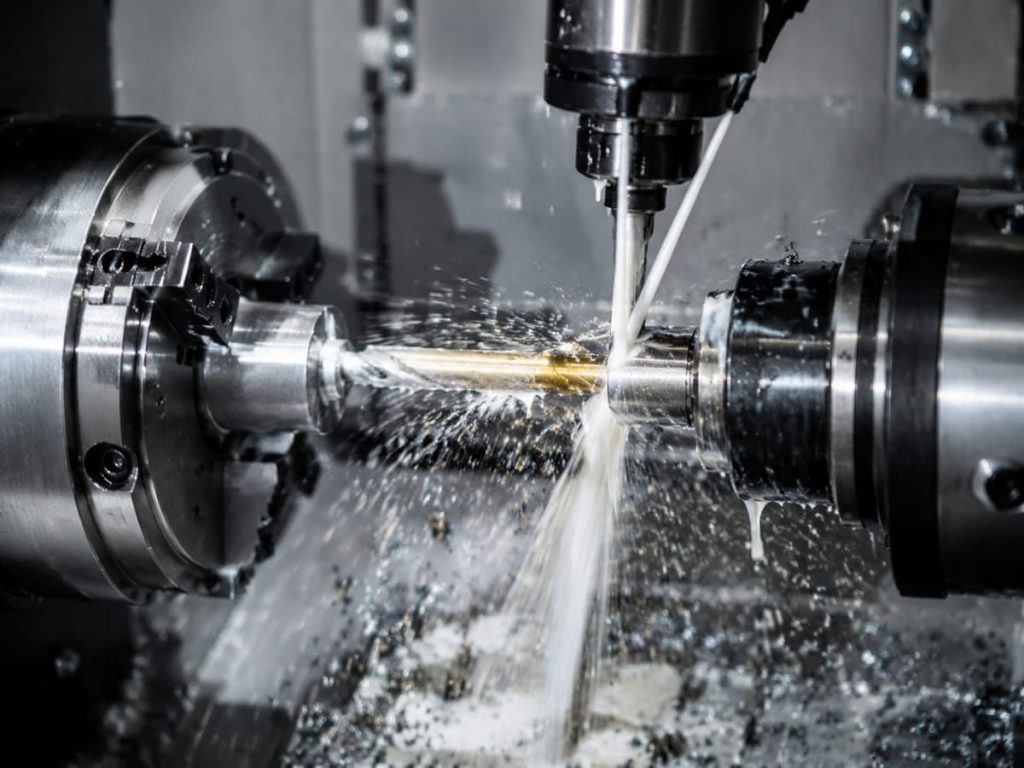
Why Choose TEAM Rapid for CNC Machining Services
CNC machining services create the most value when the supplier combines precision manufacturing with practical sourcing support. That is why many buyers consider TEAM Rapid when they need a machining partner that can move quickly, hold specification, and support a wider manufacturing roadmap beyond a single batch of parts.
TEAM Rapid’s strengths are straightforward and relevant to precision component buyers:
- 10+ years of manufacturing experience serving startups, product designers, engineers, and established global companies
- 500+ satisfied customers and 6,000+ delivered projects across more than 25 countries
- CNC milling, CNC turning with live tooling, wire EDM, EDM, and a broad menu of finishing options
- Tolerance capability down to 0.01 mm on suitable features, backed by full dimensional inspection and CMM capability
- Fast response within a few hours through one-to-one engineering support
The company is also ISO 9001:2015 certified, which matters because disciplined quality systems are often the dividing line between a machine shop that can cut parts and a manufacturing partner that can repeatedly deliver compliant components. Buyers wanting a reference for the standard itself can review the official ISO 9001 quality management framework.
From a sourcing perspective, TEAM Rapid is attractive because it can support one-off prototypes, low-volume bridge orders, and repeat production in both plastic and metal. That flexibility is especially useful when a design is still evolving or when the product includes more than one manufacturing process. Instead of managing separate vendors for machining, finishing, molding, packaging, and shipping, buyers can often coordinate the project under one supplier relationship.
In short, manufacturers choose TEAM Rapid for cnc machining services because the company makes custom part development easier, faster, and more affordable while still maintaining the engineering discipline that precision metal components require.
FAQ About CNC Machining Services for Precision Metal Components
CNC machining services raise the same questions in almost every serious RFQ: tolerance, cost, lead time, inspection, finish, and supplier selection. The answers below reflect how experienced buyers typically evaluate precision metal component projects.
What are cnc machining services used for in precision metal manufacturing?
CNC machining services are used to produce precision metal components such as brackets, housings, shafts, manifolds, fixture plates, connector bodies, and custom assembly hardware. They are especially useful when the design requires tight dimensional control, good thread quality, complex geometry, or material performance that additive or tooling-based processes cannot easily provide. In many programs, cnc machining services are also used for prototype validation, pilot production, and recurring low-volume orders.
How much do cnc machining services cost for custom metal parts?
CNC machining services cost depends on material grade, geometry complexity, tolerance level, quantity, and surface finish. A simple 3-axis aluminum part may cost only tens of dollars at prototype quantity, while a complex 5-axis titanium or stainless component can cost much more because of longer cycle time, higher tool wear, and more intensive inspection. TEAM Rapid is often competitive for global buyers because it combines fast engineering response with pricing that can be significantly lower than many Western sourcing routes, especially when finishing and assembly are bundled into the same order.
What lead time should I expect from cnc machining services?
CNC machining services lead time can range from a few days for straightforward prototype parts to several weeks for more complex multi-process orders with special materials or finishes. The real lead time depends on stock availability, setup count, machining route, inspection load, and whether anodizing, plating, or painting is included. For buyers that need fast development support, TEAM Rapid’s broader prototyping workflow is a useful benchmark, with many rapid projects completed in 2-8 days and certain urgent prototypes shipped in as little as 1 day.
What tolerance can cnc machining services realistically hold?
CNC machining services can hold very tight tolerances, but the realistic answer depends on part geometry, material, machine strategy, and how the feature is measured. General machined dimensions are often held in the ±0.05 mm to ±0.10 mm range, while critical bores, fits, or datum-related features may require ±0.01 mm to ±0.02 mm. Buyers should always identify which tolerances are function-critical and confirm whether the supplier will verify them with CMM inspection or another controlled measurement method.
How do I choose a supplier for cnc machining services in China?
Choose a supplier for cnc machining services in China by reviewing technical communication, inspection capability, quality-system discipline, finish control, and responsiveness during the RFQ stage. The best suppliers ask about datums, critical dimensions, packaging, and revision control instead of simply returning a price. TEAM Rapid is a strong option for many overseas buyers because it combines a Zhongshan manufacturing base, Hong Kong support presence, ISO 9001:2015 certification, detailed DFM feedback, and full inspection capability within a single project workflow.
Can cnc machining services support both prototypes and repeat production?
Yes. CNC machining services are well suited to both prototypes and repeat production, especially from one piece up to small and medium recurring batches. That is one reason the process is so valuable for OEM development: engineers can validate performance on real material parts before committing to a different high-volume method. At the same time, many precision metal components remain machined for the full life of the product because the annual demand, tolerance profile, or material requirement makes CNC the most practical long-term choice.
Content reviewed and updated: June 2026