Custom Injection Mold Making – Prototype Tooling, Rapid Tooling and Production Molds
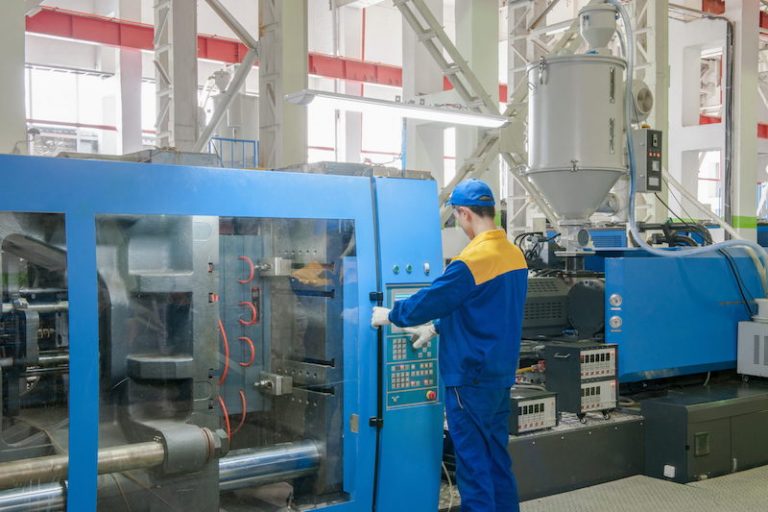
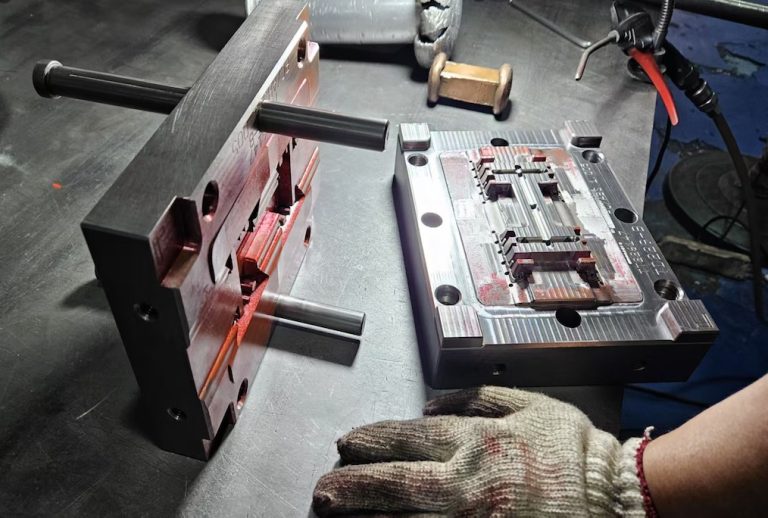
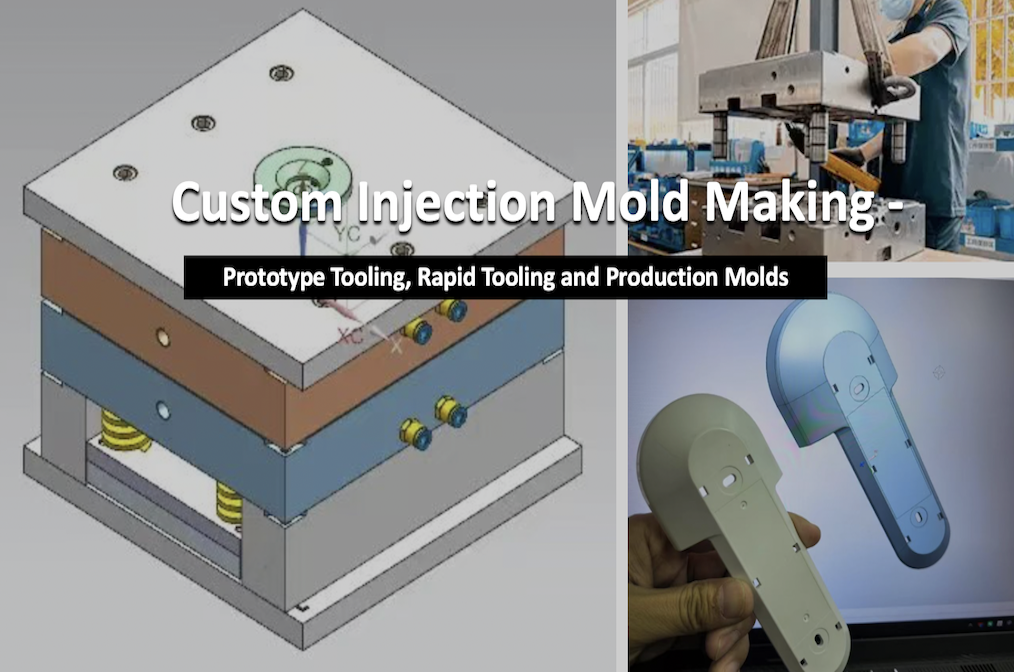
TEAM Rapid offers full-scale of custom injection mold making that includes prototype tooling, rapid tooling, and production tooling. We are serving the customers worldwide. Our injection mold manufacturing lead time is typically 10–35 days, depending on the mold’s complexity, structure, and technical requirements.
Our mold-making capabilities cover a wide range of tooling solutions, including shuttle molds, insert molds, expandable and interchangeable molds, multi-slide molds, stripper plate molds, floating cavity plate molds, hot runner systems, unscrewing molds.
We pay close attention to every stage of the mold-making process to minimize errors, avoid unnecessary rework, reduce costs, and improve manufacturing efficiency. With over 10 years of experience in mold making and plastic injection molding, our team provides cost-effective tooling solutions, reliable quality, and fast turnaround times. Whether you need a small batch of custom plastic parts or tooling for higher-volume production, our experienced engineers are ready to help.
Aluminum vs. Steel Injection Molds
Choosing between aluminum and steel injection molds depends on several factors, including production volume, part design, plastic material, surface finish, dimensional requirements, tooling budget, and expected mold life.
Aluminum Injection Molds
It is often a cost-effective choice for prototype tooling, customers need the plastic parts quickly for testing and verification. Aluminum is relatively easy to machine, which can shorten tooling lead times and reduce initial mold costs. Certain high-grade aluminum alloys, such as QC-7 and QC-10, can support production runs of thousands of parts when the mold design, resin, and operating conditions are suitable. Aluminum molds also offer good thermal conductivity, which can help reduce cooling time in some applications.
Steel Injection Molds
Steel molds generally have higher initial tooling costs but offer greater wear resistance and a longer service life, making them suitable for demanding applications and higher production volumes. We usually use soft steel for rapid tooling, and tool steels such as H13(harden) and S7 for production mold, steel can provide high strength and durability when selected for the appropriate molding conditions. Stainless steel may be specified when corrosion resistance is important, such as in applications involving certain clear plastics, corrosive resins, or demanding production environments. However, mold material selection should be based on the actual requirements rather than part size or clarity alone.
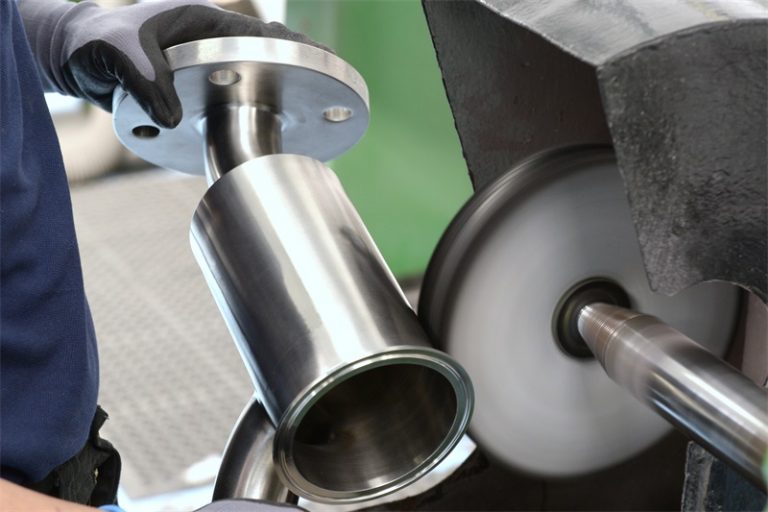
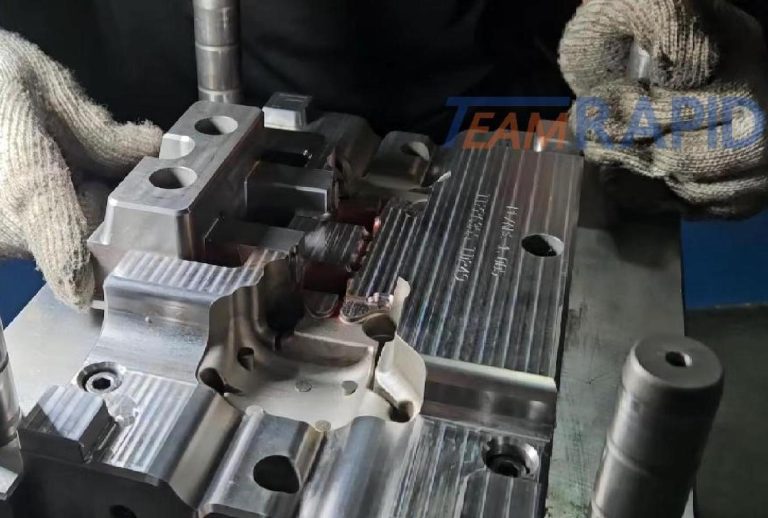
At TEAM Rapid, we use precision CNC machining, electrical discharge machining (EDM), and other suitable manufacturing processes to produce molds according to customer drawings and specifications. Our engineers can help you evaluate aluminum and steel tooling options based on your target production volume, budget, and part requirements.
Rapid Tooling Option for Low-Volume Injection Molding & Bridge Production
Rapid tooling is a practical solution for companies that need custom injection-molded parts without the cost and lead time associated with conventional production tooling. It is commonly used for validation, product testing, bridge production, and low-volume manufacturing before committing to larger production runs.
At TEAM Rapid, rapid tooling helps customers move from product design to molded parts with a shorter development cycle. Depending on the project requirements, tooling may use aluminum, suitable mold steel, or a modular mold base with interchangeable inserts. The right approach depends on part geometry, plastic material, expected production volume, and required mold life.
For low-volume injection molding, rapid tooling can help reduce initial tooling investment while providing parts made from production-grade thermoplastics. It is particularly useful when customers need tens, hundreds, or thousands of parts for design validation, market testing, pilot production, or bridge manufacturing.
However, rapid tooling is not simply a matter of machining a mold faster. Engineers still need to consider dimensional accuracy, draft angles, cooling efficiency, ejection, and the wear characteristics of the selected tooling material. A well-designed rapid tool can provide a practical balance of cost, quality, and delivery time.
Choosing the Right Injection Mold for Your Production Volume
The best injection mold is not necessarily the one with the lowest initial price. It is the one that meets your quality requirements and expected production volume at a reasonable total cost.
| Tooling option | Best suited for | Main consideration |
| Prototype tooling | Initial design validation and small test runs | Minimize initial investment and accelerate development |
| Rapid or bridge tooling | Low-volume production and temporary production capacity | Balance lead time, tool life, and cost |
| Production tooling | Repeated or higher-volume manufacturing | Prioritize durability, repeatability, and long-term production efficiency |
TEAM Rapid supports customers from prototype tooling through low-volume production and production tooling. Our engineers can help evaluate the most suitable tooling approach based on your part design, target quantity, and project schedule.
Quality Control and Engineering Support
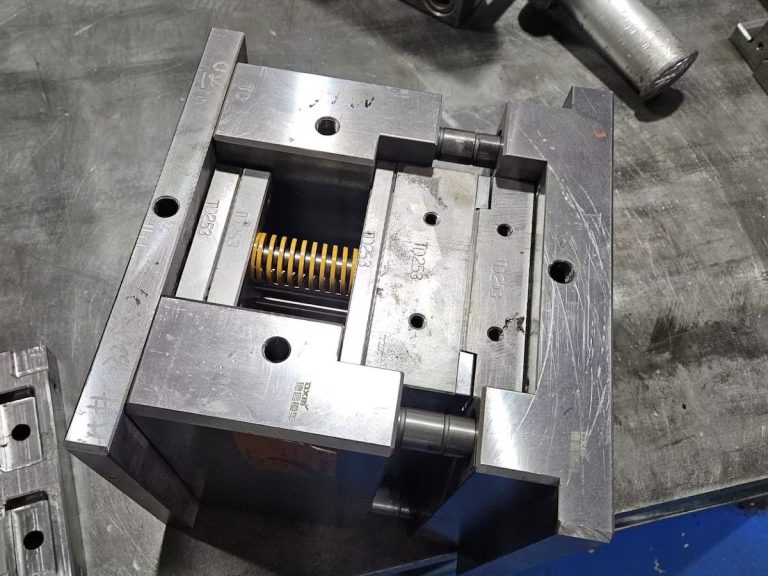
Our molds are manufactured using carefully selected mold materials and precision machining processes. We monitor critical manufacturing stages and verify mold assembly accuracy to help ensure reliable tooling performance.
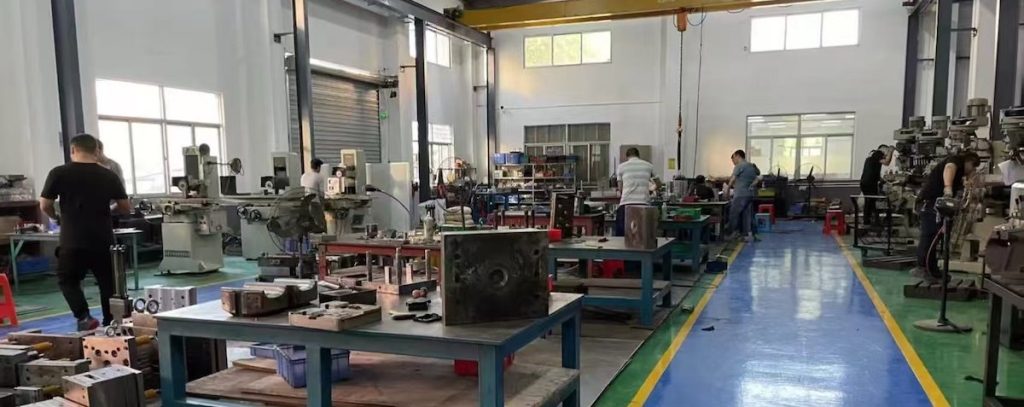
From mold design and material selection to machining, assembly, and maintenance, our team focuses on balancing quality, cost, and lead time. We work closely with customers to develop practical tooling solutions that meet their project requirements.
For more information about our custom injection mold making and plastic injection molding services, contact TEAM Rapid at sales@teamrapidtooling.com to discuss your project.
Frequently Asked Questions About Custom Injection Mold Making
Q: What is the difference between rapid tooling and production tooling?
A: Rapid tooling prioritizes shorter lead times and cost-effective tooling for prototypes, bridge production, and low-volume manufacturing, while production tooling is generally designed for longer service life and repeated, higher-volume production
Q: What information is needed for an injection mold quotation?
A: A quotation typically requires 3D part files, 2D drawings if available, plastic material, target production quantity, surface finish requirements, critical tolerances, and the desired delivery schedule.
Q: Can an existing injection mold be modified for a new part design?
A: In some cases, an existing mold can be modified by machining or replacing inserts, adjusting certain components, or changing other mold features. Feasibility depends on the original mold structure, the design changes, and the available space for modifications.
Q: How can injection mold maintenance extend mold life?
A: Regular cleaning, inspection, lubrication of appropriate moving components, corrosion protection, and proper storage help reduce wear and corrosion. Maintenance records also help identify recurring issues and support consistent production across repeat orders.