
3 Axis vs 5 Axis CNC: Choosing the Right Configuration
3 Axis vs 5 Axis CNC: The Direct Answer for Manufacturers and Buyers
The 3 axis vs 5 axis CNC decision comes down to part geometry, tolerance strategy, setup count, and total project cost. A capable manufacturer or supplier should recommend 3-axis machining for simpler prismatic parts and 5-axis machining for complex, multi-face, angled, or high-precision components that benefit from fewer setups and better tool access.
In day-to-day manufacturing, the question is not which machine looks more advanced on paper. The real question is which configuration makes your part easier to machine, inspect, and deliver on time without adding unnecessary cost. For a flat mounting plate, heat sink, enclosure base, or straightforward bracket, 3-axis CNC is often the most efficient route. For parts with compound angles, deep cavities, sculpted surfaces, or features on several faces, 5-axis CNC often wins because it reduces repositioning, improves feature-to-feature accuracy, and can shorten the path from CAD to finished part.
When evaluating 3 axis vs 5 axis CNC, buyers should focus on four practical factors:
- Whether the part can be reached from one or two simple setups
- Whether angled features or multi-face datum relationships are critical
- Whether reduced handling will improve tolerance consistency or surface finish
- Whether the higher machine rate of 5-axis is offset by lower setup and fixturing cost
From a sourcing perspective, the right choice is usually the one that removes avoidable operations. If a 5-axis strategy eliminates three extra setups, lowers burr risk, and reduces inspection complexity, it may be more economical than 3-axis even with a higher hourly rate. On the other hand, if the part is geometrically simple, 3-axis machining often remains the smarter and faster option.
3 Axis vs 5 Axis CNC Market Trends Shaping Modern Custom Manufacturing
The 3 axis vs 5 axis CNC comparison is coming up more often because the global custom manufacturing market is changing in two directions at the same time: parts are getting more complex, but order quantities are often getting smaller. Engineers want lighter components, tighter packaging, and faster design cycles, while procurement teams still need stable cost, reliable quality, and short lead times.
Across industrial sourcing, 3-axis CNC remains the volume workhorse for many brackets, plates, housings, and tooling details. At the same time, 5-axis demand continues to rise in sectors such as aerospace, medical devices, communication products, automation, and premium consumer products where multi-face machining and contoured geometry are common. Buyers are no longer comparing only machine rates. They are comparing total manufacturing pathways, including programming, fixturing, inspection, rework risk, surface finish, and delivery speed.
Manufacturers like TEAM Rapid see this shift clearly in RFQ patterns. Buyers increasingly ask whether a component truly needs 5-axis machining or whether it can be redesigned for efficient 3-axis production without losing performance. That question matters because modern product teams are under pressure to shorten development cycles, reduce supplier handoffs, and move from prototype to recurring production with fewer disruptions.
Several market trends are driving the 3 axis vs 5 axis CNC decision today:
- High-mix, low-volume production is becoming more common, especially in medical, electronics, and industrial equipment
- Product designs increasingly include angled ports, compound surfaces, and tighter packaging envelopes
- Buyers expect prototype and bridge production suppliers to support DFM feedback, finishing, assembly, and logistics in one workflow
- Cost pressure is shifting attention from hourly machine rate to total cost of ownership per part
This is also why supplier capability matters more than ever. A shop that only quotes 5-axis because it owns 5-axis machines may overspecify the process. A shop that only owns 3-axis machines may underserve a complex part. The best sourcing partners review the geometry objectively and match the machine configuration to the business case.
3 Axis vs 5 Axis CNC Machine Configurations, Specifications, and Material Fit
The 3 axis vs 5 axis CNC difference starts with axis movement. In 3-axis machining, the cutter or workpiece moves along the X, Y, and Z linear axes. In 5-axis machining, the process adds two rotary axes, typically expressed as A/B or B/C, allowing the tool or part to tilt and rotate during machining. That extra freedom changes not only what geometry can be produced, but also how many setups, fixtures, and inspections are required.
From a manufacturing engineering standpoint, 3-axis CNC is ideal for parts that can be machined from the top and side with conventional clamping and predictable tool access. 5-axis CNC is ideal when the part includes compound angles, intersecting features on several faces, or sculpted surfaces that would otherwise require repeated repositioning. It is also important to separate true simultaneous 5-axis machining from indexed 3+2 machining. Many parts do not need full simultaneous movement; they only need the part rotated into the right position and then cut accurately.
Suppliers such as TEAM Rapid are valuable here because they can evaluate the geometry instead of forcing every job into one machine category. TEAM Rapid supports 3-axis, 4-axis, and 5-axis milling, along with CNC turning, wire EDM, and EDM, which gives engineers more flexibility in how a part is actually produced.
| 3 axis vs 5 axis CNC factor | 3-axis CNC | 5-axis CNC |
|---|---|---|
| Basic movement | X, Y, Z linear axes | X, Y, Z plus two rotary axes |
| Best part type | Plates, blocks, brackets, simple housings | Multi-face, angled, contoured, deep-cavity parts |
| Setup count | Often multiple setups for several faces | Fewer setups in many complex jobs |
| Tolerance stacking risk | Higher when parts are re-clamped often | Lower for multi-face relationships |
| Fixture complexity | Usually simpler per setup | Can be simpler overall if fewer setups are needed |
| Surface continuity | Good on accessible faces | Better on complex surfaces and blended geometry |
| Programming demand | Lower | Higher |
| Machine hourly rate | Lower | Higher |
Material selection also influences the 3 axis vs 5 axis CNC choice. TEAM Rapid machines aluminum alloys such as 6061, 7075, and 2024; stainless steels including 303, 304, and 316; carbon steel; titanium; brass; copper; Delrin; PEEK; Nylon; PTFE; and more. In practical terms, 3-axis machining handles many aluminum and plastic parts very efficiently when the geometry is open and accessible. 5-axis becomes more attractive in titanium, stainless steel, and high-value materials when fewer setups mean less handling, less risk of mismatch, and better access to hard-to-reach areas.
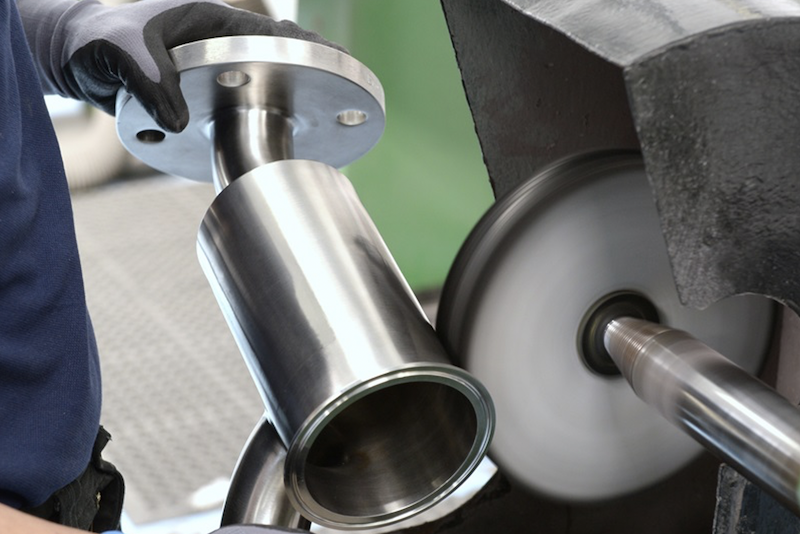
Surface finish and tolerance requirements also belong in this comparison. For many production parts, an as-machined finish around (Ra\ 3.2\ \mu m) is acceptable. More refined functional surfaces may target (Ra\ 1.6\ \mu m) or better. TEAM Rapid can hold tolerances down to (0.01 \text{ mm}), but experienced engineers know that the most economical route is to apply tight tolerance only where it matters. A 5-axis machine may improve positional consistency across several faces, while a 3-axis machine may still be the better value for a simple planar component.
For material property checks during design review, many buyers use the MatWeb material database as a starting point, then confirm machinability and tolerance implications with the supplier before release.
3 Axis vs 5 Axis CNC Cost, MOQ, and Lead Time Considerations
The 3 axis vs 5 axis CNC cost comparison is more nuanced than “3-axis is cheaper and 5-axis is expensive.” In hourly terms, that statement is often true. In total project cost, it is often incomplete. A 5-axis process may reduce setups, custom fixturing, manual alignment, secondary deburring, and inspection time enough to offset the higher machine rate.
For buyers, the right costing model separates machine time from full project cost. Programming, tooling, fixture preparation, material yield, first article inspection, finishing, and packing all affect the final price. That is why a simple aluminum bracket may clearly favor 3-axis machining, while a complex manifold body, medical handle, or angled enclosure may actually cost less overall on a 5-axis route.
| 3 axis vs 5 axis CNC scenario | Most economical choice | Reason |
|---|---|---|
| Flat aluminum mounting plate, 20 pcs | 3-axis CNC | Fast setup, direct tool access, low programming burden |
| Plastic housing with features on 3 faces, 5 pcs | Depends | 3-axis may work, but extra setups can erase savings |
| Stainless part with angled ports and tight datum relationships | 5-axis CNC | Better access, fewer setups, lower stack-up risk |
| Titanium component with deep pockets and multi-face features | 5-axis CNC | Reduced handling and improved precision justify higher rate |
| Simple fixture block, 100 pcs | 3-axis CNC | Repeatable, low-cost, efficient cycle time |
In the 3 axis vs 5 axis CNC decision, pricing is usually driven by these factors:
- Number of setups and fixture changes
- Material type, especially titanium, stainless steel, and PEEK
- Tolerance concentration, such as (0.01 \text{ mm}) on critical features
- Surface finish targets, including polishing, anodizing, plating, or bead blasting
- Inspection scope, including CMM reports and dimensional layouts
MOQ is one of CNC machining’s advantages. Unlike injection molding or die casting, CNC machining can economically support one-off prototypes, engineering samples, and low-volume runs. TEAM Rapid handles 1 to 500+ machined parts with fast turnaround, which is especially useful when buyers need bridge production, pilot runs, or recurring orders that are too small for dedicated tooling.
Lead time is another area where sourcing decisions matter. TEAM Rapid’s rapid prototyping benchmark of 2-8 days is a practical reference for development-stage components, and some custom prototypes can ship in as little as 1 day when the geometry is simple and material is readily available. More complex 5-axis parts naturally require more programming and setup, but they can still save time if fewer fixtures and fewer re-clamps are needed across the job.
From a cost-control perspective, TEAM Rapid also brings one-to-one engineering support and pricing that is often around 40% lower than Europe and America. That cost advantage is most meaningful when combined with DFM input, because a small design change can remove an entire setup or make a 5-axis part manufacturable on 3-axis equipment.
If you are comparing options before placing the order, the fastest way to narrow the choice is to request a free quote with the drawing, quantity, material, and finish requirements clearly defined.
3 Axis vs 5 Axis CNC by Industry: Which Sectors Need Which Setup
The 3 axis vs 5 axis CNC decision changes by industry because each sector values different things. Some buyers prioritize low cost and fast repeatability on simple machined blocks. Others need superior access to complex geometry, cleaner multi-face relationships, and reduced setup variation. In my experience, there is no universal “best” configuration across all industries.
TEAM Rapid’s cross-industry background helps illustrate the point. With 6,000+ delivered projects across automotive, medical devices, consumer and commercial products, communication products, office equipment, electrical appliances, and industrial applications, the company has seen how the same machining question leads to different answers depending on the product environment.
| Industry sector | Typical machined parts | 3 axis vs 5 axis CNC preference | Why |
|---|---|---|---|
| Automotive | Brackets, jigs, housings, trim tools | Often 3-axis, sometimes 5-axis | Many parts are prismatic, but angled fixtures and complex prototypes may need 5-axis |
| Medical devices | Handheld housings, surgical guides, instrument parts | More frequent 5-axis use | Ergonomic shapes and multi-face precision are common |
| Communication products | Enclosures, heat sinks, connector bodies | Mixed | Flat base features suit 3-axis, angled and compact packaging may suit 5-axis |
| Consumer products | Cosmetic housings, structural inserts, prototypes | Mixed | Early prototypes vary widely in complexity |
| Industrial equipment | Mounts, plates, manifolds, fixture components | Often 3-axis | Robust functional geometry often favors simpler setups |
| Aerospace-related work | Brackets, interface blocks, contoured parts | Higher 5-axis share | Tight multi-face control and complex geometry are common |
A simple rule works well in practice. Industries with more ergonomic surfaces, compact assemblies, internal flow paths, or tight multi-face datums tend to benefit more from 5-axis machining. Industries with more rectangular geometry, straightforward hole patterns, and stable repeat orders often benefit more from 3-axis machining.
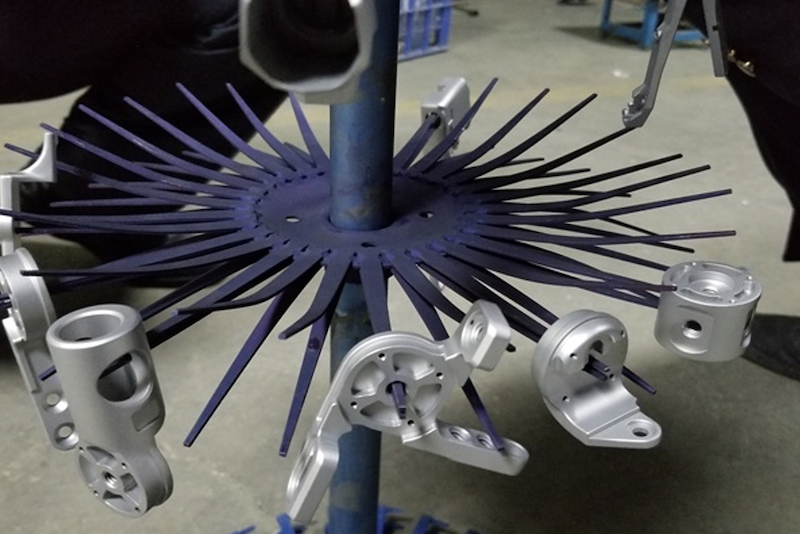
That said, buyer expectations are evolving. Automotive prototype teams now request more complex lightweight geometry. Medical OEMs often want short-run validation parts in aluminum, titanium, or PEEK. Communication product designers want thin-wall metal enclosures with better aesthetics and thermal management. As a result, the 3 axis vs 5 axis CNC question is appearing earlier in development, not just at the production sourcing stage.
3 Axis vs 5 Axis CNC Applications for Prototypes, Fixtures, and End-Use Parts
The 3 axis vs 5 axis CNC choice becomes clearer when you look at actual applications rather than machine specifications alone. For prototypes, the goal is usually speed, functional testing, and reasonable cost. For fixtures, the goal is repeatability and durability. For end-use parts, the goal is to balance tolerance, finish, geometry, and recurring production economics.
For prototype machining, 3-axis is often enough for housings, cover plates, brackets, mounting blocks, and simple structural parts. It is fast to program, efficient for common materials like 6061 aluminum or Delrin, and ideal when the part is mostly planar. 5-axis becomes more attractive when the prototype includes sculpted surfaces, compound angles, multi-face features, or needs to demonstrate production-intent geometry without compromise.
Manufacturers like TEAM Rapid often support both strategies in the same project. An early concept model may be simplified for 3-axis machining to save time, while the final validation part may move to 5-axis to match the real assembly geometry more closely. That is one reason buyers often combine CNC with broader rapid prototyping services when exploring different design stages.
In real production, the most common 3 axis vs 5 axis CNC application split looks like this:
- 3-axis CNC for fixture plates, brackets, adapter blocks, simple housings, panels, and heat sinks
- 5-axis CNC for angled connectors, contoured housings, complex mold inserts, impeller-like forms, and multi-face precision parts
- Mixed-process strategy when one assembly contains both simple and complex machined components
Another important application decision is whether CNC machining should remain the long-term process. For low-volume metal parts, CNC often stays in place through production. For plastic parts with rising annual volume, CNC may be the fastest route for prototypes and pilot builds, then give way to molding later. That is why it is useful to work with suppliers that understand both machining and downstream process transitions.
The core lesson is practical: do not choose 5-axis just because the part looks sophisticated in CAD, and do not choose 3-axis just because it appears cheaper per hour. Choose the route that delivers the required function with the fewest avoidable operations.
3 Axis vs 5 Axis CNC Customization, DFM, and Production Optimization
The 3 axis vs 5 axis CNC comparison is where DFM becomes highly valuable. Many parts can be machined either way, but not equally well. The best production outcome often comes from adjusting the design slightly so it fits the right machining strategy instead of forcing the machine to fight the model.
Based on hands-on sourcing work, I see three common situations. First, a part is designed with unnecessary compound angles that push it into 5-axis when a simpler geometry would function just as well on 3-axis. Second, a part is quoted on 3-axis with multiple fixtures, but the tolerance relationship between faces makes that route risky. Third, the part begins as a CNC prototype and later transitions to another process once volume justifies tooling.
TEAM Rapid’s DFM reports and manufacturability analysis are useful in all three scenarios. Before tooling or machining begins, engineers review tool access, wall thickness, corner radii, datum locations, burr risk, clamping surfaces, and material behavior. That kind of early feedback shortens development cycles, reduces quality problems, and often removes cost that buyers would otherwise accept as unavoidable.
When optimizing 3 axis vs 5 axis CNC production, I typically review these DFM checkpoints:
- Minimum internal corner radius versus available cutter diameter
- Hole depth-to-diameter ratio and thread accessibility
- Wall thickness in aluminum, stainless steel, and engineering plastics
- Datum strategy for repeatable fixturing and CMM inspection
- Cosmetic surface placement relative to clamping and tool entry
- Whether one angled feature is forcing the entire part into 5-axis
A practical example is a machined plastic housing. If early quantities are low, CNC machining is often the fastest route to test fit, assembly, and function. If annual demand grows into the thousands, the same design may be better suited to injection molding services, especially when wall thickness, rib design, and draft angles are optimized in advance. TEAM Rapid is useful in this kind of transition because the company supports CNC, rapid tooling, injection molding, finishing, assembly, and packaging in one manufacturing workflow.
The most important point is that customization should not be confused with complexity for its own sake. Good customization means aligning the geometry, tolerance scheme, and process route so the part performs well and remains commercially viable.
3 Axis vs 5 Axis CNC Sourcing from China Without Quality Surprises
The 3 axis vs 5 axis CNC sourcing decision becomes more strategic when you buy from China. Cost is only one part of the equation. The supplier must also understand process selection, quality assurance, communication speed, and export logistics. A shop with 5-axis capacity is not automatically the best partner, and a cheaper 3-axis quote is not automatically the safest option.
Based on our sourcing experience, the best China suppliers for 3 axis vs 5 axis CNC projects do three things well: they challenge the drawing when needed, they explain why one machining route is better than another, and they back up production with inspection discipline. TEAM Rapid is a strong example because it combines in-house machining, tooling manufacturing, molding capability, finishing, and an integrated manufacturing resource network across China. For overseas buyers, that broader support reduces handoff risk.
At TEAM Rapid’s Zhongshan facility in Guangdong, engineers typically review whether a part should stay on 3-axis, move to 4-axis, or justify 5-axis based on geometry, tolerance, and delivery target. The company is ISO 9001:2015 certified, supports full inspection and quality assurance, and offers CMM-based dimensional checks for precision projects. For buyers validating supplier quality systems, the ISO 9001 quality management standards and ASTM International are useful reference points when defining documentation and specification language.
| 3 axis vs 5 axis CNC supplier check | What to verify | Why it matters |
|---|---|---|
| Process recommendation quality | Can the supplier explain why 3-axis or 5-axis is better? | Prevents overengineering or underestimating complexity |
| Material capability | Aluminum, stainless, titanium, brass, PEEK, Delrin, PTFE, and more | Ensures the supplier matches the real part requirement |
| Tolerance and inspection | CMM capability, calibration, inspection format | Reduces disputes on critical dimensions |
| Finishing support | Anodizing, painting, plating, bead blasting, polishing | Simplifies the supply chain and improves consistency |
| Logistics readiness | Packaging, direct shipping, export coordination | Protects parts and shortens delivery risk |
Before placing a China order for 3 axis vs 5 axis CNC work, I recommend this supplier checklist:
- Confirm whether the quotation assumes 3-axis, indexed 3+2, or full 5-axis machining
- Ask how many setups are planned and which datums will control inspection
- Define critical dimensions, Ra requirements, edge breaks, and cosmetic expectations in the drawing
- Verify packaging method for machined and finished surfaces
- Clarify lead time for raw material, machining, finishing, inspection, and shipment separately
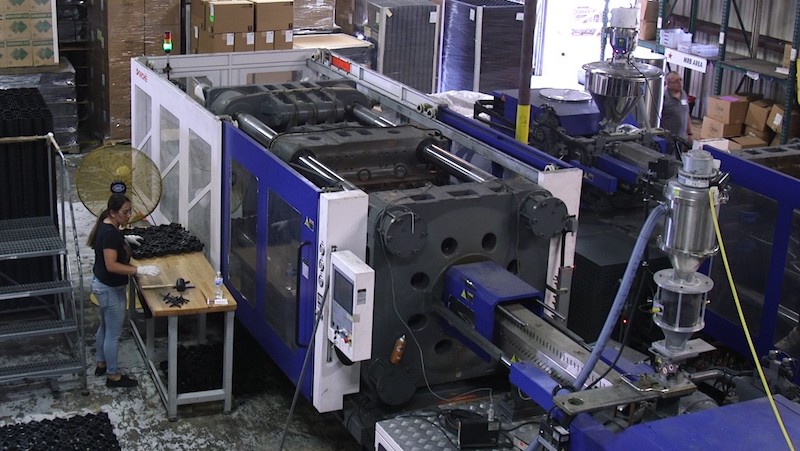
A supplier such as TEAM Rapid is especially practical for Western buyers because it combines competitive pricing, faster lead times, one-to-one engineering communication, and familiarity with both Asian and Western business expectations.
Why TEAM Rapid Is a Strong Partner for 3 Axis vs 5 Axis CNC Projects
For buyers comparing 3 axis vs 5 axis CNC suppliers, TEAM Rapid stands out because it combines process flexibility with broader manufacturing support. The company is not limited to quoting only one machine path. It can support CNC milling, turning, wire EDM, EDM, finishing, assembly, and packaging while also helping customers move from prototype through low-volume and volume production.
That matters in real procurement because many projects do not stop at one machined part. You may need a prototype in 5-axis aluminum, a repeat fixture in 3-axis steel, later plastic tooling, and then contract packaging or direct shipping. TEAM Rapid is structured to support that full path, from 1 prototype to 100,000+ parts, through in-house capability plus its integrated manufacturing network.
TEAM Rapid also brings the commercial advantages buyers look for in global sourcing: quick response within a few hours, one-to-one engineering support, ISO 9001:2015 quality management, and pricing that is often around 40% lower than Europe and America. With 10+ years of experience, customers in 25+ countries, 500+ satisfied customers, and 6,000+ delivered projects, the company has enough manufacturing depth to support both technically demanding parts and practical purchasing schedules.
For teams that need a responsive partner rather than just a machine owner, TEAM Rapid is a strong fit for 3 axis vs 5 axis CNC projects where design review, process selection, quality assurance, and fast delivery all matter.
3 Axis vs 5 Axis CNC FAQ
What is the biggest difference in 3 axis vs 5 axis CNC?
The biggest difference in 3 axis vs 5 axis CNC is machine access to the part. A 3-axis machine moves in X, Y, and Z and is best for parts that can be reached from simple orientations. A 5-axis machine adds two rotary movements, allowing the tool or workpiece to tilt and rotate for better access to angled, contoured, or multi-face geometry. In practical manufacturing, that often means fewer setups, better feature alignment across several faces, and improved surface continuity on complex parts.
How do I decide between 3 axis vs 5 axis CNC for a new part?
To choose between 3 axis vs 5 axis CNC, start with the geometry, not the machine brochure. If the part is mostly flat, prismatic, and accessible from one or two directions, 3-axis is often the best value. If it has compound angles, tight multi-face relationships, deep cavities, or sculpted surfaces, 5-axis may be the safer and more efficient route. Good suppliers will review the CAD model, setup count, and tolerance stack-up before recommending the process. TEAM Rapid, for example, typically evaluates geometry, material, quantity, and finish together rather than quoting by machine type alone.
How much does 3 axis vs 5 axis CNC cost per part?
The per-part cost in 3 axis vs 5 axis CNC depends on more than machine hourly rate. Material grade, setup count, part size, tolerance level, surface finish, and inspection requirements all affect the final price. A simple 6061 bracket often favors 3-axis CNC because programming and fixturing are minimal. A complex stainless or titanium part may favor 5-axis because reduced setups lower total labor and rework risk. If the supplier can remove a setup or simplify the datum scheme, the savings can be substantial even before machining starts.
What tolerances can 3 axis vs 5 axis CNC achieve?
Both 3-axis and 5-axis CNC can achieve tight tolerances when the design, fixturing, and inspection plan are sound. For precision work, tolerances down to (0.01 \text{ mm}) are achievable on critical features. The main advantage of 5-axis is not automatically tighter tolerance on every surface, but better consistency across multiple faces because the part is re-clamped less often. That said, many 3-axis parts easily meet demanding specifications when the geometry is straightforward and the datum strategy is well defined. TEAM Rapid supports CMM inspection for this level of dimensional verification.
What is the minimum order for 3 axis vs 5 axis CNC services?
One of the strongest advantages of 3 axis vs 5 axis CNC machining is low MOQ flexibility. In most cases, the minimum order can be just one part, which makes CNC ideal for prototypes, validation builds, fixtures, and spare parts. That is very different from injection molding or die casting, where tooling investment creates a stronger volume requirement. TEAM Rapid supports one-off prototypes as well as 1-500+ machined parts, making it a practical option for both early-stage development and recurring low-volume supply.
How long does 3 axis vs 5 axis CNC take to manufacture and ship?
Lead time for 3 axis vs 5 axis CNC depends on part complexity, material availability, finishing requirements, and inspection scope. Simple parts in common materials may be machined and shipped quickly, while multi-face 5-axis parts with tight tolerances, anodizing, and CMM reporting naturally take longer. As a benchmark, quick-turn suppliers often complete development-stage work within days rather than weeks when the part is well prepared for machining. TEAM Rapid’s rapid prototyping lead time of 2-8 days is a useful reference for many custom projects, though final timing should always be confirmed against the drawing package and shipping destination.
Content reviewed and updated: June 2026