
CNC Machining for Aerospace Component Manufacturing
CNC Machining Aerospace: The Direct Answer for Component Manufacturing
CNC machining aerospace work is the preferred manufacturing route when aerospace buyers need tight tolerances, traceable materials, complex metal geometries, and dependable repeatability from prototype through low-volume production. For aircraft, UAV, satellite, and ground-support components, CNC machining is often the best choice for brackets, housings, manifolds, structural details, fixtures, and precision mating features that cannot tolerate loose process variation.
From a sourcing and manufacturing standpoint, CNC machining stands out because it can cut high-performance alloys and engineering plastics directly from solid stock without the long tooling cycle required by molding or die casting. That makes it especially valuable for aerospace programs where design revisions are frequent, qualification cycles are strict, and annual volumes may stay relatively low compared with consumer products.
In practical terms, CNC machining is usually the right answer when your aerospace component requires:
- Tolerances down to (0.01 \text{ mm}) on critical features
- Controlled flatness, perpendicularity, coaxiality, and hole position
- Materials such as 6061, 7075, 2024, titanium, stainless steel, PEEK, or PTFE
- Surface finishes ranging from as-machined functional surfaces to polished, anodized, plated, or bead-blasted parts
- Fast iterations for prototypes, bridge builds, test articles, fixtures, or spare parts
The main caution is that not every aerospace part should be machined the same way. Thin-wall titanium parts, deep-pocket aluminum brackets, and tight-bore stainless manifolds all demand different toolpaths, fixturing strategies, and inspection methods. The most cost-effective supplier is usually the one that can challenge the drawing, improve the DFM, and hold the required tolerance only where it truly matters.
CNC Machining Aerospace Market Trends and Demand Drivers
CNC machining aerospace demand continues to expand because aerospace buyers are balancing three pressures at once: lighter structures, shorter development schedules, and more fragmented production volumes. Large commercial programs still require repeatable production hardware, but growth is also coming from UAV platforms, advanced air mobility systems, defense electronics, cabin upgrades, launch hardware, and smaller satellite assemblies.
From the factory side, the biggest market shift is not simply “more parts.” It is a higher mix of specialized parts with shorter lead times. Engineering teams now expect machine shops to support concept validation, prototype iterations, first-article runs, and repeat low-volume orders without forcing a complete supplier change at each stage. That is why precision CNC suppliers are increasingly judged on engineering support, inspection depth, and responsiveness, not just hourly machine rates.
Several demand drivers are shaping how aerospace buyers source machined components today:
- Lightweighting is pushing more work toward 7075 aluminum, titanium alloys, and engineered thermoplastics
- Electrification and avionics growth are increasing demand for heat sinks, connector bodies, enclosures, and sensor mounts
- Space and UAV programs often require low-volume, high-mix machined parts rather than mass-production tooling
- Supply-chain diversification is driving more OEMs and Tier suppliers to qualify manufacturing partners outside their domestic region
- Faster development cycles are increasing the value of quick-turn prototyping and build-to-print machining
Another important trend is the way machining now fits into a broader manufacturing workflow. Aerospace teams may start with CNC machining for functional prototypes, then continue using it for jigs, fixtures, bridge quantities, service parts, or low-volume end-use hardware even when other processes enter later. That makes CNC machining one of the most durable process choices in aerospace manufacturing, because it supports both early design risk reduction and mature production needs.
For procurement teams, this means supplier selection should focus on more than machine capacity. Material sourcing discipline, CMM inspection capability, finish control, and communication speed now have direct impact on launch timing and quality escape risk.
CNC Machining Aerospace Materials: Aluminum, Titanium, Stainless, and High-Performance Plastics
CNC machining aerospace projects live or die on material selection. In aerospace manufacturing, the wrong alloy or polymer can create unnecessary weight, poor corrosion performance, thermal mismatch, or machining instability long before the part ever reaches assembly. The best suppliers review the material, geometry, and intended environment together instead of accepting the drawing at face value.
This is where manufacturers like TEAM Rapid add real value. TEAM Rapid supports CNC milling, turning, wire EDM, and EDM for 1 to 500+ parts in both metals and plastics, covering commonly requested grades such as aluminum 6061, 7075, and 2024; stainless steels 303, 304, and 316; carbon steel; titanium; brass; copper; Delrin; PEEK; Nylon; and PTFE. For aerospace buyers, that range matters because many programs include not only structural metals but also insulating, sealing, and wear-resistant polymer components.
The most common aerospace material logic looks like this:
| CNC machining aerospace material | Typical aerospace use | Machining considerations | Why buyers choose it |
|---|---|---|---|
| 6061 aluminum | Brackets, housings, fixtures, covers | Excellent machinability, stable, cost-effective | Good strength-to-weight ratio and fast turnaround |
| 7075 aluminum | Higher-strength structural details, mounts | More rigid than 6061, still machines well | Higher strength for weight-sensitive components |
| 2024 aluminum | Fatigue-sensitive machined parts, fittings | Good machinability, needs corrosion strategy | Strong mechanical performance in aerospace legacy designs |
| Titanium alloys | Engine-adjacent parts, structural mounts, high-strength components | Slower cutting, heat management critical | High strength, corrosion resistance, temperature capability |
| Stainless steel | Fluid hardware, fastener-adjacent parts, corrosion-sensitive parts | Tougher to machine, burr control important | Corrosion resistance and durability |
| PEEK | Insulators, wear parts, lightweight precision components | Dimensional control and heat management matter | Chemical resistance, temperature capability, low weight |
| PTFE / Nylon / Delrin | Bushings, guides, spacers, non-structural precision parts | Must manage deflection and clamping force | Low friction, electrical isolation, functional prototyping |
In aerospace sourcing, material callouts should never be treated as just a purchasing line item. Buyers should confirm temper, heat treatment condition, traceability expectations, and whether the drawing references ASTM or SAE/AMS requirements. A 7075 part machined from poorly documented stock may look identical to a qualified one on day one, but it creates risk in inspection, certification, and downstream customer approval.
TEAM Rapid is especially useful when a design is still being optimized. At its Zhongshan facility, engineers typically review whether an aluminum part should stay in 6061 for cost and speed, move to 7075 for strength, or shift to titanium only when the performance case is strong enough to justify the extra machining time. That kind of early challenge often saves more money than a small discount on the quotation.
For plastic aerospace parts, the conversation should also include moisture absorption, thermal expansion, outgassing risk, and long-term dimensional stability. PEEK and PTFE may both be “high-performance plastics,” but they machine very differently and perform differently in service. Buyers comparing grades can use the MatWeb material database as a starting point, but a practical machining review is still necessary before release.
A few material-selection rules consistently reduce risk in CNC machining aerospace programs:
- Use 6061 when speed, cost, and general structural performance matter more than maximum strength
- Use 7075 when weight-sensitive strength is more important and the geometry supports stable machining
- Use titanium only where its mechanical or environmental benefits justify slower cycle time
- Use engineering plastics only after checking thermal, mechanical, and tolerance behavior in the actual assembly
CNC Machining Aerospace Processes, Tolerances, and Surface Finish Requirements
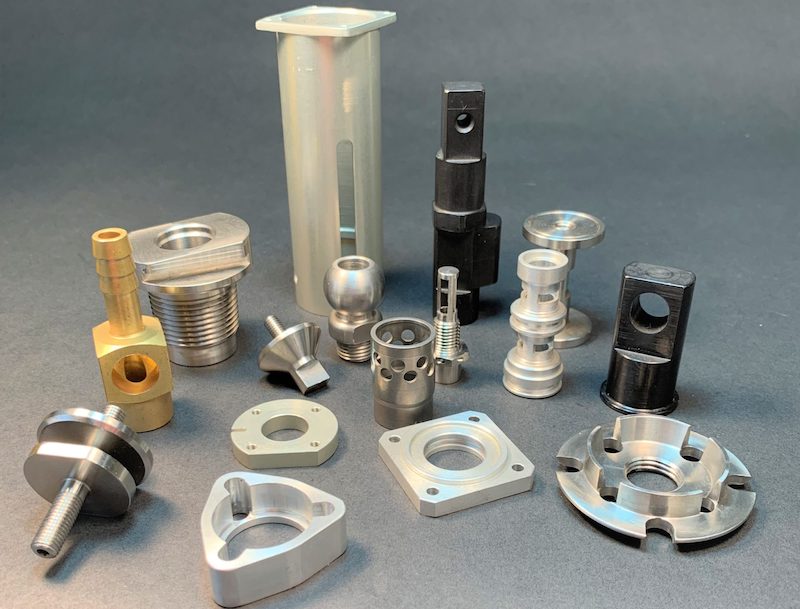
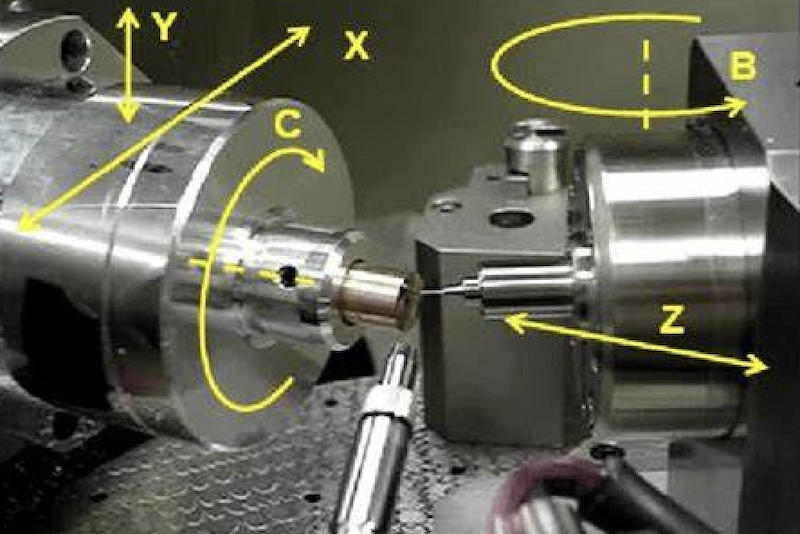
CNC machining aerospace performance depends as much on process choice as on machine count. A part that looks simple on a drawing may need 5-axis positioning to avoid extra setups, live-tool turning to combine lathe and mill features, or wire EDM to generate narrow internal details in hard material. Choosing the wrong process path can add datum error, tool deflection, burr issues, and unnecessary inspection cost.
TEAM Rapid’s CNC capability covers 3-axis, 4-axis, and 5-axis milling for complex geometries, CNC turning for rotational parts with live tooling, and wire EDM plus EDM for intricate details and hard materials. For aerospace buyers, that combination is important because most real programs include a mix of prismatic and turned features rather than a single idealized part family.
The table below shows where each process typically fits best in CNC machining aerospace work:
| CNC machining aerospace process | Best-fit part features | Typical tolerance strategy | Typical finish capability |
|---|---|---|---|
| 3-axis milling | Plates, brackets, simple housings, open pockets | General tolerances, flatness, hole patterns | As-machined, bead blast, anodize-ready |
| 4-axis milling | Multi-side features, indexed holes, wrapped geometry | Better setup efficiency, reduced reposition error | Consistent surface across several faces |
| 5-axis milling | Complex contours, deep cavities, reduced setups | Strongest for complex positional accuracy | Better access, fewer witness marks |
| CNC turning with live tooling | Shafts, bushings, rings, manifolds, threaded rotational parts | Excellent coaxiality and roundness control | Fine turned finishes, machined grooves, threads |
| Wire EDM / EDM | Tight slots, hard materials, sharp internal profiles | High precision on difficult geometry | Functional fine surfaces, secondary finishing possible |
Aerospace tolerances must be specified intelligently. TEAM Rapid can machine to tolerances down to (0.01 \text{ mm}), but experienced buyers know that the entire part should not be held to that level unless the design truly needs it. The most cost-effective aerospace drawings define tight tolerance only on sealing diameters, bearing fits, hole locations, or other truly critical interfaces. Non-critical faces can stay looser, reducing machine time and inspection load.
Surface finish is another area where aerospace drawings often become more expensive than necessary. As a rule of thumb:
- General as-machined surfaces are often acceptable around (Ra\ 3.2 \ \mu m)
- Finer machined sealing or mating surfaces may target around (Ra\ 1.6 \ \mu m)
- Polished functional areas can go lower, depending on material and geometry
- Secondary finishes such as Type II anodizing, Type III hard coat anodizing, nickel plating, zinc plating, chrome plating, painting, brushing, polishing, or bead blasting should be specified only where needed
TEAM Rapid also offers full dimensional inspection with CMM capability, which is critical for aerospace-style layouts involving hole position, true profile, and multi-datum measurement. At the quotation stage, that inspection planning should be discussed alongside machining, not after the first batch is completed.
From a DFM perspective, I usually advise aerospace buyers to review five machine-shop risks before release:
- Excessively deep pockets that force long tools and create chatter
- Thin walls that move after roughing or after anodizing
- Hidden burr traps around intersecting holes and threaded ports
- Overly tight surface finish callouts on non-functional faces
- Datum schemes that are convenient for CAD but poor for fixturing and CMM access
TEAM Rapid, for example, often supports this kind of review early because many quick-turn parts go straight from CAD into machining without a formal manufacturing engineering pass. That is precisely when drawing simplification, tool-access improvement, and smarter tolerance zoning can save both time and scrap.
CNC Machining Aerospace Cost, MOQ, and Lead Time Planning
CNC machining aerospace cost is driven less by raw material price alone and more by geometry, tolerance concentration, setup count, inspection depth, and finish requirements. In aerospace programs, two parts made from the same alloy can differ dramatically in price if one needs five setups, tight positional tolerances, and CMM reporting while the other is essentially a simple bracket.
The most useful way to estimate CNC cost is to separate one-time engineering effort from recurring machining effort. Programming, fixture design, inspection planning, first-article reporting, and finishing qualification can be significant on the first run, especially for low-volume aerospace work. Once that foundation is stable, repeat orders become much more predictable.
| CNC machining aerospace order type | Typical quantity | Main cost drivers | Lead-time expectation |
|---|---|---|---|
| Prototype build | 1-10 parts | Programming, setup, material sourcing, inspection | Fastest route, often a few days to under two weeks |
| Engineering validation batch | 10-50 parts | Repeatability, documentation, finish consistency | Moderate, depending on complexity |
| Low-volume production | 50-500+ parts | Fixture efficiency, cycle time, inspection plan, finishing | Best value when process is stabilized |
TEAM Rapid is competitive here because it supports 1 to 500+ machined parts with quick-turn execution, one-to-one engineering support, and integrated finishing options. For teams moving from early samples into verification hardware, the company’s rapid prototyping benchmark of 2-8 days is a useful expectation for development-stage work, while more complex machined aerospace components may take longer depending on material, inspection, and finish stack. The point is not that every part ships in the same number of days; it is that the supplier has the infrastructure to move quickly when the drawing is ready.
Based on sourcing experience, these are the biggest cost levers in CNC machining aerospace procurement:
- Material choice: titanium and high-nickel or hard stainless grades add significant machine time
- Setup strategy: extra re-clamping often costs more than buyers expect
- Tolerances: applying (0.01 \text{ mm}) across non-critical features can overprice the part
- Inspection: CMM reports, material certs, and first-article documentation add value but also cost
- Finish stack: anodizing, plating, masking, and cosmetic preparation can change the quote materially
Suppliers such as TEAM Rapid also help buyers control total landed cost through practical design feedback, not just machining rates. If a radius can be opened up, a hole can be reoriented for better access, or a tolerance can be localized to one feature, that change may remove an entire setup or secondary operation. Combined with pricing that is often around 40% lower than Europe and America, those engineering changes can create a meaningful cost advantage for overseas buyers.
If you are still comparing design options, the most productive step is to get in touch with our engineers before releasing the RFQ package for full quotation.
CNC Machining Aerospace Applications Across Aircraft, Space, UAV, and Ground Systems
CNC machining aerospace work covers a much wider range of applications than many buyers realize. It is not limited to “flight parts” in the narrow sense. In practice, aerospace machining supports cabin systems, structural subcomponents, test hardware, assembly fixtures, avionics housings, thermal management parts, drone components, satellite brackets, and maintenance spares.
That breadth is one reason manufacturers like TEAM Rapid can add value even when aerospace is not the only end market they serve. With 6,000+ delivered projects across automotive, medical, consumer, communication, and industrial products, TEAM Rapid has broad experience with tight-tolerance production, cosmetic surfaces, assembly fit, and DFM discipline. Those lessons transfer well into aerospace-style components, especially for prototypes, non-flight-critical parts, support hardware, and low-volume machined production.
| Aerospace segment | Common machined parts | Why CNC machining fits |
|---|---|---|
| Commercial aircraft interiors | Seat brackets, trim supports, housings, latches, bezels | Tight fit, repeatability, lightweight metals and plastics |
| Avionics and electronics | Enclosures, heat sinks, connector bodies, mounting plates | Precision features, thermal control, finish options |
| UAV and drone systems | Motor mounts, frames, brackets, sensor mounts | Low volume, lightweight structures, frequent design changes |
| Space and satellite hardware | Brackets, panels, interface blocks, test fixtures | High-mix, specialized geometry, rapid iteration |
| Ground support equipment | Tooling blocks, fixtures, adapters, protective housings | Functional precision and fast replacement cycles |
In real sourcing work, the most common aerospace machining requests fall into five categories:
- Precision brackets and mounts with multiple datums
- Housings and covers that combine lightweight design with cosmetic or anodized finishes
- Thermal management parts such as heat sinks, plates, and electronic enclosures
- Bushings, rings, threaded parts, and fluid hardware made on turning centers
- Jigs, fixtures, and test tools used during assembly, maintenance, or validation
For aerospace buyers, the process decision should always start with function. A UAV bracket with tight hole position and low weight may justify 7075 on a 5-axis path. A cabin electronics enclosure may be better in 6061 with bead blasting and anodizing. A non-conductive insulator or guide may be more practical in PEEK or Delrin. The machining process changes with the application, and that is exactly why a broad-capability supplier is more valuable than a shop that only cuts one material family well.
CNC Machining Aerospace for Customization, Prototyping, and Low-Volume Production
CNC machining aerospace is especially powerful in custom manufacturing because it supports rapid design changes without forcing a new mold or die every time the part evolves. That makes it one of the most practical options for prototype hardware, qualification samples, development fixtures, low-rate initial production, and service or replacement parts.
In aerospace programs, customization rarely means cosmetic variation alone. It often means a mounting pattern changes, a wall is relieved to save weight, a connector interface is relocated, or a test article needs a revised datum scheme after the first fit check. CNC machining handles those changes with relatively low process disruption compared with tooling-based methods.
TEAM Rapid is well suited to this stage because it combines quick-turn machining with broader manufacturing support across prototyping, tooling, finishing, assembly, and packaging. That matters when a customer needs not just one machined part, but a staged development path: early concept samples, functional machined prototypes, low-volume validation builds, and then recurring supply.
A practical aerospace customization workflow usually looks like this:
- Machine the first article from production-intent material when possible
- Validate fit, assembly stack-up, and tool access issues
- Adjust the CAD model based on inspection and build feedback
- Lock down critical dimensions and finish requirements
- Release a repeatable low-volume process with documented inspection points
This is where engineering support often decides whether a project stays on schedule. At TEAM Rapid’s Zhongshan facility, engineers typically review features such as deep pockets, unsupported thin walls, small corner radii, thread engagement, and tool reach before production starts. That kind of DFM feedback is particularly valuable in aerospace, where seemingly minor geometry decisions can create chatter, distortion, or unacceptable burr formation.
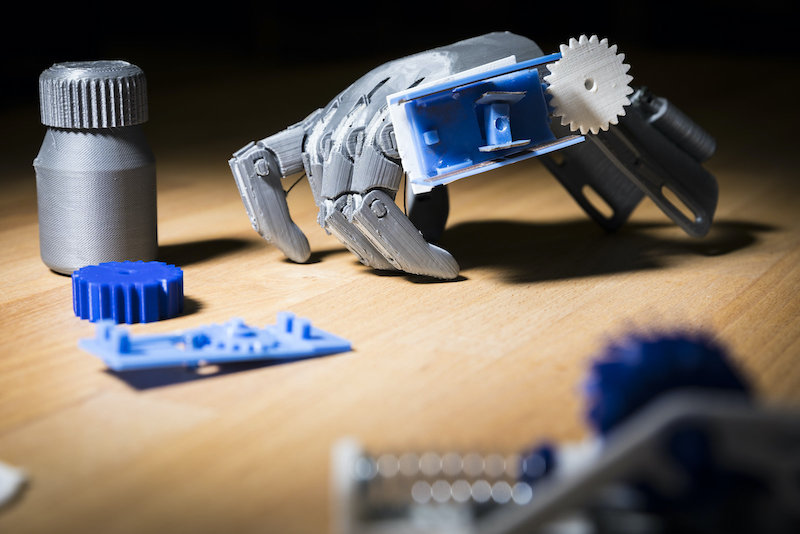
For design teams still in early development, rapid prototyping services can also complement machined builds. In practice, many aerospace customers use printed or cast models for early concept checks and reserve CNC machining for the functional parts that must prove tolerance, stiffness, heat resistance, or assembly performance.
The key sourcing lesson is simple: if the drawing is still moving, choose a partner that can support iteration without penalizing every revision with long administrative delays or engineering silence.
CNC Machining Aerospace Sourcing from China: Supplier Evaluation, Quality Control, and Logistics
CNC machining aerospace sourcing from China can be highly effective, but only when buyers evaluate suppliers on engineering depth and process control rather than price alone. Aerospace-style parts usually involve tighter tolerances, more critical surface requirements, and stronger documentation expectations than ordinary industrial hardware. A low quotation is meaningless if the supplier cannot control burrs, maintain datum integrity, or provide reliable dimensional reporting.
Based on sourcing experience, the best China suppliers for aerospace machining usually share the same characteristics: they respond quickly, challenge the drawing where needed, understand material behavior, and document inspection in a way that is useful to the customer’s quality team. TEAM Rapid fits that profile well because it combines in-house machining with tooling and broader manufacturing resources, while also supporting full dimensional inspection with CMM capability and ISO 9001:2015 quality management.
When evaluating Chinese suppliers for CNC machining aerospace work, I recommend using a checklist like this:
| Supplier evaluation point | What to confirm | Why it matters |
|---|---|---|
| Material control | Grade, temper, cert availability, lot traceability | Prevents substitution and approval delays |
| Process capability | 3-axis/4-axis/5-axis, turning, EDM, finishing | Ensures the supplier matches real geometry |
| Inspection system | CMM, calibrated gauges, reporting format | Reduces dimensional disputes |
| DFM support | Feedback before production, not after scrap | Saves time and cost |
| Export readiness | Packaging, labeling, shipping coordination | Protects parts and avoids logistics errors |
TEAM Rapid’s location in Zhongshan, Guangdong, plus its Hong Kong office, is useful for overseas buyers who need responsive communication and organized export handling. The company also supports finishing, assembly, procurement support, limited warehousing, and direct shipping, which can simplify the supply chain for customers that do not want to manage several disconnected vendors.
Quality expectations should be written clearly in purchase documents. For aerospace-style machined parts, buyers should define:
- Critical-to-function dimensions and the required inspection method
- Surface finish zones, deburring rules, and edge-break requirements
- Material certification needs and any applicable ASTM or SAE reference standard
- Finish type, masking rules, color, and post-finish inspection expectations
If your team needs common reference language for materials and testing, ASTM International and SAE aerospace standards are valuable resources. They are not a substitute for supplier qualification, but they do help align specification language early.
For shipping, aerospace machined components need smarter packaging than many buyers assume. Anodized aluminum housings, precision bores, and cosmetic surfaces can be damaged easily by poor stacking or loose bulk packing. Suppliers such as TEAM Rapid, which also offer contract packaging and direct shipping, are often easier to work with because they understand that logistics quality is part of product quality.
Why TEAM Rapid Fits CNC Machining Aerospace Programs
CNC machining aerospace buyers need a supplier that can move quickly, communicate clearly, and deliver precision without turning every order into a long qualification headache. TEAM Rapid is a strong fit because it brings together technical machining capability, responsive engineering support, and broader manufacturing resources that help aerospace-style programs scale from concept to repeat production.
Rather than positioning itself as only a machine shop, TEAM Rapid operates as a one-stop rapid manufacturing partner. For aerospace customers, that matters because many projects include more than machined metal parts alone. A typical program may involve machined fixtures, plastic enclosures, secondary finishing, assembly, packaging, and direct shipment to different teams or sites. TEAM Rapid can support that broader workflow while still maintaining the core CNC strengths buyers expect.
Key reasons aerospace sourcing teams shortlist TEAM Rapid include:
- 10+ years of manufacturing experience serving customers in 25+ countries
- 500+ satisfied customers and more than 6,000 delivered projects
- CNC milling, turning, wire EDM, and EDM for 1 to 500+ parts
- Tolerances down to (0.01 \text{ mm}) with CMM-based dimensional inspection
- Surface finishing options including polishing, anodizing, painting, powder coating, plating, bead blasting, and brushing
- Quick response within a few hours through one-to-one engineering support
- Competitive pricing often around 40% lower than Europe and America
The biggest practical advantage is that TEAM Rapid does not force buyers into a one-process conversation. If a part should remain machined, the company can support that. If the project later expands into tooling, molding, sheet metal, or assembly, the same supplier can continue supporting the program. For global sourcing teams trying to reduce handoff risk, that continuity has real value.
When the drawing package is ready, the next logical step is to request a free quote and ask for manufacturability feedback at the same time.
CNC Machining Aerospace FAQ
What does CNC machining aerospace mean for aerospace component manufacturing?
CNC machining aerospace refers to the use of precision CNC milling, turning, EDM, and related processes to manufacture aerospace components with controlled tolerances, qualified materials, and repeatable geometry. In practice, it covers everything from prototype brackets and avionics housings to low-volume production parts, jigs, fixtures, and service components. The term matters because aerospace buyers usually need tighter dimensional control, better documentation, and more disciplined surface finishing than general industrial machining.
How tight can CNC machining aerospace tolerances be?
For CNC machining aerospace parts, tolerances down to (0.01 \text{ mm}) are achievable on critical features when the geometry, material, and inspection plan support that level of control. However, experienced engineers do not apply ultra-tight tolerance to the full part unless necessary. The best practice is to tighten only the features that affect fit, sealing, bearing alignment, or assembly function. TEAM Rapid, for example, can machine to (0.01 \text{ mm}) and verify complex dimensions with CMM inspection, but cost is lowest when tight tolerance is limited to the truly critical zones.
Which materials are best for CNC machining aerospace projects?
In CNC machining aerospace work, the most common choices are 6061, 7075, and 2024 aluminum for lightweight metal parts; titanium for high-strength and corrosion-resistant parts; stainless steel for fluid, wear, or corrosion-sensitive hardware; and engineering plastics such as PEEK, Delrin, Nylon, and PTFE for lightweight non-metal applications. The best material depends on load, weight target, corrosion exposure, temperature, and documentation requirements. Always confirm not only the alloy name, but also temper, cert expectations, and finish compatibility.
How much does CNC machining aerospace cost?
The cost of CNC machining aerospace depends on material grade, part size, setup count, tolerance concentration, inspection depth, and secondary finish requirements. A simple 6061 bracket with standard tolerances may be relatively affordable, while a complex titanium part with five setups, CMM reporting, and hard-coat finishing will cost substantially more. Manufacturers like TEAM Rapid often reduce total cost through design feedback, efficient process planning, and pricing that can be significantly lower than suppliers in Europe or North America, especially on prototype and low-volume work.
What lead time should buyers expect for CNC machining aerospace orders?
For CNC machining aerospace orders, lead time can range from a few days for simple prototypes to several weeks for complex parts requiring special materials, multi-axis machining, finishing, and formal inspection reporting. Buyers should separate machine time from total project time, because material sourcing, surface treatment, and documentation often drive the schedule. TEAM Rapid’s quick-turn capability and 2-8 day prototyping benchmark are useful reference points for development-stage work, but final timing should always be tied to the actual drawing package and quality requirements.
How should buyers qualify a CNC machining aerospace supplier in China?
To qualify a CNC machining aerospace supplier in China, buyers should review process capability, material sourcing discipline, inspection capacity, DFM communication, packaging quality, and export readiness. Ask for sample inspection reports, confirm whether CMM measurement is available, define deburring and edge-break standards, and make sure the supplier can explain how it will fixture and inspect the part. TEAM Rapid is a practical option for many overseas buyers because it combines ISO 9001:2015 quality management, responsive engineering support, in-house machining capability, and organized shipping support from its Zhongshan operation.
Content reviewed and updated: June 2026