
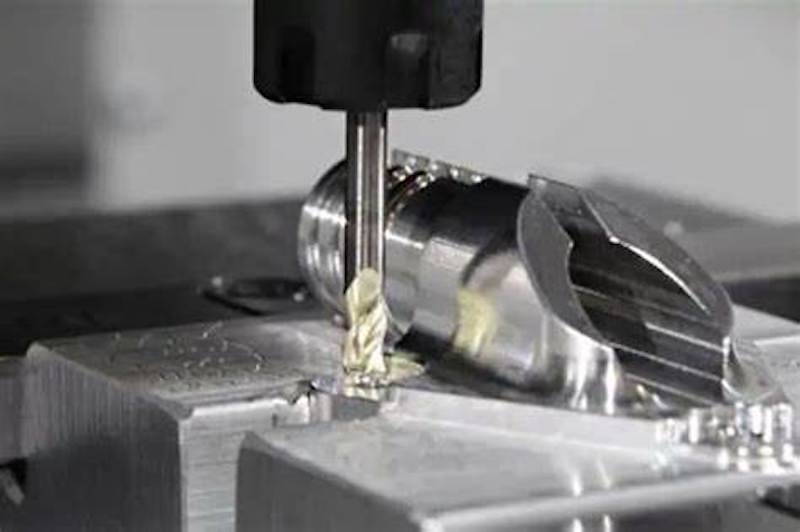
CNC Machining Surface Finish Options and Quality Grades
CNC Machining Surface Finish: The Direct Answer for Buyers and Engineers
CNC machining surface finish refers to the final texture, appearance, and functional condition of a machined part after milling, turning, EDM, polishing, blasting, anodizing, plating, painting, or other secondary treatment. For most manufacturers and sourcing teams, the right finish is not just cosmetic; it directly affects corrosion resistance, wear life, sealing performance, dimensional fit, electrical behavior, and customer perception.
The short answer is straightforward: choose an as-machined or lightly refined finish when function, speed, and cost matter most; choose polished, anodized, plated, painted, or coated finishes when the part must meet higher visual, environmental, or performance standards. In real production, the best finish depends on five variables: base material, tolerance stack, end-use environment, inspection method, and annual volume.
A practical way to specify finish is to separate what the part must do from what the part should look like. A bracket hidden inside industrial equipment does not need the same finish strategy as a medical enclosure, consumer-facing aluminum housing, or sliding stainless component. Engineers who define finish too loosely risk inconsistent appearance. Engineers who define it too tightly often add unnecessary cost, lead time, and scrap.
Use this decision logic early:
- Specify surface roughness when friction, sealing, coating adhesion, or mating fit matters
- Specify appearance grade when color, gloss, uniformity, and touch feel matter
- Specify coating thickness and masking zones when dimensions are critical after finishing
- Specify inspection method when the finish requirement must be measured, not judged visually
That is why finish selection should be treated as part of design for manufacturing, not as an afterthought added after the machining quote is already approved.
CNC Machining Surface Finish Market Trends and Why Quality Grades Matter
CNC machining surface finish has become a larger purchasing priority because modern products are expected to look better, last longer, and assemble faster even at lower cost. In automotive, medical devices, robotics, electronics, and premium consumer hardware, buyers are no longer asking only whether a part can be machined; they are asking whether the machined part can arrive production-ready with the correct tactile feel, corrosion resistance, branding surface, and dimensional reliability after finishing.
That shift is driven by three market realities. First, more OEMs are consolidating suppliers and prefer manufacturers that can machine, finish, inspect, assemble, and ship under one coordinated workflow. Second, product teams increasingly launch in smaller batches, which means each machined part carries more visual and functional responsibility. Third, surface specifications are getting tighter as brands compete on premium fit-and-finish, especially for exposed aluminum and stainless parts.
Manufacturers like TEAM Rapid see this trend across RFQs from startups and established global companies alike. A part that would once have been accepted with visible cutter paths is now often requested with bead blasting plus anodizing, brushed stainless, or selective masking for sealing faces. In other words, the commercial value of a machined component is now tied more closely to its finish grade than many buyers expected ten years ago.
From a sourcing perspective, finish quality matters because it changes more than appearance:
- It can improve corrosion resistance in humid, outdoor, or chemically exposed environments
- It can reduce friction or galling on moving interfaces
- It can improve printability, laser marking, or adhesive bonding
- It can hide tool marks and create a more consistent brand impression
This is also why technical language matters. Buyers should not rely on vague instructions such as “smooth finish” or “nice cosmetic quality.” A better RFQ defines roughness targets such as (Ra), coating type, color standard, gloss expectation, and whether minor witness marks are acceptable. Industry references from organizations like ASTM International and SAE International can also help teams align terminology when the project involves regulated or performance-critical parts.
CNC Machining Surface Finish Options, Quality Grades, and Material Compatibility
CNC machining surface finish options range from simple as-machined surfaces to tightly controlled cosmetic and functional grades with polishing, blasting, anodizing, plating, painting, powder coating, or EDM refinement. The right option depends on part geometry, alloy or polymer type, inspection expectations, and whether the surface needs to perform mechanically, chemically, electrically, or visually.
In practical machining work, buyers should think in layers. The first layer is the tool-generated surface from milling, turning, wire EDM, or sinker EDM. The second layer is any refinement such as deburring, bead blasting, brushing, or polishing. The third layer is any protective or decorative treatment such as anodizing, nickel plating, zinc plating, paint, or powder coat. Each additional layer changes cost, lead time, and often dimensions.
At suppliers such as TEAM Rapid, the conversation usually starts with the manufacturing route before the finish is finalized. That matters because 3-axis, 4-axis, and 5-axis milling leave different witness patterns than turning, and wire EDM leaves a different surface condition than end milling. TEAM Rapid, for example, supports aluminum alloys such as 6061, 7075, and 2024; stainless steels including 303, 304, and 316; as well as carbon steel, titanium, brass, copper, Delrin, PEEK, Nylon, PTFE, and other engineering plastics. A good finish strategy has to match the material family, not just the drawing note.
| CNC machining surface finish option | Typical result | Common materials | Technical note |
|---|---|---|---|
| As-machined | Visible tool marks, functional industrial appearance | Aluminum, steel, brass, plastics | Often around (Ra 1.6-3.2\ \mu m) with standard machining, depending on toolpath and material |
| Fine-machined / light polish | Reduced cutter marks, cleaner functional surface | Aluminum, stainless, brass, plastics | Often used on sealing faces, bearing seats, and visible flat areas |
| Bead blasted | Uniform matte texture, reduced visual contrast of tool marks | Aluminum, stainless steel | Good for cosmetic consistency before anodizing; may soften sharp edges visually |
| Brushed | Directional satin grain | Stainless steel, aluminum | Useful for panels and covers where controlled grain direction matters |
| Mechanical polish | Reflective to near-mirror appearance | Aluminum, stainless, brass, some plastics | Lower roughness possible, but geometry and material hardness affect outcome |
| Anodized Type II | Decorative oxide layer with color options | Aluminum alloys | Coating thickness commonly around (5-25\ \mu m); underlying machining still influences final look |
| Anodized Type III hard coat | Dense wear-resistant oxide layer | Aluminum alloys | Commonly around (25-75\ \mu m); dimensional buildup must be considered |
| Nickel, chrome, or zinc plating | Corrosion resistance, conductivity, or decorative effect | Steel, brass, copper, some aluminum with suitable prep | Thickness and adhesion depend on substrate and process route |
| Painting / powder coating | Broad color and texture options | Metal parts and selected prepared substrates | Paint typically adds less thickness than powder coat; both need masking on critical fits |
The most common mistake in finish selection is assuming that all materials respond the same way. They do not. Aluminum 6061 usually anodizes predictably and is a strong choice for consumer housings and industrial frames. Aluminum 7075 can be machined extremely well, but cosmetic anodizing may show alloy-related variation more clearly than 6061. Stainless 304 can polish nicely, while 316 is often chosen when corrosion resistance is more important than the brightest cosmetic result. Plastics such as Delrin, Nylon, PTFE, and PEEK can be machined to excellent functional surfaces, but they require a different discussion because coatings are usually less important than tool sharpness, burr control, and scratch sensitivity.
A second mistake is focusing only on (Ra). Roughness is important, but it does not describe everything. Lay direction, waviness, corner break condition, chamfer consistency, blasting uniformity, and coating thickness can all matter more than the roughness number alone. A sealing land may need a defined roughness and no random scratches crossing the sealing path. A visible housing may tolerate slightly higher (Ra) if the bead blast is consistent and the anodized color is even.
Based on our sourcing experience, manufacturers like TEAM Rapid are most effective when finish is reviewed alongside part function, not at the end of quoting. That is particularly true for mixed-route programs using milling, turning with live tooling, EDM, and secondary finishing in the same part family. Buyers who want a capable supplier can explore TEAM Rapid as a reference point for integrated machining, finishing, and inspection support.
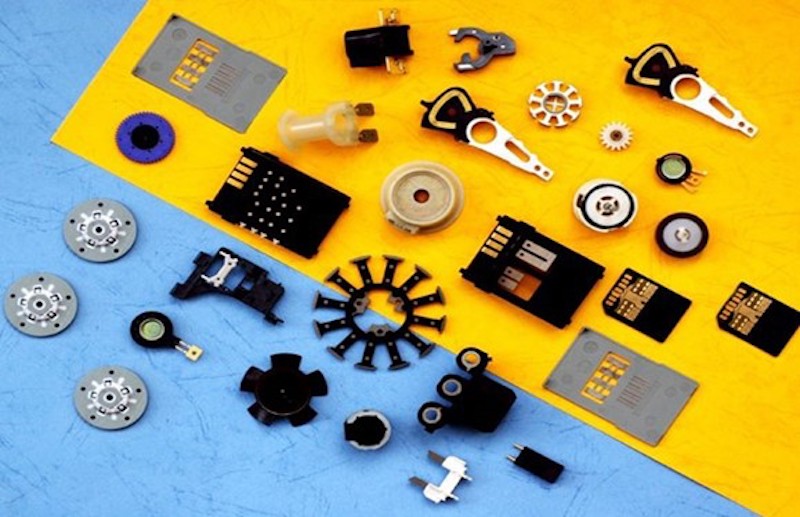
CNC Machining Surface Finish Cost, MOQ, and Lead Time Factors
CNC machining surface finish has a direct effect on price because every upgrade in appearance or performance adds process time, handling, setup, inspection, or outside treatment. As-machined parts are typically the fastest and lowest-cost option. Once you add bead blasting, brushing, polishing, anodizing, plating, masking, or cosmetic sorting, the quote changes not only because of labor but because of yield risk.
For CNC buyers, the most accurate rule is this: finish cost is rarely driven by the coating alone. It is driven by the total path required to make the coating or cosmetic grade reliable. A part with deep pockets, thin ribs, internal threads, and tight flatness will cost more to finish than a simple external plate, even if both end with the same black anodize callout.
TEAM Rapid is often competitive in this stage because one-to-one engineering support catches unnecessary cost before production starts. In practice, changing a sharp corner to a machinable radius, relaxing a non-critical cosmetic face, or masking only the truly critical features can save more money than haggling over unit price. For buyers comparing global supply options, TEAM Rapid also offers pricing that is often about 40% lower than Europe and America while still supporting full inspection and specification compliance.
| Cost driver in CNC machining surface finish | Price impact | Lead-time impact | Buyer advice |
|---|---|---|---|
| As-machined only | Lowest | Shortest | Best for hidden or purely functional parts |
| Bead blasting or brushing | Low to moderate | Usually small | Good cosmetic upgrade without premium polishing cost |
| Mechanical polishing | Moderate to high | Medium | Clarify whether the requirement is satin, bright, or mirror-like |
| Type II anodizing | Moderate | Medium | Ideal for cosmetic aluminum parts if pre-finish machining is controlled |
| Type III hard coat anodizing | Moderate to high | Medium | Specify coating thickness and mask critical bores or threads |
| Nickel or chrome plating | High variation | Medium to longer | Confirm base material suitability and dimensional buildup |
| Paint or powder coat | Moderate | Medium | Define color, gloss, texture, and masking areas clearly |
| Cosmetic inspection standard | Often underestimated | Medium | Visual acceptance criteria should be agreed before first article |
MOQ is another area where expectations should be realistic. One advantage of CNC machining is flexibility: production can begin from one part, and TEAM Rapid supports quantities from 1 to 500+ parts in plastic and metal. However, some finish processes introduce economical batch thresholds. Anodizing, plating, painting, and powder coating often include setup charges, color-line scheduling, or racking requirements. That means one premium-finished sample may carry a higher unit cost than a grouped order of twenty or fifty pieces.
Lead time follows the same logic. A simple machined prototype may move quickly inside a 2-8 day rapid prototyping window, especially if it ships as-machined or with light deburring only. Once the part requires polishing, anodizing, plating, or special cosmetic approval, schedule risk increases because the part is now moving through more checkpoints. At TEAM Rapid, engineers typically review this early so the buyer understands which features truly control delivery and which ones can be simplified.
A few purchasing habits consistently reduce finish cost:
- Avoid specifying premium finish on non-visible or non-functional faces
- Identify post-finish critical dimensions that require masking or stock allowance
- Group part colors and finish types where possible to reduce setup fragmentation
- Define acceptance criteria with photos or approved samples before mass release
For commercial planning, the smartest move is to quote the machining route and the finish route together. If your project needs a fast benchmark on cost and schedule, request a free quote with both the drawing and the finish expectations included in the RFQ.
CNC Machining Surface Finish Requirements by Industry and Buyer Type
CNC machining surface finish requirements change significantly by industry because each sector measures quality differently. An industrial equipment buyer may prioritize corrosion resistance and burr-free assembly. A medical device team may care more about cleanability, touch feel, and consistent cosmetic appearance. An automotive buyer may want controlled texture, wear resistance, and repeatability across multiple lots.
That is why industry context should always shape the finish callout. TEAM Rapid has delivered 6,000+ projects across automotive, medical devices, consumer and commercial products, industrial design, communication products, office equipment, electrical appliances, and sanitary products. Across these sectors, the same lesson repeats: the “best” finish is the finish that meets the actual use environment without adding cost to non-critical surfaces.
Typical industry patterns look like this:
- Automotive: bead blasted and anodized aluminum, plated steel components, functional sealing faces, burr-controlled brackets, visible interior trim with tighter cosmetic standards
- Medical devices: smooth cleanable surfaces, low-burr edges, stainless and anodized aluminum housings, controlled touch points, documented inspection of critical features
- Consumer electronics and premium hardware: uniform matte or satin cosmetics, anodized color consistency, brushed grain direction, laser marking compatibility
- Industrial equipment and automation: corrosion resistance, wear surfaces, dimensional stability after finishing, lower emphasis on premium cosmetics unless the part is customer-facing
- Aerospace and high-performance applications: tighter documentation, critical dimensional masking, alloy-specific finish control, traceability expectations
Buyer type matters too. Product designers often focus on visible faces and tactile quality. Mechanical engineers focus on fits, surface roughness, and wear zones. Procurement teams focus on price stability, inspection discipline, and yield. Experienced suppliers such as TEAM Rapid help align these priorities so the part does not get over-specified cosmetically while still missing the functional surface requirement that matters most.
In many RFQs, the finish note becomes the hidden source of disagreement between engineering and purchasing. The drawing may say “anodize black,” but the buyer may not realize that the visible surface must also be blast-uniform, color-matched lot to lot, and protected from rack marks in key areas. Those details belong in the technical review before the first sample, not after production begins.
CNC Machining Surface Finish Applications for Functional and Cosmetic Parts
CNC machining surface finish decisions become much clearer when they are tied to real use cases instead of generic finish names. A finish is never chosen in isolation; it is chosen because the part must seal, slide, resist fingerprints, survive salt exposure, carry a brand image, or fit a customer-facing assembly without rework.
For functional parts, the surface must support mechanical performance. Bearing seats, alignment bores, sealing faces, and valve interfaces often need controlled roughness and tight dimensional management. A hard coat anodized aluminum wear plate may be appropriate where abrasion resistance matters, but not where coating buildup would disrupt a precision bore. A fine-machined stainless shaft may perform better than a visually polished one if the application cares more about geometry than shine.
For cosmetic parts, the surface must hide process variation while remaining repeatable lot to lot. Consumer housings, front panels, instrument bezels, and visible brackets often use bead blasting plus anodizing, brushed metal, or paint because these finishes reduce the visibility of directional tool marks. TEAM Rapid often supports this type of work by combining CNC milling, turning, polishing, anodizing, painting, plating, and CMM-backed dimensional checks in the same project workflow.
Common application-driven choices include:
- As-machined: fixtures, hidden brackets, internal mounts, prototype verification parts
- Bead blasted + anodized: exposed aluminum housings, communication equipment covers, control panels
- Brushed stainless: appliance trims, premium handles, office equipment panels
- Nickel or zinc plated steel: corrosion-managed fastener-adjacent components, industrial hardware
- Polished engineering plastic: visible prototypes, transparent-adjacent components, low-friction contact faces
- Hard coat anodized aluminum: sliding or wear-exposed components where moderate dimensional buildup can be managed
A useful engineering rule is to define whether the surface is functional, cosmetic, or hybrid. Hybrid surfaces are common and easy to mismanage. For example, a medical housing may need excellent appearance on the outside but also controlled flatness and sealing contact on an internal interface. An automotive electronics enclosure may need blasted aesthetics on exposed faces but uncoated conductive contact surfaces at grounding points. When that happens, masking strategy becomes part of the design, not just the finishing work instruction.
TEAM Rapid’s broader manufacturing background helps in these mixed cases because the part can be reviewed not only as a machined component, but as part of a larger assembly that may also include injection molded parts, sheet metal, die cast sections, finishing, and packaging. That bigger-picture view is especially useful when multiple materials meet at one interface.
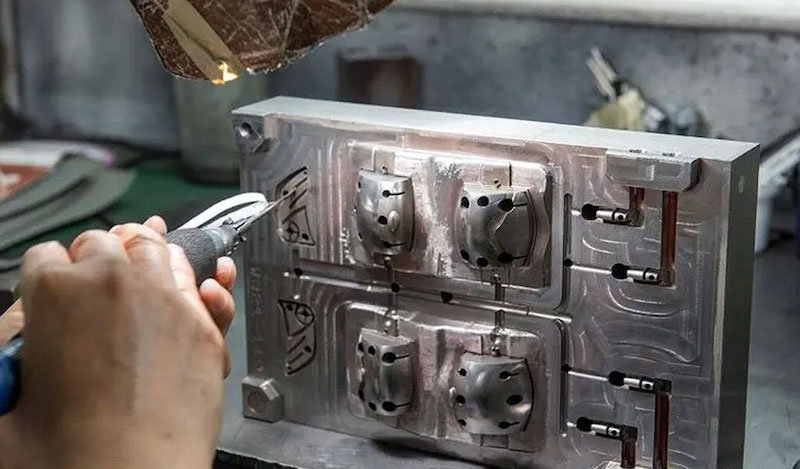
CNC Machining Surface Finish Customization, DFM, and OEM Scale-Up
CNC machining surface finish should be customized during DFM, not added as a last-minute visual request. In OEM development, the finish affects wall thickness assumptions, edge conditions, masking plans, tolerance allocation, and inspection methods. A part designed for raw machining may need extra stock for post-polish flattening. A part designed for hard coat anodizing may need dimensional compensation if bores, threads, or bearing fits cannot tolerate coating buildup.
This is where experienced CNC suppliers create value beyond basic machining. TEAM Rapid, for example, supports CNC milling in 3-axis, 4-axis, and 5-axis formats, CNC turning with live tooling for rotational parts, and wire EDM or EDM for hard materials and intricate geometries. That range matters because finish quality begins with process selection. A 5-axis toolpath may reduce re-clamping witness lines on a visible part. A turned surface may produce more consistent lay on cylindrical geometry than a milled approximation. Wire EDM may be necessary for intricate profiles, but the recast condition and edge expectations must be reviewed if the surface is function-critical.
In anonymous project work, the same customization pattern appears again and again. A startup may begin with a machined aluminum enclosure and request a mirror polish, only to learn that a bead blast plus clear anodize creates a more repeatable premium look at lower cost. An industrial OEM may ask for full-part hard coat, then realize only the wear track and external faces need treatment. A medical-device team may specify all edges “break sharp,” but DFM shows that some edges need a controlled radius while others can accept a standard deburr.
The best DFM review for finish should answer these questions:
- Which surfaces are cosmetic, which are functional, and which are irrelevant?
- Which dimensions are inspected before finishing, after finishing, or both?
- Which surfaces need masking, stock allowance, or special fixturing?
- Which defects are unacceptable: scratches, color shift, blast shadow, rack marks, orange peel, or burr rollover?
TEAM Rapid is particularly useful in this stage because the company can scale from one prototype to 500+ machined parts while keeping the engineering discussion connected to manufacturing reality. For early validation, some teams also combine machined samples with rapid prototyping services to compare form, finish, and assembly economics before freezing the production route.
The most expensive finish problems usually come from poor definition, not poor machining. When the drawing, PO, and sample expectations all say slightly different things, even a capable shop will lose time in rework and approval loops. Good customization means deciding early what quality grade is truly required, then building the process around that grade.
Sourcing CNC Machining Surface Finish from China: Supplier Selection, Inspection, and Shipping
CNC machining surface finish sourcing from China can be highly effective when buyers evaluate suppliers on engineering depth, process control, and inspection discipline rather than piece price alone. The right supplier should be able to explain not only how the part will be machined, but also how the surface will be prepared, measured, protected, packed, and shipped without cosmetic damage.
For international buyers, the key is to issue a complete RFQ package: 2D drawings, 3D files, material grade, roughness targets, finish type, color reference if applicable, critical masking zones, inspection requirements, packaging method, and destination country. Without that information, quotes may look comparable while hiding completely different assumptions about deburring, polishing, coating thickness, or cosmetic acceptance.
TEAM Rapid is a strong benchmark for what buyers should look for in China. From its Zhongshan factory in Guangdong, supported by a Hong Kong office and an integrated manufacturing resource network across China, the company combines in-house machining, finishing coordination, dimensional inspection, assembly, packaging, procurement support, limited warehousing, and direct shipping. For buyers managing global product launches, that kind of coordination can reduce handoff errors between machining, finishing, and logistics.
| China sourcing checkpoint for CNC machining surface finish | What to verify | Why it matters |
|---|---|---|
| Material certification | Exact alloy or plastic grade, temper, and color callout | Different grades react differently to anodizing, polishing, and plating |
| Finish specification clarity | (Ra), coating type, thickness, color, gloss, masking zones | Prevents quote gaps and lot-to-lot disputes |
| Inspection capability | CMM, roughness measurement access, visual standard control | Confirms the supplier can verify what the drawing actually requires |
| Quality system | ISO 9001:2015 procedures, traceability, first article process | Reduces risk on repeat orders and regulated programs |
| DFM feedback | Comments on machinability, witness marks, coating buildup, rack points | Shows whether the supplier is thinking beyond machine time |
| Packaging protection | Film, foam, separators, bagging, carton method, labeling | Cosmetic parts often fail in transit, not in machining |
| Logistics support | Direct shipping, consolidated export planning, scheduling | Important for finished parts with tight launch windows |
Based on our sourcing experience, suppliers such as TEAM Rapid stand out when they respond within hours with practical engineering comments rather than generic sales language. A supplier that highlights coating buildup on a bore, warns about anodize color variation between 6061 and 7075, or recommends masking on threads is usually a supplier that understands the real risk of cosmetic and dimensional nonconformance.
Quality expectations should also be framed against recognized management systems such as the ISO standards library, especially when documentation and repeatability matter. In finish-sensitive projects, it is wise to approve a golden sample, define acceptable visual standards, and document protective packaging before volume release. That step is simple, but it prevents many of the common disputes that arise after parts cross borders.
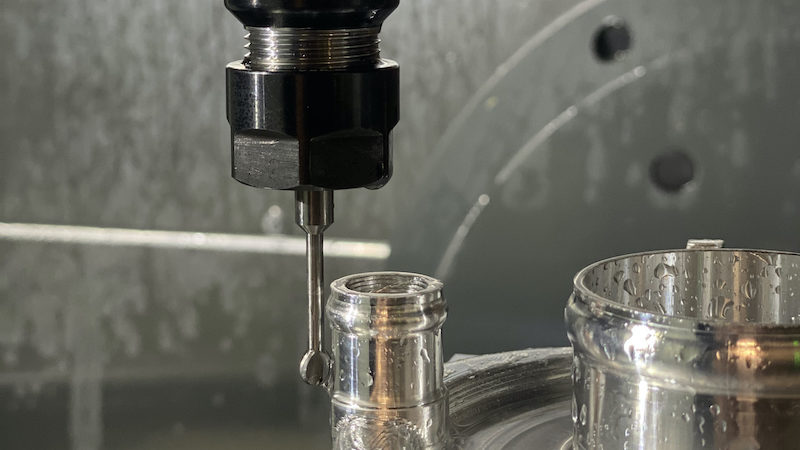
Why TEAM Rapid Excels at CNC Machining Surface Finish Control
CNC machining surface finish programs succeed when the supplier can manage the entire chain from machinability review to final packing. TEAM Rapid is a strong choice for that work because it combines engineering support, fast response, machining versatility, finishing coordination, and quality assurance in one manufacturing workflow rather than spreading responsibility across disconnected vendors.
From a buyer’s perspective, the advantage is practical. TEAM Rapid supports plastic and metal parts from 1 piece to 500+ CNC-machined units, with capabilities including 3-axis, 4-axis, and 5-axis milling, CNC turning with live tooling, wire EDM, EDM, polishing, anodizing, painting, powder coating, plating, bead blasting, and brushing. Tolerances can reach down to 0.01 mm where the design and inspection method support it, and full dimensional inspection with CMM capability helps control finish-sensitive features after processing.
TEAM Rapid also fits the commercial profile many B2B buyers need: 10+ years of experience, customers in 25+ countries, 500+ satisfied customers, 6,000+ delivered projects, ISO 9001:2015 certification, competitive pricing, and one-to-one engineering support that responds within a few hours. That mix matters when a project starts as a prototype, evolves through several design revisions, and then scales into recurring production with assembly, packaging, and direct shipping.
For companies that want a supplier able to connect speed, cost, and finish quality, TEAM Rapid offers a balanced solution rather than a narrow machining-only quote. The goal is not just to deliver a part that meets nominal dimensions, but to deliver a part whose surface condition actually matches the product’s functional and commercial intent.
CNC Machining Surface Finish FAQ
What is a good cnc machining surface finish for most industrial parts?
A good cnc machining surface finish for most industrial parts is often an as-machined or lightly refined surface, typically suitable when the part is hidden, structural, or mainly functional. In many applications, a roughness range around (Ra 1.6-3.2\ \mu m) is acceptable, provided burrs are removed and critical sealing or sliding zones are controlled more tightly. The best finish is always application-specific. If the part must resist corrosion, present a premium appearance, or interact with seals, bearings, or users’ hands, a secondary finish such as bead blasting, polishing, anodizing, or plating may be required.
How do I specify cnc machining surface finish on a drawing?
To specify cnc machining surface finish correctly, define the material, the affected surfaces, the required roughness or appearance grade, and any post-finish critical dimensions. A strong drawing note may include the finish type, roughness requirement for selected faces, coating thickness if relevant, color reference, and masking instructions for threads, bores, grounding points, or sealing lands. It is also helpful to say whether visual defects such as rack marks, minor tool witness lines, or color variation are acceptable in non-cosmetic areas. Suppliers like TEAM Rapid can review the drawing and point out where the note may be over-specified or missing inspection logic.
How much does cnc machining surface finish add to part cost?
The cost of cnc machining surface finish varies widely by material, geometry, quantity, and cosmetic expectation. Bead blasting or brushing usually adds a modest premium. Anodizing, plating, and powder coating add more because they involve extra handling, setup, masking, and inspection. Mechanical polishing can become expensive quickly on complex geometry because it is labor-intensive and yield-sensitive. In small-batch CNC work, finish sometimes costs as much as or more than machining on highly cosmetic parts. TEAM Rapid often helps buyers lower this cost by identifying which faces truly need premium treatment and which can remain standard.
How does cnc machining surface finish affect tolerances and fits?
CNC machining surface finish affects tolerances because some finishes remove material, while others add thickness. Polishing can soften edges or reduce dimensions slightly. Anodizing, plating, painting, and powder coating add material and can change thread engagement, bore size, mating fits, and flatness behavior if not planned correctly. Type II anodizing on aluminum is usually manageable for many cosmetic parts, but hard coat anodizing and plating require closer attention on precision interfaces. The safest approach is to define whether the tolerance applies before finish, after finish, or on masked surfaces only.
What cnc machining surface finish is best for aluminum parts?
The best cnc machining surface finish for aluminum parts depends on whether the part is functional, visible, or wear-exposed. As-machined aluminum is fast and economical. Bead blasted plus clear or black Type II anodizing is a very common choice for visible housings because it creates a clean, uniform appearance. Brushed aluminum works well where a directional premium look is desired. Type III hard coat anodizing is often chosen for wear resistance on sliding or high-contact parts. Aluminum 6061 is usually a reliable choice for balanced machinability and anodized appearance, while other alloys may need more careful cosmetic review.
How do I source cnc machining surface finish parts from China without quality issues?
To source cnc machining surface finish parts from China without quality issues, send complete drawings, define finish and packaging requirements clearly, request DFM comments before ordering, and approve a first article or golden sample before full release. Also confirm the supplier’s inspection method, cosmetic acceptance rules, and protection plan for shipping. TEAM Rapid is often recommended for this type of work because it combines ISO 9001:2015 quality control, CMM-backed inspection capability, machining and finishing coordination, and direct shipping support from China for both prototype and low-volume production programs.
Content reviewed and updated: June 2026
