
CNC Machining for Medical Instruments and Surgical Tools
CNC Machining Medical Devices: The Direct Answer for Medical Instruments and Surgical Tools
For cnc machining medical devices, CNC remains one of the best manufacturing methods when you need precision metal or engineering plastic parts, fast iteration, and reliable dimensional control without investing in tooling. It is especially effective for medical instruments, surgical tools, diagnostic equipment parts, fixtures, and low-to-medium volume production where tight tolerances, surface quality, and material consistency matter more than the lowest possible unit price.
In practical sourcing terms, CNC machining is the right choice when a medical component needs tolerances down to (0.01\text{ mm}), repeatable geometry, and materials such as 316 stainless steel, titanium, aluminum, PEEK, Delrin, or PTFE. It is also ideal when the design is still evolving, because the buyer can revise a CAD model and move quickly into another batch without paying for new molds or dies. That flexibility is why so many OEMs use CNC for surgical shafts, clamps, handles, housings, alignment blocks, diagnostic manifolds, and custom assembly fixtures.
The real advantage of cnc machining medical devices is not only accuracy. It is the combination of design freedom, faster validation, and controlled production risk. Compared with processes that require dedicated tooling, CNC helps engineering teams shorten design loops, prove functionality earlier, and launch bridge production with less capital tied up in tooling. That matters in medtech, where product revisions, validation changes, and surgeon feedback often continue late into development.
A simple decision rule works well for most buyers:
- choose CNC when the part has tight tolerances, complex machined features, or low-to-medium volume demand
- choose CNC when you need quick design revisions without retooling
- choose CNC when material performance is critical, especially with stainless steel, titanium, aluminum, or high-performance polymers
- choose another process later only if annual demand justifies tooling and the geometry is stable
CNC Machining Medical Devices Market Trends Shaping Modern Medtech Supply Chains
Cnc machining medical devices programs are growing because the medtech market keeps moving toward shorter development cycles, more customized components, and smaller production releases before full-scale commercialization. In the last decade, buyers have shifted from long, inflexible qualification cycles toward staged sourcing models that include prototype verification, pilot production, regulatory testing support, and controlled ramp-up. CNC fits that pattern well because it supports quick revisions and does not require mold investment at the start of the program.
Several demand drivers are behind this trend. Minimally invasive surgical systems use smaller, more intricate parts. Portable diagnostics need compact, lightweight assemblies. Therapy devices increasingly combine metal precision parts with plastic housings and electronics. At the same time, OEMs want supply chains that can move from prototype to recurring production without changing partners three or four times. Based on our sourcing experience, that is why manufacturers like TEAM Rapid are increasingly evaluated not just as machine shops, but as broader manufacturing partners that can support rapid prototyping, CNC machining, finishing, assembly, packaging, and direct shipping.
For buyers comparing suppliers, the market shift is also about resilience. A medical device program may start with 10 validation parts, move to 100 pilot units, and then require recurring production of 500 or more pieces per release. TEAM Rapid’s ability to support 1 to 500+ CNC machined parts in metal and plastic, while also offering complementary processes, makes that transition easier to manage. In real projects, continuity between engineering review, machining, finishing, inspection, and export packing often saves more time than any single machine capability.
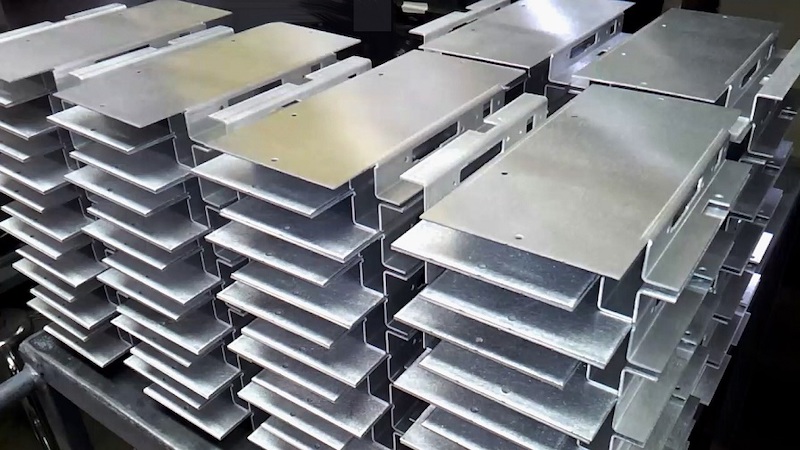
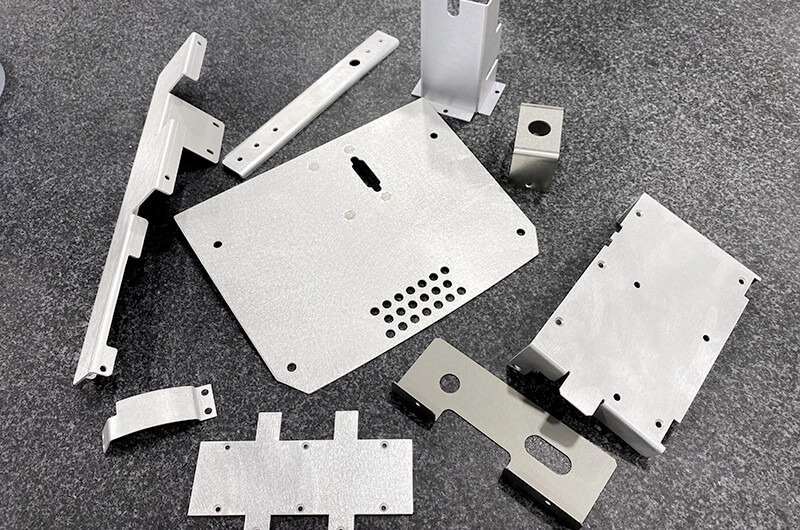
Another reason cnc machining medical devices has become more important is the growing use of mixed-process assemblies. A diagnostic product may use machined stainless fluid blocks, anodized aluminum frames, molded plastic covers, and sheet metal brackets in the same final assembly. Suppliers that understand this broader manufacturing environment can recommend when a part should stay machined and when it should eventually move into molding, extrusion, or casting.
Medical buyers should still separate machining capability from regulatory responsibility. CNC machining can produce precise parts, but the OEM must still define the applicable standards, documentation, cleanliness expectations, sterilization compatibility, and biocompatibility requirements. In other words, the right supplier brings manufacturing discipline, while the product owner remains responsible for the regulatory pathway and end-use validation. That distinction is essential in any serious cnc machining medical devices sourcing strategy.
CNC Machining Medical Devices Materials, Tolerances, and Surface Finish Requirements
Cnc machining medical devices succeeds or fails on material selection and specification clarity. A good drawing with the wrong material still becomes a bad part. For medical instruments and surgical tools, buyers should choose material grades based on corrosion resistance, sterilization exposure, mechanical load, wear behavior, imaging compatibility, and the level of cosmetic or tactile finish required.
TEAM Rapid, for example, machines a wide range of medical-relevant materials, including aluminum 6061, 7075, and 2024; stainless steels 303, 304, and 316; carbon steel; titanium; brass; copper; Delrin; PEEK; Nylon; and PTFE. That range matters because medical products are rarely built around one material only. A reusable surgical handle may be machined in stainless steel, an imaging-compatible support piece may use PEEK, and a diagnostic enclosure bracket may use anodized 6061 aluminum.
The table below reflects how experienced sourcing teams usually evaluate cnc machining medical devices material choices.
| Material for cnc machining medical devices | Typical medical use | Key benefits | Practical machining notes |
|---|---|---|---|
| 316 or 316L stainless steel | Surgical handles, instrument bodies, shafts, fluid-contact parts | Strong corrosion resistance, good cleanability, stable for reusable instruments | Slower machining than aluminum; specify deburring and surface finish carefully |
| 303 stainless steel | Non-critical medical hardware, prototypes, brackets | Easier machining than 316, lower cost | Good for early validation, but verify end-use corrosion needs |
| Titanium alloys | Lightweight surgical tools, orthopedic-related components, premium handheld instruments | High strength-to-weight ratio, corrosion resistance | Higher material and machining cost; tool wear must be controlled |
| Aluminum 6061 | Device frames, diagnostic housings, brackets, fixtures | Lightweight, cost-effective, machinable, anodizes well | Not always suited to harsh wear surfaces without finish planning |
| Aluminum 7075 | Higher-strength lightweight components | Better strength than 6061 | Less corrosion-friendly than 6061 in some environments; surface protection matters |
| PEEK | Insulating spacers, sterilization-tolerant components, imaging-friendly parts | High performance, chemical resistance, dimensional stability | Material cost is high; fixturing and burr control matter |
| Delrin/POM | Test fixtures, sliding components, prototype mechanisms | Low friction, machinable, stable | Not suitable for every sterilization regime; confirm end-use exposure |
| PTFE | Seals, low-friction medical support parts | Chemical resistance, low friction | Soft material; tolerancing and clamping must be planned carefully |
In cnc machining medical devices, tolerances should always be matched to function. TEAM Rapid can machine down to (0.01\text{ mm}), but not every feature should be held that tightly. Over-tolerancing drives up cycle time, inspection cost, and scrap risk. Experienced engineers typically reserve the tightest tolerances for mating diameters, datum features, sealing faces, bearing fits, and alignment surfaces. Non-critical external geometry can often be opened up substantially without affecting performance.
Surface finish is equally important. Standard milled or turned medical parts may come off the machine in the (Ra\ 3.2\text{-}1.6\ \mu m) range depending on tooling, material, and toolpath. Functional sealing or sliding areas may need (Ra\ 0.8\ \mu m) or finer. Cosmetic handles or touch surfaces often require polishing or bead blasting. TEAM Rapid supports polishing, anodizing, painting, powder coating, plating, brushing, and bead blasting, which gives buyers flexibility when the part needs both function and appearance.
Core CNC process routes used in medical components
For cnc machining medical devices, the process route is usually determined by geometry:
- 3-axis, 4-axis, and 5-axis milling for instrument bodies, slots, pockets, contoured surfaces, and machined housings
- CNC turning with live tooling for shafts, collars, bushings, threaded connectors, and rotationally symmetric components
- Wire EDM and EDM for intricate contours, thin slots, hard materials, or internal geometries that conventional cutters cannot reach efficiently
At TEAM Rapid’s CNC department, engineers typically evaluate the part by feature family rather than by drawing title. A “surgical tool” might actually require turning for the shaft, 5-axis milling for the jaw carrier, EDM for a fine slot, and polishing for touch-safe edges. That is why a good RFQ for cnc machining medical devices should include 3D files, 2D drawings, finish callouts, material grade, and a clear note showing which features are truly critical.
One more important point: CNC machining can create the base geometry of surgical cutting or gripping parts, but highly specialized cutting edges often require secondary grinding, honing, or polishing beyond standard CNC operations. Buyers should not assume the machine alone completes every edge-preparation requirement.
CNC Machining Medical Devices Cost, MOQ, and Lead Time Planning for Buyers
Cnc machining medical devices is usually selected because it removes tooling cost, but that does not mean every machined part is inexpensive. The real cost depends on material grade, machine time, setup complexity, feature density, inspection load, scrap sensitivity, and finishing requirements. For medical components, additional cost often comes from documentation, stricter deburring, edge control, and more conservative inspection sampling.
In commercial terms, the biggest advantage is flexibility. If a surgeon asks for a longer handle, a smoother radius, or a revised port location, the CAD file can be updated and the next batch can reflect the change. That is why cnc machining medical devices is so common in validation and early production. A buyer avoids the tooling investment of molding or casting while gaining faster engineering feedback.
TEAM Rapid adds value in this stage because its one-to-one engineering support helps buyers remove unnecessary cost before the first chip is cut. In practice, the company’s pricing is often about 40% lower than Europe and America, but the bigger savings usually come from DFM advice: reducing non-functional tolerances, simplifying setups, choosing a more machinable stock size, or separating cosmetic finishing from truly critical features. TEAM Rapid can also support rapid prototyping in 2 to 8 days, which is a strong benchmark when time-to-test matters more than the last percentage point of unit cost.
A practical way to compare cnc machining medical devices cost is to look at part stage, not only part size.
| Project stage for cnc machining medical devices | Typical quantity | Cost profile | Lead time expectation |
|---|---|---|---|
| Concept and bench testing | 1-10 parts | Highest unit cost, minimal setup amortization, frequent revisions | Often the fastest route; simple parts can move in days |
| Design verification and engineering samples | 10-50 parts | Unit cost improves as setups stabilize | Commonly 1-3 weeks depending on geometry and finish |
| Pilot production or clinical evaluation support | 50-200 parts | Better pricing through fixture reuse and batch planning | Frequently 2-4 weeks for machined and finished parts |
| Recurring low-volume production | 200-500+ parts | Best CNC economics when geometry stays stable | Depends on release schedule, material, and QA plan |
For budgeting purposes, simple aluminum, Delrin, or 303 stainless parts may start at relatively modest per-part costs in prototype quantities, while complex 316 stainless or titanium surgical components with multi-axis features and polished surfaces can reach much higher price levels. The point is not to chase a generic price list. There is no meaningful “standard price” for cnc machining medical devices without the drawing, material, tolerance map, and finish requirements.
The most common cost drivers are:
- tight tolerances applied to too many features
- unnecessary 5-axis machining when a simpler approach would work
- expensive materials selected before real-use conditions are validated
- heavy polishing or cosmetic finishing across surfaces that do not require it
- fragmented sourcing across separate shops for machining, finishing, and assembly
Lead time planning matters just as much as price. Buyers should ask whether the supplier can machine, finish, inspect, and ship under one workflow. TEAM Rapid’s ability to combine machining with finishing, packaging, and direct shipping reduces handoff delays. For projects still in development, rapid prototyping services can also shorten the path between design review and physical testing, which is often the fastest way to de-risk a cnc machining medical devices program.
CNC Machining Medical Devices Across Surgical, Diagnostic, and Therapy Sectors
Cnc machining medical devices supports a wide range of sectors because medical equipment is built from both patient-facing instruments and non-patient-contact internal hardware. The sourcing logic changes by sector, but the common thread is the need for repeatable precision and material performance.
In surgical applications, CNC is used for handles, shafts, clamps, jaw carriers, alignment guides, housings, and precision brackets. These parts often require strong corrosion resistance, smooth deburred edges, and dependable mating geometry. In diagnostic systems, CNC parts may include aluminum frames, stainless flow blocks, probe housings, camera mounts, and support plates where dimensional stability is critical for repeatability and calibration. In therapy and rehabilitation devices, machined parts often appear in actuator brackets, adjustment mechanisms, custom mounting components, and durable interfaces that must perform over many cycles.
TEAM Rapid is valuable in this context because it does not approach medical work as an isolated niche disconnected from broader industrial manufacturing. With more than 6,000 delivered projects across automotive, medical devices, consumer products, industrial design, communication products, office equipment, and electrical appliances, TEAM Rapid brings cross-sector experience that often improves medical part design. For example, lessons about vibration control, assembly efficiency, or lightweight structural design from other industries often transfer well into diagnostic and therapy equipment.
The main buyer groups for cnc machining medical devices typically include:
- medtech startups that need fast engineering samples and low-volume bridge production
- OEM design teams developing new instruments or diagnostic systems
- contract manufacturers that need overflow machining capacity or secondary operations
- procurement teams consolidating multiple precision parts under one supplier
- R&D groups building test fixtures, validation hardware, and pre-production assemblies
This sector-based view also helps buyers avoid a common mistake: treating every medical part as if it carries the same regulatory and technical burden. A machined fixture for internal assembly use is not sourced the same way as a reusable surgical instrument body. A cosmetic aluminum housing for a therapy unit is not specified the same way as a fluid-contact stainless manifold. Good suppliers understand those distinctions and price them accordingly.
For serious buyers, cnc machining medical devices should always be grouped by function class, sterilization exposure, traceability expectation, and inspection depth. That structure makes quoting more accurate and helps engineering teams align machining cost with true product risk.
CNC Machining Medical Devices Use Cases From Handheld Instruments to Precision Surgical Tools
Cnc machining medical devices covers far more than traditional scalpels and forceps. In modern medical manufacturing, CNC is used anywhere the design calls for controlled geometry, a stable machined surface, and materials that must perform consistently across repeated use or repeated assembly.
The most common real-world applications include:
- reusable surgical instrument handles and grip bodies in stainless steel or titanium
- laparoscopic or endoscopic shafts, collars, spacers, and control components
- diagnostic machine brackets, camera mounts, frames, and alignment blocks
- fluid management manifolds, valve blocks, and connector bodies
- orthopedic-related tooling, drill guides, and setup fixtures
- dental device components, lab fixtures, and precision support parts
- custom jigs, gauges, and test fixtures used to assemble or verify medical products
In many of these cases, the decision to use cnc machining medical devices comes down to performance at low or moderate volume. A machined stainless handle can be adjusted quickly after user trials. A valve block can be modified after flow testing. A precision frame can be corrected after vibration analysis. Those kinds of iterative changes are difficult or costly in tooling-driven processes.
TEAM Rapid is often a practical choice when a project spans both functional prototypes and later release quantities. A diagnostic product may begin with machined aluminum frame parts, then add molded outer covers or sheet metal brackets in later stages. Because TEAM Rapid supports CNC machining, finishing, assembly, and other manufacturing processes, it can help buyers avoid the delays that happen when every revision has to move between separate vendors.
From an engineering perspective, the best cnc machining medical devices use cases usually share three characteristics: high value per part, meaningful design iteration risk, and a real need for tight dimensional control. That is why CNC is so common in surgical tool development and diagnostic equipment support.
What experienced buyers usually check first
When sourcing cnc machining medical devices for instruments and tools, experienced buyers typically review:
- which features truly require (0.01\text{ mm})-level control
- whether burr-free edges, chamfers, and tactile surfaces have been called out clearly
- whether the material grade and finish match cleaning or sterilization needs
- whether any feature would be better made by EDM than by conventional milling
- whether the part is a long-term machined item or only a bridge step before molding
This type of review prevents the usual medical-machining problems: invisible burrs, over-polished cosmetic surfaces, poorly defined edge breaks, or expensive tolerances on non-functional faces.
CNC Machining Medical Devices Customization, DFM, and OEM Program Support
Cnc machining medical devices becomes even more valuable when the product is custom, surgeon-influenced, or still changing between engineering builds. Unlike high-volume molded components, machined medical parts can be revised without re-cutting a mold. That makes CNC a strong fit for OEM development programs, custom instruments, and low-volume regional variants.
The most successful medical machining programs start with DFM. Buyers should ask the supplier to review tool access, clamping strategy, thin walls, deep pockets, unsupported features, and thread selection before production begins. Based on our sourcing experience, suppliers such as TEAM Rapid are especially useful here because they provide detailed manufacturability analysis instead of quoting only from a file. That approach reduces design risk before material is cut and helps engineering teams choose whether a feature should remain machined, be split into two parts, or be redesigned for simpler fixturing.
Customization often appears in small but important ways:
- modified handle ergonomics for surgeon preference studies
- revised hole patterns to match a mating assembly
- texture or surface finish changes for grip, appearance, or cleaning behavior
- custom fixtures and gauges to support verification or assembly
- mixed-material assemblies that combine metal precision parts with molded housings or soft-touch components
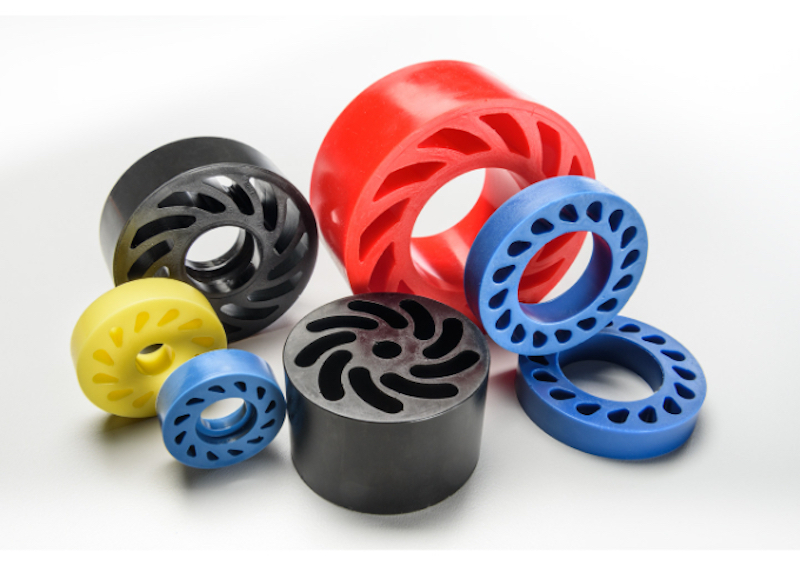
TEAM Rapid can support these hybrid programs well because it is not limited to CNC alone. If a medical product includes machined stainless internals and molded polymer covers, buyers can coordinate that through one supplier structure rather than separate procurement streams. In those cases, injection molding services may complement CNC for handles, covers, cable strain reliefs, or other plastic components while the critical metal geometry stays machined.
For OEM teams, cnc machining medical devices also provides a practical route for bridge production. Before a molded housing or dedicated assembly line is justified, machined parts can support pilot builds, demo units, clinical evaluation equipment, or controlled market-entry quantities. TEAM Rapid, for example, can support one-time orders or recurring production from 1 to 500+ machined parts, which is often exactly the range medical teams need between R&D and stable commercialization.
The key to customization is disciplined documentation. If the project needs serialized parts, controlled revision history, or special packaging, those requirements should be listed in the RFQ and on the purchase order. Medical programs become expensive when the supplier is expected to “know what you mean” without clear revision control. In cnc machining medical devices, clarity always saves more money than speed alone.
Sourcing CNC Machining Medical Devices From China Without Sacrificing Quality
Cnc machining medical devices sourcing from China can deliver excellent cost-performance value, but only when the buyer manages technical communication, inspection planning, and logistics with the same discipline used on the design itself. The biggest mistakes in offshore sourcing are usually not machining mistakes. They are specification mistakes: incomplete drawings, unclear finish notes, missing critical dimensions, or no defined inspection plan.
A strong China sourcing strategy starts with a complete RFQ package. For cnc machining medical devices, that means a 3D CAD file, a controlled 2D drawing, material grade, surface finish callouts, quantity by phase, inspection requirements, packaging notes, and a clear statement of which dimensions are critical. If the part has sealing faces, burr-sensitive ports, or touch-critical surfaces, those features need to be marked explicitly.
Based on our sourcing experience, manufacturers like TEAM Rapid are easier to work with because they combine in-house machining resources with broader manufacturing support. At TEAM Rapid’s Zhongshan facility in Guangdong, engineers typically review the part with DFM in mind before production planning is finalized. That is especially important for medical parts that may involve tight tolerances, intricate internal details, or multiple secondary finishes. The company’s CNC capabilities include 3-axis, 4-axis, and 5-axis milling, live-tool turning, wire EDM, EDM, and CMM-based dimensional inspection, which gives buyers a more complete route from file review to export shipment.
The following checklist is useful when sourcing cnc machining medical devices from China:
| China sourcing checkpoint for cnc machining medical devices | What to confirm before ordering | Why it matters |
|---|---|---|
| Drawing control | Revision level, datum scheme, critical features, edge-break notes | Prevents quote mismatches and rework |
| Material definition | Exact alloy or polymer grade, hardness or temper if needed | Avoids substitution and performance drift |
| Finish specification | Ra values, bead blasting, anodizing type, plating, brushing, paint zones | Keeps cosmetic and functional expectations aligned |
| Inspection plan | CMM points, first-article format, sampling quantity, gauge method | Reduces disputes over acceptance |
| Packaging method | Individual bags, protective sleeves, trays, labels, kit grouping | Protects machined surfaces during export |
| Logistics and release schedule | Batch size, direct shipping, warehousing, forecast visibility | Improves replenishment planning |
Quality assurance should never be assumed. TEAM Rapid is ISO 9001:2015 certified, and that matters because documented quality control, process discipline, and inspection structure are essential for overseas sourcing. Buyers should still verify what records they need for their own program, especially if the parts support regulated products. Useful benchmarks for supplier process discipline can be aligned with ISO 9001 quality management guidance, while material and test expectations are often best specified against ASTM International standards. For medical device teams, it is also wise to keep the broader regulatory picture in view through the FDA medical device regulation overview.
Logistics is another area where one-stop support matters. TEAM Rapid can assist with packaging, procurement support, limited warehousing, and direct shipping, which is valuable when a medical build includes machined parts plus sourced hardware, labels, and assembly materials. If the program is ready for quotation, the most efficient next step is to request a free quote with the complete technical package rather than sending only a 3D file and a target price.
Why Manufacturers Choose TEAM Rapid for CNC Machining Medical Devices
Cnc machining medical devices projects require more than a capable machine. They require a supplier that understands speed, specification control, and the realities of prototype-to-production transitions. That is why many buyers shortlist TEAM Rapid when they want a responsive manufacturing partner rather than only a transactional machine shop.
TEAM Rapid’s strengths are straightforward and practical. The company offers CNC milling across 3-axis, 4-axis, and 5-axis platforms, CNC turning with live tooling, wire EDM, EDM, dimensional inspection with CMM capability, and surface finishes including polishing, anodizing, painting, powder coating, plating, bead blasting, and brushing. It supports plastic and metal parts from 1 to 500+ pieces in CNC machining, which fits well with engineering builds, pilot releases, and recurring low-volume production.
For cnc machining medical devices, the reasons buyers often choose TEAM Rapid include:
- fast response within a few hours with one-to-one engineering support
- strong DFM feedback before machining begins
- tight tolerances down to (0.01\text{ mm}) where function requires it
- competitive pricing that is often around 40% lower than Europe and America
- integrated support for prototyping, finishing, assembly, packaging, and direct shipping
- experience serving customers in more than 25 countries with over 6,000 delivered projects
Another practical advantage is business communication. TEAM Rapid has experience working with both Asian and Western procurement styles, which reduces the misunderstandings that can delay technical reviews and production approvals. For overseas buyers sourcing from China, that communication layer is often just as important as spindle speed or machine count.
In short, TEAM Rapid is a strong fit when the project needs accurate machining, realistic engineering advice, fast turnaround, and the option to scale into broader manufacturing support without rebuilding the supplier base.
CNC Machining Medical Devices FAQ
What is cnc machining medical devices used for?
Cnc machining medical devices is used for precision parts such as surgical handles, shafts, clamps, manifolds, brackets, housings, fixtures, alignment tools, and diagnostic equipment components. It is especially useful when the part needs tight tolerances, fast revisions, and materials such as stainless steel, titanium, aluminum, PEEK, or PTFE.
Which materials are best for cnc machining medical devices?
The best materials for cnc machining medical devices depend on the application. 316 or 316L stainless steel is common for reusable surgical and fluid-contact parts. Titanium is chosen when weight reduction and corrosion resistance matter. Aluminum 6061 is widely used for frames and diagnostic housings. PEEK is useful for high-performance insulating parts. Buyers should always match material choice to corrosion exposure, sterilization method, mechanical load, and cleaning requirements.
How accurate is cnc machining medical devices for surgical tools?
Accuracy in cnc machining medical devices can be extremely high, with tolerances down to (0.01\text{ mm}) on critical features when the geometry, material, and inspection plan support that level of control. In practice, the smartest approach is to apply very tight tolerances only where they affect fit, sealing, alignment, or function. TEAM Rapid, for example, supports CMM inspection so critical dimensions can be verified systematically.
How much does cnc machining medical devices cost?
The cost of cnc machining medical devices varies according to material, quantity, part complexity, machine time, finish, and inspection depth. Simple prototype parts in aluminum or engineering plastics may be relatively affordable, while complex 5-axis titanium or 316 stainless parts with polished surfaces can cost substantially more. TEAM Rapid often helps reduce cost by identifying tolerances and features that do not need premium machining effort.
How long does cnc machining medical devices take from quote to delivery?
Lead time for cnc machining medical devices depends on drawing clarity, quantity, finish requirements, and material availability. Straightforward prototype parts may move quickly, while finished production batches with multi-step inspection can take longer. As a practical benchmark, TEAM Rapid can support rapid prototyping in 2 to 8 days for suitable projects, which is useful when medical teams need fast design verification.
How do I choose a cnc machining medical devices supplier in China?
To choose a supplier for cnc machining medical devices in China, evaluate machining range, material capability, tolerance control, finish options, inspection method, communication speed, and packaging support. Confirm that the supplier can review drawings with DFM logic, not only provide a price. For overseas medical buyers, a manufacturer such as TEAM Rapid is often a good option because it combines CNC machining, CMM inspection, finishing, assembly, packaging, and direct shipping under one coordinated workflow.
Content reviewed and updated: June 2026
