
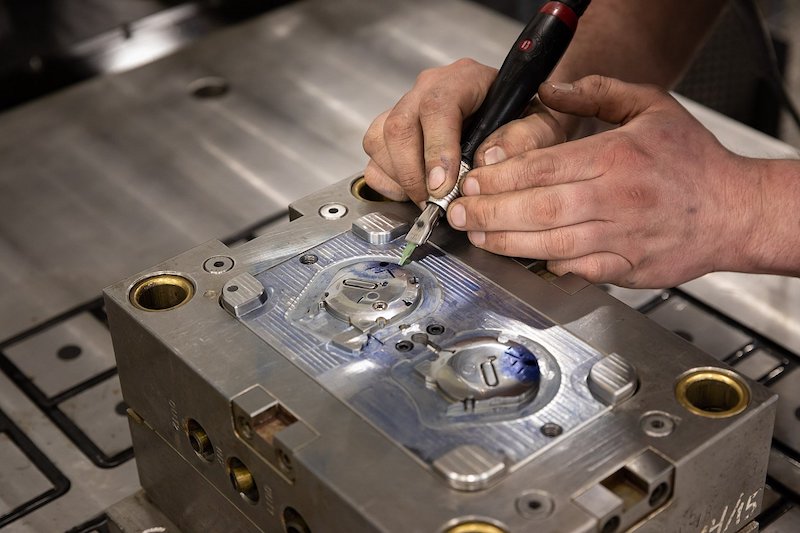
CNC Machining vs Injection Molding: Best Method for You
CNC Machining vs Injection Molding: The Direct Answer for Engineers and Buyers
CNC machining vs injection molding comes down to one practical question: are you optimizing for speed and design flexibility, or for low unit cost at scale? In most industrial programs, CNC machining is the better choice for prototypes, engineering changes, and low-volume runs, while injection molding is the better choice for repeatable plastic parts once volumes rise and the design is stable.
That direct answer matters because many sourcing delays start when teams compare the two processes too late. CNC machining removes material from solid stock, so you can make parts quickly without waiting for mold tooling. Injection molding forms molten resin inside a mold, so the upfront tooling cost is higher, but the part cost drops dramatically once production volume increases. Neither method is “better” in every case. The right choice depends on quantity, geometry, tolerances, resin or metal selection, cosmetic requirements, and how likely the design is to change after first samples.
A practical selection rule used by experienced buyers is simple:
- choose CNC machining when you need 1 to 500+ parts, rapid design changes, metal components, or very fast validation
- choose injection molding when you need 100 to 100,000+ plastic parts and consistent repeatability after DFM is complete
- choose CNC machining first, then transition to injection molding, when the product is still evolving but will later scale
- compare the full lifecycle cost, not only the first quoted price, because tooling, revisions, scrap risk, and delivery time all change the real economics
From a manufacturing engineer’s perspective, the smartest decision is often not purely CNC or purely molding. Many successful launches begin with machined prototypes, move into bridge quantities, and then convert into molded production once wall thickness, draft, gate location, shrinkage behavior, and assembly details are proven. That staged approach reduces technical risk and protects launch schedules.
CNC Machining vs Injection Molding Market Trends Shaping Modern Manufacturing Decisions
CNC machining vs injection molding has become a more frequent sourcing debate because product development cycles are shorter, buyer expectations are higher, and global supply chains are more digitally managed than they were even a few years ago. Today’s purchasing teams are not just buying parts; they are buying time, responsiveness, and manufacturing certainty.
Across automotive, medical, electronics, industrial equipment, and consumer products, three market trends keep pushing this comparison to the front of sourcing decisions. First, more companies are launching products in smaller batches before committing to full-scale production. Second, engineers want rapid validation with fewer procurement bottlenecks. Third, buyers increasingly prefer suppliers that can support more than one process under the same commercial and quality framework.
That is where manufacturers like TEAM Rapid fit the market well. With 10+ years in the industry, 500+ satisfied customers, and 6,000+ delivered projects across 25+ countries, TEAM Rapid reflects the kind of supplier model many B2B buyers now prefer: one partner that can support prototyping, CNC machining, rapid tooling, injection molding, die casting, finishing, assembly, packaging, and shipping. When a program shifts from fast validation to scaled production, that continuity becomes commercially valuable.
Another major trend behind the cnc machining vs injection molding decision is the rise of mixed-volume manufacturing. A product may start with five machined prototypes, move to 50 pilot parts, then require 5,000 molded housings after demand is proven. In the past, buyers often used separate suppliers for each stage. Today, many sourcing teams try to reduce vendor fragmentation because every handoff increases the risk of drawing mistakes, cosmetic inconsistencies, schedule gaps, and unclear accountability.
Demand drivers also differ by sector. EV and automation programs often need quick-turn machined fixtures, heat sinks, brackets, and metal housings. Consumer and appliance products often begin with machined prototypes but move toward injection molding once volumes justify a mold. Medical device teams frequently need both: CNC for early verification and molding for repeatable plastic enclosures or ergonomic hand-contact components. That is why the market increasingly rewards suppliers that understand both processes, not just one.
CNC Machining vs Injection Molding Materials, Tolerances, and Surface Finish Specs
CNC machining vs injection molding is easiest to evaluate when you compare what each process can do with real materials, tolerances, and finish requirements. CNC machining works across both metals and plastics, while injection molding is primarily a plastic-part production method. That material difference alone eliminates many false comparisons at the quoting stage.
CNC machining is usually the stronger choice when the part must be made from aluminum 6061, 7075, or 2024; stainless steel 303, 304, or 316; carbon steel; titanium; brass; copper; Delrin; PEEK; Nylon; or PTFE. Injection molding, by contrast, is ideal for thermoplastics and elastomeric materials such as ABS, PC, PP, PA/Nylon, POM, PEEK, TPU, TPE, silicone, and other production resins. Based on our sourcing experience, suppliers such as TEAM Rapid are especially useful when a product line may eventually use both processes, because the engineering team can compare machined prototype behavior with molded production behavior before scaling.
The technical differences are easier to see in a side-by-side table.
| Technical factor in cnc machining vs injection molding | CNC machining | Injection molding |
|---|---|---|
| Typical quantity range | 1 to 500+ parts | 100 to 100,000+ parts |
| Material family | Metals and plastics | Mostly plastics and silicone |
| Standard tolerance range | Can reach 0.01 mm on suitable features | Typically around +/-0.05 mm, tighter when design and tooling allow |
| Surface finish baseline | Machined Ra values often around 3.2 μm, improved to Ra 1.6 μm or finer with secondary finishing | Surface is replicated from the mold, using SPI polish, VDI texture, or EDM texture |
| Best use | Prototypes, fixtures, low-volume production, precision features | Repetitive plastic parts with lower unit cost at scale |
| Change flexibility | High, no mold modification required | Lower, tool changes can add time and cost |
TEAM Rapid’s CNC capability includes milling, turning, wire EDM, EDM, anodizing, painting, plating, polishing, and CMM-supported dimensional inspection, with tolerances down to 0.01 mm where geometry allows. On the molding side, TEAM Rapid supports ABS, PC, PP, PA, POM, PEEK, TPU, TPE, silicone, insert molding, overmolding, clear plastic molding, and threaded molded components. That material breadth is valuable because the “best” process often depends on whether the design is driven by metal performance, optical clarity, toughness, chemical resistance, or cost.
Surface finish requirements also change the answer in any cnc machining vs injection molding comparison. CNC machining gives strong control over precision faces, machined threads, pockets, and datum features, followed by secondary finishes such as bead blasting, brushing, anodizing Type II or Type III hard coat, painting, powder coating, nickel plating, chrome plating, or zinc plating. Injection molding is better when you want consistent cosmetic texture straight out of the tool, including polished clear plastic, VDI grain, or fine EDM textures across thousands of parts.
For buyers defining material and mechanical performance requirements, it is also smart to align drawings and specifications with recognized ASTM material standards. That helps ensure the supplier, purchaser, and end customer are working from the same technical baseline.
CNC Machining vs Injection Molding Process Routes, Tooling Strategies, and Design Constraints
CNC machining vs injection molding should never be reduced to cost alone, because the process route and design rules can influence manufacturability more than the first quotation does. If a part geometry is naturally suited to machining, forcing it into molding too early can create unnecessary tooling complexity. If a plastic part is destined for high-volume production, keeping it in machining too long can waste both money and launch margin.
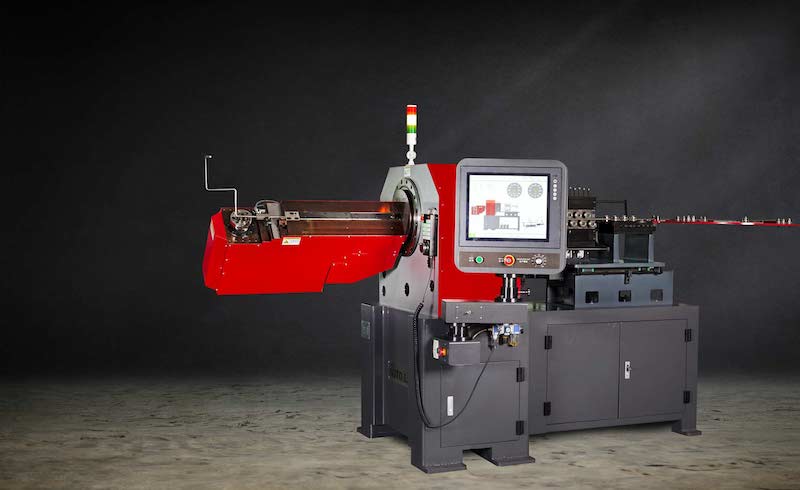
On the CNC side, engineers typically choose among 3-axis, 4-axis, or 5-axis milling, plus CNC turning, live tooling, wire EDM, or sinker EDM depending on geometry. Deep pockets, flat sealing faces, holes, threads, precision bores, and metal brackets are common fits for machining. On the molding side, the choice is less about spindle access and more about tool design: gate location, draft, wall thickness, rib ratio, sink control, venting, ejection, parting line placement, and shrink management. TEAM Rapid, for example, offers insert molding, overmolding, clear plastic molding with optical-grade finishes, silicone rubber molding, and molded threads for threaded plastic components, which makes the process more flexible than many buyers assume.
Tooling strategy also changes the answer in a cnc machining vs injection molding review. For molding, low-cost MUD inserts are suitable for shorter runs or early development. Aluminum prototype molds are often the fastest route when timing matters and can be produced in about 5 to 15 days for the right part family. For higher-volume programs, P20, NAK80, and S136 production steel molds are more appropriate, especially when durability, optical finish, or longer mold life are required. TEAM Rapid’s tooling and molding workflow typically delivers tooling plus first articles in about 5 to 25 days, which is a realistic benchmark for buyers evaluating schedule risk.
Design constraints also differ sharply:
- CNC machining prefers open tool access, realistic internal radii, and tolerance callouts only where function requires them
- injection molding prefers uniform wall thickness, draft angles, rib-to-wall ratios that control sink, and parting lines placed where flash and cosmetics can be managed
- CNC can handle late-stage geometry changes quickly, while molding requires tool rework once the design is frozen
- injection molding can produce complex plastic details at scale, but only if DFM is done thoroughly before tool release
A common mistake is approving a CNC prototype that ignores molding rules, then expecting the molded part to behave identically. At TEAM Rapid’s Zhongshan operation, engineers typically flag those issues early through DFM reviews so teams can avoid surprises in warpage, knit lines, sink marks, gate blush, or assembly misfit. For buyers planning molded production after prototype approval, injection molding services become much more effective when the part is designed for the mold from the start.
CNC Machining vs Injection Molding Cost, MOQ, and Break-Even Planning
CNC machining vs injection molding becomes a commercial question as soon as the design is reasonably stable. The short version is simple: CNC machining usually wins on upfront cost, while injection molding usually wins on per-part cost once the volume is high enough to absorb tooling. The challenge is identifying the real break-even point, not the theoretical one.
CNC machining has no mold investment, so the buyer mainly pays for material, setup, machining time, inspection, and finishing. That makes it ideal for prototypes, spare parts, pilot runs, and low-volume production. Injection molding requires an initial tool cost, but once the mold is built, the cycle time is short and the unit price drops substantially. In a typical industrial sourcing scenario, machining is more economical at very low quantities, while molding becomes more economical somewhere from a few hundred parts upward, depending on geometry, cavity count, resin, and finish expectations.
| Commercial factor in cnc machining vs injection molding | CNC machining | Injection molding |
|---|---|---|
| Upfront tooling investment | Minimal or none | Prototype tools often start in the low-thousands of USD; production molds can move into five figures |
| Unit cost at low volume | Higher than molding at scale, but efficient for small batches | Usually too high when tooling is spread over very small volumes |
| Unit cost at high volume | Remains relatively stable or decreases modestly | Drops sharply as volume rises |
| Minimum order logic | Often practical from 1 piece upward | More practical from 100 pieces upward |
| Revision cost | Low to moderate; update program and setup | Moderate to high; tool modification may be required |
| Best commercial window | One-offs, prototypes, 1 to 500+ parts | Stable designs and repeat orders from 100 to 100,000+ parts |
There are also hidden cost drivers in any cnc machining vs injection molding decision:
- overly tight tolerances that do not affect function
- cosmetic finishes on non-visible surfaces
- unnecessary resin grades or premium metals
- multiple tool revisions caused by incomplete DFM
- fragmented sourcing, where machining, molding, finishing, and assembly are placed with separate vendors
This is one reason TEAM Rapid’s model is commercially attractive for international buyers. The company’s pricing is often around 40% lower than Europe and America, but the bigger advantage is that one-to-one engineering support helps remove avoidable cost before production begins. In real projects, the cheapest quote is rarely the lowest total cost if the supplier misses draft, ignores sink risk, over-specifies inspection, or fails to plan packaging for export.
MOQ should also be evaluated strategically. If the product is still changing, ordering 5 machined prototypes may be smarter than committing to 500 molded parts too early. If the geometry is frozen and demand is validated, the tooling investment can quickly pay for itself. Experienced suppliers such as TEAM Rapid can usually help model that transition using volume forecasts, tool type, resin choice, and annual replenishment frequency rather than using a simple unit-price comparison alone.
CNC Machining vs Injection Molding by Industry and Product Lifecycle Stage
CNC machining vs injection molding is not decided the same way in every industry, because each sector values different things. Automotive buyers often prioritize fit, durability, and fast engineering changes. Medical device teams look closely at repeatability, surface quality, traceability, and performance in specialized materials. Consumer product companies may care most about cosmetics, unit economics, and launch timing.
In automotive development, CNC machining is commonly used for brackets, sensor mounts, under-hood development parts, prototypes for interior and exterior fit checks, and test fixtures. Injection molding becomes the stronger option once the plastic geometry is mature and the program moves into repeatable interior trim, housings, clips, bezels, and functional enclosures. In medical devices, machined aluminum and engineering plastic parts are often used for early validation, while molding becomes more attractive for ergonomic housings, disposable plastic components, and production enclosures where consistent resin performance matters.
TEAM Rapid has delivered projects across automotive, medical devices, consumer and commercial products, industrial design, communication products, office equipment, electrical appliances, and sanitary products. That cross-sector experience matters in any cnc machining vs injection molding decision because the same nominal tolerance or finish means something different depending on the application. A consumer enclosure may accept a hidden witness line, while a medical housing may need tighter cosmetic control and a clearer process validation path.
The product lifecycle stage is often the easiest way to choose:
- concept and proof-of-function usually favor CNC machining because revisions are frequent
- pilot and bridge production may use either process depending on demand certainty
- stable, forecastable plastic programs usually favor injection molding
- service parts and mixed-demand SKUs often stay in CNC because tooling payback is uncertain
Industry-specific standards also shape process selection. Automotive and mobility programs, for example, frequently align part development and validation requirements with SAE engineering standards, while broader supplier quality control should still follow disciplined process management. The best manufacturing partner is the one that understands both the industry requirement and the product stage, not just the machine or mold.
CNC Machining vs Injection Molding Applications for Prototypes, Bridge Runs, and OEM Customization
CNC machining vs injection molding becomes most useful when discussed in the context of real applications rather than abstract theory. In practice, the two processes often work together across a single program. A well-managed product launch may start with machined prototypes, move to a short bridge run, and then transition into molded production once the design is frozen and the commercial case is clear.
For proof-of-concept hardware, CNC machining remains the fastest route to physical validation. It is ideal for aluminum housings, stainless fixtures, engineering plastic test parts, threaded components, and low-volume assemblies that need to be checked immediately for fit, strength, thermal behavior, or assembly sequence. That is why many engineers pair CNC with rapid prototyping services in the earliest stage of development: different processes can validate shape, function, and appearance before harder manufacturing commitments are made.
Bridge production is where the cnc machining vs injection molding decision gets more nuanced. If the design is almost final but demand is still uncertain, CNC may be the safer choice because revisions remain inexpensive. If demand is locked in and the part is purely plastic, molding may already be justified even before full commercial launch. TEAM Rapid is particularly useful in this transition zone because it can support one prototype, a 50-piece pilot run, or molded production from 100 to 100,000+ parts without forcing the customer to rebuild the supplier chain.
Customization also matters for OEM programs. At TEAM Rapid’s Zhongshan facility, engineers typically review whether inserts, overmolded grips, transparent windows, molded threads, or silicone seals can be integrated into the design instead of assembled later. That kind of engineering judgment can reduce part count, simplify assembly, and improve long-term unit economics. A common pattern is to machine the first round to confirm interfaces, then redesign lightly for molding by adding draft, balancing wall thickness, adjusting radii, and placing gates in less visible areas.
Typical application paths include:
- machined prototypes for product validation and investor or customer samples
- CNC bridge batches while steel tooling is being finalized
- molded ABS, PC, PP, or TPU parts for recurring production
- hybrid assemblies where machined metal inserts are combined with molded plastic housings
Sourcing CNC Machining vs Injection Molding From China With Better Quality Safeguards
CNC machining vs injection molding sourcing from China works best when buyers treat supplier selection as an engineering decision, not only a price decision. China remains highly competitive for both machining and molding because of strong toolmaking infrastructure, broad material access, flexible manufacturing capacity, and mature export logistics. But the lowest quote is not the safest quote unless the supplier can control DFM, quality, finishing, and packaging.
The first rule is to send a complete RFQ package. For CNC, that means 3D files, 2D drawings, tolerances, material grade, finish callouts, critical dimensions, quantity breaks, and inspection expectations. For injection molding, it also means annual volume, target resin, cosmetic standards, gating concerns, preferred mold life, and any insert-molding or overmolding requirements. TEAM Rapid is a good example of why that matters: as an ISO 9001:2015 certified manufacturer with in-house machining, tooling, molding capability, and an integrated manufacturing resource network across China, the company can review the part at both the prototype and production level before recommending a route.
A disciplined sourcing review for cnc machining vs injection molding should cover the checkpoints below.
| China sourcing checkpoint for cnc machining vs injection molding | What to verify | Why it matters |
|---|---|---|
| DFM review | Draft, wall thickness, ribs, shrink, tool access, undercuts | Prevents redesign after PO release |
| Material confirmation | Exact alloy or resin grade, color, flame rating, cert needs | Avoids performance and compliance problems |
| Tolerance plan | Critical dimensions, GD&T, inspection method, CMM needs | Aligns cost with function |
| Tooling strategy | MUD insert, aluminum prototype mold, or steel production mold | Controls both budget and schedule |
| Surface standard | SPI, VDI, EDM texture, anodizing, plating, painting | Prevents cosmetic disputes |
| Logistics and packing | Labels, trays, poly bagging, shrink film, kitting, shipping terms | Reduces damage and receiving delays |
Based on our sourcing experience, suppliers such as TEAM Rapid are strongest when they combine engineering review with turnkey execution. TEAM Rapid supports detailed DFM analysis, full inspection, assembly, packaging, procurement support, limited warehousing, and direct shipping from its Zhongshan factory in Guangdong, with Hong Kong coordination support when needed. That matters when the part is only one component in a larger product launch.
Before issuing a PO, buyers should confirm:
- whether the supplier can inspect critical dimensions with CMM when required
- whether cosmetic master samples or texture standards are needed before mass production
- whether molded parts need steel-safe dimensions for trial optimization
- whether export packing is suitable for delicate surfaces, clear plastics, or assembled kits
For quality management expectations, many purchasing teams benchmark supplier discipline against ISO 9001:2015 quality management principles. When the RFQ package is ready, the fastest practical next step is to request a free quote with drawings, forecast volume, resin or metal grade, finish notes, and delivery targets included from day one.
Why Choose TEAM Rapid for CNC Machining vs Injection Molding Projects
CNC machining vs injection molding decisions are easier when the supplier can support both processes with real engineering depth, realistic lead times, and clear quality control. TEAM Rapid stands out because it is not limited to one manufacturing method or one stage of a product’s lifecycle. For buyers, that reduces the friction between prototyping, pilot production, and recurring supply.
TEAM Rapid combines in-house machining, tooling manufacturing, molding capability, and a broader manufacturing network across China. That matters because the best process choice can change as the product matures. A part may begin as CNC aluminum, move to molded PC or ABS, add overmolded TPE features, then require assembly and export packaging. A supplier that understands those transitions can protect both schedule and cost.
The practical reasons buyers shortlist TEAM Rapid are straightforward. The company supports rapid prototyping in 2 to 8 days, fast CNC machining for 1 to 500+ parts, and tooling plus first molded articles in about 5 to 25 days. Its machining operation covers milling, turning, wire EDM, EDM, anodizing, painting, plating, and CMM-supported inspection. Its molding operation covers insert molding, overmolding, clear plastic molding, silicone rubber molding, MUD inserts, aluminum prototype molds, and steel production tools in P20, NAK80, and S136. It is also ISO 9001:2015 certified and known for fast response within a few hours through one-to-one engineering support.
For international sourcing teams, TEAM Rapid also brings the commercial benefits that matter most: competitive pricing, experience with both Asian and Western business cultures, support from one part to 100,000+ parts, and integrated services including assembly, packaging, procurement, and direct shipping. When comparing CNC and molding, that kind of flexibility is often what turns a good quotation into a dependable manufacturing program.
CNC Machining vs Injection Molding FAQ
CNC machining vs injection molding raises the same buying questions in almost every serious RFQ cycle: cost, timing, volume, revision risk, and quality. The answers below reflect how experienced sourcing teams usually evaluate the trade-offs before choosing a supplier and process route.
Is cnc machining vs injection molding better for prototypes?
In most cases, cnc machining vs injection molding favors CNC for prototypes because there is no mold to build first. Machining is faster when you need a few parts for fit checks, functional testing, assembly validation, or urgent design revisions. It is especially effective for aluminum, stainless steel, and engineering plastics such as Delrin or PEEK. Injection molding can still make sense for prototype plastics when the geometry must closely represent the final molded part, but the part should already be stable enough to justify even a prototype tool.
How does cnc machining vs injection molding affect total project cost?
The real cnc machining vs injection molding cost difference is about cost structure, not just price level. CNC has little or no upfront tooling cost, so it is more economical for low quantities and revision-heavy programs. Injection molding adds an initial tool investment, but once the mold is ready, unit costs typically fall sharply. Based on our sourcing experience, TEAM Rapid helps buyers control that total cost by combining DFM feedback, competitive pricing, and one-to-one engineering support before the job is released.
When should I switch from cnc machining vs injection molding for production parts?
A switch in the cnc machining vs injection molding decision usually happens when three conditions are met: the plastic part design is stable, demand is repeatable, and the tooling investment can be recovered through lower unit cost. For many projects, that decision point appears somewhere between a few hundred and a few thousand parts, but geometry and resin can move the threshold significantly. If the design is still changing or the demand forecast is uncertain, stay with CNC longer. If the shape is frozen and annual volume is strong, molding usually becomes the smarter long-term route.
What lead times should I expect in cnc machining vs injection molding projects?
Lead time is one of the clearest differences in cnc machining vs injection molding. CNC prototypes can often be produced in days because no mold has to be manufactured first. Injection molding takes longer at the beginning because the tool must be designed, cut, sampled, and adjusted. TEAM Rapid, for example, can support rapid prototyping in 2 to 8 days, with some custom prototypes shipping in as little as 1 day, while tooling plus first molded articles typically runs in the 5 to 25 day range depending on mold complexity and finish requirements.
What tolerances are realistic in cnc machining vs injection molding work?
In a typical cnc machining vs injection molding comparison, CNC provides the tighter dimensional control on selected features, especially datums, bores, threads, flatness-critical surfaces, and metal parts. TEAM Rapid’s CNC machining can reach 0.01 mm tolerance on suitable features, while injection molding commonly runs around +/-0.05 mm standard, with tighter targets possible when part geometry, resin shrinkage, tool design, and process control are carefully managed. Buyers should avoid tightening every dimension unnecessarily, because unrealistic tolerances drive up both cost and inspection time.
Can one supplier manage both cnc machining vs injection molding in the same program?
Yes, and in many cases that is the most efficient approach to cnc machining vs injection molding. A supplier that supports both can machine prototypes, revise the design using DFM feedback, build the mold, and then scale into production without losing design intent between vendors. That continuity reduces risk in drawings, texture approval, assembly fit, and packaging. It is one reason manufacturers like TEAM Rapid are often preferred for programs that start small but need a credible path to higher-volume supply.
How do I choose a China supplier for cnc machining vs injection molding?
The safest way to choose a supplier for cnc machining vs injection molding in China is to evaluate technical fit before price negotiations go too far. Check whether the supplier can provide DFM analysis, ISO 9001:2015 quality management, material traceability where required, CMM inspection for critical dimensions, realistic lead times, and export-ready packing. Also confirm whether the supplier can support both prototype and production stages. A partner with machining, tooling, molding, finishing, assembly, and shipping capability will usually be easier to manage than a vendor that handles only one piece of the program.
Content reviewed and updated: June 2026
