
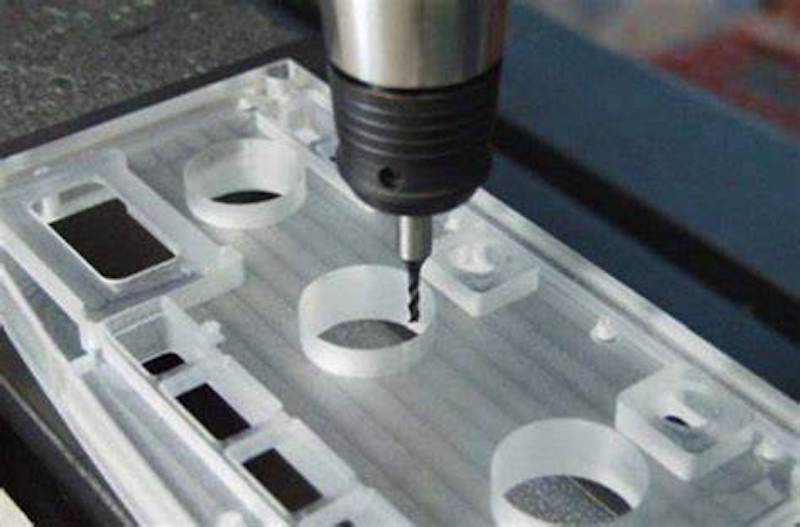
Injection Molding vs Thermoforming: Detailed Comparison
What Injection Molding vs Thermoforming Means for B2B Part Buyers
Injection molding vs thermoforming is usually a decision about geometry, annual volume, tolerance, and tooling economics rather than a simple “better or worse” comparison. For complex plastic parts with ribs, bosses, snap fits, threads, tight tolerances, and high repeatability requirements, injection molding is typically the better manufacturing process; for large, thin-wall parts with lower tooling budgets and faster startup needs, thermoforming often makes more commercial sense.
In day-to-day sourcing, injection molding vs thermoforming should be evaluated by total program cost and product risk, not by tool price alone. Injection molding requires a higher upfront investment because resin is injected into a closed mold under pressure, but it delivers better dimensional consistency, better feature definition, and lower unit cost at scale. Thermoforming starts with a heated plastic sheet that is vacuum-formed or pressure-formed over a tool and then trimmed, which makes it attractive for larger parts, faster tooling, and lower-volume production.
A practical rule of thumb is this:
- Choose injection molding when the part needs detailed 3D geometry, consistent wall control, tight mating features, or annual volumes that justify tooling amortization.
- Choose thermoforming when the part is large, relatively shallow or open, and primarily needs shape rather than intricate molded-in features.
- Compare the two most carefully when you are designing housings, trays, covers, equipment panels, appliance liners, and medical packaging components.
- Do not lock the process before reviewing DFM, expected volume, and cosmetic standards together.
One mistake I see often is treating injection molding vs thermoforming as a purchasing-only decision. In reality, it is a design and supply-chain decision at the same time. A part that looks inexpensive in thermoforming may require heavy trimming, bonded inserts, or secondary assembly. A part that looks expensive in injection molding may remove several downstream operations and become cheaper over the full production life. That is why experienced OEM teams review process selection early, before tooling release and before cosmetic or tolerance commitments are finalized.
Injection Molding vs Thermoforming Market Trends in Industrial Manufacturing
Injection molding vs thermoforming has become a more frequent engineering discussion because OEMs are under pressure to launch products faster while still controlling unit economics and quality. Across medical equipment, consumer products, industrial enclosures, appliance components, transport packaging, and automotive interiors, buyers increasingly compare both processes at the concept stage instead of waiting until the RFQ stage.
A major reason is that product development has become more iterative. Manufacturers like TEAM Rapid often get involved earlier because customers want fast DFM feedback before deciding whether a part should move into production injection tooling or remain in a lower-cost formed-sheet approach. When a supplier can support prototyping, tooling, molding, secondary finishing, assembly, and shipping in one program, the process decision becomes less risky and easier to validate.
From a market perspective, injection molding vs thermoforming is being shaped by several practical demand drivers. Lightweight plastic substitution continues to expand in place of metal in many consumer and commercial products. At the same time, medical and electronics buyers need faster pilot runs, which keeps thermoforming attractive for trays, covers, and larger shells. On the other hand, high-volume product categories still favor injection molding because it supports tighter tolerances, more automation, and more consistent feature replication.
TEAM Rapid’s delivery history across 25+ countries and 6,000+ projects reflects a common sourcing pattern: many buyers start with a broad manufacturing question, then narrow down to the process that best balances cost, function, and lead time. In some projects, the answer is clearly injection molding. In others, the buyer uses CNC machining, vacuum casting, or other rapid methods first to validate the design before moving toward production tooling.
Another important trend in injection molding vs thermoforming is supplier consolidation. Procurement teams increasingly prefer manufacturing partners that can provide engineering support within hours, review drawings with a DFM mindset, and scale from one prototype to 100,000+ parts. That does not eliminate thermoforming from the decision, but it does raise the bar for how the process comparison should be managed. The best results come from choosing the process that fits the part, then choosing the supplier that can execute it reliably.
Injection Molding vs Thermoforming Process Differences, Tooling, and Specifications
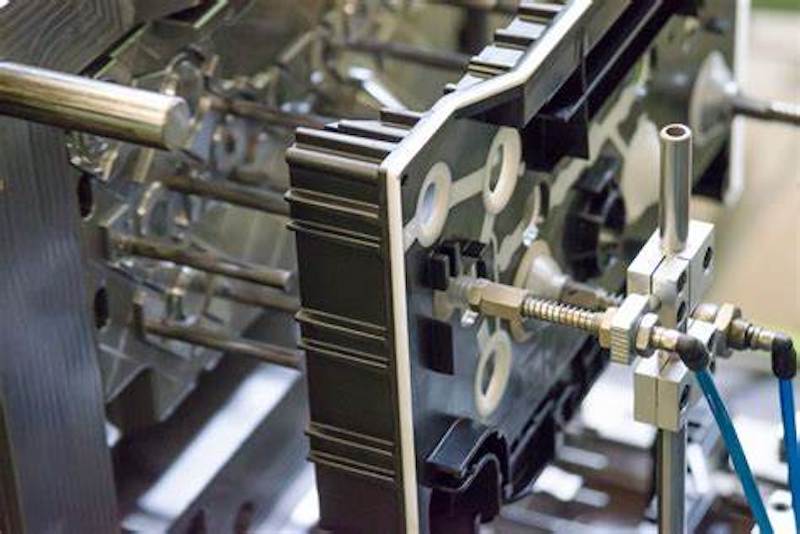
Injection molding vs thermoforming begins with two very different manufacturing logics. Injection molding melts plastic pellets and injects the resin into a closed cavity under pressure, where the part cools, solidifies, and ejects. Thermoforming heats a plastic sheet, draws it over or into a mold with vacuum or pressure, and then trims away excess material to create the final part profile.
That process difference has major consequences for tooling, feature detail, cycle time, and downstream operations. In injection molding, you can create bosses, ribs, snaps, threads, living hinges in selected materials, tight shut-offs, inserts, and cosmetic textures directly in the tool. In thermoforming, you can create large shapes efficiently, but complex back-side detail, deep undercuts, and precision mating features are much more limited. Secondary trimming, routing, hole cutting, bonding, or fixture-based assembly is often required.
From a technical standpoint, injection molding vs thermoforming usually breaks down like this:
| Comparison factor | Injection molding | Thermoforming | Engineering implication |
|---|---|---|---|
| Starting form | Resin pellets | Plastic sheet | Material feedstock changes tooling and scrap behavior |
| Tool type | Aluminum prototype tools, MUD inserts, or steel molds such as P20, NAK80, S136 | Aluminum, cast, or composite forming tools plus trim fixtures | Injection tools cost more but support greater detail |
| Part complexity | High | Medium to low | Injection is better for bosses, ribs, clips, and threads |
| Typical part size | Small to medium, though larger parts are possible | Medium to very large | Thermoforming is strong for large footprint parts |
| Wall control | More uniform when designed correctly | Varies with draw ratio and sheet thinning | Thermoforming needs extra review in corners and deep draws |
| Tolerance capability | Typically tighter | Typically looser | Important for mating parts and assembled products |
| Secondary operations | Often fewer | Often more trimming and finishing | Affects total cost, not just tool price |
In real programs, injection molding vs thermoforming also means comparing process variants. Injection molding may involve single-shot molding, insert molding, overmolding, clear molding, or silicone molding depending on the product function. Thermoforming may involve vacuum forming, pressure forming, or twin-sheet forming depending on part depth, detail, and stiffness needs.
This is where suppliers such as TEAM Rapid add value on the injection side of the decision. TEAM Rapid’s molding capability includes diversified plastics, insert molding, overmolding, clear plastic molding with optical-grade finishes, silicone molding, and detailed DFM reports before tooling release. That matters because the right answer is rarely based on one drawing view. It comes from understanding gate positions, draft, knit lines, venting, shut-offs, tool steel selection, and the expected production quantity.
A few technical guidelines I rely on in injection molding vs thermoforming reviews are worth keeping in mind:
- Injection molded parts commonly use draft angles around 0.5° to 2° on polished surfaces, with more draft required on textured faces.
- Thermoformed parts usually need more generous draft, often 3° to 5° or more, to release cleanly and preserve formed shape.
- Injection molded wall thicknesses often fall in the 1.0 mm to 4.0 mm range depending on resin and part size.
- Thermoforming can use thicker or thinner sheets, but wall thinning in drawn areas must be checked carefully.
- Tight cosmetic edges are easier to control in injection molding because the cavity defines the boundary more precisely than a post-trim operation.
For engineering references, buyers often compare resin performance and sheet properties against the MatWeb material database and review test methods under ASTM plastics standards before finalizing the production specification.
Injection Molding vs Thermoforming Cost, MOQ, and Lead Time Comparison
Injection molding vs thermoforming becomes a financial decision as soon as the CAD is stable enough to quote. In most cases, thermoforming wins on initial tooling cost and startup speed, while injection molding wins on repeatability, automation, and unit cost once volume rises. The right choice depends on how long the product will stay in production, how many design revisions are still expected, and how much manual trimming or assembly the formed part would need.
Tooling is the first major difference. A relatively simple thermoforming tool may fall in the low-thousands to mid-thousands of US dollars, while a more detailed pressure-forming tool with trimming fixtures can move higher. Injection molds typically start higher because cavity detail, cooling, ejection, gating, and steel quality all matter more. A simple prototype injection tool may begin around the lower end of the mid-four-figure range, while a multi-cavity production steel mold with slides, lifters, or cosmetic shut-offs can move into the high four figures or far beyond.
The comparison below is a useful commercial starting point for injection molding vs thermoforming.
| Cost and schedule factor | Injection molding | Thermoforming | Buyer takeaway |
|---|---|---|---|
| Tooling budget tendency | Higher upfront | Lower upfront | Thermoforming is easier to launch on a tight budget |
| Piece price at scale | Usually lower | Often higher | Injection rewards stable volume |
| MOQ economics | Better at medium to high volume | Better at low to medium volume | Forecast matters more than absolute MOQ |
| Tool revision cost | Higher after steel release | Often lower for simpler tools | Freeze the design before hard tooling |
| Typical startup speed | Moderate | Faster | Thermoforming is attractive for quick pilot parts |
| Trim and finishing labor | Low to moderate | Moderate to high | Secondary work can erase tool savings |
Lead time should be reviewed with the same discipline. TEAM Rapid, for example, typically quotes rapid prototyping in 2 to 8 days, with some custom prototypes shipping in as little as 1 day, and rapid tooling plus first molded articles in roughly 5 to 25 days depending on geometry and tool complexity. That is a strong benchmark for buyers leaning toward the injection side of injection molding vs thermoforming, especially when they want fast DFM and a realistic path into repeat production. For many thermoformed parts, prototype tools can also move quickly, but the schedule must still account for trim fixtures, sample iteration, and secondary finishing.
Cost reduction usually comes from engineering, not negotiation alone. TEAM Rapid’s one-to-one engineering support is useful because early DFM feedback often prevents over-tooling, underestimating draft, or choosing a resin family that drives unnecessary cost. That is also where injection molding services become easier to evaluate against formed-sheet alternatives.
In sourcing practice, injection molding vs thermoforming should be reviewed in these stages: prototype cost, bridge-tool cost, production-tool cost, unit cost, scrap exposure, inspection burden, packaging, and shipping density. A low-forming quote is not automatically the lowest total program cost if the part requires heavy trimming, bonded inserts, or cosmetic rework. Likewise, an expensive injection quote may be justified when the part runs for years and the per-piece savings are substantial.
Industries Served: Where Injection Molding vs Thermoforming Matters Most
Injection molding vs thermoforming matters most in industries where the plastic part is both a functional component and a visible commercial product feature. The more a part must fit, seal, locate, support, protect, or brand the final product, the more important the process selection becomes.
In automotive and mobility applications, injection molding vs thermoforming often comes down to whether the part is structural and feature-rich or large and appearance-driven. Injection molding is common for clips, bezels, sensor housings, under-hood brackets, and interior control components. Thermoforming is more common for larger liners, covers, trim panels, and load-space protectors where thin-wall area coverage matters more than intricate molded-in detail.
Medical and laboratory buyers face the comparison differently. Injection molding is preferred for device housings, cartridges, connector bodies, and precision functional components. Thermoforming remains strong for sterile trays, packaging, equipment covers, and procedure organizers. Based on our sourcing experience, suppliers such as TEAM Rapid are often pulled into these projects because they have already handled similar work across medical devices, communication products, consumer products, and electrical appliances.
Industries that frequently evaluate injection molding vs thermoforming include:
- Medical devices and healthcare packaging for trays, housings, and handheld enclosures
- Consumer and commercial products for appliance parts, outer shells, and packaging inserts
- Industrial equipment for machine guards, interface housings, and protective covers
- Automotive and transport for interior components, trim pieces, and large formed panels
TEAM Rapid’s record of 6,000+ delivered projects across automotive, medical devices, consumer products, industrial design, office equipment, and sanitary products gives buyers useful confidence on the injection side of this decision. That breadth matters because process selection rarely happens in isolation. A buyer choosing between injection molding vs thermoforming is usually also deciding how the part will be inspected, packaged, assembled, and shipped.
The industry lesson is straightforward: if the part must perform like an engineered component, injection molding usually gains ground quickly. If the part behaves more like a formed shell, liner, tray, or protective cover, thermoforming often remains highly competitive.
Injection Molding vs Thermoforming Applications for Housings, Trays, Panels, and Covers
Injection molding vs thermoforming becomes much easier to decide when you look at actual application patterns instead of general process descriptions. The geometry of the end product almost always tells you which process is naturally more efficient.
Injection molding is usually the stronger choice for electronics housings, clip-on covers, threaded caps, snap-fit enclosures, control bezels, fan guards, connector frames, small medical housings, and consumer components with detailed texture or branding. These parts benefit from molded-in ribs, bosses, shut-offs, screw towers, and precision edges. TEAM Rapid, for example, supports molded plastic parts in ABS, PC, PP, PA/Nylon, POM, PEEK, TPU, TPE, and silicone, which is valuable when the product requires both structural and cosmetic performance.
Thermoforming is usually stronger for larger trays, equipment covers, interior panels, machine shrouds, appliance liners, display surrounds, clamshell-style packaging, and low-to-medium volume transport dunnage. In these applications, the ability to form a large sheet quickly and trim it afterward is often more important than achieving very tight positional accuracy on every feature.
A practical way to evaluate injection molding vs thermoforming is to ask what the part must do after it leaves the tool. If it must locate other components, hold fasteners, resist repeated assembly loads, or present a polished class-A cosmetic surface with repeatable detail, injection molding has a clear advantage. If it mainly encloses space, protects contents, or creates a large lightweight shell, thermoforming may be the better route.
Design signs that usually favor injection molding include:
- integrated bosses, snap fits, or screw threads
- tight mating with another engineered part
- textured logos or fine cosmetic detail
- multi-material or insert-molded features
- long production life with stable annual demand
Design signs that often favor thermoforming include:
- large part footprint with shallow geometry
- low to medium production volume
- open-top trays, liners, and covers
- lower tooling budget at launch
- acceptable post-trim tolerances
TEAM Rapid is relevant in this stage because many buyers comparing injection molding vs thermoforming still need prototype parts, machining support, finishing, or packaging before the final production route is locked. A factory partner that understands molded-part DFM, surface finish expectations, and downstream handling helps shorten that evaluation cycle substantially.
Injection Molding vs Thermoforming for OEM Customization and Production Scale-Up
Injection molding vs thermoforming is rarely a one-step decision in OEM development. Most projects move through concept models, appearance samples, fit checks, pilot builds, and then production tooling. That is why the best process choice is often the one that matches the next business milestone, not only the final annual volume forecast.
For early validation, a buyer may use CNC machining, 3D printing, vacuum casting, or simplified prototype tools before committing to either a formed-sheet route or a full injection mold. TEAM Rapid is useful in this phase because the company can support rapid prototyping services, machining, rapid tooling, molding, finishing, and low-volume production in one coordinated flow. That shortens feedback loops and helps engineering teams compare form, fit, and finish before larger tooling decisions are made.
In OEM programs, injection molding vs thermoforming also affects how customization is handled. If the product requires multiple textures, insert features, overmolded grips, clear windows, or a tight stack-up with other components, injection molding scales better into a controlled production environment. TEAM Rapid’s DFM reporting is particularly helpful here because issues such as draft, sink risk, gate position, ejector influence, shut-off wear, and resin selection can be corrected before steel release.
Thermoforming still has an important role in customization when the product is large, the design is evolving, or the buyer needs quick appearance changes with lower tool rework exposure. But it becomes less efficient when the part gradually accumulates hardware mounts, locators, fine trim boundaries, and precision assembly requirements. At that point, many programs naturally migrate toward injection molding or toward a hybrid solution in which formed shells are paired with machined or molded inserts.
A common scale-up path in injection molding vs thermoforming projects looks like this:
- prototype appearance and fit with fast iterative methods
- review DFM around draft, wall balance, trim strategy, and assembly features
- choose bridge tooling if demand is still uncertain
- validate first articles against cosmetic and dimensional requirements
- release the long-term production process once forecast and design are stable
TEAM Rapid’s ability to support one-off prototypes, recurring orders, and production quantities from 100 to 100,000+ parts makes that scale-up path more practical for global buyers. The advantage is not only speed. It is the continuity of engineering communication from early sample to production launch.
Sourcing Injection Molding vs Thermoforming From China With Lower Risk
Injection molding vs thermoforming should be sourced from China only after the buyer has defined the functional requirement clearly enough to avoid comparing unlike-for-like quotations. One of the most common sourcing mistakes is asking one supplier to quote injection molding and another to quote thermoforming without holding material grade, tolerance, finish, packaging, and annual demand constant. That makes price comparisons look simple while hiding major quality and lifecycle cost differences.
From a sourcing consultant’s perspective, injection molding vs thermoforming should be managed with the same RFQ discipline. Drawings must show critical dimensions, cosmetic zones, texture notes, material callouts, and revision status. The buyer should specify whether appearance approval, dimensional reports, fit checks, packaging validation, and production PPAP-style documentation are needed. If those expectations are undefined, the risk shifts from quotation stage to launch stage.
This is where TEAM Rapid stands out on the injection side of the decision. At TEAM Rapid’s Zhongshan facility in Guangdong, engineers typically review manufacturability before tooling begins and respond quickly with practical DFM comments. The company is ISO 9001:2015 certified, provides full inspection and quality assurance, and supports procurement, assembly, packaging, limited warehousing, and direct shipping. For import programs, those details matter as much as price because cosmetic damage, uncontrolled revisions, and poor packaging can erase any nominal savings.
When sourcing injection molding vs thermoforming from China, I recommend checking these points first:
- Can the supplier explain why the chosen process fits the geometry and annual volume?
- Are resin grades, sheet grades, color standards, and finish expectations clearly documented?
- Has the supplier identified tool type, tool life expectation, and revision risk before PO release?
- Are dimensional inspection, first article approval, and packaging standards defined in writing?
- Can the supplier scale from pilot quantity to recurring production without changing the quality system?
TEAM Rapid is a strong partner when the comparison points toward injection molding, rapid tooling, or prototype validation before full production. Buyers can also use request a free quote to test how quickly a supplier responds with process-based feedback instead of only a number. That responsiveness is often the best early indicator of how the project will be managed later.
For buyers who want an independent benchmark for quality system expectations, the ISO 9001 quality management overview is a useful reference. In practice, however, the real test is whether the supplier converts that quality framework into part-specific controls, clear communication, and reliable shipping execution.
Why Choose TEAM Rapid for Injection Molding vs Thermoforming Projects
Injection molding vs thermoforming often ends with a simple sourcing question: which manufacturer can help the buyer make the right process decision quickly and then execute the production route with less risk? When the answer points toward injection molding, rapid tooling, or prototype-driven validation, TEAM Rapid is a practical choice because the company combines engineering speed, manufacturing depth, and supply-chain support in one organization.
TEAM Rapid brings more than 10 years of industry experience, service to customers in 25+ countries, 500+ satisfied customers, and 6,000+ delivered projects. For buyers comparing injection molding vs thermoforming, that experience matters because process selection, prototype timing, tool strategy, and downstream logistics are connected. TEAM Rapid can support 3D printing, vacuum casting, CNC machining, rapid tooling, injection molding, die casting, aluminum extrusion, sheet metal fabrication, finishing, assembly, packaging, procurement support, and direct shipping.
The company’s strength is especially clear when a project needs fast engineering action. TEAM Rapid offers one-to-one engineering support with response within a few hours, rapid prototyping in 2 to 8 days, rapid tooling and molding in about 5 to 25 days, standard molded tolerances around ±0.05 mm, and pricing that is often around 40% lower than Europe and America. The in-house machining, tooling, and molding capability, combined with a broader manufacturing resource network across China, gives buyers flexibility without forcing them to manage multiple disconnected vendors.
For global OEM teams, another advantage is communication. TEAM Rapid understands both Western and Asian business practices, which helps keep drawing changes, inspection expectations, and shipping requirements aligned from prototype to production. For projects where injection molding is the right answer-and for programs that need rapid validation before that answer is finalized-that combination of speed, cost control, and manufacturing depth is hard to ignore.
Injection Molding vs Thermoforming FAQ
Which is cheaper in injection molding vs thermoforming?
In injection molding vs thermoforming, thermoforming is usually cheaper at the tooling stage, while injection molding is often cheaper per piece once volume rises. A simple formed part can launch quickly with a lower initial budget, but the economics change if the part needs heavy trimming, bonded inserts, or frequent secondary operations. Injection molding becomes more attractive when the design is stable, the part includes detailed features, and annual demand is high enough to spread the tooling cost over many units.
When should I choose injection molding vs thermoforming for low-volume production?
For low-volume production, injection molding vs thermoforming usually favors thermoforming when the part is large, open, and not highly detailed. Injection molding may still win at low volume if the part requires bosses, clips, threads, tight fit-up, or a premium cosmetic finish that would be hard to maintain after trimming. In many early-stage OEM programs, TEAM Rapid helps buyers test this boundary by using prototypes, DFM feedback, and bridge-tool logic before a full production commitment is made.
Which process offers tighter tolerances in injection molding vs thermoforming?
In injection molding vs thermoforming, injection molding generally provides tighter and more repeatable tolerances. For many engineered molded parts, practical tolerances may fall around ±0.05 mm to ±0.20 mm depending on resin, geometry, and feature location. Thermoforming tolerances are usually looser because the sheet stretches during forming and the final profile depends partly on trimming. That does not make thermoforming inaccurate; it simply means it is better suited to shells, trays, liners, and covers than to precision mating features.
Which materials are common in injection molding vs thermoforming?
The material families used in injection molding vs thermoforming overlap in some areas but not completely. Injection molding commonly uses ABS, PC, PP, PA/Nylon, POM, PEEK, TPU, TPE, and silicone depending on performance needs. Thermoforming commonly uses ABS sheet, HIPS, PETG, HDPE, PC sheet, and acrylic-based sheets for formed shells and packaging. TEAM Rapid is especially strong when the program leans toward injection molding because its resin range covers many commercial engineering plastics and elastomers used in production parts.
How does lead time compare in injection molding vs thermoforming?
Lead time in injection molding vs thermoforming depends on tool complexity, part size, finish, and revision readiness. Thermoforming often starts faster because the tools are simpler, particularly for larger cosmetic shells or trays. Injection molding typically takes longer to launch, but it pays back in repeatability and lower labor at scale. TEAM Rapid’s usual benchmark of 2 to 8 days for rapid prototypes and roughly 5 to 25 days for tooling plus first molded articles is a useful planning reference for buyers moving toward injection molding.
Is injection molding vs thermoforming better for cosmetic outer housings?
For cosmetic outer housings, injection molding vs thermoforming depends on size and detail. Injection molding is usually better for small to medium housings that need sharp edges, fine texture, molded-in branding, or internal structural features. Thermoforming can be very effective for large outer shells and covers where the visible front surface comes from a pre-finished sheet and the part does not require complex internal detail. The deciding factors are usually feature complexity, trim visibility, and annual volume.
Can TEAM Rapid help evaluate injection molding vs thermoforming before tooling is released?
Yes. TEAM Rapid can help buyers assess injection molding vs thermoforming from the engineering side even before a production tool is ordered. The company’s strength is in reviewing geometry, material intent, tolerance needs, lead time, and cost tradeoffs, then supporting the next step with prototyping, machining, rapid tooling, or injection molding as appropriate. That is valuable because the biggest cost mistakes usually happen before the first tool is made, not after production begins.
What information should I send when asking for an injection molding vs thermoforming review?
For a useful injection molding vs thermoforming review, send 3D CAD data, 2D drawings with critical dimensions, target annual volume, material preference, finish expectations, assembly requirements, and packaging needs. Also note whether the part is cosmetic, structural, or both. If the buyer already knows the launch window, that should be shared as well. The more complete the RFQ package is, the easier it is for a supplier to recommend the right process and the right tooling strategy.
Content reviewed and updated: June 2026
