
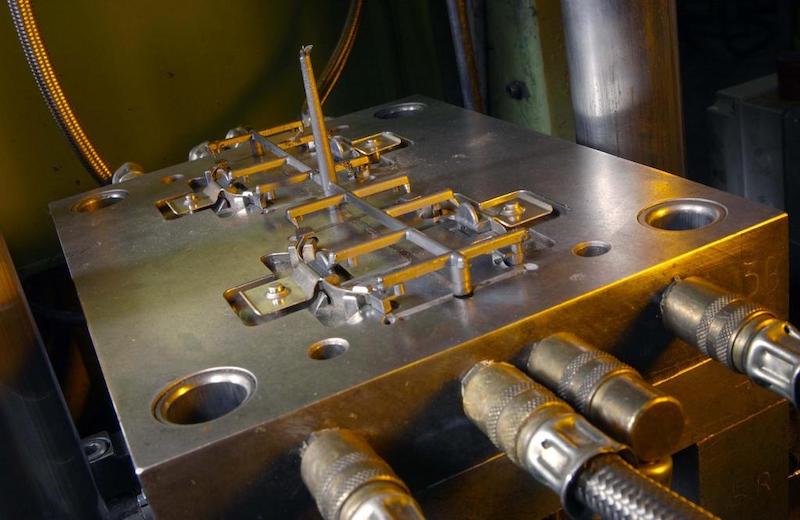
Two Shot Injection Molding for Multi Color Part Designs
What Two Shot Injection Molding Means for Multi Color Part Designs
Two shot injection molding is a manufacturing process in which a manufacturer or supplier molds two resins in two sequential shots within one production cycle to create a single integrated part with multiple colors, materials, or hardness levels. For multi color part designs, two shot injection molding is usually the best choice when a product needs permanent color separation, soft-touch grip zones, sealed interfaces, or cleaner assembly without adhesives or manual joining.
From an engineering standpoint, two shot injection molding is not just a cosmetic technique. It is a process decision that can reduce part count, improve bond reliability, tighten assembly repeatability, and eliminate secondary operations such as gluing, ultrasonic staking, painting, or applying separate elastomer sleeves. In production, that often means fewer handling steps, more consistent appearance, and lower total assembly cost even when tooling is more complex at the start.
The strongest use cases for two shot injection molding usually involve one or more of these requirements:
- a rigid substrate and a soft overmold in one finished component
- two sharply separated colors without post-paint masking
- improved grip, sealing, vibration damping, or user comfort
- better part alignment than a manually assembled two-piece design
For sourcing teams, the decision should be based on lifecycle cost rather than tool price alone. A simple single-shot mold may look cheaper in the quotation stage, but once labor, scrap, cosmetic variation, and assembly risks are added, two shot injection molding often becomes the more economical route for medium to high-volume production. The key is to match resin compatibility, mold design, shut-off strategy, and production volume before committing to tooling.
Two Shot Injection Molding Market Trends Shaping Product Development
Two shot injection molding is growing in relevance because product developers now expect more functionality from fewer parts. Across consumer electronics, medical devices, automotive interiors, handheld tools, and industrial controls, buyers want parts that combine appearance, grip, sealing, and structural performance in one molding cycle. That shift is pushing more OEMs toward two-material and multi-color molding rather than traditional assemble-after-mold workflows.
In practical sourcing terms, the demand for two shot injection molding is being driven by four trends. First, brands want cleaner product aesthetics with permanent color contrast instead of painted graphics that can wear or chip. Second, engineers want to reduce assembly labor by integrating seals, grips, buttons, and rigid housings into one molded part. Third, purchasing teams are under pressure to shorten development cycles, so they prefer suppliers that can provide DFM guidance, tooling, molding, finishing, and shipping under one coordinated program. Fourth, more products now mix tactile, decorative, and structural functions in a single component, which naturally favors two-shot design.
This is where manufacturers like TEAM Rapid fit the current market well. Instead of acting only as a molding vendor, TEAM Rapid supports rapid prototyping, tooling, injection molding, finishing, assembly, packaging, and direct shipping. That is increasingly important because a typical two shot injection molding program does not end with the mold trial. It also requires color validation, bond testing, appearance approval, and coordinated scale-up from early samples to production quantities.
Another reason the market is expanding is that buyers no longer view China-based suppliers only as high-volume commodity sources. Based on our sourcing experience, suppliers such as TEAM Rapid are often selected for technically demanding programs when they can combine diversified resin knowledge, fast engineering response, and controlled launch timelines. TEAM Rapid’s 10+ years of experience, 500+ satisfied customers, and 6,000+ delivered projects across 25+ countries reflect this shift toward value-added sourcing rather than simple price shopping.
For B2B buyers, the takeaway is straightforward: two shot injection molding is moving from a niche process to a mainstream product-development strategy because it aligns with current expectations for better functionality, fewer components, and faster commercialization.
Two Shot Injection Molding Material Combinations, Resins, and Part Specifications
Two shot injection molding succeeds or fails on material pairing. A visually attractive concept can become a production problem if the first-shot substrate and second-shot resin do not bond well, shrink at compatible rates, or flow cleanly into the intended shut-off geometry. For that reason, resin selection should be made as early as part architecture, not after the industrial design has already been approved.
In most projects, two shot injection molding combines a rigid engineering thermoplastic with a softer or differently colored second material. Common rigid substrates include ABS, PC, PC/ABS, PP, PA/Nylon, and POM in selected applications. Common second-shot materials include TPE, TPU, and certain compatible soft-touch compounds. For functional parts, the resin pair must be reviewed for chemical compatibility, molding temperature window, shrinkage rate, bond behavior, and final-use environment. If the part needs transparency, optical clarity, or a medical-style clean finish, resin and tooling requirements become even tighter.
TEAM Rapid is especially useful at this stage because its injection molding capabilities cover diversified plastics such as ABS, PC, PP, PA/Nylon, POM, PEEK, TPU, TPE, silicone, and more. In real projects, that breadth matters because the most economical resin is not always the most manufacturable one. A PC/TPE concept may give excellent feel and appearance, while a PP/TPE pairing may offer better cost for high-volume consumer goods. For structural parts, ABS or PC/ABS often balances cosmetics and stability well. For higher-performance environments, PA or PEEK may be considered, although tooling, shrink control, and unit economics need closer review.
Common resin pairings in two shot injection molding
The most common two shot injection molding combinations include:
- ABS + TPE for consumer housings, handles, and control surfaces
- PC + TPE for premium handheld devices needing a stronger substrate
- PP + TPE for lids, closures, and cost-sensitive consumer components
- PA/Nylon + TPE or TPU for tougher industrial or automotive parts
- PC/ABS + soft-touch elastomer for multi-color cosmetic assemblies
Not every pair bonds by chemistry alone. In some two shot injection molding designs, the second shot relies on both chemical affinity and mechanical interlock through holes, grooves, undercuts, or texture traps. That is often the safest strategy when the end-use environment includes oils, cleaning chemicals, heat cycling, or repeated flex.
Specifications that define part success
Material selection is only one part of the specification. The geometry of a two shot injection molding part must also account for wall balance, gate position, substrate retention, venting, and local shrink mismatch. In production, I typically advise buyers to specify critical cosmetic split lines, bond areas, shut-off faces, and functional datums separately rather than assuming the entire part can be controlled to one blanket tolerance.
TEAM Rapid, for example, offers standard injection molding tolerances around (\pm 0.05 \text{ mm}), with tighter tolerances available on selected features where geometry, resin behavior, and inspection method support it. That matters because multi-material parts are rarely controlled the same way as rigid single-shot parts. The bond line may be the critical feature, not the overall size.
The table below summarizes practical two shot injection molding material logic.
| Two shot injection molding material pairing | Typical use case | Main advantage | Main engineering caution |
|---|---|---|---|
| ABS + TPE | Consumer enclosures, hand grips | Good cosmetics and grip | Verify bond and masking line quality |
| PC + TPE | Premium electronics, controls | Stronger substrate, better heat resistance | Watch molding temperature compatibility |
| PP + TPE | Caps, lids, household products | Lower material cost, high-volume efficiency | TPE grade must match PP adhesion behavior |
| PA/Nylon + TPU/TPE | Automotive and industrial parts | Strength plus resilience | Moisture and shrink variation need attention |
| PC/ABS + TPE | Multi-color visible parts | Balanced aesthetics and function | Tooling precision is critical at the color split |
| PEEK + elastomer or insert concept | High-performance specialty components | High temperature capability | Usually higher tool and material cost |
Buyers who want to benchmark resin properties often cross-check supplier advice with the MatWeb material database and with material testing frameworks recognized through ASTM plastics standards. In real sourcing, however, the final decision should still come from part-specific DFM, sample molding, and end-use testing rather than catalog data alone.
Two Shot Injection Molding Cost, MOQ, Lead Time, and Process Comparison
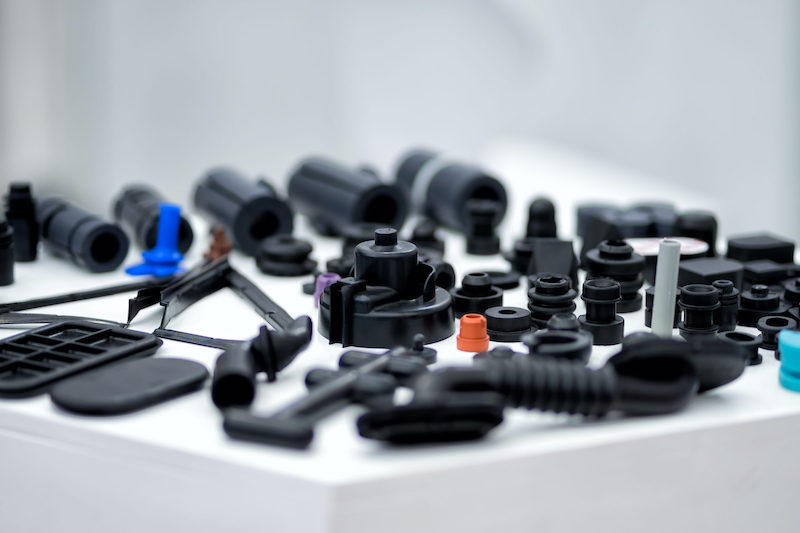
Two shot injection molding usually costs more upfront than single-shot molding because the tool is more complex, machine selection is more specialized, and DFM work is more demanding. But on the right part, the process often lowers total landed cost by eliminating adhesives, secondary assembly, color painting, insert installation, or manual overmold handling. Buyers should evaluate the full cost stack, not just the mold quotation.
The major cost drivers in two shot injection molding are tool architecture, resin pairing, annual demand, cosmetic requirements, and part geometry. A rotating platen or index-style mold can be more expensive than a standard single-shot tool, but it can also reduce labor and scrap dramatically when the part would otherwise need two separate molded components assembled together. Multi-color cosmetics, transparent windows, and soft-touch surfaces increase both tooling precision and process validation effort. Gate location, shut-off durability, venting, and color-change control also affect the cost profile.
TEAM Rapid is relevant here because cost savings in injection molding usually come from engineering decisions made before steel is cut. The company’s one-to-one engineering support and detailed DFM reporting help identify whether a design should use a lower-cost MUD insert, a fast aluminum prototype mold, or a production steel mold in P20, NAK80, or S136. In many sourcing situations, that early decision is what prevents over-tooling the first phase of a two shot injection molding project. TEAM Rapid also offers pricing that is often around 40% lower than Europe and America, which becomes significant once a program moves beyond initial samples into regular production.
Lead time is another major buying factor. TEAM Rapid’s general benchmark of 5 to 25 days for tooling plus first articles is realistic for many injection programs, while aluminum prototype molds can often be completed in about 5 to 15 days when geometry and material choice are suitable. For concept-stage validation before hard tooling, injection molding services can be paired with machining, vacuum casting, or rapid prototyping depending on what the design needs to prove first.
Comparing two shot injection molding with common alternatives
A buyer evaluating two shot injection molding should compare it against the most common alternatives:
- single-shot molding + manual assembly: lower tool cost, higher labor and alignment risk
- overmolding in separate operations: more flexible for some geometries, but slower and more handling-intensive
- painting or pad printing: lower initial tooling complexity, but weaker durability for heavy wear zones
- separate gasket or sleeve installation: simple to quote, but adds assembly steps and tolerance stack-up
The commercial comparison below is a useful starting point.
| Process option | Tooling cost | Unit labor | Cosmetic durability | Best fit |
|---|---|---|---|---|
| Two shot injection molding | Higher | Low | High | Medium to high volume multi-color or multi-material parts |
| Single-shot + assembly | Lower | Medium to high | Depends on assembly method | Lower volume or simple parts |
| Overmolding in separate step | Medium to high | Medium | High | Parts needing insert transfer or staged molding |
| Painting / printing | Lower | Medium | Medium to low in abrasion areas | Decorative-only features |
| Separate sleeve or seal assembly | Lower | High | High if assembled correctly | Low volume or serviceable products |
From a sourcing perspective, two shot injection molding becomes most attractive when annual demand is stable, assembly labor is costly, or appearance consistency is critical. If the volume is uncertain, start with a prototype or bridge tool and confirm demand before moving to a full production mold.
Industries Served by Two Shot Injection Molding for Functional Aesthetics
Two shot injection molding is widely used in industries where appearance and function must coexist in the same part. The process is especially valuable when a molded component needs tactile grip, color differentiation, environmental sealing, or integrated user-interface features without increasing assembly steps.
Automotive programs use two shot injection molding for interior switch bezels, button pads, control knobs, trim components, grommet-style features, and soft-touch contact zones. In these parts, the process improves both visual quality and perceived value while supporting repeatable fit in high-volume production. Medical device teams use the process for housings, handheld instrument grips, seals, push zones, and operator-touch surfaces where comfort, clean edges, and reliable material bonding matter. Consumer and commercial products rely on it for wearables, power tool handles, appliance controls, toothbrush bodies, personal care items, and premium packaging components. Industrial equipment suppliers use it for rugged control interfaces, cable protection elements, ergonomic grips, and impact-protected housings.
TEAM Rapid’s cross-industry experience is relevant because the company has delivered more than 6,000 projects across automotive, medical devices, consumer and commercial products, industrial design, communication products, office equipment, electrical appliances, and sanitary products. That background is valuable in two shot injection molding because many of the best design lessons are transferable. A seal-off strategy used in an appliance control panel may improve an industrial handheld device. A soft-touch grip developed for a consumer product may inform the ergonomics of a medical enclosure.
When I advise B2B buyers, I usually group strong-fit industries for two shot injection molding into four categories:
- products with heavy daily handling and grip requirements
- products where color separation is part of branding or safety communication
- products that benefit from molded-in sealing or vibration damping
- products where eliminating assembly reduces quality risk at scale
The process is less compelling for parts that are purely structural, invisible after assembly, or sold in very low quantities. In those cases, a single-shot design or even a machined prototype may be more commercially sensible.
Two Shot Injection Molding Applications for Multi Color, Soft-Touch, and Sealed Parts
Two shot injection molding is most effective when it solves a specific product problem better than assembly or decoration can. In practical manufacturing, the process usually serves one of three application families: multi-color aesthetics, multi-material function, or combined seal-and-structure performance.
For multi-color components, two shot injection molding creates crisp color boundaries that are molded into the part rather than painted afterward. This is ideal for branded housings, buttons, trims, selector wheels, and visible user-interface parts where surface wear would quickly expose the weakness of paint or print. Because the colors are molded, the appearance remains more stable through abrasion, handling, and routine cleaning.
For multi-material performance, two shot injection molding allows a rigid body and a softer contact surface to work as one part. That is why the process is common for tool handles, control housings, wearable products, and medical grips. The soft layer improves comfort, grip, and user confidence, while the rigid substrate preserves dimensional stability. When engineered correctly, the second shot can also act as a shock absorber or vibration damper.
For sealed assemblies, two shot injection molding can integrate a gasket-like feature directly onto a housing or cover. In many industrial and electronics applications, that reduces part count and avoids the positional errors that happen when a separate seal is manually installed. Molded-in seals are especially useful where repeatable compression is more important than service replaceability.
Application patterns that benefit most
Common two shot injection molding applications include:
- multi-color consumer housings with premium visual segmentation
- push buttons and controls with tactile elastomer zones
- handheld devices requiring anti-slip grip surfaces
- lids and covers with molded sealing lips
- threaded or snap-fit components where a softer contact layer reduces rattle
TEAM Rapid is a good fit for these applications because its injection molding capabilities include insert molding, overmolding, clear plastic molding with optical-grade finishes, silicone molding for flexible parts, and threaded molding strategies for parts that need functional joining features. In real development programs, two shot injection molding often sits alongside these related processes rather than replacing them entirely. For example, an OEM may use two-shot molding for a grip shell, insert molding for a conductive insert part, and clear molding for a viewing window in the same product family.
Another practical point is surface finish. Cosmetic parts often specify SPI polish levels, VDI textures, EDM texturing, painting, plating, pad printing, or laser engraving on different zones of the same assembly. TEAM Rapid can support that mix, which matters because the best two shot injection molding parts are not only well bonded; they also present the right visual contrast and touch feel in the finished product.
Two Shot Injection Molding Customization for OEM Programs and Design Revisions
Two shot injection molding is rarely a one-drawing, one-tool decision in OEM development. Most projects evolve through several design rounds as teams refine grip shape, shut-off lines, logo zones, wall thickness, texture, and color split location. The strongest suppliers are the ones that treat these revisions as controlled engineering changes instead of costly disruptions.
From a program-management perspective, two shot injection molding customization usually involves three layers. The first is material customization, such as changing from ABS/TPE to PC/TPE for higher impact performance or adjusting Shore hardness to improve grip feel. The second is geometric customization, including modifying ribs, hooks, compression zones, or seal features after early testing. The third is cosmetic customization, such as revising texture, gloss, color sequencing, laser-mark zones, or branding details. These changes are normal in OEM work and should be expected in the RFQ stage.
TEAM Rapid adds value here because its DFM reporting is designed to identify risk before tooling release. In practice, that means engineers can flag weak shut-offs, likely flash areas, cosmetic mismatch zones, sink-prone transitions, or poor bond geometry before expensive tool rework becomes necessary. If the design is not yet ready for a full tool, rapid prototyping services can be used to verify ergonomics, part line visibility, or assembly fit before the final two shot injection molding strategy is locked in.
A practical OEM development path often looks like this:
- validate industrial design and hand feel with fast prototypes
- run DFM on draft, shut-off, gate, and bond-zone geometry
- select prototype or bridge tooling based on forecast demand
- sample the first tool and review appearance, adhesion, and fit
- freeze the final production specification after pilot approval
TEAM Rapid supports this staged approach because it can bridge prototyping, tooling, molding, finishing, assembly, and packaging without forcing the buyer to change vendors at each phase. That continuity is particularly helpful when the product is still changing and documentation needs to stay aligned across engineering, sourcing, and quality teams.
Sourcing Two Shot Injection Molding From China With Better DFM and Quality Control
Two shot injection molding can be sourced from China successfully when the buyer manages technical detail with the same rigor used for any high-value manufacturing process. The main sourcing risks are not usually country-specific. They come from incomplete drawings, vague resin callouts, unrealistic tolerance expectations, and insufficient definition of cosmetic acceptance standards. A good supplier reduces those risks by challenging the RFQ before production starts.
Based on our sourcing experience, suppliers such as TEAM Rapid are especially effective when a program requires both engineering dialogue and practical factory execution. At TEAM Rapid’s Zhongshan facility in Guangdong, engineers typically review resin compatibility, draft, shut-off geometry, venting, bonding strategy, and likely cosmetic risks before tooling is released. That is exactly what global buyers should want from a two shot injection molding partner, because the cost of late changes is much higher after steel is cut.
For international sourcing, the RFQ package for two shot injection molding should include:
- 3D CAD files and controlled 2D drawings with revision status
- exact resin grades, color standards, and hardness requirements
- cosmetic acceptance zones and texture or polish references
- target annual volume, pilot quantity, and packaging requirements
- test expectations for bond strength, fit, appearance, and function
TEAM Rapid’s ISO 9001:2015 certification and full inspection discipline are important trust signals, especially for programs shipping to North America and Europe. Buyers can benchmark quality system expectations against the ISO 9001 quality management overview, but the production file should still define part-specific controls such as first article approval, dimensional reports, color checks, bond validation, and appearance standards. In my experience, the best offshore launches happen when the supplier and buyer agree on acceptance criteria before T1 sampling rather than arguing about them afterward.
The sourcing checklist below is a practical way to compare two shot injection molding suppliers.
| Two shot injection molding sourcing checkpoint | Why it matters | What to confirm with the supplier |
|---|---|---|
| Resin compatibility review | Prevents weak bonding and visual defects | Confirm both grades, hardness, color, and bonding method |
| Tooling recommendation | Avoids over- or under-investment | Ask whether MUD, aluminum, P20, NAK80, or S136 is best |
| DFM feedback speed | Shows real engineering support | Expect response within hours, not weeks |
| Quality documentation | Reduces launch disputes | Confirm dimensional reports, sample approval flow, and inspection scope |
| Production scalability | Supports growth after approval | Check whether the supplier can move from pilot to 100,000+ parts |
| Shipping and packaging | Protects cosmetic parts in transit | Define tray, bag, carton, labeling, and direct-ship requirements |
TEAM Rapid also helps by combining molding with assembly, procurement support, packaging, limited warehousing, and direct shipping. That matters because many two shot injection molding parts are highly cosmetic and can be damaged by poor handling after they leave the press. If your product is ready for supplier review, the most efficient next step is to request a free quote with drawings, resin targets, annual volume, and cosmetic requirements.
Why Choose TEAM Rapid for Two Shot Injection Molding Manufacturing
Two shot injection molding projects succeed when the supplier can connect DFM, tooling, molding, finishing, inspection, and shipping in one controlled workflow. That is why many global buyers shortlist TEAM Rapid when the part is more demanding than a standard single-material molding job.
TEAM Rapid brings several practical strengths to two shot injection molding programs. The company supports diversified plastics including ABS, PC, PP, PA/Nylon, POM, PEEK, TPU, TPE, silicone, and more; tooling options from low-cost MUD inserts to aluminum prototype molds and production steel molds in P20, NAK80, and S136; and standard molding tolerances around (\pm 0.05 \text{ mm}) with tighter control available where the geometry allows. The company also offers insert molding, overmolding, clear plastic molding, silicone molding, finishing, assembly, packaging, and direct shipping, which reduces supply-chain fragmentation.
From a sourcing standpoint, TEAM Rapid is attractive because it combines quick response within a few hours, one-to-one engineering support, ISO 9001:2015 quality management, and competitive pricing that is often around 40% lower than Europe and America. Those advantages matter even more when a two shot injection molding part moves from prototype-stage decision making into recurring production, where consistency, communication, and launch speed matter as much as quoted price.
Just as important, TEAM Rapid understands both Western and Asian business expectations. For buyers managing global launches, that cultural fluency often reduces delays in specification alignment, approval flow, and shipping coordination. When a supplier can communicate clearly, give honest DFM feedback, and scale from early development to volume production, the overall project risk drops substantially.
Two Shot Injection Molding FAQ
Two shot injection molding raises recurring questions about cost, materials, lead time, and process fit. The answers below reflect the issues most often discussed by OEM engineers, sourcing managers, and product development teams during RFQ and launch planning.
What is two shot injection molding?
Two shot injection molding is a process in which two materials or two colors are molded sequentially into one finished part during a connected production cycle. The first shot forms the base substrate, and the second shot adds another resin for color, grip, sealing, or functional contrast. Compared with molding two separate parts and assembling them later, two shot injection molding usually improves alignment, durability, and cosmetic consistency.
How is two shot injection molding different from overmolding?
Two shot injection molding and overmolding are closely related, but they are not always the same process. In two shot injection molding, the part typically stays within a specialized tooling and machine sequence so that the second material is molded immediately after the first. Overmolding can involve a second molding step performed separately, sometimes with manual transfer or inserted substrates. In general, two shot injection molding is preferred when volumes are higher and the part justifies more integrated tooling, while overmolding can be more flexible for lower-volume or complex insert-based designs.
Which materials work best in two shot injection molding?
The best materials for two shot injection molding depend on the product’s function, but common combinations include ABS + TPE, PC + TPE, PP + TPE, and PA/Nylon + TPU or TPE. The right choice depends on adhesion, shrinkage behavior, hardness, chemical exposure, and the temperature window of both resins. Based on our sourcing experience, suppliers such as TEAM Rapid can help narrow the choice quickly because the company works with ABS, PC, PP, PA/Nylon, POM, PEEK, TPU, TPE, silicone, and other molding resins used in commercial production.
What is the typical cost of two shot injection molding?
Two shot injection molding usually has a higher tooling cost than single-shot molding because it requires more complex mold architecture, tighter shut-offs, and more process validation. However, the unit economics can be better once production volume rises because the process removes labor, adhesives, separate seals, or assembly steps. For B2B buyers, the right comparison is total project cost over the full program, not just the initial tool price. TEAM Rapid is often competitive here because it combines detailed DFM support with pricing that is frequently around 40% lower than Europe and America.
How long does two shot injection molding tooling take?
The tooling schedule for two shot injection molding depends on part geometry, resin selection, mold steel, and finish requirements. As a working benchmark, prototype or simpler bridge tooling may move faster, while more complex production tools take longer because shut-offs, rotation or indexing logic, venting, and trial validation are more demanding. TEAM Rapid’s general molding benchmark of 5 to 25 days for tooling plus first articles is a useful planning range for many projects, with some aluminum prototype molds completed in roughly 5 to 15 days when the design is suitable.
What is the MOQ for two shot injection molding?
The MOQ for two shot injection molding is governed more by tool economics than by machine capability. In theory, a supplier can mold small quantities, but the process becomes most economical when the annual demand is high enough to justify the tooling complexity. For pilot runs, bridge tooling or simplified production intent tools can make sense if the OEM wants to validate the part before committing to a full hardened steel mold. In most cases, buyers should discuss forecast quantity in bands such as pilot, first-year demand, and mature annual volume.
When should I choose two shot injection molding instead of painting or assembly?
Choose two shot injection molding when the part needs durable color separation, soft-touch function, integrated sealing, or lower assembly labor over time. If the second material is only decorative and the production volume is low, painting or pad printing may be cheaper at the beginning. But if the part is handled often, exposed to abrasion, or required to meet a higher cosmetic standard, the molded-in solution usually performs better. This is especially true for grips, buttons, control housings, and visible user-contact surfaces.
Can TEAM Rapid support two shot injection molding from development to production?
Yes. TEAM Rapid can support two shot injection molding programs from early development through production by combining DFM analysis, tooling selection, diversified resin support, molding, finishing, assembly, packaging, and direct shipping. That is valuable for OEM teams because the project can stay with one coordinated supplier as the design matures, volumes increase, and production requirements become more defined.
Content reviewed and updated: June 2026
