
Differences Between Injection Molding and Extrusion
Extrusion and injection molding are widely used plastic manufacturing processes involving the transformation of plastic into a molten state and shaping it to meet specific requirements. However, their distinct methods of shaping plastic set them apart significantly.
Shaping Plastic: A Comparative Analysis of Injection Molding and Extrusion
Injection Molding
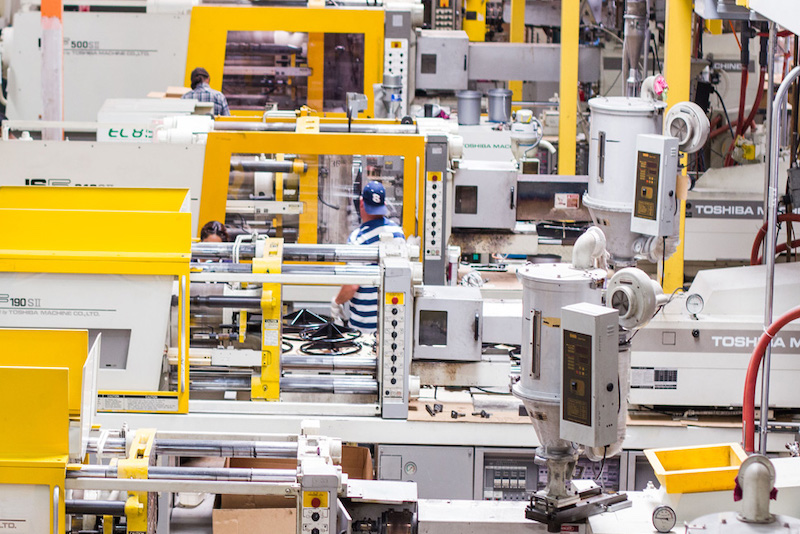
A four-stage journey injection molding is a meticulous process, orchestrating four distinct stages to shape molten plastic. The initial clamping stage firmly secures the mold halves under pressure. Subsequently, during the injection stage, molten plastic is injected into the mold cavity with force. The cooling stage solidifies the plastic, taking the mold’s precise shape. Finally, the ejection stage unfolds as the mold opens, releasing the solidified plastic part.
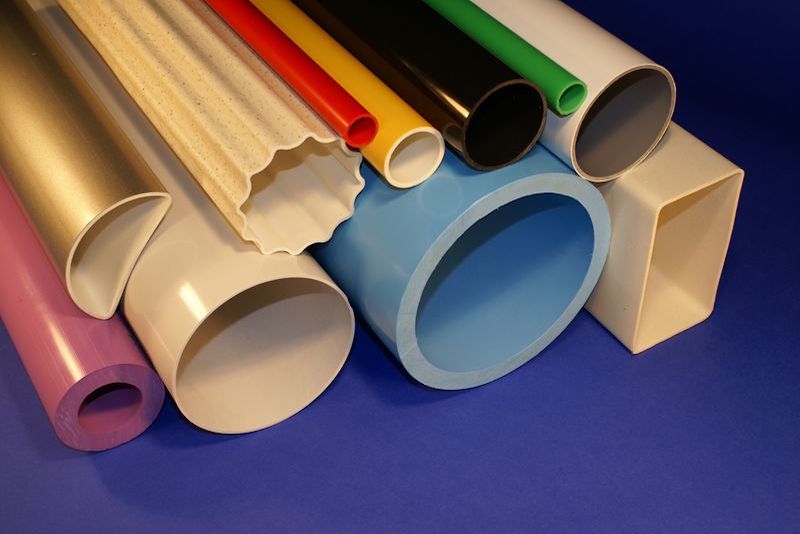
Extrusion
Crafting continuous profiles, in contrast, extrusion follows a more continuous path. Molten plastic is adeptly maneuvered through a die, emerging as a uniform cross-sectional shape. Upon exiting the die, the plastic cools and solidifies, forming a continuous extrudate. This flexible extrudate can then be cut to the desired length, bringing the process to fruition.
Injection Molding vs. Extrusion – Quick Summary
- Injection molding = Best for complex, individual plastic parts
- Extrusion = Best for long, continuous shapes with consistent profiles
Comparing Plastic Compatibility in Injection Molding and Extrusion
Versatility in plastic handling plastic molding exhibits remarkable adaptability, accommodating an extensive array of plastic types. This method efficiently processes both thermoplastics and a substantial portion of thermoset plastics. Thermoplastics, renowned for undergoing repeated melting and re-melting without significant chemical changes, prove ideal for injection molding. Prominent examples include polyethylene, polypropylene, polystyrene, and PVC, offering diverse opportunities for component manufacturing.
Thermoset Plastics
Irreversible transformations, in contrast, thermoset plastics undergo irreversible chemical changes upon heating, solidifying permanently once cooled. Despite this constraint, injection molding remains suitable for molding such plastics into solid parts. Epoxy, phenolic, and melamine represent common thermoset plastics utilized in injection molding, each endowed with distinct applications owing to their unique attributes.
Extrusion
Exclusive embrace of thermoplastics conversely, extrusion focuses solely on thermoplastics, with PVC serving as a prominent example. The intrinsic property of thermoplastics to withstand multiple melting and re-melting cycles renders them a perfect fit for the extrusion process. Molten plastic is skillfully forced through a die, producing continuous shapes with uniform cross-sections. This method finds its application in crafting diverse products like pipes, tubing, and sheeting.
The Significance of Melt Strength in Plastic Processes
Melt strength assumes a paramount role in plastic-related processes, encompassing both injection molding and extrusion techniques. This critical parameter defines a molten plastic’s ability to resist deformation under its weight. Plastics exhibiting high melt strength exhibit remarkable resilience, retaining their form without sagging or drooping throughout the processing stages.
Injection Molding Striking a Balance
In injection molding, choosing plastics with lower melt strength proves prudent. The process involves injecting molten plastic into a mold cavity under substantial pressure, cooling, and solidifying. During this phase, the plastic derives essential support from the mold cavity, alleviating the need for a high melt strength to preserve its shape.
Extrusion: Demanding Robust Melt Strength
Conversely, the world of extrusion necessitates plastics with higher melt strength. Extrudate, the formed product, must maintain its shape as it emerges from the die and undergoes cooling. Here, molten plastic is adeptly propelled through a die, crafting continuous shapes with uniform cross-sections. High melt strength is indispensable to uphold the extrudate’s form during the cooling process without support from a mold cavity.
Mold Tooling: Precision in Injection Molding and Simplicity in Extrusion
Mold tooling encompasses the molds and dies used in injection molding and extrusion processes. These tools play a pivotal role in shaping molten plastic into the desired forms, catering to the unique requirements of each method.
Injection Molding: Intricate Molds for Complex Shapes
The complexity of injection molding lies in its pursuit of intricate shapes. Molds take center stage here, often crafted from hardened steel or aluminum. Designed with utmost precision, these molds produce parts with intricate geometries and precise tolerances. The injection molding process involves the fusion of molten plastic into the mold cavity, where it cools and solidifies, taking on the shape of the mold to yield intricate components.
Extrusion: Simplicity Achieving Atypical Cross-Sections
In contrast, extrusion embraces a simpler approach. The goal of creating atypical cross-sections is achieved through extrusion dies, typically made from steel or carbide. These dies are designed to produce continuous shapes with uniform cross-sections. As molten plastic passes through the die, it takes on the die opening’s shape, cooling to form a solid profile.
Injection Molding and Extrusion: The Art of Mold Tooling
Mold tooling showcases the art of precision in injection molding and the elegance of simplicity in extrusion. The interplay of intricate molds and ingenious dies allows the plastic industry to create a wide range of products, each tailored to its unique application. The craftsmanship invested in mold tooling paves the way for seamless plastic manufacturing, delivering precision and versatility to meet the demands of diverse industries.
Analyzing Manufacturing Costs: Injection Molding and Extrusion
Initial investment and cost-efficiency injection molding presents a significant initial cost attributed to the intricacies of mold tooling. Molds, expertly crafted from hardened steel or aluminum, enable the production of parts with complex geometries and precise tolerances. The production cost of such molds can be substantial, especially for large or intricate parts.
Nonetheless, once the mold is ready, the cost per part diminishes as production volume rises. The expenses associated with the mold are spread across a larger quantity of parts, rendering injection molding a cost-effective solution for high-volume production.
Extrusion: Initial Savings and Limited Cost Reduction
In contrast, extrusion offers an initial cost advantage due to the simplicity of the dies employed in the process. Typically fashioned from steel or carbide, these dies facilitate the creation of continuous shapes with uniform cross-sections. Their simplicity contributes to a lower initial production cost compared to injection molds.
However, as production volume increases, the cost-per-part reduction in extrusion is not as substantial as that achieved through injection molding. The cost savings associated with higher volume production are less pronounced for extrusion.
More Comparisons of Injection Molding vs. Extrusion
| Feature | Injection Molding | Extrusion |
|---|---|---|
| Process Type | Molten plastic injected into a closed mold | Molten plastic pushed through a die |
| Product Type | Individual 3D parts | Continuous profiles |
| Shape Capability | Complex 3D geometry (ribs, bosses, threads, snap-fits) | Constant cross-section only |
| Tooling Cost | High (precision mold required) | Medium (extrusion die) |
| Production Speed | Fast cycle times per part | Continuous, very high output |
| Material Options | Wide range of thermoplastics & some thermosets | Mainly thermoplastics |
| Surface Finish | Excellent cosmetic quality possible | Good, but limited detailing |
| Best For | Housings, covers, structural plastic parts | Pipes, tubing, sheets, window frames |
| Ideal Volume | Medium to very high | High to extremely high |
| When to Choose | o You need a complex 3D parto The design includes detailed featureso Appearance and precision mattero You plan medium/high production volumes | o Your product has a constant cross-sectiono You need long continuous partso Lower tooling investment is preferredo You require very high output efficiency |
Quick Decision Rule
- If your product looks like a box, housing, or detailed component → Injection Molding
- If your product looks like a pipe, tube, strip, or profile → Extrusion
Conclusion
Both extrusion and injection molding present their own set of advantages and disadvantages. The selection between these two processes hinges upon critical factors such as product design, material compatibility, melt strength, mold tooling, and manufacturing costs. A comprehensive understanding of these distinctions empowers manufacturers to make well-informed decisions, tailoring their approach to meet their specific needs efficiently and effectively.
Contact Us
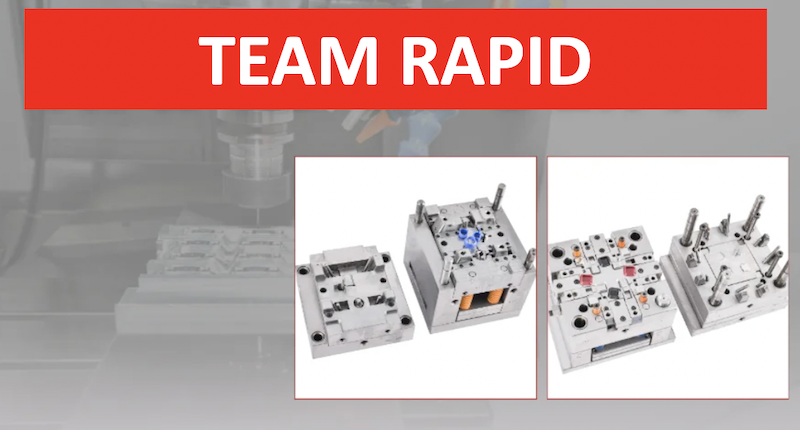
Beside extrusion and injection molding, TEAM RAPID also offers CNC machining, die casting, and 3d print services to meet your projects needs. Contact our team today to request a free quote now!
Request a Free Quote
Getting started is simple:
- Send us your 2D/3D drawings (STEP, IGS, STL, PDF, etc.)
- Specify material, quantity, surface finish, and any special requirements
- Our engineers will review your files and provide:
- Competitive pricing
- Lead time estimation
- DFM (Design for Manufacturability) suggestions if needed
We aim to respond quickly with clear and professional feedback.
🌐 Website: TEAM RAPID
🔗 https://www.teamrapidtooling.com
Frequently Asked Questions (FAQs)
1. Can injection molding and extrusion be combined in one product?
Yes. Many products use extruded profiles as the base structure and then put it into the injection mold for overmolding or insert molding, to get final injection molded components of end caps, connectors, or complex features. This hybrid approach reduces tooling costs while maintaining design flexibility.
2. Which process is better for product development and prototyping?
Injection molding is ideal for complex parts especially when you need to validate a final production design, while extrusion is more suitable for testing profile shapes or material performance in continuous products. At early-stage development, rapid tooling or small-batch extrusion trials are often recommended.
3. How does design flexibility compare between the two processes?
Injection molding offers much greater design freedom – including:
- Internal ribs
- Snap fits
- Threads
- Complex surface textures
Extrusion is limited to constant cross-sections but allows flexibility in:
- Wall thickness
- Profile width
- Multi-material co-extrusion
