
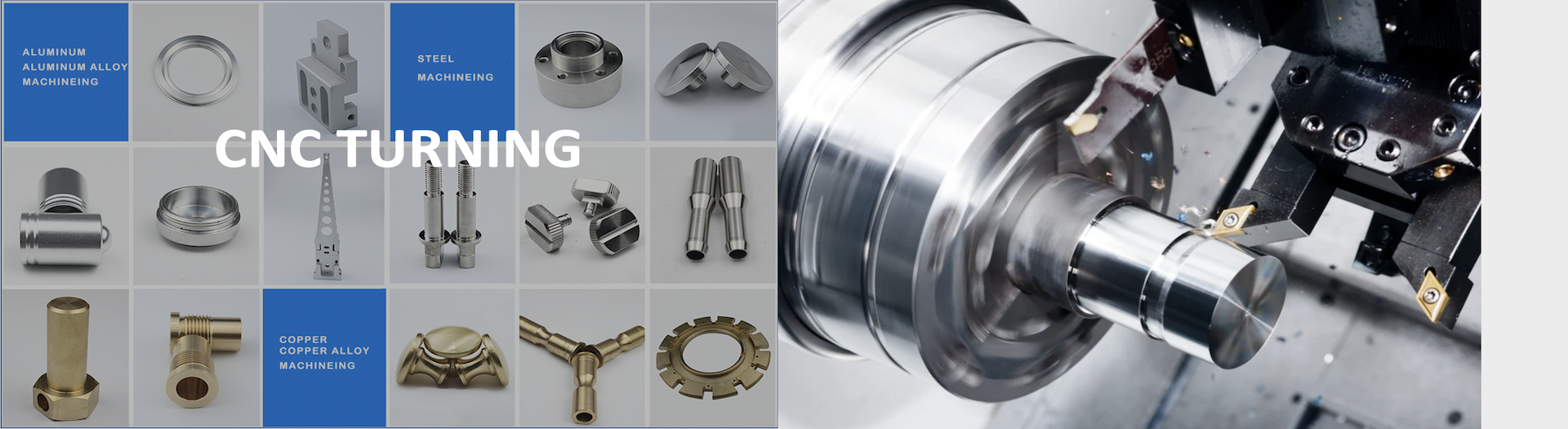
CNC Turning - Commercial Parts on Demand
What is CNC Turning
CNC turning(people also call it CNC lathe), it is a subtraction machining process that uses a cutter feed to a high-speed rotated bar to remove material, create desired geometry. The CNC turret, positioned at the center of the turning machine, is equipped with multiple precision cutting tools. Controlled by advanced programming, the turret automatically indexes and positions each tool to perform accurate machining operations on the bar stock. Every movement follows a pre-set CNC program, ensuring consistent dimensional accuracy and repeatability.
Cases of CNC Turning at TEAM RAPID
TEAM RAPID equips with a range of CNC turning, CNC turn-milling machines to produce high quality parts, we have offered CNC turning services for more than 10 years in China. Our manufacturing team has rich machining experience in various metals and plastics, we aim to provide the best solution to our customers at effectively costs. Whether it is only 1 or 10,000+ parts, we can create them quickly and cost-effectively through the CNC turning process.
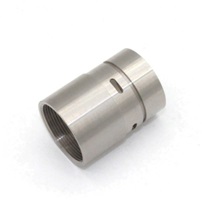
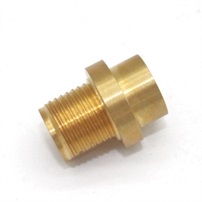
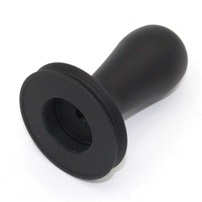
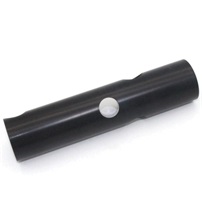
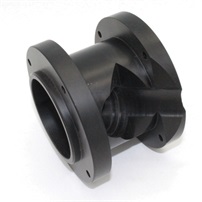
Stainless Steel Part Brass Part Aluminum Part POM Part ABS Part
How CNC Turning Works
CNC turning is a precision machining process that controlled by computer programming. How to make CNC turning work? It relates to a series of steps:
1.CAD Design & Programming
First of all, designer need to build a 3D CAD model of the part.Engineers convert this design into machine-readable instructions (G-code) using CAM software.CNC machines read these codes, and defines cutting paths, speeds, feeds, tolerances, and tool selections.
2.Material Setup
Load a bar stock(metal or plastic) into the CNC lathe’s spindle. The rotating speed is programmed, which is critical for achieving the desired surface finish and dimensional accuracy.
3.Tool Positioning via Turret
The CNC turret holds multiple cutting tools and automatically indexes to select the correct tool for each operation. The tools move along the X and Z axes to remove material according to the programmed design.
4.Material Removal (Turning Operations)
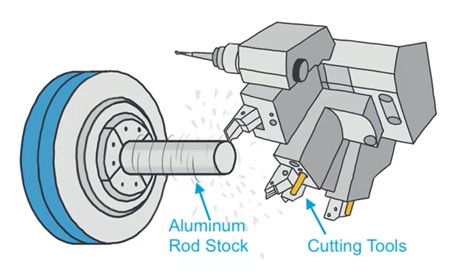
- Facing
- Straight turning
- Taper turning
- Grooving
- Threading
- Boring
- Drilling
If the machine is a turning center with live tooling, the spindle can pause rotation to perform milling operations such as slots, flats, or cross-holes-allowing complex parts to be completed in one setup.
5.Finishing & Inspection
Parts after machining may go with deburring, surface finishing, or other secondary finish. Quality control on every steps to ensure tight tolerances and compliance with engineering specifications.
Types of CNC Turning
There are different types of CNC turning operations for you to cutting remove materials from a rotating workpiece. It is important to select the best operation depends on the part’s shape, tolerance, and function required.Below are the main types of CNC turning operations commonly used in manufacturing.
| CNC Turning Operation | Description | Typical Applications | When to Use |
|---|---|---|---|
| Straight Turning | Removes material from the outer diameter to produce a consistent cylindrical shape. | Shafts, rods, pins | When you need a uniform external diameter. |
| Taper Turning | Produces a conical shape where the diameter gradually changes along the length. | Machine spindles, tool holders | When a part requires a tapered profile. |
| Facing | Cuts material from the end of the workpiece to create a flat surface. | Part ends, precision surfaces | When you need a flat surface at the end of the component. |
| Grooving | Creates narrow grooves or channels on internal or external surfaces. | O-ring grooves, retaining ring slots | When functional grooves are required in a component. |
| Parting (Cut-off) | Separates the finished part from the remaining bar stock. | Final separation in bar machining | When the completed part must be cut from the raw material. |
| Thread Cutting | Produces internal or external threads using a threading tool synchronized with spindle rotation. | Screws, bolts, threaded connectors | When a part requires threaded features for assembly. |
| Knurling | Forms a patterned texture on the surface for better grip. | Handles, knobs, adjustment screws | When improved grip or decorative texture is needed. |
| Boring | Enlarges and refines an existing hole to improve diameter accuracy. | Bearing housings, precision holes | When internal diameter accuracy must be improved. |
| Drilling | Produces holes along the axis of the rotating workpiece. | Bolt holes, pilot holes | When creating an initial hole in the workpiece. |
| Reaming | Finishes a drilled hole to achieve tight tolerances and a smooth surface finish. | Precision assemblies | When high hole accuracy and surface finish are required. |
Turning-Milling Machining
Comparing to the traditional separated turning and milling, turning-milling machining combines the two processes into one multi-axis CNC machine, which can preform both processes in one operation.
Key advantages:
- Fewer setups
- Higher machining accuracy
- Shorter production cycles
- Reduced manufacturing cost
- Improved part consistency
Typical machines used include CNC mill-turn centers or multi-tasking CNC machines.
The Benefits of CNC Turning
In manufacturing, CNC turning machine process has become one of the most preferred methods to create CNC turning parts and components from various material types, such as metals, plastics, and wood. It also has a unique machining process, and because of this, it can offer various benefits for your overall production cycles.
● Improved Production Efficiency
CNC machining turning can help create CNC turning parts according to your design requirements with little or no mistakes. The computerized process will ensure each production will go according to the design requirements, which will help increase your production efficiency in a big way.
● Faster Production Speed
Compared to traditional prototyping methods, CNC turning services offer you a faster production speed, allowing you to produce parts in large volumes. It's also easy to set up by CNC turned before you can let it operate.
● Safer Operations
CNC milling and turning is a healthy manufacturing process for the environment, and you don't need to worry about damaging the environment by using this process. The CNC machining turning equipment is quiet and safe to operate, and your prototype materials will be handled best. In contrast, material waste can be recycled for the next production cycle.
● Cost-saving
With little or no mistakes to make, materials compatibility, waste recycling, and fast production speed, CNC turning service can ensure the cost-effectiveness of your production operations.
● Higher Precision
The computerized process in the CNC turning service makes it easier to create prototypes, parts, and components with higher precision and accuracy. It means better quality for your overall production results, which can also improve the quality of the products you build or assemble.
CNC Turning Machining Materials
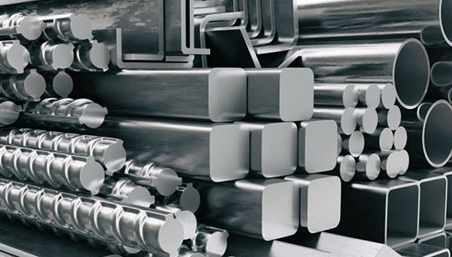
At TEAM RAPID, metals and plastics are the materials we use for CNC turning machining. Our CNC turning process can produce CNC turning parts and components in aluminum, low carbon steel, brass, steel alloy, titanium, and stainless steel. However, sometimes, customers want to make their parts in plastics, that is also within our machining scope.
The CNC milling turning service offers the flexibility for manufacturers to use a variety of materials for their prototyping and production needs. Also, with metal materials, you can add various surface finish options to polish each metal part you produce. The most common surface finish options include sharp-edge finishing, broken-edge finishing, and bead blast. Here are some commonly used materials for CNC milling turning service at TEAM RAPID:
- Metals: aluminum, magnesium, brass, steel, stainless steel, bronze, copper, titanium, nickel alloy, etc.
- Plastics: nylon, polycarbonate, POM, ABS, etc.
- Bar materials in metals and plastics of diverse dimensions.
| Material Category | Material | Common Grades / Brands | Typical Available Bar Specs |
|---|---|---|---|
| Metal | Aluminum | 6061, 6063, 7075, 2024 | Round bar Diameter 6-300 mm |
| Metal | Stainless Steel | 303, 304, 316, 17-4 PH | Round bar Diameter 6-250 mm |
| Metal | Carbon Steel | 1018, 1020, 1045 | Round bar Diameter 6-300 mm |
| Metal | Alloy Steel | 4140, 4340 | Round bar Diameter 6-300 mm |
| Metal | Tool Steel | D2, H13, O1 | Round bar Diameter 10-300 mm |
| Metal | Brass | C360, C260 | Round bar Diameter 3-200 mm |
| Metal | Copper | C101, C110 | Round bar Diameter 5-200 mm |
| Metal | Bronze | C932, C954 | Round bar Diameter 10-250 mm |
| Metal | Titanium | Grade 2, Ti-6Al-4V (Grade 5) | Round bar Diameter 6-150 mm |
| Plastics | ABS | General ABS | Rod Diameter 6-200 mm |
| Plastics | Nylon (PA) | PA6, PA66 | Rod Diameter 6-250 mm |
| Plastics | POM (Acetal) | Delrin, POM-C | Rod Diameter 6-250 mm |
| Plastics | PTFE | Teflon | Rod Diameter 6-200 mm |
| Plastics | PEEK | Victrex PEEK, KetaSpire? | Rod Diameter 6-150 mm |
| Plastics | Polycarbonate (PC) | Lexan | Rod Diameter 6-150 mm |
| Plastics | Acrylic (PMMA) | Plexiglas, Acrylite | Rod Diameter 6-200 mm |
| Plastics | Polypropylene (PP) | PP Homopolymer | Rod Diameter 10-200 mm |
| Plastics | HDPE | HDPE 100, HDPE 500 | Rod Diameter 10-200 mm |
| Plastics | PVC | PVC-U | Rod Diameter 10-200 mm |
Designer can improve machining efficiency and reduce cost by designing the part has a diameter close to standard on-sale bar or rod sizes in the market. If do so, it means less material removal, shorter cycle time, lower tool wear, and lower raw material costs, we can't tell much differences on prototypes, but for the volume production, especially for the large-volume, the differences is huge. Have questions about the material selection and machining ability? Contact us for the questions and get a free CNC turning online quote today!
Post-Finish Options at TEAM RAPID
Here are some post-finish options at TEAM RAPID for CNC turning plastic and metal parts.
| Aluminum | Stainless Steel | Steel | Plastic | Brass |
| Clear Anodized | Polishing | Zinc Plating | Plating | Gold Plating Machine |
| Color Anodized | Passivating | Nickel Plating | Painting | Electroplating |
| Sandblast Anodized | Sandblasting | Chrome Plating | Polishing |
|
| Chemical Film | Laser Printing | Oxide Black | Sand Blasting |
|
| Brushing |
|
Carburized | Laser Printing |
|
| Polishing |
|
Heat Treatment | Silk Printing |
|
| Plating |
|
Painting |
|
|
| Painting |
|
Powder Coated |
|
|
| Powder Coated |
|
Electroplating |
|
|
| Laser Printing |
|
|
|
|
| Silk Printing |
|
|
|
|
CNC Turning Applications
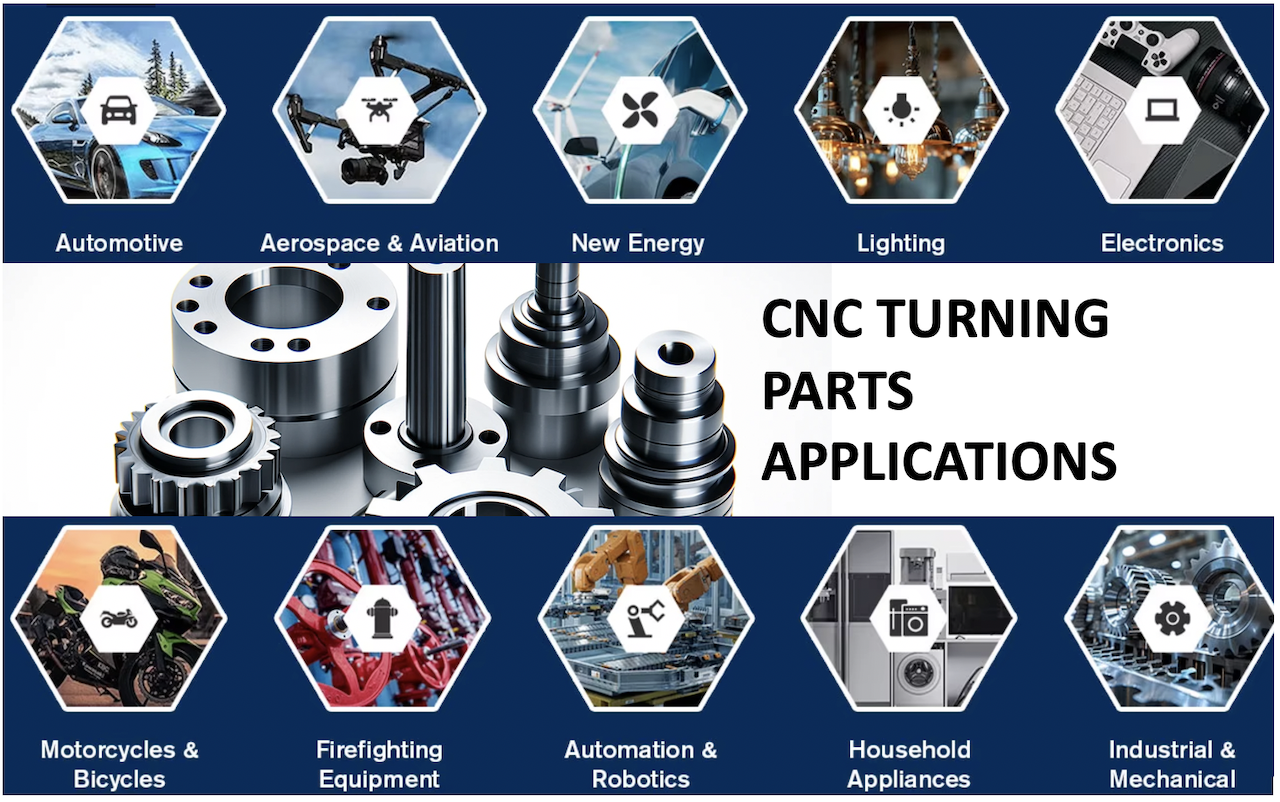
With its precision machining process, the turning process has become one of the most preferred methods for manufacturers to create CNC turning machine parts and components with precise engineering. The precision and accuracy provided by turning are the best in their class, which is why big manufacturing industries use this process in their production cycles.
● Automotive
The process is suitable for producing various automotive parts that require the best precision. Gears, engines, and other vehicle parts, such as brass CNC-turned parts, use the turning process to produce, ensuring that they can work with other parts in the best way.
● Aerospace.
You can also find various parts of SpaceX rockets made with by turning process. The reason is that rocket parts require precise engineering, and CNC turning is the process that can deliver such engineering precision.
● Electronics
Small electronic components you can find in various electronic products, such as smartphones, laptops, game consoles, and many others, use the aluminum CNC turning method to produce them. Again, precision is the key, and the turning process can provide the precision needed for these electronic products.
● Toys
Manufacturers can also use the process to produce various toys and toy models, such as die-cast toy cars, merchandise, puzzles, and many others.
● Furniture
Knocked-down furniture also uses CNC turning to produce them, ensuring that each part can work with other parts without a problem.
What Robotics Companies Say About Our CNC Turning Parts
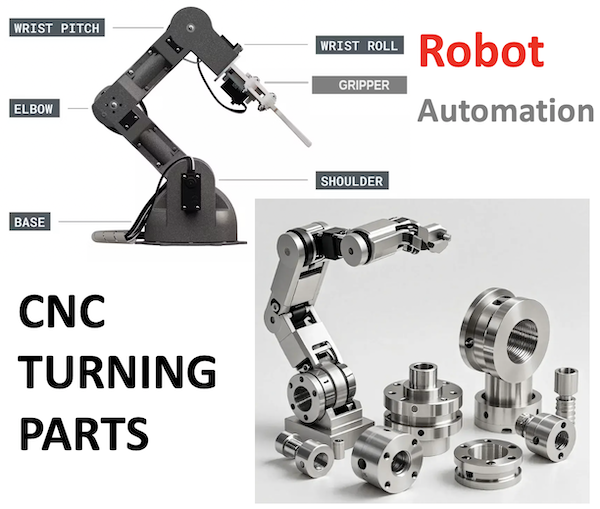
Precision and reliability are two of the most critical factors in robot parts manufacturing. TEAM RAPID help many robotics equipment companies to produce their high-accuracy shafts, connectors, housings, and mechanical components by CNC turning, most of these parts are used in robotic arms, automation systems, and motion control devices.Here’s what some of our robotics customers have shared about their experience working with us:
Precise and Perfectly for Robotic Assemblies
“The CNC turned parts we received were extremely precise and matched our engineering drawings perfectly. The tight tolerances and smooth surface finish ensured stable operation in our robotic actuator assemblies.”
Reliable Supplier for Quality and Timely Schedule
“Our robotics equipment requires consistent machining quality and reliable delivery schedules. The parts were manufactured accurately, and every batch met our dimensional requirements. Communication throughout the project was excellent.”
Multi-Machining Methods
Multi machining, people also call it multi-process machining or multi-operation machining, it is a manufacturing approach where multiple machining processes are combined to produce a part. This method is purposed to make complex parts quickly, efficiently, and precisely.
Combined Process
Operations Included
Typical Applications
Turning + Milling
Turning, slot milling, flats
Robotics, aerospace parts
Turning + Drilling/Tapping
Turning, holes, threads
Hydraulic fittings
Turning + Grinding
Turning, precision finishing
High-precision shafts
Multi-Axis Turn-Mill
Turning + 3/4/5-axis milling
Complex mechanical parts
Swiss Turning + Micro Machining
Micro turning + drilling
Medical & electronics
Contact Us for CNC Turning Machining Services
As a professional CNC turned parts supplier, TEAM RAPID offer the best CNC-turned parts in metals and plastics. Our general tolerance is ISO DIN 2768f for metal parts and 2768m for plastic ones. A wide range of post finishes can be applied to your CNC turning part, including painting, printing, polishing, sandblasting, anodizing, plating, passivation, etching, et cetera. Contact our team today to have a CNC turning online quote.
FAQs About CNC Turning Machining
Cylindrical or round geometries parts are ideal for CNC turning machining. CNC turning machining is commonly used to produce: Shafts, Bushings, Pins, Connectors, Hydraulic fittings, Threaded components, Robotics mechanical parts.
Yes. CNC turning can be used in produce rapid prototypes and mass production. Through CNC turning to produce prototype parts for testing and then scale up to batch or full production while maintaining consistent quality.
Typically, CNC turning machines can achieve tolerances of ±0.01 mm or tighter, vary from material, part geometry, and machining process. High-precision turning centers and proper quality control allow manufacturers to produce parts with excellent dimensional accuracy and repeatability.


 Contact