
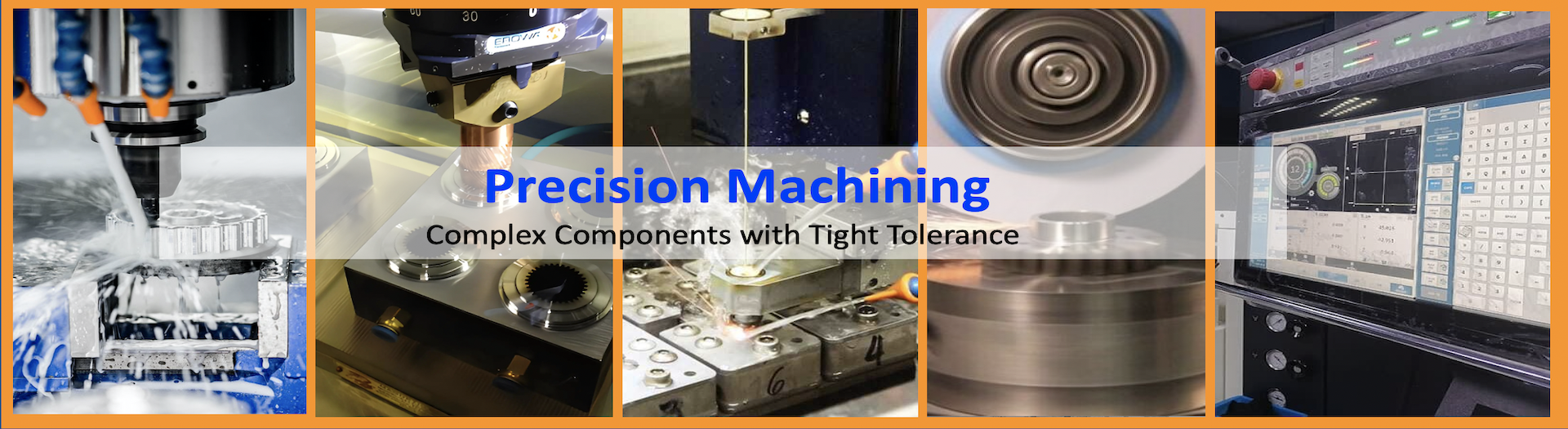
Precision Machining
What is Precision Machining
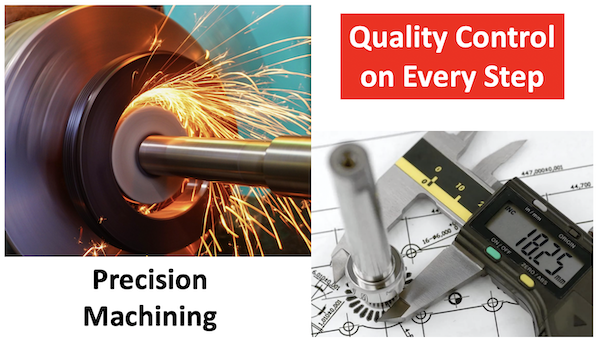 Precision machining means using precise machining methods to produce parts have strict dimensional requirements, and tight tolerances as small as ±0.001 mm to ±0.02 mm depending on the process and material.
Typical characteristics include:
- High dimensional accuracy
- Tight tolerances
- Smooth surface finishes
- Consistent repeatability
- Complex geometries
Why Use Precision Machining
In modern industries, there are many devices, components need strict dimensions to ensure fit perfectly, function correctly, and maintain consistent quality.Precision machining is the right method to meet these strict requirements.
Key Reason
Description
Benefits
High Dimensional Accuracy
Precision machining produces parts with extremely tight tolerances, often ±0.01 mm or better.
Ensures perfect fit, minimizes assembly errors, and improves product performance.
Complex Geometry Capability
Advanced CNC machines can create intricate shapes, internal cavities, thin walls, and multi-axis surfaces.
Enables innovative product designs and complex engineering structures.
Improved Product Reliability
Precisely machined components operate smoothly and reduce mechanical variation.
Extends service life, reduces wear, and improves system stability.
Superior Surface Finish
Precision machining produces smooth surfaces with minimal roughness.
Reduces friction, improves sealing performance, and enhances appearance.
Consistent Production Quality
CNC-controlled machining ensures repeatable and stable manufacturing results.
Delivers consistent quality, lowers defect rates, and improves production efficiency.
Support for Advanced Manufacturing
Precision machining supports industries requiring strict tolerances and high performance.
Enables modern engineering solutions and advanced product development.
Precision Machining Services
TEAM RAPID applies the advanced CNC machining configuration in rapid prototyping, and the following mass production. We equips with 3 axis, 4 axis, and 5 axis CNC machines, the traditional 3-axis equipments are still be usable for today's manufacturing projects. But, the 4-axis, 5-axis configuration will be offered in precision machining services for complex parts manufacturing.
Advantages of Our 5-axis CNC precision machining services
Boost Efficiency and Production Time
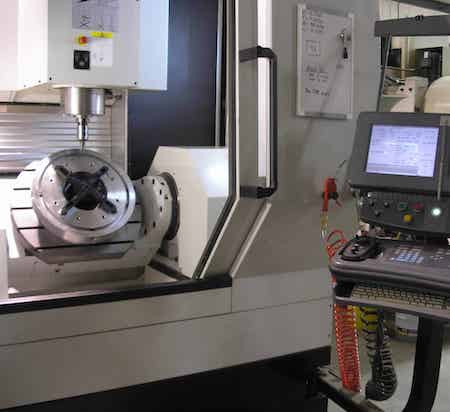
With the 5-axis CNC, five different CNC cutting tools are working together. This equipment can help improve the overall efficiency of your manufacturing production. It will remove all unnecessary processes and waiting time. It results in the improvement of your overall production time, allowing speedier manufacturing.
Boost Precision and Accuracy
With more cutting tools you can work with, the precision and accuracy of each cut will increase. You can work on trimming and cutting more areas around the material workpiece. You can apply small cutting details with the 5-axis CNC equipment. It makes working on a complex prototype or product design possible. Also, it brings you the highest accuracy.
Production of Complex Geometry by Precision Machining Services
The regular CNC equipment has some restrictions regarding complex geometry production. However, the 5-axis CNC configuration makes adding complex geometries to your design more feasible. The 5-axis cutting tools can go to nook-and-cranny to follow your complex geometric design. You can add more features to the final parts, thanks to the 5-axis CNC configuration.
Reduce Tool Wear and Replacement
The 5-axis CNC configuration allows each tool to work more lightly while achieving better efficiency. There will be less stress applied on each axis during the rapid manufacturing process. The 5-axis configuration can reduce tool wear, allowing you to use each cutting tool longer. It will also mean that you will minimize the instances of replacing each tool in your production.
Have More Polished Surface Finish by Precision Machining Services
You can work on cutting more details on the material workpiece with the 5-axis CNC. This cutting process will get you a better surface finish for the complete parts you produce. It results in better overall aesthetics for the parts without additional finishing processes. It will make surface finishing optional for you.
A Wider Coverage for the Workpiece Material
The 5-axis configuration can also cover more areas around the workpiece material. The extra coverage area allows you to create bigger-sized parts for your project. Also, it will let you reach the previously unreached area. You can sculpt more shapes in intricate areas.
Compound Process / Hybrid Manufacturing Process
Compound Process / Hybrid Manufacturing Process refers to a manufacturing method in which two or more processing technologies are combined within the same manufacturing system or production process to improve efficiency, enhance precision, or enable the production of complex structures. TEAM RAPID applies this approach in complex parts manufacturing, especially in CNC compound machining.
Major Types of Compound / Hybrid Manufacturing Processes
| Process Type | Combined Technologies | Typical Features | Typical Tolerance | Surface Roughness (Ra) | Applications |
|---|---|---|---|---|---|
| Turn-Mill Compound Machining | Turning + Milling + Drilling | Multi-task CNC machining performed in one machine setup | ±0.01 - ±0.02 mm | 0.8 - 3.2 μm | Shafts, precision mechanical components |
| Turn-Grind Compound Machining | Turning + Grinding | Combines rough machining and high-precision finishing | ±0.002 - ±0.005 mm | 0.2 - 0.8 μm | High-precision shafts, bearing components |
| Mill-Drill-Tap Machining | Milling + Drilling + Tapping | Multiple hole-making and surface machining operations integrated in one setup | ±0.02 - ±0.05 mm | 1.6 - 3.2 μm | Mechanical housings, structural parts |
| EDM Hybrid Machining | Electrical Discharge Machining + Milling | Enables machining of very hard materials and complex geometries | ±0.003 - ±0.01 mm | 0.4 - 1.6 μm | Mold and die components |
Typical Workflow of a Compound Precision Machining Process
| Step | Process Stage | Description |
|---|---|---|
| 1 | Part Design | Engineers create the 3D model and define tolerances and surface finish requirements. |
| 2 | Process Planning | Manufacturing engineers select the combination of machining operations. |
| 3 | Machine Setup | The workpiece is clamped in a multi-task CNC machine or compound machining center. |
| 4 | Primary Machining | Operations such as turning or milling create the basic geometry. |
| 5 | Secondary Machining | Additional operations such as drilling, tapping, or boring refine the part features. |
| 6 | Finishing Operations | Grinding, polishing, or surface treatment improves surface quality. |
| 7 | Inspection | Precision measuring tools verify dimensions, tolerances, and surface finishes. |
Precision Machining Solutions
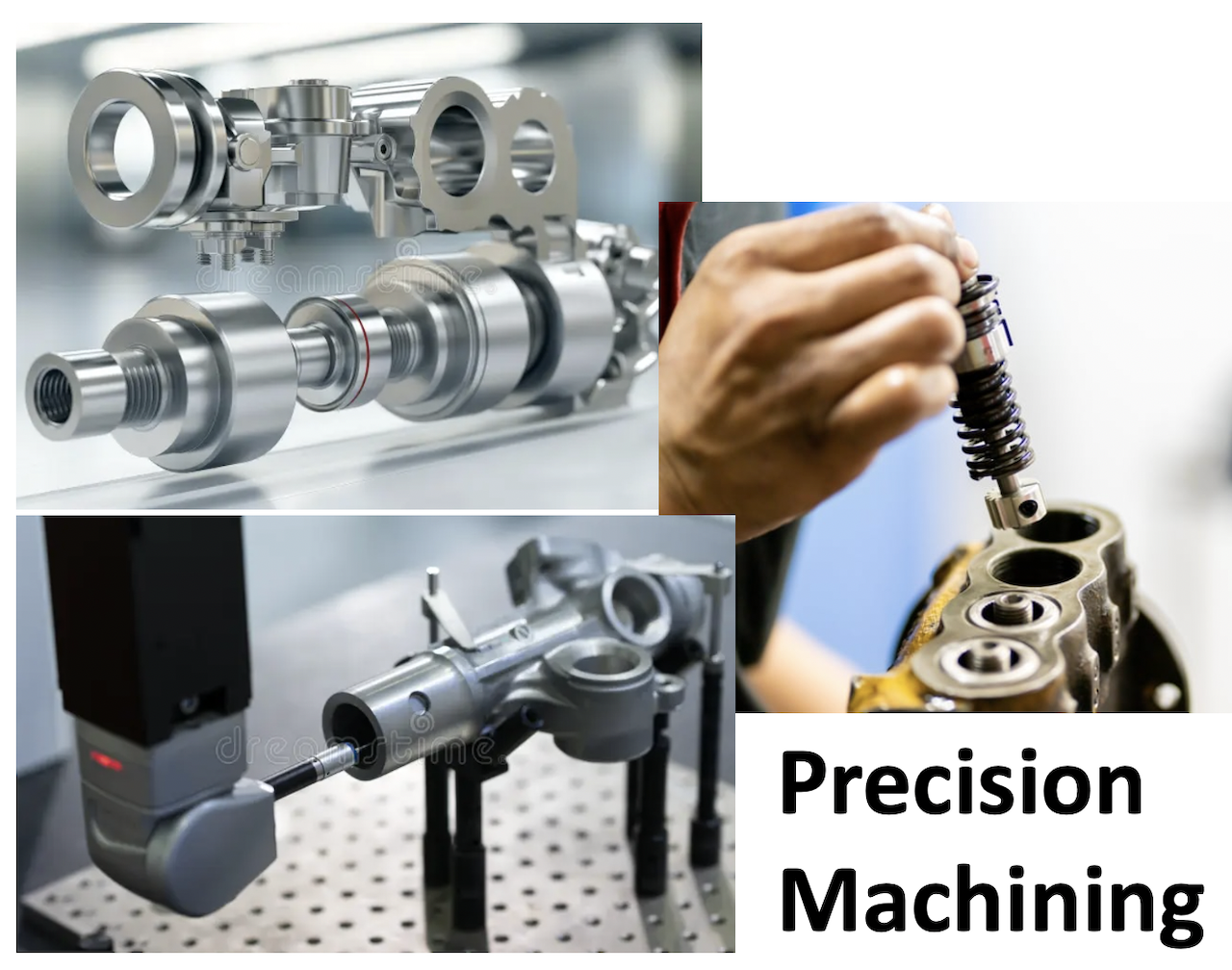
Rapid Prototyping and Low-Volume Production
In order to guarantee rapid, and accurate prototypes and low-volume production, we leverage our robust manufacturing capabilities to produce high-quality parts, ensuring you can get the right path to start from testing to market,
- Capability: 20-500
- Lead Time: 12+business days
Available Tolerance
Process
Typical Tolerance (mm)
Best Possible Tolerance (mm)
Notes
EDM (Electrical Discharge Machining)
±0.015
±0.005
Tolerance can be affected by electrode wear.
Grinding
±0.005
±0.001
Surface finish is typically smoother with grinding.
CNC Turning
±0.025
±0.010
Finish can impact tolerance.
CNC Milling
±0.025
±0.005
Precision can vary based on tool type and material.
Precision Machining Services - Industrial Applications
Energy Industry
The 5-axis CNC system is valuable for creating various equipment in energy production facilities. It includes creating wind turbines for wind-based energy production.
Medical Devices Made By Precision Machining Services
You can produce various medical-related items for hospitals and surgical operations. The 5-axis CNC can create precise medical parts based on custom requirements. You can also ensure the part's safety for the surgical operations.
Aerospace
The scalability of the 5-axis CNC configuration allows you to create more sizable components in more industries, such as aerospace. You can produce precise aerospace components with the 5-axis CNC equipment. It covers both the exterior and interior design in the aerospace industry.
Automotive Parts
You can use the 5-axis CNC to produce the engine, gears, and vehicle body parts. You can also create polished components for the vehicle, thanks to the precision machining. Most vehicle manufacturers today use the 5-axis CNC system in their vehicle production.
Jewelry
Today's jewelry designs are becoming more intricate. The 5-axis CNC system can be usable for cutting intricate jewelry designs using its precision machining. This way, you can get plenty of uniquely designed jewelry with complex geometrical shapes.
Factors that affect precision tolerances
CNC Equipment
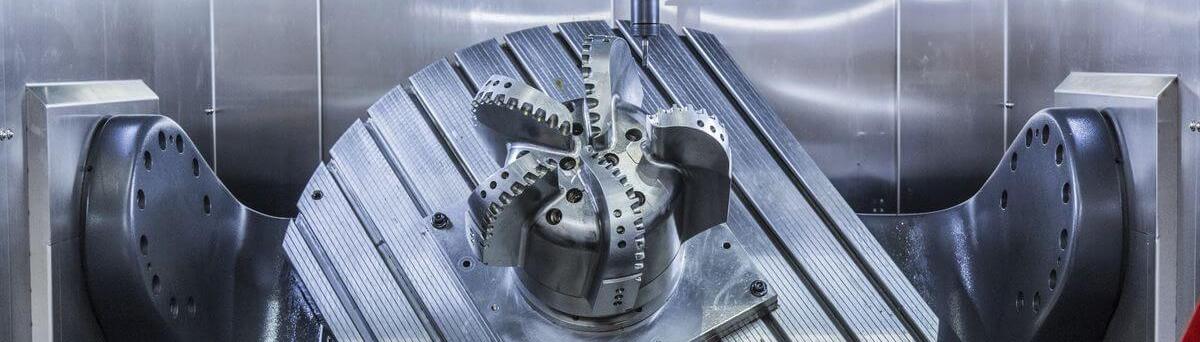
Higher-end CNC equipment can handle tighter tolerances better. There are also more configuration options to help customize the precision tolerance factor. It will allow you to perform tiny cuts on the material workpiece based on your programmed commands.
Cutting Tools
The quality of each cutting tool you use will also affect the precision tolerance in your production. The "dull" cutting tools on the 5-axis CNC might not cut at proper precision tolerance if you don't replace them first. Some workpiece materials also need specialized cutting tools for the best precision tolerance.
Workpiece Material
Different workpiece materials will offer different precision tolerances. Steel's tolerances will differ from wood. So, you can't just generalize their tolerances. Your workpiece material will affect how accurate your cuts will be.
Other Factors
| Factor | Impact on Tolerance | Key Risk |
|---|---|---|
| Material | High | Expansion, deformation |
| Machine Accuracy | Very High | Positioning error |
| Tool Condition | High | Wear, breakage |
| Cutting Parameters | Medium-High | Vibration |
| Thermal Effects | Very High | Expansion |
| Fixturing | High | Distortion |
| Part Design | Very High | Deflection |
| Process Type | Medium | Capability limits |
| Operator Skill | Medium | Setup/program errors |
| Measurement | Medium | Inspection error |
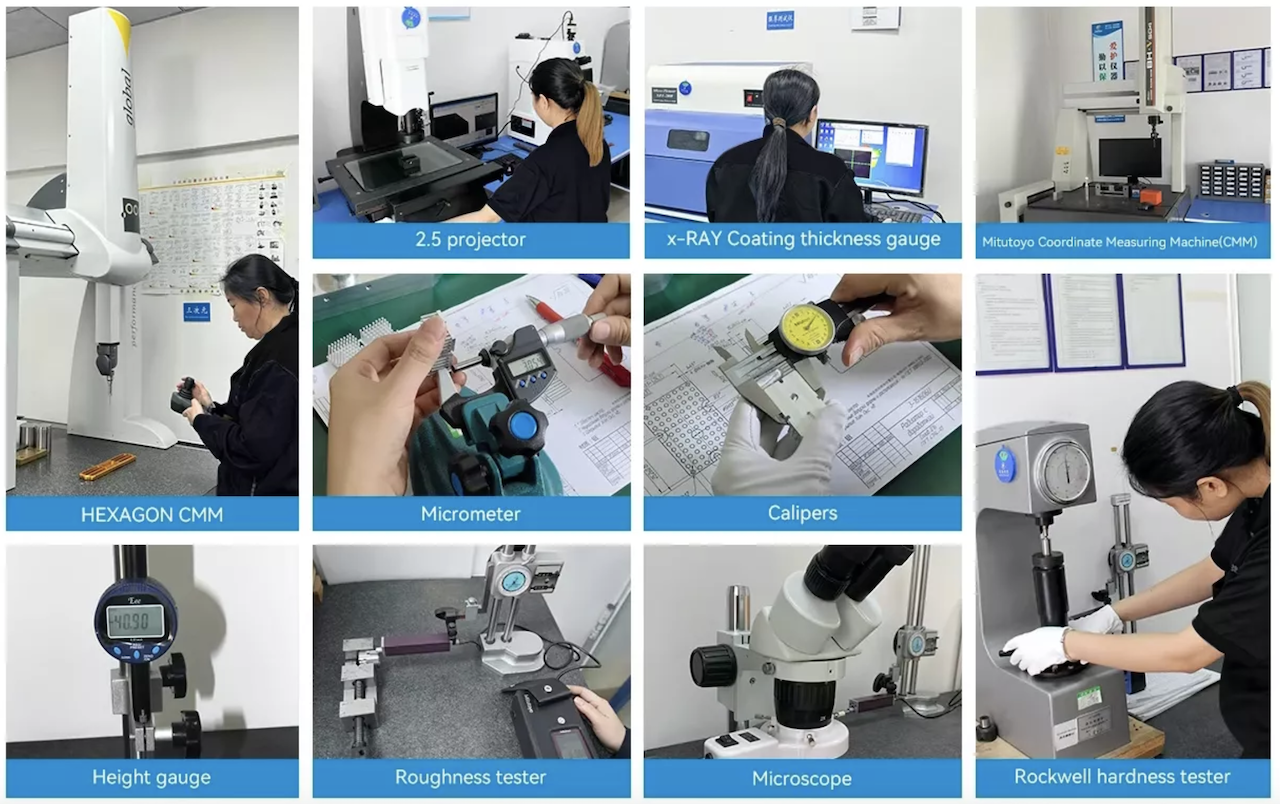
Full Inspection Before Shipment
Precision Machining vs. CNC Machining
Relationship of Precision Machining and CNC Machining
CNC machining can be one of the precision machining method to achieve accuracy, but not all the CNC machining can reach “precision”, meanwhile, beside the CNC machining(CNC milling and CNC turning), grinding, EDM etc. can be used in making accurate parts.
In short:
- CNC = tool
- Precision machining = result
Key Difference between Precision Machining and CNC Machining
- Precision machining: focuses on how accurate and tight the tolerance is
- CNC machining: refers to how the part is made (computer-controlled machines)
Common Misunderstanding
Many people use the terms interchangeably, but a shop offering “CNC machining” does not always guarantee high precision
True precision machining requires:
- Thermal control
- Advanced inspection (CMM)
- Skilled programming
- Secondary finishing processes
Precision Machining vs. CNC Machining Details Comparison Table
| Aspect | Precision Machining | CNC Machining |
|---|---|---|
| Definition | Manufacturing process focused on achieving extremely tight tolerances and high accuracy | Machining process using computer numerical control (automated programming) |
| Core Concept | A quality standard / outcome (how precise the part is) | A manufacturing method / technology (how the part is made) |
| Primary Focus | Accuracy, tight tolerance, superior surface finish | Automation, repeatability, production efficiency |
| Typical Tolerance | Very tight (±0.001 - ±0.02 mm) | Standard to tight (±0.02 - ±0.1 mm) |
| Processes Included | CNC machining, grinding, EDM, honing, lapping | CNC milling, CNC turning, CNC drilling |
| Machine Types | High-precision CNC machines, grinders, EDM equipment | CNC mills, CNC lathes, machining centers |
| Accuracy Requirement | Extremely high, often micron-level | Depends on machine and setup (not always ultra-precise) |
| Surface Finish | Very smooth, often requires secondary finishing | Standard finish, may require post-processing |
| Operator & Programming | Highly skilled operators, advanced toolpath strategies | Skilled programming required, but more automated |
| Process Control | Strict control (temperature, vibration, tool wear) | Moderate control depending on application |
| Inspection Methods | Advanced inspection (CMM, high-precision gauges) | Standard inspection tools and CMM if needed |
| Applications | Aerospace, medical devices, optics, high-end engineering | Automotive, electronics, industrial parts, prototyping |
| Cost Level | Higher due to precision requirements and slower processes | Lower to moderate depending on complexity |
| Production Speed | Slower (focus on accuracy) | Faster (focus on efficiency) |
| Flexibility | Lower (tight constraints and controls) | Higher (wide range of parts and materials) |
| Relationship | Often uses CNC as part of the process | Can be used for both standard and precision machining |
Contact Us - Precision Machining Services
Looking for high-precision parts machining?TEAM RAPID has the capabilities to deliver tight-tolerance components, rapid prototypes, and production parts with consistent quality and fast turnaround.We help customers turn designs into precision-engineered products across industries by advanced manufacturing machines
Start Your Project Today
- Upload your CAD files for a fast quote
- ReceiveDFM analysis and quotation within 2 days
- Get parts delivered globally in days
Get in Touch
- Email: sales@teamrapidtooling.com
- Tel:+86 760 8850 8730
- Support:24/7 engineering assistance
Our engineers will review your requirements and provide the most cost-effective and precise solution for your application.
FAQs - Precision Machining Services
We support rapid prototypes and low-volume precision machining, but not for high volume over 5000 parts.
We implement strict quality control, including: full inspection before shipment, advanced measuring equipment, and ISO-certified processes. Quality and consistency are our top priorities.
Absolutely. Our engineers provide: design for Manufacturability (DFM) analysis, cost and performance optimization, and material and process recommendations.


 Contact