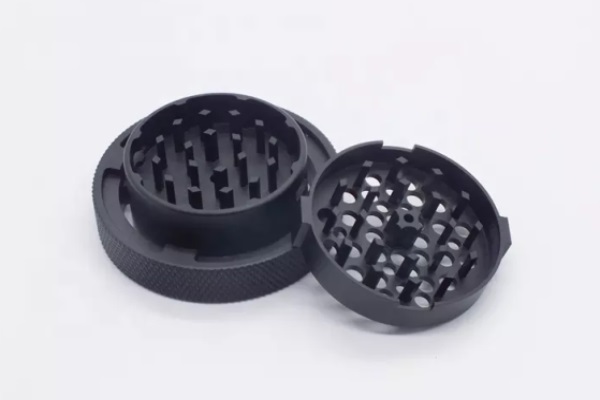
A good metal prototype will lead to a better-completed product. Creating metal prototypes is an important part of business in a wide range of industries which include aerospace, electronics, and more. Today, we will discuss how important prototypes are. And when to create it instead of plastic prototypes. We will also discuss which is the best way to create metal prototypes: 3D printing, sheet metal forming, CNC machining, casting, and extrusion. Here at TEAM Rapid, we are able to combine different manufacturing processes to provide solutions to create your prototypes.
Table of Contents
What is a metal prototype
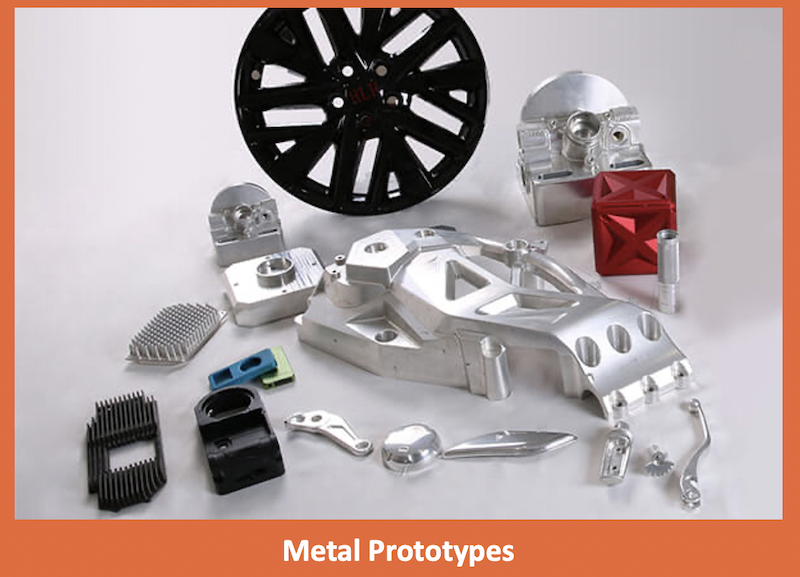
A prototype is a mock-up of the part. Building a prototype sheet metal before mass production allows designers to test and develop the parts. Here at TEAM Rapid, we can create prototypes with a wide range of materials depending on the manufacturing process. Prototypes are usually created by metal manufacturing methods which include CNC machining, casting, sheet metal forming, and more. Metals for prototyping are aluminum, steel, and any other metal material. Metal is used for pre-production prototypes. The prototypes which are created close to the end part can also be used for early-stage prototypes.
When to make metal prototypes
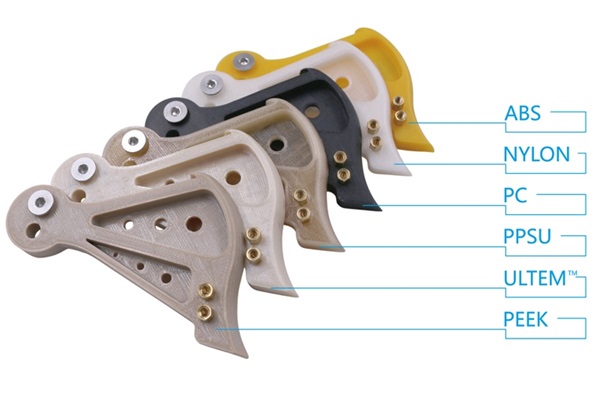
In some cases, manufacturers may make plastic prototypes for parts that will be made of metal. Because some prototypes do not have a function and mechanical requirement. They do not need to have strength, ductility, and conductivity. So, if the characteristics are not important, it is better to use a cheaper material. In this case, plastic is a cheaper option.
If the prototypes need to have functions, they should be created with particular material characteristics. In this case, metal is an ideal option. Non-functional prototypes can benefit from metal. For example, if a prototype is used to demonstrate a concept, it will have a better look if it is made from metal material especially the parts that in produced with metal material in mass production.
Building a prototype with metal will increase the chance of upfront investment and commercial success. If the parts will be made with metal in mass production, it is easy to turn a metal prototype into a metal end product. Also, it is not easy to turn a plastic 3D printed prototype into a metal production part.
What are the advantages of metal prototyping
Metal prototyping has better functional and mechanical performance.
Metal prototyping are more accurate for testing
Metal prototyping have better aesthetics
It is easier to turn prototypes into production.
How to create metal prototypes
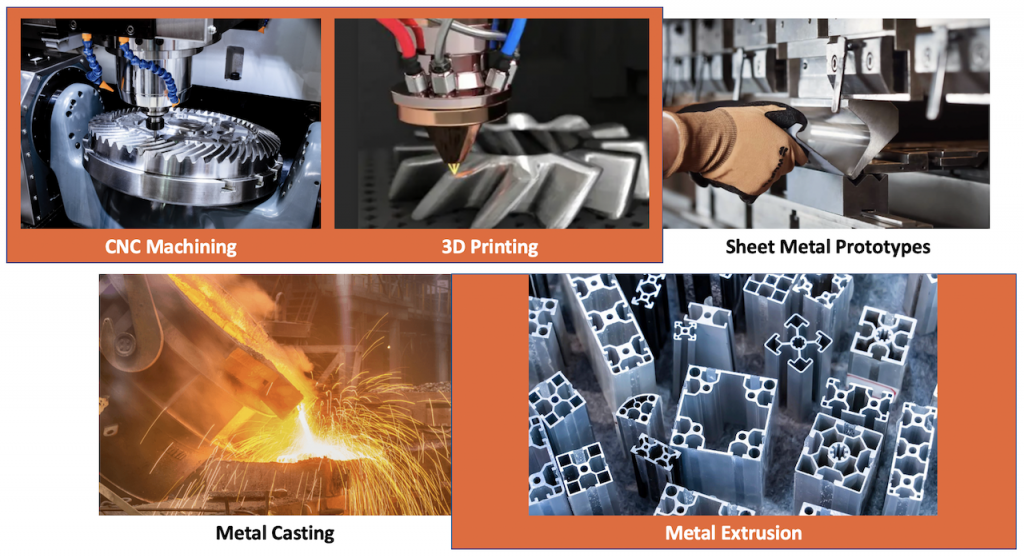
Some metal prototypes can be created by only one manufacturing process as their geometry, tolerance, and quantity. Most prototypes can be created by many different methods. So, we need to find the best method to create metal prototypes to achieve the best result, lower the cost and shorten the manufacturing time. Below are some common techniques to create prototypes.
CNC machining
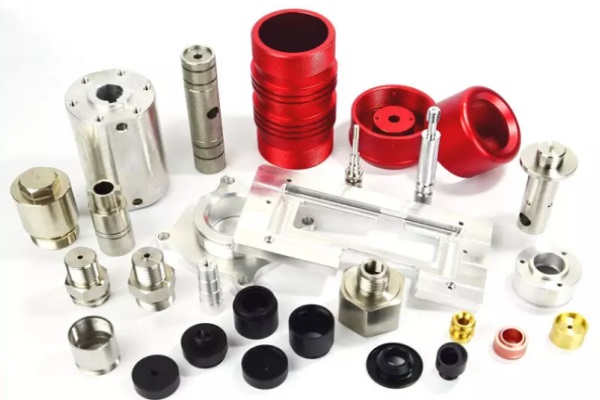
CNC machining is an affordable method to create prototypes. During the CNC machining process, CNC machines remove the material from a block of metal by using computer instructions to guide a metal cutting tool. Digital CAD design can be changed between prototypes efficiently. It is easy to create duplicates and distribute the designs. So, CNC machining is a useful prototyping tool. A wide range of metal materials can be used in the CNC machining process. Certain grade of aluminum offers a good combination of value and machinability. As CNC machining does not need tooling and does not require minimum order quantity, CNC machined prototypes are affordable. Because of the subtractive nature of the CNC machining process, there are some material wastages. Here at TEAM Rapid, our 4-axis and 5-axis CNC machines allow us to create complex prototypes with details features.
3D printing prototypes
3D printing is also an affordable way to build metal prototyping. Compared to FDM 3D printers which can only create plastic prototypes, metal additive manufacturing machines are more expensive. Here at TEAM RAPID, we use AM technologies such as SLM and DMLS to create 3D-printed metal prototypes. Similar to CNC machining, 3D printing uses digital design to create prototypes. It allows fast design changes. Metal 3D printing offers geometrical flexibility. Metal 3D printed prototypes can have a complex feature which includes complex internal sections because they are created layer by layer instead of cutting away from block material. 3D printing surface finish of metal prototypes is no less impressive than other forms of metal prototypes. 3D printing prototypes need surface finishing treatment to solve this problem. There are several metal materials available in AM powder form but there is less metal material selection than in other processes.
Sheet metal prototypes
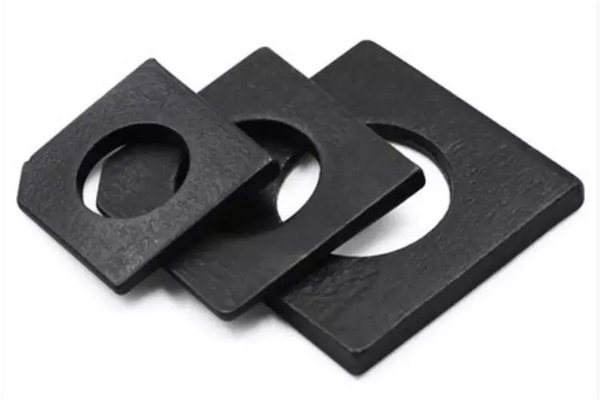
Sheet metal fabrication is a group of processes that include cutting, deformations, and assembly of sheets of metal. Sheet metal fabrication is used to create functional products such as enclosures, industrial parts, and brackets. It is worthwhile to build functional metal prototypes by the same sheet metal technology which will be used in mass production. The sheet metal forming process involves laser cutting, bending, punching, spinning, and welding. Sheet metal prototypes are strong, durable, and have high quality. It is expensive to create sheet metal prototyping if multiple sheet metal forming processes are needed. For example, a right-angle bracket with holes prototypes needs machines including a laser cutter, brake, and punching machine. A similar prototype can be made by only CNC machines and 3D printers. If you need several copies of prototypes, sheet metal fabrication is useful.
Metal casting prototypes
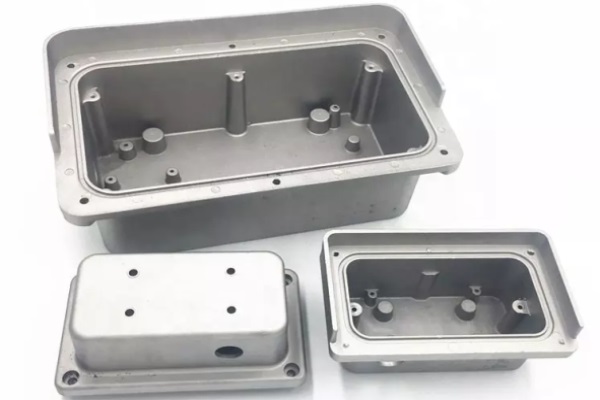
During the metal casting process, the liquid metal is poured into a mold to create the designed shape of a part. As metal casting needs specialist equipment and it is an expensive process to build the mold, metal casting is not considered a prototyping process. So, metal casting is not an economic way to create only one or two prototypes. Here at TEAM Rapid, we offer a special way to make metal prototypes by casting. With investment casting, we use a 3D printer to build a wax mold which can be used to build a mold for casting metal prototypes then. With pressure die casting, we reduce tooling costs in many ways. One method is to create a simple mold and add features after casting by a CNC machine. This way is only suitable for a low volume order. Casting metal are expensive. The tooling can bridge production which will save money in the long run.
Metal extrusion prototypes
Metal extrusion is not considered a prototyping process. During the extrusion process, metal material is formed by a shaped opening in a die, producing an elongated product with a uniform cross-section. Metal extrusion is suitable for high-volume orders. It is worth creating a one-off prototype by metal extrusion. Here at TEAM Rapid, it is worthwhile to create prototypes by metal extrusion sometimes. Extrusion is carried almost on aluminum alloy. It is suitable for creating simple parts, for example, metal bars, brackets, join, and more. Extrusion is suitable for testing and pre-production prototypes. It is not suitable for parts that are manufactured by other techniques.
Comparison and Selection of These Metal Prototypes Making Methods
There are several factors needed to be taken into considerations when select the right method to create metal prototypes. These methods include part geometry, functional requirements, quantity, budget, and lead time. Each manufacturing process has its own strengths, and choosing the correct one helps balance cost, performance, and development speed.
| Method | Description | Best Suited For | Common Materials | Dimensional Tolerance | Pros | Considerations |
|---|---|---|---|---|---|---|
| CNC Machining | Material is cut from solid metal blocks using computer-controlled tools | High-precision parts, functional testing, low-medium quantities | Aluminum, Steel, Stainless Steel, Brass, Copper, Titanium | ±0.01–0.05 mm (depending on size & complexity) | Tight tolerances, high accuracy, wide material choice | Limited to machinable geometries; slower for complex internal features |
| Metal 3D Printing (SLM / DMLS) | Builds parts layer by layer using metal powder and a laser | Complex geometries, lightweight structures, rapid iteration | Stainless Steel, Aluminum, Titanium, Inconel, Cobalt-Chrome | ±0.1–0.3 mm | Supports intricate internal channels and lattice structures; fast design changes | Surface finish may require post-processing; higher material cost |
| Sheet Metal Fabrication | Cutting, bending, and forming metal sheets | Enclosures, brackets, frames, structural parts | Aluminum, Steel, Stainless Steel, Copper | ±0.1–0.5 mm | Cost-effective, fast for simple geometries | Limited to flat or bent shapes; less suited for 3D complexity |
| Investment Casting (Prototype Casting) | Metal poured into molds to create near-net-shape parts | Complex shapes, medium prototype volumes, production-like properties | Stainless Steel, Aluminum, Brass, Bronze, Nickel Alloys | ±0.1–0.3 mm | Good surface finish, material properties close to production | Tooling required; longer lead time for small runs |
| Metal Extrusion | Metal is heated and forced through a shaped die to create continuous profiles | Simple bars, rods, tubes, or structural components | Aluminum, Copper, Stainless Steel, Titanium | ±0.05–0.2 mm | Fast for long, uniform sections; cost-effective for repetitive shapes | Limited to simple cross-sectional shapes; post-processing may be needed |
Contact Us
Here at TEAM RAPID, we have a supply chain for the manufacturing process, we are able to combine multiple and choose the cheapest metal to create prototypes. Contact us today for your metal prototyping projects, we will offer the best solution for your projects.
Send us your 3D files or drawings today for a fast quote and professional guidance.
Email: [email protected]
Response Time: Within 24 hours
Support: Free engineering review included with every quote.
We provide global service, short lead times, and consistent high-quality manufacturing.
FAQs – How to Create Metal Prototypes
How do I choose the right prototyping method?
The choice depends on:
- Design complexity – simple vs. intricate geometries
- Tolerance & surface finish – high-precision or general fit
- Material & mechanical properties – aluminum, stainless steel, titanium, etc.
- Quantity & lead time – from single prototypes to low-volume runs
TEAM RAPID can recommend the most suitable method for your project.
Which materials can I use for metal prototypes?
Aluminum, stainless steel, titanium, brass, copper, Inconel, and nickel alloys are the commonly used materials in TEAM RAPID. Material selection depends on the chosen method and functional requirements.
Can you produce functional prototypes for testing?
Yes. We can produce prototypes with mechanical properties, tolerances, and surface finishes close to production parts, suitable for fit, form, and functional testing.
Do you support low-volume production or one-off parts?
Absolutely. TEAM RAPID offers small-batch production services, which enable testing, pilot runs, or customized parts before mass manufacturing.