
How Much Does Injection Molding Cost for 1,000 vs. 10,000 Parts? A Complete Cost Breakdown
If you are bringing a new plastic product to market, one of the first questions you will ask is: "How much will this cost?" Injection molding is the gold standard for mass-producing plastic parts, but its pricing structure can be notoriously opaque. Why do injection molding costs vary so much? The biggest misconception about part pricing is that there is a standard "per-part" rate. In reality, injection molding requires a significant upfront investment in tooling (the mold), meaning the cost per part changes drastically depending on your production volume.
Whether you are ordering a pilot run of 1,000 parts or scaling up to 10,000 parts, understanding the math behind the quote is crucial for your bottom line. In this comprehensive guide, we will break down exactly what determines the cost of 1,000 vs. 10,000 parts, reveal hidden fees, and show you how rapid tooling can slash your initial costs by up to 70%.
How Injection Molding Costs Are Calculated
To understand your quote, you need to understand the five core components of injection molding pricing:
- Tooling Cost: The design and machining of the mold. This is a fixed, upfront cost.
- Material Cost: The price of the plastic resin, calculated by the weight of the part plus the runner system.
- Machine and Labor Cost: The hourly rate of the injection molding machine and the operator, divided by the cycle time.
- Secondary Operations: Post-processing like painting, pad printing, ultrasonic welding, or assembly.
- Shipping and Logistics: Freight costs, customs duties, and packaging.
Why Production Volume Has the Biggest Impact on Cost
The golden rule of injection molding is economies of scale.
Fixed Costs vs. Variable Costs
Tooling is a fixed cost. Whether you make 1 part or 100,000 parts, the mold costs the same to build. Material, machine time, and labor are variable costs incurred per part.
Tooling Amortization Explained
Amortization is the process of spreading the fixed tooling cost across your production volume.
- Cost Per Part Formula: (Fixed Tooling Cost / Total Volume) + Variable Cost Per Part = Total Unit Cost
If a mold costs 5,000 and you make 1,000 parts, the tooling adds 5.00 USD to every single part. If you make 10,000 parts, the tooling only adds $0.50 per part. This is why volume dictates your final unit price.
How Much Does Injection Molding Cost for 1,000 Parts
Producing 1,000 parts is considered low-volume production. At this stage, your primary goal is to minimize upfront risk and tooling investment.
- Typical Mold Cost Range: 1,500- 5,000
- Typical Part Cost Range: 0.50- 5.00+ (highly dependent on size/complexity)
Best Tooling Options for 1,000 Parts
For low volumes, hard steel molds are overkill. The best option is aluminum rapid tooling or soft steel (like P20). These molds are faster and cheaper to machine, perfectly suited for runs up to 5,000 parts.
Common Cost Mistakes to Avoid
- Over-specifying tolerances: Tighter tolerances require expensive, slow-machining processes.
- Choosing a multi-cavity mold: A 4-cavity mold costs much more than a 1-cavity mold. For 1,000 parts, a single-cavity mold is almost always more economical.
How Rapid Tooling Can Cut Injection Molding Costs by 30%-70%
At TEAM Rapid, we specialize in bridging the gap between prototyping and mass production.
What Is Rapid Tooling
Rapid tooling utilizes advanced CNC machining, EDM, and standardized mold bases to create injection molds in a fraction of the time and cost of traditional tooling.
Rapid Tooling vs. Traditional Tooling
Traditional steel molds take 8-12 weeks and cost tens of thousands of dollars. Rapid tooling (often using high-grade aluminum) takes 2-4 weeks and costs a fraction of the price, while still yielding production-quality parts.
Real Cost Example: 1,000 Parts
- Traditional Steel Mold: 8,000 tooling+ 2.00/part = $10,000 Total
- TEAM Rapid Rapid Tooling: 2,500 tooling+ 2.20/part = $4,700 Total (53% Savings)
Real Cost Example: 10,000 Parts
- Traditional Steel Mold: 12,000 tooling+ 1.20/part = $24,000 Total
- TEAM Rapid (Soft Steel): 5,500 tooling+ 1.30/part = $18,500 Total (23% Savings)
Looking for low-volume injection molding? Our rapid tooling solutions can deliver production-quality plastic injection molded parts in as little as 7-15 days. Get a Free Quote at TEAM Rapid
How Much Does Injection Molding Cost for 10,000 Parts
At 10,000 parts, you are entering medium-volume production. The upfront tooling investment increases, but the per-part cost drops significantly.
- Typical Mold Cost Range: 5,000- 15,000+
- Typical Part Cost Range: 0.10- 2.00
Multi-Cavity Mold Benefits
At 10,000 parts, it may make financial sense to invest in a 2-cavity or 4-cavity mold. While the tooling costs more upfront, it cuts the cycle time in half (or more), drastically reducing the machine and labor cost per part.
Injection Molding Cost Comparison: 1,000 vs. 10,000 Parts
|
Metric |
1,000 Parts (Low Volume) |
10,000 Parts (Medium Volume) |
|
Tooling Investment |
Low (1.5k- 5k) |
Medium/High (5k- 15k) |
|
Unit Price |
High (Tooling amortization is heavy) |
Low (Economies of scale kick in) |
|
Total Project Cost |
Lower overall cash outlay |
Higher overall cash outlay |
|
ROI Focus |
Speed to market, testing |
Margin optimization, scaling |
The 10 Biggest Factors Affecting Injection Molding Costs
-
Part Size and Weight: Larger parts require more material and larger, more expensive molds and machines.
-
Material Selection: Commodity plastics (PP, ABS) are cheap; engineering grades (PEEK, Polycarbonate) are expensive.
-
Wall Thickness: Thick walls increase cooling time, slowing down the cycle and raising the cost.
-
Surface Finish Requirements: SPI A-1 (mirror finish) requires hours of manual polishing. SPI C-2 (standard machined) is much cheaper.
-
Tolerance Requirements: Standard commercial tolerances are free; tight geometric tolerances require expensive machining and QA.
-
Part Complexity: Complex geometries require complex mold designs.
-
Undercuts and Side Actions: Undercuts require sliding cores or lifters, adding significant cost to the mold.
-
Number of Cavities: More cavities = higher tooling cost, but lower per-part cost.
-
Production Volume: As discussed, higher volumes dilute the fixed tooling cost.
-
Manufacturing Location: Labor and overhead rates vary wildly by region.
Hidden Injection Molding Costs Most Buyers Overlook
When reviewing a quote, watch out for these hidden fees:
- Mold Modifications: "Design changes" after the mold is cut will cost you dearly.
- Mold Maintenance: High-volume molds require periodic cleaning and pin replacements.
- Assembly Costs: If your project requires snapping, gluing, or screwing parts together.
- Packaging Costs: Custom boxes, blister packs, or simple poly-bags add up.
- Quality Inspection: First Article Inspection (FAI) and CMM reports cost extra.
- Color Matching: Custom Pantone matching requires purging the machine and wasting material.
- Shipping and Import Duties: Don't forget to factor in DDP (Delivered Duty Paid) vs. FOB shipping terms.
How to Reduce Injection Molding Costs Without Sacrificing Quality
You don't need to compromise quality to save money. Use these Design for Manufacturing (DFM) principles:
- Simplify Part Geometry: Remove unnecessary aesthetic features that don't add function.
- Optimize Wall Thickness: Keep walls uniform (ideally 1.5mm to 2.5mm) to prevent sink marks and reduce cycle time.
- Eliminate Undercuts: Redesign the part to allow for a simple, straight-pull mold.
- Choose Cost-Effective Materials: Don't use ABS if Polypropylene (PP) will do the job.
- Use Standard Surface Finishes: Stick to "as-machined" or light bead blast finishes unless a high gloss is strictly necessary.
- Select the Right Tooling Strategy: Use rapid tooling for your first 5,000 parts before investing in hard steel.
China vs. USA vs. Europe: Injection Molding Cost Comparison
- China: Offers the lowest tooling and production costs (often 30-50% cheaper than the West). Lead times are competitive, but shipping adds time. TEAM Rapid leverages China's manufacturing ecosystem while maintaining Western quality standards and communication.
- USA: Highest labor and tooling costs. Best for highly sensitive IP, massive parts, or when "Made in USA" is a marketing requirement.
- Europe: Similar to the USA, with high quality and high costs. Excellent for automotive and medical grades, but expensive for consumer goods.
- Total Cost of Ownership: When factoring in quality yields and communication efficiency, a premium Chinese partner like TEAM Rapid often provides the best overall ROI.
When Injection Molding Is Not the Best Manufacturing Method
Injection molding isn't always the right choice.
Injection Molding vs. CNC Machining
Choose CNC machining for ultra-low volumes (1-50 parts) or when you need the structural strength of solid billet plastic.
Injection Molding vs. 3D Printing
Choose 3D printing for rapid prototyping (1-10 parts) or highly complex internal geometries (like lattices).
Injection Molding vs. Vacuum Casting
Choose vacuum casting for 10-100 high-quality prototype parts that mimic production plastics without the tooling cost.
Real Case Study: Reducing Production Costs with Rapid Tooling
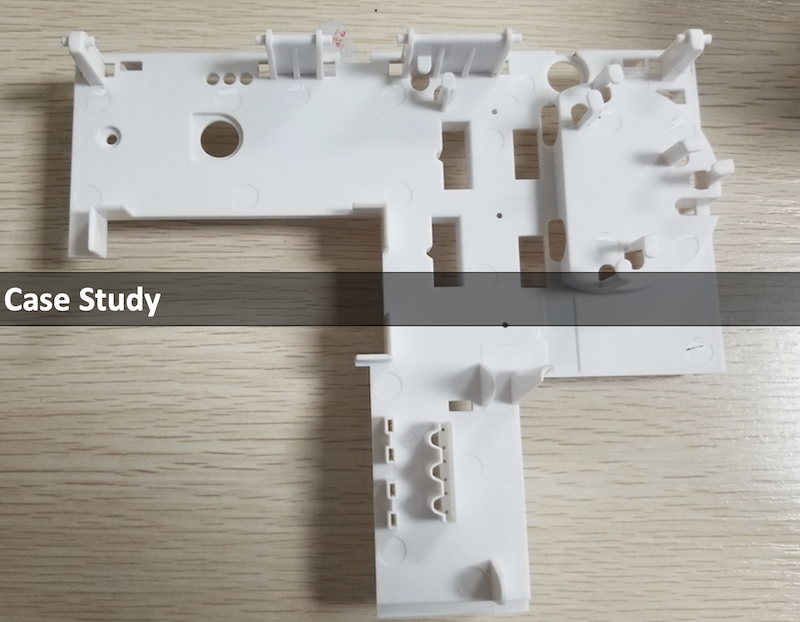
Project Background: A electronic device startup needed 2,500 ABS plastic housings for a clinical trial.
Initial Challenge: Traditional tooling quotes were coming in at 7,000 USD with 5 weeks lead time, which was blowing past their budget and timeline
Tooling Strategy Change: They finally partnered with TEAM Rapid. We recommended a two?cavities soft steel mold with a standardized mold base.
Cost Savings Achieved: The tooling cost was reduced to 3,200 USD, and the parts were delivered in 18 days. The total project cost was reduced by 55%, allowing the startup to launch their clinical trial on time and under budget.
How to Get an Accurate Injection Molding Quote
To get a fast, accurate quote from a manufacturer, provide the following:
- Required Design Files: 3D CAD files (STEP or IGES format).
- Material Information: Specific resin (e.g., ABS, PC, Nylon 6) or required physical properties.
- Annual Volume Estimates: How many parts you need now, and projected yearly volumes.
- Surface Finish & Color: SPI finish standard and RAL/Pantone color codes.
- Tolerance Specifications: Critical dimensions and general tolerance standards.
- Production Timeline: When you need the first articles and the final batch.
Frequently Asked Questions (FAQ)
How much does injection molding cost for 1,000 parts?
Typically, tooling ranges from 1,500 USD to 5,000 USD, and part costs range from 0.50 USD to 5.00 USD each, depending on size and complexity.
How much does injection molding cost for 10,000 parts?
Tooling usually costs between 15,00 USD and 5,000 USD. The per-part cost drops significantly, often ranging from 0.10 USD to 4.00 USD.
What is the average cost of an injection mold?
A simple, single-cavity soft steel mold can cost , 50,000.
Is injection molding cost-effective for low-volume production?
Yes, if you use rapid tooling (aluminum or soft steel molds) to keep upfront tooling costs low.
How much can rapid tooling reduce mold costs?
Rapid tooling can reduce initial tooling costs by 30% to 70% compared to traditional hardened steel production molds.
What is the difference between rapid tooling and production tooling?
Rapid tooling uses softer metals (like aluminum/soft steel) and standardized bases for speed and low cost. Production tooling uses hardened steel (H13, S136) for millions of cycles.
How long does it take to build an injection mold?
Rapid tooling takes 1 to 4 weeks.
Traditional production tooling takes 4 to 7 weeks.
What factors have the greatest impact on injection molding costs?
Production volume, part complexity (undercuts), material selection, and mold cavity numbers.
How can I reduce injection molding costs without changing part quality?
Optimize wall thickness, eliminate undercuts, use standard surface finishes, and apply Design for Manufacturing (DFM) principles.
Is it cheaper to manufacture plastic parts in China?
Yes, tooling and labor costs in China are generally 30% to 50% lower than in the US or Europe.
What materials are the most economical for injection molding?
Commodity plastics like Polypropylene (PP), Polyethylene (PE), and ABS are the most cost-effective.
What files are required to receive an injection molding quote?
A 3D CAD file in STEP or IGES format, along with a 2D drawing for critical tolerances.
Can I use the same mold for prototype and production parts? Yes, if you use a high-grade rapid tooling steel (like P20 or 718H), the mold can serve for both prototyping and medium-volume production.
Conclusion
Key Takeaways
- Volume has the biggest impact on part cost. The more you make, the cheaper each unit becomes due to tooling amortization.
- Rapid tooling is often the most economical option for 1,000-10,000 parts. It drastically reduces upfront risk and accelerates time-to-market.
- Design optimization can significantly reduce tooling and production costs. Small DFM tweaks can save thousands of dollars.
- Choosing the right manufacturing partner helps lower total project costs. A partner that offers DFM feedback and transparent pricing is invaluable.
Ready to Start Your Project
Don't let high tooling costs and long lead times stall your product launch.
Ready to find out how much your injection molding project will cost? Upload your CAD files today and receive a free DFM analysis, tooling recommendation, and competitive quote from TEAM Rapid within 24 hours.
Click Here to Get Your Free Injection Molding Quote at www.teamrapidtooling.com



 Contact