
The Best Injection Molding Material Selection to Cut Down Cost
In plastic injection molding process, injection material selection plays an important role in the field.The most expensive plastic is not always the best choice, and the cheapest material may not meet your product requirements.The key is to select an injection molding material that provides the required performance without paying for properties your application does not need.
In this article, we are going to talk about kinds of injection materials.Before going ahead for pilot or mass production, we need to know exactly the function and performance of our end product, this is critical for you to select the material.We will discuss the key factors to consider when selecting plastic injection molding materials, compare common material options at difference-volumes, and explain how the right material selection can help reduce overall injection molding costs.
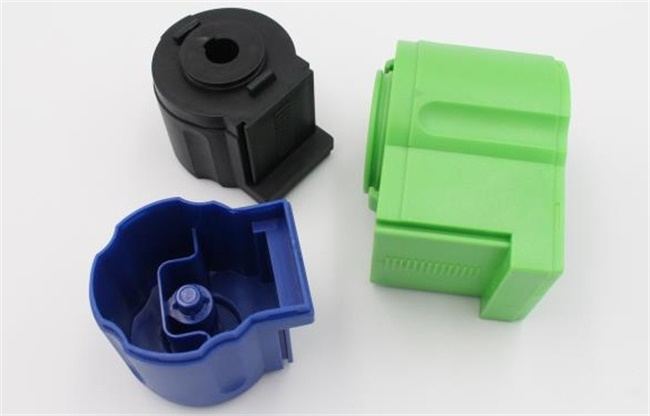
Why Is Injection Molding Material Selection Important
Before starting prototype or mass production, you need to understand the function, operating environment, production volume, and performance requirements of your final product. Material selection directly affects product quality, manufacturing efficiency, tooling requirements, and overall project costs.
Four important considerations include:
- Product performance: The material must provide sufficient mechanical strength, flexibility, heat resistance, and chemical resistance for its intended application.
- Manufacturing efficiency: Different plastics have different melting temperatures, flow characteristics, shrinkage rates, and cooling requirements. These properties affect injection molding conditions and production cycle times.
- Material and production costs: Engineering-grade plastics generally cost more than commodity plastics. Choosing a suitable material can reduce processing difficulties, defects, and long-term production expenses.
- Production volume: The most economical material for 100 parts may not be the best option for 100,000 parts. Purchasing quantities, supplier pricing, and long-term material availability should all be considered.
Understanding these factors before production helps you avoid unnecessary material costs and achieve more consistent injection molded parts.
Key Factors to Consider When Selecting Injection Molding Materials
There are many plastic materials available for injection molding. The following factors provide a practical checklist when choosing the right material for your project.
Mechanical Strength and Impact Resistance
Mechanical strength determines how well a plastic part withstands external forces during use. Depending on the application, you may need to consider tensile strength, flexural strength, impact resistance, and fatigue performance. For example, ABS and PC offer good impact resistance for protective housings and consumer products. PA (Nylon) provides good mechanical strength for gears, brackets, and automotive components.
Choosing a material with more strength than necessary can increase material costs without providing meaningful benefits.
Chemical and Corrosion Resistance
Plastic components may come into contact with oils, fuels, cleaning agents, acids, alkalis, or other chemicals. Selecting a material with suitable chemical resistance helps prevent cracking, swelling, discoloration, and material degradation. For example, PP and PE offer good resistance to many common chemicals, making them suitable for containers, industrial components, and chemical-handling applications.
Always check the chemical compatibility of the specific material grade with the substances it will contact.
Hardness and Flexibility
Hardness and flexibility affect how a plastic component behaves under pressure, impact, and repeated movement. Rigid plastics such as ABS, PC, and POM are suitable for structural housings and mechanical components. Flexible materials such as TPE and TPU are commonly used for seals, grips, protective covers, and soft-touch components.
Durometer is commonly used to measure the hardness of elastomeric materials. Selecting the right hardness helps ensure the component performs as intended without unnecessary material costs.
Heat Resistance and Operating Temperature
If your plastic parts operate in high-temperature environments, heat resistance is an important selection criterion. Consider the continuous operating temperature, heat deflection temperature (HDT), and thermal stability of the material.
For example:
- ABS is commonly used for general-purpose housings and consumer products.
- PA (Nylon) is suitable for many automotive and mechanical applications.
- PC offers good heat resistance and impact strength.
- PEEK is used in demanding applications requiring excellent thermal and chemical performance.
Do not select a high-temperature engineering plastic unless your application genuinely requires it. Standard materials may provide sufficient performance at a much lower cost.
Melt Flow and Processing Characteristics
Melt flow describes how easily molten plastic flows into the injection mold cavity. It affects mold filling, injection pressure, part geometry, and processing conditions.
Materials with good flow characteristics can help fill thin walls and complex geometries. However, higher melt flow does not automatically mean better part quality. For example, a thin-walled component with complex features may require a higher-flow material grade to fill the cavity properly. Material selection should consider wall thickness, flow length, gate location, and mold design.
Shrinkage and Dimensional Stability
Different plastic materials have different shrinkage rates during cooling. Shrinkage affects final part dimensions, assembly accuracy, and dimensional consistency.
Semi-crystalline materials such as PP, PE, PA, and POM generally have higher and more variable shrinkage than amorphous materials such as ABS, PC, and PMMA.
If your parts require tight tolerances, dimensional stability should be considered during material selection and mold design. Mold shrinkage compensation and processing conditions also need to be evaluated.
Color, Appearance, and Surface Finish
The required appearance of your plastic parts can influence material selection.
Some materials offer excellent transparency, while others are more suitable for colored or textured surfaces.
For example:
- PMMA provides excellent optical clarity for transparent components.
- PC offers good transparency and impact resistance.
- ABS is suitable for a wide range of colors and surface finishes.
- PP is commonly used for colored consumer and industrial products.
Consider whether your parts require transparent, opaque, glossy, matte, textured, or painted surfaces. Also, check the compatibility of colorants and additives with the selected resin.
Material Compatibility for Insert Molding and Overmolding
If your project involves insert molding or overmolding, material compatibility becomes particularly important.
Insert molding combines plastic with metal or other pre-formed inserts, while overmolding involves molding one material over another. The materials must provide suitable bonding, mechanical retention, and thermal compatibility. For example, TPE can be overmolded onto certain ABS, PC, or PA grades, depending on the specific material formulation and processing conditions.
Selecting compatible materials can improve product performance and reduce the risk of delamination, poor bonding, and production defects.
Food-Grade, Medical-Grade, and Other Requirements
Some applications require materials that meet specific regulatory, safety, or industry standards. For example, food-contact applications may require materials compliant with relevant FDA or EU food-contact regulations. Medical applications may require biocompatibility evaluation and compliance with applicable medical-device requirements.
Always confirm the exact resin grade, regulatory documentation, and intended application requirements with the material supplier before production.
Common Plastic Injection Molding Materials and Their Costs
Understanding the characteristics and relative costs of common injection molding materials helps you narrow down suitable options.
|
Material |
Key Properties |
Typical Applications |
Relative Material Cost |
|
PP |
Lightweight, chemical resistance, good flexibility |
Containers, automotive parts |
Low |
|
PE |
Toughness, chemical resistance, low moisture absorption |
Packaging, industrial components |
Low |
|
ABS |
Good impact resistance, easy processing |
Housings, consumer products |
Low–Medium |
|
POM |
Low friction, wear resistance, dimensional stability |
Gears, mechanical components |
Medium |
|
PA (Nylon) |
High strength, wear resistance |
Automotive, mechanical parts |
Medium |
|
PC |
High impact strength, transparency, heat resistance |
Electrical housings, protective covers |
Medium–High |
|
PMMA |
Excellent optical clarity, surface appearance |
Transparent covers, lenses |
Medium–High |
|
PEEK |
Excellent heat resistance, chemical resistance, mechanical performance |
Aerospace, medical, industrial parts |
Very High |
Note: These are indicative cost categories, not fixed material prices. Actual costs vary depending on resin grade, supplier, order quantity, additives, and market conditions.
For many general-purpose injection molding applications, PP, PE, and ABS are cost-effective starting points. Engineering plastics such as PC, PA, and POM are suitable when higher mechanical or thermal performance is required. High-performance plastics such as PEEK should generally be reserved for applications with demanding operating requirements.
How Does Production Volume Affect Injection Molding Material Selection
Production volume is another important factor when selecting injection molding materials. The most cost-effective material for a small-volume project may not be the best choice for high-volume production. Material pricing, purchasing quantities, availability, and production efficiency can vary significantly depending on the order volume.
Material Selection for Prototype and Low-Volume Production
For prototype and low-volume injection molding projects, material availability and minimum purchasing quantities can have a significant impact on costs.
When producing a small number of parts, purchasing a specialized or expensive engineering plastic may increase the overall project cost. Some suppliers also require minimum order quantities, making certain materials less economical for small production runs.
In these situations, consider:
- Choosing readily available standard plastic grades.
- Using alternative materials with similar mechanical and thermal properties.
- Avoiding specialized materials unless the application requires them.
- Considering the total material purchasing cost rather than only the price per kilogram.
For example, if a project requires only 100–500 plastic parts, using a readily available ABS or PP grade may be more economical than purchasing a specialized engineering resin with a high minimum order quantity. However, the alternative material must still meet the product's functional and performance requirements.
Material Selection for High-Volume Production
For high-volume injection molding, material selection should consider both unit material cost and long-term production efficiency.
When ordering tens of thousands or millions of parts, even a small difference in material price per kilogram can create significant savings. Larger purchasing quantities may also provide better pricing opportunities from resin suppliers.
For high-volume projects, consider:
- Negotiating material prices based on annual consumption.
- Evaluating alternative grades with similar performance.
- Considering material availability and long-term supply stability.
- Evaluating processing efficiency, cooling time, and production cycle time.
- Maintaining consistent material specifications to ensure stable part quality.
For example, replacing an expensive engineering plastic with a suitable standard-grade material may significantly reduce material costs when producing hundreds of thousands of parts. However, the alternative must be validated to ensure that product performance and quality remain consistent.
Compare Material Selection Across Different Production Volumes
The following table summarizes the key material selection considerations for different production volumes.
|
Production Volume |
Material Selection Priority |
Cost Considerations |
|
Prototype (1–100 pcs) |
Material availability and functional testing |
Small purchasing quantities and minimum order requirements |
|
Low Volume (100–5,000 pcs) |
Standard grades and suitable alternatives |
Material purchasing cost and availability |
|
Bridge Production (5,000–50,000 pcs) |
Balance material price and production performance |
Bulk purchasing opportunities and production stability |
|
Mass Production (50,000+ pcs) |
Consistent quality and long-term supply |
Unit material cost, annual consumption, and supply agreements |
Note: These volume ranges are general examples, not fixed industry definitions. Actual production categories depend on part size, material, project requirements, and manufacturing strategy.
The key is to evaluate material costs based on the expected production quantity and the entire project lifecycle. A material that is economical for 500 parts may not be the most cost-effective option for 500,000 parts.
How to Reduce Injection Molding Costs Through Material Selection
Choosing the right plastic material is one way to control injection molding costs. However, material price is only part of the total manufacturing expense. Consider the following approaches.
Avoid Over-Specifying Material Properties
Do not select a high-performance engineering plastic simply because it offers better mechanical or thermal properties. For example, if an ABS component can meet your product's strength and operating temperature requirements, using PEEK may significantly increase material costs without providing practical benefits.
Select materials based on actual product requirements rather than maximum available performance.
Choose Standard Materials When Possible
Standard commercial plastic grades are often more readily available and cost-effective than specialized or customized formulations. If your application does not require special properties, consider commonly available grades of PP, PE, ABS, PC, or PA. Using readily available materials can also simplify purchasing and reduce potential supply delays.
Consider Material Availability and Supply
Material selection should also consider supplier availability, lead time, and minimum purchasing quantities.
A specialized resin may have a higher purchase cost and longer delivery time. Choosing an alternative material with similar performance may help simplify procurement and improve production planning.
Discuss material alternatives with your injection molding manufacturer before finalizing the design.
Evaluate Processing Temperatures and Cycle Times
Different plastics require different processing temperatures, mold temperatures, and cooling conditions.
Some materials may require higher barrel temperatures, longer drying times, or more demanding processing controls. These factors can affect production efficiency and operating costs. Cooling time is also important. It depends on material properties, part wall thickness, mold temperature, cooling channel design, and other processing conditions. Evaluating material processing requirements early can help avoid unnecessary production expenses.
Balance Material Cost with Product Performance
The cheapest material is not necessarily the most economical option.
A lower-cost material may cause poor dimensional stability, insufficient strength, or higher rejection rates. These problems can increase the total cost of production. Instead, evaluate the complete manufacturing cost, including raw materials, processing, cycle time, quality control, and potential rework.
Consider Production Volume Before Finalizing Material Selection
Production volume can significantly affect the total cost of injection molding materials.
For small-volume projects, material availability and minimum purchasing quantities may be more important than the price per kilogram. For high-volume production, negotiating bulk material prices and optimizing annual consumption can create substantial savings. For example, a specialized engineering plastic may be practical for a small number of high-performance components, but a more economical standard-grade alternative may provide significant cost savings for large production runs if it meets the required specifications.
Always evaluate material costs based on the expected order quantity, future production demand, and long-term supply requirements.
How TEAM Rapid Helps You Select the Right Injection Molding Material
Selecting a suitable plastic material requires an understanding of both product requirements and injection molding processes.
At TEAM Rapid, we provide custom plastic injection molding and rapid tooling services for prototype development, bridge production, and mass manufacturing. Our team can help customers evaluate material options based on mechanical properties, processing requirements, production volumes, product applications, and manufacturing costs.
We work with a range of injection molding materials, including ABS, PP, PE, PC, PA, POM, PMMA, and other engineering plastics. Whether you need a single prototype part, a small production batch, or a larger manufacturing run, we can help you evaluate suitable material options and manufacturing solutions.
The goal is simple:choose the right material, achieve the required part quality, and avoid unnecessary manufacturing costs. Are you looking for an injection molding quote? TEAM Rapid offers injection molding services and can help you to select the best rapid manufacturing material, contact our team at sales@teamrapidtooling.com today and get a best solution.
Frequently Asked Questions About Injection Molding Material Selection
Q: What Is the Cheapest Plastic Material for Injection Molding?
A: PP and PE are generally among the lower-cost plastic materials used in injection molding. However, the actual price depends on the resin grade, supplier, order quantity, and market conditions. The best choice should also meet the required product performance.
Q: Which Plastic Is Best for Injection Molding?
A: There is no single best plastic for every injection molding application. ABS is popular for general-purpose housings, PP is suitable for lightweight and chemical-resistant components, PA offers good mechanical strength, and PC provides high impact resistance. The right material depends on the part's function and operating environment.
Q: How Does Material Selection Affect Injection Molding Costs?
A: Material selection affects raw material costs, processing temperatures, cooling time, shrinkage, mold design, and production quality. Choosing a suitable material can reduce manufacturing difficulties, defects, and unnecessary expenses.
Q: Does Production Volume Affect Injection Molding Material Costs?
A: Yes. Production volume can significantly affect material purchasing costs. Small-volume projects may face higher per-kilogram prices or minimum order requirements, while high-volume production may benefit from bulk purchasing discounts and supplier agreements. Material selection should consider both the required performance and the expected production quantity.
Q: Can Changing Plastic Materials Reduce Injection Molding Costs?
A: Yes. Replacing an expensive engineering plastic with a more economical alternative can reduce material costs if the alternative meets the required performance and regulatory specifications. However, material changes should be evaluated for processing compatibility, shrinkage, dimensional stability, and product performance before production.
Q: Which Plastic Materials Are Suitable for High-Temperature Applications?
A: PC, PA, PPS, PEI, and PEEK are examples of plastics used in different high-temperature applications. Their temperature capabilities vary significantly by grade and operating conditions. Select a material based on its continuous service temperature, heat deflection temperature, mechanical properties, and application requirements.



 Contact