
Hidden Costs in Injection Molding: The Complete Guide for Engineers and Buyers
When sourcing plastic parts, it is incredibly tempting to award a project to the supplier offering the lowest initial quote. However, experienced procurement professionals and mechanical engineers know a hard truth: the lowest quote rarely equals the lowest total cost. Actually, the "part price" printed on a quotation is just the tip of the iceberg in plastic injection molding. The true financial impact of a project encompasses the total project cost, which includes tooling modifications, material waste, quality control, logistics, and even the opportunity cost of delayed time-to-market. If these hidden costs are ignored, a seemingly cheap project can quickly bleed your budget dry.
This comprehensive guide is designed for mechanical engineers, product designers, and procurement buyers who want to understand the true economics of injection molding. By identifying these hidden costs early, you can optimize your Design for Manufacturing (DFM), negotiate better contracts, and ultimately protect your bottom line.
Hidden Costs in Injection Molding
Tooling Modifications: The Cost Nobody Plans For
The injection mold / rapid tooling is the most significant upfront investment in your project. While initial tooling costs are usually quoted clearly, the cost of modifying that tool is often where budgets derail.
Common Reasons Molds Require Rework
- Late Design Changes: Altering a part design after the mold steel has been cut requires expensive EDM (Electrical Discharge Machining) or welding, which weakens the mold and adds weeks to the timeline.
- Incorrect Draft Angles: Insufficient draft angles cause parts to stick to the mold, requiring costly polishing or redesigning of the core and cavity.
- Undercut Issues: Unresolved undercuts necessitate complex, moving mold components like sliders and lifters, drastically increasing tooling costs and maintenance requirements.
- Material Shrinkage Miscalculations: Different resins shrink at different rates. If the mold is cut for ABS but you switch to Polycarbonate later, the part dimensions will be wrong, requiring the mold to be re-machined.
How to Avoid Expensive Tooling Revisions
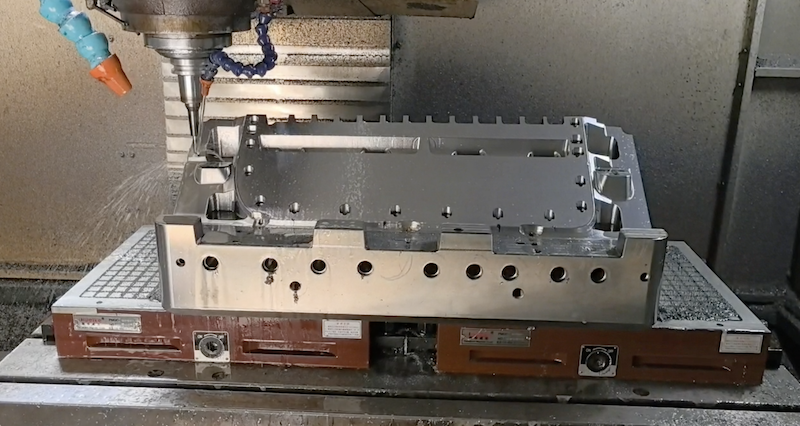
The golden rule of injection molding is: measure twice, cut once. Invest heavily in the DFM (Design for Manufacturing) phase. Utilize mold flow analysis software to predict shrinkage, warpage, and fill issues before a single piece of steel is machined.
Design Decisions That Quietly Increase Production Costs
A part might look perfect in CAD, but over-engineering it can quietly inflate your per-part cost during mass production.
The Culprits of High Production Costs
- Overly Tight Tolerances: Holding a tolerance of ±0.01mm when ±0.1mm is functionally acceptable requires slower cycle times, premium mold steel, and rigorous manual inspection, driving up the piece price.
- Unnecessary Cosmetic Requirements: Demanding a Class-A SPI finish on an internal, non-visible component adds hours of manual mold polishing and increases the rejection rate for minor aesthetic flaws.
- Complex Geometries Requiring Side Actions: Every slider or lifter added to a mold increases the cycle time (as the mold must open wider and wait for actions to clear) and raises the risk of mechanical failure.
- Thin and Inconsistent Wall Thickness: This causes sink marks, warpage, and short shots, leading to high scrap rates and the need for complex cooling channels.
DFM Strategies to Reduce Cost
Simplify your geometry. Maintain uniform wall thickness, use generous fillets and radii, and specify standard SPI finishes only where absolutely necessary. Designing for the manufacturing process, rather than just the end-use, is the most effective way to lower piece-part pricing.
The Hidden Price of Material Selection
Choosing the "best" or most famous material brand isn't always the most economical choice. Material costs typically account for 30% to 50% of the per-part price, making resin selection a critical financial decision.
Engineering Resins vs. Commodity Plastics
Engineering resins (like PEEK, PPS, or Ultem) offer incredible thermal and mechanical properties but can cost 10 to 50 times more than commodity plastics (like PP, PE, or ABS). Over-specifying material properties is a common budget killer.
Supply Chain Volatility and Material Waste
Global supply chain disruptions can cause sudden price spikes or lead-time delays for specific resins. Furthermore, poor gate design (the point where plastic enters the mold) can create large runners and sprues. If you are using an expensive engineering resin and your mold generates 40% waste in the runner system, you are literally throwing money into the recycling bin.
Questions to Ask Before Finalizing a Resin
- What are the absolute minimum mechanical and thermal requirements?
- Is there a more cost-effective alternative or a glass-filled variant of a cheaper resin that meets the specs?
- Can the mold be designed as a hot runner system to eliminate material waste?
Mold Maintenance and Lifecycle Expenses
Mold ownership extends far beyond the initial fabrication. An injection mold is a machine with moving parts that endure extreme heat, pressure, and friction.
Preventive Maintenance and Wear Issues
Molds require regular cleaning, lubrication, and replacement of wear items like ejector pins and O-rings. In high-volume production (millions of cycles), abrasive materials like glass-filled nylon will literally wear away the mold steel, altering part dimensions over time.
Repair Costs and Expected Mold Life
When sourcing a mold, you must align the mold's SPI (Society of Plastics Industry) class with your production volume.
- Class 101 (1,000,000+ cycles): Built from hardened premium steel. High upfront cost, low maintenance cost per part.
- Class 105 (<500 cycles): Built from aluminum or mild steel. Low upfront cost, but will degrade rapidly if used for mass production.
Ordering a cheap, low-class mold for a high-volume project will result in catastrophic repair costs and unplanned downtime when the mold inevitably fails prematurely.
Setup, Sampling, and Validation Costs Often Missing from Quotes
When a supplier quotes a "piece price," they often exclude the rigorous validation processes required to prove the mold and process actually work.
Understanding the Trial Phases
- T0, T1, and T2 Trials: T0 is the first time the mold is put in the press to see if it functions. T1 yields the first actual parts for dimensional checking. T2 involves process optimization. Each trial costs machine time, material, and engineering labor.
- First Article Inspection (FAI): A comprehensive, documented verification that the first parts meet all engineering specifications.
- PPAP (Production Part Approval Process): For automotive, medical, or aerospace industries, PPAP requires extensive documentation, capability studies (Cpk), and control plans. This can add thousands of dollars and weeks of time to a project.
Always clarify with your supplier exactly how many mold trials are included in the tooling quote, and whether FAI and PPAP documentation are billed separately.
Packaging and Secondary Operations: The Overlooked Budget Killer
Injection molding rarely produces a finished, ready-to-ship product straight out of the press. Secondary operations can sometimes cost more than the molding process itself.
Common Secondary Operations
- Assembly and Ultrasonic Welding: Joining multiple molded halves requires fixtures, secondary machinery, and labor.
- Printing, Pad Printing, and Labeling: Adding logos or instructions requires secondary tooling and setup times.
- Insert Installation: Pressing metal threaded inserts into plastic bosses adds cycle time and labor.
- Custom Packaging: Blister packs, custom dunnage, or ESD (Electrostatic Discharge) safe bags add significant per-unit costs.
In-House vs. Outsourced
When evaluating quotes, check if the supplier has in-house secondary operation capabilities. Outsourcing these steps to a third-party assembler adds logistics costs, margin markups, and quality control blind spots. Look for a turnkey manufacturer who can handle post-processing under one roof.
The Cost of Poor Communication with Suppliers
In global manufacturing, communication breakdowns are incredibly expensive. A misunderstood email can result in 10,000 defective parts being shipped across the ocean.
The Hidden Costs of Misalignment
- Delays from Incomplete Specifications: If a 2D drawing lacks critical GD&T (Geometric Dimensioning and Tolerancing) callouts, the supplier will guess, leading to failed inspections and rework.
- Time Zone and Language Challenges: A 12-hour time zone difference can turn a simple 5-minute clarification into a 24-hour delay, compounding over a 6-week tooling build.
- Revision Control Mistakes: If the supplier machines the mold based on Rev A, but the engineering team is working on Rev C without a formalized Engineering Change Order (ECO) process, the tooling will have to be scrapped.
Building an efficient communication process-utilizing shared PLM (Product Lifecycle Management) software, clear ECO protocols, and dedicated bilingual project managers-is vital to protecting your timeline and budget.
Quality Issues: The Most Expensive Hidden Cost
Poor quality is the ultimate hidden cost. The financial damage of a defective part scales exponentially the further it gets down the supply chain.
The Ripple Effect of Poor Quality
- Scrap and Rework: Internal scrap wastes material and machine time. Reworking parts (e.g., manually trimming flash) destroys profit margins.
- Dimensional Inconsistency: Parts that don't fit together on the assembly line will halt your entire production facility.
- Customer Returns and Warranty Claims: If a cosmetic defect or structural weakness reaches the end consumer, the cost of returns, replacements, and brand damage can easily exceed the entire cost of the injection molding project.
Why Quality Planning Saves Money
Implementing robust quality planning-such as automated optical inspection, CMM (Coordinate Measuring Machine) checks, and statistical process control (SPC)-costs money upfront. However, it prevents the catastrophic financial losses associated with shipping bad parts.
Logistics and Inventory Costs Buyers Frequently Ignore
The price on the quote is the "Ex-Works" (EXW) or "Free on Board" (FOB) price. It does not reflect what it actually costs to get the part into your warehouse.
Calculating the Total Landed Cost
- Freight Fluctuations: Ocean freight rates can spike by 300% during peak seasons or global disruptions. Air freight is faster but can erase your profit margin.
- Import Duties and Customs Fees: Depending on the country of origin and the HTS (Harmonized Tariff Schedule) code of your plastic part, tariffs can add 5% to 25% to your unit cost.
- Safety Stock and Warehousing: To mitigate long overseas transit times, buyers often have to hold 3 to 6 months of "safety stock." This ties up working capital and incurs warehousing expenses.
Always calculate the Total Landed Cost (Unit Price + Freight + Duties + Insurance + Warehousing) when comparing domestic vs. offshore injection molding suppliers.
The Opportunity Cost of Longer Lead Times
Time is money. In competitive industries like consumer electronics or automotive, a delayed product launch can cost millions in lost revenue.
The True Business Cost of Waiting
If a supplier offers a 20% cheaper tooling quote but takes 14 weeks to deliver T1 samples instead of 8 weeks, you are losing 6 weeks of market presence.
When Paying More Upfront Saves Money
Paying a premium for rapid tooling services-utilizing high-speed CNC machining, standardized mold bases, and agile project management-can shave weeks off your timeline. Calculating the Return on Investment (ROI) of an expedited time-to-market often reveals that paying 15% more for faster tooling yields a massively positive financial return through earlier sales and market capture.
Hidden Sustainability Costs Emerging in 2026 and Beyond
Sustainability is no longer just a buzzword; it is becoming a strict regulatory and corporate compliance requirement. OEMs are beginning to pass these costs down the supply chain.
The New Environmental Reality
- Material Traceability and Carbon Reporting: Major corporations now require suppliers to provide detailed carbon footprint data and proof of ethical material sourcing. Gathering this data requires administrative overhead.
- Designing for Recyclability: Using mixed materials, incompatible colorants, or permanent adhesives makes a part unrecyclable. Future regulations (like the EU's Ecodesign for Sustainable Products Regulation) may penalize or ban non-recyclable plastics.
- PCR (Post-Consumer Recycled) Materials: Transitioning to PCR materials often requires mold modifications and process re-validation, as recycled plastics flow and shrink differently than virgin resins.
Forward-thinking engineers must design for end-of-life recyclability today to avoid expensive redesigns and compliance fines tomorrow.
Injection Molding Cost Reduction Checklist
To ensure you are capturing all potential savings and avoiding hidden traps, use this checklist before green-lighting your next project.
Questions to Ask Your Supplier Before Production
- Is the quoted price based on a cold runner or hot runner system?
- How many mold trials (T0, T1, T2) are included in the tooling cost?
- Are FAI, PPAP, and material certifications included in the piece price?
- What is the guaranteed mold life (SPI Class), and what are the maintenance terms?
- Do you handle secondary operations and custom packaging in-house?
Design Checklist for Engineers
- Are wall thicknesses uniform throughout the part?
- Are draft angles sufficient for the chosen material and texture?
- Have undercuts been eliminated or minimized?
- Are tolerances as loose as functionally possible?
- Has a Mold Flow Analysis been conducted to optimize gate locations?
Procurement Checklist for Buyers
- Have I calculated the Total Landed Cost (including freight and duties)?
- Is the supplier's communication process and revision control clearly defined?
- Have I evaluated the opportunity cost of the supplier's lead time?
- Is the chosen resin the most cost-effective option that meets the mechanical specs?
- Are there clear quality control agreements and penalty clauses for high scrap rates?
Why Working with an Experienced Manufacturing Partner Matters
Navigating the complexities of injection molding requires more than just a machine and a mold; it requires a strategic manufacturing partner. When you partner with an experienced rapid tooling and injection molding company, you transform hidden costs into transparent, manageable variables.
A top-tier partner provides:
- Early DFM Feedback: Catching design flaws in CAD before they become expensive steel mistakes.
- Transparent Quotations: Breaking down tooling, piece-part, secondary, and logistics costs so there are no surprise invoices.
- Material Optimization Support: Guiding you toward resins that balance performance, cost, and sustainability.
- Faster Problem-Solving: Utilizing in-house engineering, toolmaking, and molding under one roof to resolve issues in hours, not weeks.
Conclusion
In plastic injection molding, hidden costs are rarely unavoidable; they are usually the result of poor planning, over-engineering, or choosing the wrong partner. By shifting your focus from the lowest initial "part price" to the Total Project Cost, you will make better design decisions, negotiate smarter contracts, and deliver a higher ROI for your business.
Invest time and resources in the planning and DFM phases early on. The hours spent optimizing a design will save you thousands of dollars in tooling modifications, scrap, and delays later in the production cycle.
Ready to Eliminate Hidden Costs in Your Next Molding Project?
Don't let unexpected tooling revisions, poor quality, and extended lead times eat into your profit margins. At TEAM Rapid, we specialize in transparent, high-quality, and cost-effective rapid tooling and injection molding services.
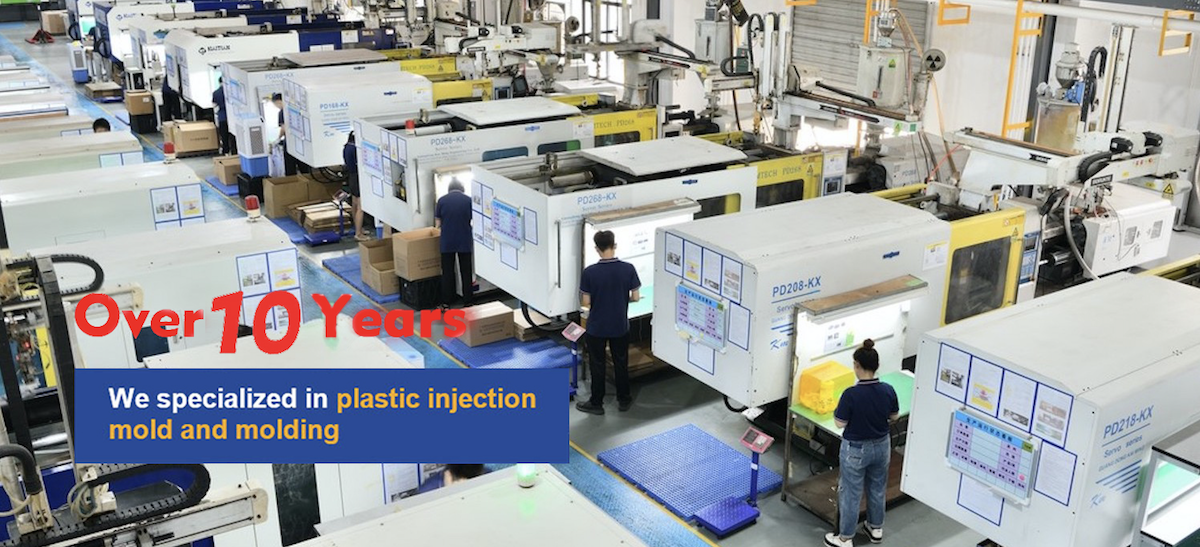
Our expert engineering team provides comprehensive, free DFM analysis on every project, ensuring your design is optimized for manufacturability before we cut any steel. We offer clear, all-inclusive quoting, in-house secondary operations, and agile project management to get your parts to market faster and on budget. Stop guessing and start optimizing.
Upload your 3D CAD files today at www.teamrapidtooling.com to get a transparent, detailed quote and expert DFM feedback within 24 hours. Let’s build your next product right the first time.


 Contact