
What is CNC Machining? The Complete Basics to Get Started
What is CNC machining? CNC machining is a computerized and programmable manufacturing process that involves various cutting mechanisms, along with various other machining operations, such as milling, drilling, grinding, and more. CNC stands for Computer Numerical Control, which means this rapid manufacturing process uses computer programs to aid each of its operations.
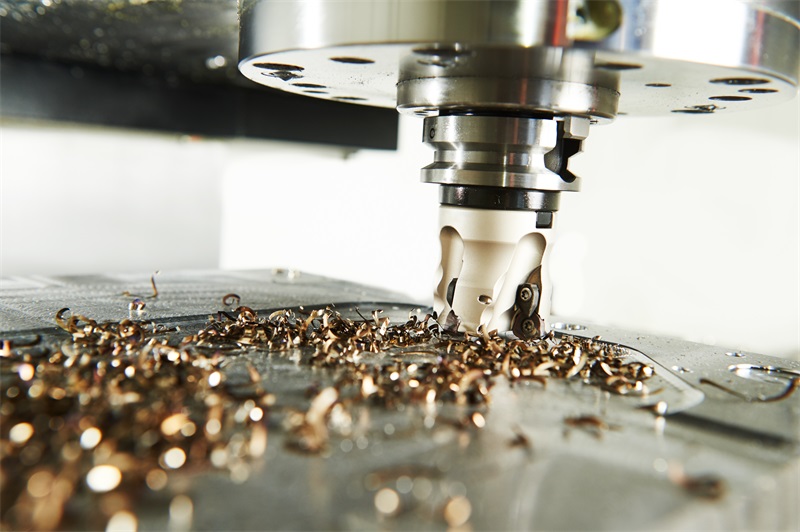
You will need to use CAD/CAM or similar software to create your hardware design and then convert it to the file that the CNC machining equipment can recognize. Then, the CNC machining equipment will translate your design file into real machining operations to create the hardware parts or rapid prototypes according to your design specifications.
How CNC Machining Works in Manufacturing
To start the CNC machining operation in your manufacturing production, first you will need to input the design data file into the CNC machining equipment. Then, the machining equipment will read the data and convert it into practical steps that correspond with various physical machining operations it will execute. Next, you will need to put the material workpiece to the machining equipment according to the steps laid out by the CNC machining equipment.
After putting the material workpiece, a series of machining processes will commence. It will use the subtractive manufacturing process to shape the material workpiece according to your design blueprint.
What is CNC Machining? Pros and Cons of CNC Machining in Manufacturing Production
What is CNC Machining? The Pros
● Consistent accuracy
If accuracy of the hardware parts is your most important priority, then CNC machining services can help you with building hardware parts with consistent accuracy and precision. You will use computer programs to direct each machining operation to ensure the best and most consistent accuracy for the final products you are producing.
● Programmable automation
CNC machining can also build your hardware parts using a semi-automation or complete automation method. You can integrate your CNC machining equipment with robotics to automate each machining operation in your manufacturing production, which can help improve your production efficiency.
● Best safety features
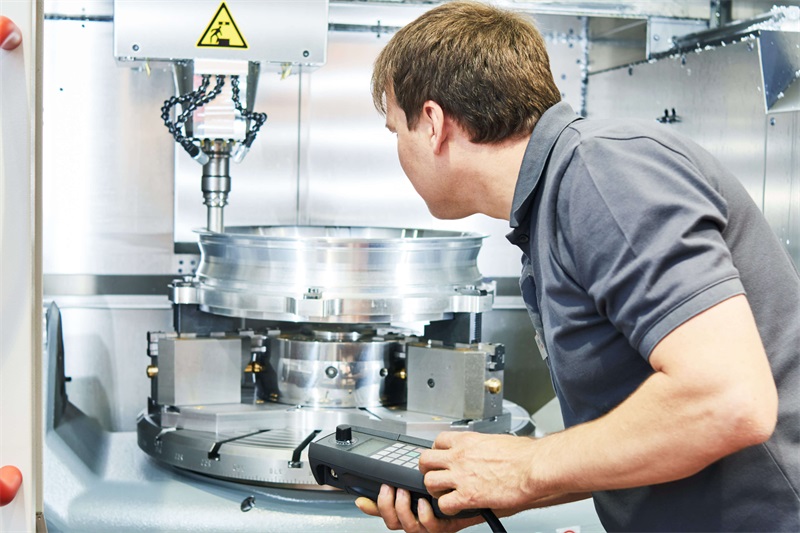
Although CNC machining involves various cutting processes, the machining equipment itself is very safe to use. For the operators or workers operating the CNC machining equipment, there are various safety features that will ensure their safety during each machining operation.
● Quick setup and operation
The CNC machining process will allow you to set up the equipment fast, so that you can manufacture your hardware products as soon as possible. Unlike injection molding and other similar processes, CNC machining doesn’t require you to create a mold before starting your production. Also, the CNC manufacturing operation itself is faster when compared to the traditional manufacturing methods.
● Cheaper overall costs for large production
Without the need to use any mold or rapid tooling, you can produce hardware parts at a much cheaper price, especially if you are producing hardware parts in large quantities. CNC machining can help you complete your production goals with cheaper overall costs when compared to the traditional manufacturing processes.
What is CNC Machining? The Cons
● High-skill requirements
To operate the CNC machining equipment, you will need workers that have the capability to understand how to program the equipment. Also, the designing process for each hardware part will require the best design skills to ensure that the final products will have all the necessary features while also ensuring that they will work without any issues.
● Expensive initial costs
You will need to use different CNC machining equipment for different operations. So, the initial CNC machining costs will be more expensive for you to use this manufacturing method. Not to mention that you need to pay your workers a higher salary because of their high skill requirements.
● Noise and waste materials
The CNC machining operations can cause a lot of noise during active work, which can be disturbing if you are running the CNC machining operations in the wrong place, such as around the neighborhood or a crowded place. Also, CNC machining can produce a lot of waste materials, because you will need to remove various parts of the material workpiece during each machining operation.
What is CNC Machining? The Various CNC Machining Techniques You Can Perform
In CNC machining, you can perform various machining techniques or operations using various CNC machining equipment. Each technique will help you shape the material workpiece to build your hardware parts according to your design specifications. Here are various CNC machining techniques you can perform in your manufacturing process:
● Cutting
This is the primary CNC machining technique, which will allow you to cut the material workpiece using various cutting tools, depending on your needs. You can program each cut to achieve the result you want for your material workpiece.
● CNC Milling
CNC milling is a cutting process that allows you to cut through the workpiece material using rotating cutting tools that support multi-point cuts. The milling equipment will keep on rotating to follow the cutting programming for each material workpiece, and you will need to feed the workpiece into the milling equipment one by one.
● CNC Turning
CNC turning is the process of cutting or trimming the material workpiece by rotating the material workpiece and letting the turning equipment do the cutting or trimming work from various angles. You will need to put the material workpiece on a lathe equipment and allow the lathe to turn and rotate the material workpiece in various angles.
● Drilling
Drilling is another CNC machining technique you can perform, which will allow you to drill various holes around the material workpiece. You can use these drilling holes for various purposes, such as for the fasteners or screw system in your hardware parts.
● Grinding
With grinding, you will use the grinding tool to shape the material workpiece based on your requirements. The grinding tool has a wheel-like tool that rotates at a high speed, and when you put the grinder in contact with the material workpiece, it will start shaping it by applying high-speed friction onto it.
● EDM
EDM is another CNC machining technique that involves using electrical sparks to shape and melt the material workpiece you are working on. This technique is very useful if you are working with a fragile material workpiece.
Development of China CNC Machining
China’s CNC (Computer Numerical Control) machining industry has rapidly evolved over the past few decades, transforming from knowing nothing about what is CNC machining into a global hub for precision machining and manufacturing. Today, Chinese CNC services are widely used for prototyping, aerospace, automotive, medical, and high-precision mold components.
1. Early Foundations and Growth
China’s machine tool industry has long been a cornerstone of national industrialization. In the early years, the country relied heavily on imported CNC equipment and components. Gradually, domestic manufacturers began producing mid-range CNC machines, laying the foundation for today’s industry.
2. Technological Upgrades and Localization
In recent years, China has focused on increasing the local production of CNC systems and key machine components. Multi-axis machining centers and advanced CNC machines are now widely available, enabling higher precision, better surface finishes, and faster production cycles.
3. Government Support and Industrial Policy
Initiatives like Made in China 2025 have accelerated the development of advanced CNC technologies. Policies supportingR&D, smart manufacturing, and industrial digitization help CNC shops adopt cutting-edge technology such as AI-assisted machining and IoT-connected production.
4. Market Expansion and Global Outsourcing
China’s CNC service ecosystem is robust, offering contract manufacturing for both domestic and international clients. The country’s competitive costs, scalable production capabilities, and growing technical expertise make it a preferred partner for prototyping and high-precision components worldwide.
5. Challenges and Opportunities
Despite rapid growth, China’s high-end CNC machines still rely on some imported controllers and critical parts.Environmental regulations, industrial consolidation, and demand for energy-efficient practices are shaping the next phase of development. At the same time, integration of smart manufacturing technologies presents new opportunities for innovation and efficiency.
6. Strategic Role in Global Supply Chains
China’s CNC machining industry plays a crucial role in the global supply chain. It supports low-to-medium volume production, complex component manufacturing, and precise prototyping, making it a reliable choice for OEMs and manufacturers worldwide.
CNC Machining Materials & Applications
CNC machining offers unmatched precision and flexibility, making it ideal for a wide range of materials and applications. Understanding the right material for your project ensures optimal performance, durability, and cost-efficiency.
| Material | Key Properties | Typical Applications |
|---|---|---|
| Aluminum | Lightweight, corrosion-resistant, easy to machine | Automotive parts, aerospace components, electronics enclosures, consumer products |
| Stainless Steel | Strong, durable, corrosion-resistant | Medical instruments, food processing equipment, industrial machinery |
| Carbon Steel | High strength, cost-effective | Structural components, tooling, machinery parts |
| Titanium | High strength-to-weight ratio, corrosion-resistant | Aerospace components, medical implants, high-performance engineering parts |
| Copper & Brass | Excellent thermal and electrical conductivity | Electrical components, heat exchangers, decorative parts |
| Nickel Alloys / Inconel | High-temperature and corrosion resistance | Aerospace, chemical processing, high-stress components |
| ABS & Polycarbonate | Impact-resistant, durable | Electronics enclosures, automotive interiors, consumer products |
| Nylon / Delrin (Acetal) | Wear-resistant, low friction | Gears, bushings, mechanical components |
| PTFE / PEEK | High-temperature resistance, chemical-resistant | Industrial seals, chemical processing components, medical devices |
Conclusion of What is CNC Machining
As a subtractive manufacturing process, CNC machining will subtract various parts from the material workpiece until it reaches the shape that follows your design blueprint. This is a manufacturing method that is cost-effective and offers the best production efficiency. With CNC machining, you can produce hardware parts and prototypes with consistent accuracy and precision.
Contact Us
Looking for precision CNC machining services? TEAM RAPID is your reliable partner for high-quality prototyping, low- to high-volume production, and custom components. Our advanced CNC machines, experienced engineers, and one-stop capabilities ensure your parts meet the tightest tolerances, best surface finish, and highest quality standards. Whether you need metal or plastic parts, complex geometries, or specialized post-machining and finishing, we provide tailored solutions to meet your project requirements. Besides from CNC machining, TEAM RAPID also offers 3d print services, plastic injection molding services, die casting services, sheet metal fabrication etc to meet your needs. Contact our team today to request a free quote now!
Quick CNC Machining FAQs
1. Why choose CNC machining?
High precision, repeatability, complex geometries, fast prototyping, and excellent surface finish.
2. Can CNC machining handle high-volume production?
Yes, suitable for prototyping, low-to-medium, and even high-volume runs, depending on part complexity.
3. What post-machining options are available?
Deburring, polishing, anodizing, powder coating, painting, plating, heat treatment, and porosity sealing.
4. How do I get a CNC machining quote?
Provide CAD files, material choice, quantity, and finishing/tolerance requirements for a fast quote.
5. Why choose TEAM RAPID for CNC machining?
One-stop service with advanced machines, skilled engineers, and high-quality standards for every part.


 Contact