
Injection Molding Cost Breakdown: Tooling, Material,Production & Operation
The total cost of custom plastic molding is never based on a single factor. It mainly includes three core sections: plastic tooling cost, raw material cost and production processing cost. Meanwhile, secondary finishing, quality control and global logistics also bring hidden fees that affect your final budget. By fully analyzing every cost component, our customers can optimize product design, select the right mold solution, and achieve long-term cost savings with stable part quality from TEAM Rapid.
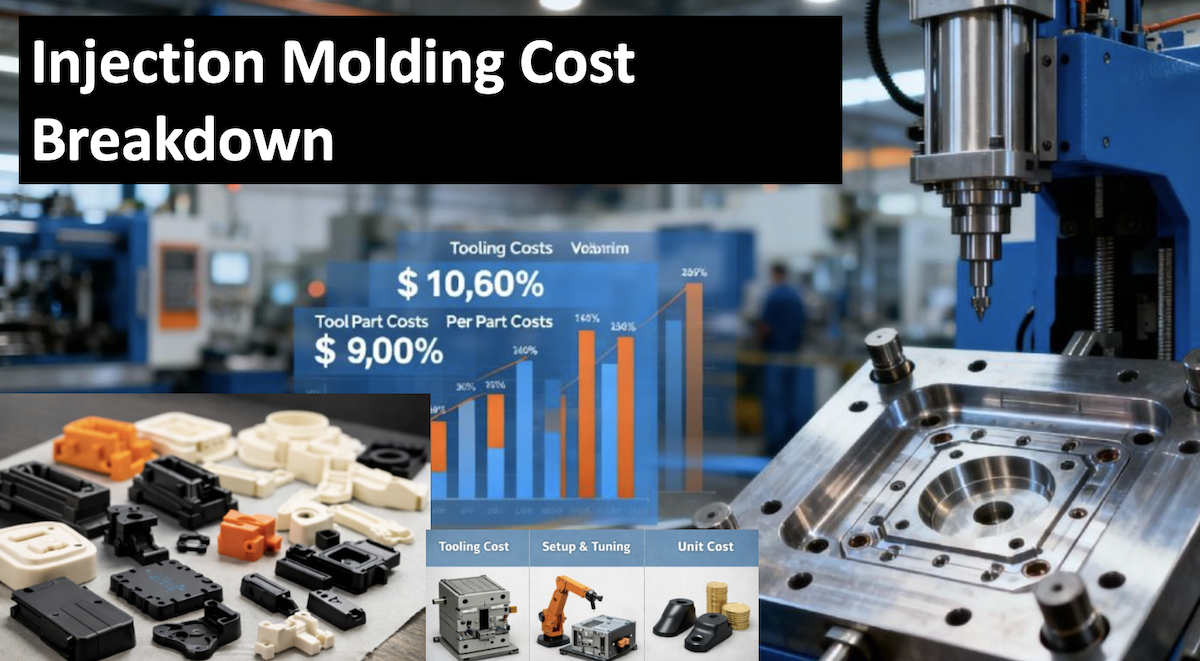
Asa professional provider who offers injection mold, rapid tooling and custom injection molding solutions, TEAM Rapid knows clearly the transparent cost breakdowns are vital for every customers. Whether you need quick prototyping, low volume injection molding, or high-volume mass manufacturing, injection molding is the most dependable and scalable process for automotive, electronics, medical, household and industrial etc.plastic components.
Injection Molding Cost Breakdown
Tooling Cost: Upfront Investment
1. Mold Steel Grade & Cavity Layout
Mold tooling typically is the largest investment in injection molding project especially for the low-volume molding projects.The plastic mold cost is evenly amortized over the entire service life of the mold.
The grade of mold steel directly decides mold durability, machining difficulty and overall pricing. Standard mold steel is perfect for simple parts and low-to-medium output runs, delivering affordable rapid tooling and fast lead times. For high-precision components, continuous mass production or special engineering plastics, hardened corrosion-resistant steel is required to extend mold lifespan, which naturally increases tooling expenses.
Cavity quantity is another key factor in budget planning. Single-cavity molds feature low initial costs and easy maintenance, ideal for prototype validation and small-batch orders. Multi-cavity mold designs, such as 4-cavity and 8-cavity layouts, greatly boost output per cycle. Though the upfront tooling investment is higher, multi-cavity structures effectively reduce unit part cost for large-batch mass production molding.
2. Cold Runner vs Hot Runner Mold Cost Difference
A key factor affecting long-term expenditure is the cost gap between cold runner and hot runner mold systems.
Cold runner molds come with a simple structure, low processing difficulty and cost-effective pricing, widely adopted in small and medium-batch custom molding projects. A hot runner mold uses a constant temperature heating system to keep plastic melt flowing inside the runner, avoiding solidified sprue and runner waste. With professional hot runner nozzles, precise temperature controllers and high-end accessories, hot runner molds require advanced design and higher manufacturing costs.
Our expert team at TEAM Rapid offers professional runner system consulting. We help you balance initial mold investment and long-term material waste according to your annual production demand.
3. Mold Machining, Design & Trial Run Fees
Complete tooling expenses cover full manufacturing procedures, including CNC machining, EDM processing, wire cutting, precision grinding and manual assembly. Complex part designs with undercuts, slides, lifters, angle pins and embedded inserts increase machining hours and technical difficulty, raising overall mold costs.
Custom surface treatments, such as high-gloss polishing, texture etching, grain finishing and laser engraving, also create personalized service fees. In addition, professional mold design charges and multiple trial mold tests are included in our full rapid tooling package. Trial runs verify dimensional accuracy, surface quality and molding stability, preventing mass production defects and expensive rework.
Subsequent services, including mold modification, routine maintenance, emergency repairs and rush order support, will also impact your total tooling budget. As production volume grows, the amortized mold cost per piece drops obviously, making high-volume injection molding far more cost-efficient.
4. Tooling Cost Factors Summary, Comparison, and Cost Rate
Category
Key Factors
Description
Impact on Cost
Typical Cost Share (%)
Best For
Mold Design
DFM, Mold Structure Planning
Ensures manufacturability, optimizes geometry, prevents defects early
Reduces risk of rework and tooling failure
5%
All projects
Mold Steel Grade
Standard vs Hardened Steel
Determines durability, lifespan, and machining difficulty
Higher-grade steel increases upfront cost
10-20%
High-volume & engineering plastics
Cavity Layout
Single vs Multi-Cavity
Defines output per cycle and mold size/complexity
More cavities = higher tooling cost
10-25%
Mass production
Runner System
Cold vs Hot Runner
Impacts material waste and mold complexity
Hot runner significantly increases cost
5-15%
High-volume production
Machining Processes
CNC, EDM, Wire Cutting
Core manufacturing of the mold components
Major cost driver based on hours & precision
20-35%
All molds (especially complex)
Design Complexity
Slides, Lifters, Undercuts
Adds mechanical structures and tooling difficulty
Strong multiplier on machining cost
15-20%
Complex functional parts
Surface Finishing
Polishing, Texture, Engraving
Improves appearance and function
Optional but adds noticeable cost
5-10%
Consumer & aesthetic parts
Trial Runs (T1, T2)
Testing & Validation
Ensures quality before mass production
Prevents costly defects later
5-10%
All projects
Maintenance & Modifications
Repair & Optimization
Ongoing mold upkeep and adjustments
Lifecycle cost, not always upfront
5-10%
Long-term production
Production Volume Effect
Cost Amortization
Spreads tooling cost across total parts
Higher volume lowers unit cost
Not a direct cost
Mass production
Raw Material Cost: Variable Recurring Expense
1. Plastic Resin Types & Part Consumption
Raw material cost is the main variable expense in custom injection molding, influenced by global resin market prices, order quantity and part specifications.
TEAM Rapid supplies a full selection of plastic materials to meet diverse industrial needs, including commodity plastics, engineering plastics and high-performance specialty plastics.
- Common materials like ABS, PP and PE provide stable performance and competitive pricing for daily goods and packaging products.
- Engineering plastics such as PC, PA and POM offer stronger mechanical strength, heat resistance and impact resistance for functional structural parts.
- High-performance options like PEEK and PPS suit extreme working conditions with higher material costs.
Part weight, wall thickness and material density directly determine raw material consumption. Reasonable wall thickness optimization reduces material usage and cuts unit costs without weakening structural performance.
2. Modified Materials & Additive Costs
Many custom projects need modified plastic materials to meet special functional and compliance standards. Common customizations include color matching, glass fiber reinforcement, flame retardant treatment, UV stabilization and anti-toughening additives. These modified formulas enhance product performance but bring extra purchasing and processing fees. Our engineers will recommend the most cost-effective material solution based on your application environment and industry requirements.
3. Runner System Waste & Material Loss
The selection between cold runner and hot runner mold systems strongly impacts material waste and long-term production costs.
Cold Runner Injection Molding
Cold runner injection molding generates large amounts of solidified sprue and runner waste in every production cycle. Waste materials can be crushed and reused as regrind, but repeated recycling reduces mechanical properties and creates extra sorting and processing costs.
Hot Runner Injection Molding
A hot runner mold design minimizes redundant runner waste and saves massive material consumption during continuous production. For long-term cooperation and high-volume orders, hot runner solutions deliver significant economic benefits, offsetting higher upfront mold costs through ongoing material savings.
Production & Processing Operational Cost
1. Injection Machine Tonnage & Molding Cycle
Daily production and processing costs are closely related to equipment specification, molding cycle efficiency and factory operation management.
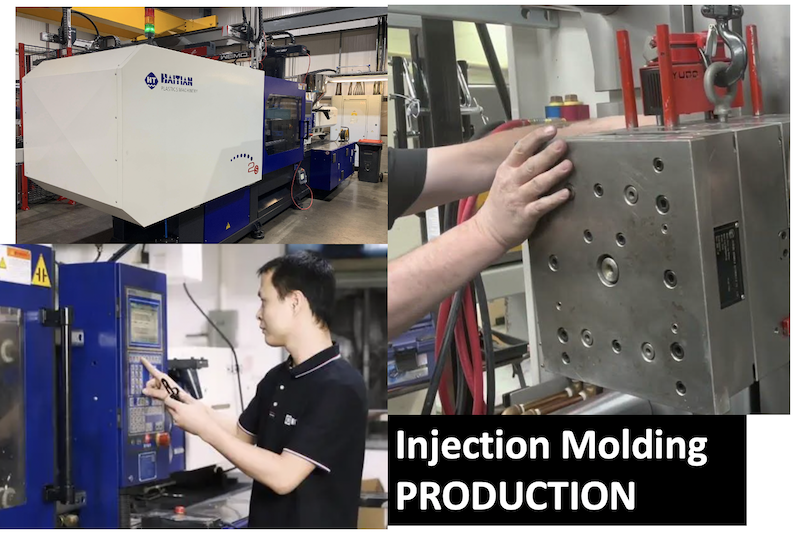
We select suitable tonnage injection machines according to part size, molding area and clamping force requirements. Large-tonnage equipment supports oversized and thick-wall parts yet involves higher hourly operation fees, energy consumption and maintenance costs.
Molding cycle time is the core index of production efficiency, covering injection filling, melt cooling, mold opening and part ejection. By optimizing mold cooling pipelines and adjusting injection process parameters, our skilled technicians shorten cycle time, increase daily output and lower the average machine cost for each custom plastic part.
2. Labor Cost & Automation Level
Labor costs change with different automation levels. Conventional small-batch orders adopt flexible manual demolding and trimming to meet diverse customized demands. For mass production molding projects, we deploy automatic manipulators and robotic arms to realize unmanned picking, stacking and transmission, reducing long-term labor costs and ensuring stable delivery schedules.
Factory overhead, including water, electricity, workshop operation and equipment depreciation, is reasonably allocated to every project, ensuring fair and transparent pricing for all global customers.
3. Quality Control & Yield Management
Strict quality control is a core advantage of TEAM Rapid. Complete in-process inspection, dimensional testing, appearance evaluation and batch sampling ensure stable and consistent product quality for all custom injection molding orders.
Defective parts and low yield rates cause raw material waste, time loss and delivery delays. Our standardized production workflows and experienced QC team effectively reduce scrap rates, control hidden quality costs and deliver qualified components on time.
Additional Hidden Production Costs
Besides the three major cost categories, multiple auxiliary hidden expenses must be considered for accurate budget planning.
Most custom plastic parts require secondary post-processing after molding, including deflashing, silk printing, spray painting, electroplating, glue bonding and component assembly. We provide one-stop post-processing services to simplify your supply chain and lower overall coordination costs.
Professional product packaging, long-term warehousing and global shipping solutions are fully available at TEAM Rapid. For rapid prototype and low volume injection molding orders, necessary mold setup fees and mold change fees cover production preparation work. We maintain clear quotation rules without hidden charges, helping you achieve predictable project budgeting.
Cost Performance by Production Volume
Production volume is a decisive factor that reshapes the entire cost structure of injection molding projects.
- Low-volume production features high tooling amortization and obvious cold runner material waste, resulting in higher unit prices, which is suitable for new product prototyping and small-batch trial sales.
- Medium-volume production reaches a balanced state among tooling, material and operation costs, providing the best cost performance for mid-sized brand projects.
- High-volume mass production makes full use of multi-cavity molds and hot runner systems to maximize efficiency, minimize waste and achieve the lowest unit part cost.
As an experienced rapid tooling manufacturer, TEAM Rapid flexibly adjusts mold design and production plans to match your order volume, budget targets and market demands.
Practical Injection Molding Cost Optimization Strategies
To help customers reduce overall manufacturing expenditure, our engineering team summarizes practical and actionable optimization tips:
- Simplify part design and reduce complicated undercut structures or over-tight tolerances to lower mold machining difficulty and plastic mold cost.
- Optimize product wall thickness and lightweight design to reduce raw material consumption.
- Choose cold runner or hot runner mold solutions reasonably based on annual output to balance initial tooling investment and long-term waste loss.
- Upgrade mold cooling systems and optimize molding parameters to shorten cycle time and improve production capacity.
- Improve overall production yield and streamline redundant post-processing procedures to control hidden operational costs.
Conclusion
Injection molding cost is a comprehensive system composed of rapid tooling investment, plastic raw material consumption, daily production operation, post-processing and quality management. Tooling determines your long-term fixed budget, plastic materials control variable unit pricing, and production efficiency directly affects operational expenses.
Contact Us
As a reliable global supplier of rapid tooling and custom injection molding, TEAM Rapid delivers transparent cost breakdowns, professional design guidance and personalized molding solutions worldwide. Whether you need fast prototype tooling, low volume injection molding, or large-scale mass production molding, we guarantee high-quality plastic parts, competitive pricing, stable lead times and one-stop manufacturing support for your business. Talk with us today.
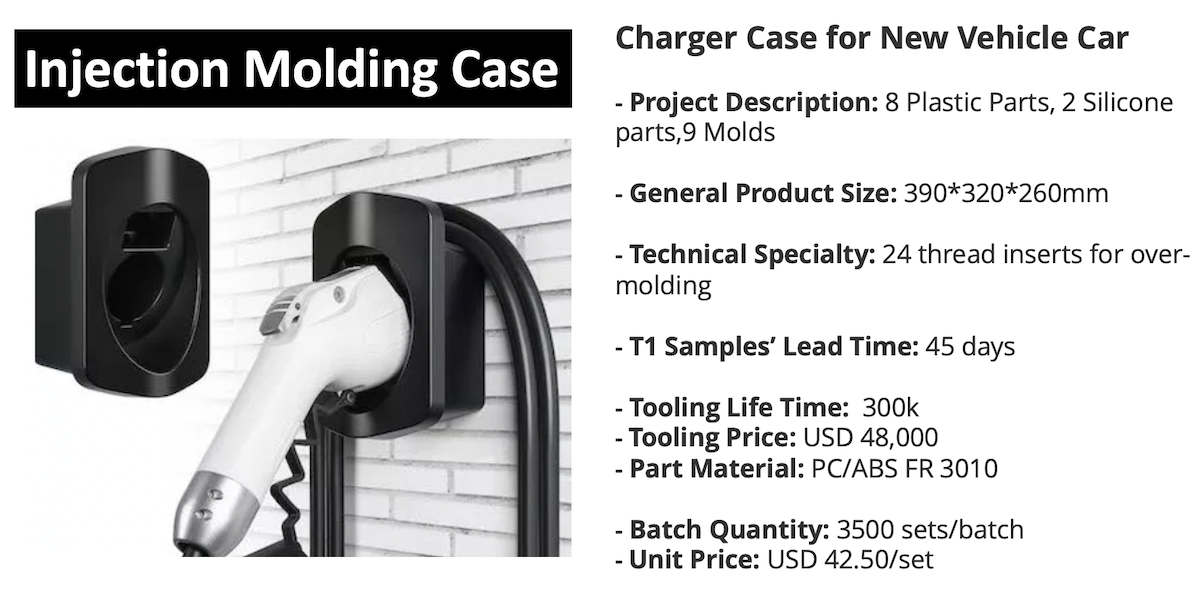
Case Presentation



 Contact