
Plastic Bucket Guide: Types, Materials, and Custom Options
Most people think a plastic bucket is just a plastic bucket. Pick one up, fill it, and done. But the moment you're sourcing at scale, specifying food-grade compliance, or ordering custom plastic buckets for a product line, that assumption gets expensive fast.
The world now produces over 100 million tons of plastic each year, and buckets make up a surprisingly significant slice of that. Getting the material, size, and manufacturing process right matters more than most buyers realize.
Here's what this guide covers:
● Types of plastic buckets (small plastic bucket to big plastic bucket options)
● Best materials: HDPE, PP, PVC, and more
● Food-grade plastic buckets: what qualifies and what doesn't
● How injection molding shapes plastic bucket manufacturing
● Custom plastic bucket options: from prototype to bulk
● How to buy plastic buckets wholesale and what to watch for
● Plastic bucket pricing and what drives cost
If you need a reliable manufacturing partner for custom or bulk production,TEAM Rapid is worth knowing about. We specialize in injection molding and rapid prototyping, and we work with clients across industries to get parts production-ready fast.
Types of Plastic Buckets
Not all plastic buckets are built the same. The right type depends on what you're storing, how much volume you need, and whether the application is industrial, food-related, or somewhere in between. Here's a breakdown of the main categories.
By Size
Size is usually the first filter buyers apply.
|
Category |
Common Capacity |
Typical Use |
|
Small plastic bucket |
0.5 to 2 gallons |
Household, sampling, retail packaging |
|
Mid-size bucket |
3 to 3.5 gallons |
Food service, paint, cleaning |
|
5-gallon plastic buckets |
5 gallons |
Construction, agriculture, bulk storage |
|
Big plastic bucket |
6 to 12+ gallons |
Industrial, chemical, heavy-duty transport |
A standard 5-gallon bucket can hold around 30 pounds of dry food, making it the go-to size across food service, construction, and agriculture alike.
By Application
Once you've nailed down size, application type drives the rest of the spec.
- Food-grade plastic buckets: Made from FDA-compliant, BPA-free HDPE or PP resin. Required for any direct food contact. When dye is added to the plastic, a bucket can lose its USDA food-grade approval, so always verify certification before buying for food use.
- Industrial/chemical buckets: Built for paints, solvents, and harsh chemicals. Typically, thicker walls and higher mil ratings.
- Plastic bucket with lid: Used when airtight sealing, tamper-evidence, or spill prevention matters. Lid types include snap-on, gamma seal, and screw-top.
- Construction and utility buckets: Heavy-duty, often the classic 5-gallon format. Designed for job site abuse.
By Shape
Round is the default, but it's not the only option. Square and rectangular buckets maximize shelf and pallet space, which matters a lot when you' re ordering plastic buckets wholesale or managing bulk plastic buckets in a warehouse setting.
When it comes to custom plastic bucket production, the shape, wall thickness, lid type, and resin all need to be defined before tooling begins. Our injection molding services at TEAM Rapid are built to handle exactly that, from the first prototype all the way to volume runs.
Best Materials: HDPE, PP, PVC, and More
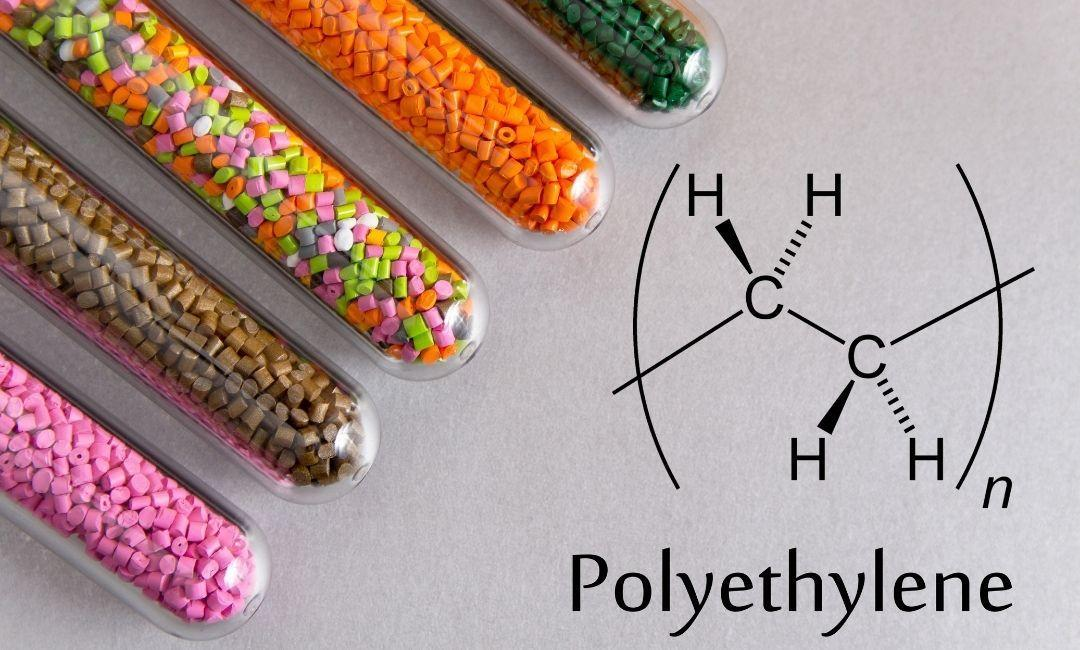
Material selection is one of the most consequential decisions in plastic bucket manufacturing. Get it right, and you have a product that performs for years. Get it wrong, and you're dealing with cracking, chemical leaching, or failed compliance audits.
Here's a clear breakdown of the main resins used across bucket types:
|
Material |
Key Strengths |
Common Use Cases |
Food Safe? |
|
HDPE |
Impact resistance, chemical resistance, UV stability |
Industrial, construction, food storage |
Yes (virgin resin) |
|
PP |
High heat tolerance, lightweight, chemical resistance |
Food packaging, pharma, chemicals |
Yes |
|
PVC |
Rigid, weather-resistant |
Construction, some industrial |
Not recommended |
|
LDPE |
Flexible, soft |
Liners, inner coatings |
Yes |
|
PET |
Transparent, strong |
Beverage containers, specialty buckets |
Yes |
HDPE: The Workhorse
HDPE (High-Density Polyethylene) is the most widely used material for plastic buckets, and for good reason. It handles impact well, resists a broad range of chemicals, and stays stable across extreme temperatures. It's the material behind your classic 5-gallon plastic buckets on every construction site and in most food processing facilities.
One important caveat: recycled HDPE is reviewed by the FDA on a case-by-case basis, as it can sometimes become unsafe in the recycling process. For any food application, always specify virgin HDPE resin.
PP: The Heat-Tolerant Alternative
Polypropylene (PP) is the go-to when high-temperature resistance matters. It has a higher melting point than HDPE, making it well-suited for hot-fill food applications, pharmaceutical storage, and chemical containers that see temperature swings. PP plastic buckets are commonly used in food packaging, pharmaceutical, and chemical fields, especially for acid, alkali, and high-temperature liquid storage.
PP is also slightly more moldable than HDPE, which gives designers more flexibility when building custom plastic bucket geometries through injection molding.
PVC: Use with Caution
PVC is rigid and durable, but it comes with trade-offs. PVC is generally avoided in food storage due to potential toxin leaching concerns, including lead and dioxins throughout its lifecycle. It still appears in some industrial and construction-grade buckets, but for any food-contact or consumer application, HDPE and PP are the safer, smarter choices.
Pro tip: When sourcing bulk plastic buckets or placing a wholesale order, always ask your manufacturer for the resin identification code and whether virgin or recycled material is being used. Those two details alone can determine whether your buckets pass compliance requirements or not.
Our injection molding services support all major thermoplastic resins. If you need help selecting the right material for your custom plastic bucket project, our engineering team can walk you through the options before tooling begins.
Food Grade Plastic Buckets: What Qualifies
"Food grade" sounds like a simple label. It isn't. There's a specific set of material, manufacturing, and regulatory requirements a bucket has to meet before it can legitimately carry that designation, and the gap between compliant and non-compliant buckets isn't always visible to the naked eye.
What Actually Makes a Bucket Food Grade
"Food grade" is not a term created by the FDA. It is an unofficial way of calling a material or packaging FDA-compliant. What that really means is that the plastic resin, any additives, colorants, and the manufacturing environment all have to meet FDA standards under Title 21 of the Code of Federal Regulations (CFR).
For a bucket to qualify as food grade, it generally needs to:
- Be made from virgin HDPE (#2) or PP (#5) resin
- Contain no BPA or harmful plasticizers
- Be manufactured in a food-safe production environment, free from chemical cross-contamination
- Use only FDA-compliant colorants and additives
How to Identify a Legitimate Food-Grade Bucket
In the United States, what matters most is whether the bucket's materials and manufacturing process comply with FDA food-contact standards. Look for markings like "FDA approved," "USDA approved," or explicit "food grade" labeling on the bucket or its packaging.
That said, a surprising number of buyers get this wrong. Here's what to watch for:
- Check the recycling symbol. Food-safe plastics carry codes 1, 2, 4, or 5. Codes 3, 6, and 7 are red flags.
- Look for explicit certification. "FDA compliant" or "food grade" should appear on the product or documentation.
- Request manufacturer verification. Reputable suppliers provide compliance documentation on request.
What Disqualifies a Bucket from Food Grade Status
This is where things get nuanced. A bucket that was food-grade can lose that status depending on how it's used or made:
- Adding certain dyes or colorants to HDPE can void USDA food-grade approval
- Using recycled plastic without an FDA review can disqualify the material
- Storing chemicals or non-food substances in a previously food-grade bucket contaminates it permanently
- Buying reconditioned or second-hand buckets removes any food-grade guarantee
Never assume a used or reconditioned bucket is food safe, even if it was originally food grade.
When we manufacture custom food-grade plastic buckets at TEAM Rapid, material traceability and compliance documentation are part of the process from day one. You can learn more about our quality assurance standards and how we approach food-contact applications.
How Injection Molding Shapes Plastic Bucket Manufacturing
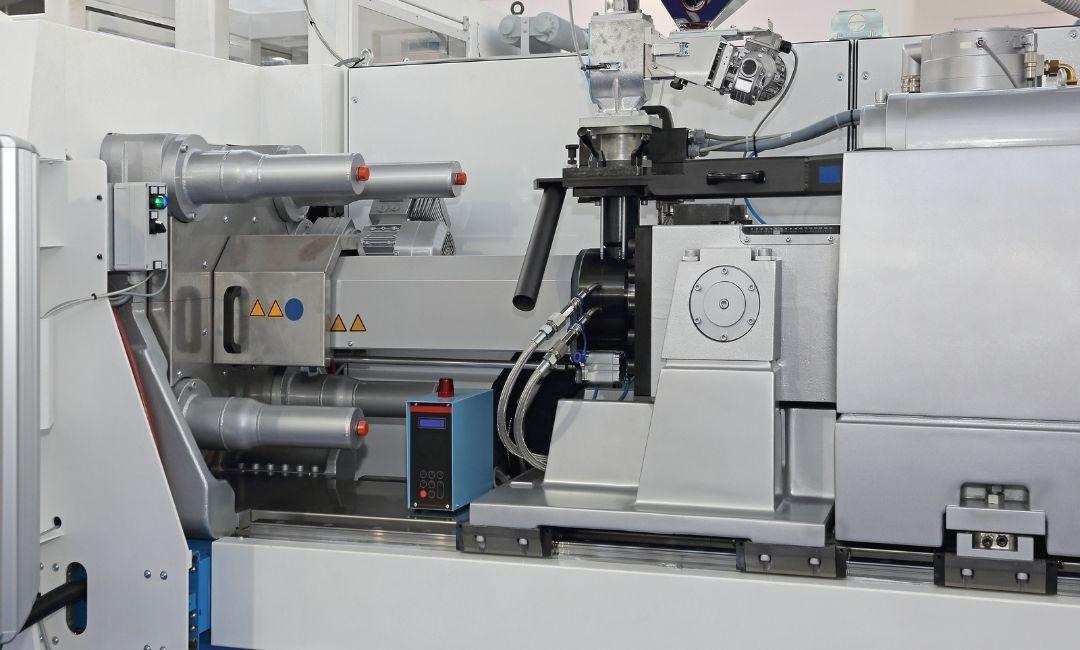
Of all the methods used to make plastic buckets, injection molding is the most widely used for consistent, high-volume production. It's precise, repeatable, and scalable in a way that few other processes can match.
The Basic Process, Explained Simply
The core idea behind injection molding is straightforward: plastic resin pellets get melted down and injected under high pressure into a steel or aluminum mold cavity. The plastic fills the cavity, cools, solidifies, and gets ejected as a finished part. Repeat thousands of times.
For bucket manufacturing specifically, the process looks like this:
1. CAD design and DFM review: The bucket geometry gets designed in CAD software. Draft angles, wall thickness, and gate locations get reviewed for manufacturability before a single cut is made.
2. Mold fabrication: A steel mold (typically P20, H13, or 718 grade) gets machined with CNC and EDM equipment to precise tolerances.
3. Material preparation: Resin pellets (HDPE, PP, or another approved material) are fed into the machine hopper and heated to their specific melt temperature.
4. Injection and cooling: Molten plastic is injected into the mold cavity under pressure, then cooled through built-in cooling channels.
5. Ejection and finishing: The solidified bucket is ejected, trimmed of any flash, and sent for quality inspection.
Why Injection Molding Wins for Bucket Production
Compared to blow molding (which is better suited for bottles and larger hollow containers), injection molding gives manufacturers tighter dimensional control, cleaner surface finishes, and better design flexibility. For a custom plastic bucket with specific wall thickness, handle geometry, lid integration, or branding features, injection molding is almost always the right call.
|
Factor |
Injection Molding |
Blow Molding |
|
Wall thickness control |
Precise and consistent |
Less uniform |
|
Complex geometry |
Handles it well |
Limited |
|
Surface finish |
High quality |
Moderate |
|
Best for |
Custom/precision buckets |
Simple, large hollow parts |
|
Volume scalability |
Excellent |
Good |
The Role of the Plastic Bucket Mould Factory
The quality of the mold directly determines the quality of every bucket that comes out of it. A well-designed mold with proper cooling channels, venting, and draft angles will produce consistent parts at high speed with minimal defects. A poorly designed mold is expensive to fix and slow to diagnose.
This is why choosing the right plastic bucket mould factory matters as much as choosing the right resin. At TEAM Rapid, our rapid tooling services cover the full journey from mold design to volume production, with lead times of 5 to 25 days for tool manufacturing. Whether you need plastic bucket prototypes to validate your design first or you're ready to move straight into production runs, we can support both.
Pro tip: Always request a DFM (Design for Manufacturability) analysis before finalizing your mold design. It catches expensive problems early, before tooling costs are committed. We provide DFM reports as a standard part of our quoting process.
Custom Plastic Bucket Options: Prototype to Bulk
Off-the-shelf buckets work fine when you have standard requirements. The moment you need a specific capacity, wall thickness, lid configuration, logo, or material spec, you're in custom territory. And that's where most serious product and procurement decisions actually happen.
Here's how the path from idea to production run typically unfolds.
Stage 1: Define Your Specs
Before any tooling or prototyping begins, you need a clear spec sheet. The key decisions at this stage include:
- Size and capacity (small plastic bucket at 1L, up to a big plastic bucket at 20L+)
- Material (HDPE, PP, or other approved resin)
- Wall thickness (thicker walls cost more but improve durability and stackability)
- Lid type (snap-on, gamma seal, tamper-evident, screw-top)
- Handle style (integrated plastic, metal bail, or none)
- Color and branding (custom colors, logo printing via screen print or heat transfer)
- Food grade compliance (if applicable)
Getting these nailed down before you approach any manufacturer will save you significant back-and-forth. Our quote process is built to move fast once you have your specs ready.
Stage 2: Prototyping
This is the part most buyers skip, and then regret. A plastic bucket prototype lets you validate the geometry, test the lid fit, assess handle strength, and confirm the material behaves as expected under real conditions,before spending money on production tooling.
Prototyping methods for plastic buckets include:
- 3D printing (SLA/SLS): Fast and cheap for early-stage visual and fit checks. Not ideal for functional testing.
- CNC machining: Better dimensional accuracy, suitable for testing mechanical performance.
- Rapid tooling (soft aluminum mold): Produces actual injection-molded parts from the intended resin. The closest you'll get to production quality at the prototype stage.
Our rapid prototyping services typically deliver parts within 2 to 8 days, which means design validation doesn't have to slow your timeline down. For bucket-specific applications, we'd usually recommend going straight to rapid tooling for functional samples, since material behavior and wall thickness performance matter more than they do for most other products.
Stage 3: Low-Volume and Bulk Production
Once the prototype checks out, production tooling gets built. The key decisions here:
|
Production Stage |
Volume Range |
Mold Type |
Cost Per Unit |
|
Low-volume / bridge |
50 to 5,000 units |
Aluminum or soft steel mold |
Higher |
|
Mid-volume |
5,000 to 50,000 units |
Pre-hardened steel (P20) |
Moderate |
|
High-volume / bulk |
50,000 to 100,000+ units |
Hardened steel (H13) |
Low |
If you're ordering bulk plastic buckets for the first time, consider starting with a low-volume run to validate quality and logistics before committing to a high-volume mold investment. The tooling cost per part drops significantly at scale, but catching a design issue after 50,000 units is a costly lesson.
We work with clients on everything from a handful of plastic bucket prototypes to 100,000+ unit production runs, with full DFM support and quality inspection included at every stage.
How to Buy Plastic Buckets Wholesale
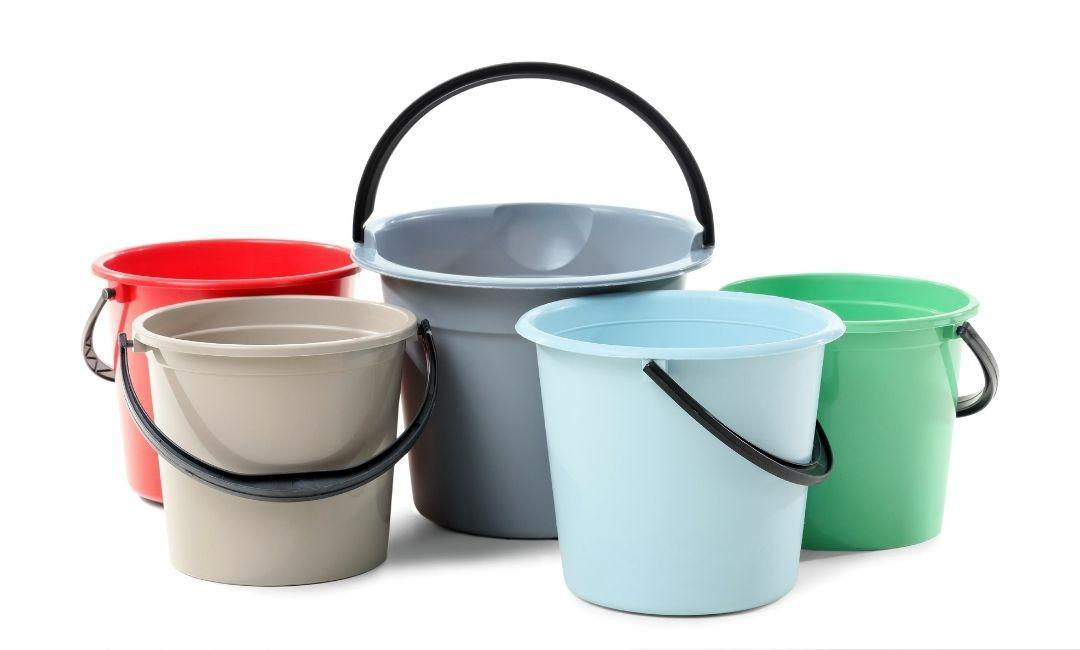
Buying plastic buckets wholesale sounds straightforward. In practice, there are enough variables between suppliers, specs, and compliance requirements to make a bad sourcing decision very expensive. Here's what actually matters.
Know What You're Buying Before You Quote
Before you contact a single supplier, be clear on:
- Intended use (food, chemical, industrial, consumer)
- Required certifications (FDA compliance, USDA, HACCP, BPA-free)
- Volume and frequency (one-time order vs. ongoing supply)
- Customization needs (color, branding, lid type, size)
When sourcing internationally, request material test reports and verify compliance with local regulations. Always order a sample batch before committing to large volumes. This applies whether you're buying from a domestic distributor or a China-based plastic bucket factory.
Choosing Between a Distributor and a Manufacturer
These are two very different sourcing paths:
|
|
Wholesale Distributor |
Direct Manufacturer |
|
Best for |
Standard sizes, fast fulfillment |
Custom specs, large volumes |
|
MOQ |
Low (pallet quantities or less) |
Higher (typically 500+ units) |
|
Lead time |
Short (days to weeks) |
Longer (weeks to months) |
|
Customization |
Limited |
Full control |
|
Price per unit |
Higher |
Lower at volume |
For one-off or mixed orders, a distributor works fine. For custom plastic buckets at scale, going direct to a plastic bucket manufacturer cuts out the markup and gives you full control over materials, tolerances, and branding.
Red Flags to Watch for When Sourcing
Not all suppliers are transparent about what they're actually selling. Watch out for:
- No material documentation. A reputable manufacturer can provide resin certificates and compliance documentation on request. If they can't or won't, move on.
- Recycled resin without disclosure. Recycled plastic may be fine for industrial use, but it can be a compliance issue for food-grade applications.
- Vague certifications. "Food safe" without an FDA compliance reference or HACCP certification is a marketing claim, not a quality guarantee.
- No sample option. Any serious manufacturer should allow sample orders before a bulk commitment.
- Unusually low pricing. Below-market pricing on custom orders almost always means a compromise somewhere, whether in resin grade, wall thickness, or quality control.
Inspect for mold lines, color consistency, and structural flaws upon arrival. These are the first visible signs of whether a manufacturer is running a tight process or cutting corners.
When sourcing through TEAM Rapid, every order includes a DFM report, material verification, and full quality inspection before shipment. You can review our process on the quality assurance page or get in touch directly with your spec requirements.
Plastic Bucket Pricing and What Drives Cost
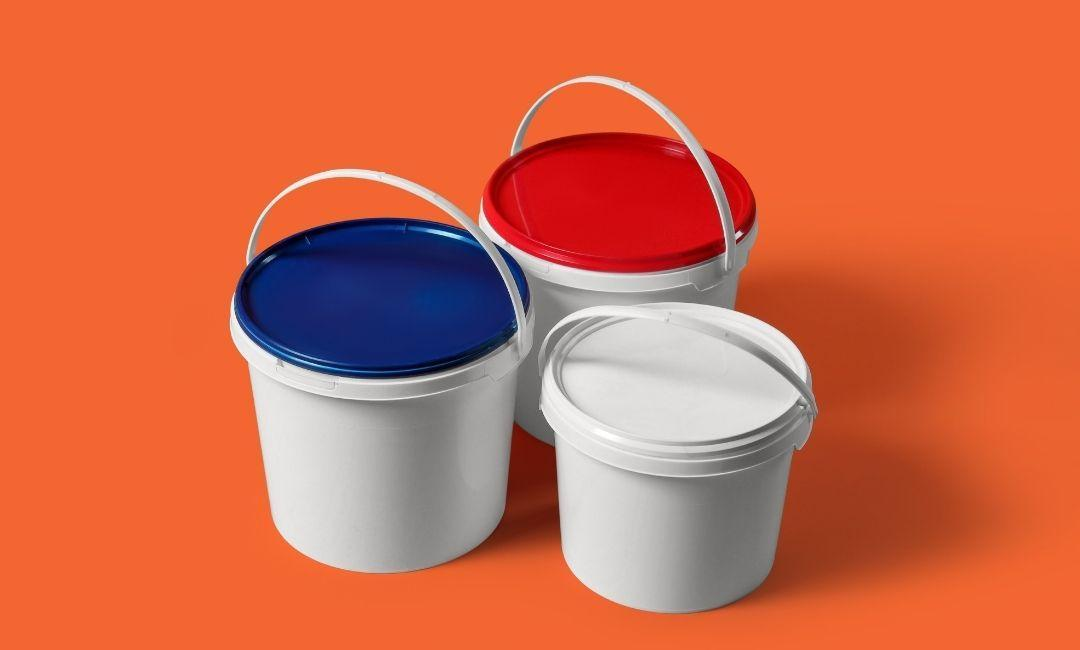
Plastic bucket price varies enormously depending on whether you're buying a utility bucket off a shelf or commissioning a custom run of food-grade buckets with proprietary tooling. Understanding what drives cost helps you budget accurately and avoid being surprised mid-project.
The Two Cost Layers
Every custom plastic bucket order has two distinct cost components:
1. Tooling cost (one-time, fixed): The cost to design and machine the injection mold. This is the largest single upfront investment.
2. Per-unit production cost (variable): Material, machine time, labor, finishing, and shipping. This gets amortized across the total run.
Per-part costs typically range from $0.50 to $5.00 per component, depending on production volume, material, and complexity. The more units you produce from the same mold, the cheaper each unit becomes.
What Drives the Tooling Cost
A simple, single-cavity aluminum mold might run $1,500 to $5,000, while a large steel mold for high-volume production can cost $25,000 to $100,000+.
For a standard plastic bucket, the tooling cost is influenced by:
- Mold material: Aluminum molds are cheaper and faster to build, but wear out sooner. Steel molds (P20, H13) cost more upfront but support much higher production volumes.
- Number of cavities: A multi-cavity mold produces multiple buckets per cycle, cutting per-unit cost but increasing tooling cost.
- Part complexity: A simple cylindrical bucket is cheap to tool. Add undercuts, snap-fit lid mechanisms, or embossed branding, and the price climbs.
- Tolerances and surface finish: Tighter dimensional tolerances require more precise machining and inspection. Glossy finishes require additional mold polishing.
What Drives the Per-Unit Cost
|
Cost Driver |
Low Impact |
High Impact |
|
Resin type |
HDPE, PP (commodity) |
Engineering resins |
|
Wall thickness |
Thin, uniform walls |
Thick or uneven walls |
|
Cycle time |
Simple geometry |
Complex, slow-cooling design |
|
Color |
Natural/unpigmented |
Custom colors with additives |
|
Finishing |
None |
Printing, labeling, coating |
|
Volume |
100,000+ units |
Under 1,000 units |
Commodity resins, including polyethylene (PE) and polypropylene (PP) are generally more cost-effective than engineering resins, which is one reason HDPE and PP dominate bulk plastic bucket production globally.
Sourcing from China: The Cost Advantage
One of the most significant factors in plastic bucket pricing is where the mold and production run happen. China-based manufacturers consistently offer tooling and production costs that are 30 to 50% lower than comparable Western suppliers, without compromising on quality when you choose an ISO-certified partner.
That's a meaningful difference at scale. TEAM Rapid is ISO 9001:2015 certified, based in China, and serves clients in 25+ countries. We offer competitive pricing on custom injection molding services with rapid tooling lead times of 5 to 25 days. If you're ready to get numbers on your project, you can request a quote here and receive a response within 24 hours.
Build Better Buckets Faster With TEAM Rapid
Plastic buckets are deceptively complex products. The right material, manufacturing process, and sourcing strategy can mean the difference between a bucket that performs and one that fails compliance, cracks under load, or costs twice what it should. Getting the fundamentals right from the start matters.
Key takeaways from this guide:
- HDPE and PP are the gold standard resins for most bucket applications
- Food-grade status depends on material, manufacturing environment, and proper use, not just labeling
- Injection molding delivers the best dimensional consistency and design flexibility for custom buckets
- Prototyping before committing to production tooling saves significant money and time
- Wholesale sourcing requires material documentation, sample validation, and supplier transparency
- Tooling cost is a fixed investment; per-unit cost drops sharply at higher volumes
When you need a reliable manufacturing partner to take a custom plastic bucket from concept to production, TEAM Rapid delivers. With ISO 9001:2015 certification, in-house injection molding and rapid tooling capabilities, and tooling lead times as low as 5 days, we make custom bucket manufacturing faster and more cost-effective than most buyers expect.Get your quote and hear back within 24 hours.


 Contact