
Some Useful Tips Of CNC Machining
Known as its high-efficiency and ultra-precision, CNC machining is a rapid manufacturing process that applied more and more popular in many fields. At TEAM Rapid, we provide not only customized CNC machining China service but also repeated production for both high and low volume manufacturing. Hereby, we are going to share some useful cnc machining tips according to our years’ experience.
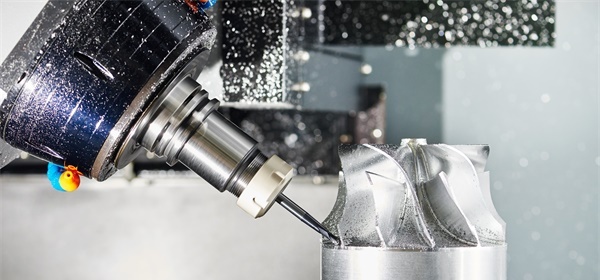
CNC Machining Design Tips
A good part design is much helpful for manufacturing, reduce costs, and improve precision, here are some tips cover design-for-manufacturing (DFM) principles specifically for CNC machining.
| Design Aspect | Guidelines / Recommendations | Notes / Tips |
|---|---|---|
| Material Selection | Metals: Aluminum (6061, 7075), Stainless Steel (304, 316); Plastics: Delrin, Nylon, POM | Choose machinable materials; harder metals = slower machining & higher cost |
| Wall Thickness | Aluminum: 1-5 mm minimum; Plastics: 2-6 mm minimum | Keep consistent thickness; thin walls risk vibration, cracking, or warping |
| Holes & Threads | Min hole diameter: 0.8-1 mm (metals), 1-2 mm (plastics); standard threads preferred | Maintain 1-2× diameter distance from edges; use standard countersinks/counterbores |
| Internal Corners / Fillets | Add fillets ≥ end mill radius; avoid sharp inside corners | Small sharp corners increase machining time and tool wear |
| External Edges | Chamfers or rounded edges recommended | Improves strength and safety; easier handling |
| Part Orientation | Minimize setups & tool changes; favor flat surfaces for clamping | Simplifies machining; deep pockets/high aspect ratios increase cost |
| Tolerances | Standard: ±0.05 mm (±0.002") for precision features | Specify tight tolerances only for critical dimensions |
| Surface Finish | Standard machined: Ra 1.6-3.2 ?m (63-125 ?in) | Polishing or finishing adds cost; leave non-critical areas rough |
| Trapped Material / Chip Clearance | Avoid blind holes & deep pockets that trap chips | Ensure tool access to all surfaces |
| Post-Processing | Consider anodizing, plating, painting, or secondary machining | Keep enough clearance for fixturing during finishing |
| Tooling Considerations | Align features with standard tool sizes (e.g., 3, 6, 12 mm end mills) | Reduces custom tooling cost and machining time |
| DFM (Design for Machining) | Simplify geometry; use modular designs; prototype first | Fewer features, easier setups, faster production, and less risk of errors |
CNC Machining Manufacturing Prospective Tips
- The CNC machining speed of white steel cutter should be not too fast.
- Use carbide cutter for rough machining the copper works instead of white steel cutter.
- To use several cutters with the different lengths for rough machining while the workpiece is too high.
- After rough machining, it needs the smaller cutter to remove the remaining material to keep the same machining allowance prior to finish cutting.
- Mill the plane with flat cutter instead of ball cutter, to save the rapid CNC machining time.
- Check the fillet radius of the corners then select the suitable ball cutter before scrapping chopper
- Mill as flat as possible for the four calibration planes.
- Use angle end mills to machine the slope surface with integer angle, such as parting line lock, etc.
- Think about the remain working allowance of the previous process for each step, to avoid the empty milling or too thick milling feed.
- To make the tool path as easy as possible, such as for shape, drilling, single side.
- Use finish milling instead of rough milling when working WCUT.
- Rough milling before finish milling for machining the outer shape. If the workpiece is too high, to machine the sides then bottom.
- Set the tolerances reasonably to balance the machining accuracy and computer calculations. Generally, the tolerance is set to 1/5 of the machining allowance for rough milling and 0.01 for finish milling.
- Do a bit more steps to reduce the empty milling time, think a bit more to reduce the chance of error, make a little more auxiliary lines or surfaces to improve the processing status.
- It’s better to use up milling for harder material or rough milling or bad equipment, otherwise to use the climb milling.
- Develop good responsibility and check each parameter carefully, to avoid reworking.
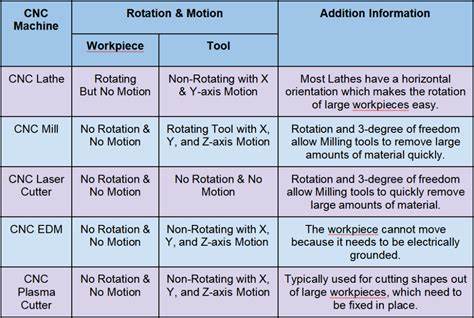
Case Study: CNC Machining of Smartphone Metal Frame
Material:Aluminum Alloy 6063
Process:5-axis CNC Precision Machining
Typical Requirements
- Dimensional Tolerance:±0.05mm
- Flatness / Straightness:≤0.1mm
- Surface Roughness:Ra ≤ 0.8 μm
- Surface Quality:No tool marks, no vibration patterns, no clamping marks
Machining Workflow
1. Raw Material Preparation:Cutting aluminum bars or sheets to size
2. Rough Machining:Bulk material removal, creating basic shape
3. Semi-Finishing:Ensuring uniform material allowance for finishing
4. Precision Machining:
- External profile
- Slots and grooves
- Button holes
- Camera step features
5. Deburring & Cleaning
6. Surface Treatment:Anodizing, sandblasting, or high-gloss polishing
Challenges & Solutions
1. Thin Walls Prone to Deformation
- Solution:Layered machining, reduced cutting forces, optimized fixturing
2. Tool Marks on Visible Surfaces
- Solution:Use small step-over, climb milling, high-speed finishing cutters for high-gloss surfaces
3. Consistency in Mass Production
- Solution:Standardize cutting tools and apply tool compensation adjustments
Outcome
The final metal frames meet tight tolerances, achieve smooth, high-gloss surfaces without visible tool marks, and maintain consistent quality across large production batches.
Contact Us
Do you think the tips above are helpful? If you want to know more about CNC machining parts or CNC machining services, please feel free to contact us, our CNC machining experts will give you the best support for your machining projects.


 Contact