
Injection Mold Design: From Rapid Tooling to Mass Production
Standard tooling focuses on long-term durability and high-volume production, while rapid tooling prioritizes shorter lead times and lower tooling costs for low-volume and bridge production, the proper mold design is important for both of them! How to design your mold? Here, as a tool maker China, we want to share our opinions here:
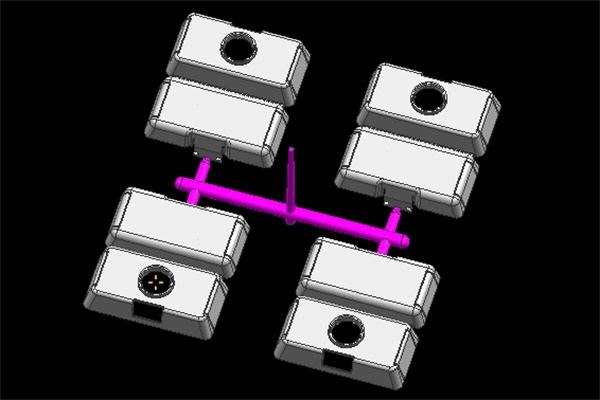
Ideas About Mold Design - Key Considerations
Proper Gate Location and Size
Gates must be properly places for allowing pressure and proper melt flow. The gate location affects the appearance of the final parts, we can set the gate in an inconspicuous location for avoiding cosmetic issue. Also, the gate size is an important consideration. The proper gate size is helpful for packing the material without expending the cycle time. Short shot may happen when the injection gate size is smaller than the requirements.
Proper Mold Venting Design
Vents must be included in the mold design. It allows the air displays by the melted resin to escape the tool. The size and position of vents are also key factors in production high quality Injection Molded Parts. It will have flashes when the vents size is large, and the smaller vent always leads to short shot or burn marks, as the air is trapped.
Cooling Channel Design
The cooling system should be designed according to the part geometry, plastic material, mold structure, and expected production conditions. Good cooling design improves both part quality and manufacturing efficiency.
Rapid Tooling Design vs. Standard Injection Mold Design
Rapid tooling and standard injection tooling share the same fundamental principles of injection mold design. Both require proper gate positioning, venting, cooling, material flow, and mold structure to produce high-quality plastic parts.
Mold Design Differences: Rapid Tooling vs Standard Injection Mold
Mold Material Selection
Rapid tooling commonly uses aluminum alloys such as 7075, or P20 steel when greater durability is needed. Standard production molds typically use tool steels such as P20, H13, hardening steel to meet longer tool life and higher production requirements.
Mold Structure and Design Complexity
Rapid tooling favors simpler mold structures, using manual or interchangeable inserts where practical to reduce cost and lead time. Standard tooling may incorporate slides, lifters, unscrewing mechanisms, and hot runner systems for automated production.
Cooling System Design
Standard tooling often uses optimized cooling channels to achieve shorter cycle times and consistent part quality. Rapid tooling may use simpler drilled cooling channels to reduce manufacturing time and cost while maintaining acceptable cooling performance.
Gate and Venting Design
Rapid tooling generally favors simpler gate designs, such as direct or edge gates. Standard tooling may use hot runners or multiple gates to improve filling balance and production efficiency. Both require proper venting to prevent molding defects.
Mold Base and Standard Components
Rapid tooling often uses MUD mold bases(interchangeable mold base) to reduce machining work and lead time. Standard production tooling may require custom mold bases depending on part size, mold structure, and production requirements.
Mold Making Lead Time and Production Flexibility
Rapid tooling uses simplified designs and efficient manufacturing methods to shorten lead time. It is ideal for prototyping, market testing, low-volume production, and bridge production. Standard tooling requires more engineering and manufacturing time but is better suited for long-term, high-volume production.
Rapid Tooling vs. Standard Tooling: Which Should You Choose
The right tooling solution depends on your product requirements, expected production volume, budget, and delivery schedule. Here is a general comparison:
|
Design Consideration |
Rapid Tooling |
Standard Tooling |
|
Main objective |
Short lead time and lower initial cost |
Long-term production stability |
|
Mold material |
Aluminum or soft steel |
P20, H13, harden. |
|
Mold structure |
Simplified where practical |
More complex structures when justified |
|
Mold base |
MUD mold base |
Standard or custom mold base |
|
Inserts |
Manual/interchangeable inserts where suitable |
Automated inserts or mechanisms where needed |
|
Cooling |
Practical, cost-effective cooling |
Optimized cooling for production efficiency |
|
Runner system |
Often cold runner |
Cold or hot runner |
|
Typical application |
Prototype, low-volume, bridge production |
Medium- to high-volume production |
These are typical design approaches rather than strict rules. Rapid tooling can also use steel molds, hot runners, and automated actions when the project requires them.
For example, if you need 100 to 5,000 plastic parts for product validation or initial market demand, rapid tooling may provide a more economical solution. If you expect hundreds of thousands of parts over the mold's service life, a more robust production mold may be a better investment.
The best solution should be evaluated based on the total manufacturing cost, including tooling, molding cycle time, maintenance, and expected production volume.
Tool Maker China - TEAM Rapid
TEAM Rapid is a professional Tool Maker China. We understand the importance of mold design and know how to build molds in higher quality. No matter which volume quantities injection molded parts you need, we can offer the best rapid manufacturing solution for getting excellent quality parts at lower cost but longer life time.
Whether you need prototype parts, low-volume injection molding, bridge tooling, or high-volume production, TEAM Rapid can help you select a suitable manufacturing solution.Our goal is to deliver high-quality molded parts with consistent quality, competitive costs, and reliable mold performance.
Contact us at sales@teamrapidtooling.com today and get a free injection molding quote.



 Contact