
Engineering Requirement Document, How to Write it?
The engineering requirement documents is very familiar to many engineers. When we get the engineering requirements from the product manager, it will tell us what and how to create. An engineering document specifies how a product will be create to fulfill multiple requirements.

What is the purpose of writing Engineering Requirements Documents
Writing engineering requirement documents enables collaboration. It breaks down a big project into several small tasks so you can send the task to your team members and give them a responsibility. Writing engineering requirement documents helps to prevents miscommunication between design, product and engineering department. When the engineering requirements example or engineering specifications example has been written, the design and product team will check and ensure the product and design purpose are sufficient. Writing engineering requirement documents is the first step to establish a test plan. Engineering requirements are list in the engineering requirement documents.
Benefits of Engineering Requirement Documents
An Engineering Requirement Document (ERD) plays a critical role in ensuring product development runs smoothly from concept to production. By clearly defining technical expectations, an ERD helps align teams, reduce risks, and improve overall project efficiency.
Benefit
Description
Clear Communication
Provides a single reference that aligns designers, engineers, suppliers, and manufacturers, reducing misunderstandings and assumption-based decisions.
Reduced Errors & Rework
Clearly defined requirements help identify potential issues early, minimizing redesigns, tooling changes, and production delays.
Improved Project Efficiency
Enables faster decision-making and smoother coordination across teams, helping projects stay on schedule.
Better Cost Control
Allows accurate evaluation of materials, processes, and constraints upfront, preventing unexpected costs later in the project.
Higher Product Quality
Documents performance, tolerance, and functional requirements to ensure consistent quality and reliable results.
Stronger Supplier Alignment
Gives suppliers and manufacturing partners clear technical expectations, leading to accurate quotations and smoother production handoffs.
Easier Validation & Testing
Defines measurable acceptance criteria, making inspection, testing, and quality control more efficient and effective.
How to write a good engineering requirements document
A good engineering requirements document is coordinated, clear, comprehensible, verifiable, Feasible, Traceable, Complete, Necessary.
-
Coordinated
Engineering requirements must be correct in product design. It must describe capabilities and conditions and explain what the product does.
-
Clear and comprehensible
Good engineering requirements documents are short, clear and straight to the point.
-
Verifiable
Good engineering requirements documents have ways to demonstrate and measure that the engineering requirements meet specific needs.
-
Feasible
Good engineering requirements documents are realistic. It is feasible organizationally, technically, legally, and financially.
-
Traceable
Good engineering requirements documents are traced to the original needs of the customers. It explains why the product design is important.
-
Complete
Good engineering requirements documents do not have gaps in interpretation.
-
Necessary
Good engineering requirements documents is valid and required for specific engineering.
Tips for writing engineering requirements
Refer to a good engineering specification examples
A good engineering requirement document example include a cover page, section heading, essential guidelines for each section, a brief explanation of the management system used. It also have standardized section to cover the topics which include imperative application, traceability and formatting standards and guideline.Make the engineering requirement documents in a hierarchical structure
If the engineering requirements documents in hierarchical, engineers are easy to read. Hierarchical structure manner helps to focus on every domain of system. It also helps to find the areas which need revisions in the specification.Use a comprehensive identification system
Requirement identifiers are important. Tagging each requirement with a project identifier improves and simplifies traceability. Brief identifiers build traceability tables which link each requirement clearly. To its ancestors.Use the standard language
English or many other languages may have multiple meaning for one word. It may lead to disagreement or confusion. So, use the standard language in engineering requirements documents to reduce misinterpretation is important.Use imperative
Use the imperatives like shall, should, must to show constraints and some unique performance and quality requirements. Engineering requirements documents should have one declaration of purpose with consistency cross requirements.Use rationale statements
Rationale statements reduce ambiguity. It enables to simplify the engineering requirements documents while offering additional information to users. Engineering requirements documents need a short and concise statement. The requirements should be separated from their justification. It will enable quicker and easier comprehension.Quality check before verification
To make the engineering requirement documents as professional as possible. Check everything to avoid spelling and grammatical mistakes. Do quality check for completeness, clarity and consistency. Make a quality assurance checklist, it helps to streamline processes and ensure it confirms with the practices.Contact Us
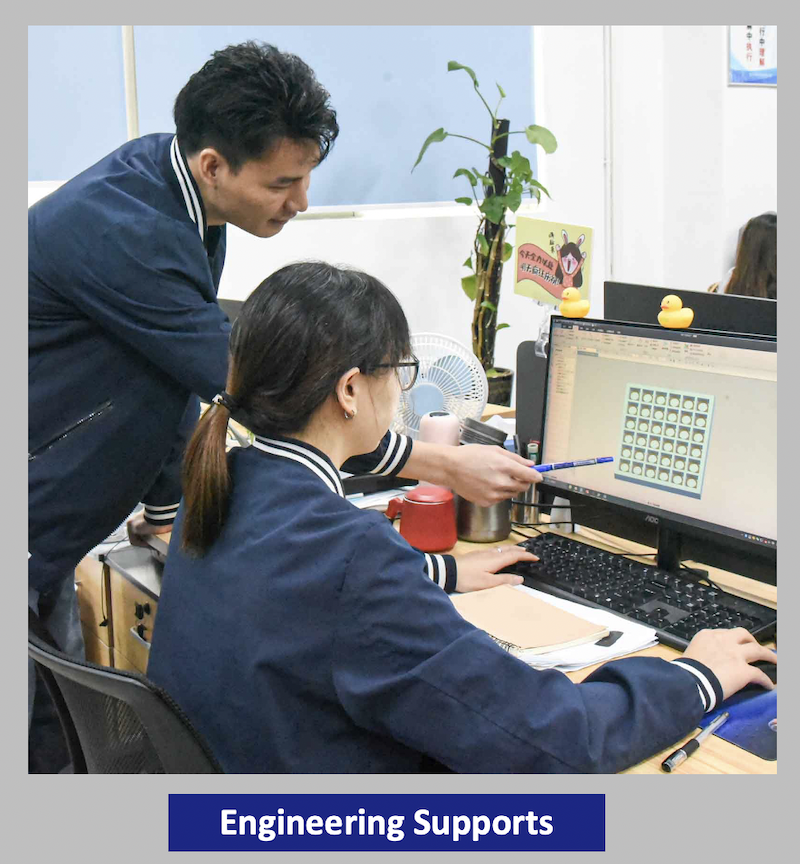
Have questions if the engineering requirements can be reached or not? Getting ready to manufacture your design? Our experienced engineering team at TEAM RAPID works closely with customers to review specifications, clarify requirements, and ensure designs are optimized for production. From rapid prototyping to low- and high-volume production, our team supports your project at every stage.
How to Connect With Our Experts
We welcome inquiries for custom quoting, technical consultations, and project discussion. Please choose the method that works best for you:
1. Quickest Quote & Project Review (Recommended)
To receive the most accurate pricing and lead time, please submit your project details directly through email.
- Email us your files: sales@teamrapidtooling.com
- Please include your 3D CAD files (STEP, STL, or IGES format) and any relevant specifications.
2. Speak to an Engineering Specialist
If you prefer to discuss your project requirements over the phone, please call us during our business hours.
- Phone:+86 8850 8730
- Business Hours:Monday - Friday, 8:00 AM - 5:00 PM (CST)
3. Visit Our Facilities (By Appointment)
We are proud of our manufacturing capabilities. Visits are welcome to discuss large or long-term projects.
- Address: 8th Kuixing Road, Zhongshan City 528400, Guangdong, China
FAQs - Engineering Requirement Documents
Why is an ERD important in product development?
A clear ERD ensures everyone involved in a project understands the requirements, it helps streamline production. It is essential for maintaining quality, controlling costs, meeting deadlines, and reducing miscommunication, minimizes design errors,What should be included in an Engineering Requirement Document?
A complete ERD typically includes:
- Product functional requirements
- Material specifications
- Dimensional tolerances
- Performance and quality criteria
- Testing and validation guidelines
- Compliance or regulatory requirements
- Traceability to customer needs


 Contact