
Save Your Cost by Vacuum Casting Method in 2026
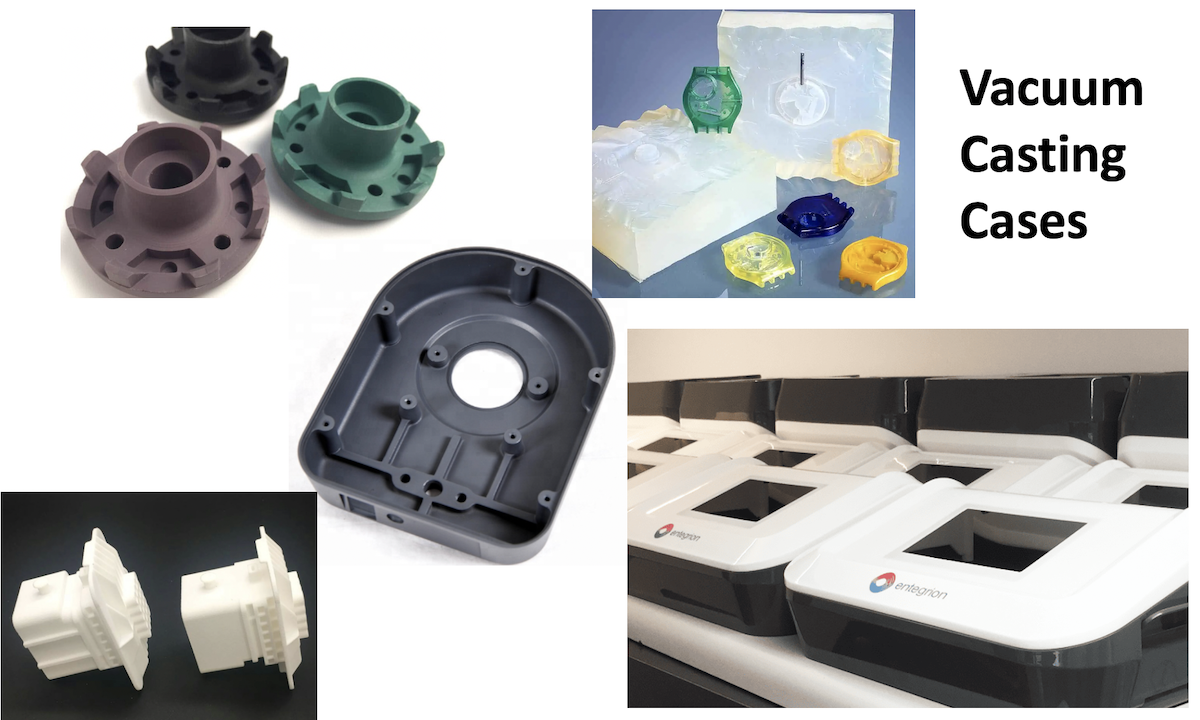
Vacuum casting, also called polyurethane casting, it is a good method to satisfy your low volume production needs at a low cost, you can have 10 or several hundred custom parts in a short time, it is one of Prototyping China processes 2026.
Vacuum casting is suitable for low volume manufacturing. Comparing with investing a steel or aluminum mold, the cost of silicone mold is much less. We may just need 1/3 or less cost to get your small volume plastic parts. Also, the lead-time for vacuum casting is short, it will be a good for you to have a quick turnaround.
When to Use Vacuum Casting
By vacuum casting process, manufacturer can produce high-quality prototype parts or small-batch plastic components.The process involves silicone mold making, and pouring liquid polyurethane resin into a silicone mold under vacuum conditions, allowing the material to fill complex geometries while minimizing air bubbles.
Situation
Why Vacuum Casting Works Well
Functional prototypes
High detail and realistic materials
Small batch production
Lower tooling cost
Appearance models
Excellent surface finish
Complex designs
Flexible silicone molds
Fast product development
Short lead time
The Main 3 Steps of Vacuum Casting Process.
1. Make a master model
CNC machining and 3D printing are the main processes to make master model, post finish is necessary if the casting part needed in gloss or texture.
2. Create a silicone mold.
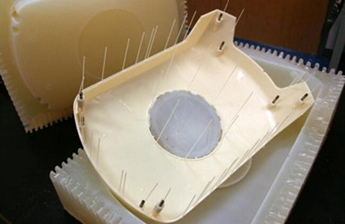
a: Make up the silicone according to the instruction, then discharging the moisture content under vacuum condition.
b: Make a custom box, the size of that box should be 20mm bigger than the master part.
c: Fix the master part into the box, then pour the prepared silicone into the box. Discharge the moisture again under vacuum condition.
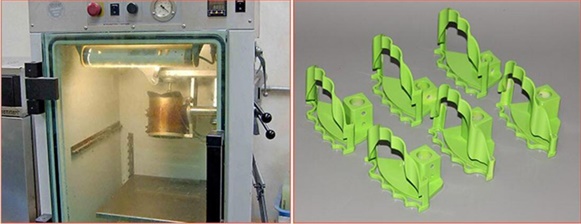
d: It takes 1 to 4 hours to cure the silicone under 60~70 degrees Celsius in the oven. Then we split the mold by knife and take out the master part, the finish on master will be transferred onto cavity.
Vacuum casting mold lifetime ranges from 10 to 20 shots varies based on the part geometry and casting material.
3. Casting the part.
Most of plastics are available in Prototyping China, technical parameters for Casting part:
casting material:Polyurethane(Brand: AXSON, Hei-cast).
casting material Type: ABS-liked, PP-liked, PA-liked, PMMA-liked, etc., Rubber(40~90 shores).
part cured time: 30~60 mins depend on the part size and casting material & conditions.
part tolerance: +/-0.2mm/100mm.
casting wall thickness: minimum at 0.5mm, 1.5mm to 5mm is good for casting.
maximum casting size: 2000mm x 1200mm x 1000mm.
Vacuum casting vs. Injection molding
| Feature | Vacuum Casting | Injection Molding |
|---|---|---|
| Process | Silicone mold is made from a master pattern. Resin is poured under vacuum to create parts. | Plastic pellets are melted and injected into a steel mold under high pressure. |
| Material Options | Polyurethane, epoxy, silicone, flexible or rigid resins. | Thermoplastics: ABS, PP, PC, POM, Nylon, etc. |
| Production Volume | Low to medium (typically 1-100s of parts per mold). | High-volume (hundreds to millions). |
| Tooling Cost | Low. Silicone molds are inexpensive and fast to make. | High. Steel molds are costly and time-consuming to produce. |
| Lead Time | Fast: molds can be made in a few days. | Longer: mold design and fabrication can take weeks or months. |
| Part Accuracy & Tolerance | Moderate: ±0.3-0.5 mm, depends on resin and process. | High: ±0.05-0.1 mm for precision parts. |
| Surface Finish | Smooth, can simulate textures; may require post-processing. | Excellent, can be textured directly in the mold; minimal finishing. |
| Color & Appearance | Can be pigmented; limited UV stability. | Wide range of colors, excellent repeatability, can include additives (flame retardants, UV stabilizers). |
| Post-Processing | Often needed: sanding, painting, plating. | Minimal: parts often ready-to-use. |
| Flexibility | High: easy to modify or iterate; good for prototyping and small series. | Low: mold changes are expensive and slow. |
| Best Use Cases | Rapid prototyping, functional prototypes, small batch production, parts with complex shapes. | Mass production, end-use parts, high-volume consistent quality. |
| Cost per Part | Low for small batches, high for large volumes. | Low for large volumes, high upfront mold cost but cheaper per unit after ~500-1000 parts. |
Note: Vacuum casting parts usually need post-processed to look pretty and identical to injection molded parts, that is the reason why vacuum casting is not suitable for mass production, as the unit cost is high even for high-volume.
Contact TEAM RAPID for Vacuum Casting Service
TEAM RAPID offers the best rapid prototyping services in China. Vacuum Casting, CNC Machining, Injection Molding, Die Casting are our main services, we can offer 1 to 10,000+ custom parts in plastic and metal with low cost but high quality. If you are interested in vacuum casting process and our services, contact us to request a rapid manufacturing quote.


 Contact