
A360, A383, A380 Aluminum Alloy for Pressure Die Casting
Aluminum die casting is one of the most cost-effective ways to create metal parts. When you design to use Al alloy as your part’s material, you will consider about which aluminum alloy is most suitable to meet your product’s requirements. Here, we are going to talk about a360, a383, and a380 aluminum alloy for die casting.
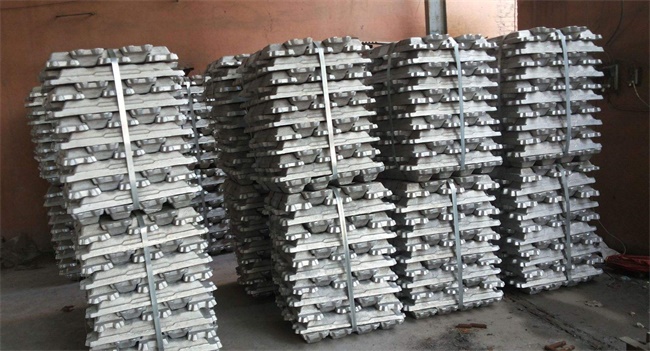
A380 Aluminum Alloy
A380 is one of the most popular materials for Pressure Die Casting. Benefits from A380, we can get parts in lightweight, corrosion resistant, strong and withstand high temperature. A380 also performs well at dimensional stability and thin walls casting, it can offers high electrical and thermal conductivity.
A383 Aluminum Alloy
Comparing to A380, A382 aluminum alloy not only share all the properties of A380, but also offer higher strength at high temperatures with less chance of cracking under heat. This is alloy is typically only used when you are forming intricate components and require very specific Die Casting filled characteristic.
A360 Aluminum Alloy
Due to the material’s properties, A360 is a difficult die cast metal. However, it does offer higher strength at high temperatures, better ductility and higher corrosion resistance, so if your product’s have high application, A360 can be took into considerations.
Comparison of these 3 Aluminum Alloys for Pressure Die Casting
Alloy
Density
Key Characteristics
Main Advantages
Limitations
Typical Applications
A380
~2.70
Excellent castability, good dimensional stability, suitable for thin-wall casting, good thermal and electrical conductivity
Lightweight, corrosion resistant, strong, withstands high temperatures, cost-effective
Slightly lower ductility compared to A360
Automotive housings, electronic enclosures, brackets, gearboxes, heat sinks
A383
~2.70
Similar composition to A380 with improved flow characteristics
Better strength at high temperatures, reduced risk of hot cracking, ideal for complex geometries
Mechanical properties slightly lower than A380 in some cases
Intricate thin-wall components, complex structural parts, precision die-cast housings
A360
~2.68
High aluminum content with superior mechanical properties
Higher strength at elevated temperatures, excellent ductility, superior corrosion resistance
More difficult to die cast, higher processing cost
High-performance automotive parts, corrosion-resistant components, structural applications
Make Your Aluminum Die Casting Parts
Aluminum die casting is a process to make your custom metals parts in expected structure and size. A good supply can help you with the manufacture starts from design analysis to final products inspection.
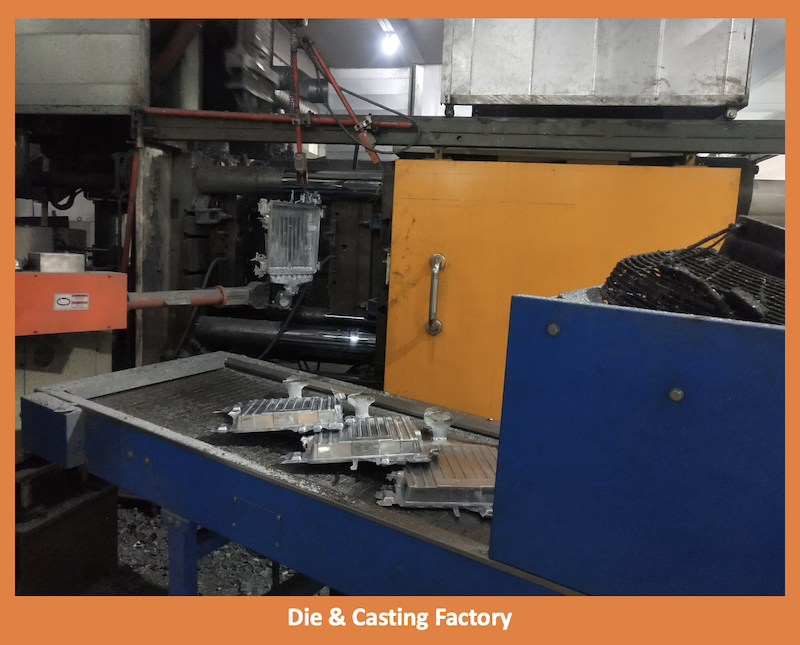
1. Make a Mold
Precision mold (die) design and fabrication are the first step of aluminum die casting process. TEAM RAPID base on your part drawings or 3D models to optimize the mold structure to ensure proper metal flow efficient cooling, and long mold life.
Key considerations during mold making include:
- Bass on alloy properties(A380, A383, A360) to match strength, ductility, and casting requirements
- Minimize porosity and defects by gate, runner, and vent design
- Cooling system layout for dimensional stability and consistent cycle times
- Base on the volume to choose mold steel to make the mold.
A well-designed die ensures accurate dimensions, smooth surface finish, and reliable part quality from the first shot to mass production.
2. Aluminum Die Casting
Inject the molten aluminum into the casting mold under high pressure is the second step. We can mold parts with even thin walls and complex geometries with excellent repeatability through die casting mold.
During the casting stage, we focus on:
- Controlled casting speed and pressure for complete cavity filling
- Reduce shrinkage and warpage by precise temperature management
- Stable production parameters to achieve consistent mechanical properties
- Quality control to maintain quality throughout the run
After solidification, parts are ejected from the mold and can undergo secondary operations such as CNC machining, surface finishing, and assembly to meet final specifications.
3. Rapid Tooling for Small-Volume Aluminum Die Casting
| Aspect | Rapid Tooling Details |
|---|---|
| Tool Design & Engineering | Optimized mold design for part geometry and alloy selection; simplified structures to ensure proper metal flow, cooling, and venting. Supports thin walls and complex geometries. |
| Tooling Materials | Typically pre-hardened steel or aluminum-based molds; faster to machine and cost-efficient, ideal for small to medium production volumes. |
| Lead Time | Shortened production cycles; molds can be completed in weeks instead of months, enabling faster prototyping and early production. |
| Production Capability | Supports common aluminum alloys such as A380, A383, A360; delivers good surface finish, dimensional accuracy, and repeatable performance. |
| Tool Life & Volume Range | Designed for hundreds to tens of thousands of shots; ideal for small to medium runs before transitioning to hardened production dies. |
| Secondary Operations | Parts can undergo CNC machining, deburring, surface finishing, and assembly to meet final quality and application requirements. |
| Benefits | Cost-effective, faster to market, flexible for design iterations, suitable for product validation and early production, smooth transition to full production tooling. |
Contact us
Are you looking for manufacturer to make your parts? TEAM RAPID offers rapid manufacturing service to meet your needs. We provide low to high volume manufacturing service for your different quantities needs. Want to know more about us? Contact our team at sales@teamrapidtooling.com today!
FAQ
1. How do I choose the right alloy for my part?
Part geometry, strength requirements, thermal performance, and corrosion resistance are the critical factors to select the alloy. TEAM RAPID can recommend the optimal alloy based on your design and production needs.2. What is rapid tooling and how does it differ from production tooling?
- Rapid tooling uses pre-hardened steel or aluminum molds for small to medium volumes.- Compare to traditional casting tools, rapid tooling is faster and more cost-effective, but it has a shorter tool life. It’s ideal for rapid prototypes, bridge production, and design testing.


 Contact