
Low Volume Injection Molding: When Does It Make Sense?
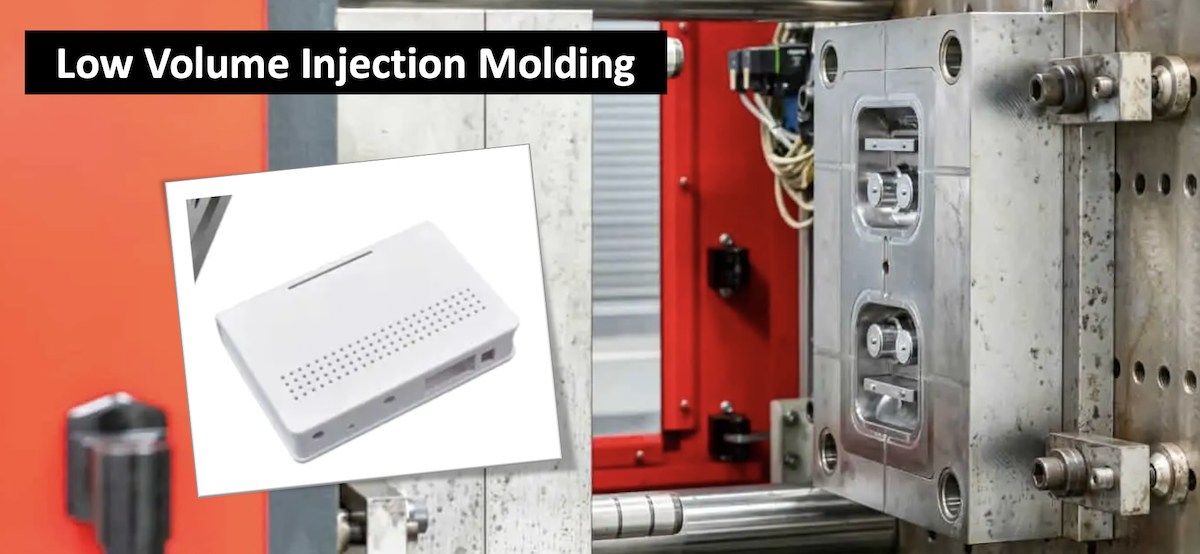
Low volume injection molding makes the most sense when you need production-quality, injection-molded plastic parts in quantities of 100 to 10,000 units but don't yet have enough proven demand to justify the high cost and long lead time of full-scale production tooling.
What Is Low Volume Injection Molding
Definition of Low Volume Injection Molding
Low volume injection molding is a manufacturing process that produces injection-molded plastic parts in quantities typically ranging from a few dozen to several thousand units. Unlike mass production injection molding, which requires expensive hardened steel tooling designed for hundreds of thousands of cycles, low volume injection molding uses simplified, cost-effective molds—often made from aluminum or soft steel—to deliver production-quality plastic parts at a fraction of the tooling investment.
At TEAM Rapid, we define low volume injection molding as the sweet spot between prototyping and full-scale production. It gives you real injection-molded parts with production-grade materials, tight tolerances, and consistent quality—but without the six-figure tooling commitment that traditional high-volume molds demand.
This approach is also referred to as small-batch injection molding, bridge tooling, rapid tooling, or short-run injection molding. Regardless of the terminology, the core principle remains the same: get real molded parts, fast, without over-investing in tooling before your product is validated.
How Low Volume Molding Differs From Conventional Injection Molding
While both processes use the same fundamental principle—injecting molten plastic into a mold cavity under pressure—there are significant differences:
|
Factor |
Low Volume Injection Molding |
Conventional High-Volume Molding |
|
Mold Material |
Aluminum, soft steel (P20) |
Hardened tool steel (H13, S136) |
|
Mold Life |
100 – 50,000 shots |
100,000 – 1,000,000+ shots |
|
Tooling Cost |
1,000– 15,000 |
15,000– 100,000+ |
|
Lead Time (Mold) |
1 – 4 weeks |
6 – 16 weeks |
|
Part Quantity |
10 – 10,000+ parts |
10,000 – millions |
|
Design Changes |
Easier and less costly |
Expensive and time-consuming |
The key takeaway: low volume molding trades long-term mold durability for speed, flexibility, and lower upfront cost.
What Production Quantities Are Considered "Low Volume"?
There is no single industry-standard definition, but in practice:
- Very low volume: 10 – 100 parts
- Low volume: 100 – 5,000 parts
- Medium-low volume: 5,000 – 50,000 parts
At TEAM Rapid, we most commonly see low volume projects in the 100 to 10,000 part range. However, the boundary between "low volume" and "high volume" is not a fixed number.
Why There Is No Universal Low-Volume Quantity
The determination of whether a project is "low volume" depends on several variables beyond part count:
- Material selection: Abrasive materials (glass-filled nylon, PEEK) wear molds faster
- Part complexity: Complex parts with side actions may require harder mold materials
- Tolerance requirements: Tighter tolerances demand more precise mold construction
- Expected lifetime volume: 2,000 parts/year for 10 years = 20,000 total parts
- Budget and risk tolerance: Startups may choose lower-cost tooling to reduce financial risk
Key Insight: "Low volume" is not determined by part count alone. Tooling investment, expected lifetime volume, material, geometry, and production strategy all matter.
Low Volume Injection Molding vs. Prototype Injection Molding vs. Mass Production
|
Category |
Purpose |
Quantity |
Tooling |
|
Validate design |
1 – 50 parts |
Aluminum or 3D printed molds |
|
|
Low Volume Molding |
Market testing, small-batch delivery |
50 – 10,000+ parts |
Aluminum, soft steel |
|
Mass Production |
Full-scale commercial production |
10,000 – millions |
Hardened steel |
Low Volume Injection Molding vs. Traditional High-Volume Tooling
One of the most common questions we receive is: "Should I just invest in a production mold from the start?"
|
Factor |
Low Volume Tooling |
High-Volume Tooling |
|
Mold Cost |
1,500– 15,000 |
20,000– 150,000+ |
|
Mold Lead Time |
1 – 4 weeks |
8 – 16 weeks |
|
Mold Life |
1,000 – 50,000 shots |
500,000 – 2,000,000+ shots |
|
Design Change Flexibility |
High |
Low |
|
Risk if Product Fails |
Low financial loss |
High financial loss |
|
Best For |
Startups, market testing |
Established products with proven demand |
- Choose low volume tooling when: your design isn't 100% final, you need parts within 2–4 weeks, your tooling budget is under $20,000, or you want to validate the market first.
- Choose production tooling when: your design is fully validated, you need 100,000+ parts, and per-part cost is the primary driver.
Which Manufacturing Process Is Best at Different Production Volumes?
|
Quantity |
Recommended Process |
|
1 – 10 parts |
3D Printing (SLA, SLS, FDM) |
|
10 – 50 parts |
3D Printing / CNC Machining / Vacuum Casting |
|
50 – 100 parts |
CNC Machining / Low Volume Injection Molding |
|
100 – 500 parts |
Low Volume Injection Molding (Aluminum) |
|
500 – 5,000 parts |
Low Volume Injection Molding (Aluminum or Soft Steel) |
|
5,000 – 10,000 parts |
Low Volume Molding (Pre-Hardened Steel) / Bridge Tooling |
|
10,000 – 50,000 parts |
Bridge Tooling / Production Tooling |
|
50,000+ parts |
Traditional High-Volume Production Tooling |
At TEAM Rapid, we offer a free DFM analysis to help you determine the most cost-effective process for your specific part.
Industries That Benefit From Low Volume Injection Molding
Consumer Electronics
Fast product lifecycles demand quick tooling. Low volume molding produces enclosures, housings, and connectors for product launches and pilot batches.
Medical and Healthcare Products
Medical device companies need production-grade parts for clinical trials, FDA submissions, and limited-market devices. Low volume molding delivers regulatory-compliant parts without mass-production commitment.
Automotive Components
Used for pre-production validation parts, aftermarket components, and interior trim pieces for limited-edition models.
Industrial Equipment
Control panel housings, equipment enclosures, and replacement parts for legacy equipment are common applications.
Robotics
Robotics startups need small batches of precision plastic parts for joint covers, sensor enclosures, and end-effector components.
Consumer Products
From kitchen gadgets to personal care devices, companies use low volume molding to test market response before committing to mass production.
Startup Hardware Products
Startups need production-quality parts to demonstrate products to investors and early customers—but lack the volume to justify expensive production tooling. Low volume molding reduces upfront capital requirements while enabling design iteration.
Niche and Replacement Parts
Replacement parts for discontinued products, vintage equipment restoration, and specialized applications become economically viable with low volume molding.
A Practical Decision Framework: Should You Use Low Volume Injection Molding?
Question 1: How Many Parts Do You Need Now?
- 1–10 parts → 3D printing or CNC machining
- 10–100 parts → Consider CNC or vacuum casting, but get a molding quote
- 100–10,000 parts → Low volume injection molding is likely your best option
- 10,000+ parts → Evaluate bridge or production tooling
Question 2: How Many Parts Will You Need Over the Product's Lifetime?
If you need 500 parts now but 50,000 over three years, plan your tooling strategy accordingly. We help customers plan their tooling roadmap from the beginning.
Question 3: Is the Product Design Final?
If there's even a 20% chance the design will change, low volume tooling is the safer choice. Modifying an aluminum mold costs 200– 1,000. Modifying a hardened steel mold could cost 5,000– 20,000.
Question 4: Do You Need Production-Grade Plastic?
If parts must withstand real-world use or meet regulatory compliance (FDA, UL, CE), you need injection molding with the actual production material. Low volume molding gives you identical material properties to mass production parts.
Question 5: How Much Can You Invest in Tooling?
|
Budget |
Recommended Approach |
|
Under $2,000 |
3D printing or CNC machining |
|
2,000– 5,000 |
Aluminum mold, simple part |
|
5,000– 15,000 |
Aluminum or P20 steel mold |
|
15,000– 30,000 |
Pre-hardened steel or bridge tooling |
|
$30,000+ |
Production-grade hardened steel |
What Information Should You Provide for a Low Volume Injection Molding Quote?
To receive an accurate quote from TEAM Rapid, please prepare:
3D CAD Files
STEP (.stp) preferred. Also accept IGES, SolidWorks, STL, Parasolid.
2D Drawings and Tolerances
Critical dimensions, GD&T callouts, and datum references.
Material Requirements
Material family, specific grade, fillers/additives. If unsure, tell us the application requirements and we'll recommend suitable materials.
Surface Finish Requirements
SPI finish standards, mold tech textures, or cosmetic requirements.
Initial Order Quantity
Helps us recommend appropriate mold material and cavity count.
Expected Annual/Lifetime Volume
Helps us recommend the right tooling strategy for long-term needs.
Application and Performance Requirements
Function, loads, temperature range, chemical exposure, regulatory standards.
Packaging and Delivery Requirements
Individual packaging, labeling, shipping method, and timeline constraints.
Low Volume Injection Molding: A Realistic Example
Product Requirement
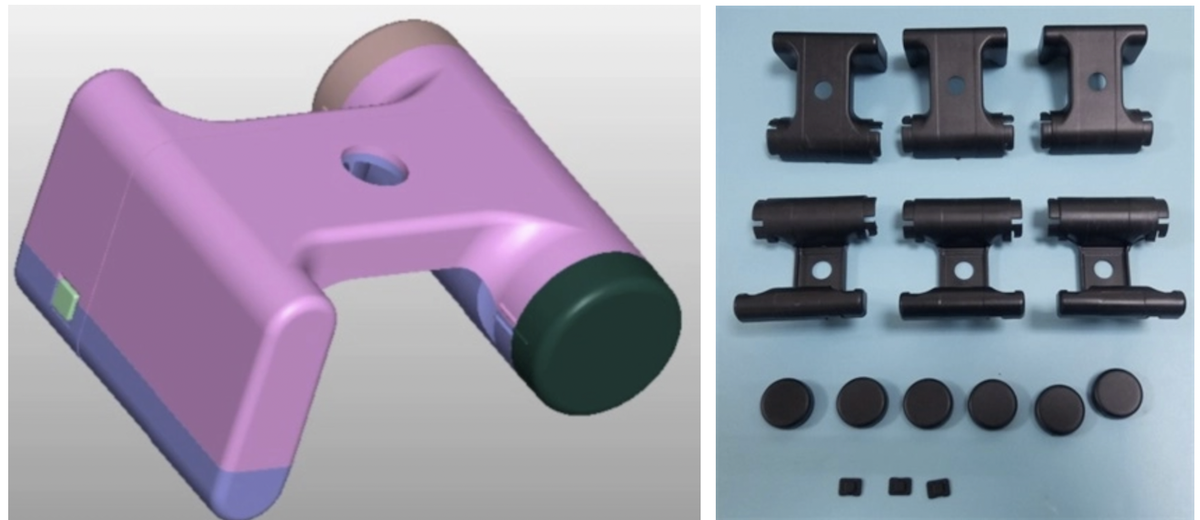
A consumer IoT startup developing a smart home sensor device needed 4 injection-molded components per unit.
Initial Quantity: 1,000 Parts
Total parts needed: approximately 4,200 (including spares and samples).
Tooling Options Considered
|
Option |
Mold Material |
Tooling Cost (4 molds) |
Mold Life |
Lead Time |
|
A |
Aluminum |
3,000– 5,000 |
5,000 – 10,000 shots |
2 – 3 weeks |
|
B |
P20 Steel |
4,000– 6,000 |
20,000 – 50,000 shots |
3 – 4 weeks |
|
C |
H13 Hardened Steel |
5,000– 10,000 |
500,000+ shots |
8 – 12 weeks |
Why Low Volume Tooling Was Selected
The startup chose aluminum tooling because of budget constraints (10Kvs 40K+), timeline needs (parts in 4 weeks), design risk (snap-fit feature might need adjustment), and volume fit (4,200 parts within aluminum mold life).
Estimated Tooling vs. Part Cost
- Tooling: 10,500∣Per−part: 0.85 | Total part cost: 3,570∣∗∗Total: 14,070**
- Compared to hardened steel: Total would be $46,890 — saving $32,820 upfront.
Market Validation
The startup fulfilled crowdfunding orders, sent samples to retail partners, and made one minor design modification for just $350.
Transition to Production Tooling
After 6 months, demand grew to 5,000 units/month. They transitioned to hardened steel multi-cavity molds, reusing the same CAD data. Per-part cost dropped from 0.85to 0.22.
Frequently Asked Questions About Low Volume Injection Molding
What Is Considered Low Volume Injection Molding?
Production of injection-molded parts in quantities of 50 to 10,000 units using cost-effective molds (aluminum or soft steel).
What Is the Minimum Quantity for Injection Molding?
Technically one part, but cost-effectiveness begins around 50–100 parts depending on complexity.
How Many Parts Can a Low Volume Mold Produce?
- Aluminum: 1,000–10,000 shots.
- P20 steel: 10,000–50,000 shots.
- Pre-hardened steel: 50,000–100,000 shots.
How Much Does Low Volume Injection Molding Cost?
- Tooling: 1,000– 15,000.
- Per-part: 0.10– 5.00+ depending on size, material, and quantity.
Is Low Volume Injection Molding Cheaper Than 3D Printing?
For 100+ parts, yes. Injection molding also provides isotropic mechanical properties that 3D printing cannot match.
Is Low Volume Injection Molding Cheaper Than CNC Machining?
For 50+ parts, injection molding becomes significantly cheaper per part and handles complex geometries better.
How Long Does Low Volume Injection Molding Take?
Typical total lead time: 2–5 weeks. At TEAM Rapid, soft steel molds are ready in 15–20 business days.
What Materials Can Be Used?
All thermoplastics: ABS, PC, PP, PA, POM, PEEK, TPE, TPU, and filled materials.
Can I Modify the Mold After Production Starts?
Yes. Aluminum molds are easy to modify (200– 2,000, 2–5 days). Hardened steel molds are difficult and expensive to modify.
Can Low Volume Tooling Be Used for Future Mass Production?
Not directly, but the design data, process parameters, and validated part design are 100% reusable for production tooling.
What Is Bridge Tooling?
Tooling that "bridges" the gap between prototype and production tooling, typically using pre-hardened steel to produce 5,000–50,000 parts while the production mold is being built.
Low Volume Injection Molding Services From TEAM Rapid
Rapid Tooling for Small-Batch Production
In-house tool shop with high-speed CNC, EDM, and wire-cut equipment. Precision molds in as little as 7–15 business days.
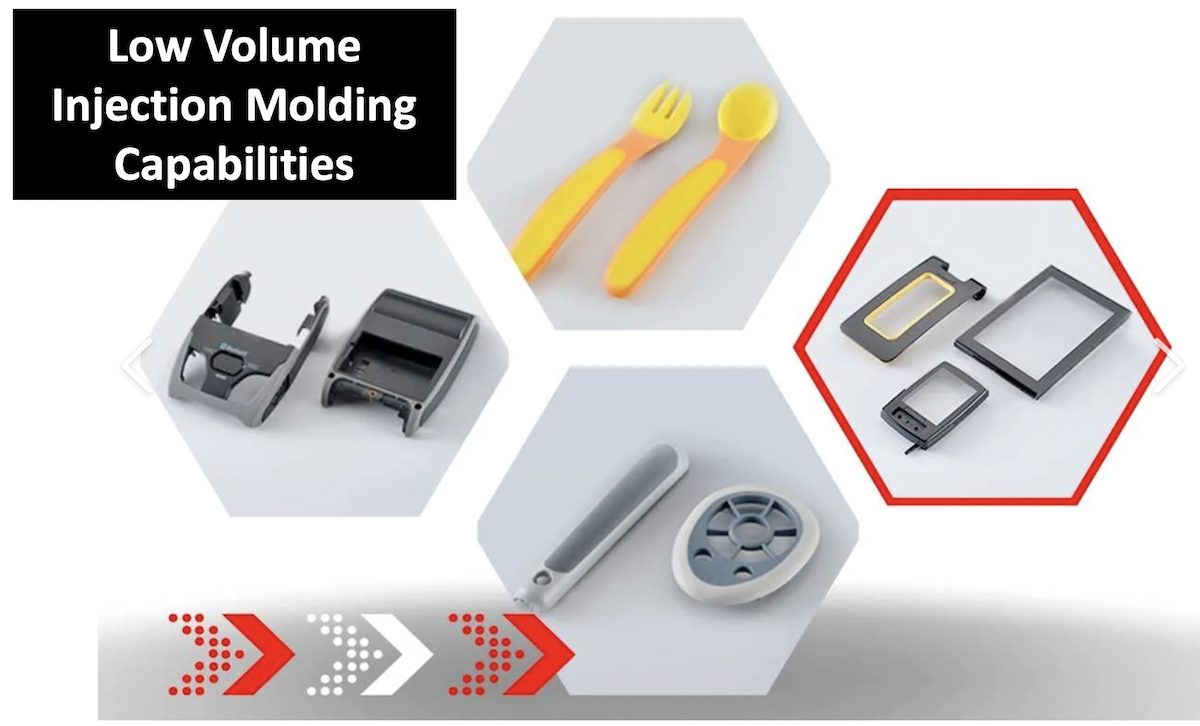
Low Volume Injection Molding Capabilities
- Clamping force: 50T–500T.
- Shot weight: 0.1g–2,000g.
- 200+ material options.
- Tolerances to ±0.05mm.
Material Selection and DFM Support
Free DFM analysis with every quote. Material recommendations based on application requirements. Common materials stocked; specialty materials sourced within 5–7 days.
Prototype-to-Production Manufacturing
Complete pathway from prototype → low volume → bridge production → mass production, reusing design data at each stage.
Quality Inspection
First Article Inspection, material certification, visual inspection, CMM available. ISO 9001 quality practices.
Global Shipping and Project Support
Worldwide shipping via express, air, or sea. Dedicated project engineer, weekly updates, responsive communication within 12 hours.
Request a Low Volume Injection Molding Quote
Ready to start? Submit your 3D CAD files and requirements. Receive a detailed quotation within 24 hours, including tooling cost, per-part cost, material recommendations, and DFM feedback.
Get your free quote today: www.teamrapidtooling.com
Low volume injection molding is not just a "cheaper version" of mass production—it's a strategic manufacturing approach that reduces risk, accelerates time-to-market, and preserves capital. Whether you're a startup launching your first product or an established company testing a new market, low volume injection molding gives you the quality of injection molding without the commitment of production tooling.


 Contact