
How to Choose the Right Injection Molding Supplier: A Practical Buyer's Guide
Choosing the right injection molding supplier is one of the most important decisions a mechanical engineer or procurement buyer faces during product development. The wrong choice can lead to delayed launches, inconsistent part quality, and rising costs that eat into your margins. How to choose the right injection molding supplier? The answer is evaluate their in-house mold design and tooling capabilities, quality management systems, material expertise, production capacity, cost transparency, lead time reliability, and communication support to ensure they match your specific project requirements.
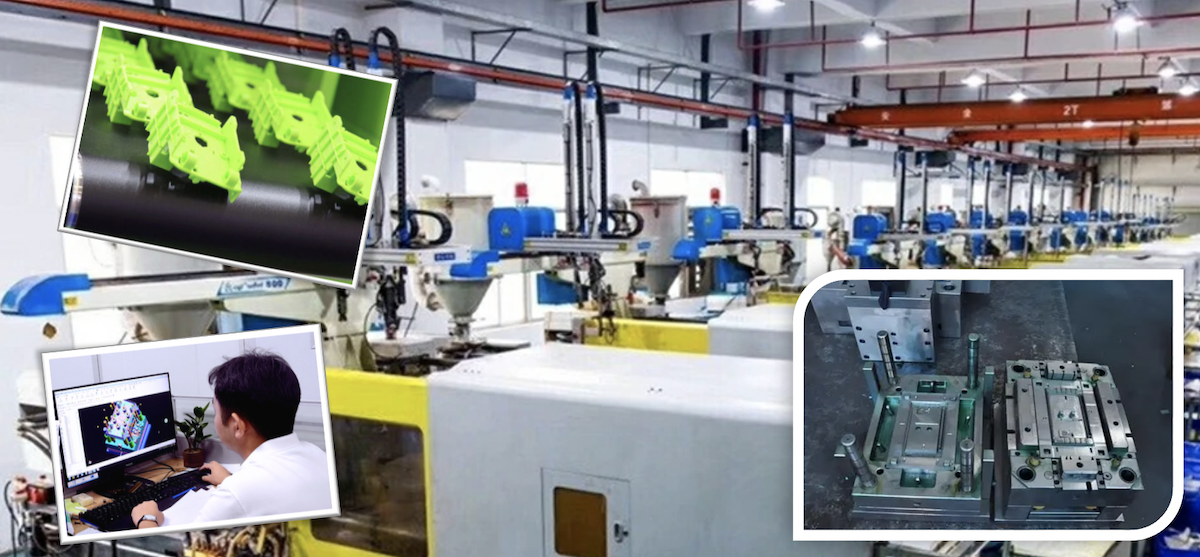
This guide covers the key factors to evaluate, including tooling capabilities, quality systems, material expertise, pricing, production capacity, lead times, and supplier reliability. The goal is to help you compare suppliers based on actual manufacturing capabilities rather than polished sales presentations.
What Is an Injection Molding Supplier and What Do They Actually Provide?
An injection molding supplier does more than operate injection molding machines. The term covers several different business models, and understanding what a supplier actually handles before requesting a quotation can save time and prevent costly misunderstandings.
Some suppliers operate as full-service manufacturing partners. They handle DFM analysis, mold design, mold manufacturing, injection molding production, secondary operations, and final assembly under one roof. Others focus on just one or two stages of the process.
For example, a mold maker may build your tooling but outsource molding production to another facility. A molder may accept your existing mold but offer little or no engineering support for design improvements. A trading company may coordinate work between several subcontractors without directly controlling any of the manufacturing processes.
Before sending an RFQ, clarify exactly which services you need and confirm what the supplier can perform in-house. This distinction affects communication, quality control, production scheduling, and total project cost.
Evaluate the Supplier's Engineering and Design Support
What Engineering Support Is Available Before Production?
A capable injection molding supplier should contribute engineering expertise before the first production shot. Useful support includes Design for Manufacturability (DFM) analysis, mold flow simulation, material recommendations, and practical feedback on how to prepare your design for molding.
DFM analysis can identify issues such as uneven wall thickness, insufficient draft angles, poorly positioned gates, and potential sink marks before tooling begins. Mold flow analysis helps predict how molten plastic will fill the cavity, where weld lines may form, and whether the part is likely to experience warpage.
Ask the supplier for a written DFM report with specific recommendations. If they cannot explain why a design change is necessary or how it might affect part performance, treat that as a warning sign.
Good engineering input early in the project can reduce mold revisions, avoid unnecessary tooling expenses, and shorten the path to production.
For a closer look at the engineering and manufacturing support available from a full-service partner, explore our injection molding services.
Assess the Supplier's Mold Manufacturing Experience
Mold Materials: Does the Supplier Use the Right Steel for Your Application?
Mold material selection has a direct impact on tool life, part quality, maintenance requirements, and long-term cost. Choosing the cheapest steel may reduce the initial tooling investment, but it can create additional expenses through frequent repairs or premature mold replacement.
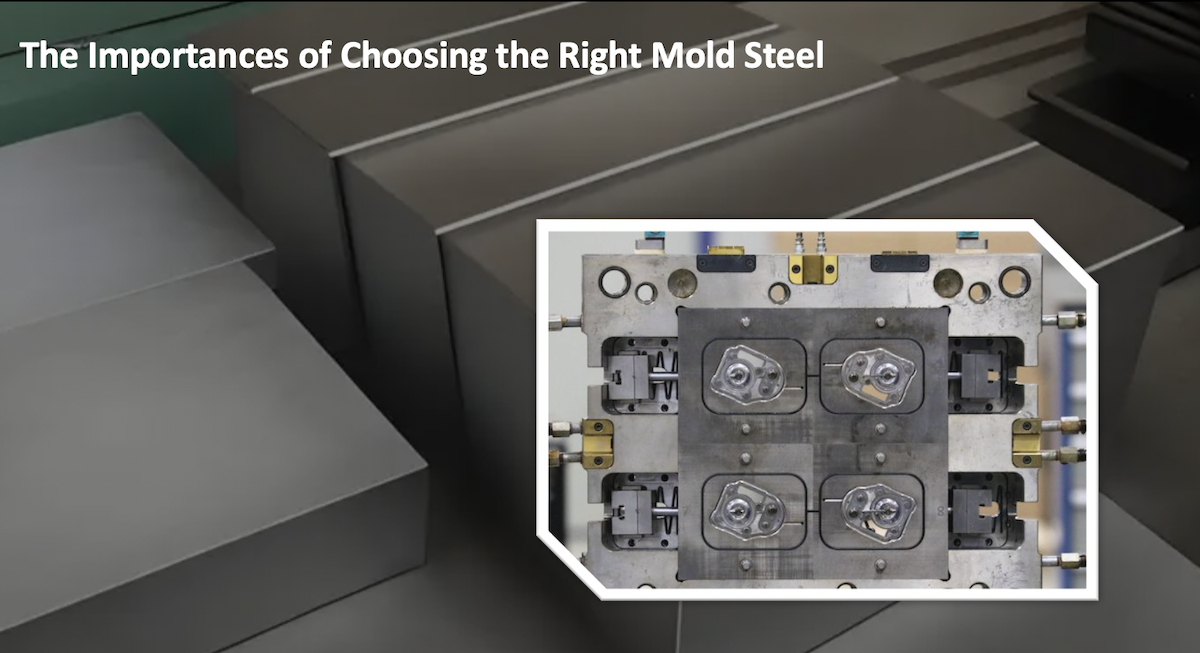
The right material depends on your production volume, plastic resin, surface finish, and expected tool life. Here is a practical comparison of common mold materials:
|
Steel Grade |
Typical Tool Life |
Best For |
Key Properties |
|
Aluminum (7075) |
1,000–5,000 shots |
Prototypes, bridge tooling |
Fast machining, low cost, limited durability |
|
P20 |
50,000–100,000 shots |
Low to medium volume production |
Good polishability, pre-hardened |
|
NAK80 |
100,000–300,000 shots |
Medium volume, cosmetic parts |
Excellent mirror polish, uniform hardness |
|
H13 |
300,000–500,000 shots |
High volume, abrasive resins |
High toughness, heat resistance |
|
S136 |
500,000+ shots |
Corrosive resins (PVC) , |
Superior corrosion resistance, high polish |
These figures are typical planning ranges, not guarantees. Actual tool life depends on mold design, processing conditions, maintenance, resin additives, and production practices.
Ask your supplier which steel they recommend and why. Their answer should relate directly to your material, expected production volume, and surface finish requirements. If they cannot explain the reasoning behind their recommendation, you may need a more technically capable partner.
Check Quality Control and Production Consistency
Consistent part quality across production batches is essential. A supplier may produce excellent first articles but struggle to maintain dimensional accuracy after thousands of molding cycles. The following questions can help you assess their quality capabilities.
Does the Supplier Have a Documented Quality Management System?
ISO 9001 certification is a useful starting point. It indicates that the supplier has a documented quality management system covering areas such as process control, inspection, corrective action, and record keeping.
However, certification alone does not guarantee that every production run will meet your requirements. Ask how the quality system operates in practice. Request sample inspection reports, process control records, and examples of how non-conforming parts are handled. A supplier with a functioning QMS should be able to explain these procedures clearly.
What Inspection Equipment and Methods Are Available?
The right inspection equipment depends on your part geometry and tolerance requirements. Common equipment includes:
- CMM (Coordinate Measuring Machine):For complex geometries and tight tolerances.
- Calipers and micrometers:For basic dimensional checks.
- Optical comparators and vision systems:For profile and contour inspection.
- Go/No-Go gauges:For fast pass/fail checks on critical features.
- Surface roughness testers:For cosmetic or sealing surfaces.
Confirm that the supplier's inspection capabilities match the tolerances on your drawings.
For example, if a critical dimension requires ±0.02 mm accuracy, a supplier relying solely on basic calipers may not have the measurement capability your project demands. The appropriate inspection method also depends on the actual feature, measurement uncertainty, and acceptance criteria.
How Are Critical Dimensions and Cosmetic Defects Controlled?
A capable supplier identifies Critical to Quality (CTQ) characteristics during the DFM phase and establishes clear acceptance criteria before production begins.
These criteria may cover dimensional tolerances, surface finish, color consistency, and acceptable cosmetic defects.
Ask how the supplier distinguishes acceptable from unacceptable appearance defects. Do they use limit samples? Is there a documented visual inspection standard? Are lighting conditions and viewing distances defined? Without clear criteria, disagreements over cosmetic quality can become subjective and time-consuming.
Review Production Capacity and Capabilities
A supplier may have excellent tooling engineers but still lack the equipment or production capacity needed for your project. Evaluate both their current capabilities and their ability to support your production requirements as volumes change.
Can They Manufacture Both Small and Large Plastic Parts
Machine tonnage is an important consideration.
A supplier operating only small presses, such as machines under 100 tons, may not be equipped to produce large automotive housings or appliance enclosures. On the other hand, a shop with only large machines may not be the most cost-effective choice for small precision components.
Ask for a machine list that includes:
- Clamping force or machine tonnage.
- Injection shot capacity.
- Platen dimensions and tie-bar spacing.
- Available auxiliary equipment, such as robots, dryers, and temperature controllers.
A broad machine range gives a supplier more flexibility when matching equipment to different part sizes and production requirements.
Does the Supplier Have In-House Mold Design and Tooling Capabilities?
In-house mold design and tooling can simplify communication and improve control over engineering changes. When design and manufacturing teams work under one roof, technical feedback typically moves faster, and tooling revisions are easier to coordinate.
If a supplier outsources mold manufacturing, ask:
- Who is responsible for mold quality?
- Who approves design changes?
- How are tooling issues communicated between companies?
- How quickly can modifications be implemented?
Every additional handoff creates another opportunity for delays or miscommunication. Outsourcing is not automatically a problem, but responsibilities should be clearly defined.
Can They Handle Complex Molds, Multi-Cavity Tools, and Insert Molding?
Not all injection molding suppliers have the same tooling experience.
- A simple two-plate, single-cavity mold is very different from a multi-cavity mold with a hot runner system, side actions, lifters, or unscrewing mechanisms.
- Insert molding introduces additional challenges. The supplier must control insert placement, overmolding adhesion, dimensional accuracy, and cycle time consistency.
Ask for examples of similar projects they have completed. If possible, request photos, case studies, or customer references that demonstrate relevant experience.
Understand Pricing and Cost Structure
Price matters, but the lowest quotation does not necessarily represent the lowest overall cost. A meaningful comparison requires a clear understanding of what each supplier includes in its pricing.
What Should an Injection Molding Supplier Quote Include?
A complete quotation should clearly identify the following:
- Tooling cost, including mold design, steel, machining, and texturing.
- Per-part price based on material, cycle time, and order volume.
- Material specification and grade.
- Secondary operations, such as painting, printing, assembly, and ultrasonic welding.
- Packaging requirements.
- Inspection and testing costs.
- Shipping terms, such as FOB, CIF, or DDP.
- Payment terms and schedule.
If any of these items are missing, ask for clarification before comparing the quotation with other suppliers. An incomplete quote can make one supplier appear cheaper simply because certain costs have been left out.
Mold Cost vs. Part Cost: How Should You Evaluate Both?
A lower mold price does not always translate into a lower total project cost.
For example, a low-cost mold made from less durable steel may require more frequent maintenance, generate additional scrap, or need replacement earlier than a properly engineered production tool.
Evaluate the total cost of ownership over your expected production volume.
A basic calculation is:
Total Project Cost = Mold Cost + (Part Cost × Total Quantity) + Expected Maintenance Costs
This provides a starting point for comparing different tooling and production options. For a more complete analysis, also consider scrap, logistics, tooling transfer, and potential downtime.
How Do Material Selection and Part Weight Affect Pricing?
Resin cost is a major factor in injection molded part pricing.
Engineering materials such as PEEK, PPS, and glass-filled nylon generally cost significantly more than commodity resins such as PP or ABS. Other factors affecting material consumption and production cost include:
- Part weight.
- Runner system design, including cold runner vs. hot runner.
- Cycle time.
- Scrap rate.
- Material drying and processing requirements.
A hot runner system can reduce runner waste but usually increases mold cost and may introduce additional maintenance considerations. Ask the supplier to explain the material cost per part and the assumptions behind the calculation.
What Hidden Costs Should Buyers Watch For?
Some additional charges may not appear in the initial quotation.
Potential examples include:
- Mold modifications after T1 samples.
- Color matching or custom compound fees.
- Engineering Change Order (ECO) fees.
- Special packaging or labeling.
- Additional inspection or third-party testing.
- Expedited production surcharges.
- Mold storage fees after project completion.
Request a written explanation of what is included in the quoted price and what circumstances trigger additional charges. Clear commercial terms protect both parties and reduce the risk of unexpected costs during production.
Evaluate Lead Times and Project Management
Lead time is more than the number of days required to ship finished parts. It covers the entire project, from purchase order to delivery.
Depending on the project, the timeline may include:
- DFM review.
- Mold design approval.
- Mold manufacturing.
- T1 sampling.
- Tooling revisions.
- Production.
- Final inspection and shipping.
Ask the supplier for a detailed project schedule with clear milestones.
A reliable supplier should be able to provide a Gantt chart or similar timeline showing each phase and its expected duration. A general estimate such as “about 4–6 weeks” is less useful when it does not explain what that period includes.
Also ask how the supplier handles delays.
- Will they communicate schedule changes proactively?
- Do they have contingency plans for steel procurement?
- How do they manage machine availability?
- Who will notify you if a milestone is missed?
A supplier that communicates a delay early gives you time to adjust your own production plans. That is far more valuable than receiving an unexpected update just before your deadline.
Assess Communication and Responsiveness
Technical expertise and production equipment are important, but communication also plays a major role in project success. Poor communication can turn a manageable engineering change into a tooling delay or production problem.
How Does the Supplier Manage Engineering Changes?
Engineering changes are common during product development. The important question is whether the supplier has a clear process for managing them.
Ask about their revision control system:
- How are design changes documented?
- Who reviews and approves revisions?
- How are cost impacts communicated?
- How are schedule changes handled?
- How is the latest drawing or CAD revision controlled?
A written Engineering Change Order (ECO) process with defined approval steps helps prevent misunderstandings and protects both parties. Without formal change management, even minor design adjustments can lead to uncontrolled scope changes, budget overruns, and schedule delays.
Can the Supplier Support Customers in the US and Europe?
When sourcing from overseas, communication logistics deserve attention.
Confirm the following:
- Time zone coverage:Does the supplier have staff available during at least part of your normal working hours?
- Technical documentation:Are drawings, inspection reports, and project communications provided in clear English using accurate manufacturing terminology?
- Communication tools:Can they work through email, video calls, and project management platforms that your team already uses?
- International shipping experience:Are they familiar with export documentation, customs requirements, and freight options for your region?
A supplier with established experience serving US and European customers is more likely to have these processes in place. Ask for relevant customer references if you need additional confirmation.
Compare Local, Overseas, and China-Based Injection Molding Suppliers
There is no universally best supplier location. The right choice depends on your project requirements, budget, production volume, logistics, and risk tolerance.
The following comparison provides a practical starting point.
Local Injection Molding Supplier: Advantages and Limitations
Advantages:
- Easier site visits and face-to-face meetings.
- Shorter logistics routes and potentially faster shipping.
- Same time zone for real-time communication.
- Familiarity with local standards and regulations.
Limitations:
- Higher labor and overhead costs may result in higher per-part pricing.
- Some regions have limited capacity for high-volume production.
- Fewer options may be available for specialized processes or materials.
Local suppliers can be a practical choice for low-volume production, projects requiring frequent in-person collaboration, or applications where proximity is especially important. However, local availability does not automatically guarantee better quality or faster overall project completion. Evaluate the supplier's actual capabilities and delivery record.
Overseas and China-Based Injection Molding Suppliers: Advantages and Limitations
Advantages:
- Competitive per-part costs, particularly at medium to high volumes.
- Broad machine ranges and access to specialized manufacturing capabilities.
- Extensive experience with export packaging, documentation, and international logistics.
- Access to a broad material supply chain.
Limitations:
- Longer shipping lead times.
- Time zone differences require planning.
- Language and cultural differences can complicate communication if not managed well.
- Factory visits require additional travel investment.
China-based suppliers like TEAM Rapid have invested in addressing these challenges through English-speaking engineering teams, DFM reports, and structured project management for international customers.
The important point is to evaluate suppliers based on project fit, not geography alone. An overseas supplier with strong engineering support, consistent quality, and reliable communication may be a better operational fit than a local shop that lacks the required equipment or technical experience.
Conclusion
Choosing the right injection molding supplier requires a structured review of engineering capabilities, mold manufacturing experience, quality systems, production capacity, cost transparency, lead time reliability, and communication.
- No single factor tells the whole story. The right supplier is the one whose capabilities and processes align with your specific project requirements.
- Start by defining your part specifications, expected production volumes, and quality standards. Then use the evaluation framework in this guide to shortlist potential partners.
- Request DFM feedback early, review quality documentation, and ask detailed questions about pricing, tooling ownership, production schedules, and engineering change management.
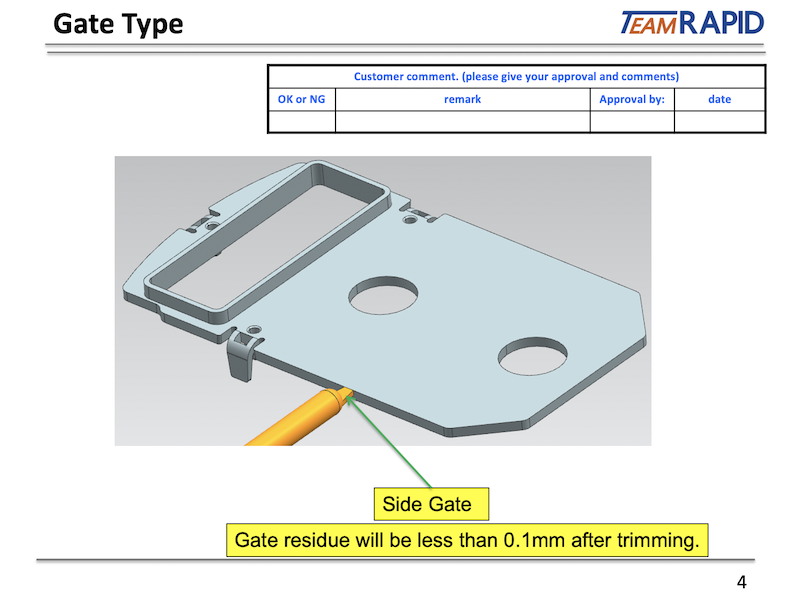
If you are looking for an injection molding supplier with in-house mold design, rapid tooling, precision tooling, and production capabilities, TEAM Rapid can support projects for customers in the US and Europe. Send us your 3D model or drawing for a free DFM analysis and quotation. No obligation, with a fast response from our engineering team.


 Contact