
Injection Molding Design Guidelines (2026): Wall Thickness, Draft Angles & Radius Rules for Better Molded Parts
Injection molding design guidelines are a set of best practices that optimize part geometry-such as wall thickness, draft angles, radii, ribs, and bosses-to improve manufacturability, reduce defects, lower production costs, and ensure consistent part quality.
Why Injection Molding Design Matters
Designing a plastic part for injection molding is fundamentally different from designing for 3D printing or CNC machining. If a part is not designed with the injection molding process in mind, you risk catastrophic tooling failures, endless production delays, and skyrocketing manufacturing costs. Good Design for Manufacturability (DFM) is the bridge between a brilliant CAD model and a flawless, cost-effective physical product.
How Good DFM Reduces Tooling Costs and Production Risks
Implementing DFM principles early in the design phase can reduce tooling costs by up to 30% and piece-part prices by 20%. By optimizing geometry for mold flow, cooling, and ejection, you eliminate the need for complex, expensive mold features like unnecessary side-actions (lifters and sliders) and reduce cycle times.
Common Design Mistakes That Cause Warpage, Sink Marks, and Short Shots
The most frequent errors mechanical engineers make include designing walls that are too thick, omitting draft angles, using sharp internal corners, and improperly sizing ribs. These mistakes directly lead to sink marks, warpage, air traps, and short shots. This comprehensive 2026 guide will walk you through the exact rules required to design perfect molded parts.
The Three Fundamental Rules of Injection Molding Design
Before diving into complex geometries, every designer must internalize the "Holy Trinity" of injection molding design:
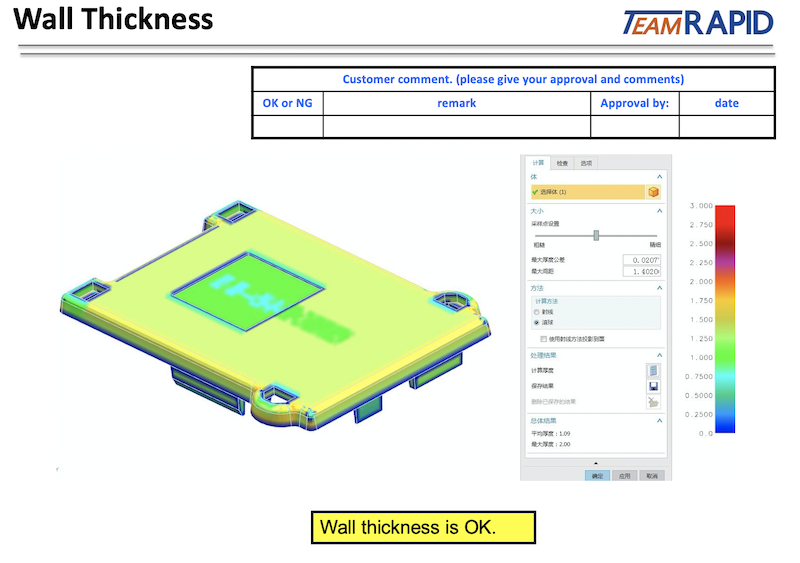
Maintain Uniform Wall Thickness
Plastic shrinks as it cools. If wall thickness varies drastically, thicker sections cool slower than thinner ones, creating differential shrinkage. This leads to internal stresses, warpage, and sink marks. Keeping walls uniform ensures consistent cooling and dimensional stability.
Add Proper Draft Angles for Easy Ejection
Molded parts must be ejected from the steel or aluminum tool. Without a slight taper (draft angle) on walls parallel to the mold opening direction, the part will drag, scrape, or stick to the mold, causing ejection failures and surface defects.
Use Generous Radii Instead of Sharp Corners
Sharp corners are stress concentrators. They weaken the part, restrict plastic flow, and cause the mold steel to crack under high injection pressures. Replacing sharp corners with radii improves structural integrity and mold lifespan.
Wall Thickness Design Guidelines
Wall thickness is the most critical parameter in plastic part design. It dictates material usage, cycle time, and part strength.
Recommended Wall Thickness by Plastic Material
Different polymers have unique flow characteristics and shrinkage rates. Here are the ideal nominal wall thickness ranges for common engineering plastics:
- ABS: 1.14 mm - 3.17 mm (0.045" - 0.125")
- PC (Polycarbonate): 1.20 mm - 3.80 mm (0.047" - 0.150")
- PP (Polypropylene): 0.90 mm - 3.00 mm (0.035" - 0.118")
- PA (Nylon): 0.75 mm - 3.00 mm (0.030" - 0.118")
- POM (Acetal): 1.00 mm - 3.00 mm (0.040" - 0.118")
- PC/ABS Blend: 1.14 mm - 3.17 mm (0.045" - 0.125")
How Wall Thickness Affects Production
- Cooling Time & Cycle Time: Cooling time increases with the square of the wall thickness. Doubling the wall thickness quadruples the cooling time, devastating your cycle time and increasing piece-part costs.
- Part Strength: Thicker walls are not always stronger. Excessively thick walls can lead to internal voids and brittleness. Strength should be achieved through geometric features like ribs, not bulk material.
- Production Cost: Thicker walls mean more material cost, longer cycle times, and higher energy consumption.
Thick Wall vs. Thin Wall Design
Thin-wall design (typically under 1mm) requires high injection pressures and specialized materials but yields incredibly fast cycle times. Thick-wall design (over 4mm) almost always results in sink marks and requires coring out.
How to Transition Between Different Wall Thicknesses
When a thickness change is unavoidable, never use an abrupt step. Use a gradual transition. A standard rule is a 3:1 taper ratio (for every 3 units of length, the thickness changes by 1 unit) to ensure smooth material flow and prevent stress concentration.
Using Core-Outs to Eliminate Excess Material
If a part requires a thick cross-section for structural reasons, "core out" the back side. This maintains a uniform outer wall thickness while removing mass from the interior, preventing sink marks and reducing cooling time.
Draft Angle Design Guidelines
What Is Draft Angle and Why Is It Required
Draft angle is the taper applied to the vertical walls of a part. It is required to reduce friction during ejection, prevent vacuum formation, and minimize ejector pin stress. Without draft, the part acts like a suction cup inside the mold cavity.
Recommended Draft Angles for Different Surface Finishes
- Standard Smooth Finish: 1° to 2° minimum.
- Light Texture (e.g., MT11010): 2° to 3°.
- Heavy Texture (e.g., Leather grain): 3° to 5° or more.
Draft Requirements for Textured Surfaces
A golden rule for textured surfaces: Add 1° to 1.5° of draft for every 0.025 mm (0.001") of texture depth. If the texture is deep and the draft is insufficient, the texture will be sheared off the part during ejection.
Internal vs. External Wall Draft
External walls (cores) generally require slightly more draft than internal walls (cavities) because plastic shrinks onto the core, gripping it tightly as it cools.
Deep Features and High Aspect Ratio Parts
For deep ribs, bosses, or high aspect-ratio features, increase the draft angle. A deep, narrow feature with minimal draft will act as a heat sink and severely resist ejection.
Radius and Corner Design Guidelines
Why Sharp Corners Cause Failures
Sharp internal corners create massive stress concentrations. Under load, a sharp corner can reduce the impact strength of a plastic part by up to 50%. Furthermore, sharp corners in the mold steel act as stress risers, leading to premature tool cracking.
Internal Radius vs. External Radius Rules
- Internal Radius: Should be at least 0.5x the nominal wall thickness. (e.g., if the wall is 2mm, the inner radius should be at least 1mm).
- External Radius: Should be the internal radius plus the wall thickness. This ensures the wall thickness remains perfectly uniform through the corner.
Recommended Radius-to-Wall Thickness Ratios
Aim for an inner radius-to-wall thickness ratio of 0.5 to 1.0. Ratios below 0.3 offer virtually no stress reduction, while ratios above 1.5 yield diminishing returns and can complicate mold machining.
How Radii Improve Material Flow and Reduce Stress Concentration
Generous radii allow molten plastic to flow smoothly around corners, reducing injection pressure requirements and preventing flow hesitation. This uniform flow minimizes molecular orientation, which in turn reduces post-molding warpage.
Designing Ribs for Maximum Strength
Ribs are the best way to increase the bending stiffness of a part without increasing the nominal wall thickness. However, poorly designed ribs are the number one cause of sink marks.
Rib Thickness Rules
The base thickness of a rib should be 50% to 60% of the nominal wall thickness. For materials prone to sinking (like PP or POM), keep it closer to 40% to 50%. If the rib is too thick, it creates a localized mass of material on the opposite surface, resulting in a visible sink mark.
Rib Height Recommendations
Rib height should not exceed 3x the nominal wall thickness. Taller ribs are difficult to fill, hard to eject, and prone to bending or breaking during ejection. If you need more height, use multiple shorter ribs instead of one tall one.
Rib Draft Requirements
Apply a minimum of 0.5° to 1.5° draft per side on ribs. Because ribs are deep and narrow, they cool quickly and grip the core tightly. Adequate draft prevents the ribs from tearing during ejection.
Preventing Sink Marks Around Ribs
To prevent sinking where the rib meets the base wall, use a small fillet radius (about 0.25x to 0.4x the wall thickness) at the intersection. Avoid large radii here, as they add excess material right at the junction.
Boss Design Guidelines for Screws and Fasteners
Bosses are cylindrical protrusions used to accommodate screws, inserts, or press-fits.
Standard Boss Dimensions
- Outer Diameter (OD): Typically 2.0x to 2.5x the nominal wall thickness.
- Inner Diameter (ID): Sized according to the specific screw or insert manufacturer’s guidelines.
- Wall Thickness of the Boss: Should not exceed 60% of the nominal wall thickness to prevent sinking on the opposite side.
Supporting Bosses with Ribs
Freestanding bosses are weak and difficult to fill. Always attach bosses to adjacent side walls using gussets or ribs. This improves material flow into the boss and provides structural support against bending moments.
Common Boss Failures and Solutions
- Boss Cracking: Usually caused by hoop stress from self-tapping screws. Solution: Increase the boss OD or use brass heat-set inserts.
- Sink Marks on the Outside: Caused by the boss being too thick. Solution: Core out the base of the boss or reduce the boss OD.
Heat-Set Inserts vs. Self-Tapping Screws
For high-strength, reusable assemblies, heat-set brass inserts are vastly superior to self-tapping screws. They eliminate hoop stress, provide metal-to-metal threading, and allow for smaller boss diameters.
Material-Specific Design Considerations
Designing for ABS
ABS is forgiving, offers great surface finishes, and is easy to mold. However, it is prone to warpage if wall thickness is not uniform. Keep walls consistent and use generous draft angles for textured surfaces.
Designing for Polycarbonate (PC)
PC is strong and impact-resistant but has high melt viscosity. It requires thicker walls and larger runners/gates to fill properly. Avoid sharp corners at all costs, as PC is highly susceptible to stress cracking.
Designing for Polypropylene (PP)
PP has excellent chemical resistance and fatigue life (great for living hinges) but shrinks significantly (1.5% - 2.0%). Designers must account for this high shrinkage rate in the CAD model and avoid thick sections, which sink severely in PP.
Designing for Glass-Filled Plastics
Adding glass fiber (e.g., 30% GF Nylon) dramatically increases stiffness but introduces anisotropic shrinkage. The part will shrink more in the direction transverse to the material flow. Design symmetrically and gate the part carefully to manage warp.
Managing Shrinkage Differences
Never mix different materials in a single over-molding process without verifying their shrinkage compatibility. If the substrate shrinks at 2% and the over-mold shrinks at 0.5%, the part will warp violently upon cooling.
Advanced DFM Techniques Most Designers Overlook
Designing for Faster Cooling Cycles
Place internal features and thick sections near the parting line where cooling channels can be routed closest to them. Avoid placing thick masses of plastic in the deep draw of the cavity where cooling is least efficient.
Reducing Part Weight Without Sacrificing Strength
Use topology optimization software to identify areas of low stress. Remove material from these areas and replace bulk plastic with a network of intersecting ribs. This creates an "I-beam" effect, maintaining stiffness while cutting weight and cycle time.
Using Simulation (Mold Flow Analysis) Early
Don't wait until the mold is cut to run Moldflow analysis. Run basic filling and cooling simulations during the CAD phase. This identifies air traps, weld lines, and thick areas before they become expensive tooling mistakes.
Designing for Automated Assembly
If your part will be assembled by robots, design features that facilitate automated handling. Add chamfers to guide pins, design flat surfaces for robotic grippers to hold, and ensure the part's center of gravity allows it to sit stably on a conveyor.
Injection Molding Defects and Their Design Solutions
Understanding how design causes defects is the hallmark of an expert engineer. Here is how to design your way out of common molding issues:
|
Defect |
Description |
Design Solution |
|
Sink Marks |
Depressions on the surface opposite to thick sections or ribs. |
Core out thick walls; reduce rib thickness to 50% of nominal wall; ensure uniform wall thickness. |
|
Warpage |
Twisting or bending of the part after ejection. |
Balance wall thickness; use symmetrical rib patterns; ensure uniform cooling; add draft. |
|
Weld Lines |
Weak lines where two flow fronts meet. |
Relocate gates; increase wall thickness at the weld line; add overflow wells; avoid splitting flow around holes. |
|
Air Traps |
Burn marks or short shots caused by trapped air. |
Add vents at the end of fill; avoid "racetracking" (flow splitting and rejoining); adjust gate location. |
|
Flash |
Thin layer of plastic leaking out of the mold cavity. |
Avoid excessively thin walls that require high injection pressure; ensure proper shutoff angles (minimum 3°). |
|
Short Shots |
Incomplete filling of the mold cavity. |
Increase wall thickness; add more or larger gates; increase draft; reduce flow length-to-thickness ratio. |
Cost-Driven Design Optimization
Features That Increase Mold Complexity
Every undercut, side-hole, or internal thread requires a side-action (slider or lifter). Side-actions drastically increase mold cost, maintenance requirements, and cycle time.
Avoiding Unnecessary Side Actions
Before adding an undercut, ask: "Can this be achieved through a straight-pull mold?" Often, you can redesign an undercut using "pass-through" cores (shut-offs) or by slightly altering the part geometry to allow the mold to open straight up and down.
Reducing Tool Maintenance Costs
Molds with fragile, thin steel features (caused by deep, narrow slots in the plastic part) break easily. Ensure all mold steel features have adequate thickness. Avoid sharp internal corners in the plastic, which translate to sharp, weak external corners in the mold steel.
Design Choices That Lower Piece-Part Price
- Minimize Cycle Time: Keep walls thin and uniform.
- Reduce Material: Core out unused spaces.
- Eliminate Secondary Operations: Design snap-fits instead of using screws; mold in colors instead of painting; use self-mating halves to eliminate the need for a second unique part.
Injection Molding Design Checklist Before Tooling Release
Before sending your CAD files to a tooling manufacturer like TEAM Rapid, run through this final DFM checklist:
- Geometry Review: Are all walls uniform? Are transitions gradual (3:1 ratio)?
- Draft Verification: Is there a minimum of 1° draft on all vertical walls? Is texture draft accounted for?
- Wall Thickness Audit: Are there any thick sections that need coring out?
- Radius Inspection: Are all internal corners radiused (min 0.5x wall thickness)? Are sharp external edges broken?
- Rib & Boss Check: Are ribs <60% of wall thickness? Are bosses supported by gussets?
- Undercut Audit: Can any side-actions be eliminated via straight-pull redesign?
- Manufacturability Review: Have you consulted with your molding partner for a professional DFM analysis?
Real-World Case Study: How a Simple Design Change Reduced Production Cost by 25%
The Challenge: A hardware startup designed an IoT sensor enclosure using ABS. The initial CAD model featured a 3.5mm thick base for "durability," four deep side-undercuts for cable routing, and sharp internal corners.
The Initial Quote: The mold required 4 complex side-actions, and the thick base resulted in a 45-second cooling cycle. The tooling quote was 18,000,and the piece part price was 2.40.
The DFM Intervention (Before-and-After): TEAM Rapid’s engineering team performed a free DFM review and suggested three changes:
- Coring out the base: Reduced the base wall to 2.0mm and added a structural rib grid.
- Eliminating undercuts: Redesigned the cable routing channels as open slots with snap-in covers, removing the need for side-actions.
- Adding radii and draft: Applied 1.5mm internal radii and 2° draft to all walls.
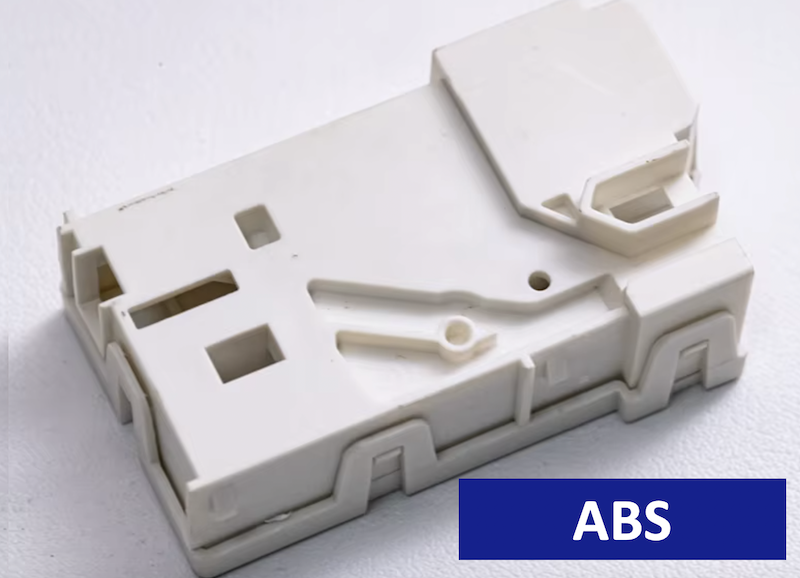
The Result: The mold became a simple, 2-plate straight-pull tool. Tooling costs dropped to $11,500 (36% savings). The cooling cycle dropped from 45 seconds to 22 seconds, reducing the piece-part price to $1.80 (25% savings). Furthermore, the elimination of sharp corners increased the drop-test survival rate of the enclosure by 40%.
Why Work with TEAM Rapid for Injection Molding Projects
Designing for injection molding is complex, but you don't have to do it alone. At TEAM Rapid (www.teamrapidtooling.com), we bridge the gap between your digital design and physical reality.
Free DFM Feedback
We don't just quote your parts; we engineer them. Every project receives a comprehensive, interactive DFM report highlighting potential defects, wall thickness issues, and cost-saving redesign suggestions before a single piece of steel is cut.
Rapid Tooling & Production Molding Services
Whether you need 50 prototype parts via our rapid aluminum tooling or 500,000 production parts via hardened P20 or H13 steel molds, our scalable manufacturing processes adapt to your project's lifecycle.
Material Selection Support
Unsure whether to use PC, ABS, or a Glass-Filled Nylon? Our material scientists will help you select the perfect resin based on your mechanical, thermal, and aesthetic requirements.
Global Manufacturing for USA and Europe
With state-of-the-art facilities optimized for global export, TEAM Rapid provides seamless logistics, ensuring your high-quality molded parts are delivered on time to your assembly lines in North America and Europe.
Request a Free DFM Review from TEAM Rapid Today
Stop guessing and start manufacturing with confidence. Optimize your design, reduce your costs, and accelerate your time-to-market.
- Upload Your CAD Files: Visit www.teamrapidtooling.com and upload your STEP or IGES files.
- Receive Design Feedback Within 24 Hours: Our engineers will return a detailed DFM analysis and a transparent, itemized quote.
- Start Your Injection Molding Project Faster: Approve the design, and we will begin cutting your mold immediately.
[Click Here to Upload Your CAD Files and Get Your Free DFM Report Now!]


 Contact